Are LG soundbars good?
LG soundbars have an average overall score of 7.3, ranking #3 among all soundbar brands, and a user rating of 8.4, placing them at #11 based on user reviews.
LG soundbars are good if you want a TV-focused range that goes from simple 2.0/2.1 bars to much larger Atmos systems. The strongest LG models combine eARC, Dolby Atmos, DTS:X, Wi-Fi, AirPlay, app control, dialogue enhancement, calibration, and in the top model a full 7.1.4 layout.
The range is more uneven than Sonos or Bose because LG covers both basic low-cost bars and advanced home-cinema packages. DSP2, SK1, and SP2 are mainly entry TV-audio upgrades, while SC9, SE6, and SP11RA are the models that carry the more serious format and connection specs.
The main limitation is consistency. Not every LG soundbar has eARC, Atmos, Wi-Fi, a bundled subwoofer, or rear speakers, so the exact model matters more than the LG badge alone.
The best available LG soundbars are as follows.
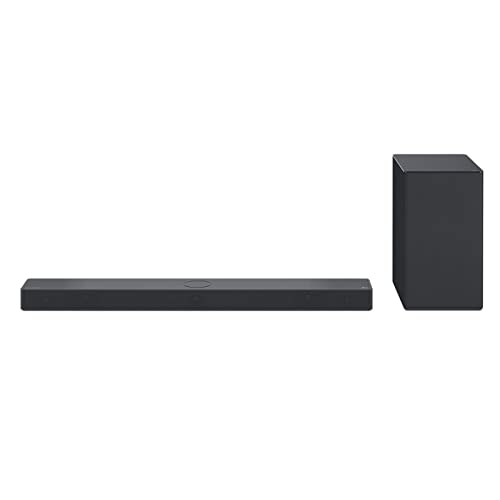
- LG SC9 (Overall score: 8.78 points)
- LG SP11RA (Overall score: 8.74 points)
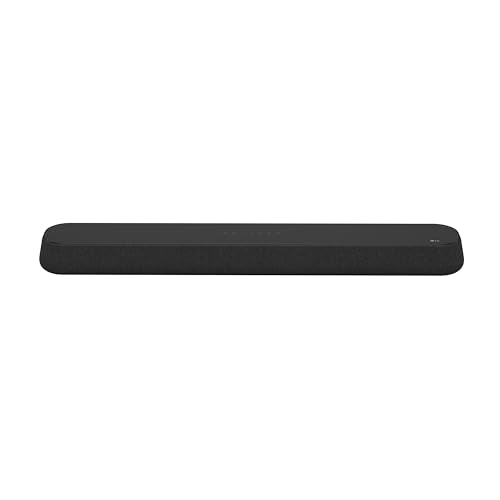
- LG SE6 (Overall score: 8.07 points)
The chart below ranks soundbar brands based on their overall scores.
[horizontal-chart-04592904924512229361057660775741675581583712410342]
What are the main advantages of LG soundbars?
The main advantages of LG soundbars are as follows:
- Wide range: LG covers basic 2.0 and 2.1 bars as well as 3.0, 3.1.3, and 7.1.4 models. That gives the brand a clearer step-up path than brands that only focus on compact all-in-one bars.
- Atmos options: LG has Dolby Atmos on SC9, SE6, and SP11RA-style models. These are the more relevant LG choices for films and games because they pair Atmos with eARC and stronger channel layouts.
- DTS: X support: The stronger LG models also support DTS:X. This is useful if you want broader home-cinema format coverage instead of relying only on Dolby formats.
- Bundled hardware: LG has models with bundled subwoofer hardware, and the SP11RA adds rear speakers as well. That makes the top LG tier more complete out of the box than many front-bar-only competitors.
- TV connections: The upper LG tier uses eARC, while simpler models use ARC or no HDMI ARC. This creates a clear technical separation between basic TV-audio bars and models intended for higher-quality TV audio handling.
What are the main disadvantages of LG soundbars?
LG soundbars have the following main disadvantages:
- Large top model: The SP11RA-style top tier is much larger than the compact LG bars. A width around 1400 mm and a 7.1.4 package make sense only with a large TV, wide furniture, and enough room for rear speakers.
- Limited rears: Rear speakers are not standard across the LG range. They appear on the top surround package, but the smaller LG models still work mainly as front soundbars.
- Basic entry bars: SK1, SP2, and DSP2-style models do not represent LG's strongest soundbar technology. They are useful for simple TV sound, but they miss the more important premium features such as eARC, Atmos, DTS:X, Wi-Fi, and calibration depending on the model.
- Price jump: LG moves from about £90 entry models to a premium tier around £1,400. That jump is mainly about channel layout, subwoofer/rear hardware, and format support, so buyers need to make sure the room can actually use the extra hardware.
Who makes LG soundbars?
LG soundbars are made by LG Electronics, a South Korean consumer-electronics company headquartered in Seoul. The company traces its electronics history to GoldStar, founded in 1958, while the wider LG group goes back to Lucky Chemical in 1947. The Lucky Goldstar name was shortened to LG in 1995. LG Electronics now operates globally and says it has an international workforce of more than 75,000 employees.
That background matters because LG approaches soundbars as part of a much larger TV and home-entertainment business. In practice, that means the range starts with simple TV-audio upgrades and moves up to higher-spec models with HDMI eARC, Dolby Atmos, DTS:X, wireless features, external subwoofers, and optional rear speakers.
What are the main LG soundbar series?
LG soundbars are mainly split between entry SK/SP/DSP models, compact premium SE/SC models, and larger SP surround packages.
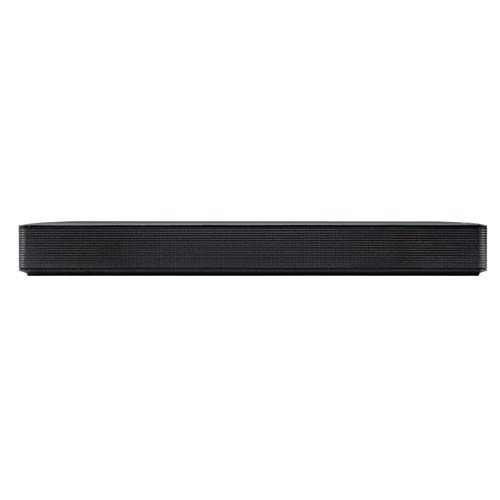
- SK models: LG SK models such as the SK1 are basic TV-audio bars. They focus on compact 2.0 playback, Bluetooth, and simple dialogue improvement rather than eARC, Atmos, DTS:X, Wi-Fi, or room calibration. They are best understood as small TV-speaker replacements.
- SP/DSP models: LG SP2 and DSP2-style models are a step above the simplest SK line but still remain entry-level compared with LG's Atmos bars. They usually focus on 2.1 playback, ARC on selected models, Bluetooth, app control, and compact cabinet width around 760 mm. They suit buyers who want a low-cost LG bar rather than advanced cinema formats.
- SE models: LG SE6 is a compact premium-style option with a 3.0 layout, eARC, Dolby Atmos, DTS:X, Wi-Fi, AirPlay, app control, dialogue enhancement, and calibration. It is stronger than the entry bars but does not include the subwoofer or rear-speaker hardware of the largest LG package.
- SC models: LG SC9 moves into a 3.1.3 layout with eARC, Dolby Atmos, DTS:X, Wi-Fi, AirPlay, calibration, and a bundled subwoofer. It is more cinema-focused than SE6 because it adds dedicated bass hardware and a higher channel layout without becoming as large as SP11RA.
- SP surround: LG SP11RA is the large home-cinema package in LG's range. It uses a 7.1.4 layout with eARC, Dolby Atmos, DTS:X, subwoofer, rear speakers, Wi-Fi, AirPlay, app control, dialogue enhancement, and calibration. It is the strongest LG option when the room can support a full multi-speaker setup.
How much do LG soundbars cost?
LG soundbars cost about £90 to £1,400, with the main price jump coming from eARC, Dolby Atmos, DTS:X, channel layout, subwoofer hardware, rear speakers, Wi-Fi, AirPlay, and calibration.
LG SK1, SP2, and DSP2 occupy the entry tier at roughly £90-£130. These models are mainly compact TV-audio upgrades with 2.0 or 2.1 layouts, Bluetooth, app control on selected models, and ARC on some options. They are not the LG models to choose for Atmos or large-room surround.
LG SE6 and SC9 move into the midrange at roughly £260-£340. This is where LG adds eARC, Dolby Atmos, DTS:X, Wi-Fi, AirPlay, app control, dialogue enhancement, calibration, and stronger 3.x channel layouts. SC9 also adds a bundled subwoofer, which explains part of the tier jump.
LG SP11RA is the premium outlier at about £1,400. Its price is driven by the 7.1.4 layout, subwoofer, rear speakers, eARC, Atmos, DTS:X, Wi-Fi, AirPlay, and calibration rather than by small convenience features.
How do LG soundbars compare with Samsung models?
LG soundbars are usually stronger than Samsung models when you want a top-end package with bundled rear speakers, while Samsung has a broader range of lower and mid-tier model choices.
At the basic level, both brands cover simple 2.0 and 2.1 TV-audio upgrades. LG SK/SP/DSP models compete with Samsung C/T/N and basic S/B models, where the decision is mostly about ARC support, Bluetooth, cabinet size, and whether a subwoofer is included.
In the midrange, LG SC9 and SE6 compete with Samsung S-series and Q600-style models. LG's stronger models emphasize eARC, Atmos, DTS:X, Wi-Fi, AirPlay, calibration, and in SC9's case a subwoofer. Samsung's advantage is a wider set of model choices and Samsung-TV-specific Q-Symphony, Samsung's TV-and-soundbar speaker sync feature, on selected models.
At the premium end, LG SP11RA reaches 7.1.4 with bundled subwoofer and rear speakers, while Samsung's compared range reaches 5.1.2 with subwoofer but no bundled rear speakers. For a full surround package, LG has the stronger hardware path; for Samsung TV integration, Samsung remains the more natural ecosystem match.
What should you consider while choosing the best LG soundbar?
The main things to check while choosing the best LG soundbar are as follows.
- Model tier: Compare SK/SP/DSP, SE, SC, and SP11RA-style models as different technical levels. SK/SP/DSP models are basic TV-audio bars, SE6 is the compact premium all-in-one option, SC9 adds a subwoofer and 3.1.3 layout, and SP11RA is the full 7.1.4 surround package. The right tier depends on whether you need simple dialogue improvement or a real home-cinema setup.
- Channel layout: LG moves from 2.0 and 2.1 to 3.0, 3.1.3, and 7.1.4. A 2.0 or 2.1 LG bar is mainly a front-stage TV upgrade, while 3.1.3 and 7.1.4 models are much more relevant for Atmos and film use. Do not compare the SK1 or SP2 directly with SC9 or SP11RA just because they share the LG name.
- HDMI support: ARC is enough for basic TV audio, but eARC is the better target for premium LG bars. SC9, SE6, and SP11RA-style models are the stronger choices when you want cleaner TV integration with Atmos and higher-quality formats. If the TV is new and the bar will be used for films or consoles, eARC should be a priority.
- Format support: Dolby Atmos and DTS:X separate the serious LG bars from the entry models. SE6, SC9, and SP11RA are the relevant options for those formats, while SK/SP/DSP models should be treated as basic TV-audio upgrades. Check both the format label and the channel layout, because Atmos matters more when the hardware can create height or surround effects.
- Bass hardware: LG models do not all include a subwoofer. SC9 and SP11RA-style models are stronger choices when film impact and low-end weight matter, while SE6 and the smaller entry bars are easier to place but more limited in bass output. Treat subwoofer inclusion as a hardware decision, not a small feature difference.
- Rear speakers: Rear speakers are mainly a top-tier LG advantage, not a standard feature across the brand. SP11RA-style packages are the better fit for actual rear-channel separation, while smaller LG bars rely on the front soundbar. If the room cannot place rear speakers correctly, the larger package may not justify its size or cost.
- Cabinet fit: LG width ranges from compact bars around 650-800 mm to a very large top model around 1400 mm. Match the soundbar width to the TV size and furniture before choosing the channel layout. A large 7.1.4 bar can look and fit poorly under a smaller TV even if the technical spec is stronger.