Which brands make the best Dolby Atmos soundbars?
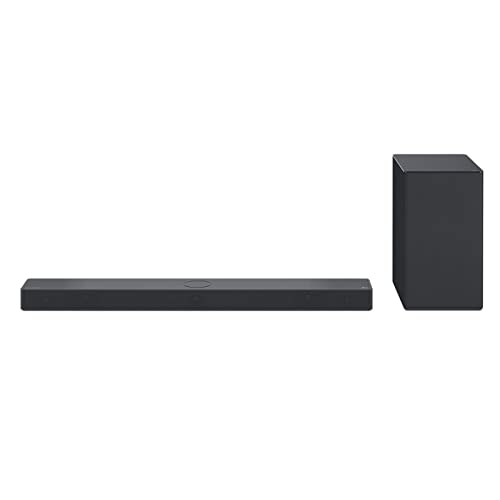
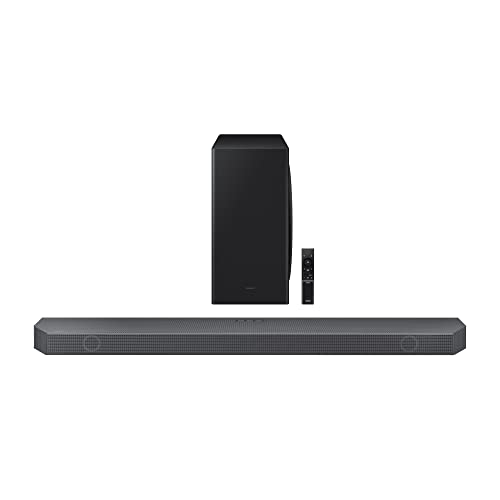
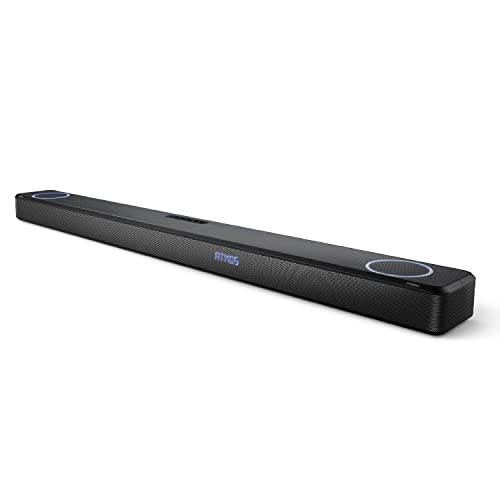
The best soundbar brands with Dolby Atmos models are as follows.
- LG (Average overall score: 8.7)
- Sony (Average overall score: 8.2)
- Samsung (Average overall score: 8.1)
The chart below ranks soundbar brands with Dolby Atmos models by average overall score.
[horizontal-chart-00197834127681002978068215381503672510174174881893]
What does Dolby Atmos do on a soundbar?
Dolby Atmos makes a soundbar try to place sound not just in front of you but also with more height and space around you. When it works well, films and games feel larger, more layered, and less stuck to the TV screen.
That does not automatically mean every Atmos soundbar sounds dramatic. The real benefit depends on the speaker layout, the room, the TV connection, and whether the content you watch actually carries Atmos audio.
So Atmos is best understood as a surround-format upgrade, not a guaranteed quality shortcut. A weak Atmos implementation can still sound less convincing than a well-tuned non-Atmos soundbar.
When does Dolby Atmos make a real difference?
Dolby Atmos makes a real difference when you watch a lot of films or cinematic games and the rest of the setup can actually support it. The effect is usually strongest in medium or larger rooms, with proper HDMI eARC support, and with streaming services or discs that really deliver Atmos soundtracks.
It matters less when the room is small, the listening position is awkward, or most of your use is regular TV, news, and casual streaming. In those cases, dialogue tuning and overall sound quality often matter more than the Atmos label itself.
That is why Atmos should be matched to the use case. It can be worth paying for, but mostly when the room, content, and source devices are good enough to let it show up properly.
Do you need upward-firing speakers for Dolby Atmos?
No, you do not strictly need upward-firing speakers for a Dolby Atmos soundbar, but they usually help if you want a more convincing height effect. Some Atmos soundbars use real height-channel layouts such as 5.1.2 or 7.1.4, while others rely more on virtualization or less explicit implementations.
That means the Atmos label alone does not tell you how the soundbar creates the effect. A 5.1.2 or 7.1.4-style layout usually signals a more serious Atmos approach than a simpler layout that only lists Atmos support in the feature sheet.
So upward-firing hardware is not mandatory, but it is often one of the clearest signs that the Atmos experience is being taken seriously. If height and overhead effects are a priority, it is worth checking the real channel layout rather than trusting the logo alone.
What room and setup factors matter for Dolby Atmos?
The room and setup factors that matter most for Dolby Atmos are as follows.
- Ceiling shape: Atmos works better when the room gives reflected sound a fair chance to behave predictably. Very high, very angled, or heavily broken ceilings can make the height effect less convincing.
- Room size: A slightly larger room usually gives Atmos more space to open up. In a very small room, the jump from a good regular soundbar to Atmos can feel smaller.
- HDMI eARC path: Most Dolby Atmos soundbars rely on eARC rather than plain ARC. If the TV, source, or HDMI chain is weak, the Atmos setup can lose one of its main advantages.
- Listening position: Atmos works best when the main seat is placed sensibly in front of the bar, not far off to one side. Seat position matters more once you start paying for a wider or more cinematic layout.
- Rear-speaker support: Rear-speaker compatibility is common on Atmos models. That matters because Atmos usually feels more convincing when the whole setup can build a wider and deeper sound field.
- Real Atmos content: The room can be perfect, but the effect still depends on the films, games, and services you actually use. Atmos has less value if most of your viewing never carries Atmos audio in the first place.
How much do Dolby Atmos soundbars usually cost?
Most Dolby Atmos soundbars cost £260 or more, and premium models often go well above £850. That makes Atmos one of the clearer dividing lines between mainstream TV-audio upgrades and more serious home-cinema soundbar systems.
The cheaper end does exist, but it is not where most Atmos models sit. Once you move past entry pricing, you start seeing the stronger eARC support, wider channel layouts, and larger cabinets that make the Atmos label more believable in practice.
You are usually paying here for more than just the logo. The extra cost normally goes with bigger systems, more cinematic tuning, and better support for multi-speaker or surround-oriented setups.
What should you consider while choosing a Dolby Atmos soundbar?
The main things to check while choosing a Dolby Atmos soundbar are as follows.
- HDMI eARC support: Most Atmos soundbars rely on eARC rather than plain ARC. If the TV and source chain are weak here, the Atmos setup is already limited before you even press play. Without a clean eARC path, you can end up paying for Atmos hardware that never performs properly in daily use.
- Real channel layout: Do not stop at the Atmos logo. Layouts such as 5.1.2 or 7.1.4 usually tell you more about the real hardware approach than a generic feature badge does. A listed layout is often much more informative than marketing language about immersive sound.
- Height implementation: Some Atmos soundbars use upward-firing speakers, while others lean more on virtualization. If overhead effects matter to you, check how the soundbar is actually trying to create them. This is one of the first things to verify if you want something more convincing than a broad surround effect.
- Room and ceiling fit: Atmos gets more believable when the room gives reflected sound a fair chance to work. Ceiling height, shape, and seat position all matter more here than they do on a simpler soundbar. Flat, not-too-high ceilings usually help more than vaulted or heavily angled ones.
- Subwoofer and bass support: Atmos can create more space, but bass still helps create weight and cinematic scale. A soundbar that feels thin in the low end can make the whole Atmos presentation less convincing. If the low end feels weak, the overhead effect often feels lighter than buyers expect.
- Rear-speaker path: Many Atmos soundbars also support wireless rear speakers. If you want a more complete surround setup later, that upgrade path is worth checking now. It matters even more if films and gaming are the main reasons you are paying extra for Atmos.
- Physical size: Atmos models are often wider and more room-dominant than basic soundbars. Make sure the cabinet, TV stand, and seating distance all make sense for the size of system you are buying. A compact cabinet may fit better visually, but it often leaves less room for a bigger Atmos presentation.
A Dolby Atmos soundbar is usually worth it when the room, TV connection, and content library can support it properly. The better buy is the one that makes Atmos believable in your room, not the one that simply prints the format name on the box.