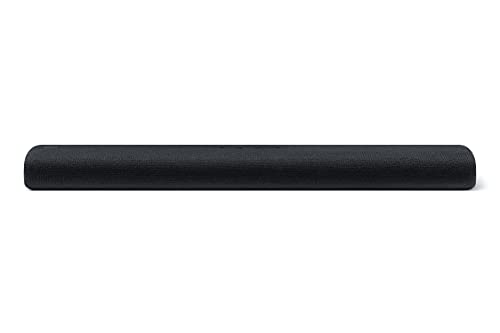
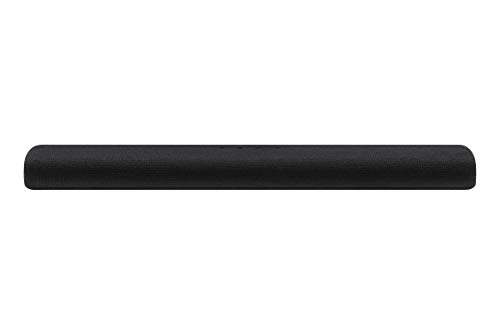
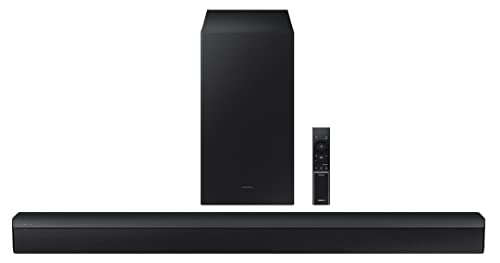
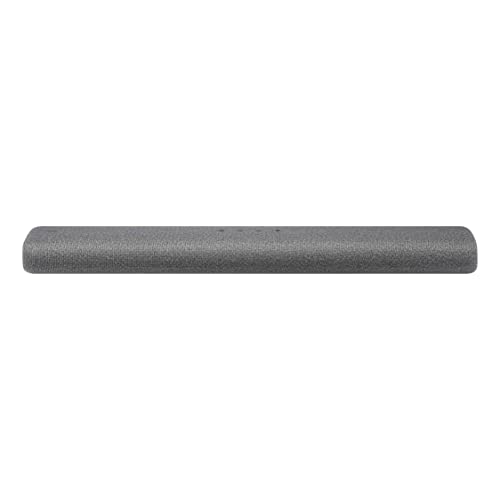
Are Samsung soundbars good?
Samsung soundbars have an average overall score of 6.6, ranking #7 among all soundbar brands, and a user rating of 8.7, placing them at #5 based on user reviews.
Samsung soundbars are generally good TV-focused soundbars, especially if you use a Samsung TV and can benefit from features such as Q-Symphony.
The range covers simple 2.0 models, midrange 3.x options, and stronger 5.x systems with features such as Bluetooth, dialogue enhancement, ARC/eARC, Dolby Atmos, and subwoofer hardware depending on the model. That makes Samsung useful for buyers who want anything from a basic TV-speaker upgrade to a more complete living-room setup.
The main limitation is that Samsung features are not uniform across the whole range. Q-Symphony, Wi-Fi, eARC, Atmos, HDMI inputs, and subwoofer inclusion vary by model, so the exact specs matter more than the Samsung name alone.
The best currently available Samsung soundbars are as follows.
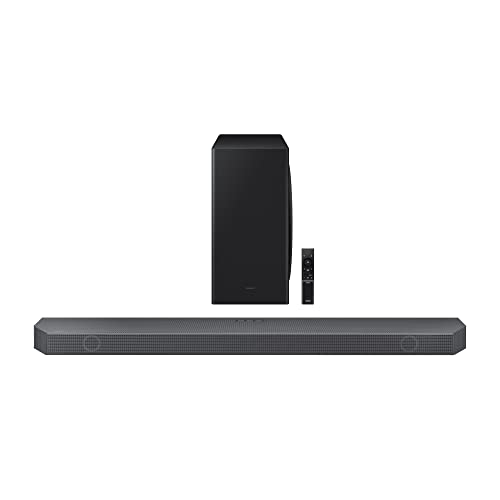
- Samsung HW-Q800B Soundbar (Overall score: 8.68 points)
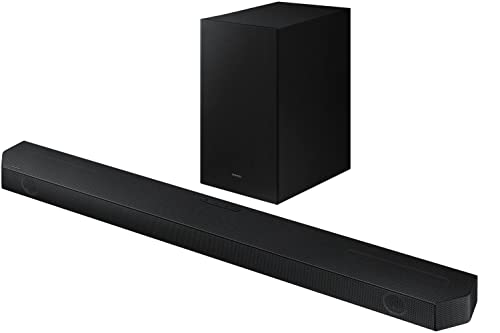
- Samsung HW-Q600B Soundbar (Overall score: 8.13 points)
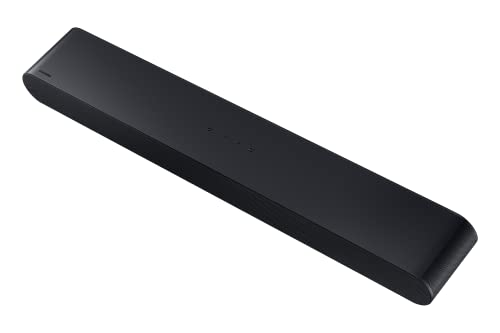
- Samsung HW-S60B All-in-One Soundbar (Overall score: 7.36 points)
The chart below ranks soundbar brands based on their overall scores.
[horizontal-chart-04592904924512229361057660775741675581583712410342]
What are the main advantages of Samsung soundbars?
The main advantages of Samsung soundbars are as follows:
- TV integration: Many Samsung soundbars are designed to work especially well with Samsung TVs. On compatible setups, Q-Symphony can play the TV speakers and soundbar together instead of muting the TV speakers completely. This is a real advantage if the TV also supports the feature, because it can make the front soundstage feel wider and more anchored to the screen.
- Upgrade path: Samsung covers simple 2.0 bars, compact 3.0 and 5.0 all-in-one models, subwoofer-based 2.1 and 3.1 systems, and stronger Q-series setups with 3.1.2 or 5.1.2 layouts. That makes it easier to stay inside the same brand while moving from a basic TV-sound upgrade to a more cinema-focused system.
- Good dialogue support: Most Samsung soundbars put TV speech clarity high on the feature list, with center-channel layouts or dialogue processing depending on the model. This helps with news, sport, streaming series, and films where voices can otherwise sound thin or buried under effects.
- Subwoofer options: Samsung is not limited to slim all-in-one bars. B-series and Q-series models often include a separate subwoofer, which gives stronger low-frequency output for films, games, and music than a basic stereo bar can usually provide.
- Premium specs: The better Samsung soundbars can add Dolby Atmos, eARC, Q-Symphony, Wi-Fi, app control, and upward-firing channel layouts. These features matter most when the soundbar is used as the main living-room audio system rather than only as a small speaker upgrade.
What are the main disadvantages of Samsung soundbars?
Samsung soundbars have the following main disadvantages:
- Samsung TV dependency: Q-Symphony is useful only when the soundbar is paired with a compatible Samsung TV. With an LG, Sony, TCL, Hisense, or other non-Samsung TV, that advantage mostly disappears and the soundbar has to be judged on normal HDMI, channel layout, and audio-format support.
- Rear speakers: Many Samsung soundbars rely on the front bar and sometimes a subwoofer, but not real rear speakers. That limits surround separation behind the listener. If rear effects are important, check whether the model supports optional rear speakers or choose a package that includes them from the start.
- Bass limits: Several Samsung models are compact all-in-one bars without a separate subwoofer. They are easier to place, but they cannot produce the same low-end impact as a system with a dedicated subwoofer. For action films, games, and bass-heavy music, the smaller S-series and basic bars can feel lighter.
- Limited Atmos: Dolby Atmos is mostly a higher-tier Samsung feature, not something every Samsung soundbar includes. Basic 2.0, 2.1, or 3.0 bars should be treated as TV-sound upgrades, not height-channel cinema systems. For real Atmos use, the model needs the right decoding support, HDMI handling, and a channel layout such as 3.1.2 or 5.1.2.
Who makes Samsung soundbars?
Samsung soundbars are made by Samsung Electronics, the South Korean electronics company headquartered in Suwon. Samsung Electronics was founded in 1969 and is part of the wider Samsung group. It is one of the largest consumer-electronics manufacturers in the world and official Samsung materials describe a global workforce of more than 260,000 employees.
Samsung Electronics operates across several large technology businesses, including TVs, displays, smartphones, semiconductors, appliances, and connected-home products. Within that broader company structure, soundbars belong to a mass-market home-entertainment portfolio built alongside Samsung's TV and audio categories.
What are the main Samsung soundbar series?
Samsung soundbars are mainly divided into S-series, B-series, Q-series, and simpler compact TV-sound lines.
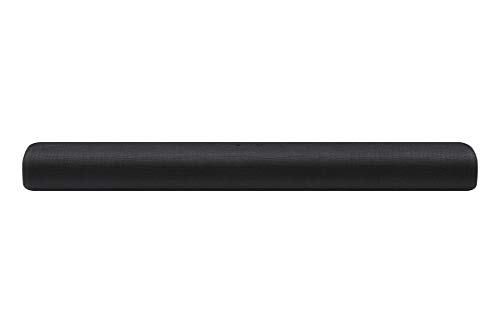
- S-series: The S-series is the Samsung all-in-one lifestyle line, with models such as the HW-S50A, HW-S50B, HW-S60A, HW-S60B, and HW-S60T. These models usually focus on slimmer cabinets, 3.0 to 5.0 channel layouts, Bluetooth, ARC, and in several cases Q-Symphony. They are better for buyers who want clean TV sound and compact placement without a separate subwoofer.
- B-series: The B-series is more bass-focused and budget-oriented, with models such as the HW-B450 and HW-B650. These models are more likely to include a separate subwoofer, moving from 2.1 to 3.1 layouts depending on the model. They suit buyers who want stronger low-end impact more than a slim all-in-one design.
- Q-series: The Q-series is the more cinema-focused Samsung soundbar line, with models such as the HW-Q600B and HW-Q800B. These models add stronger layouts such as 3.1.2 or 5.1.2, Dolby Atmos, eARC, Q-Symphony, and subwoofer hardware. They are the clearest Samsung choice for movies, gaming, and larger rooms.
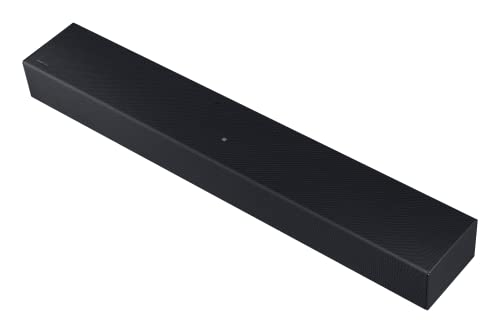
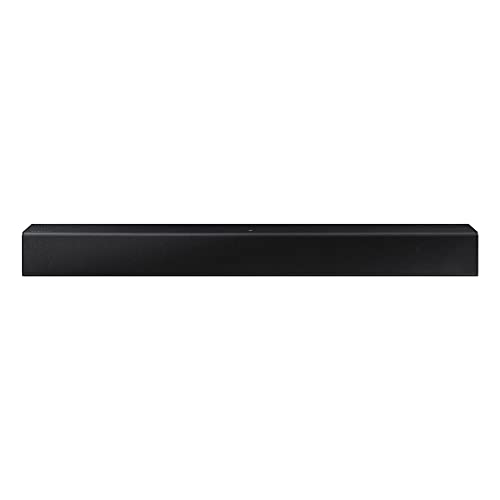
- C/T/N and TV Mate models: Models such as the HW-C400, HW-T400, and HW-N400 are simpler TV-audio upgrades. They usually sit closer to basic 2.0 playback, compact placement, and easy Bluetooth or ARC-style TV use depending on the model. They are better for small rooms or secondary TVs than for cinema-style sound.
The series name is useful, but it should not replace checking the exact model specs. Channel layout, ARC type, subwoofer inclusion, Atmos support, and Q-Symphony support can change significantly between two Samsung soundbars that look similar by name.
How much do Samsung soundbars cost?
Samsung soundbars cost about £45 to £550, with the main price jump coming from series tier, channel layout, subwoofer hardware, eARC, Dolby Atmos, and Q-Symphony support.
Entry models such as the HW-S40T, HW-S50A, HW-C400, and HW-T400 sit roughly around £45-£100. These are mainly simple 2.0 or 3.0 TV-audio upgrades, so the buyer is paying for basic sound improvement, Bluetooth, compact placement, and in some cases ARC or Q-Symphony rather than serious cinema hardware.
Midrange Samsung models such as the HW-S50B, HW-B650, HW-Q600B, and HW-S60B usually sit around £130-£260. This tier is where the range becomes more interesting: some models add 3.1 sound with a subwoofer, while others move toward 5.0 all-in-one playback or 3.1.2 Atmos with eARC.
Higher Samsung models such as the HW-S60A, HW-S60T, HW-N400, and HW-Q800B sit roughly around £300-£550. The Q800B is the clearest premium-style option here because it combines 5.1.2 channels, Atmos, eARC, Q-Symphony, and a subwoofer, while the S60 models are more about compact all-in-one design and Samsung TV integration.
How do Samsung soundbars compare with LG soundbars?
Samsung soundbars are usually a better fit than LG soundbars for Samsung TV owners who can use Q-Symphony, while LG soundbars make more sense for buyers focused on LG TV integration.
At the basic level, both brands cover the same core jobs: clearer TV dialogue, Bluetooth playback, ARC/eARC connection, and compact soundbar placement. The simpler Samsung C/T/N and S-series models compete most directly with LG compact and midrange all-in-one bars.
Samsung becomes more distinctive when Q-Symphony is available, because that feature is designed around compatible Samsung TVs. LG has its own TV-matching features, so the better brand often depends on the TV you already own rather than only the soundbar itself.
For movie-focused setups, compare Samsung Q-series models against LG advanced Atmos bars by channel layout, eARC, subwoofer hardware, and rear-speaker options. If those specs are close and you do not need brand-specific TV features, the better choice is usually the model with stronger channels, cleaner connection support, and better price for the exact room size.
What should you consider while choosing the best Samsung soundbar?
The main things to check while choosing the best Samsung soundbar are as follows.
- Series position: Use the series name to understand the design target first. S-series models are usually slim all-in-one bars, B-series models lean more toward affordable subwoofer-based setups, and Q-series models are the more cinema-focused Samsung choice. C/T/N and TV Mate models are better treated as simple TV-audio upgrades.
- Samsung TV features: Q-Symphony is relevant only on selected Samsung soundbars and only with compatible Samsung TVs. If you own a Samsung TV, check which exact models support it. If you do not, ignore it and compare the soundbar by its normal audio and connection specs.
- Channel layout: Samsung ranges from 2.0 and 3.0 models to 3.1, 3.1.2, 5.0, and 5.1.2 layouts. A 2.0 or 3.0 bar is mainly for speech and front-stage clarity, while Q600B and Q800B-style layouts are more relevant for Atmos, films, and games. Compare the exact layout before treating two Samsung bars as the same class.
- HDMI level: Basic Samsung models may have no ARC or standard ARC, while stronger models can add eARC. ARC is enough for simpler TV audio and remote-control convenience, but eARC is the better target for higher-bitrate formats and Atmos-oriented setups. This is one of the clearest separators between basic and serious Samsung soundbars.
- Subwoofer design: Samsung differs a lot here by series. Many S-series models are all-in-one bars, while B-series and Q-series models are more likely to use a separate wireless subwoofer. Choose based on whether you want cleaner placement or stronger bass hardware.
- Dolby Atmos support: Atmos appears on selected Samsung models such as Q-series and some stronger S-series options, but it is not universal. Atmos is most convincing when paired with a suitable channel layout and eARC, not when it is only a processing label. If height effects matter, check both Dolby Atmos and the channel layout together.
- Smart features: Wi-Fi, app control, voice assistants, and stronger wireless features are not evenly spread across the Samsung range. Premium Q-series and selected S-series models are much more complete here than the simpler bars, so compare smart-control level directly if music playback or app setup matters.