Scored using Smartphones Methodology v3.0
Smartphones Methodology v3.0
Mathematical & Unbiased Scoring
Products in this category are scored under Frontum Smartphones Methodology v3.0: the technical score from the specifications is the base, and independent expert and video reviews (up to ±0.5 points), owner opinions (up to ±0.3) and best-of lists (up to +0.3) move it up or down.
Explore Smartphones Methodology v3.0

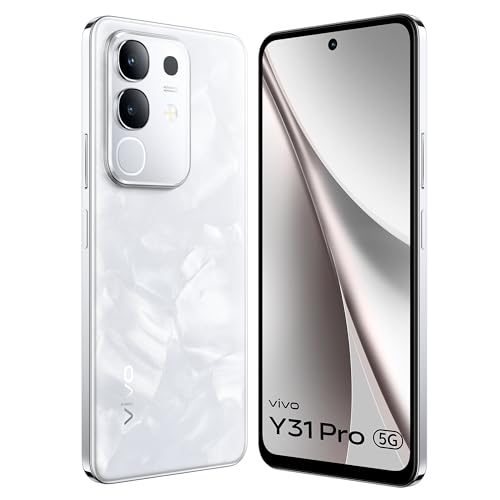
vivo Y31 Pro 5G (8GB + 256GB) review: 196 specs compared

Avg. price:~£260RAM capacity:8 GBInternal storage:256 GBScreen size:6.72 inchesMain camera megapixels:50 MP & 2 MP

vivo Y31 Pro 5G (8GB + 256GB) Review: Compare 196 technical specifications and 4 expert and video reviews to see how this product ranks in the Smartphones category and whether it is worth buying.
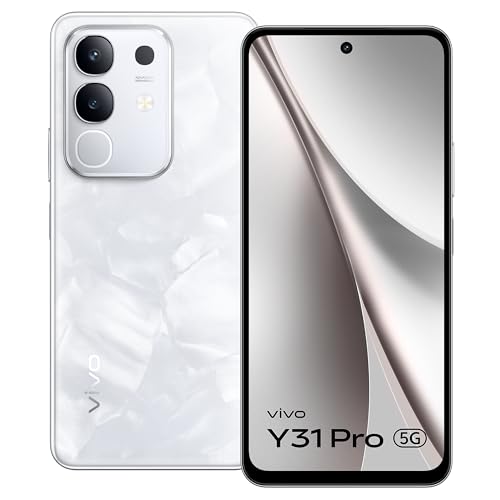
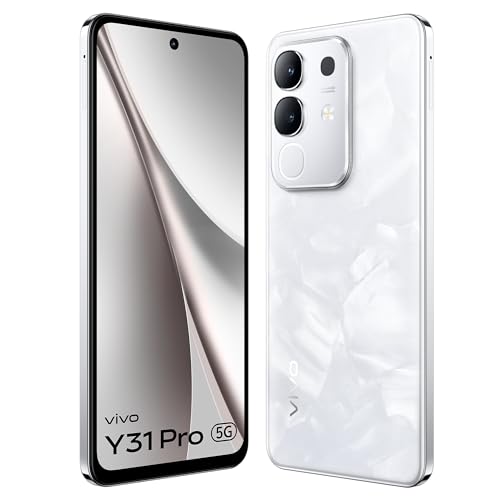
vivo Y31 Pro 5G (8GB + 256GB)
7.2/10

Overall score

Score
7.2/ 10
✕
What it is
Our main score for this model, 1–10. It combines specs, best-of lists, expert reviews and owners.
How we count it
Parts: Technical score 35%, List score 30%, Reviews score 25%, Sentiment score 10%
Marks: Each part gets a mark out of 10. For reviews, lists and owners, a typical model in this category gets about 8 and the best one gets 10.
No data yet: A part with no data shows "?". It counts as the mark of a weaker model in this category (4 in 5 models with data score higher). This way, models with reviews, lists and owners usually come out ahead.
Score distribution
â–¼
<55-66-77-88-99-10
Score components

35%

7.1

Technical score

30%

?

List scoreNot enough data yet, so we use 7.5, the mark of a weaker model in this category

25%

7.1

Reviews score

10%

6.4

Sentiment score

â–¼Worse than 56% of smartphones
7.8

Value for money

Value for money
7.8/ 10
✕
What it is
An indicator that combines the smartphone's overall rating with its cost.
When it matters
When you are looking for a smartphone with a good balance between quality and price.
Score distribution
â–¼
<55-66-77-88-99-10
Score components

70%

7.2

Overall score

30%

9.2

Price

â–²Better than 59%
7.1

Technical score

Technical score
7.1/ 10
✕
What it is
How good the specs are compared with the other models in this category, 1–10.
How we count it
Areas: We rate the specs in each area against the other models in this category.
Weighting: The areas that matter most to buyers count more. The shares are shown under Score components.
Share: The technical score is 35% of the overall score.
Score distribution
â–¼
<55-66-77-88-99-10
Score components

25%

6.7

Performance

18%

6.7

Camera

15%

6.6

Display

15%

7.1

Battery

10%

9.7

Software

10%

7.1

Connectivity

4%

7.2

Audio

3%

7.1

Design

â–²Better than 62%
7.1

Reviews score

Reviews score
7.1/ 10
✕
What it is
Average grade from independent test sites, magazines and video reviewers, 1–10.
How we count it
Grades: Each review's own score is converted to 1–10; without one, we grade the review ourselves. Big test sites count more, short reviews half as much as full tests. A video review counts half.
Score: The average grade is 80% of the review mark; the number of reviews is the other 20% (1 review = 5, the typical number in this category = 8, the most-reviewed model = 10).
Enough data: With few reviews, the average grade is pulled toward the typical grade of this category. No reviews yet: 7.5 for now.
Share: Reviews count 25% of the overall score.
Score distribution
â–¼
<55-66-77-88-99-10

7.1

Mark 7.4 is below the typical mark 7.9 of this category, so it cannot lift the score above the technical score

80%

7.6

Average grade

20%

6.4

Popularity

Grades by review (4)
4 video reviews, each counting half as much as a written test. Reviews count 25% of the overall score.
User ratings collected online are not part of this score.
â–¼Worse than 63%
?

List score

List score
7.5/ 10
✕
What it is
How often independent test sites, magazines and video reviewers put this model in their best-of lists for this category.
How we count it
Points: The model in the most lists of this category gets 10; the others get 8 to 10 in proportion. In no list yet: 7.5. Lists count 30% of the overall score.
Enough data: Every list counts, even a single one. With fewer than 5 best-of lists in the category, this part is left out.
Lists with this model (0)
Not in any best-of list yet, so this part counts as 7.5. Models in a list get 8 to 10.
Not in any best-of list yet
  • vivo-y31-pro-5g-8gb-256gb
  • vivo-y31-pro-5g-8gb-256gb
  • vivo-y31-pro-5g-8gb-256gb
  • vivo-y31-pro-5g-8gb-256gb
  • vivo-y31-pro-5g-8gb-256gb
  • vivo-y31-pro-5g-8gb-256gb
  • vivo-y31-pro-5g-8gb-256gb
vivo-y31-pro-5g-8gb-256gb
Where to buy
*As an Amazon Associate, we earn from qualifying purchases.
Available versions:

What reviewers say about the vivo Y31 Pro 5G (8GB + 256GB)

Based on 0 · 4

Reviewers agree the battery and charging impress and photos look good, but the selfie camera consistently disappoints.
Praised
Criticised
Pick a topic to see who said what

What owners say about the vivo Y31 Pro 5G (8GB + 256GB)

Based on 18 owners sharing their experience in online comments

28%positive16%mixed56%negative

Owners appreciate gaming performance, battery, network and back camera, but most often criticize weak cameras and poor value for money.

What owners dislike

  • Owners call the front camera poor, with an 8MP sensor, and say camera quality is generally weak.6
  • Owners say it has the same features as the cheaper Vivo T4x, which has an AMOLED display, so the price is hard to justify.4

Points mentioned by at least 3 owners, most mentioned first.

Loading...
Loading category ranking...

Technical Specifications of smartphone vivo Y31 Pro 5G (8GB + 256GB)

Technical score
Technical score
7.1/ 10
✕
What it is
How good the specs are compared with the other models in this category, 1–10.
How we count it
Areas: We rate the specs in each area against the other models in this category.
Weighting: The areas that matter most to buyers count more. The shares are shown under Score components.
Share: The technical score is 35% of the overall score.
Score distribution
â–¼
<55-66-77-88-99-10
Score components:

25%

6.7

Performance

18%

6.7

Camera

15%

6.6

Display

15%

7.1

Battery

10%

9.7

Software

10%

7.1

Connectivity

4%

7.2

Audio

3%

7.1

Design

7.1
Reviews score
7.1
List score
?
Value for money
Value for money
7.8/ 10
✕
What it is
An indicator that combines the smartphone's overall rating with its cost.
When it matters
When you are looking for a smartphone with a good balance between quality and price.
Score distribution
â–¼
<55-66-77-88-99-10
Score components:

70%

7.2

Overall score

30%

9.2

Price

7.8
Processor model
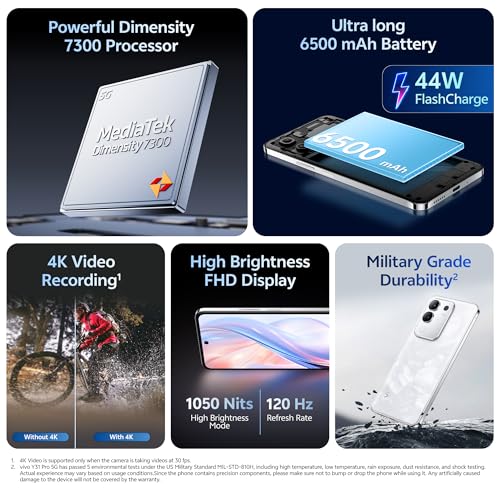
MediaTek Dimensity 7300
This smartphone uses the MediaTek Dimensity 7300 processor which is faster than processors in 58.7% of smartphones and equal to processors in 1.1% of smartphones.
Storage type
?
RAM capacity
8 GB
This smartphone has a RAM capacity of 8 GB which is larger than the RAM capacity of 28.7% of smartphones and equal to that of 30.5% of smartphones.
Internal storage
256 GB
This smartphone has an internal storage capacity of 256 GB which is larger than the storage of 38.9% of smartphones and equal to that of 38.4% of smartphones.
CPU boost clock speed
2.5 GHz
The CPU boost clock speed of this smartphone is 2.5 GHz which is higher than the boost speed of 51.1% of smartphones and equal to that of 6.1% of smartphones.
Show more
Operating system
Android
This smartphone runs Android, which is more mainstream than the system in 4.8% of smartphones and the same as in 95.2% of smartphones.
Android 15 (Funtouch OS 15)
Android version
Android 15
This smartphone runs Android version Android 15 which is newer than that found in 70.5% of smartphones and equal to that in 25% of smartphones.
Direct OS updates
yes
This smartphone receives direct OS updates. 20.1% of smartphones receive direct updates.
Promised software updates
?
Open-source OS
yes
This smartphone runs an open-source operating system. 5.2% of smartphones offer this.
Show more
Multi-lens main camera
yes
This smartphone includes a multi-lens main camera system. 93.7% of smartphones include multi-lens setups.
Main camera megapixels
50 MP & 2 MP
This smartphone has a main camera resolution of 50 MP & 2 MP which is lower than that of 57.6% of smartphones and equal to that of 12.9% of smartphones.
Main camera aperture
f/1.8 & f/2.4
This smartphone has a main camera aperture of f/1.8 & f/2.4 which is narrower than that of 58% of smartphones and equal to that of 12.5% of smartphones.
Main camera sensor area
?
Main camera pixel size
?
Show more
What reviewers say
Number of SIM slots
2
This smartphone has 2 SIM slots, which is more than in 3.7% of smartphones and equal to the number in 96.2% of smartphones.
2 Nano-SIMs (Dual SIM dual standby)
Cellular module
yes
This smartphone includes a cellular module. 100% of smartphones include cellular modules.
eSIM support
?
5G connectivity
yes
This smartphone supports 5G connectivity. 66.6% of smartphones support 5G.
LTE support
yes
This smartphone supports LTE. 99.7% of smartphones include LTE connectivity.
Show more
Screen size
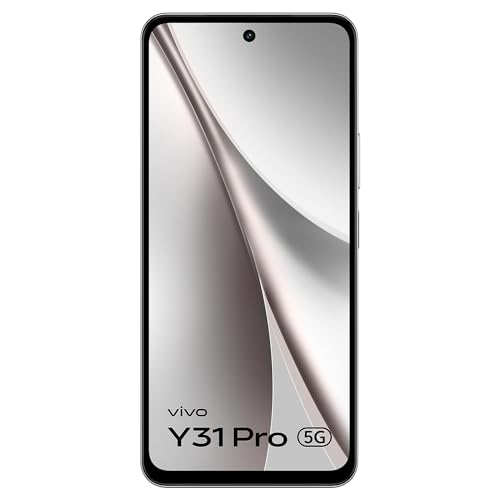
6.72 inches
This smartphone has a screen size of 6.72 inches which is larger than the screens of 62.2% of smartphones and equal to those of 2.3% of smartphones.
Screen resolution
1080x 2408 px
This smartphone has a screen resolution of 1080x2408 px which is higher than that of 56.9% of smartphones and equal to that of 4.2% of smartphones.
Pixel density
393 ppi
This smartphone has a pixel density of 393 ppi which is lower than that of 60.5% of smartphones and equal to that of 2.8% of smartphones.
Display type
IPS LCD
This smartphone uses a IPS LCD display type. 0% of smartphones use this display technology.
Refresh rate
120 Hz
This smartphone supports a refresh rate of 120 Hz which is higher than in 34.4% of smartphones and equal to that in 55.6% of smartphones.
Show more
Battery capacity
6,500 mAh
This smartphone has a battery capacity of 6,500 mAh which is larger than the batteries in 82.3% of smartphones and equal to those in 2.6% of smartphones.
Charging speed
44 W
This smartphone supports charging speeds of 44 W which is faster than in 54.5% of smartphones and equal to speeds in 2.6% of smartphones.
Fast charging
yes
This smartphone supports fast charging. 93.2% of smartphones support fast charging.
GSMArena full wired charge time
?
Wireless charging
no
This smartphone does not support wireless charging. 25.1% of smartphones support wireless charging.
Show more
What reviewers say
Stereo speakers
yes
This smartphone includes stereo speakers. 64.3% of smartphones provide stereo audio.
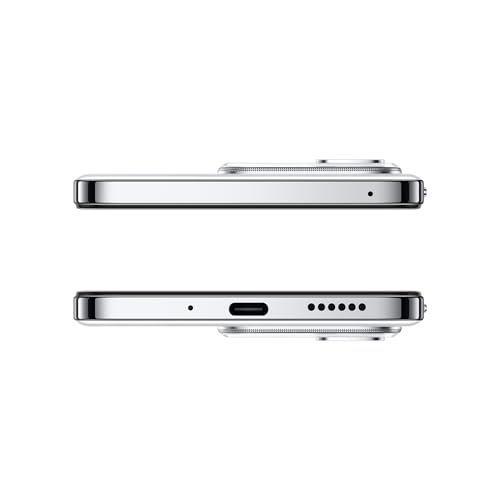
3.5 mm headphone jack
no
This smartphone does not have a headphone jack. 45.1% of smartphones offer this.
Number of microphones
?
FM radio
no
This smartphone does not have an FM radio. 34.3% of smartphones offer this.
aptX Lossless
no
This smartphone does not support aptX Lossless Bluetooth audio. 12.5% of smartphones offer this.
Show more
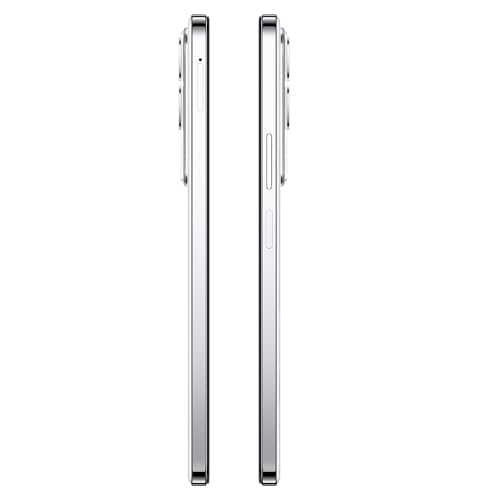
Height
165.7 mm
This smartphone has a height of 165.7 mm which is taller than 71.7% of smartphones and equal to that of 1.7% of smartphones.
Width
76.3 mm
This smartphone has a width of 76.3 mm which is wider than 58% of smartphones and equal to that of 1.9% of smartphones.
Thickness
8.09 mm
This smartphone has a thickness of 8.09 mm which is thinner than 63.3% of smartphones and equal to that of 0.3% of smartphones.
Weight
204 g
This smartphone weighs 204 g which is heavier than 64.2% of smartphones and equal to the weight of 1.3% of smartphones.
Device volume
102 cm³
This smartphone has a device volume of 102 cm³ which is smaller than 49.3% of smartphones and equal to that of 3.4% of smartphones.
Show more

vivo Y31 Pro 5G (8GB + 256GB) vs the average smartphone

246810TotalPerformanceSoftwareCameraConnectivityDisplayBatteryAudioDesign
  • 30% larger battery capacity
    This smartphone has a larger battery capacity than the average smartphone (6,500 mAh vs 5,000 mAh). The average smartphone battery is 5,000 mAh.
    6,500 mAh vs 5,000 mAh
  • Direct OS updates
    This smartphone supports direct OS updates, the average smartphone does not. 20.1% of smartphones support this feature.
  • 33.3% smaller process node
    This smartphone uses a smaller process node than the average smartphone (4 nm vs 6 nm). The average process node size is 6 nm.
    4 nm vs 6 nm
  • Supports HDR10+ support
    This smartphone supports HDR10+, the average smartphone does not. 22.4% of smartphones include HDR10+ support.
  • Supports RAW photo capture
    This smartphone supports RAW photo capture, the average smartphone does not. 37.3% of smartphones allow RAW files.
  • Includes cross-site tracking protection
    This smartphone supports cross-site tracking prevention, the average smartphone does not. 31.9% of smartphones include this feature.
  • Has an always-on display
    This smartphone features an always-on display, the average smartphone does not. 49.1% of smartphones offer always-on functionality.
  • Supports motion tracking
    This smartphone supports motion tracking, the average smartphone does not. 21.7% of smartphones offer motion tracking capabilities.
  • 33.3% smaller process node
    This smartphone uses a smaller process node than the average smartphone (4 nm vs 6 nm). The average process node size is 6 nm.
    4 nm vs 6 nm
  • Higher CPU base clock speed
    This smartphone has a higher CPU base clock speed than the average smartphone (4x2.5 GHz & 4x2 GHz vs 2x2.2 GHz & 6x2 GHz). The average smartphone has a base clock speed of 2x2.2 GHz & 6x2 GHz.
    4x2.5 GHz & 4x2 GHz vs 2x2.2 GHz & 6x2 GHz
  • 2x more L1
    This smartphone has more L1 cache than the average smartphone (64 KB vs 32 KB). The average L1 cache is 32 KB.
    64 KB vs 32 KB
  • 1 year/s newer release date
    This smartphone has a newer release date than the average smartphone (2025 vs 2024). 1.00% of smartphones are released annually.
    September 2025
    2025 vs 2024
  • 4.2% higher CPU boost clock speed
    This smartphone has a higher CPU boost clock speed than the average smartphone (2.5 GHz vs 2.4 GHz). The average smartphone has a boost clock speed of 2.4 GHz.
    2.5 GHz vs 2.4 GHz
  • 6.5% higher Geekbench 6 single-core benchmark score
    This smartphone scores better in Geekbench 6 single-core than the average smartphone (1,003 vs 942). The average smartphone scores 942 in single-core.
    1,003 vs 942
  • Direct OS updates
    This smartphone supports direct OS updates, the average smartphone does not. 20.1% of smartphones support this feature.
  • Includes cross-site tracking protection
    This smartphone supports cross-site tracking prevention, the average smartphone does not. 31.9% of smartphones include this feature.
  • Supports fast boot
    This smartphone supports fast boot, the average smartphone does not. 22.1% of smartphones include fast boot capabilities.
  • Newer Android version
    This smartphone features a newer Android version than the average smartphone (Android 15 vs Android 14). The average version is Android 14.
    Android 15 vs Android 14
  • Supports RAW photo capture
    This smartphone supports RAW photo capture, the average smartphone does not. 37.3% of smartphones allow RAW files.
  • Allows manual shutter speed
    This smartphone allows manual shutter speed control, the average smartphone does not. 29.5% of smartphones include this.
  • Wider front camera aperture
    This smartphone has a wider front camera aperture than the average smartphone (f/2.05 vs f/2.2). The average aperture is f/2.2.
    2.05
    f/2.05 vs f/2.2
  • Supports motion tracking
    This smartphone supports motion tracking, the average smartphone does not. 21.7% of smartphones offer motion tracking capabilities.
  • Newer Bluetooth version
    This smartphone supports a newer Bluetooth version than the average smartphone (5.4 vs 5.2). The average version is Bluetooth 5.2.
    5.4 vs 5.2
  • Newer Wi-Fi version
    This smartphone has more advanced Wi-Fi than the average smartphone (Wi-Fi 6 (802.11ax), Wi-Fi 5 (802.11ac), Wi-Fi 4 (802.11n) vs Wi-Fi 5 (802.11ac), Wi-Fi 4 (802.11n)).
    Wi-Fi 6 (802.11ax), Wi-Fi 5 (802.11ac), Wi-Fi 4 (802.11n) vs Wi-Fi 5 (802.11ac), Wi-Fi 4 (802.11n)
  • Has an infrared sensor
    This smartphone includes an infrared sensor, the average smartphone does not. 33.4% of smartphones feature an IR blaster.
  • Supports HDR10+ support
    This smartphone supports HDR10+, the average smartphone does not. 22.4% of smartphones include HDR10+ support.
  • Has an always-on display
    This smartphone features an always-on display, the average smartphone does not. 49.1% of smartphones offer always-on functionality.
  • 0.05 inches inch larger screen size
    This smartphone has a larger screen size than the average smartphone (6.7 inches vs 6.67 inches). The average smartphone screen is 6.67 inches.
    6.72 inches vs 6.67 inches
  • Higher screen resolution
    This smartphone has a higher screen resolution than the average smartphone (1080x2408 px vs 1080x2400 px). The average smartphone resolution is 1080x2400 px.
    1080x2408 px vs 1080x2400 px
  • 30% larger battery capacity
    This smartphone has a larger battery capacity than the average smartphone (6,500 mAh vs 5,000 mAh). The average smartphone battery is 5,000 mAh.
    6,500 mAh vs 5,000 mAh
  • 33.3% faster charging speed
    This smartphone supports a faster charging speed than the average smartphone (44 W vs 33 W). The average charging speed is 33 W.
    44 W vs 33 W
  • 0.21 mm thinner
    This smartphone is thinner than the average smartphone (8.1 mm vs 8.3 mm). The average smartphone thickness is 8.3 mm.
    8.09 mm vs 8.3 mm
  • Inferior display type
    This smartphone has an inferior display type compared to the average smartphone (IPS LCD vs OLED/AMOLED). 0.00% of smartphones use the superior display type.
    IPS LCD vs OLED/AMOLED
  • No ultrawide rear camera
    This smartphone does not have an ultrawide rear camera, while the average smartphone does. 62.6% of smartphones offer this.
  • Narrower main camera aperture
    This smartphone has a narrower main camera aperture than the average smartphone (f/1.8 & f/2.4 vs f/1.8 & f/2.2 & f/2.4 & f/2.4). The average smartphone aperture is f/1.8 & f/2.2 & f/2.4 & f/2.4.
    f/1.8 & f/2.4 vs f/1.8 & f/2.2 & f/2.4 & f/2.4
  • No NFC
    This smartphone does not support NFC, the average smartphone does. 83.3% of smartphones feature NFC.
  • No memory card slot
    This smartphone does not have a memory card slot, the average smartphone does. 53.7% of smartphones feature expandable storage.
  • 42.9% lower maximum RAM capacity
    This smartphone supports less maximum RAM than the average smartphone (8 GB vs 14 GB). The average smartphone supports 14 GB of RAM.
    8 GB vs 14 GB
  • Lower front camera megapixels
    This smartphone has lower front camera megapixels than the average smartphone (8 MP vs 16 MP). The average smartphone has a 16 MP front camera.
    8 MP vs 16 MP
  • 22.4% slower memory speed
    This smartphone has a lower memory speed than the average smartphone (2,133 MHz vs 2,750 MHz). The average smartphone has a memory speed of 2,750 MHz.
    2,133 MHz vs 2,750 MHz
  • 17.9% lower sentiment score
    6.4 vs 7.8
  • 2.7% lower review score
    Reviews score
    7.1/ 10
    ✕
    What it is
    Average grade from independent test sites, magazines and video reviewers, 1–10.
    How we count it
    Grades: Each review's own score is converted to 1–10; without one, we grade the review ourselves. Big test sites count more, short reviews half as much as full tests. A video review counts half.
    Score: The average grade is 80% of the review mark; the number of reviews is the other 20% (1 review = 5, the typical number in this category = 8, the most-reviewed model = 10).
    Enough data: With few reviews, the average grade is pulled toward the typical grade of this category. No reviews yet: 7.5 for now.
    Share: Reviews count 25% of the overall score.
    Score distribution
    â–¼
    <55-66-77-88-99-10

    7.1

    Mark 7.4 is below the typical mark 7.9 of this category, so it cannot lift the score above the technical score

    80%

    7.6

    Average grade

    20%

    6.4

    Popularity

    Grades by review (4)
    4 video reviews, each counting half as much as a written test. Reviews count 25% of the overall score.
    User ratings collected online are not part of this score.
    7.1 vs 7.3
  • 42.9% lower maximum RAM capacity
    This smartphone supports less maximum RAM than the average smartphone (8 GB vs 14 GB). The average smartphone supports 14 GB of RAM.
    8 GB vs 14 GB
  • 22.4% slower memory speed
    This smartphone has a lower memory speed than the average smartphone (2,133 MHz vs 2,750 MHz). The average smartphone has a memory speed of 2,750 MHz.
    2,133 MHz vs 2,750 MHz
  • Worse processor
    This smartphone uses a worse processor than the average smartphone (MediaTek Dimensity 7300 vs Qualcomm Snapdragon 7 Gen 3).
    MediaTek Dimensity 7,300 vs Qualcomm Snapdragon 7 Gen 3
  • 30.5% lower 3DMark Wild Life Extreme benchmark
    This smartphone scores lower in 3DMark Wild Life Extreme than the average smartphone (851 vs 1,224.5). The average smartphone scores 1,224.5.
    851 vs 1,224.5
  • No ultrawide rear camera
    This smartphone does not have an ultrawide rear camera, while the average smartphone does. 62.6% of smartphones offer this.
  • Narrower main camera aperture
    This smartphone has a narrower main camera aperture than the average smartphone (f/1.8 & f/2.4 vs f/1.8 & f/2.2 & f/2.4 & f/2.4). The average smartphone aperture is f/1.8 & f/2.2 & f/2.4 & f/2.4.
    f/1.8 & f/2.4 vs f/1.8 & f/2.2 & f/2.4 & f/2.4
  • Lower front camera megapixels
    This smartphone has lower front camera megapixels than the average smartphone (8 MP vs 16 MP). The average smartphone has a 16 MP front camera.
    8 MP vs 16 MP
  • Lower-resolution main camera
    This smartphone has a lower-resolution main camera than the average smartphone (50 MP & 2 MP vs 50 MP & 8 MP). The average smartphone has a 50 MP & 8 MP main camera.
    50 MP & 2 MP vs 50 MP & 8 MP
  • No NFC
    This smartphone does not support NFC, the average smartphone does. 83.3% of smartphones feature NFC.
  • No memory card slot
    This smartphone does not have a memory card slot, the average smartphone does. 53.7% of smartphones feature expandable storage.
  • Inferior display type
    This smartphone has an inferior display type compared to the average smartphone (IPS LCD vs OLED/AMOLED). 0.00% of smartphones use the superior display type.
    IPS LCD vs OLED/AMOLED
  • 0.5% lower pixel density
    This smartphone has a lower pixel density than the average smartphone (393 ppi vs 395 ppi). The average smartphone has a pixel density of 395 ppi.
    393 ppi vs 395 ppi
  • Lower IP rating
    This smartphone has a lower IP rating than the average smartphone (IP64 vs IP67). 0.00% of smartphones have a higher IP rating.
    IP64 vs IP67
  • 4% heavier
    This smartphone is heavier than the average smartphone (204 g vs 196.2 g). The average smartphone weighs 196.2 g.
    204 g vs 196.2 g
  • 2.1 mm taller
    This smartphone is taller than the average smartphone (165.7 mm vs 163.6 mm). The average smartphone has a height of 163.6 mm.
    165.7 mm vs 163.6 mm
  • 0.3 mm wider
    This smartphone is wider than the average smartphone (76.3 mm vs 76 mm). The average smartphone has a width of 76 mm.
    76.3 mm vs 76 mm

Video reviews

Hands-on testing, unboxing, and real-world video evaluations

Not graded yet
Not graded yet
Not graded yet
Not graded yet
Not graded yet
Not graded yet
Not graded yet
Not graded yet
Not graded yet

Third-party reviews

What customers like about vivo Y31 Pro 5G (8GB + 256GB)

  • Extremely long-lasting 6,500 mAh battery capacity, which holds up well even with heavy use.
  • Fast charging capability with 44W FlashCharge, able to reach 50% charge in about 40 minutes.
  • Smooth and responsive performance for daily tasks, multitasking, and even mid-to-high-level gaming, powered by the MediaTek Dimensity 7300 processor.
  • Bright 6.72-inch Full HD+ display with a 120Hz refresh rate, offering excellent clarity and smooth visuals even in bright sunlight.
  • Good durability for its price segment, featuring an IP64 dust and splash resistance rating and MIL-STD-810H military-grade certification.
  • Ample RAM (8GB with up to 8GB extended RAM) and fast UFS 3.1 storage (128GB or 256GB options) for effortless multitasking and fast data transfers.
  • 50MP main rear camera captures clear and detailed photos in daylight conditions.
  • Enhanced audio experience with dual stereo speakers capable of 400% volume for loud media playback and ringtones.

What customers don't like about vivo Y31 Pro 5G (8GB + 256GB)

  • The camera system beyond the main 50MP sensor is basic, with a 2MP depth sensor that has limited utility and performs poorly in low light.
  • Some users report the 44W charging speed, while fast, is not top-tier compared to some competitors and still takes over an hour for a full charge.
  • Lack of a 3.5mm headphone jack.
  • Absence of NFC support.
  • Some reviewers find the Funtouch OS software to be somewhat bloated or laggy out of the box.

Verdict

The Vivo Y31 Pro 5G with 8GB RAM and 256GB storage is a mid-range smartphone featuring a 6.72-inch Full HD+ IPS LCD display with a 120 Hz refresh rate and 1050 nits peak brightness, powered by a 4nm MediaTek Dimensity 7300 processor. Key pros include a large 6,500mAh battery with 44W FlashCharge support for extended use, a capable 50MP main rear camera that can record 4K video at 30fps, dual stereo speakers, and an IP64 rating for dust and splash resistance. A notable con is that the display uses LCD technology, with some reviewers pointing out that AMOLED panels are often expected in this price range, and the front camera is a modest 8MP sensor.

Compare vivo Y31 Pro 5G (8GB + 256GB) with other smartphones

1Product to compare no. 1
VS
2Product to compare no. 2
VS
3Product to compare no. 3 (optional)

Graphic comparison of vivo Y31 Pro 5G (8GB + 256GB) and other smartphones

No results found