Scored using Smartphones Methodology v1.0
Smartphones Methodology v1.0
Mathematical & Unbiased Scoring
Products in this category are scored under Frontum Smartphones Methodology v1.0: technical specifications plus authentic consumer ratings, with 0% commercial bias.
Explore Smartphones Methodology v1.0

OUKITEL C61 4G (8GB + 256GB) Review | 197 Data compared

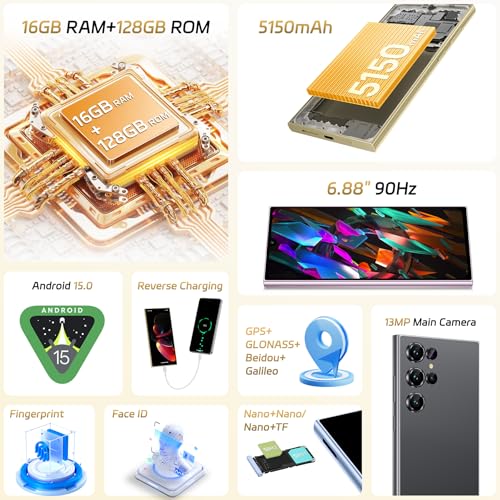
Avg. price:~£90RAM capacity:8 GBInternal storage:256 GBScreen size:6.88 inchesMain camera megapixels:13 MP & 5 MP

OUKITEL C61 4G (8GB + 256GB) Review: Compare 197 technical specifications and user reviews to see how this product ranks in the Smartphones category and whether it is worth buying.
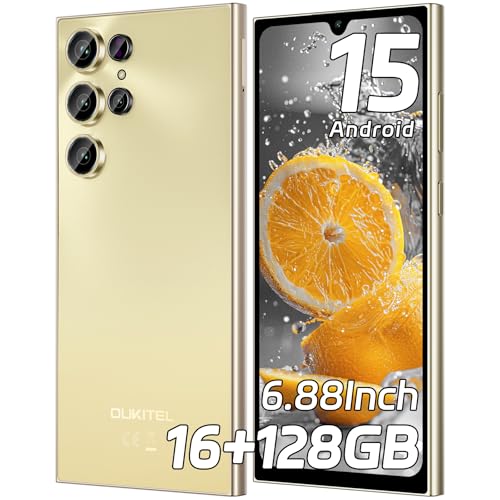
OUKITEL C61 4G (8GB + 256GB)
6.0/10

Overall score

Score
6.0/ 10
✕
What it is
An overall evaluation of the smartphone's quality, based on technical analyses and user reviews.
When it matters
When you need a quick reference to identify the best smartphones on the market.
Score distribution
â–¼
<55-66-77-88-99-10
Score components

90%

5.8

Technical score

10%

8.0

User score

â–¼Worse than 78% of smartphones
7.2

Value for money

Value for money
7.2/ 10
✕
What it is
An indicator that combines the smartphone's overall rating with its cost.
When it matters
When you are looking for a smartphone with a good balance between quality and price.
Score distribution
â–¼
<55-66-77-88-99-10
Score components

70%

6.0

Overall score

30%

10

Price

â–¼Worse than 64%
5.8

Technical score

Technical score
5.8/ 10
✕
What it is
An assessment of the smartphone's technical performance, covering eight key areas: performance & hardware, software, camera, connectivity, display, battery, audio, and design.
When it matters
When you want to compare smartphones based on technical performance and available features.
Score distribution
â–¼
<55-66-77-88-99-10
Score components

25%

6.1

Performance & Hardware

18%

5.4

Camera

15%

4.2

Display

15%

5.5

Battery

10%

8.9

Software

10%

6.9

Connectivity

4%

2.3

Audio

3%

6.5

Design

â–¼Worse than 80%
8.0

User score

User score
8.0/ 10
✕
What it is
A rating that combines user reviews and the total number of reviews received by the smartphone
When it matters
When you want to know how a smartphone handles daily tasks and how reliable it remains over time according to user feedback.
Score distribution
â–¼
<55-66-77-88-99-10
Score components

70%

8.2

User ratings

30%

7.6

Number of reviews

Based on ratings from across the web.
â–²Better than 67%
Loading...
Loading category ranking...

Technical Specifications of smartphone OUKITEL C61 4G (8GB + 256GB)

Technical score
Technical score
5.8/ 10
✕
What it is
An assessment of the smartphone's technical performance, covering eight key areas: performance & hardware, software, camera, connectivity, display, battery, audio, and design.
When it matters
When you want to compare smartphones based on technical performance and available features.
Score distribution
â–¼
<55-66-77-88-99-10
Score components:

25%

6.1

Performance & Hardware

18%

5.4

Camera

15%

4.2

Display

15%

5.5

Battery

10%

8.9

Software

10%

6.9

Connectivity

4%

2.3

Audio

3%

6.5

Design

5.8
User score
User score
8.0/ 10
✕
What it is
A rating that combines user reviews and the total number of reviews received by the smartphone
When it matters
When you want to know how a smartphone handles daily tasks and how reliable it remains over time according to user feedback.
Score distribution
â–¼
<55-66-77-88-99-10
Score components

70%

8.2

User ratings

30%

7.6

Number of reviews

Based on ratings from across the web.
8.0
Popularity
Popularity
7.6/ 10
✕
What it is
An indicator based on the number of reviews received by the smartphone.
When it matters
When you prefer to purchase a product chosen and reviewed by many other consumers.
Score distribution
â–¼
<55-66-77-88-99-10
Popularity:
OUKITEL C61 4G (8GB + 256GB) has a popularity of 7.6 points, which is higher than 70.5% of smartphones.
7.6
Value for money
Value for money
7.2/ 10
✕
What it is
An indicator that combines the smartphone's overall rating with its cost.
When it matters
When you are looking for a smartphone with a good balance between quality and price.
Score distribution
â–¼
<55-66-77-88-99-10
Score components:

70%

6.0

Overall score

30%

10

Price

7.2
Brand name
OUKITEL
Processor model
Unisoc T615
This smartphone uses the Unisoc T615 processor model which is slower than processors in 84.1% of smartphones and equal to processors in 0.4% of smartphones.
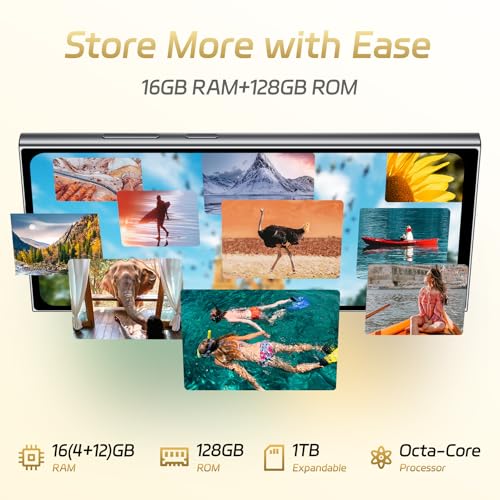
RAM capacity
8 GB
This smartphone has a RAM capacity of 8 GB which is larger than the RAM capacity of 28.5% of smartphones and equal to that of 30.4% of smartphones.
up to 16 GB with virtual expansion
Internal storage
256 GB
This smartphone has an internal storage capacity of 256 GB which is larger than the storage of 38.8% of smartphones and equal to that of 38.3% of smartphones.
CPU boost clock speed
1.8 GHz
The CPU boost clock speed of this smartphone is 1.8 GHz which is lower than the boost speed of 92.9% of smartphones and equal to that of 2% of smartphones.
Show more
Operating system
Android
This smartphone uses the Android operating system, which outperforms that of 1%.
Android 15
Android version
Android 15
This smartphone runs Android version Android 15 which is newer than that found in 70.6% of smartphones and equal to that in 25.1% of smartphones.
Direct OS updates
yes
This smartphone receives direct OS updates. 20.6% of smartphones receive direct updates.
Open-source OS
yes
This smartphone uses an open-source OS. 94.6% of smartphones use an open-source OS.
Dark mode
yes
This smartphone offers dark mode. 95.8% of smartphones support this feature.
Show more
Multi-lens main camera
no
This smartphone does not include a multi-lens main camera system. 93.7% of smartphones include multi-lens setups.
Main camera megapixels
13 MP & 5 MP
This smartphone has a main camera resolution of 13 MP & 5 MP which is lower than that of 88.4% of smartphones and equal to that of 0.4% of smartphones.
Main camera aperture
f/2.2
This smartphone has a main camera aperture of f/2.2 which is narrower than that of 96.9% of smartphones and equal to that of 3.1% of smartphones.
Main camera sensor area
?
Main camera pixel size
?
Show more
Number of SIM slots
2
This smartphone has 2 SIM slots, which is more than in 3.8% of smartphones and equal to the number in 96.1% of smartphones.
2 SIM (Nano + Nano, shared with microSD)
Cellular module
yes
This smartphone includes a cellular module. 100% of smartphones include cellular modules.
5G connectivity
no
This smartphone does not support 5G connectivity. 66.9% of smartphones support 5G.
LTE support
yes
This smartphone supports LTE. 99.7% of smartphones include LTE connectivity.
Wi-Fi connectivity
yes
This smartphone supports Wi-Fi connectivity. 100% of smartphones offer Wi-Fi support.
Show more
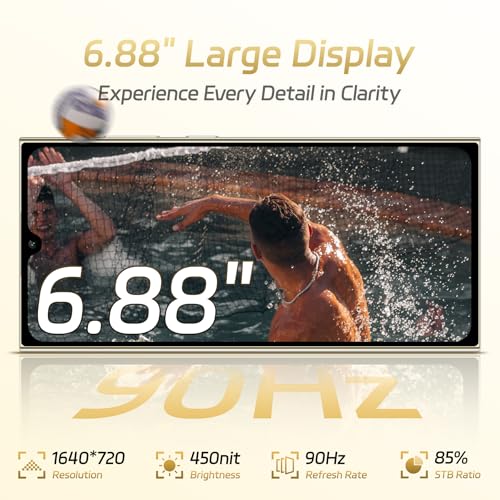
Screen size
6.88 inches
This smartphone has a screen size of 6.88 inches which is larger than the screens of 92.4% of smartphones and equal to those of 1.3% of smartphones.
Screen resolution
720x 1640 px
This smartphone has a screen resolution of 720x1640 px which is lower than that of 77.2% of smartphones and equal to that of 1.6% of smartphones.
Pixel density
260 ppi
This smartphone has a pixel density of 260 ppi which is lower than that of 93.7% of smartphones and equal to that of 4.3% of smartphones.
Display type
IPS LCD
This smartphone uses a IPS LCD display type. 0% of smartphones use this display technology.
Refresh rate
90 Hz
This smartphone supports a refresh rate of 90 Hz which is lower than in 65.4% of smartphones and equal to that in 18.9% of smartphones.
Show more
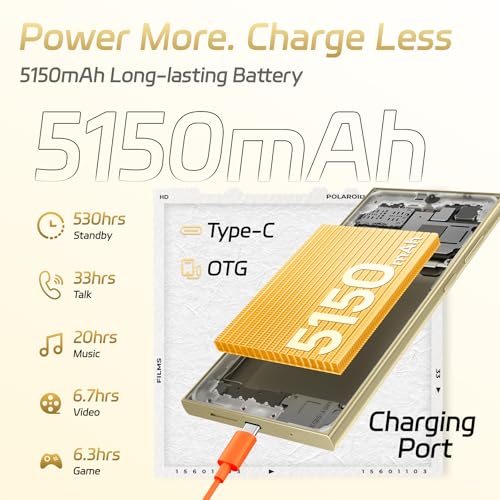
Battery capacity
5,150 mAh
This smartphone has a battery capacity of 5,150 mAh which is larger than the batteries in 61.9% of smartphones and equal to those in 0.9% of smartphones.
Charging speed
10 W
This smartphone supports charging speeds of 10 W which is slower than in 93.7% of smartphones and equal to speeds in 5.8% of smartphones.
Fast charging
no
This smartphone does not support fast charging. 93.1% of smartphones support fast charging.
GSMArena full wired charge time
?
Wireless charging
no
This smartphone does not support wireless charging. 25.2% of smartphones support wireless charging.
Show more
Stereo speakers
no
This smartphone does not include stereo speakers. 64.4% of smartphones provide stereo audio.
3.5 mm headphone jack
no
This smartphone does not include a 3.5 mm headphone jack. 45.5% of smartphones offer this port.
Number of microphones
?
FM radio
yes
This smartphone includes an FM radio. 34.2% of smartphones offer FM radio functionality.
aptX Lossless
no
This smartphone does not support aptX Lossless. 12.9% of smartphones provide aptX Lossless.
Show more
Height
170.7 mm
This smartphone has a height of 170.7 mm which is taller than 88.3% of smartphones and equal to that of 0.1% of smartphones.
Width
79.6 mm
This smartphone has a width of 79.6 mm which is wider than 88.4% of smartphones and equal to that of 0.3% of smartphones.
Thickness
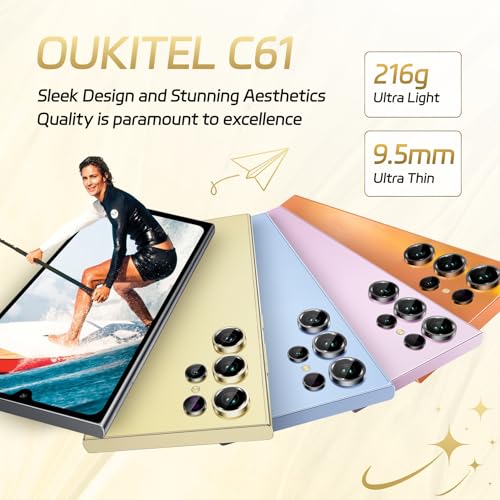
9.5 mm
This smartphone has a thickness of 9.5 mm which is thicker than 85.6% of smartphones and equal to that of 1% of smartphones.
Weight
216 g
This smartphone weighs 216 g which is heavier than 78.6% of smartphones and equal to the weight of 0.5% of smartphones.
Device volume
120,870 cm³
This smartphone has a device volume of 120,870 cm³ which is larger than 87.9% of smartphones and equal to that of 0.1% of smartphones.
Show more

OUKITEL C61 4G (8GB + 256GB) vs the average smartphone

246810TotalPerformance & HardwareSoftwareCameraConnectivityDisplayBatteryAudioDesign
  • Direct OS updates
    This smartphone supports direct OS updates, the average smartphone does not. 20.6% of smartphones support this feature.
  • 66.7% lower TDP
    This smartphone has a lower TDP than the average smartphone (10 W vs 6 W). The average TDP for smartphones is 6 W.
    10 W vs 6 W
  • 0.21 inches inch larger screen size
    This smartphone has a larger screen size than the average smartphone (6.9 inches vs 6.67 inches). The average smartphone screen is 6.67 inches.
    6.88 inches vs 6.67 inches
  • Supports reverse wireless charging
    This smartphone supports reverse wireless charging, the average smartphone does not. 23.6% of smartphones offer reverse wireless charging.
  • 2x more L2 cache
    This smartphone has more L2 cache than the average smartphone (2048 KB vs 1024 KB). The average L2 cache is 1024 KB.
    2,048 KB vs 1,024 KB
  • Includes cross-site tracking protection
    This smartphone supports cross-site tracking prevention, the average smartphone does not. 32.2% of smartphones include this feature.
  • Supports 360° panorama
    This smartphone can capture 360° panoramas, the average smartphone cannot. 25.2% of smartphones support 360° panoramas.
  • 3% larger battery capacity
    This smartphone has a larger battery capacity than the average smartphone (5150 mAh vs 5000 mAh). The average smartphone battery is 5000 mAh.
    5,150 mAh vs 5,000 mAh
  • 2.89x cheaper
    OUKITEL C61 4G (8GB + 256GB) is cheaper than the average smartphone (£90 vs £260).
    £90 vs £260
  • 0.2% higher user score
    User score
    8.0/ 10
    ✕
    What it is
    A rating that combines user reviews and the total number of reviews received by the smartphone
    When it matters
    When you want to know how a smartphone handles daily tasks and how reliable it remains over time according to user feedback.
    Score distribution
    â–¼
    â–¼
    <55-66-77-88-99-10
    OUKITEL C61 4G
    the average smartphone
    OUKITEL C61 4G (8GB + 256GB) has a higher user score than the average smartphone (8.02 vs 8.000).
    8.02 vs 8
  • 40% more popular
    OUKITEL C61 4G (8GB + 256GB) is more popular than the average smartphone (7.61 vs 5.4).
    7.61 vs 5.44
  • 66.7% lower TDP
    This smartphone has a lower TDP than the average smartphone (10 W vs 6 W). The average TDP for smartphones is 6 W.
    10 W vs 6 W
  • 2x more L2 cache
    This smartphone has more L2 cache than the average smartphone (2048 KB vs 1024 KB). The average L2 cache is 1024 KB.
    2,048 KB vs 1,024 KB
  • 14.3% higher maximum RAM
    This smartphone supports more maximum RAM than the average smartphone (16 GB vs 14 GB). The average smartphone supports 14 GB RAM.
    16 GB vs 14 GB
  • 2x more L1
    This smartphone has more L1 cache than the average smartphone (64 KB vs 32 KB). The average L1 cache is 32 KB.
    64 KB vs 32 KB
  • Direct OS updates
    This smartphone supports direct OS updates, the average smartphone does not. 20.6% of smartphones support this feature.
  • Includes cross-site tracking protection
    This smartphone supports cross-site tracking prevention, the average smartphone does not. 32.2% of smartphones include this feature.
  • Supports fast boot
    This smartphone supports fast boot, the average smartphone does not. 22.6% of smartphones include fast boot capabilities.
  • Newer Android version
    This smartphone features a newer Android version than the average smartphone (Android 15 vs Android 14). The average version is Android 14.
    Android 15 vs Android 14
  • Supports 360° panorama
    This smartphone can capture 360° panoramas, the average smartphone cannot. 25.2% of smartphones support 360° panoramas.
  • Allows manual shutter speed
    This smartphone allows manual shutter speed control, the average smartphone does not. 29.8% of smartphones include this.
  • 0.21 inches inch larger screen size
    This smartphone has a larger screen size than the average smartphone (6.9 inches vs 6.67 inches). The average smartphone screen is 6.67 inches.
    6.88 inches vs 6.67 inches
  • Supports reverse wireless charging
    This smartphone supports reverse wireless charging, the average smartphone does not. 23.6% of smartphones offer reverse wireless charging.
  • 3% larger battery capacity
    This smartphone has a larger battery capacity than the average smartphone (5150 mAh vs 5000 mAh). The average smartphone battery is 5000 mAh.
    5,150 mAh vs 5,000 mAh
  • Has FM radio
    This smartphone features an FM radio, the average smartphone does not. 34.2% of smartphones include an FM tuner.
  • 1 year/s newer release date
    This smartphone has a newer release date than the average smartphone (2025 vs 2024). 1.00% of smartphones are released annually.
    May 2025
    2025 vs 2024
  • Worse processor
    This smartphone uses a worse processor than the average smartphone (Unisoc T615 vs Qualcomm Snapdragon 7 Gen 3).
    Unisoc T615 vs Qualcomm Snapdragon 7 Gen 3
  • Narrower main camera aperture
    This smartphone has a narrower main camera aperture than the average smartphone (f/2.2 vs f/1.8 & f/2.2 & f/2.4 & f/2.4). The average smartphone aperture is f/1.8 & f/2.2 & f/2.4 & f/2.4.
    f/2.2 vs f/1.8 & f/2.2 & f/2.4 & f/2.4
  • Inferior display type
    This smartphone has an inferior display type compared to the average smartphone (IPS LCD vs OLED/AMOLED). 0.00% of smartphones use the superior display type.
    IPS LCD vs OLED/AMOLED
  • No 5G connectivity
    This smartphone does not support 5G connectivity, the average smartphone does. 66.9% of smartphones are 5G compatible.
  • 2x larger process node
    This smartphone is manufactured on a larger process node than the average smartphone (12 nm vs 6 nm). The average smartphone uses a 6 nm process.
    12 nm vs 6 nm
  • Worse main camera video quality
    This smartphone records worse main camera video than the average smartphone. 11.80x of smartphones support 4K video recording.
    1080x30 fps vs 2160x30 fps
  • 25% lower refresh rate
    This smartphone has a lower refresh rate than the average smartphone (90 Hz vs 120 Hz). The average smartphone has a refresh rate of 120 Hz.
    90 Hz vs 120 Hz
  • 34.2% lower pixel density
    This smartphone has a lower pixel density than the average smartphone (260 ppi vs 395 ppi). The average smartphone has a pixel density of 395 ppi.
    260 ppi vs 395 ppi
  • 1.6% worse value for money
    OUKITEL C61 4G (8GB + 256GB) has worse value for money than the average smartphone (7.22 vs 7.3).
    7.22 vs 7.34
  • Worse processor
    This smartphone uses a worse processor than the average smartphone (Unisoc T615 vs Qualcomm Snapdragon 7 Gen 3).
    Unisoc T615 vs Qualcomm Snapdragon 7 Gen 3
  • 2x larger process node
    This smartphone is manufactured on a larger process node than the average smartphone (12 nm vs 6 nm). The average smartphone uses a 6 nm process.
    12 nm vs 6 nm
  • 25% lower CPU boost clock speed
    This smartphone has a lower CPU boost clock speed than the average smartphone (1.8 GHz vs 2.4 GHz). The average smartphone has a boost clock speed of 2.4 GHz.
    1.8 GHz vs 2.4 GHz
  • 75% less L3 cache
    This smartphone has a smaller L3 cache than the average smartphone (1024 KB vs 4096 KB). The average smartphone has an L3 cache of 4096 KB.
    1,024 KB vs 4,096 KB
  • 32.1% slower memory speed
    This smartphone has a lower memory speed than the average smartphone (1866 MHz vs 2750 MHz). The average smartphone has a memory speed of 2750 MHz.
    1,866 MHz vs 2,750 MHz
  • 87.5% fewer shader units
    This smartphone includes fewer shader units than the average smartphone (32 vs 256). The average smartphone has 256 shader units.
    32 vs 256
  • Lower CPU base clock speed
    This smartphone has a lower CPU base clock speed than the average smartphone (2x1.8 GHz & 6x1.6 GHz vs 2x2.2 GHz & 6x2 GHz). The average smartphone has a base clock speed of 2x2.2 GHz & 6x2 GHz.
    2x1.8 GHz & 6x1.6 GHz vs 2x2.2 GHz & 6x2 GHz
  • 1 fewer memory channels
    This smartphone supports fewer memory channels than the average smartphone (1 vs 2). The average smartphone supports 2 channels.
    1 vs 2
  • No battery health monitoring
    This smartphone lacks battery health monitoring, the average smartphone includes it. 66.3% of smartphones provide battery health stats.
  • Lacks instant markup
    This smartphone does not support instant markup, the average smartphone does. 52.2% of smartphones include instant markup tools.
  • Narrower main camera aperture
    This smartphone has a narrower main camera aperture than the average smartphone (f/2.2 vs f/1.8 & f/2.2 & f/2.4 & f/2.4). The average smartphone aperture is f/1.8 & f/2.2 & f/2.4 & f/2.4.
    f/2.2 vs f/1.8 & f/2.2 & f/2.4 & f/2.4
  • Worse main camera video quality
    This smartphone records worse main camera video than the average smartphone. 11.80x of smartphones support 4K video recording.
    1080x30 fps vs 2160x30 fps
  • Lower-resolution main camera
    This smartphone has a lower-resolution main camera than the average smartphone (13 MP & 5 MP vs 50 MP & 8 MP). The average smartphone has a 50 MP & 8 MP main camera.
    13 MP & 5 MP vs 50 MP & 8 MP
  • Single-lens main camera
    This smartphone has a single-lens main camera, while the average smartphone has a multi-lens setup. 93.7% of smartphones use multiple lenses.
  • Lower front camera megapixels
    This smartphone has lower front camera megapixels than the average smartphone (5 MP vs 16 MP). The average smartphone has a 16 MP front camera.
    5 MP vs 16 MP
  • No slow-motion recording
    This smartphone does not support slow-motion recording, the average smartphone does. 90.3% of smartphones offer slow-mo features.
  • No manual white balance
    This smartphone does not allow manual white balance adjustments, the average smartphone does. 98.5% of smartphones include white balance controls.
  • No 5G connectivity
    This smartphone does not support 5G connectivity, the average smartphone does. 66.9% of smartphones are 5G compatible.
  • Older Bluetooth version
    This smartphone uses an older Bluetooth version than the average smartphone (5 vs 5.2). The average smartphone uses Bluetooth 5.2.
    5.0 vs 5.2
  • Inferior display type
    This smartphone has an inferior display type compared to the average smartphone (IPS LCD vs OLED/AMOLED). 0.00% of smartphones use the superior display type.
    IPS LCD vs OLED/AMOLED
  • 25% lower refresh rate
    This smartphone has a lower refresh rate than the average smartphone (90 Hz vs 120 Hz). The average smartphone has a refresh rate of 120 Hz.
    90 Hz vs 120 Hz
  • 34.2% lower pixel density
    This smartphone has a lower pixel density than the average smartphone (260 ppi vs 395 ppi). The average smartphone has a pixel density of 395 ppi.
    260 ppi vs 395 ppi
  • 31.8% lower screen brightness
    This smartphone has a lower screen brightness than the average smartphone (450 nits vs 660 nits). The average smartphone has a brightness of 660 nits.
    450 nits vs 660 nits
  • 550 nits lower peak brightness
    This smartphone has a lower peak brightness than the average smartphone (450 nits vs 1000 nits). The average smartphone peak brightness is 1000 nits.
    450 nits vs 1,000 nits
  • Worse display glass type
    This smartphone uses a worse display glass type than the average smartphone (Corning Gorilla Glass vs Corning Gorilla Glass 5). 0.00% of smartphones use the better glass type.
    Corning Gorilla Glass vs Corning Gorilla Glass 5
  • Lower screen resolution
    This smartphone has a lower screen resolution than the average smartphone (720x1640 px vs 1080x2400 px). The average smartphone has a resolution of 1080x2400 px.
    720x1640 px vs 1080x2400 px
  • 69.7% slower charging speed
    This smartphone has a slower charging speed than the average smartphone (10 W vs 33 W). The average smartphone charges at 33 W.
    10 W vs 33 W
  • No fast charging support
    This smartphone does not support fast charging, the average smartphone does. 93.1% of smartphones feature fast charging.
  • No ultra power-saving mode
    This smartphone does not have an ultra power-saving mode, the average smartphone does. 93.8% of smartphones include ultra power-saving.
  • No stereo speakers
    This smartphone does not have stereo speakers, the average smartphone does. 64.4% of smartphones feature stereo speakers.
  • No LDAC support
    This smartphone does not support LDAC, the average smartphone does. 60.3% of smartphones support LDAC.
  • No aptX HD
    This smartphone does not support aptX HD, the average smartphone does. 50.7% of smartphones support aptX HD.
  • 10.1% heavier
    This smartphone is heavier than the average smartphone (216 g vs 196.2 g). The average smartphone weighs 196.2 g.
    216 g vs 196.2 g
  • 3.6 mm wider
    This smartphone is wider than the average smartphone (79.6 mm vs 76 mm). The average smartphone has a width of 76 mm.
    79.6 mm vs 76 mm
  • 7.1 mm taller
    This smartphone is taller than the average smartphone (170.7 mm vs 163.6 mm). The average smartphone has a height of 163.6 mm.
    170.7 mm vs 163.6 mm
  • 1.2 mm thicker
    This smartphone is thicker than the average smartphone (9.5 mm vs 8.3 mm). The average smartphone has a thickness of 8.3 mm.
    9.5 mm vs 8.3 mm
  • 23.6% larger volume
    This smartphone has a larger volume than the average smartphone (120870 cm³ vs 97800 cm³). The average smartphone volume is 97800 cm³.
    120,870 cm³ vs 97,800 cm³

Video reviews

Hands-on testing, unboxing, and real-world video evaluations

Third-party reviews

Based on ratings from across the web.
Reviews last updated: August 2026 · How we calculate this

What we like about OUKITEL C61 4G (8GB + 256GB)

  • Excellent value for money, frequently cited as an affordable budget option.
  • Large 6.88-inch immersive display with a 90Hz refresh rate providing smooth visuals.
  • Long-lasting 5150mAh battery capable of 1-2 days of light use.
  • Sturdy build quality with Gorilla Glass protection; reported to survive drops well.
  • Responsive performance for daily tasks like messaging and web browsing.
  • Convenient security features including both face unlock and a side fingerprint sensor.
  • Reverse charging capability allows the phone to act as a power bank for other devices.

What we don't like about OUKITEL C61 4G (8GB + 256GB)

  • Limited network compatibility; primarily supports T-Mobile and may not work with AT&T or Verizon in the US.
  • Low-quality camera performance, especially in low light or for video stability.
  • Lack of 5G connectivity, which may be a dealbreaker for users seeking faster data speeds.
  • Single-firing speaker design results in mediocre audio quality.
  • No 3.5mm headphone jack, requiring adapters or Bluetooth for audio.
  • Lack of NFC on standard models (though some regional 'Pro' variants may include it).

Verdict

The OUKITEL C61 4G is a budget-friendly Android 15 smartphone designed for everyday use, featuring a large 6.88-inch HD+ display with a 90Hz refresh rate and durable Gorilla Glass protection. It is powered by an octa-core Unisoc T606 processor, offering a smooth experience for typical apps and social media, complemented by 8GB of physical RAM (expandable with virtual RAM) and 256GB of internal storage (expandable up to 1TB). A major pro is the high-capacity 5150mAh battery that can last a full day of heavy use and supports useful OTG reverse charging. It also includes practical features like NFC for contactless payments, a 13MP main camera, 5MP front camera, and dual SIM support. A notable con is that the camera performance, while adequate in daylight, can be inconsistent in low light, and the phone lacks a traditional 3.5mm headphone jack. Additionally, the phone's 4G connectivity is explicitly stated to only support specific carriers like T-Mobile in the US, limiting network compatibility for some users.

Compare OUKITEL C61 4G (8GB + 256GB) with other smartphones

1Product to compare no. 1
VS
2Product to compare no. 2
VS
3Product to compare no. 3 (optional)

Graphic comparison of OUKITEL C61 4G (8GB + 256GB) and other smartphones

No results found