Scored using Smartphones Methodology v3.0
Smartphones Methodology v3.0
Mathematical & Unbiased Scoring
Products in this category are scored under Frontum Smartphones Methodology v3.0: the technical score from the specifications is the base, and independent expert and video reviews (up to ±0.5 points), owner opinions (up to ±0.3) and best-of lists (up to +0.3) move it up or down.
Explore Smartphones Methodology v3.0

Asus ROG Phone 9 FE (16GB + 256GB) review: 196 specs compared

Avg. price:~£760RAM capacity:16 GBInternal storage:256 GBScreen size:6.78 inchesMain camera megapixels:50 MP & 13 MP & 5 MP

Asus ROG Phone 9 FE (16GB + 256GB) Review: Compare 196 technical specifications and 6 expert and video reviews to see how this product ranks in the Smartphones category and whether it is worth buying.
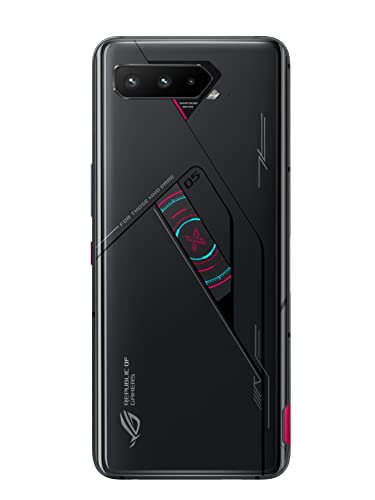
Asus ROG Phone 9 FE (16GB + 256GB)
7.7/10

Overall score

Score
7.7/ 10
✕
What it is
Our main score for this model, 1–10. It combines specs, best-of lists, expert reviews and owners.
How we count it
Parts: Technical score 35%, List score 30%, Reviews score 25%, Sentiment score 10%
Marks: Each part gets a mark out of 10. For reviews, lists and owners, a typical model in this category gets about 8 and the best one gets 10.
No data yet: A part with no data shows "?". It counts as the mark of a weaker model in this category (4 in 5 models with data score higher). This way, models with reviews, lists and owners usually come out ahead.
Score distribution
▼
<55-66-77-88-99-10
Score components

35%

8.0

Technical score

30%

?

List scoreNot enough data yet, so we use 7.5, the mark of a weaker model in this category

25%

7.9

Reviews score

10%

6.8

Sentiment score

▲Better than 75% of smartphones
7.3

Value for money

Value for money
7.3/ 10
✕
What it is
An indicator that combines the smartphone's overall rating with its cost.
When it matters
When you are looking for a smartphone with a good balance between quality and price.
Score distribution
▼
<55-66-77-88-99-10
Score components

70%

7.7

Overall score

30%

6.5

Price

▼Worse than 83%
8.0

Technical score

Technical score
8.0/ 10
✕
What it is
How good the specs are compared with the other models in this category, 1–10.
How we count it
Areas: We rate the specs in each area against the other models in this category.
Weighting: The areas that matter most to buyers count more. The shares are shown under Score components.
Share: The technical score is 35% of the overall score.
Score distribution
▼
<55-66-77-88-99-10
Score components

25%

8.4

Performance

18%

7.7

Camera

15%

8.1

Display

15%

7.4

Battery

10%

8.5

Software

10%

7.7

Connectivity

4%

7.6

Audio

3%

8.0

Design

▲Better than 85%
7.9

Reviews score

Reviews score
7.9/ 10
✕
What it is
Average grade from independent test sites, magazines and video reviewers, 1–10.
How we count it
Grades: Each review's own score is converted to 1–10; without one, we grade the review ourselves. Big test sites count more, short reviews half as much as full tests. A video review counts half.
Score: The average grade is 80% of the review mark; the number of reviews is the other 20% (1 review = 5, the typical number in this category = 8, the most-reviewed model = 10).
Enough data: With few reviews, the average grade is pulled toward the typical grade of this category. No reviews yet: 7.5 for now.
Share: Reviews count 25% of the overall score.
Score distribution
▼
<55-66-77-88-99-10

80%

8.1

Average grade

20%

6.8

Popularity

Grades by review (6)
3 reviews: 1 with a printed score, 2 estimated from the review. 3 video reviews, each counting half as much as a written test. Reviews count 25% of the overall score.
User ratings collected online are not part of this score.
▼Worse than 51%
?

List score

List score
7.5/ 10
✕
What it is
How often independent test sites, magazines and video reviewers put this model in their best-of lists for this category.
How we count it
Points: The model in the most lists of this category gets 10; the others get 8 to 10 in proportion. In no list yet: 7.5. Lists count 30% of the overall score.
Enough data: Every list counts, even a single one. With fewer than 5 best-of lists in the category, this part is left out.
Lists with this model (0)
Not in any best-of list yet, so this part counts as 7.5. Models in a list get 8 to 10.
Not in any best-of list yet

What reviewers say about the Asus ROG Phone 9 FE (16GB + 256GB)

Based on 3 · 3

Reviewers like the solid performance, good sound and lasting battery, though the camera is the clear weak point.
Praised
Criticised
Pick a topic to see who said what

What owners say about the Asus ROG Phone 9 FE (16GB + 256GB)

Based on 36 owners sharing their experience in online comments

36%positive14%mixed50%negative

Owners praise speed and gaming power, but overheating, charging failures, and software bugs are the biggest frustrations.

What owners dislike

  • Owners report the phone gets very hot in games like MLBB at high frame rates, and Gaming mode can make heating worse; an external cooler helps a little.6
  • Owners report recurring software bugs, including WhatsApp notifications not appearing unless the app is opened and touch trigger buttons failing.6
  • Owners report the phone suddenly stopped charging, with one unit failing within about two months and another failing after roughly a year.4
  • Owners say frame rates drop sharply in some games, such as Delta Force, though one reports it improved after a software update.4

Points mentioned by at least 3 owners, most mentioned first.

Loading...
Loading category ranking...

Technical Specifications of smartphone Asus ROG Phone 9 FE (16GB + 256GB)

Technical score
Technical score
8.0/ 10
✕
What it is
How good the specs are compared with the other models in this category, 1–10.
How we count it
Areas: We rate the specs in each area against the other models in this category.
Weighting: The areas that matter most to buyers count more. The shares are shown under Score components.
Share: The technical score is 35% of the overall score.
Score distribution
▼
<55-66-77-88-99-10
Score components:

25%

8.4

Performance

18%

7.7

Camera

15%

8.1

Display

15%

7.4

Battery

10%

8.5

Software

10%

7.7

Connectivity

4%

7.6

Audio

3%

8.0

Design

8.0
Reviews score
7.9
List score
?
Value for money
Value for money
7.3/ 10
✕
What it is
An indicator that combines the smartphone's overall rating with its cost.
When it matters
When you are looking for a smartphone with a good balance between quality and price.
Score distribution
▼
<55-66-77-88-99-10
Score components:

70%

7.7

Overall score

30%

6.5

Price

7.3
Processor model
Qualcomm Snapdragon 8 Gen 3
This smartphone uses the Qualcomm Snapdragon 8 Gen 3 processor which is faster than processors in 90.4% of smartphones and equal to processors in 2% of smartphones.
Storage type
UFS 4.0
This smartphone uses UFS 4.0 storage, which is faster than the storage in 73.7% of smartphones and the same as in 16.4% of smartphones.
RAM capacity
16 GB
This smartphone has a RAM capacity of 16 GB which is larger than the RAM capacity of 83.8% of smartphones and equal to that of 11.8% of smartphones.
Internal storage
256 GB
This smartphone has an internal storage capacity of 256 GB which is larger than the storage of 38.9% of smartphones and equal to that of 38.4% of smartphones.
CPU boost clock speed
3.3 GHz
The CPU boost clock speed of this smartphone is 3.3 GHz which is higher than the boost speed of 89.5% of smartphones and equal to that of 1.9% of smartphones.
Show more
What reviewers say
Operating system
Android
This smartphone runs Android, which is more mainstream than the system in 4.8% of smartphones and the same as in 95.2% of smartphones.
Android 15
Android version
Android 15
This smartphone runs Android version Android 15 which is newer than that found in 70.5% of smartphones and equal to that in 25% of smartphones.
Direct OS updates
no
This smartphone does not support direct OS updates. 20.1% of smartphones offer this.
Promised software updates
?
Open-source OS
yes
This smartphone runs an open-source operating system. 5.2% of smartphones offer this.
Show more
Multi-lens main camera
yes
This smartphone includes a multi-lens main camera system. 93.7% of smartphones include multi-lens setups.
Main camera megapixels
50 MP & 13 MP & 5 MP
This smartphone has a main camera resolution of 50 MP & 13 MP & 5 MP which is higher than that of 60.7% of smartphones and equal to that of 0.5% of smartphones.
Main camera aperture
f/1.9 & f/2.2 & f/2.4
This smartphone has a main camera aperture of f/1.9 & f/2.2 & f/2.4 which is narrower than that of 83% of smartphones and equal to that of 3.3% of smartphones.
Main camera sensor area
50 mm²
This smartphone has a main camera sensor area of 50 mm² which is larger than the main camera sensor area of 65.4% of smartphones and equal to that of 16.5% of smartphones.
Main camera pixel size
1 µm
This smartphone has a main camera pixel size of 1 µm which is larger than in 57.7% of smartphones and equal to the size in 20% of smartphones.
2 binned
Show more
What reviewers say
Number of SIM slots
2
This smartphone has 2 SIM slots, which is more than in 3.7% of smartphones and equal to the number in 96.2% of smartphones.
Cellular module
yes
This smartphone includes a cellular module. 100% of smartphones include cellular modules.
eSIM support
?
5G connectivity
yes
This smartphone supports 5G connectivity. 66.6% of smartphones support 5G.
LTE support
yes
This smartphone supports LTE. 99.7% of smartphones include LTE connectivity.
Show more
Screen size
6.78 inches
This smartphone has a screen size of 6.78 inches which is larger than the screens of 72.9% of smartphones and equal to those of 9.5% of smartphones.
Screen resolution
1080x 2400 px
This smartphone has a screen resolution of 1080x2400 px which is higher than that of 36.3% of smartphones and equal to that of 20.4% of smartphones.
Pixel density
388 ppi
This smartphone has a pixel density of 388 ppi which is lower than that of 66.6% of smartphones and equal to that of 3.3% of smartphones.
Display type
OLED/AMOLED
This smartphone uses a OLED/AMOLED display type. 58.4% of smartphones use this display technology.
Refresh rate
185 Hz
This smartphone supports a refresh rate of 185 Hz which is higher than in 99.6% of smartphones and equal to that in 0.1% of smartphones.
Show more
Battery capacity
5,500 mAh
This smartphone has a battery capacity of 5,500 mAh which is larger than the batteries in 67.8% of smartphones and equal to those in 3% of smartphones.
Charging speed
65 W
This smartphone supports charging speeds of 65 W which is faster than in 65.2% of smartphones and equal to speeds in 2.6% of smartphones.
Fast charging
yes
This smartphone supports fast charging. 93.2% of smartphones support fast charging.
GSMArena full wired charge time
?
Wireless charging
yes
This smartphone supports wireless charging. 25.1% of smartphones support wireless charging.
Show more
What reviewers say
Stereo speakers
yes
This smartphone includes stereo speakers. 64.3% of smartphones provide stereo audio.
3.5 mm headphone jack
yes
This smartphone includes a 3.5 mm headphone jack. 45.1% of smartphones offer this port.
Number of microphones
2
This smartphone includes 2 microphones, which is more than in 10.3% of smartphones and equal to the number in 66.9% of smartphones.
FM radio
no
This smartphone does not have an FM radio. 34.3% of smartphones offer this.
aptX Lossless
yes
This smartphone supports aptX Lossless. 12.5% of smartphones provide aptX Lossless.
Show more
What reviewers say
Height
163.8 mm
This smartphone has a height of 163.8 mm which is taller than 53.7% of smartphones and equal to that of 2.1% of smartphones.
Width
76.8 mm
This smartphone has a width of 76.8 mm which is wider than 68% of smartphones and equal to that of 1.8% of smartphones.
Thickness
8.9 mm
This smartphone has a thickness of 8.9 mm which is thicker than 75.4% of smartphones and equal to that of 4.1% of smartphones.
Weight
225 g
This smartphone weighs 225 g which is heavier than 83.8% of smartphones and equal to the weight of 0.6% of smartphones.
Device volume
112 cm³
This smartphone has a device volume of 112 cm³ which is larger than 76.6% of smartphones and equal to that of 2% of smartphones.
Show more

Asus ROG Phone 9 FE (16GB + 256GB) vs the average smartphone

246810TotalPerformanceSoftwareCameraConnectivityDisplayBatteryAudioDesign
  • 8 GB more RAM
    This smartphone has more RAM capacity than the average smartphone (16 GB vs 8 GB). The average smartphone has 8 GB of RAM.
    16 GB vs 8 GB
  • Supports wireless charging
    This smartphone supports wireless charging, the average smartphone does not. 25.1% of smartphones are wireless charging compatible.
  • 2.33x higher Geekbench 6 single-core benchmark score
    This smartphone scores better in Geekbench 6 single-core than the average smartphone (2,193 vs 942). The average smartphone scores 942 in single-core.
    2,193 vs 942
  • Has optical image stabilization
    This smartphone has optical image stabilization (OIS), the average smartphone does not. 48.4% of smartphones feature OIS.
  • 37.5% higher CPU boost clock speed
    This smartphone has a higher CPU boost clock speed than the average smartphone (3.3 GHz vs 2.4 GHz). The average smartphone has a boost clock speed of 2.4 GHz.
    3.3 GHz vs 2.4 GHz
  • 2.42x higher screen brightness
    This smartphone has a higher screen brightness than the average smartphone (1,600 nits vs 660 nits). The average smartphone brightness is 660 nits.
    1,600 nits vs 660 nits
  • 54.2% higher refresh rate
    This smartphone has a higher refresh rate than the average smartphone (185 Hz vs 120 Hz). The average smartphone refresh rate is 120 Hz.
    185 Hz vs 120 Hz
  • 56.3% larger main camera sensor area
    This smartphone has a larger main camera sensor area than the average smartphone (50 mm² vs 32 mm²). The average main camera sensor area is 32 mm².
    50 mm² vs 32 mm²
  • 8.2% higher review score
    Reviews score
    7.9/ 10
    ✕
    What it is
    Average grade from independent test sites, magazines and video reviewers, 1–10.
    How we count it
    Grades: Each review's own score is converted to 1–10; without one, we grade the review ourselves. Big test sites count more, short reviews half as much as full tests. A video review counts half.
    Score: The average grade is 80% of the review mark; the number of reviews is the other 20% (1 review = 5, the typical number in this category = 8, the most-reviewed model = 10).
    Enough data: With few reviews, the average grade is pulled toward the typical grade of this category. No reviews yet: 7.5 for now.
    Share: Reviews count 25% of the overall score.
    Score distribution
    ▼
    <55-66-77-88-99-10

    80%

    8.1

    Average grade

    20%

    6.8

    Popularity

    Grades by review (6)
    3 reviews: 1 with a printed score, 2 estimated from the review. 3 video reviews, each counting half as much as a written test. Reviews count 25% of the overall score.
    User ratings collected online are not part of this score.
    7.9 vs 7.3
  • 8 GB more RAM
    This smartphone has more RAM capacity than the average smartphone (16 GB vs 8 GB). The average smartphone has 8 GB of RAM.
    16 GB vs 8 GB
  • 2.33x higher Geekbench 6 single-core benchmark score
    This smartphone scores better in Geekbench 6 single-core than the average smartphone (2,193 vs 942). The average smartphone scores 942 in single-core.
    2,193 vs 942
  • 37.5% higher CPU boost clock speed
    This smartphone has a higher CPU boost clock speed than the average smartphone (3.3 GHz vs 2.4 GHz). The average smartphone has a boost clock speed of 2.4 GHz.
    3.3 GHz vs 2.4 GHz
  • Higher CPU base clock speed
    This smartphone has a higher CPU base clock speed than the average smartphone (3x3.15 GHz & 2x2.96 GHz & 2x2.26 GHz & 1x3.3 GHz vs 2x2.2 GHz & 6x2 GHz). The average smartphone has a base clock speed of 2x2.2 GHz & 6x2 GHz.
    3x3.15 GHz & 2x2.96 GHz & 2x2.26 GHz & 1x3.3 GHz vs 2x2.2 GHz & 6x2 GHz
  • 6x more shader units
    This smartphone features more shader units than the average smartphone (1,536 vs 256). The average smartphone has 256 shader units.
    1,536 vs 256
  • 33.3% smaller process node
    This smartphone uses a smaller process node than the average smartphone (4 nm vs 6 nm). The average process node size is 6 nm.
    4 nm vs 6 nm
  • Better processor
    This smartphone features a better processor than the average smartphone (Qualcomm Snapdragon 8 Gen 3 vs Qualcomm Snapdragon 7 Gen 3).
    Qualcomm Snapdragon 8 Gen 3 vs Qualcomm Snapdragon 7 Gen 3
  • 2.99x higher memory bandwidth
    This smartphone has higher memory bandwidth than the average smartphone (76.6 GB/s vs 25.6 GB/s). The average memory bandwidth is 25.6 GB/s.
    76.6 GB/s vs 25.6 GB/s
  • 2.8x higher Geekbench 6 multi-core benchmark score
    This smartphone scores better in Geekbench 6 multi-core than the average smartphone (7,088 vs 2,533). The average smartphone scores 2,533 in multi-core.
    7,088 vs 2,533
  • 3x more L3 cache
    This smartphone has more L3 cache than the average smartphone (12,288 KB vs 4,096 KB). The average L3 cache is 4,096 KB.
    12,288 KB vs 4,096 KB
  • Newer DDR memory version
    This smartphone supports a newer DDR version than the average smartphone (5 vs 4). The average DDR version is 4.
    5 vs 4
  • 74.5% faster memory speed
    This smartphone supports faster memory speed than the average smartphone (4,800 MHz vs 2,750 MHz). The average smartphone supports 2,750 MHz memory speed.
    4,800 MHz vs 2,750 MHz
  • 71.4% higher maximum RAM
    This smartphone supports more maximum RAM than the average smartphone (24 GB vs 14 GB). The average smartphone supports 14 GB RAM.
    24 GB vs 14 GB
  • Faster storage type
    This smartphone has faster storage than the average smartphone (UFS 4 vs UFS 3.1).
    UFS 4.0 vs UFS 3.1
  • 1 year/s newer release date
    This smartphone has a newer release date than the average smartphone (2025 vs 2024). 1.00% of smartphones are released annually.
    February 2025
    2025 vs 2024
  • Includes cross-site tracking protection
    This smartphone supports cross-site tracking prevention, the average smartphone does not. 31.9% of smartphones include this feature.
  • Newer Android version
    This smartphone features a newer Android version than the average smartphone (Android 15 vs Android 14). The average version is Android 14.
    Android 15 vs Android 14
  • Has optical image stabilization
    This smartphone has optical image stabilization (OIS), the average smartphone does not. 48.4% of smartphones feature OIS.
  • 56.3% larger main camera sensor area
    This smartphone has a larger main camera sensor area than the average smartphone (50 mm² vs 32 mm²). The average main camera sensor area is 32 mm².
    50 mm² vs 32 mm²
  • Supports laser autofocus
    This smartphone features laser autofocus, the average smartphone does not. 20.9% of smartphones include laser AF.
  • 0.2 µm larger main camera pixel size
    This smartphone has a larger main camera pixel size than the average smartphone (1 µm vs 0.8 µm). The average pixel size is 0.8 µm.
    2 binned
    1 µm vs 0.8 µm
  • Higher front camera megapixels
    This smartphone has more front camera megapixels than the average smartphone (32 MP vs 16 MP). The average front camera has 16 MP megapixels.
    32 MP vs 16 MP
  • Higher-resolution main camera
    This smartphone has a higher main camera resolution than the average smartphone (50 MP & 13 MP & 5 MP vs 50 MP & 8 MP). The average smartphone main camera has 50 MP & 8 MP megapixels.
    50 MP & 13 MP & 5 MP vs 50 MP & 8 MP
  • Newer Wi-Fi version
    This smartphone has more advanced Wi-Fi than the average smartphone (Wi-Fi 7 (802.11be), Wi-Fi 6E (802.11ax), Wi-Fi 6 (802.11ax), Wi-Fi 5 (802.11ac), Wi-Fi 4 (802.11n) vs Wi-Fi 5 (802.11ac), Wi-Fi 4 (802.11n)).
    Wi-Fi 7 (802.11be), Wi-Fi 6E (802.11ax), Wi-Fi 6 (802.11ax), Wi-Fi 5 (802.11ac), Wi-Fi 4 (802.11n) vs Wi-Fi 5 (802.11ac), Wi-Fi 4 (802.11n)
  • Newer USB version
    This smartphone supports a newer USB version than the average smartphone (3.2 vs 2). The average version is USB 2.
    3.2 vs 2
  • Newer Bluetooth version
    This smartphone supports a newer Bluetooth version than the average smartphone (5.4 vs 5.2). The average version is Bluetooth 5.2.
    5.4 vs 5.2
  • 2.42x higher screen brightness
    This smartphone has a higher screen brightness than the average smartphone (1,600 nits vs 660 nits). The average smartphone brightness is 660 nits.
    1,600 nits vs 660 nits
  • 54.2% higher refresh rate
    This smartphone has a higher refresh rate than the average smartphone (185 Hz vs 120 Hz). The average smartphone refresh rate is 120 Hz.
    185 Hz vs 120 Hz
  • 3x higher touch sampling rate
    This smartphone has a higher touch sampling rate than the average smartphone (720 Hz vs 240 Hz). The average touch sampling rate is 240 Hz.
    720 Hz vs 240 Hz
  • 1,500 nits higher peak brightness
    This smartphone has a higher peak brightness than the average smartphone (2,500 nits vs 1,000 nits). The average peak brightness is 1,000 nits.
    2,500 nits vs 1,000 nits
  • Supports HDR10 support
    This smartphone supports HDR10, the average smartphone does not. 42.6% of smartphones are HDR10 compatible.
  • Better display glass type
    This smartphone features a better display glass type than the average smartphone (Corning Gorilla Glass Victus 2 vs Corning Gorilla Glass 5). The average smartphone uses Corning Gorilla Glass 5 protection.
    Corning Gorilla Glass Victus 2 vs Corning Gorilla Glass 5
  • 0.11 inches inch larger screen size
    This smartphone has a larger screen size than the average smartphone (6.8 inches vs 6.67 inches). The average smartphone screen is 6.67 inches.
    6.78 inches vs 6.67 inches
  • Has an always-on display
    This smartphone features an always-on display, the average smartphone does not. 49.1% of smartphones offer always-on functionality.
  • Supports wireless charging
    This smartphone supports wireless charging, the average smartphone does not. 25.1% of smartphones are wireless charging compatible.
  • 10% larger battery capacity
    This smartphone has a larger battery capacity than the average smartphone (5,500 mAh vs 5,000 mAh). The average smartphone battery is 5,000 mAh.
    5,500 mAh vs 5,000 mAh
  • 97% faster charging speed
    This smartphone supports a faster charging speed than the average smartphone (65 W vs 33 W). The average charging speed is 33 W.
    65 W vs 33 W
  • Supports aptX Adaptive
    This smartphone supports aptX Adaptive, the average smartphone does not. 33.7% of smartphones include aptX Adaptive support.
  • Supports aptX Lossless
    This smartphone supports aptX Lossless, the average smartphone does not. 12.5% of smartphones include aptX Lossless support.
  • Has a 3.5 mm headphone jack
    This smartphone features a 3.5 mm headphone jack, the average smartphone does not. 45.1% of smartphones include a standard headphone jack.
  • Supports aptX
    This smartphone supports aptX, the average smartphone does not. 49.5% of smartphones are aptX compatible.
  • 1.5 m deeper water resistance
    This smartphone has a deeper water resistance rating than the average smartphone (1.5 m vs 0 m). The average depth rating is 0 m.
    1.5 m vs 0 m
  • Better IP rating
    This smartphone has a better IP rating than the average smartphone (IP68 vs IP67). The average IP rating is IP67.
    IP68 vs IP67
  • Narrower main camera aperture
    This smartphone has a narrower main camera aperture than the average smartphone (f/1.9 & f/2.2 & f/2.4 vs f/1.8 & f/2.2 & f/2.4 & f/2.4). The average smartphone aperture is f/1.8 & f/2.2 & f/2.4 & f/2.4.
    f/1.9 & f/2.2 & f/2.4 vs f/1.8 & f/2.2 & f/2.4 & f/2.4
  • 2.08x higher TDP (less efficient)
    This smartphone has a higher TDP than the average smartphone (12.5 W vs 6 W). The average smartphone has a TDP of 6 W.
    12.5 W vs 6 W
  • No live text recognition
    This smartphone does not support live text recognition, the average smartphone does. 51.3% of smartphones offer real-time text recognition.
  • No LDAC support
    This smartphone does not support LDAC, the average smartphone does. 60.1% of smartphones support LDAC.
  • No memory card slot
    This smartphone does not have a memory card slot, the average smartphone does. 53.7% of smartphones feature expandable storage.
  • Narrower front camera aperture
    This smartphone has a narrower front camera aperture than the average smartphone (f/2.5 vs f/2.2). The average smartphone front aperture is f/2.2.
    f/2.5 vs f/2.2
  • 14.7% heavier
    This smartphone is heavier than the average smartphone (225 g vs 196.2 g). The average smartphone weighs 196.2 g.
    225 g vs 196.2 g
  • 2.92x more expensive
    Asus ROG Phone 9 FE (16GB + 256GB) is more expensive than the average smartphone (£760 vs £260).
    £760 vs £260
  • 2.92x more expensive
    Asus ROG Phone 9 FE (16GB + 256GB) is more expensive than the average smartphone (£760 vs £260).
    £760 vs £260
  • 12.8% lower sentiment score
    6.8 vs 7.8
  • 4.5% worse value for money
    Asus ROG Phone 9 FE (16GB + 256GB) has worse value for money than the average smartphone (7.33 vs 7.7).
    7.33 vs 7.66
  • 2.08x higher TDP (less efficient)
    This smartphone has a higher TDP than the average smartphone (12.5 W vs 6 W). The average smartphone has a TDP of 6 W.
    12.5 W vs 6 W
  • 5.3% slower GPU clock
    This smartphone has a lower GPU frequency than the average smartphone (900 MHz vs 950 MHz). The average smartphone has a GPU frequency of 950 MHz.
    900 MHz vs 950 MHz
  • No live text recognition
    This smartphone does not support live text recognition, the average smartphone does. 51.3% of smartphones offer real-time text recognition.
  • Narrower main camera aperture
    This smartphone has a narrower main camera aperture than the average smartphone (f/1.9 & f/2.2 & f/2.4 vs f/1.8 & f/2.2 & f/2.4 & f/2.4). The average smartphone aperture is f/1.8 & f/2.2 & f/2.4 & f/2.4.
    f/1.9 & f/2.2 & f/2.4 vs f/1.8 & f/2.2 & f/2.4 & f/2.4
  • Narrower front camera aperture
    This smartphone has a narrower front camera aperture than the average smartphone (f/2.5 vs f/2.2). The average smartphone front aperture is f/2.2.
    f/2.5 vs f/2.2
  • No memory card slot
    This smartphone does not have a memory card slot, the average smartphone does. 53.7% of smartphones feature expandable storage.
  • 1.8% lower pixel density
    This smartphone has a lower pixel density than the average smartphone (388 ppi vs 395 ppi). The average smartphone has a pixel density of 395 ppi.
    388 ppi vs 395 ppi
  • 25% slower wireless charging speed
    This smartphone has a slower wireless charging speed than the average smartphone (15 W vs 20 W). The average smartphone wireless charging speed is 20 W.
    15 W vs 20 W
  • No LDAC support
    This smartphone does not support LDAC, the average smartphone does. 60.1% of smartphones support LDAC.
  • 14.7% heavier
    This smartphone is heavier than the average smartphone (225 g vs 196.2 g). The average smartphone weighs 196.2 g.
    225 g vs 196.2 g
  • 0.6 mm thicker
    This smartphone is thicker than the average smartphone (8.9 mm vs 8.3 mm). The average smartphone has a thickness of 8.3 mm.
    8.9 mm vs 8.3 mm
  • 9.8% larger volume
    This smartphone has a larger volume than the average smartphone (112 cm³ vs 102 cm³). The average smartphone volume is 102 cm³.
    112 cm³ vs 102 cm³
  • 0.8 mm wider
    This smartphone is wider than the average smartphone (76.8 mm vs 76 mm). The average smartphone has a width of 76 mm.
    76.8 mm vs 76 mm

Video reviews

Hands-on testing, unboxing, and real-world video evaluations

7.0
Kaltekno
≈ estimated
01/04/2026
Hands-on review · camera, video and charging tests
Verdict
The Asus ROG Phone 9 FE is strong for gaming and multitasking at this used price, but its camera trails an older iPhone.
9.0
TechKuya: Tech for techies, pare.
≈ estimated
01/04/2025
Gaming review · game tests, benchmarks and thermals
Verdict
Asus ROG Phone 9 FE is a very attractive package for gamers, with strong performance, speakers and sustained frame rates.
8.0
NL Tech
≈ estimated
21/03/2025
Gaming review · hands-on tests and comparison with previous model
Verdict
Asus ROG Phone 9 FE is a very good deal with strong performance, though the air triggers disappoint and the design is largely unchanged.
Overview video
Shop video
Overview video
Overview video
Hands-on video, no verdict
Overview video
Not graded

Expert reviews

In-depth analysis and verdict from leading tech publications
9.0
twenty8two.com
≈ estimated
16/05/2025
Daily driven · Gaming phone
Verdict
The ROG Phone 9 FE is an all-round gaming phone with last year's hardware that handles any game and lasts over a day, though its AniMe display adds little.
9.0
techlokalph.com
≈ estimated
07/04/2025
One-week test · Gaming phone
Verdict
The ROG Phone 9 FE is a gaming phone with a smooth screen and a great price-to-performance ratio, though its cameras and 256GB storage option are modest.
7.5
helloexpress.net
✓ explicit
19/03/2025
Hands-on review · Gaming phone
Verdict
The ROG Phone 9 FE is a restrained gaming phone with AirTriggers, loud speakers and a fast screen, held back by weak camera processing.

Third-party reviews

What customers like about Asus ROG Phone 9 FE (16GB + 256GB)

  • Flagship-tier performance with Snapdragon 8 Gen 3 chipset that runs all games smoothly without lag or stutter.
  • Excellent battery life (5500mAh) that can last a full day even with heavy use and offers long gaming sessions.
  • Stunning 6.78-inch AMOLED display with a 165Hz (overclockable to 185Hz in Game Genie) refresh rate, great brightness, and color accuracy.
  • Effective cooling system (GameCool 360° SoC Cooling System) that keeps the phone cool during intense gaming sessions.
  • Useful gaming-centric features like the programmable Air Triggers and Game Genie software.
  • Practical inclusions like a side-mounted USB-C port for charging while gaming, and a 3.5mm headphone jack.
  • Fast 65W wired charging that can charge the phone from 0 to 100% in around 39 minutes.
  • Refined and sleek design with a matte finish that resists fingerprints, and a durable build with IP68 water resistance.
  • Comprehensive and loud dual stereo speakers with Hi-Res audio support.
  • Good value for the price point, offering high-end features at a more accessible cost.

What customers don't like about Asus ROG Phone 9 FE (16GB + 256GB)

  • Camera quality is considered average and not quite on par with other flagship, non-gaming-focused phones.
  • Photos from the front camera can sometimes look washed out.
  • Accessories like the AeroActive Cooler are often seen as overpriced gimmicks if not included for free.
  • Some users report the speaker volume could be louder.
  • In-display fingerprint sensor can sometimes be inconsistent.
  • The phone is considered relatively bulky and heavy by some users.
  • Limited improvements over its predecessor, the ROG Phone 8, making it less appealing for existing owners to upgrade.

Verdict

The Asus ROG Phone 9 FE (16GB + 256GB) is a high-performance gaming-focused smartphone, released in February 2025, offering flagship specifications at a more accessible price point. Key features include a powerful Qualcomm Snapdragon 8 Gen 3 processor, 16GB of LPDDR5X RAM, and 256GB of UFS 4.0 storage for seamless multitasking and demanding games. The device boasts an immersive 6.78-inch Full HD+ AMOLED display with a 165Hz standard refresh rate (up to 185Hz in Game Genie mode), 2,500 nits peak brightness, and a 720Hz touch sampling rate. Its robust build includes an IP68 rating for water and dust resistance, built-in AirTrigger shoulder controls for a console-like experience, and a 50MP main camera with 6-Axis Hybrid Gimbal Stabilizer 3.0. Pros are its industry-leading performance, excellent display, and solid durability. A primary con is that, to achieve a lower price, it features a slightly smaller 5,500mAh battery compared to the Pro models and omits the telephoto lens, though it retains 65W wired and 15W wireless charging support.

Compare Asus ROG Phone 9 FE (16GB + 256GB) with other smartphones

1Product to compare no. 1
VS
2Product to compare no. 2
VS
3Product to compare no. 3 (optional)

Graphic comparison of Asus ROG Phone 9 FE (16GB + 256GB) and other smartphones

No results found