Scored using Drones Methodology v3.0
Drones Methodology v3.0
Mathematical & Unbiased Scoring
Products in this category are scored under Frontum Drones Methodology v3.0: the technical score from the specifications is the base, and independent expert and video reviews (up to ±0.5 points), owner opinions (up to ±0.3) and best-of lists (up to +0.3) move it up or down.
Explore Drones Methodology v3.0

Holy Stone HS160 review: 97 specs compared

Avg. price:~£70Max flight time:8 minVideo resolution:720p/20 fpsMax transmission distance:0.07 km

Holy Stone HS160 Review: Compare 97 technical specifications and 7 expert and video reviews to see how this product ranks in the Drones category and whether it is worth buying.
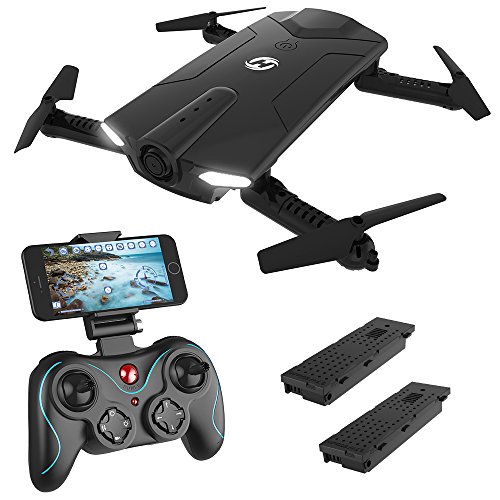
Holy Stone HS160
5.5/10

Overall score

Score
5.5/ 10
✕
What it is
Our main score for this model, 1–10. It combines specs, best-of lists, expert reviews and owners.
How we count it
Parts: Technical score 35%, List score 30%, Reviews score 25%, Sentiment score 10%
Marks: Each part gets a mark out of 10. For reviews, lists and owners, a typical model in this category gets about 8 and the best one gets 10.
No data yet: A part with no data shows "?". It counts as the mark of a weaker model in this category (4 in 5 models with data score higher). This way, models with reviews, lists and owners usually come out ahead.
Score distribution
â–¼
<55-66-77-88-99-10
Score components

35%

4.6

Technical score

30%

?

List scoreNot enough data yet, so we use 7.5, the mark of a weaker model in this category

25%

4.6

Reviews score

10%

4.6

Sentiment score

â–¼Worse than 96% of drones
6.8

Value for money

Value for money
6.8/ 10
✕
What it is
An indicator that combines the drone's overall rating with its cost.
When it matters
When you are looking for a drone with a good balance between flight quality, camera features, and price.
Score distribution
â–¼
<55-66-77-88-99-10
Score components

70%

5.5

Overall score

30%

10

Price

â–¼Worse than 88%
4.6

Technical score

Technical score
4.6/ 10
✕
What it is
How good the specs are compared with the other models in this category, 1–10.
How we count it
Areas: We rate the specs in each area against the other models in this category.
Weighting: The areas that matter most to buyers count more. The shares are shown under Score components.
Share: The technical score is 35% of the overall score.
Score distribution
â–¼
<55-66-77-88-99-10
Score components

26%

3.2

Flight

24%

5.3

Camera

20%

4.1

Safety

16%

5.5

Connectivity

14%

5.9

Battery & Design

â–¼Worse than 91%
4.6

Reviews score

Reviews score
4.6/ 10
✕
What it is
Average grade from independent test sites, magazines and video reviewers, 1–10.
How we count it
Grades: Each review's own score is converted to 1–10; without one, we grade the review ourselves. Every review counts the same: written or video, short or full test.
Score: The average grade is 80% of the review mark; the number of reviews is the other 20% (1 review = 5, the typical number in this category = 8, the most-reviewed model = 10).
Enough data: With few reviews, the average grade is pulled toward the typical grade of this category. No reviews yet: 7.5 for now.
Share: Reviews count 25% of the overall score.
Score distribution
â–¼
<55-66-77-88-99-10

4.6

Mark 7.9 is below the typical mark 8.0 of this category, so it cannot lift the score above the technical score

80%

8.1

Average grade

20%

7.1

Popularity

Grades by review (7)
3 reviews + 4 videos, average 8.2/10. Reviews count 25% of the overall score.
User ratings collected online are not part of this score.
â–¼Worse than 97%
?

List score

List score
7.5/ 10
✕
What it is
How often independent test sites, magazines and video reviewers put this model in their best-of lists for this category.
How we count it
Points: The model in the most lists of this category gets 10; the others get 8 to 10 in proportion. In no list yet: 7.5. Lists count 30% of the overall score.
Enough data: Every list counts, even a single one. With fewer than 5 best-of lists in the category, this part is left out.
Lists with this model (0)
Not in any best-of list yet, so this part counts as 7.5. Models in a list get 8 to 10.
Not in any best-of list yet
  • holy-stone-hs160
  • holy-stone-hs160
  • holy-stone-hs160
  • holy-stone-hs160
  • holy-stone-hs160
  • holy-stone-hs160
  • holy-stone-hs160
  • holy-stone-hs160
  • holy-stone-hs160
holy-stone-hs160
holy-stone-hs160
holy-stone-hs160
holy-stone-hs160
holy-stone-hs160
holy-stone-hs160
holy-stone-hs160
holy-stone-hs160
holy-stone-hs160
Where to buy
    N/A~ £70
Best rankings
Available: ranking among products currently available (including other versions of this product).All: ranking among all products in the database.

What reviewers say about the Holy Stone HS160

Based on 1 · 4

The few reviewers like its compact design and easy handling, with no clear complaint standing out.
Praised
Pick a topic to see who said what

What owners say about the Holy Stone HS160

Based on 24 owners sharing their experience in online comments

17%positive12%mixed71%negative

Owners like its easy flying and low price, but mostly complain about unstable hovering and camera or app problems.

What owners dislike

  • Owners say it drifts sideways or forward and back, especially indoors, and veers off to one side, needing constant correction to stay level.7
  • Some owners get a Wi-Fi password prompt when connecting to the drone camera, and others see no images in the app on their phone.4
  • Owners find video shakes while flying, and drifting forces constant corrections that make footage choppy; it looks steady only when landed.4
  • Some owners lost control mid-flight, with the drone flying away and ignoring landing commands; others find speed hard to control, as it goes extremely fast.3

Points mentioned by at least 3 owners, most mentioned first.

Loading...
Loading category ranking...

Technical Specifications of drone Holy Stone HS160

Technical score
Technical score
4.6/ 10
✕
What it is
How good the specs are compared with the other models in this category, 1–10.
How we count it
Areas: We rate the specs in each area against the other models in this category.
Weighting: The areas that matter most to buyers count more. The shares are shown under Score components.
Share: The technical score is 35% of the overall score.
Score distribution
â–¼
<55-66-77-88-99-10
Score components:

26%

3.2

Flight

24%

5.3

Camera

20%

4.1

Safety

16%

5.5

Connectivity

14%

5.9

Battery & Design

4.6
Reviews score
4.6
List score
?
Value for money
Value for money
6.8/ 10
✕
What it is
An indicator that combines the drone's overall rating with its cost.
When it matters
When you are looking for a drone with a good balance between flight quality, camera features, and price.
Score distribution
â–¼
<55-66-77-88-99-10
Score components:

70%

5.5

Overall score

30%

10

Price

6.8
Max flight time
8 min
This drone has a max flight time of 8 min, shorter than 88.5% of drones and equal to 2.5% of drones.
Max flight distance
0.05 km
This drone has a max flight distance of 0.05 km, shorter-range than 87.3% of drones and equal to 6.6% of drones.
Maximum range varies by region (for example FCC vs CE).
Max flight speed
3.7 m/s
This drone has a max flight speed of 3.7 m/s, slower than 97.5% of drones.
Max wind resistance
?
Max service ceiling (ASL)
60 m
This drone has a max service ceiling of 60 m, lower than 97.8% of drones.
Show more
What reviewers say
Video resolution
720p/20 fps
This drone records video at 720p/20 fps, lower than 87.1% of drones and equal to 0.5% of drones.
20 fps applies to live view only.
4K camera
no
This drone does not support 4K video. 54.6% of drones support 4K video.
Sensor size
?
Main camera megapixels
2 MP
This drone has a main camera resolution of 2 MP, lower than 85.3% of drones and equal to 13.3% of drones.
Max movie bitrate
?
Show more
Obstacle detection
no
This drone does not support obstacle detection. 31% of drones support obstacle detection.
Return to Home (RTH)
no
This drone does not support Return-to-Home (RTH). 67.5% of drones support Return-to-Home (RTH).
GPS
no
This drone does not support GPS. 65.2% of drones support GPS.
GNSS systems supported
none
This drone supports none GNSS systems, which are less comprehensive than those of 65.8% and the same as those of 34.2%.
Obstacle sensing directions
N/A
Show more
Max transmission distance
0.07 km
This drone has a max transmission distance of 0.07 km, shorter-range than 82.1% of drones and equal to 0.5% of drones.
Value reflects maximum control/transmission range; FPV video range can be lower.
Transmission latency
?
Video transmission system
Wi-Fi
This drone uses Wi-Fi for video transmission, which is more advanced than the system used by 8.2% and the same as that used by 47.7%.
Live view quality
720p@20 fps
This drone offers live view quality of 720p@20 fps, lower-quality than 83.3% of drones and equal to 5.2% of drones.
Remote control
yes
This drone has a handheld remote controller. 5% of drones offer this.
Show more
Battery capacity
500 mAh
This drone has a battery capacity of 500 mAh, smaller than 91.2% of drones and equal to 0.5% of drones.
Battery energy
3.7 Wh
This drone has battery energy of 3.7 Wh, lower than 87.7% of drones and equal to 2.4% of drones.
Charging time
110 min
This drone charges in 110 min, slower than 62.5% of drones and equal to 1.9% of drones.
Weight
83 g
This drone weighs 83 g, lighter than 89.2% of drones.
Removable battery
yes
This drone has a removable battery. 0.5% of drones have a removable battery.
Show more
What reviewers say

Holy Stone HS160 vs the average drone

246810TotalFlightCameraSafetyConnectivityBattery & Design
  • 66.3% lower weight
    This drone is lighter than the average drone (83 g vs 246 g). The average drone weighs 246 g.
    83 g vs 246 g
  • Supports TapFly
    This drone supports TapFly, while the average drone does not.
  • Supports smartphone control
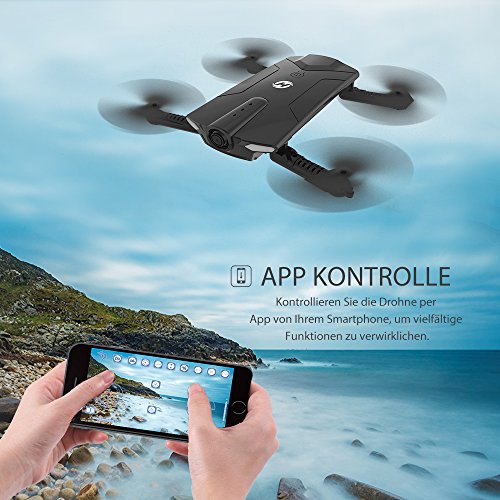
    This drone supports smartphone control, while the average drone does not.
  • 24.5 mm lower body height
    This drone is shorter than the average drone (38 mm vs 62.5 mm). The average drone is 62.5 mm tall.
    38 mm vs 62.5 mm
  • 30 ° wider field of view
    This drone has a wider field of view than the average drone (120 ° vs 90 °). The average drone has a field of view of 90 °.
    120 ° vs 90 °
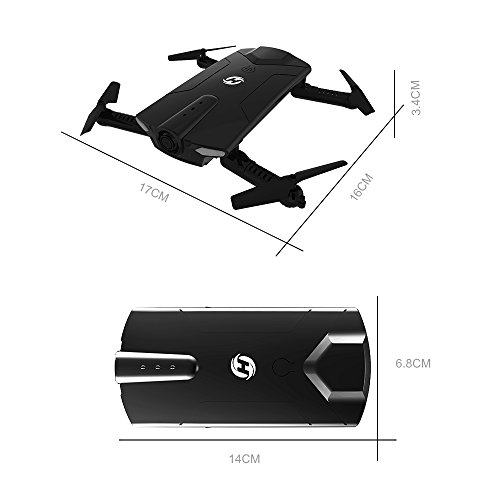
  • 72 mm narrower width
    This drone is narrower than the average drone (169 mm vs 241 mm). The average drone width is 241 mm.
    169 mm vs 241 mm
  • 53 mm shorter body length
    This drone is shorter than the average drone (222 mm vs 275 mm). The average drone is 275 mm long.
    222 mm vs 275 mm
  • 2.86x cheaper
    Holy Stone HS160 is cheaper than the average drone (£70 vs £200).
    £70 vs £200
  • 2.86x cheaper
    Holy Stone HS160 is cheaper than the average drone (£70 vs £200).
    £70 vs £200
  • 30 ° wider field of view
    This drone has a wider field of view than the average drone (120 ° vs 90 °). The average drone has a field of view of 90 °.
    120 ° vs 90 °
  • Supports TapFly
    This drone supports TapFly, while the average drone does not.
  • Supports smartphone control
    This drone supports smartphone control, while the average drone does not.
  • 66.3% lower weight
    This drone is lighter than the average drone (83 g vs 246 g). The average drone weighs 246 g.
    83 g vs 246 g
  • 24.5 mm lower body height
    This drone is shorter than the average drone (38 mm vs 62.5 mm). The average drone is 62.5 mm tall.
    38 mm vs 62.5 mm
  • 72 mm narrower width
    This drone is narrower than the average drone (169 mm vs 241 mm). The average drone width is 241 mm.
    169 mm vs 241 mm
  • 53 mm shorter body length
    This drone is shorter than the average drone (222 mm vs 275 mm). The average drone is 275 mm long.
    222 mm vs 275 mm
  • Lower video resolution
    This drone offers lower video resolution than the average drone (720p/20 fps vs 4K/100 fps). The average drone offers a video resolution of 4K/100 fps.
    20 fps applies to live view only.
    720p/20 fps vs 4K/100 fps
  • Fewer GNSS systems
    This drone supports none GNSS systems, while the average drone supports GPS, GLONASS, Galileo, BeiDou.
    none vs GPS, GLONASS, Galileo, BeiDou
  • 11.3 m/s slower flight speed
    This drone reaches a lower max flight speed than the average drone (3.7 m/s vs 15 m/s). The average drone reaches 15 m/s.
    3.7 m/s vs 15 m/s
  • 35.2% lower review score
    Reviews score
    4.6/ 10
    ✕
    What it is
    Average grade from independent test sites, magazines and video reviewers, 1–10.
    How we count it
    Grades: Each review's own score is converted to 1–10; without one, we grade the review ourselves. Every review counts the same: written or video, short or full test.
    Score: The average grade is 80% of the review mark; the number of reviews is the other 20% (1 review = 5, the typical number in this category = 8, the most-reviewed model = 10).
    Enough data: With few reviews, the average grade is pulled toward the typical grade of this category. No reviews yet: 7.5 for now.
    Share: Reviews count 25% of the overall score.
    Score distribution
    â–¼
    <55-66-77-88-99-10

    4.6

    Mark 7.9 is below the typical mark 8.0 of this category, so it cannot lift the score above the technical score

    80%

    8.1

    Average grade

    20%

    7.1

    Popularity

    Grades by review (7)
    3 reviews + 4 videos, average 8.2/10. Reviews count 25% of the overall score.
    User ratings collected online are not part of this score.
    4.6 vs 7.1
  • More basic transmission system
    This drone uses Wi-Fi for video transmission, while the average drone uses SkyLink 2.0.
    Wi-Fi vs SkyLink 2.0
  • 12 min shorter flight time
    This drone offers shorter max flight time than the average drone (8 min vs 20 min). The average drone offers 20 min of max flight time.
    8 min vs 20 min
  • No subject tracking
    This drone cannot track subjects, while the average drone can.
  • No return-to-home (RTH)
    This drone does not support return-to-home (RTH), while the average drone does.
  • 35.2% lower review score
    Reviews score
    4.6/ 10
    ✕
    What it is
    Average grade from independent test sites, magazines and video reviewers, 1–10.
    How we count it
    Grades: Each review's own score is converted to 1–10; without one, we grade the review ourselves. Every review counts the same: written or video, short or full test.
    Score: The average grade is 80% of the review mark; the number of reviews is the other 20% (1 review = 5, the typical number in this category = 8, the most-reviewed model = 10).
    Enough data: With few reviews, the average grade is pulled toward the typical grade of this category. No reviews yet: 7.5 for now.
    Share: Reviews count 25% of the overall score.
    Score distribution
    â–¼
    <55-66-77-88-99-10

    4.6

    Mark 7.9 is below the typical mark 8.0 of this category, so it cannot lift the score above the technical score

    80%

    8.1

    Average grade

    20%

    7.1

    Popularity

    Grades by review (7)
    3 reviews + 4 videos, average 8.2/10. Reviews count 25% of the overall score.
    User ratings collected online are not part of this score.
    4.6 vs 7.1
  • 39.5% lower sentiment score
    4.6 vs 7.6
  • 9.4% worse value for money
    Holy Stone HS160 has worse value for money than the average drone (6.84 vs 7.5).
    6.84 vs 7.48
  • 11.3 m/s slower flight speed
    This drone reaches a lower max flight speed than the average drone (3.7 m/s vs 15 m/s). The average drone reaches 15 m/s.
    3.7 m/s vs 15 m/s
  • 12 min shorter flight time
    This drone offers shorter max flight time than the average drone (8 min vs 20 min). The average drone offers 20 min of max flight time.
    8 min vs 20 min
  • 3,440 m lower service ceiling
    This drone can fly at a lower max service ceiling than the average drone (60 m vs 3,500 m). The average drone reaches 3,500 m.
    60 m vs 3,500 m
  • 0.95 km shorter flight distance
    This drone has a shorter max flight distance than the average drone (0.1 km vs 1 km). The average drone can fly up to 1 km.
    Maximum range varies by region (for example FCC vs CE).
    0.05 km vs 1 km
  • 6 years older release date
    This drone is older than the average drone (2017 vs 2023). The average drone was released in 2023.
    November 2017
    2017 vs 2023
  • Simpler motor design
    This drone uses coreless motors, while the average drone uses brushless motors.
    coreless vs brushless
  • Lower video resolution
    This drone offers lower video resolution than the average drone (720p/20 fps vs 4K/100 fps). The average drone offers a video resolution of 4K/100 fps.
    20 fps applies to live view only.
    720p/20 fps vs 4K/100 fps
  • Fewer photo format options
    This drone supports JPEG photo formats, while the average drone supports JPEG, DNG (RAW).
    JPEG vs JPEG, DNG (RAW)
  • Lower photo resolution
    This drone offers lower photo resolution than the average drone (1920x1080 px vs 4096x3072 px). The average drone offers a photo resolution of 4096x3072 px.
    1920x1080 px vs 4096x3072 px
  • Narrower tilt range
    This drone has a narrower tilt range than the average drone (-90 to 0 ° vs -90 to 20 °).
    -90 to 0 ° vs -90 to 20 °
  • 10 MP less camera resolution
    This drone has fewer main camera megapixels than the average drone (2 MP vs 12 MP). The average drone has 12 MP on the main camera.
    2 MP vs 12 MP
  • 3 x lower digital zoom
    This drone offers less digital zoom than the average drone (0 x vs 3 x). The average drone offers 3 x of digital zoom.
    0 x vs 3 x
  • No 4K video
    This drone does not support 4K video, while the average drone does.
  • 96 GB lower memory card limit
    This drone supports less external storage than the average drone (32 GB vs 128 GB). The average drone supports up to 128 GB of external storage.
    32 GB vs 128 GB
  • Fewer GNSS systems
    This drone supports none GNSS systems, while the average drone supports GPS, GLONASS, Galileo, BeiDou.
    none vs GPS, GLONASS, Galileo, BeiDou
  • No subject tracking
    This drone cannot track subjects, while the average drone can.
  • No return-to-home (RTH)
    This drone does not support return-to-home (RTH), while the average drone does.
  • No GPS
    This drone does not have GPS, while the average drone does.
  • No POI mode
    This drone does not support POI mode, while the average drone does.
  • 3 fewer flight modes
    This drone offers fewer intelligent flight modes than the average drone (1 vs 4). The average drone offers 4 intelligent flight modes.
    TapFly
    1 vs 4
  • No compass
    This drone does not have a compass, while the average drone does.
  • No beginner mode
    This drone does not support beginner mode, while the average drone does.
  • More basic transmission system
    This drone uses Wi-Fi for video transmission, while the average drone uses SkyLink 2.0.
    Wi-Fi vs SkyLink 2.0
  • Lower live view quality
    This drone has worse live view quality than the average drone (720p@20 fps vs 1080p@25 fps). The average drone offers live view quality of 1080p@25 fps.
    720p@20 fps vs 1080p@25 fps
  • Fewer frequency bands
    This drone supports 2.4 GHz operating frequency bands, while the average drone supports 2.4 GHz, 5.8 GHz.
    2.4 GHz vs 2.4 GHz, 5.8 GHz
  • 0.93 km shorter transmission range
    This drone has a shorter max transmission distance than the average drone (0.1 km vs 1 km). The average drone reaches 1 km of transmission distance.
    Value reflects maximum control/transmission range; FPV video range can be lower.
    0.07 km vs 1 km
  • 1,700 mAh less battery capacity
    This drone has a smaller battery capacity than the average drone (500 mAh vs 2,200 mAh). The average drone battery has a capacity of 2,200 mAh.
    500 mAh vs 2,200 mAh
  • 13.48 Wh less battery energy
    This drone has lower battery energy than the average drone (3.7 Wh vs 17.18 Wh). The average drone battery has 17.18 Wh of energy.
    3.7 Wh vs 17.18 Wh
  • 20 min longer charging time
    This drone charges more slowly than the average drone (110 min vs 90 min). The average drone charges in 90 min.
    110 min vs 90 min

Video reviews

Hands-on testing, unboxing, and real-world video evaluations

9.0
Drones & Dogs
≈ estimated
11/05/2021
Unboxing and flight review · wind and battery checks in flight
Verdict
Holy Stone HS160 is a solid, good-value front yard flyer that handles breezy conditions better than expected.
8.0
McLIFE ADVENTURES
≈ estimated
10/05/2021
Unboxing and feature review · owned for a while, family use
Verdict
Holy Stone HS160 is a smooth-flying beginner drone, though it does not climb very high.
8.0
Jack Cole
≈ estimated
11/01/2019
Unboxing and feature review · two weeks of flying and battery checks
Verdict
Holy Stone HS160 is worth the money for casual flying, though not for cinematic footage.
8.0
Repost - Reviews, Pointers, Stuff
≈ estimated
01/05/2018
Hands-on review · unboxing, flight and battery notes
Verdict
The Holy Stone HS160 is a compact drone that is recommended at this price, despite its short battery life.
Not graded
Hands-on video, no verdict
Brand video
Not graded
Not graded
Hands-on video, no verdict

Expert reviews

In-depth analysis and verdict from leading tech publications
7.8
techgearlab.com
✓ explicit
08/11/2017
Product review · Foldable drone
Verdict
The Holy Stone HS160 is a portable drone with clear video, but it only flies in calm weather and its laggy live feed makes flying by the screen hard.
8.5
dronescores.com
✓ explicit
25/07/2018
Full review · Indoor toy drone
Verdict
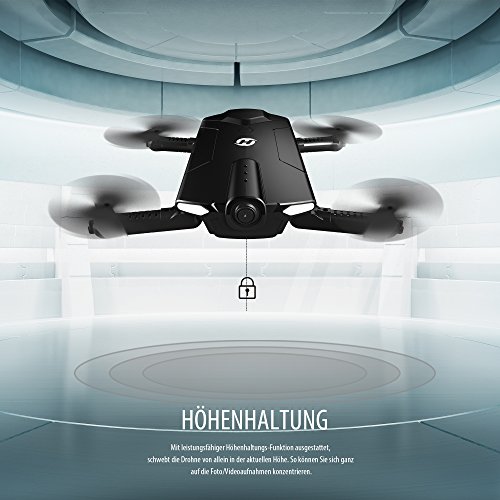
The Holy Stone HS160 is a tiny foldable drone for beginners who fly indoors, with altitude hold and headless mode, but it is too light for wind.
8.0
yourdronereviews.com
✓ explicit
19/08/2019
Short review · Foldable beginner drone
Verdict
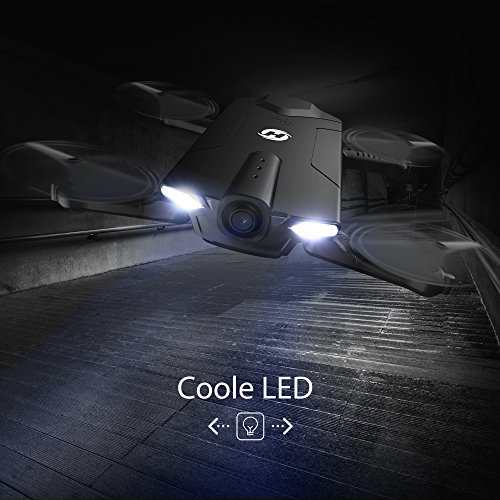
The Holy Stone HS160 is a beginner drone that folds down to palm size and has LEDs for night flying, but 9 minutes per battery is short.

Third-party reviews

What customers like about Holy Stone HS160

  • Extremely portable with a slim, foldable design that fits in a pocket
  • Considered easy to control and stable for beginners compared to similar budget models
  • Produces impressive video quality for its low price point
  • Includes a bonus battery, extending total flight time to approximately 16 minutes
  • Highly rated customer service that is responsive and helpful with issues

What customers don't like about Holy Stone HS160

  • Lacks power to fly effectively in even light wind or breezes
  • Significant lag in the FPV video downlink, making real-time shot framing difficult
  • Absence of 'headless mode' can make orientation challenging for some new pilots
  • No sensors for automatic stable hovering, requiring constant manual joystick adjustment
  • Video recording can occasionally experience brief, inadvertent cutouts or glitches

Verdict

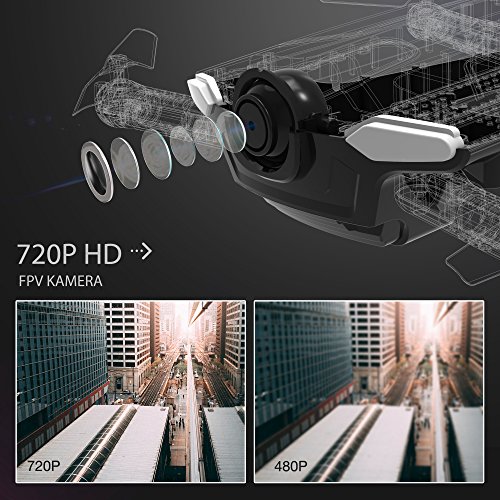
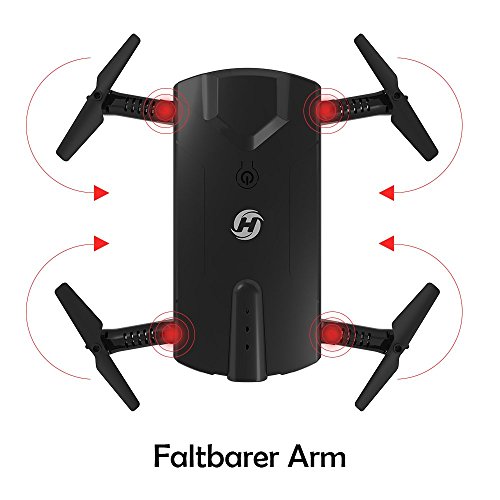
The Holy Stone HS160 Shadow is a compact, foldable quadcopter weighing just 63.8g, designed primarily for indoor use and beginner pilots. It features a 720p HD FPV camera that streams live 1280x720p video to a smartphone via a 2.4GHz Wi-Fi connection with a range of approximately 30 meters. Key performance characteristics include an 8-minute flight time per modular battery (often sold with two for 16 minutes total) and intuitive flight aids like altitude hold, headless mode, and four adjustable speed settings. Main pros include its extreme portability—folding down to the size of a large smartphone—and user-friendly controls that simplify the learning curve for novices. However, notable cons include its high sensitivity to wind due to its lightweight build, a lack of GPS-assisted return-to-home features, and potential lag in the FPV video downlink.

Compare Holy Stone HS160 with other drones

1Product to compare no. 1
VS
2Product to compare no. 2
VS
3Product to compare no. 3 (optional)

Graphic comparison of Holy Stone HS160 and other drones

No results found