Scored using Drones Methodology v2.0
Drones Methodology v2.0
Mathematical & Unbiased Scoring
Products in this category are scored under Frontumo Drones Methodology v2.0: technical specifications plus grades from 1,110 independent expert reviews and 2,622 video reviews, with 0% commercial bias.
Explore Drones Methodology v2.0

Revell Go! Video Pro 2.0 Review | 97 Data compared

Avg. price:~£70Max flight time:15 minVideo resolution:1080pMax transmission distance:0.05 km

Revell Go! Video Pro 2.0 Review: Compare 97 technical specifications and 1 expert and video reviews to see how this product ranks in the Drones category and whether it is worth buying.

5.1

Overall score

Score
5.1/ 10
✕
What it is
An overall evaluation of the drone's quality, based on technical analyses and grades from independent expert reviews.
When it matters
When you need a quick reference to identify the best drones on the market.
Score distribution
â–¼
<55-66-77-88-99-10
Score components

96%

5.2

Technical Score

4%

2.0

Review score ( 0 · 1)

Based on 1 video review
Experts get the full 25% only from 3 full tests (a first look counts as half a test). This model has fewer, so experts count 4% here. The technical score makes up the other 96%. A video review counts half as much as a written full test.
â–¼Worse than 91% of drones
5.2

Technical Score

Technical score
5.2/ 10
✕
What it is
An assessment of the drone's technical performance, covering key areas such as flight performance, camera quality, transmission, safety features, battery life, and design.
When it matters
When you want to compare drones based on technical performance and available features.
Score distribution
â–¼
<55-66-77-88-99-10
Score components

26%

2.8

Flight

24%

5.8

Camera

20%

5.1

Safety

16%

5.8

Connectivity

14%

8.0

Battery & Design

â–¼Worse than 75% of drones
2.0

Review score

Review score
2.0/ 10
✕
What it is
Average grade from independent test sites, magazines and video reviewers, 1–10.
How we count it
Grades: Each review's own score is converted to 1–10; without one, we grade the review ourselves.
Weighting: Big test sites count more, first looks half as much as full tests. A video review counts half.
Share: The review score is 25% of the overall score with 3+ full tests, less with fewer.
Score distribution
â–¼
<55-66-77-88-99-10
Grades by review (1)
1 video review, counting half as much as a written test. Share in this model’s overall score: 4%.
Video reviews 1

100%

2.0

Rc-Andy

estimated from the review
Shop star ratings are not part of this score.
â–¼Worse than 99% of drones
  • revell-go-video-pro-2-0
  • revell-go-video-pro-2-0
  • revell-go-video-pro-2-0
  • revell-go-video-pro-2-0
  • revell-go-video-pro-2-0
  • revell-go-video-pro-2-0
  • revell-go-video-pro-2-0
  • revell-go-video-pro-2-0
  • revell-go-video-pro-2-0
revell-go-video-pro-2-0

Best prices

*As an Amazon Associate, we earn from qualifying purchases.

Best rankings

Available: ranking among products currently available (including other versions of this product).All: ranking among all products in the database.
Loading...
Loading category ranking...

Technical Specifications of drone Revell Go! Video Pro 2.0

Technical Score
Technical score
5.2/ 10
✕
What it is
An assessment of the drone's technical performance, covering key areas such as flight performance, camera quality, transmission, safety features, battery life, and design.
When it matters
When you want to compare drones based on technical performance and available features.
Score distribution
â–¼
<55-66-77-88-99-10
Score components:

26%

2.8

Flight

24%

5.8

Camera

20%

5.1

Safety

16%

5.8

Connectivity

14%

8.0

Battery & Design

5.2
Review score
Review score
2.0/ 10
✕
What it is
Average grade from independent test sites, magazines and video reviewers, 1–10.
How we count it
Grades: Each review's own score is converted to 1–10; without one, we grade the review ourselves.
Weighting: Big test sites count more, first looks half as much as full tests. A video review counts half.
Share: The review score is 25% of the overall score with 3+ full tests, less with fewer.
Score distribution
â–¼
<55-66-77-88-99-10
Grades by review (1)
1 video review, counting half as much as a written test. Share in this model’s overall score: 4%.
Video reviews 1

100%

2.0

Rc-Andy

estimated from the review
Shop star ratings are not part of this score.
2.0
Popularity
Popularity
2.7/ 10
✕
What it is
An indicator based on the number of reviews received by the drone.
When it matters
When you prefer to choose a drone reviewed and selected by many other buyers.
Score distribution
â–¼
<55-66-77-88-99-10
Popularity:
Revell Go! Video Pro 2.0 has a popularity score of 2.7 points, which is lower than that of 70.8% of products in this category.
2.7
Ratio quality/price
Value for money
6.5/ 10
✕
What it is
An indicator that combines the drone's overall rating with its cost.
When it matters
When you are looking for a drone with a good balance between flight quality, camera features, and price.
Score distribution
â–¼
<55-66-77-88-99-10
Score components:

60%

5.1

Overall score

40%

10

Price

6.5
Max flight time
15 min
Max flight time
15 min
This drone has a max flight time of 15 min, shorter than 64% of drones and equal to 8% of drones.
Max flight distance
0.1 km
Max flight distance
0.1 km
This drone has a max flight distance of 0.1 km, shorter-range than 75.1% of drones and equal to 8.8% of drones.
Max flight speed
4 m/s
Max flight speed
4 m/s
This drone has a max flight speed of 4 m/s, slower than 90.5% of drones and equal to 6.3% of drones.
Max wind resistance
3.3 m/s
Max wind resistance
3.3 m/s
This drone has max wind resistance of 3.3 m/s, lower than 88.5% of drones and equal to 7.2% of drones.
Max service ceiling (ASL)
?
Show more
Video resolution
1080p
Video resolution
1080p
This drone records video at 1080p, lower than 71.8% of drones and equal to 11.9% of drones.
4K camera
no
4K camera
no
This drone does not support 4K video. 54.6% of drones support 4K video.
Sensor size
?
Main camera megapixels
?
Max movie bitrate
?
Show more
Obstacle detection
no
Obstacle detection
no
This drone does not support obstacle detection. 31% of drones support obstacle detection.
Return to Home (RTH)
?
GPS
no
GPS
no
This drone does not support GPS. 65.2% of drones support GPS.
GNSS systems supported
none
GNSS systems supported
none
This drone supports none GNSS systems, which are less comprehensive than those of 65.8% and the same as those of 34.2%.
Obstacle sensing directions
N/A
Show more
Max transmission distance
0.05 km
Max transmission distance
0.05 km
This drone has a max transmission distance of 0.05 km, shorter-range than 85.2% of drones and equal to 9.2% of drones.
Transmission latency
?
Video transmission system
Wi-Fi
Video transmission system
Wi-Fi
This drone uses Wi-Fi for video transmission, which is more advanced than the system used by 8.2% and the same as that used by 47.7%.
Live view quality
1080p@25 fps
Live view quality
1080p@25 fps
This drone offers live view quality of 1080p@25 fps, higher-quality than 50% of drones and equal to 10.4% of drones.
Remote control
yes
Remote control
yes
This drone has a handheld remote controller. 5% of drones offer this.
Show more
Battery capacity
?
Battery energy
?
Charging time
?
Weight
?
Removable battery
yes
Removable battery
yes
This drone has a removable battery. 0.5% of drones have a removable battery.
Show more

Revell Go! Video Pro 2.0 vs the average drone

246810TotalFlightCameraSafetyConnectivityBattery & Design
  • Supports TapFly
    TapFly
    yes
    This drone supports TapFly, while the average drone does not.
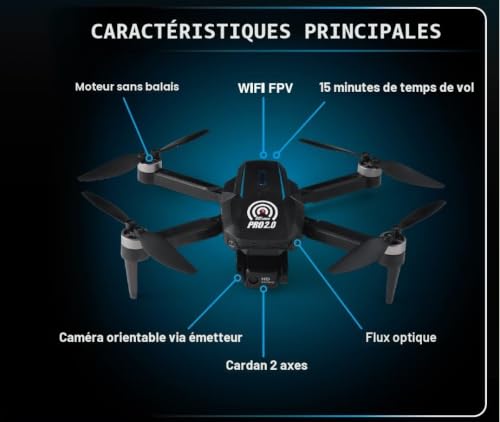
  • 2 more gimbal axes
    Gimbal axes
    2
    This drone has more gimbal axes than the average drone (2 vs 0). The average drone has 0 gimbal axes.
    2 vs 0
  • Supports smartphone control
    Smartphone control
    yes
    This drone supports smartphone control, while the average drone does not.
  • More advanced stabilization
    Image stabilization type
    2-Axis Mechanical
    This drone uses 2-Axis Mechanical image stabilization, while the average drone uses EIS (Digital).
    2-Axis Mechanical vs EIS (Digital)
  • 2 years newer release date
    Release date
    2025
    This drone is newer than the average drone (2025 vs 2023). The average drone was released in 2023.
    2025 vs 2023
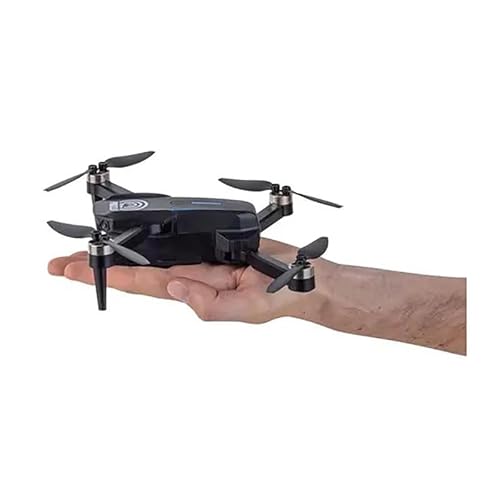
  • 71 mm narrower width
    Width
    170 mm
    This drone is narrower than the average drone (170 mm vs 241 mm). The average drone width is 241 mm.
    170 mm vs 241 mm
  • 2.86x cheaper
    Revell Go! Video Pro 2.0 is cheaper than the average drone (£70 vs £200).
    £70 vs £200
  • 50 mm shorter body length
    Length
    225 mm
    This drone is shorter than the average drone (225 mm vs 275 mm). The average drone is 275 mm long.
    225 mm vs 275 mm
  • 2.86x cheaper
    Revell Go! Video Pro 2.0 is cheaper than the average drone (£70 vs £200).
    £70 vs £200
  • 2 years newer release date
    Release date
    2025
    This drone is newer than the average drone (2025 vs 2023). The average drone was released in 2023.
    2025 vs 2023
  • 2 more gimbal axes
    Gimbal axes
    2
    This drone has more gimbal axes than the average drone (2 vs 0). The average drone has 0 gimbal axes.
    2 vs 0
  • More advanced stabilization
    Image stabilization type
    2-Axis Mechanical
    This drone uses 2-Axis Mechanical image stabilization, while the average drone uses EIS (Digital).
    2-Axis Mechanical vs EIS (Digital)
  • Supports TapFly
    TapFly
    yes
    This drone supports TapFly, while the average drone does not.
  • Supports smartphone control
    Smartphone control
    yes
    This drone supports smartphone control, while the average drone does not.
  • 71 mm narrower width
    Width
    170 mm
    This drone is narrower than the average drone (170 mm vs 241 mm). The average drone width is 241 mm.
    170 mm vs 241 mm
  • 50 mm shorter body length
    Length
    225 mm
    This drone is shorter than the average drone (225 mm vs 275 mm). The average drone is 275 mm long.
    225 mm vs 275 mm
  • Lower video resolution
    Video resolution
    1080p
    This drone offers lower video resolution than the average drone (1080p vs 4K/100 fps). The average drone offers a video resolution of 4K/100 fps.
    1080p vs 4K/100 fps
  • 7.4 m/s lower wind resistance
    Max wind resistance
    3.3 m/s
    This drone handles weaker wind than the average drone (3.3 m/s vs 10.7 m/s). The average drone handles wind up to 10.7 m/s.
    3.3 m/s vs 10.7 m/s
  • Fewer GNSS systems
    GNSS systems supported
    none
    This drone supports none GNSS systems, while the average drone supports GPS, GLONASS, Galileo, BeiDou.
    none vs GPS, GLONASS, Galileo, BeiDou
  • 11 m/s slower flight speed
    Max flight speed
    4 m/s
    This drone reaches a lower max flight speed than the average drone (4 m/s vs 15 m/s). The average drone reaches 15 m/s.
    4 m/s vs 15 m/s
  • More basic transmission system
    Video transmission system
    Wi-Fi
    This drone uses Wi-Fi for video transmission, while the average drone uses SkyLink 2.0.
    Wi-Fi vs SkyLink 2.0
  • No subject tracking
    Subject tracking
    no
    This drone cannot track subjects, while the average drone can.
  • No GPS
    GPS
    no
    This drone does not have GPS, while the average drone does.
  • Fewer frequency bands
    Operating frequency bands
    2.4 GHz
    This drone supports 2.4 GHz operating frequency bands, while the average drone supports 2.4 GHz, 5.8 GHz.
    2.4 GHz vs 2.4 GHz, 5.8 GHz
  • 7.5% worse value for money
    Revell Go! Video Pro 2.0 has worse value for money than the average drone (6.54 vs 7).
    6.54 vs 7.03
  • 2.43x less popular
    Revell Go! Video Pro 2.0 is less popular than the average drone (2.67 vs 6.5).
    2.67 vs 6.47
  • 7.4 m/s lower wind resistance
    Max wind resistance
    3.3 m/s
    This drone handles weaker wind than the average drone (3.3 m/s vs 10.7 m/s). The average drone handles wind up to 10.7 m/s.
    3.3 m/s vs 10.7 m/s
  • 11 m/s slower flight speed
    Max flight speed
    4 m/s
    This drone reaches a lower max flight speed than the average drone (4 m/s vs 15 m/s). The average drone reaches 15 m/s.
    4 m/s vs 15 m/s
  • 5 min shorter flight time
    Max flight time
    15 min
    This drone offers shorter max flight time than the average drone (15 min vs 20 min). The average drone offers 20 min of max flight time.
    15 min vs 20 min
  • 0.9 km shorter flight distance
    Max flight distance
    0.1 km
    This drone has a shorter max flight distance than the average drone (0.1 km vs 1 km). The average drone can fly up to 1 km.
    0.1 km vs 1 km
  • Lower video resolution
    Video resolution
    1080p
    This drone offers lower video resolution than the average drone (1080p vs 4K/100 fps). The average drone offers a video resolution of 4K/100 fps.
    1080p vs 4K/100 fps
  • Fewer photo format options
    Photo formats supported
    JPEG
    This drone supports JPEG photo formats, while the average drone supports JPEG, DNG (RAW).
    JPEG vs JPEG, DNG (RAW)
  • Lower photo resolution
    Photo resolution
    1920 x 1080 px
    This drone offers lower photo resolution than the average drone (1920x1080 px vs 4096x3072 px). The average drone offers a photo resolution of 4096x3072 px.
    1920x1080 px vs 4096x3072 px
  • No memory card slot
    Memory card slot
    no
    This drone does not have a memory card slot, while the average drone does.
  • Narrower tilt range
    Camera tilt range
    -90 to 0 °
    This drone has a narrower tilt range than the average drone (-90 to 0 ° vs -90 to 20 °).
    -90 to 0 ° vs -90 to 20 °
  • No 4K video
    4K camera
    no
    This drone does not support 4K video, while the average drone does.
  • 128 GB lower memory card limit
    Max external memory supported
    0 GB
    This drone supports less external storage than the average drone (0 GB vs 128 GB). The average drone supports up to 128 GB of external storage.
    0 GB vs 128 GB
  • Fewer GNSS systems
    GNSS systems supported
    none
    This drone supports none GNSS systems, while the average drone supports GPS, GLONASS, Galileo, BeiDou.
    none vs GPS, GLONASS, Galileo, BeiDou
  • No subject tracking
    Subject tracking
    no
    This drone cannot track subjects, while the average drone can.
  • No GPS
    GPS
    no
    This drone does not have GPS, while the average drone does.
  • No compass
    Compass
    no
    This drone does not have a compass, while the average drone does.
  • 2 fewer flight modes
    N. of intelligent flight modes
    2
    This drone offers fewer intelligent flight modes than the average drone (2 vs 4). The average drone offers 4 intelligent flight modes.
    2 vs 4
  • No beginner mode
    Beginner mode
    no
    This drone does not support beginner mode, while the average drone does.
  • More basic transmission system
    Video transmission system
    Wi-Fi
    This drone uses Wi-Fi for video transmission, while the average drone uses SkyLink 2.0.
    Wi-Fi vs SkyLink 2.0
  • Fewer frequency bands
    Operating frequency bands
    2.4 GHz
    This drone supports 2.4 GHz operating frequency bands, while the average drone supports 2.4 GHz, 5.8 GHz.
    2.4 GHz vs 2.4 GHz, 5.8 GHz
  • 0.95 km shorter transmission range
    Max transmission distance
    0.05 km
    This drone has a shorter max transmission distance than the average drone (0.1 km vs 1 km). The average drone reaches 1 km of transmission distance.
    0.05 km vs 1 km

Video reviews

Hands-on testing, unboxing, and real-world video evaluations

2.0
Rc-Andy
≈ estimated
28/03/2026
Hands-on review · flight test with crash and connection loss
Verdict
Revell Go! Video Pro 2.0 flies well once airborne, but connection drops and flyaway risk mean it is not recommended.

Third-party reviews

What we like about Revell Go! Video Pro 2.0

  • Two-axis mechanical gimbal, rare in this class
  • Brushless motors for power and longevity
  • About 15 minutes of flight
  • Altitude hold and headless mode
  • Well-known brand

What we don't like about Revell Go! Video Pro 2.0

  • No GPS or return-to-home
  • Video limited to 1080p
  • Wi-Fi link has short range
  • Drifts in wind without GPS hold

Verdict

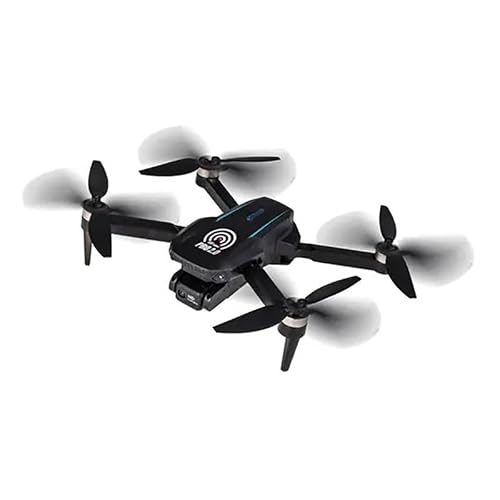
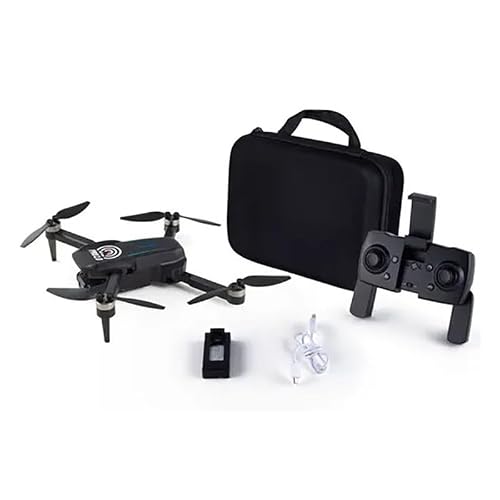
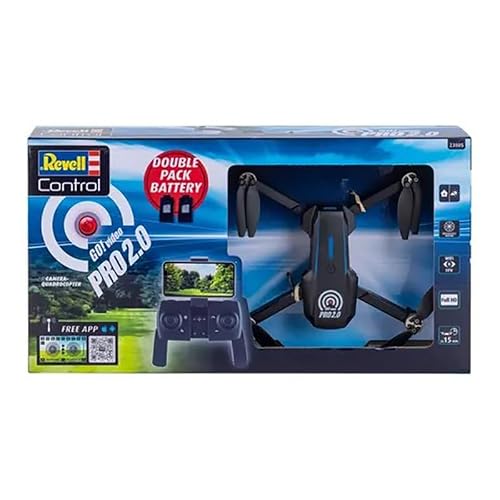
The Revell Go! Video Pro 2.0 stands out among entry-level drones because its 1080p camera sits on a two-axis mechanical gimbal. That means smoother video than the fixed cameras found on most toy-class models, which makes it a good fit for hobbyists who want watchable clips without moving up to a GPS drone. Brushless motors give it more power and longevity than brushed rivals, and a flight time of about 15 minutes is generous for its class. Altitude hold and headless mode keep handling relaxed for beginners. Video streams to a phone over Wi-Fi, and there is no GPS, so it cannot hold position precisely in wind or fly home by itself. For newcomers who care about steadier footage on a modest budget, it offers a rare combination from a well-known brand.

Compare Revell Go! Video Pro 2.0 with other drones

1Product to compare no. 1
VS
2Product to compare no. 2
VS
3Product to compare no. 3 (optional)

Graphic comparison of Revell Go! Video Pro 2.0 and other drones

No results found