Scored using Drones Methodology v3.0
Drones Methodology v3.0
Mathematical & Unbiased Scoring
Products in this category are scored under Frontum Drones Methodology v3.0: the technical score from the specifications is the base, and independent expert and video reviews (up to ±0.5 points), owner opinions (up to ±0.3) and best-of lists (up to +0.3) move it up or down.
Explore Drones Methodology v3.0

Fimi X8 Tele review: 97 specs compared

Avg. price:~£620Max flight time:38 minVideo resolution:4K/60 fpsMax transmission distance:10 km

Fimi X8 Tele Review: Compare 97 technical specifications and 4 expert and video reviews to see how this product ranks in the Drones category and whether it is worth buying.
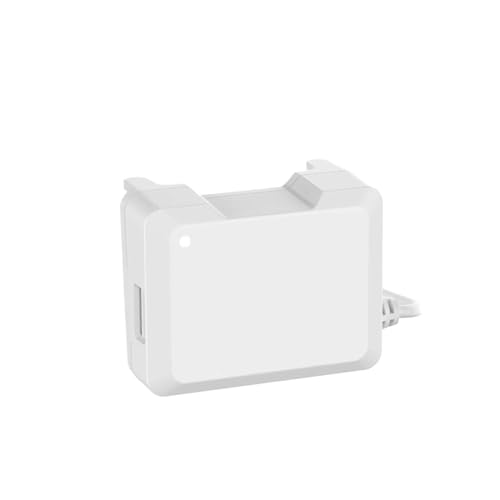
Fimi X8 Tele
7.7/10

Overall score

Score
7.7/ 10
✕
What it is
Our main score for this model, 1–10. It combines specs, best-of lists, expert reviews and owners.
How we count it
Parts: Technical score 35%, List score 30%, Reviews score 25%, Sentiment score 10%
Marks: Each part gets a mark out of 10. For reviews, lists and owners, a typical model in this category gets about 8 and the best one gets 10.
No data yet: A part with no data shows "?". It counts as the mark of a weaker model in this category (4 in 5 models with data score higher). This way, models with reviews, lists and owners usually come out ahead.
Score distribution
â–¼
<55-66-77-88-99-10
Score components

35%

8.1

Technical score

30%

?

List scoreNot enough data yet, so we use 7.5, the mark of a weaker model in this category

25%

7.3

Reviews score

10%

7.4

Sentiment score

â–²Better than 70% of drones
7.5

Value for money

Value for money
7.5/ 10
✕
What it is
An indicator that combines the drone's overall rating with its cost.
When it matters
When you are looking for a drone with a good balance between flight quality, camera features, and price.
Score distribution
â–¼
<55-66-77-88-99-10
Score components

70%

7.7

Overall score

30%

7.2

Price

â–¼Worse than 52%
8.1

Technical score

Technical score
8.1/ 10
✕
What it is
How good the specs are compared with the other models in this category, 1–10.
How we count it
Areas: We rate the specs in each area against the other models in this category.
Weighting: The areas that matter most to buyers count more. The shares are shown under Score components.
Share: The technical score is 35% of the overall score.
Score distribution
â–¼
<55-66-77-88-99-10
Score components

26%

8.6

Flight

24%

7.7

Camera

20%

7.8

Safety

16%

8.2

Connectivity

14%

7.9

Battery & Design

â–²Better than 84%
7.3

Reviews score

Reviews score
7.3/ 10
✕
What it is
Average grade from independent test sites, magazines and video reviewers, 1–10.
How we count it
Grades: Each review's own score is converted to 1–10; without one, we grade the review ourselves. Every review counts the same: written or video, short or full test.
Score: The average grade is 80% of the review mark; the number of reviews is the other 20% (1 review = 5, the typical number in this category = 8, the most-reviewed model = 10).
Enough data: With few reviews, the average grade is pulled toward the typical grade of this category. No reviews yet: 7.5 for now.
Share: Reviews count 25% of the overall score.
Score distribution
â–¼
<55-66-77-88-99-10

80%

7.5

Average grade

20%

6.5

Popularity

Grades by review (4)
4 videos, average 6.8/10. We use 5 reviews; the 1 missing counts as the category's typical 8.1: (6.8 × 4 + 8.1 × 1) ÷ 5 ≈ 7.0. Reviews count 25% of the overall score.
User ratings collected online are not part of this score.
â–¼Worse than 59%
?

List score

List score
7.5/ 10
✕
What it is
How often independent test sites, magazines and video reviewers put this model in their best-of lists for this category.
How we count it
Points: The model in the most lists of this category gets 10; the others get 8 to 10 in proportion. In no list yet: 7.5. Lists count 30% of the overall score.
Enough data: Every list counts, even a single one. With fewer than 5 best-of lists in the category, this part is left out.
Lists with this model (0)
Not in any best-of list yet, so this part counts as 7.5. Models in a list get 8 to 10.
Not in any best-of list yet
  • fimi-x8-tele
fimi-x8-tele
Where to buy
    N/A~ £620
Best rankings
Available: ranking among products currently available (including other versions of this product).All: ranking among all products in the database.

What reviewers say about the Fimi X8 Tele

Based on 0 · 4

Too few reviews for a firm verdict, though most who mention it find range and signal disappointing.
Criticised
Pick a topic to see who said what

What owners say about the Fimi X8 Tele

Based on 154 owners sharing their experience in online comments

36%positive7%mixed57%negative

Owners praise its zoom, range, and sturdy build, while weak signal and connection failures dominate the experience.

What owners dislike

  • Many owners report a weak radio link, with the video and control dropping at 400 to 500 metres in cities, and some losing signal near metal roofs or in forest.37
  • Owners often cannot connect the controller after a firmware update, and some report the update fails or the controller stays stuck on the old version.17
  • Owners report the live feed on the phone or tablet freezes, stutters or looks blurry, especially after a few hundred feet of flight.11
  • Owners say the 4G module often fails to register with the drone, with the SIM not activating or the module not being recognised.7
  • Owners say Fimi repairs and spare parts are hard to get, with support described as slow and some parts such as the gimbal rubber hard to find.7
  • Some owners report battery faults, such as the drone refusing to take off with a battery error, and batteries that crack or fail to charge.6
  • Some owners say the sticks feel imprecise and the drone drifts or slides near takeoff and landing, especially near walls.6
  • Owners report return-home can cut out or trigger too early, and some say the drone drifted away after losing the link.6
  • Owners say GPS lock is slow and unreliable, taking several minutes to find satellites, with some reporting GPS and VPS error modes.5
  • Owners say recorded video quality is weak, with footage that degrades over time and files that look poor compared with DJI.4

Points mentioned by at least 3 owners, most mentioned first.

Loading...
Loading category ranking...

Technical Specifications of drone Fimi X8 Tele

Technical score
Technical score
8.1/ 10
✕
What it is
How good the specs are compared with the other models in this category, 1–10.
How we count it
Areas: We rate the specs in each area against the other models in this category.
Weighting: The areas that matter most to buyers count more. The shares are shown under Score components.
Share: The technical score is 35% of the overall score.
Score distribution
â–¼
<55-66-77-88-99-10
Score components:

26%

8.6

Flight

24%

7.7

Camera

20%

7.8

Safety

16%

8.2

Connectivity

14%

7.9

Battery & Design

8.1
Reviews score
7.3
List score
?
Value for money
Value for money
7.5/ 10
✕
What it is
An indicator that combines the drone's overall rating with its cost.
When it matters
When you are looking for a drone with a good balance between flight quality, camera features, and price.
Score distribution
â–¼
<55-66-77-88-99-10
Score components:

70%

7.7

Overall score

30%

7.2

Price

7.5
Max flight time
38 min
This drone has a max flight time of 38 min, longer than 85% of drones and equal to 2.5% of drones.
Higher max may require optional/Plus battery configuration.
Max flight distance
10 km
This drone has a max flight distance of 10 km, farther than 72.9% of drones and equal to 5.5% of drones.
20 km applies to the Tele Max variant.
Max flight speed
18 m/s
This drone has a max flight speed of 18 m/s, faster than 68.4% of drones and equal to 8.2% of drones.
Max wind resistance
12 m/s
This drone has max wind resistance of 12 m/s, higher than 75.5% of drones and equal to 15.1% of drones.
Max service ceiling (ASL)
5,000 m
This drone has a max service ceiling of 5,000 m, higher than 67.9% of drones and equal to 10.5% of drones.
Show more
Video resolution
4K/60 fps
This drone records video at 4K/60 fps, higher than 79.2% of drones and equal to 6.4% of drones.
4K camera
yes
This drone supports 4K video. 46% of drones support 4K video.
Sensor size
1/2"
This drone has a sensor size of 1/2", larger than 48.2% of drones and equal to 17.6% of drones.
Main camera megapixels
48 MP
This drone has a main camera resolution of 48 MP, higher than 76% of drones and equal to 18% of drones.
Max movie bitrate
100 Mbps
This drone has a max movie bitrate of 100 Mbps, higher than 30.3% of drones and equal to 29% of drones.
Show more
Obstacle detection
no
This drone does not support obstacle detection. 31% of drones support obstacle detection.
Return to Home (RTH)
yes
This drone supports Return-to-Home (RTH). 33% of drones support Return-to-Home (RTH).
GPS
yes
This drone supports GPS. 35.3% of drones support GPS.
GNSS systems supported
GPS, GLONASS, Galileo, BeiDou
This drone supports GPS, GLONASS, Galileo, BeiDou GNSS systems, which are more comprehensive than those of 82.4% and the same as those of 17.6%.
Obstacle sensing directions
forward/backward/downward
This drone senses obstacles in forward/backward/downward directions, which is more comprehensive than that of 75.9% and the same as that of 5.5%.
Show more
Max transmission distance
10 km
This drone has a max transmission distance of 10 km, farther than 75.5% of drones and equal to 9.2% of drones.
Transmission latency
120 ms
This drone has transmission latency of 120 ms, lower than 59.2% of drones and equal to 28.2% of drones.
Video transmission system
RokLink
This drone uses RokLink for video transmission, which is more advanced than the system used by 83.1% and the same as that used by 3.1%.
Live view quality
1080p@60 fps
This drone offers live view quality of 1080p@60 fps, higher-quality than 80.2% of drones and equal to 12.5% of drones.
Remote control
yes
This drone has a handheld remote controller. 5% of drones offer this.
Show more
What reviewers say
Battery capacity
4,650 mAh
This drone has a battery capacity of 4,650 mAh, larger than 86.5% of drones and equal to 0.5% of drones.
Battery energy
53.7 Wh
This drone has battery energy of 53.7 Wh, higher than 80.6% of drones and equal to 0.6% of drones.
Charging time
110 min
This drone charges in 110 min, slower than 62.5% of drones and equal to 1.9% of drones.
Weight
750 g
This drone weighs 750 g, heavier than 79.4% of drones and equal to 1.6% of drones.
Removable battery
yes
This drone has a removable battery. 0.5% of drones have a removable battery.
Show more

Fimi X8 Tele vs the average drone

246810TotalFlightCameraSafetyConnectivityBattery & Design
  • 18 min longer flight time
    This drone offers longer max flight time than the average drone (38 min vs 20 min). The average drone offers 20 min of max flight time.
    Higher max may require optional/Plus battery configuration.
    38 min vs 20 min
  • 9 km longer transmission range
    This drone has a longer max transmission distance than the average drone (10 km vs 1 km). The average drone reaches 1 km of transmission distance.
    10 km vs 1 km
  • 3 more gimbal axes
    This drone has more gimbal axes than the average drone (3 vs 0). The average drone has 0 gimbal axes.
    3 vs 0
  • 9 km longer flight distance
    This drone has a longer max flight distance than the average drone (10 km vs 1 km). The average drone can fly up to 1 km.
    20 km applies to the Tele Max variant.
    10 km vs 1 km
  • Supports low-light mode
    This drone supports low-light mode, while the average drone does not.
  • 2,450 mAh more battery capacity
    This drone has a larger battery capacity than the average drone (4,650 mAh vs 2,200 mAh). The average drone battery has a capacity of 2,200 mAh.
    4,650 mAh vs 2,200 mAh
  • Includes optical zoom
    This drone has an optical zoom camera, while the average drone does not. 6.9% of drones offer one.
  • More video codec options
    This drone supports H.264/AVC, H.265/HEVC video codecs, while the average drone supports H.264/AVC.
    H.264/AVC, H.265/HEVC vs H.264/AVC
  • 18 min longer flight time
    This drone offers longer max flight time than the average drone (38 min vs 20 min). The average drone offers 20 min of max flight time.
    Higher max may require optional/Plus battery configuration.
    38 min vs 20 min
  • 9 km longer flight distance
    This drone has a longer max flight distance than the average drone (10 km vs 1 km). The average drone can fly up to 1 km.
    20 km applies to the Tele Max variant.
    10 km vs 1 km
  • 1.3 m/s higher wind resistance
    This drone handles stronger wind than the average drone (12 m/s vs 10.7 m/s). The average drone handles wind up to 10.7 m/s.
    12 m/s vs 10.7 m/s
  • 3 m/s faster flight speed
    This drone reaches a higher max flight speed than the average drone (18 m/s vs 15 m/s). The average drone reaches 15 m/s.
    18 m/s vs 15 m/s
  • 1,500 m higher service ceiling
    This drone can fly at a higher max service ceiling than the average drone (5,000 m vs 3,500 m). The average drone reaches 3,500 m.
    5,000 m vs 3,500 m
  • 3 more gimbal axes
    This drone has more gimbal axes than the average drone (3 vs 0). The average drone has 0 gimbal axes.
    3 vs 0
  • Supports low-light mode
    This drone supports low-light mode, while the average drone does not.
  • Includes optical zoom
    This drone has an optical zoom camera, while the average drone does not. 6.9% of drones offer one.
  • More video codec options
    This drone supports H.264/AVC, H.265/HEVC video codecs, while the average drone supports H.264/AVC.
    H.264/AVC, H.265/HEVC vs H.264/AVC
  • Captures RAW photos
    This drone can capture RAW photos, while the average drone cannot.
  • More advanced stabilization
    This drone uses 3-Axis Mechanical image stabilization, while the average drone uses EIS (Digital).
    3-Axis Mechanical vs EIS (Digital)
  • Richer manual controls
    This drone offers full manual camera controls, while the average drone offers no.
    full vs no
  • Wider aperture
    This drone has a wider aperture than the average drone (f/1.6 vs f/2). The average drone uses an aperture of f/2.
    f/1.6 vs f/2
  • 36 MP more camera resolution
    This drone has more main camera megapixels than the average drone (48 MP vs 12 MP). The average drone has 12 MP on the main camera.
    48 MP vs 12 MP
  • More capable focus system
    This drone uses contrast AF (CDAF) for focusing, while the average drone uses fixed focus.
    contrast AF (CDAF) vs fixed focus
  • 19,200 ISO higher max ISO
    This drone reaches a higher max ISO than the average drone (25,600 ISO vs 6,400 ISO). The average drone reaches 6,400 ISO.
    25,600 ISO vs 6,400 ISO
  • More color profile options
    This drone supports Normal, F-Log color profiles, while the average drone supports Normal.
    Normal, F-Log vs Normal
  • Supports HDR mode
    This drone supports HDR mode, while the average drone does not.
  • Larger sensor size
    This drone has a larger sensor than the average drone (1/2" vs 1/2.3"). The average drone uses a sensor of 1/2.3".
    1/2" vs 1/2.3"
  • Higher photo resolution
    This drone offers higher photo resolution than the average drone (8064x6048 px vs 4096x3072 px). The average drone offers a photo resolution of 4096x3072 px.
    8064x6048 px vs 4096x3072 px
  • Supports panorama mode
    This drone supports panorama mode, while the average drone does not.
  • Supports waypoint flight
    This drone supports waypoint flight, while the average drone does not.
  • Supports TapFly
    This drone supports TapFly, while the average drone does not.
  • Weather-sealed design
    This drone is weather-sealed, while the average drone is not.
    Advertised as rain/snow-proof; no official IP rating.
  • Remote ID
    This drone supports Remote ID, while the average drone does not.
    Support may depend on current FIMI firmware and app configuration.
  • 3.05x lower takeoff weight
    This drone has a lower max takeoff weight than the average drone (760 g vs 249 g). The average drone has a max takeoff weight of 249 g.
    760 g vs 249 g
  • 1 more flight modes
    This drone offers more intelligent flight modes than the average drone (5 vs 4). The average drone offers 4 intelligent flight modes.
    POI, Waypoint Flight, TapFly, Course Lock, SAR
    5 vs 4
  • 9 km longer transmission range
    This drone has a longer max transmission distance than the average drone (10 km vs 1 km). The average drone reaches 1 km of transmission distance.
    10 km vs 1 km
  • Better live view quality
    This drone has better live view quality than the average drone (1080p@60 fps vs 1080p@25 fps). The average drone offers live view quality of 1080p@25 fps.
    1080p@60 fps vs 1080p@25 fps
  • 10 ms lower latency
    This drone has lower transmission latency than the average drone (120 ms vs 130 ms). The average drone has transmission latency of 130 ms.
    120 ms vs 130 ms
  • More polished companion app
    This drone uses the FIMI Navi 3.0 companion app, while the average drone uses HS FPV.
    FIMI Navi 3.0 vs HS FPV
  • Supports 4G / LTE
    This drone supports 4G / LTE connectivity, while the average drone does not.
    Requires optional module.
  • More capable transmission system
    This drone uses RokLink for video transmission, while the average drone uses SkyLink 2.0.
    RokLink vs SkyLink 2.0
  • 2,450 mAh more battery capacity
    This drone has a larger battery capacity than the average drone (4,650 mAh vs 2,200 mAh). The average drone battery has a capacity of 2,200 mAh.
    4,650 mAh vs 2,200 mAh
  • 36.52 Wh more battery energy
    This drone has higher battery energy than the average drone (53.7 Wh vs 17.18 Wh). The average drone battery has 17.18 Wh of energy.
    53.7 Wh vs 17.18 Wh
  • More modern charging port
    This drone uses proprietary for charging, while the average drone uses micro-USB.
    proprietary vs micro-USB
  • 3.05x higher weight
    This drone is heavier than the average drone (750 g vs 246 g). The average drone weighs 246 g.
    750 g vs 246 g
  • 93 mm wider width
    This drone is wider than the average drone (334 mm vs 241 mm). The average drone width is 241 mm.
    334 mm vs 241 mm
  • No wireless file transfer
    This drone does not support wireless file transfer, while the average drone does.
  • 20 min longer charging time
    This drone charges more slowly than the average drone (110 min vs 90 min). The average drone charges in 90 min.
    110 min vs 90 min
  • No headless mode
    This drone does not support headless mode, while the average drone does.
  • 11 ° narrower field of view
    This drone has a narrower field of view than the average drone (79 ° vs 90 °). The average drone has a field of view of 90 °.
    79 ° vs 90 °
  • 3.1x more expensive
    Fimi X8 Tele is more expensive than the average drone (£620 vs £200).
    £620 vs £200
  • More basic controller
    This drone uses the TX10A controller, while the average drone uses LiteRadio 4 SE.
    TX10A vs LiteRadio 4 SE
  • 3.1x more expensive
    Fimi X8 Tele is more expensive than the average drone (£620 vs £200).
    £620 vs £200
  • 11 ° narrower field of view
    This drone has a narrower field of view than the average drone (79 ° vs 90 °). The average drone has a field of view of 90 °.
    79 ° vs 90 °
  • Lower video resolution
    This drone offers lower video resolution than the average drone (4K/60 fps vs 4K/100 fps). The average drone offers a video resolution of 4K/100 fps.
    4K/60 fps vs 4K/100 fps
  • Narrower tilt range
    This drone has a narrower tilt range than the average drone (-90 to 10 ° vs -90 to 20 °).
    -90 to 10 ° vs -90 to 20 °
  • No headless mode
    This drone does not support headless mode, while the average drone does.
  • No wireless file transfer
    This drone does not support wireless file transfer, while the average drone does.
  • More basic controller
    This drone uses the TX10A controller, while the average drone uses LiteRadio 4 SE.
    TX10A vs LiteRadio 4 SE
  • 3.05x higher weight
    This drone is heavier than the average drone (750 g vs 246 g). The average drone weighs 246 g.
    750 g vs 246 g
  • 93 mm wider width
    This drone is wider than the average drone (334 mm vs 241 mm). The average drone width is 241 mm.
    334 mm vs 241 mm
  • 20 min longer charging time
    This drone charges more slowly than the average drone (110 min vs 90 min). The average drone charges in 90 min.
    110 min vs 90 min
  • 10.1 mm taller body height
    This drone is taller than the average drone (72.6 mm vs 62.5 mm). The average drone is 62.5 mm tall.
    Folded height listed as 72.6 mm.
    72.6 mm vs 62.5 mm

Video reviews

Hands-on testing, unboxing, and real-world video evaluations
8.0
Caper Couple
≈ estimated
25/07/2025
Flight review · camera quality, zoom and lag
Verdict
The Fimi X8 Tele has a camera with clear image quality and strong zoom, but slight lag and jitter show up in flight.
9.0
Nick Psarikoglou (MyQuadcopter)
≈ estimated
13/12/2024
Long-range test · one 9 km flight over December landscapes
Verdict
The Fimi X8 Tele reached 9 km on a single flight, which suits hobbyists and content creators if battery and signal are watched closely.
4.0
Gorillaman's Garage
≈ estimated
08/12/2024
Firmware update check · flight problems and zoom tests
Verdict
The Fimi X8 Tele's firmware updates changed nothing, and it still has zoom shake, lag and cold-weather limits.
9.0
Gorillaman's Garage
≈ estimated
02/09/2024
Comparison flight test · three drones, handling and camera
Verdict
Fimi X8 Tele is clearly better than the previous X8 model in handling and hover, and the best of the three drones tested.
7.0
Gorillaman's Garage
≈ estimated
02/09/2024
Range test · return-to-home and landing test among trees
Verdict
Fimi X8 Tele has about the same range as the previous X8 model, but its return-to-home works reliably.
8.0
Caper Couple
≈ estimated
18/08/2024
Hands-on review · camera, zoom and return-to-home test
Verdict
Fimi X8 Tele is a decent drone with a strong camera, but its return-to-home landing needs firmware work.
8.0
Nick Psarikoglou (MyQuadcopter)
≈ estimated
27/12/2024
Hands-on test · 2.4 vs 5.8 GHz range and signal
Verdict
The Fimi X8 Tele's 2.4 and 5.8 GHz bands each have their place, and switching between them adds useful flexibility.
Hands-on video, no verdict
Overview video
Not graded
Not graded
Hands-on video, no verdict

Third-party reviews

What customers like about Fimi X8 Tele

  • Affordable price point compared to DJI competitors
  • Dual-camera system featuring a 48MP main sensor
  • Excellent flight stability, even in moderate wind conditions
  • Support for long-range transmission via RokLink (up to 10-15km)
  • Impressive advertised battery life of up to 38-40 minutes
  • Useful accessory port for add-ons like megaphones or drop-release systems
  • Compact, foldable design suitable for travel

What customers don't like about Fimi X8 Tele

  • Telephoto lens image quality is often reported as blurry or unsatisfactory beyond 5x zoom
  • Visual artifacts ('jello' effect) and focus issues in cold temperatures
  • Lack of official drone certifications (e.g., C-class or Remote ID in some regions)
  • Software limitations, including a 5-minute video clip limit and lack of live exposure view for stills
  • Unreliable customer support and difficult warranty claim process
  • Actual battery life often falls short of advertised times in real-world conditions
  • Basic 'Navi' app can be processor-intensive and buggy on older smartphones

Verdict

The Fimi X8 Tele is a professional-grade foldable drone featuring a dual Sony camera system, headlined by a 48MP wide-angle sensor (1/2-inch) and a 13MP telephoto sensor (1/2.5-inch) that supports 4K/60fps video and a powerful 30x hybrid zoom. Key performance specifications include a 10km RokLink transmission range, level 7 wind resistance, and a versatile flight time of up to 47 minutes when using the optional 'Plus' battery. Its main pros include exceptional long-range imaging, stable 3-axis mechanical gimbal stabilization, and specialized modes like AI Super Night Video and Search and Rescue. However, notable cons include its relatively heavy takeoff weight of approximately 750g-832g, the lack of obstacle avoidance in certain zoomed-in flight modes, and a reported setup process that can be challenging for some users.

Compare Fimi X8 Tele with other drones

1Product to compare no. 1
VS
2Product to compare no. 2
VS
3Product to compare no. 3 (optional)

Graphic comparison of Fimi X8 Tele and other drones

No results found