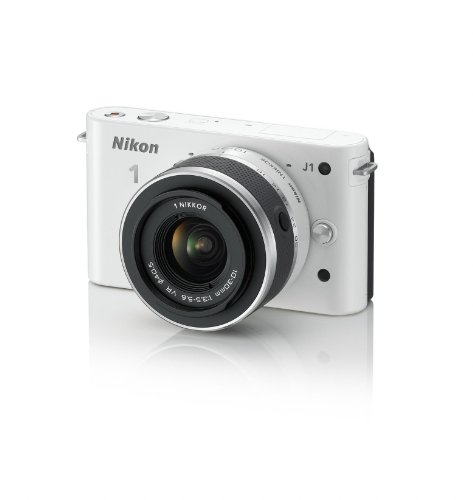
Nikon 1 J1 review. Compare 108 technical specifications and user reviews to see how it ranks among cameras and if it is worth buying.
Overall score
What it is: An overall evaluation of the camera's quality, based on technical analyses and user reviews.
When it matters: When you need a quick reference to identify the best cameras on the market.
Score components:
90.0%
Technical Score
10.0%
User score
Technical Score
What it is: An assessment of the camera's technical performance, covering eight key areas: image quality, autofocus, video features, stabilization, lens compatibility, connectivity, battery, and design.
When it matters: When you want to compare cameras based on technical performance and available features.
Score components:
28.0%
Sensor & Image
25.0%
Photo Features
18.0%
Video & Audio
14.0%
Display & Design
8.0%
Battery & Power
7.0%
Connectivity & Storage
User score
What it is: A rating that combines user reviews and the total number of reviews received by the camera.
When it matters: When real-world owner satisfaction and review volume matter to your decision.
Score components:
70.0%
User reviews
30.0%
Popularity
Score components:
25.0%
Sensor size
20.0%
Main camera megapixels
20.0%
Dual card slots
15.0%
N. of focus points
10.0%
RAW photo capture
10.0%
Phase-detection autofocus (photos)
Score components:
35.0%
Weight
30.0%
Battery life (CIPA)
20.0%
Sensor-shift stabilization
15.0%
GPS
Score components:
30.0%
Price
20.0%
Weight
20.0%
AF tracking
20.0%
Battery life (CIPA)
10.0%
Touchscreen
Score components:
30.0%
Main camera megapixels
25.0%
Sensor size
20.0%
Main camera pixel size
15.0%
Sensor-shift stabilization
10.0%
RAW photo capture
Score components:
30.0%
Weight
25.0%
Thickness
20.0%
AF low-light sensitivity
15.0%
Sensor-shift stabilization
10.0%
Eye detection AF (human)
Score components:
30.0%
Sensor size
25.0%
Main camera pixel size
20.0%
Eye detection AF (human)
15.0%
Main camera megapixels
10.0%
Sensor-shift stabilization
Score components:
30.0%
Weight
25.0%
Battery life (CIPA)
20.0%
Min operating temperature
15.0%
Sensor-shift stabilization
10.0%
GPS
Available: ranking among products currently available (including other versions of this product).
All: ranking among all products in the database.
#41 in Best Cheap Cameras
#50 in Best Cameras under £1000
#68 in Best Nikon Cameras
#84 in Best Cameras under £500
#103 in Best Mirrorless Cameras
#129 in Best Cameras under £200
#177 in Best Cameras under £300
#239 in Best Cameras
#239 in Best Digital Cameras
#333 in Best Travel Cameras
#338 in Best Cameras for Hiking
What it is: An assessment of the camera's technical performance, covering eight key areas: image quality, autofocus, video features, stabilization, lens compatibility, connectivity, battery, and design.
When it matters: When you want to compare cameras based on technical performance and available features.
Score components:
28.0%
Sensor & Image
25.0%
Photo Features
18.0%
Video & Audio
14.0%
Display & Design
8.0%
Battery & Power
7.0%
Connectivity & Storage
What it is: A rating that combines user reviews and the total number of reviews received by the camera.
When it matters: When real-world owner satisfaction and review volume matter to your decision.
Score components:
70.0%
User reviews
30.0%
Popularity
What it is: An indicator that combines the camera's overall rating with its cost.
When it matters: When you want to know how much overall quality you get for the price.
Score components:
60.0%
Overall score
40.0%
Price
Importance: HIGH
Good value: Full frame or larger
Importance: HIGH
Good value: At least 20 MP
Importance: HIGH
Good value: At least 3.5 µm
Importance: LOW
Importance: MEDIUM
Good value: At least ISO 25,600
Importance: MEDIUM
Importance: MEDIUM
Good value: At least 14-bit
Importance: LOW
Importance: LOW
Importance: LOW
Importance: LOW
Importance: LOW
Importance: LOW
Importance: LOW
Importance: LOW
Importance: MEDIUM
Importance: LOW
Importance: LOW
Importance: LOW
Importance: LOW
Importance: LOW
Importance: HIGH
Good value: At least 200 points
Importance: HIGH
Importance: MEDIUM
Importance: LOW
Importance: LOW
Importance: MEDIUM
Importance: MEDIUM
Importance: HIGH
Good value: At least 5 stops
Importance: LOW
Importance: MEDIUM
Good value: At least 10 fps
Importance: LOW
Importance: LOW
Importance: LOW
Importance: LOW
Importance: LOW
Importance: LOW
Importance: LOW
Importance: LOW
Importance: LOW
Importance: LOW
Importance: LOW
Importance: LOW
Importance: LOW
Importance: LOW
Importance: LOW
Importance: LOW
Good value: At least 200,000 actuations
Importance: LOW
Good value: At least 10x
Importance: HIGH
Good value: At least 3840 px
Importance: MEDIUM
Good value: At least 200 Mbps
Importance: MEDIUM
Good value: At least 10-bit
Importance: LOW
Importance: LOW
Importance: LOW
Importance: LOW
Importance: LOW
Importance: LOW
Importance: LOW
Good value: At least 30 min
Importance: LOW
Importance: LOW
Importance: LOW
Importance: LOW
Importance: LOW
Good value: At least 2 microphones
Importance: LOW
Importance: LOW
Importance: LOW
Importance: LOW
Importance: MEDIUM
Good value: 500 g or less
Importance: LOW
Importance: LOW
Importance: LOW
Importance: MEDIUM
Importance: MEDIUM
Good value: At least 2.36 million dots
Importance: LOW
Good value: 100%
Importance: LOW
Importance: LOW
Good value: At least 120 Hz
Importance: MEDIUM
Good value: At least 3 in
Importance: LOW
Importance: LOW
Importance: LOW
Importance: LOW
Importance: LOW
Importance: LOW
Importance: LOW
Good value: At least 10 m
Importance: LOW
Importance: LOW
Importance: LOW
Importance: LOW
Importance: MEDIUM
Good value: At least 400 shots
Importance: LOW
Good value: At least 1,500 mAh
Importance: LOW
Importance: LOW
Importance: LOW
Importance: LOW
Importance: LOW
Importance: LOW
Importance: LOW
Importance: LOW
Importance: LOW
Importance: LOW
Importance: LOW
Importance: LOW
Importance: LOW
Importance: LOW
Importance: LOW
Importance: LOW
Importance: LOW
Importance: LOW
Importance: HIGH
Importance: HIGH
Good value: At least 200 points
Importance: LOW
Importance: LOW
Importance: LOW
Importance: MEDIUM
Good value: 500 g or less
Importance: HIGH
Good value: At least 20 MP
Importance: HIGH
Good value: Full frame or larger
Importance: LOW
Importance: MEDIUM
Good value: At least 14-bit
Importance: LOW
Importance: LOW
Importance: MEDIUM
Good value: At least 400 shots
Importance: LOW
(Reviews last updated: July 2026)
The DPReview of the Nikon 1 V1 and J1 highlights these mirrorless cameras as highly responsive, featuring an innovative hybrid autofocus system and 60 fps continuous shooting. Both models deliver vibrant JPEG images, with the V1 offering a quality EVF and the J1 providing a compact design with a built-in flash. However, the review notes drawbacks including limited low-light performance from the 1-inch sensor and a severe lack of direct manual controls, forcing settings into the menu system. Additionally, the cameras are criticized for a flawed Auto ISO system that causes motion blur and high pricing for the V1.
The ePHOTOzine review highlights the Nikon 1 J1 as an ultra-compact, 10.1-megapixel CX-format mirrorless camera featuring the world’s fastest autofocus system, combining phase-detection and contrast-detect AF for rapid tracking. Key advantages include its ability to shoot at up to 10 frames per second with full AF tracking, or 60 frames per second with single AF, along with full 1080p video capabilities. However, limitations include a modest 3-inch 460k-dot screen, the absence of an electronic viewfinder (EVF), and no hot shoe, which may deter advanced users. Furthermore, the interface lacks direct manual exposure controls, and the smaller CX sensor shows weaker dynamic range in poor lighting compared to larger APS-C alternatives, despite respectable image quality at lower ISO settings.
The Amateur Photographer review highlights the Nikon 1 J1 as a well-engineered, portable mirrorless camera featuring a fast hybrid autofocus system, impressive high ISO noise control, and a solid build with responsive controls. Its compact, collapsible zoom lens makes the system highly portable for users upgrading from point-and-shoots. However, the review notes significant limitations for enthusiasts, including a heavily consumer-oriented menu system that buries manual controls and a non-customizable 'F' button. Additionally, while fast in good light, the autofocus struggles in low-contrast, low-light environments.
The Photography Life review of the Nikon 1 J1 highlights a fast-performing, compact camera suitable for casual users, featuring a groundbreaking hybrid autofocus system, impressive ISO performance for its size, and a high-quality 3-inch LCD. However, it is constrained by a lack of a viewfinder, no physical PASM dial for manual controls, and limited dynamic range compared to larger-sensor alternatives. Pros include the highly portable design, small lenses, and exceptional tracking speed, making it well-suited for fast-action scenarios. Cons highlighted are the lack of a hot shoe, an overly plasticky build, and an inconvenient menu-driven interface for changing essential settings.
The Focus Review of the Nikon J1 highlights this mirrorless camera as an attractive, lower-priced alternative to its larger sibling, the Nikon V1, aimed at users transitioning from compact cameras who want better image quality without the bulk of an SLR. Tested alongside the 10-100mm zoom and 10mm pancake lenses, the 10-megapixel CX-sensor camera delivers strong daylight color accuracy and a solid center resolution averaging 1500 lines per picture height. Notable pros include a fast hybrid autofocus system that utilizes quick phase detection in good lighting, a completely silent electronic shutter capable of speeds up to 1/16,000 second, and an impressive burst mode of up to 60 frames per second at full resolution. Additionally, unlike the V1, the J1 features a built-in, periscope-style pop-up flash designed to clear longer lenses. However, the review details clear cons regarding the camera's physical design and small sensor constraints. Physically, the mode dial on the back rotates too lightly, often causing users to accidentally switch settings, and the lack of a dedicated PASM button forces tedious navigation through the 3-tab menu to adjust manual...
The Nikon 1 J1 is a compact interchangeable-lens camera praised for its solid build quality, fast start-up speeds, and exceptionally accurate autofocus that competes well with entry-level DSLRs. The reviewer found its lightweight form factor ideal for travel, weighing just 535 grams when paired with both the 10-30mm and 30-110mm VR lenses. Performance highlights include stellar metering, an intuitive menu system that remembers previous settings, and an impressive battery life that easily yields over 350 shots on a partial charge. It is also highly effective for candid photography, as its unobtrusive design allows photographers to shoot discreetly without drawing unwanted attention. However, the camera has several distinct drawbacks, most notably its small 1-inch (CX) sensor, which produces "gritty" images even at base ISO and suffers a sharp decline in image quality past ISO 1600. The reviewer noted that shooting in RAW is necessary to achieve the best details. Ergonomically, the lack of a Fn button for quick ISO adjustments and the omission of physical PSAM shooting mode dials on the body force users to dig into the menus for manual...
The Vancouverscape review highlights the Nikon 1 J1 as a sleek, lightweight, and elegant mirrorless camera that offers impressive functionality in a highly compact design. It is heavily praised for its advanced Hybrid AF system featuring 73 focus points and incredibly fast continuous shooting capabilities that reach up to 60 frames per second in Electronic (Hi) mode, making it an excellent option for action and sports photography. Additionally, the reviewer commends its unique creative features, such as the Smart Photo Selector—which automatically captures 20 frames and saves the top five images—and the Motion Snapshot mode that blends slow-motion video clips with still images. The camera also delivers solid low-light performance using its Programmed Auto mode, full HD video capabilities, and a convenient dual-startup method via the power switch or by simply rotating the zoom lens ring. However, the review outlines several clear drawbacks to the system. A major con is the J1's lack of an external flash unit option, leaving users reliant on a built-in "submarine-like" pop-up flash that does not produce amazing photos or offer softer lighting choices for...
The Nikon 1 J1 is a compact, retro-inspired mirrorless digital camera featuring a 10-megapixel CX-format sensor, an EXPEED 3 processor, and a hybrid autofocus system with 73 focal-plane points. Reviewer James Tocchio highlights its sleek, minimalist design reminiscent of a Leica, its intuitive menu layout, and its impressive performance in well-lit conditions, yielding vibrant colors and sharp details. Additional highlights include a bright 3-inch LCD screen and a highly capable hybrid phase- and contrast-detection autofocus system that holds its own against modern cameras in good light. Today, it serves as an affordable, distraction-free option—typically priced around $150 on eBay—for photographers looking to unplug from modern smartphone ecosystems. However, the camera has notable limitations rooted in its 2011 origin and small sensor size. The CX sensor produces a deep depth-of-field that limits subject isolation, and low-light performance is hindered by struggling autofocus and an Auto ISO bias that causes camera shake by favoring slow shutter speeds. Physically, its glossy finish can make it slippery to hold single-handed, the built-in flash frequently produces blown-out portraits, and mounting the system's zoom lenses eliminates...
The Cameraderie field report praises the Nikon J1 for its sharp, vibrant rear display, compact, lightweight design, and small, smooth-operating lenses. However, the review highlights significant drawbacks, including a low-capacity battery that necessitates a spare, and a severe lack of external controls or a functional menu system for key settings. Cameraderie
about picking up a camera from this era, let me know: Are you considering buying a used J1, or looking into the later J5 model mentioned in the post? What is your primary use case (e.g., street photography, casual family photos, video)? What is your budget, or are you cross-shopping this with other mirrorless brands? I can help you compare options or recommend settings to bypass the J1's interface quirks.
The Nikon 1 J1 features a high-quality, minimalistic metal-fronted body with exceptionally fast autofocus and continuous shooting capabilities driven by the EXPEED 3 processor. Pros include an intuitive control layout with dedicated video/still buttons, a built-in pop-up flash, and effective, fast performance. However, the camera's 1-inch sensor shows noticeable noise at ISO 800 and higher compared to larger sensors, limiting its low-light performance. Cons include a lack of a physical mode dial for manual controls, forcing menu navigation, alongside somewhat gimmicky "smart" shooting modes and low-resolution slow-motion video.
The Nikon 1 J1 is a compact mirrorless system camera designed primarily for users upgrading from standard compact point-and-shoots. Priced at around €500 with a 10-30mm kit lens, it introduces a CX-format sensor that is roughly two-thirds smaller than a typical Nikon DSLR sensor. A major highlight of the camera is its high-speed performance, featuring daytime autofocus that locks in just 0.31 seconds and a rapid burst mode utilizing an electronic shutter that can shoot up to 60 frames per second. It is highly optimized for automatic shooting, offering features like the "Smart Photo Selector" to automatically save the five best images from a burst, a pop-up flash, and Full-HD video recording with manual microphone sensitivity adjustments. However, the camera has notable limitations regarding image quality and user control. Due to the smaller sensor size, distinct image noise becomes visible in full-view monitors at ISO 400, and fine details suffer from aggressive softening from ISO 800 upwards. While manual and semi-manual shooting programs are available, they are frustratingly hidden deep within the menu system rather than being accessible on the...
The Nikon 1 J1 marks Nikon's entry into the mirrorless market, utilizing a 10.0-megapixel CX-format (1-inch) sensor with a 2.7x crop factor. Reviewers praised the camera's high fun factor, fast hybrid autofocus system, and rapid shooting speeds of up to 60 frames per second. Image quality remains solid with minimal noise up to ISO 800, and its 3.0-inch display offers a smooth, lag-free viewing experience. Furthermore, it boasts strong Full-HD video capabilities at 60i/30p with reliable continuous autofocus tracking, making it an excellent, highly responsive point-and-shoot upgrade for beginners. However, the camera suffers from notable handling and hardware limitations. The physical design lacks ergonomics with a slippery grip, and it completely omits both an electronic viewfinder and a hot shoe for external accessories. Advanced users will find the interface frustrating, as changing between manual exposure modes and semi-automatics requires tedious navigation through on-screen menus due to a lack of direct physical buttons. Finally, while the 10-30mm kit lens features quiet autofocus and optical stabilization, its performance is subpar; it exhibits prominent edge softness, weak corners, and noticeable distortion, especially at...
The Nikon 1 J1 is a beginner-friendly mirrorless system camera that originally launched with a manufacturer's suggested retail price (MSRP) of 599 Euro, positioning it as an affordable entry-point model compared to its higher-end sibling, the V1. Designed primarily for hobbyist photographers, the camera features an intuitive rear layout dominated by automatic modes and creative features like the "Motion Snapshot" (which blends slow-motion video with a still image) and a Smart Photo Selector that automatically chooses the best scene program. It is equipped with a 10-megapixel CMOS sensor, a high-speed hybrid contrast and phase-detection autofocus system, and a fixed 3-inch screen with 460,000 pixels. On the downside, advanced users will find manual settings cumbersome, as manual controls like aperture and shutter priority are buried deep inside the camera's menus rather than accessible via physical buttons. In testing, the camera's primary strengths emerged as its very fast operating speed and lightweight portability, weighing under 400 grams with the battery and memory card included. Performance tests highlighted a solid dynamic range capable of handling high-contrast scenes and an impressive effective resolution efficiency...
This review concludes that the Nikon 1 V1 and J1 mirrorless cameras serve as excellent, fast snapshot devices tailored for users upgrading from basic compact cameras, rather than advanced enthusiasts. The core pros highlighted include remarkably fast operational speeds that eliminate annoying wait times, high continuous shooting performance (up to 10 frames per second), and the ability to capture high-resolution photos while simultaneously recording Full HD videos. Additionally, despite utilizing a small 10.1-megapixel CX-format sensor, both cameras deliver consistently good image quality across their ISO range. They also offer an innovative "Motion Snapshot" mode that pairs a still image with a short slow-motion video snippet. Conversely, the review identifies several notable cons, focusing heavily on flawed ergonomics and sparse functionality. Manual adjustments are described as overly cumbersome due to a lack of physical buttons, forcing users into a highly menu-driven operation that relies on a loose, overly sensitive four-way control wheel. Hardware limitations further hold the system back; the premium V1 lacks a built-in flash, suffers from a sluggish auto-switch between the LCD monitor and Electronic Viewfinder (EVF), and utilizes...
The Nikon 1 J1 is a compact mirrorless camera equipped with a 10.1-megapixel CMOS sensor (1-inch format) that emphasizes speed through a hybrid autofocus system, combining phase- and contrast-detection. Its standout features include exceptionally fast autofocus and a continuous shooting rate of up to 60 frames per second using the electronic shutter. The camera offers 1080i Full HD video recording at 60fps, alongside specialized high-speed, slow-motion modes (up to 1200fps) and creative, quick-capture features like "Motion Snapshot" and "Smart Photo Selector". Wikipedia Pros include the highly capable and fast autofocus system, a sleek, portable design, and innovative, user-friendly creative modes. However, the camera also has notable limitations, such as the smaller sensor size compared to its direct competition, resulting in slightly lower image quality in low-light conditions, as well as a limited number of physical controls, which may frustrate advanced photographers. Despite these drawbacks, the J1 is praised for its performance and speed. Wikipedia
The Nikon 1 J1 marks Nikon's entry into the mirrorless system camera market, featuring a compact aluminium body and a 10.1-megapixel CX CMOS sensor with a 2.7x crop factor. Despite its small sensor size compared to Micro Four Thirds alternatives, the camera delivers surprisingly excellent image quality that rivals larger DSLRs, performing well up to ISO 800 before noise becomes noticeable. Its standout strengths include a highly reliable exposure metering system, Full HD video capabilities, and exceptional speed. Powered by the Expeed 3 dual-core processor, it achieves rapid autofocusing and impressive burst rates of up to 10 frames per second at full resolution, or 60 frames per second in Full HD. Additionally, it features a 3-inch display and an innovative "Smart-Photo-Selector" mode that captures a sequence of 40 shots to automatically recommend the five best images based on focus and framing. However, the camera comes with notable downsides, primarily its lack of advanced connectivity and physical expansions. It features no hot shoe for external flashes—leaving users dependent on the integrated pop-up flash—and lacks a port for external microphones. While the...
The digitalkamera.de lab test of the Nikon 1 J1, conducted with the 10-30mm, 10mm f/2.8, and 30-110mm lenses, highlights a 10.1-megapixel CX-format sensor designed for high-speed performance. Key advantages include an exceptionally fast, accurate autofocus system and strong continuous shooting speeds up to 10 fps. However, the smaller sensor leads to noticeable image noise above ISO 800 and limited low-light capability compared to larger sensor systems. While the 10mm pancake lens provides good sharpness, it offers limited advantage in aperture over the versatile, albeit less compact, 10-30mm kit zoom.
The Nikon 1 J1 is an elegant, minimalist system camera designed to keep the photographer focused on the subject rather than complex tech settings. The camera features a 10-megapixel sensor with a 2.7x crop factor and relies on simplified menus and minimal buttons for streamlined operation. Key highlights include its exceptionally fast autofocus tracking and a "Smart Photo Selector" feature that captures 30 photos at 20 frames per second to automatically save the five best shots based on sharpness and facial expressions. Image quality is detailed, sharp, and high-contrast, while video recording delivers crisp Full HD performance at 1080p. Pros and Cons Pro: High-speed continuous shooting mode. Pro: Convenient built-in flash. Pro: Fast, reliable autofocus tracking. Con: No built-in electronic viewfinder. Con: Image noise (graininess) visible in dark areas at higher ISO settings. Con: Lacks a hot shoe for external flash attachments.
The Computerwoche review of the Nikon 1 J1 highlights it as an entry-level mirrorless system camera tailored heavily toward beginner photographers. Evaluated at an original retail price of €599, the device stands out for its high operational speeds, exceptionally fast hybrid autofocus (which seamlessly switches between contrast and phase-detection methods), and unique lifestyle features like "Motion Snapshot" and "Smart Photo Selector". Physically, it is praised for its lightweight 396-gram build (including the battery and memory card) and its very sharp 3-inch LCD screen. It also delivers strong Full-HD video recording alongside a rapid continuous burst capability of up to 60 frames per second. However, the reviewer points out several notable drawbacks, particularly regarding image quality and handling. The primary complaint centers on aggressive image noise that becomes visible as early as ISO 100, combined with a mediocre dynamic range that struggles slightly with high-contrast scenes. Ergonomically, the camera lacks an integrated viewfinder and requires users to manually unlock the lens via a physical button before taking a shot. Advanced enthusiasts may also find the interface frustrating, as core manual controls...
The review highlights the long-awaited entry of Nikon into the mirrorless system camera market with the compact J1 and V1 models. Despite initial hesitation regarding the smaller size of the CX-format sensor, the cameras exceeded performance expectations across diverse photography environments, including daytime urban landscapes, low-light settings, indoor shoots, and studio environments. The reviewer notes that both models are highly versatile, lightweight, and capable of producing low-noise, high-resolution images even during long exposures of up to two minutes. Key strengths include impressive battery durability in freezing temperatures, low-noise performance at ISO settings up to 6400, and exceptionally fast electronic burst shooting speeds ranging between 5 and 60 frames per second. However, the review identifies specific weaknesses, particularly regarding the performance of the camera's autofocus system in dark conditions, the limited control over depth of field, and built-in flash limitations. Despite these drawbacks, the J1 and V1 are praised as being vastly more flexible than standard compact cameras, moving beyond simple snapshot devices to serve effectively for serious photography projects. Practical testing confirmed their speed capability, allowing the photographer to seamlessly...
The Nikon 1 J1 is a mirrorless system camera designed for beginners upgrading from point-and-shoot compacts. According to reviewers from CHIP, the camera features a minimalist, lightweight aluminium body that weighs just 277 grams, providing a premium look and excellent portability. A major highlight praised in the review is its exceptional speed. Driven by a 10.1-megapixel CMOS sensor in the CX format, the camera can capture up to 60 frames per second in burst mode and shoots sharp Full HD video at up to 60 frames per second. Beginners will also appreciate the easy-to-use automatic modes that can be selected instantly using the physical mode dial on the back of the camera. However, the review points out several design limitations. While automatic shooting is simple, users looking for a manual exposure mode must navigate through cumbersome internal software menus rather than a dedicated dial. The audio capabilities are also limited. While you can manually adjust the sensitivity levels of the internal stereo microphone, the camera lacks complete manual control over the audio levels. Finally, lighting expansions are highly restricted. The...
The Nikon 1 J1 is a mirrorless interchangeable-lens camera equipped with a 1" 10-megapixel CMOS sensor, receiving a 3 out of 5-star rating from Les Numériques. The review highlights the camera's high build quality, excellent 1080p video recording options with reliable continuous autofocus, and built-in pop-up flash. Image performance is a strong point, delivering impressive quality and low electronic noise at sensitivities up to 1600 ISO. Additionally, it features a quality LCD screen that displays broad viewing angles, a clean colour output, and smooth tracking, combined with a generally reactive autofocus performance capable of capturing moving subjects. However, the camera has notable limitations, starting with the lack of a swivel or touchscreen interface, no integrated sweep panorama or HDR modes, and a menu structure that is overly complex for beginners. Mechanically, it is frustratingly impossible to record a video while the camera is set to photo mode. The exterior design is criticized for its smooth finish that lacks a grip, alongside a fragile plastic battery and memory card door. Lastly, while the kit's 10-30mm lens yields decent sharpness, it suffers...
This review examines the Nikon 1 J1, an interchangeable lens compact camera featuring a unique 1-inch, 10-megapixel CX sensor. The camera excels in performance and build quality, boasting an exceptionally fast, hybrid autofocus system with 73 phase-detection points that instantly locks onto central subjects. Powered by the Expeed 3 processor, it delivers an impressive burst shooting rate of up to 60 frames per second. Image quality defies its small sensor size, yielding well-controlled noise up to ISO 1600, great auto white balance, and high-quality 1080i video at 60 fps with ultra-smooth focus. The standard 10-30mm VR kit lens is conveniently retractable, expanding automatically upon startup. However, the J1 suffers from flawed ergonomics and a confusing market position. The body is metallic and dense but lacks any grip, making single-handed operation uncomfortable. Advanced shooters will dislike having to dive deep into menus to switch between P, A, S, and M exposure modes, as the physical mode dial only features gimmicky automated functions like "Motion Snapshot" and "Smart Photo Selector". Crucial features like panoramas, bracketing, and HDR are entirely missing. Hardware limitations...
Nikon 1 J1 Review Summary The Nikon 1 J1 is a compact, mirrorless interchangeable-lens camera praised for its exceptional speed and fluid operation. Key pros highlighted in the review include its highly responsive autofocus system (boasting 135 focus zones), an impressive maximum continuous shooting speed of 60 fps at full resolution, and its ability to shoot high-speed video up to 1200 fps. It delivers excellent image quality and accurate colors up to 800 ISO with virtually no noise. Furthermore, it features a crisp, fluid 3-inch display screen and outputs high-quality stereo audio during video recording. DPReview
The 01net review of the Nikon 1 J1 highlights it as a mirrorless camera with a solid technical foundation but notable ergonomic shortcomings. On the positive side, the camera delivers excellent photo and video quality utilizing a 10.1 MP CX-format CMOS sensor that performs beautifully up to ISO 1,600. It is highly praised for its ultra-fast burst shooting capabilities, reaching up to 60 frames per second without autofocus and 10 frames per second with autofocus. Additional pros include its compact body and lens format, a highly effective pop-up flash that allows for fine-tuned power adjustments, and innovative features like the "Smart Photo Selector" and the ability to capture full-resolution photos while recording video without any slowdown. Conversely, the review points out several significant drawbacks, particularly regarding user experience and performance limitations. A major design flaw is the camera's inability to record video while in photo mode, an omission attributed to limited onboard memory. The ergonomics are frustrating; the camera features a sparse layout with too few physical buttons, forcing users into a dull, poorly designed menu interface that fails to...
Arkadii Shapoval’s review on Radojuva highlights the Nikon 1 J1 as a fast, entry-level mirrorless camera utilizing a 10.1 MP CX-format sensor, capable of speeds up to 1/16,000 of a second and boasting a strong battery life. Pros include the rapid autofocus, an integrated pop-up flash, and user-friendly features like "Motion Snapshot" mode. However, the review notes the lack of a viewfinder and a hot shoe, and highlights that the camera is unsuitable for professional use due to limited manual controls and heavy reliance on menus. The camera's simplified interface makes it a solid option for beginners, though advanced users may find it restrictive.
The Nikon 1 J1 review by DXOMARK highlights surprisingly strong sensor performance considering its small CX format physical size. Launched in September 2011, the camera achieved an overall sensor score of 56, which ranks exceptionally well alongside or ahead of several larger micro four-thirds sensors. The review reveals distinct performance strengths (pros), particularly at the camera's base ISO 100 setting. It earns a portrait color depth score of 21.5 bits and a landscape dynamic range score of 11 EVs, both of which deliver highly accurate color and sharp contrast for its class. DxOMark However, the physical limitations of the compact sensor surface area present noticeable drawbacks (cons) when lighting conditions drop. The camera scores a low 372 ISO in the low-light sports category, proving that the small sensor cannot gather enough light to combat image noise effectively in dim environments. When matched against similar generation compact system cameras, its overall mark of 56 falls short of rivals like the Sony DSC-RX0 (68), Canon PowerShot G7 X (71), and Olympus OM-D E-M10 Mark II (73). Ultimately, DXOMARK details a device capable...
The review outlines Nikon's bold entry into the mirrorless market with its "System 1" line, introducing the Nikon V1 and J1 cameras built around a compact 1-inch CX sensor format. Key pros highlighted in the review include the cameras' stellar performance speeds, featuring a hyper-fast hybrid autofocus system (combining phase and contrast detection) and an impressive continuous burst rate of 10 frames per second with active AF, which jumps up to 60 frames per second with focus locked. Additionally, the review praises the innovative integration of photo and video capabilities, such as the ability to capture high-resolution stills while filming 1080p video, creative "Motion Snapshot" features, and the convenience of the V1 utilizing the same long-lasting battery as the D7000 DSLR. However, the review details significant cons, particularly regarding the ultra-small CX sensor, which poses an inherent disadvantage for image resolution, depth-of-field rendering, and low-light noise management compared to larger Micro Four Thirds or APS-C competitors. The physical design also draws criticism; despite the small sensor, the camera bodies—especially the J1—remain unexpectedly bulky, thick, and lack a proper grip, failing...
The Nikon 1 series mirrorless cameras (the J1 and V1 models) offer outstanding hybrid autofocus that proves both fast and precise, even outperforming some established competitors in its segment. The cameras deliver excellent continuous shooting burst speeds, useful creative capture modes like "Smart Photo Selector," and high-quality video performance reaching up to 60fps. Additionally, despite featuring a relatively small sensor, the system handles high low-light situations remarkably well, producing clean images even when pushed to ISO 3200. However, the design exhibits notable ergonomics drawbacks, specifically a disappointing, insecure physical grip and overly simplistic control dials that restrict advanced customization. A major flaw for street photographers is the highly inconvenient manual focus system, which forces the user through confusing menu settings and completely prevents focusing directly from the lens barrel. Ultimately, the reviewer concludes that while the system introduces powerful autofocusing and sensor capabilities, its confusing mode changes, lack of a true traditional manual experience, and high retail price make it a treasure burdened by significant limitations.
The Radojuva review characterizes the Nikon 1 J1 as an ultra-simple, beginner-focused mirrorless camera, noted for a fast 1/16,000s shutter, reliable 500-shot battery life, and capable hybrid autofocus. Key features include the unique "Motion Snapshot" mode and effective Active D-lighting, making it suitable for casual, high-speed shooting rather than professional work. However, the camera is limited by a small 10-megapixel CX sensor with a 2.7x crop factor that produces noticeable noise at higher ISOs. Significant drawbacks include the absence of a viewfinder, a slow 1/60s flash sync speed, and limited manual control capabilities, such as the inability to magnify images for manual focusing.
The Nikon 1 J1 is a highly automated 10-megapixel mirrorless camera (CX format) praised for its user-friendly interface, incredibly fast 73-point hybrid autofocus, and a robust battery life of approximately 500 shots per charge. Its primary pros include a rapid 1/16,000s electronic shutter, efficient, simple controls for beginners, and a compact design with Full HD video capabilities. YouTube · Conversely, the review highlights significant limitations for experienced photographers, such as the absence of any viewfinder, requiring reliance on the rear LCD, and a lack of dedicated manual controls for exposure. The 1-inch sensor size is a notable con, offering inferior image quality compared to larger APS-C systems, making it unsuitable for professional use.
The Saggiamente review highlights the Nikon 1 J1 as a highly portable, compact mirrorless camera featuring an exceptionally fast autofocus system, minimal shutter lag, and high-speed shooting capabilities. Its strengths include a lightweight design, intuitive interface for beginners, and great build quality, along with unique features like "Motion Snapshot". However, the review notes significant drawbacks, particularly regarding the smaller 1-inch CX-format sensor that struggles with noise and depth-of-field, alongside a lack of external controls and a fixed LCD screen, making it less ideal for enthusiasts. YouTube
The Nikon 1 J1 is a highly compact mirrorless camera featuring a 12-megapixel CMOS sensor that sits physically between standard point-and-shoots and digital SLRs. Built with a premium magnesium alloy body and a minimalist design, it delivers rich, bright image quality that rivals entry-level DSLRs under strong lighting conditions. The camera stands out for its exceptionally fast and precise hybrid autofocus system—switching between 73 phase-detection and 135 contrast-detection points—alongside innovative features like "Motion Snapshot" (capturing slow-motion video backstages alongside stills) and a 60 fps continuous shooting speed. Furthermore, DSLR owners can expand its versatility by using older F-mount Nikkor lenses via an optional FT-1 adapter. Despite these strengths, the review notes several design and performance drawbacks aimed mostly at advanced photographers. The primary complaint centers on ergonomics; users must constantly navigate slow software menus to alter core exposure settings (PASM modes), ISO values, and white balance, as the physical mode dial lacks dedicated buttons for them. Performance-wise, the relatively small sensor size leads to noticeable image noise in shadow regions even at low sensitivities like ISO 400. Additionally, the camera...
The Nadir review by Carlo Riggi highlights the Nikon J1 as an adorable, pocket-sized mirrorless camera with excellent ergonomics and an intuitive, rational menu layout. The reviewer praises its professional-grade finishes, reliable hybrid autofocus, and a rapid continuous shooting capability that handles up to 15 shots in quick succession. When paired with the 10mm pancake lens, it delivers sharp images with saturated colors and controlled distortion up to 800 ISO, making it a perfect, discrete "point-and-shoot" for street and landscape photography. Additionally, it features customizable settings and high-resolution video recording. However, the review outlines several inherent trade-offs stemming from its compact category. Key disadvantages include sluggish autofocus in low-light environments and a limited dynamic range that requires extra caution to prevent blown-out highlights. The body lacks physical dials and an optical viewfinder, which forces users to dive into menus to tweak essential exposure parameters. Lastly, poor battery life makes carrying a spare essential, and European users must manually deselect the NTSC video standard to ensure full compatibility with local monitors.
The Nikon 1 J1 mirrorless camera, when paired with the NiMAR NIJ1 housing, excels as a highly capable and versatile option for underwater photography and videography. Reviewers highlight its incredibly fast autofocus system, which seamlessly switches between phase and contrast detection, and its 10.1-megapixel CX-format CMOS sensor that performs exceptionally well in low-light aquatic conditions. The NiMAR housing itself is robust, built from aluminum and clear polycarbonate, and rated to withstand depths down to -80 metres (9 atmospheres). A major strength is the system's support for interchangeable 1 Nikkor lenses—such as the 10-30mm VR zoom and the 10mm f/2.8 wide-angle lens—allowing photographers to break free from the limitations of fixed-lens compact cameras and shoot everything from ultra-macro images (via an M67 adapter) to sweeping underwater panoramas. Additionally, its fiber-optic connection flawlessly synchronizes external flashes, while its manual controls for exposure, ISO, and white balance capture high-quality 1080p video. Despite its strong performance, the review points out a few limitations and specific operational demands. On the downside, the camera setup has a decidedly negative buoyancy in the water, meaning it is...
This review from Fotografi Digitali tests the Nikon J1 and Nikon V1 mirrorless cameras. The tester likes how fast and simple they are. They feature a hybrid autofocus system. It combines 73 phase-detect points and 135 contrast-detect points. This makes focusing lightning fast. Image quality is very clean between 100 to 800 ISO. The 10-megapixel RAW files capture great details. The cameras can also shoot high-speed video at 400 frames per second. The compact size of the J1 makes it highly portable. This body is easy to slip right into a jacket pocket. However, the reviewer points out some notable drawbacks. The small 1-inch CX sensor is smaller than rival cameras. The early firmware causes several glitches. The lens image stabilizer actually creates blurry pictures at times. At high settings like 1600 ISO and above, the JPEG noise filter smudges fine details. Advanced users might find the simplified menu frustrating. Classic exposure modes (P/A/S/M) are buried inside text options rather than on the top dial. The video mode at 1200 frames per second is mostly useless. It suffers from tiny...
Overview The Nikon 1 V1 and J1 introduce a brand-new CX sensor format (13.2 x 8.8mm with a 2.7x crop factor) and a new Nikon 1 lens mount, positioning themselves right between high-end compact cameras and Micro Four Thirds systems. Boasting a 10.1-megapixel resolution and dual-core Expeed 3 processor, these cameras are built heavily around speed, enabling ultra-fast bursts of up to 60fps at full resolution and a hybrid autofocus system that seamlessly switches between 73 phase-detection and 135 contrast-detection points. The V1 stands out as the magnesium-alloy flagship featuring a highly praised, bright 1.44-million subpixel electronic viewfinder (EVF), a mechanical shutter, and a multi-accessory port for external flashes or GPS modules. Meanwhile, the J1 targets a more casual market with a lighter plastic body, a unique rail-sliding built-in flash, and a simplified interface, though it lacks the accessory port and EVF. Pros and Cons Pros: Blazing fast performance featuring 60fps full-resolution bursts and unique high-speed modes like "Motion Snapshot" and "Smart Photo Selector". Rapid and accurate hybrid autofocus system. Exceptional, sharp electronic viewfinder (EVF) on the V1. Solid build...
The Nikon J1 is a compact interchangeable-lens camera designed for photographers transitioning from compact point-and-shoots who want better image quality without the bulk of a digital SLR. Built with a Spartan, durable design, it features a 10-megapixel CX-format sensor that is over four times larger than typical compact camera sensors, resulting in sharp, low-noise images at lower ISO settings and excellent, highly accurate colour reproduction. Its standout performance feature is a remarkably fast hybrid autofocus system that uses phase detection in good lighting to capture up to 60 frames per second at full resolution using a completely silent electronic shutter. Additionally, it includes a unique periscope-style built-in flash designed to clear longer lenses, and it features a simplified, highly intuitive three-tab menu system that makes operations quick to learn for beginners. However, the camera has notable limitations, particularly regarding its dynamic range and physical handling. While its total dynamic range is strong at 10 stops, its usable dynamic range drops drastically from 5.5 stops at ISO 100 to just 1.5 stops at ISO 800, leading to visible noise in darker...
The Nikon 1 J1 is a compact system camera that holds an average user rating of 4.2 out of 5 stars based on community feedback, while the editorial team gave it a score of 6 out of 10. Everyday users highlight the camera's excellent value for money and approachable nature for non-professionals, noting that it reliably produces sharp, high-quality photographs. Reviewers generally paired the camera with either the 1 NIKKOR 10mm f/2.8 or the 1 NIKKOR VR 10-30mm f/3.5-5.6 lenses, with individual ratings ranging from a moderate 3 stars up to a perfect 5 stars. In terms of performance and build, the camera is highly praised for its robust physical construction, dependable battery life, and solid everyday imaging capabilities. However, the device does receive some criticism regarding its visual appeal, with a user pointing out that they do not consider it to be a particularly "beautiful" or stylish camera. Additionally, minor complaints note that photos can occasionally lack sharpness, though this was partly attributed to individual user handling rather than a definitive systemic failure of the camera hardware.
The Shoot review of the Nikon 1 analyzes Nikon's debut in the compact system camera market, focusing on its unique design philosophy engineered to appeal to everyday consumers rather than professional photographers. The pros highlight the system's blistering performance, specifically its incredibly fast hybrid autofocus system and the ability to capture massive burst rates of up to 60 frames per second at full resolution. Additionally, the dual-core Expeed 3 processor enables creative and playful features like Motion Snapshot and Smart Photo Selector, making the camera intuitive and fun for individuals upgrading from basic point-and-shoot digital cameras. YouTube · The cons primarily center around the deliberate limitations imposed by its unique concept, most notably the smaller 1-inch CX sensor which inherently compromises low-light capabilities, dynamic range, and depth-of-field control compared to larger mirrorless formats. Furthermore, the review outlines functional omissions tailored to simplify usage but restrictive for advanced shooters, such as the initial lack of bright aperture lenses, a highly basic menu layout that buries manual controls, and the absence of common internal modes like automatic panorama or HDR. Ultimately, while...
The DiskIdee review covers Nikon’s entry into the mirrorless interchangeable-lens market with the consumer-oriented Nikon 1 J1 and the enthusiast-focused Nikon 1 V1. Both systems are praised for their compact, lightweight, and mirrorless designs that bridge the gap between pocket cameras and heavy digital SLRs. Equipped with a 10.1-megapixel CX-format CMOS sensor and an EXPEED 3 image processor, these cameras deliver strong action-oriented performance and a balance of portability and high-quality imaging. However, the review points out several notable drawbacks. The sensor size is comparatively smaller than what competing mirrorless systems offer. Furthermore, no instruction manuals are bundled in the retail boxes, requiring users to undergo a tedious registration process on Nikon’s website to download them. The review also highlights that while the consumer J1 version includes an all-inclusive double-zoom lens package (10-30mm and 30-110mm), the more advanced V1 version only includes a single kit lens (10-30mm) right out of the box.
Compare