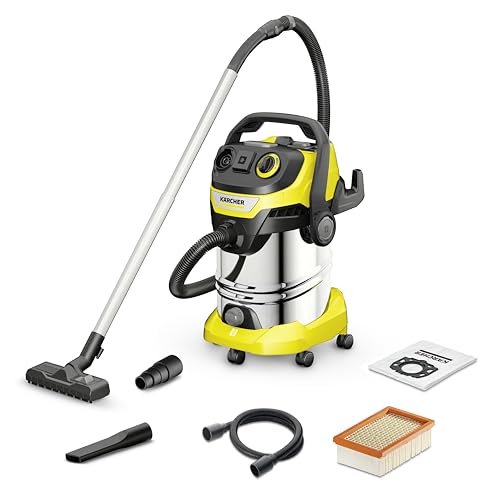
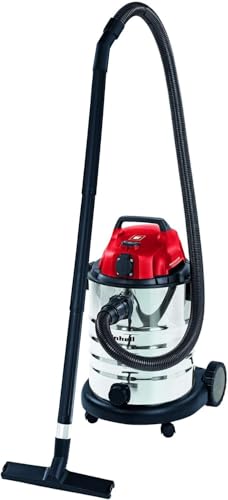
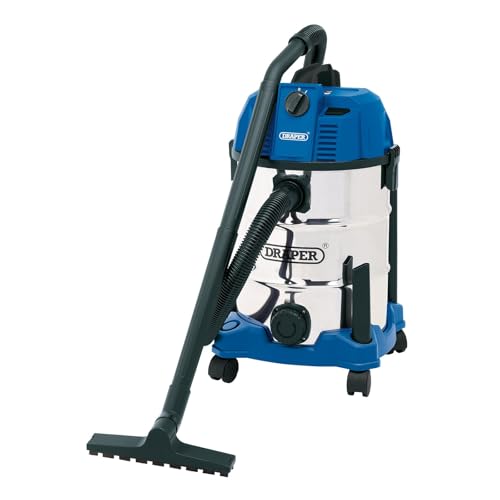
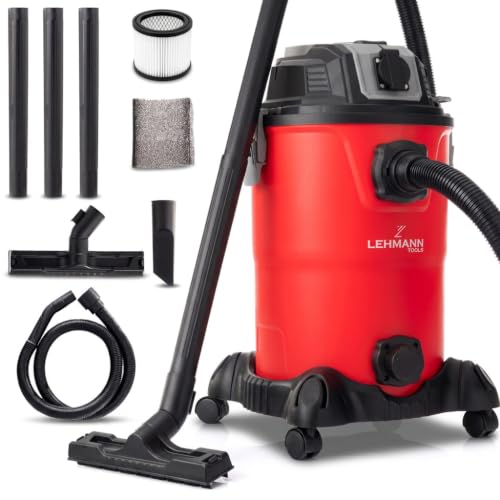
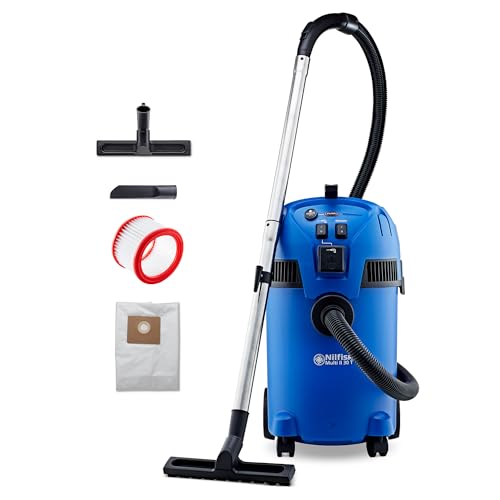
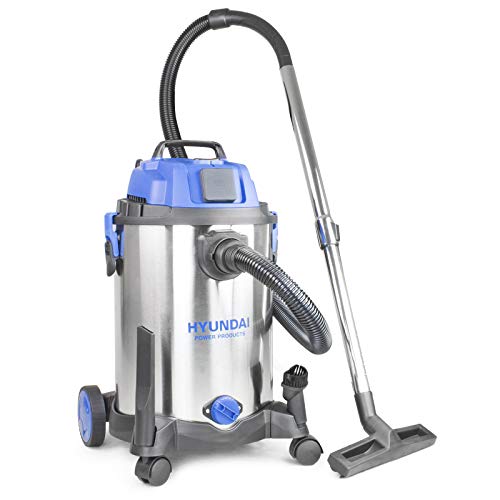
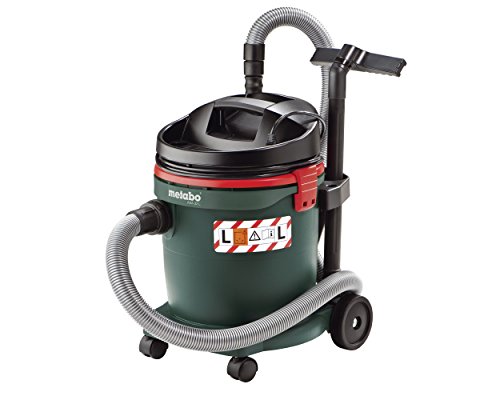
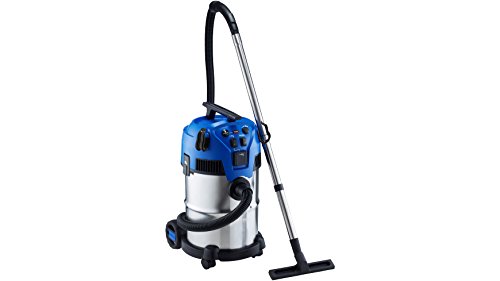
Which brands make the best professional wet-dry vacuums?
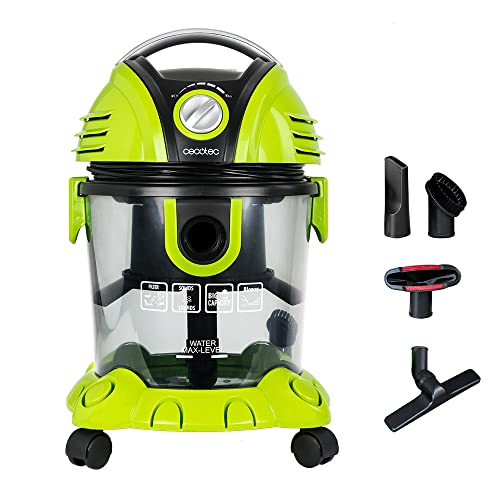
The brands making the best professional wet-dry vacuums are as follows:
- Roborock (Average overall score: 7.7 points)
- Cecotec (Average overall score: 7.7 points)
- Kärcher (Average overall score: 7.7 points)
The chart below ranks professional wet-dry vacuum brands by their average overall scores.
[horizontal-chart-03101507917386295643070833247877390445433230585203]
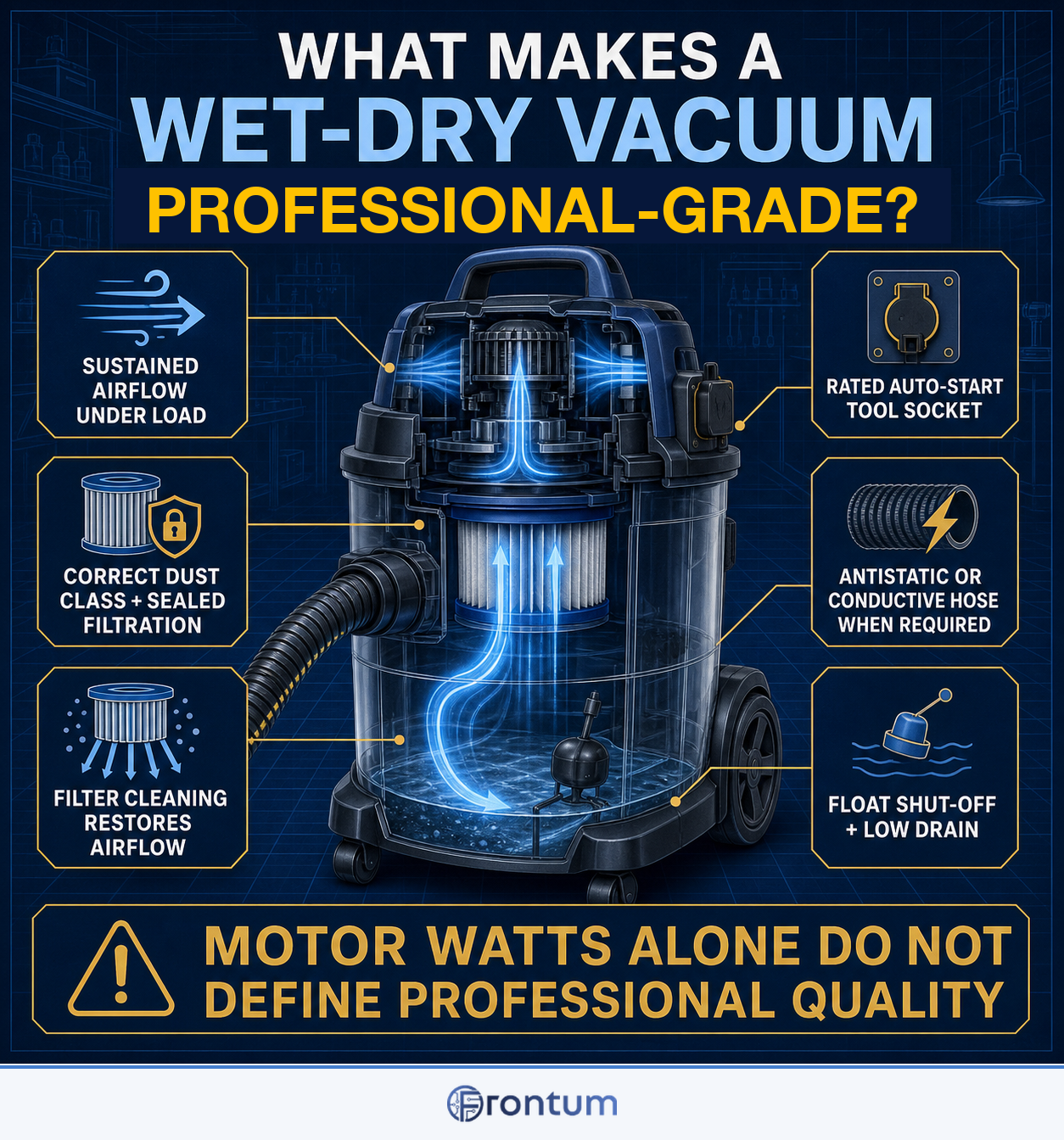
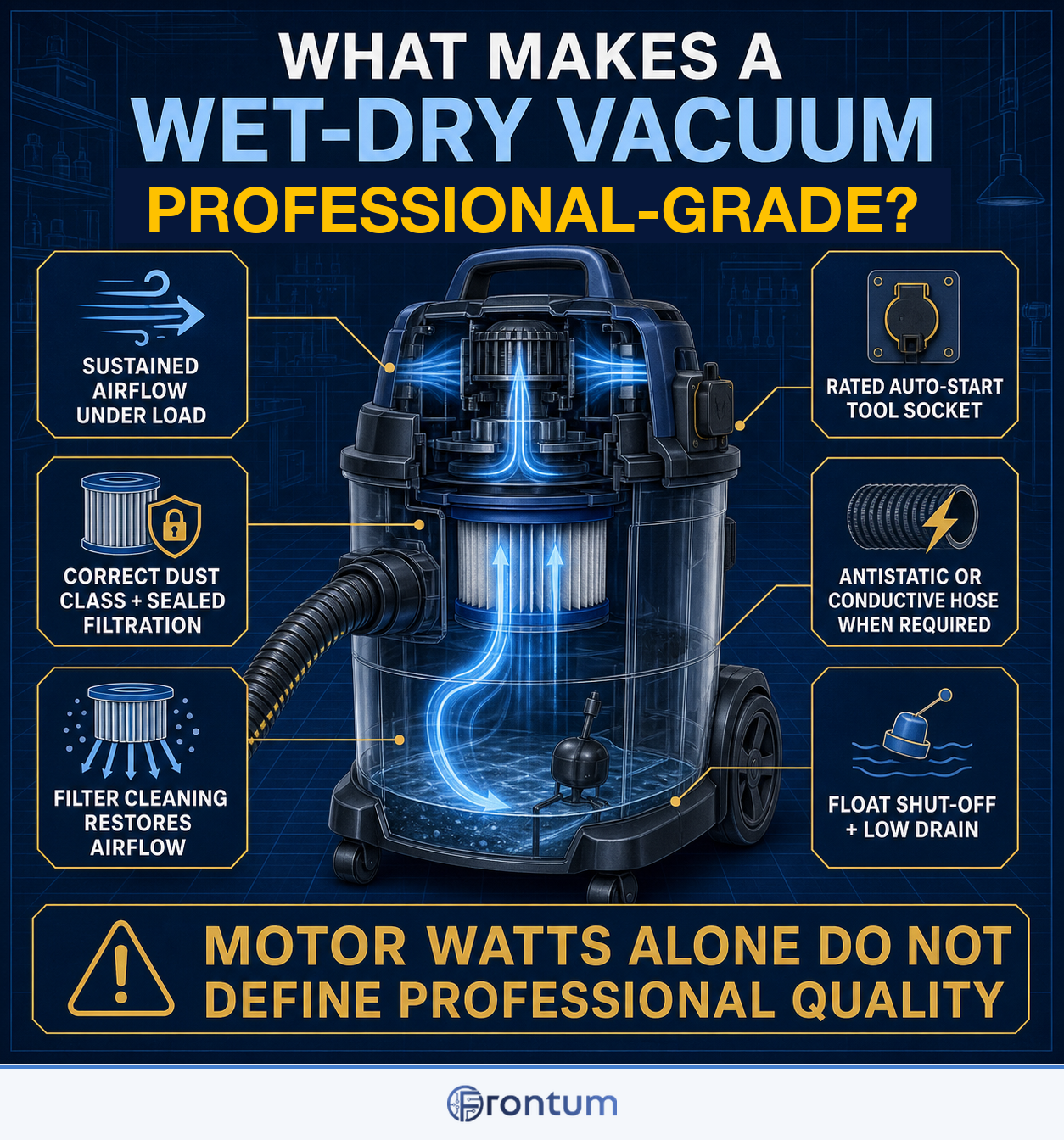
What makes a wet-dry vacuum professional-grade?
A professional-grade wet-dry vacuum is built to maintain useful airflow during long, repeated jobs and to survive regular transport, impacts, hose pulling, and wet-tank handling. Duty cycle, filter performance, coupling strength, and parts support are more meaningful signs of professional quality than motor wattage alone.
For fine dust, look for a clearly stated dust class or extraction certification appropriate to the work, plus sealed filtration and a cleaning system that restores airflow without exposing the operator. A standard HEPA-labelled filter does not automatically make the complete machine suitable for hazardous construction dust.
For tool-connected work, a rated automatic-start socket, secure adapters, and an antistatic or conductive hose may be necessary. Compare the tool load limit and the extractor requirements together, particularly for sanding, chasing, or grinding that generates persistent fine particles.
Wet performance also matters: a reliable float shut-off, corrosion-resistant tank components, serviceable seals, and a low drain reduce downtime. Capacity should be large enough for the job but not so large that one person cannot control the machine safely when the tank is full.
How durable are professional wet-dry vacuums under heavy use?
Professional wet-dry vacuums can be highly durable under heavy use when the chassis, motor cooling, hose, wheels, latches, and seals form a serviceable system. Tank thickness alone is not enough: common weak points include swivel joints, cable entries, caster mounts, accessory clips, and filters that are difficult to maintain correctly.
Long service life also depends on care and parts support. Empty wet tanks before transport, dry washable components, keep cooling inlets clear, and avoid running with a blocked hose or saturated filter. For daily trade use, prefer published duty guidance, replaceable hoses and couplings, available consumables, and local repair support; stronger running gear is valuable only if the full machine remains safe to move.
How much power and suction does a professional wet-dry vacuum need?
A professional wet-dry vacuum typically needs about 18–25 kPa of suction pressure plus strong sustained airflow; the right balance matters more than a single peak figure. Compare pressure and airflow only under similar test methods because hose diameter, filter condition, and tool restriction change working performance.
For fine dust, prioritize airflow that stays stable as the filter loads and an effective automatic or manual cleaning system. Coarse chips need a wider, smooth-bore hose that resists blockage, so higher motor-input wattage alone does not guarantee better pickup.
For tool-connected extraction, check the socket rating, adapter fit, hose grounding where required, and the airflow demand of the tool. Choose a machine that can sustain the required flow through a full work cycle, not merely post the largest headline number.
How much do professional wet-dry vacuums cost?
Professional wet-dry vacuums generally cost about £170-£730. Basic trade models are usually £130-£260, better-sealed machines with power-tool sockets and stronger running gear cost £300-£400, and specialist units with automatic filter cleaning, antistatic equipment, certified dust control, or high-capacity drainage reach £300-£600 or more.
Compare total ownership cost: filters, bags, hoses, tool adapters, batteries, and servicing can erase a saving. Pay more for verified dust handling, sustained filter cleaning, tool integration, fast wet drainage, durable mobility, or dependable service support. Tank capacity or motor-input wattage alone rarely justifies a large premium.
What should you consider when choosing a professional wet-dry vacuum?
Before choosing a professional wet-dry vacuum, consider the following factors:
- Duty cycle and service support: Match the machine to daily runtime, transport frequency, and site conditions. Prefer published duty guidance, a useful commercial warranty, and readily available filters, hoses, seals, wheels, and repair parts.
- Dust classification and filtration: Select the required dust class or certification for the material being collected. A HEPA-labelled filter alone does not prove that the complete vacuum safely contains hazardous dust.
- Filter cleaning: Automatic cleaning is valuable during sustained fine-dust extraction, while an effective manual system may be sufficient for intermittent work. Check whether cleaning operates without opening the tank and how much airflow is lost as the filter loads.
- Suction, airflow, and hose: Compare pressure and airflow under similar test methods, then match hose diameter to the debris and connected tools. Antistatic or conductive hoses may be required for particular professional applications.
- Tool integration: Confirm automatic-start socket load, adapter fit, cable reach, and compatibility with the tools in use. A pre-separator can reduce filter loading for high volumes of suitable dry debris.
- Wet handling and capacity: Require reliable float shut-off, wet-compatible components, and a low drain for larger tanks. Judge capacity by safe full-tank handling, not only by how long the vacuum can run before emptying.
- Chassis and controls: Strong casters, protected switches, secure latches, cable and hose storage, and a stable centre of gravity reduce damage and lost time. Noise, carry weight, and loading height also matter when the machine moves between sites.