Scored using Vacuum Cleaners Methodology v3.0
Vacuum Cleaners Methodology v3.0
Mathematical & Unbiased Scoring
Products in this category are scored under Frontum Vacuum Cleaners Methodology v3.0: the technical score from the specifications is the base, and independent expert and video reviews (up to ±0.5 points), owner opinions (up to ±0.3) and best-of lists (up to +0.3) move it up or down.
Explore Vacuum Cleaners Methodology v3.0

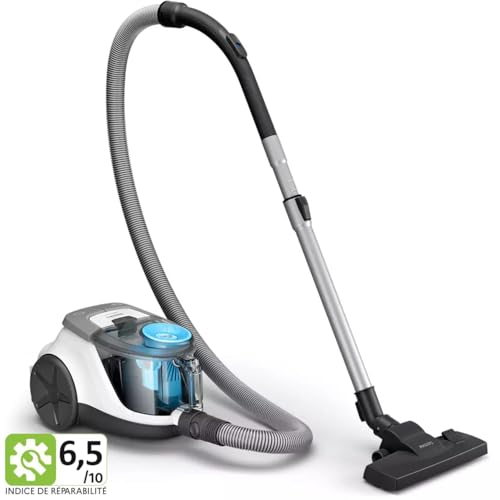
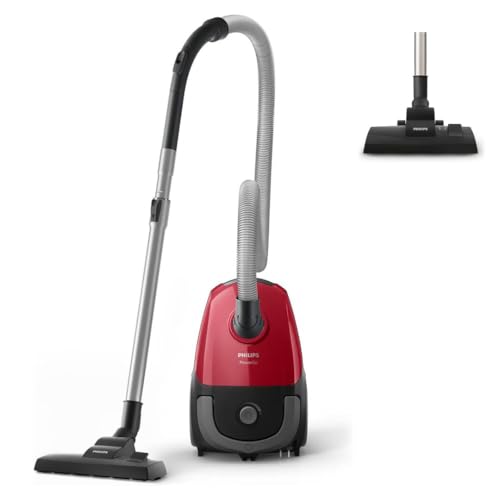
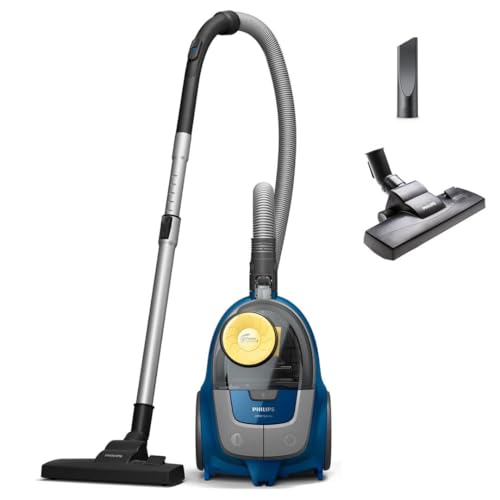
Philips 2000 Series PowerCyclone 4 review: 53 specs compared

Avg. price:~£90Suction power (AW):?Battery runtime:N/A minutesCapacity:1.3 LWeight:4.4 kg

Philips 2000 Series PowerCyclone 4 Review: Compare 53 technical specifications and 1 expert and video reviews to see how this product ranks in the Vacuum Cleaners category and whether it is worth buying.
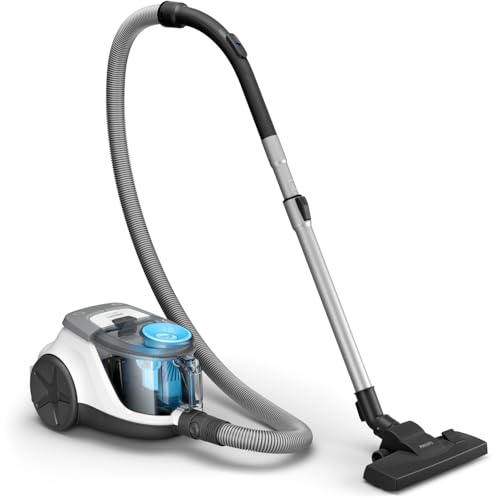
Philips 2000 Series PowerCyclone 4
6.4/10

Overall score

Score
6.4/ 10
✕
What it is
Our main score for this model, 1–10. It combines specs, expert reviews, best-of lists and owners.
How we count it
Parts: Technical score 50%, Reviews score 25%, List score 20%, Sentiment score 5%
Marks: Each part gets a mark out of 10. For reviews, lists and owners, a typical model in this category gets about 8 and the best one gets 10.
No data yet: A part with no data shows "?". It counts as the mark of a weaker model in this category (4 in 5 models with data score higher). This way, models with reviews, lists and owners usually come out ahead.
Score distribution
▼
<55-66-77-88-99-10
Score components

50%

5.5

Technical score

25%

7.4

Reviews score

20%

?

List scoreNot enough data yet, so we use 7.5, the mark of a weaker model in this category

5%

?

Sentiment scoreNot enough data yet, so we use 5.5, the mark of a weaker model in this category

▼Worse than 97% of vacuum cleaners
7.5

Value for money

Value for money
7.5/ 10
✕
What it is
An indicator that combines the vacuum cleaner's overall score with its price.
When it matters
When you are looking for a vacuum cleaner with a good balance between quality and price.
Score distribution
▼
<55-66-77-88-99-10
Score components

70%

6.4

Overall score

30%

10

Price

▼Worse than 94%
5.5

Technical score

Technical score
5.5/ 10
✕
What it is
How good the specs are compared with the other models in this category, 1–10.
How we count it
Areas: We rate the specs in each area against the other models in this category.
Weighting: The areas that matter most to buyers count more. The shares are shown under Score components.
Share: The technical score is 50% of the overall score.
Score distribution
▼
<55-66-77-88-99-10
Score components

28%

5.7

Performance

22%

3.9

Battery

18%

8.2

Filtration

14%

5.1

Attachments

10%

5.6

Design

8%

4.0

Smart features

▼Worse than 97%
7.4

Reviews score

Reviews score
7.4/ 10
✕
What it is
Average grade from independent test sites, magazines and video reviewers, 1–10.
How we count it
Grades: Each review's own score is converted to 1–10; without one, we grade the review ourselves. Big test sites count more, short reviews half as much as full tests. A video review counts half.
Score: The average grade is 80% of the review mark; the number of reviews is the other 20% (1 review = 5, the typical number in this category = 8, the most-reviewed model = 10).
Enough data: With few reviews, the average grade is pulled toward the typical grade of this category. No reviews yet: 7.4 for now.
Share: Reviews count 25% of the overall score.
Score distribution
▼
<55-66-77-88-99-10

80%

8.1

Average grade

20%

5.0

Popularity

Grades by review (1)
1 video review, counting half as much as a written test. Reviews count 25% of the overall score.
User ratings collected online are not part of this score.
▼Worse than 86%
?

List score

List score
7.5/ 10
✕
What it is
How often independent test sites, magazines and video reviewers put this model in their best-of lists for this category.
How we count it
Points: The model in the most lists of this category gets 10; the others get 8 to 10 in proportion. In no list yet: 7.5. Lists count 20% of the overall score.
Enough data: Every list counts, even a single one. With fewer than 5 best-of lists in the category, this part is left out.
Lists with this model (0)
Not in any best-of list yet, so this part counts as 7.5. Models in a list get 8 to 10.
Not in any best-of list yet
  • philips-2000-series-powercyclone-4
  • philips-2000-series-powercyclone-4
philips-2000-series-powercyclone-4
Where to buy
    N/A~ £90
Loading...
Loading category ranking...

Technical Specifications of vacuum cleaner Philips 2000 Series PowerCyclone 4

Technical score
Technical score
5.5/ 10
✕
What it is
How good the specs are compared with the other models in this category, 1–10.
How we count it
Areas: We rate the specs in each area against the other models in this category.
Weighting: The areas that matter most to buyers count more. The shares are shown under Score components.
Share: The technical score is 50% of the overall score.
Score distribution
▼
<55-66-77-88-99-10
Score components:

28%

5.7

Performance

22%

3.9

Battery

18%

8.2

Filtration

14%

5.1

Attachments

10%

5.6

Design

8%

4.0

Smart features

5.5
Reviews score
7.4
List score
?
Value for money
Value for money
7.5/ 10
✕
What it is
An indicator that combines the vacuum cleaner's overall score with its price.
When it matters
When you are looking for a vacuum cleaner with a good balance between quality and price.
Score distribution
▼
<55-66-77-88-99-10
Score components:

70%

6.4

Overall score

30%

10

Price

7.5
Suction power (AW)
?
Suction power (kPa)
16.8 kPa
This vacuum cleaner has a suction pressure of 16.8 kPa, which is lower than that of 70.1% of vacuum cleaners and equal to that of 1.6% of vacuum cleaners.
Airflow
?
Motor type
Universal motor
Power consumption
850 W
This vacuum cleaner draws 850 W, which is higher than the power consumption of 82.3% of vacuum cleaners and equal to that of 2.9% of vacuum cleaners.
Show more
Cordless
no
This vacuum cleaner does not work cordlessly. 49.5% of vacuum cleaners offer cordless operation.
Battery runtime
N/A
Charging time
N/A
Battery capacity
N/A
Battery voltage
N/A
Show more
Filter class
epa 12
This vacuum cleaner uses filter class epa 12, which is more advanced than the class used by 70.6% of vacuum cleaners and the same as the class used by 3.7% of vacuum cleaners.
Minimum overall efficiency
99.9%
This vacuum cleaner reaches 99.9% minimum overall efficiency, which is lower than that of 68.1% of vacuum cleaners and equal to that of 10.6% of vacuum cleaners.
Suitable for allergy sufferers
no
This vacuum cleaner is not suitable for allergy sufferers. 82.4% of vacuum cleaners are allergy-friendly.
Capacity
1.3 L
This vacuum cleaner has a dust capacity of 1.3 L, which is larger than that of 58.5% of vacuum cleaners and equal to that of 1.1% of vacuum cleaners.
Bagless
yes
This vacuum cleaner uses a bagless design. 78.6% of vacuum cleaners use this setup.
Show more
Main brush type
classic
Roller type
bristled
Anti-tangle brush
no
This vacuum cleaner does not include an anti-tangle brush. 25.7% of vacuum cleaners include this feature.
Mini motorized brush
no
This vacuum cleaner does not include a mini motorized brush. 26.9% of vacuum cleaners include this attachment.
Suitable for pet owners
no
This vacuum cleaner is not suitable for pet owners. 72% of vacuum cleaners handle pet hair well.
Show more
Vacuum type
canister
Weight
4.4 kg
This vacuum cleaner weighs 4.4 kg, which is greater than the weight of 62.3% of vacuum cleaners and equal to that of 0.7% of vacuum cleaners.
2-in-1 design
no
This vacuum cleaner does not offer a 2-in-1 design. 53% of vacuum cleaners offer this flexible format.
Self-standing
no
This vacuum cleaner does not stand on its own. 18.9% of vacuum cleaners offer this convenience.
Adjustable tube height
yes
This vacuum cleaner includes adjustable tube height. 47.4% of vacuum cleaners offer this ergonomic feature.
Show more
Auto suction adjustment
no
This vacuum cleaner does not support automatic suction adjustment. 19.9% of vacuum cleaners support this feature.
Dust particle sensor
no
This vacuum cleaner does not include a dust particle sensor. 8% of vacuum cleaners include this feature.
LED display
no
This vacuum cleaner does not include an LED display. 25.9% of vacuum cleaners include this interface feature.
Nozzle light
no
This vacuum cleaner does not include a nozzle light. 43.4% of vacuum cleaners include this visibility feature.
Mopping support
no
This vacuum cleaner does not support mopping. 3.7% of vacuum cleaners support this multi-function feature.

Philips 2000 Series PowerCyclone 4 vs the average vacuum cleaner

246810TotalPerformanceBatteryFiltrationAttachmentsDesignSmart features
  • Higher filter class
    This vacuum cleaner uses a better filter class than the average vacuum cleaner (epa 12 vs hepa).
    epa 12 vs hepa
  • Adjustable tube height
    This vacuum cleaner has adjustable tube height, the average vacuum cleaner does not.
  • Higher filter class
    This vacuum cleaner uses a better filter class than the average vacuum cleaner (epa 12 vs hepa).
    epa 12 vs hepa
  • Adjustable tube height
    This vacuum cleaner has adjustable tube height, the average vacuum cleaner does not.
  • Louder operation
    This vacuum cleaner is noisier than the average vacuum cleaner (77-84 dB vs 77-77 dB).
    77-84 dB vs 77-77 dB
  • Not pet-hair friendly
    This vacuum cleaner is not suitable for pet owners, the average vacuum cleaner is.
  • No handheld conversion
    This vacuum cleaner does not have a 2-in-1 design, the average vacuum cleaner does.
  • Not allergy-friendly
    This vacuum cleaner is not suitable for allergy sufferers, the average vacuum cleaner is.
  • 3.2 kPa lower suction pressure
    This vacuum cleaner has lower suction pressure than the average vacuum cleaner (16.8 kPa vs 20 kPa).
    16.8 kPa vs 20 kPa
  • No upholstery nozzle
    This vacuum cleaner does not include an upholstery nozzle, the average vacuum cleaner does.
  • 250 W higher power consumption
    This vacuum cleaner draws more power than the average vacuum cleaner (850 W vs 600 W).
    850 W vs 600 W
  • 1 fewer power levels
    This vacuum cleaner offers fewer speed levels than the average vacuum cleaner (1 vs 2).
    1 vs 2
  • 4% worse value for money
    Philips 2000 Series PowerCyclone 4 offers worse value for money than the average vacuum cleaner (7.48 vs 7.8).
    7.48 vs 7.78
  • 5.1% lower review score
    Reviews score
    7.4/ 10
    ✕
    What it is
    Average grade from independent test sites, magazines and video reviewers, 1–10.
    How we count it
    Grades: Each review's own score is converted to 1–10; without one, we grade the review ourselves. Big test sites count more, short reviews half as much as full tests. A video review counts half.
    Score: The average grade is 80% of the review mark; the number of reviews is the other 20% (1 review = 5, the typical number in this category = 8, the most-reviewed model = 10).
    Enough data: With few reviews, the average grade is pulled toward the typical grade of this category. No reviews yet: 7.4 for now.
    Share: Reviews count 25% of the overall score.
    Score distribution
    ▼
    <55-66-77-88-99-10

    80%

    8.1

    Average grade

    20%

    5.0

    Popularity

    Grades by review (1)
    1 video review, counting half as much as a written test. Reviews count 25% of the overall score.
    User ratings collected online are not part of this score.
    7.4 vs 7.8
  • Louder operation
    This vacuum cleaner is noisier than the average vacuum cleaner (77-84 dB vs 77-77 dB).
    77-84 dB vs 77-77 dB
  • 3.2 kPa lower suction pressure
    This vacuum cleaner has lower suction pressure than the average vacuum cleaner (16.8 kPa vs 20 kPa).
    16.8 kPa vs 20 kPa
  • 250 W higher power consumption
    This vacuum cleaner draws more power than the average vacuum cleaner (850 W vs 600 W).
    850 W vs 600 W
  • 1 fewer power levels
    This vacuum cleaner offers fewer speed levels than the average vacuum cleaner (1 vs 2).
    1 vs 2
  • 0.5 m shorter power cord
    This vacuum cleaner has a shorter power cord than the average vacuum cleaner (6 m vs 6.5 m).
    6 m vs 6.5 m
  • Not allergy-friendly
    This vacuum cleaner is not suitable for allergy sufferers, the average vacuum cleaner is.
  • 0.05 % lower filtration efficiency
    This vacuum cleaner has lower filtration efficiency than the average vacuum cleaner (99.9 % vs 99.95 %).
    99.9 % vs 99.95 %
  • Not pet-hair friendly
    This vacuum cleaner is not suitable for pet owners, the average vacuum cleaner is.
  • No upholstery nozzle
    This vacuum cleaner does not include an upholstery nozzle, the average vacuum cleaner does.
  • No handheld conversion
    This vacuum cleaner does not have a 2-in-1 design, the average vacuum cleaner does.
  • 21.5% higher weight
    This vacuum cleaner is heavier than the average vacuum cleaner (4.4 kg vs 3.62 kg).
    4.4 kg vs 3.62 kg
  • 143 mm deeper body
    This vacuum cleaner is deeper than the average vacuum cleaner (408 mm vs 265 mm).
    408 mm vs 265 mm

Video reviews

Hands-on testing, unboxing, and real-world video evaluations
9.0
TechGuru Andrew
≈ estimated
10/03/2022
Hands-on review · suction tests on carpet and floor
Verdict
Philips 2000 Series PowerCyclone 4 is a good vacuum with strong suction on carpet and floors, though thicker carpet is harder to clean.
Not graded

Third-party reviews

What customers like about Philips 2000 Series PowerCyclone 4

  • Strong initial suction power for picking up dust, fine debris, and pet hair.
  • Compact and highly lightweight design making it easy to carry around the house.
  • Hygienic and simple pop-of-a-button bagless container emptying mechanism.
  • Equipped with an efficient filtration system that captures fine dust particles.
  • Adjustable floor multi-purpose nozzle easily transitions via a foot pedal between carpet and hard floors.
  • Affordable price point offering great value for money compared to expensive brands.

What customers don't like about Philips 2000 Series PowerCyclone 4

  • Performance on thick or large debris can be poor, sometimes requiring lifting the cleaner head.
  • Filters get dirty very quickly and require frequent cleaning or maintenance to avoid loss of suction.
  • The corded versions can feel limiting due to a short power cable, requiring frequent outlet switching.
  • Replacement parts, especially matching filters, can be difficult to find in regular department stores.
  • The telescopic handle and attachments can feel slightly wobbly or cumbersome when fully extended.

Verdict

The Philips 2000 Series PowerCyclone 4 is a corded bagless cylinder vacuum cleaner featuring an efficient 850W motor that provides high suction power alongside a 1.3-litre dust capacity and a 9-metre cleaning radius. Its primary characteristics include PowerCyclone 4 technology, which accelerates airflow to separate dust from the air, a Super Clean Air filter capturing over 99% of small particles, and an adjustable multi-purpose nozzle. Main pros include its compact 4.4 kg lightweight design, an integrated onboard crevice tool, and a hygienic one-handed emptying system. However, notable cons include its relatively high 82 dB noise level during operation, plastic wheels that lack premium rubber treading, and the absence of an electronic variable power control switch.

Compare Philips 2000 Series PowerCyclone 4 with other vacuum cleaners

1Product to compare no. 1
VS
2Product to compare no. 2
VS
3Product to compare no. 3 (optional)

Graphic comparison of Philips 2000 Series PowerCyclone 4 and other vacuum cleaners

No results found