Intel Core i7 4765T Review | 78 Data compared

double-arrow
  • Avg. price: ~£260
  • PassMark benchmark result: 5034
  • N. of physical cores: 4
  • CPU boost clock speed: 3.0 GHz

Intel Core i7 4765T review. Compare 78 technical specifications and user reviews to see how it ranks among processors and if it is worth buying.

4.3

Overall score

What it is: An overall evaluation of the processor's quality, based on technical analyses and user reviews.

When it matters: When you need a quick reference to identify the best processors on the market.

Score components:

90.0%

4.0

Technical Score

10.0%

6.8

User score

Poor
4.0

Technical Score

What it is: An assessment of the processor's technical performance, covering key areas such as processing performance, core configuration, efficiency, platform support, integrated features, and thermal behavior.

When it matters: When you want to compare processors based on technical performance and available features.

Score components:

60.0%

3.5

Performance

18.0%

4.1

Cache & Architecture

10.0%

3.6

Memory & PCIe

7.0%

6.1

Power & Thermal

4.0%

7.4

Platform

1.0%

6.3

Integrated Graphics

Poor
6.8

User score

What it is: A rating that combines user reviews and the total number of reviews received by the processor.

When it matters: When you want to know how a processor performs in real workloads and how reliable it is for gaming, productivity, and efficiency according to user feedback.

Score components:

70.0%

8.7

User reviews

30.0%

2.3

Popularity

User score:
United Kingdom
amazon
4.6
(10)
amazon
1.0
(1)
amazon
5.0
(1)

(Reviews last updated: May 2026)

Good
  • 2.1
    Gaming

    Score components:

    30.0%

    2.1

    PassMark single-core benchmark score

    25.0%

    2.5

    Geekbench 6 single-core benchmark score

    20.0%

    1.6

    CPU boost clock speed

    17.0%

    2.1

    L3 cache

    8.0%

    1.8

    N. of physical cores

  • 2.1
    Video editing

    Score components:

    45.0%

    2.0

    Geekbench 6 multi-core benchmark score

    20.0%

    1.8

    N. of physical cores

    20.0%

    2.8

    CPU threads

    15.0%

    2.1

    L3 cache

  • intel-core-i7-4765t
intel-core-i7-4765t

Best prices in UK

Best rankings

?

Available: ranking among products currently available (including other versions of this product).
All: ranking among all products in the database.

Verdict

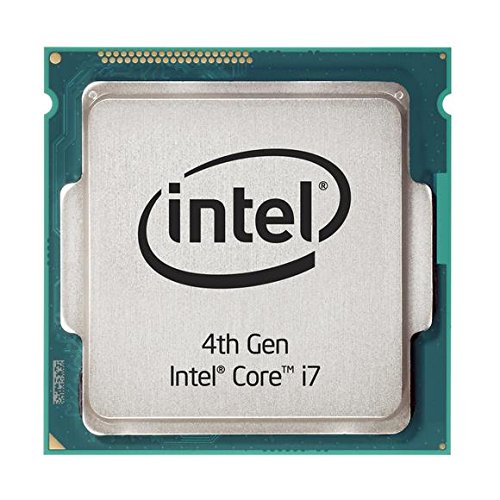
The Intel Core i7-4765T is a 4th Generation Haswell-based desktop processor featuring 4 cores and 8 threads with an 8 MB Intel Smart Cache. Optimized for low-power environments, it operates at a base frequency of 2.00 GHz and can reach a maximum turbo boost of 3.00 GHz while maintaining a remarkably low 35W TDP. Its primary advantages include excellent energy efficiency, low heat output suitable for fanless or small-form-factor builds, and support for up to 32 GB of DDR3-1600 memory with integrated Intel HD Graphics 4600. However, its lower clock speeds compared to standard i7 models limit high-performance gaming and heavy rendering, it lacks an unlocked multiplier for overclocking, and it is restricted to older DDR3 memory standards.

Technical Specifications of processor Intel Core i7 4765T

Technical Score

What it is: An assessment of the processor's technical performance, covering key areas such as processing performance, core configuration, efficiency, platform support, integrated features, and thermal behavior.

When it matters: When you want to compare processors based on technical performance and available features.

Score components:

60.0%

3.5

Performance

18.0%

4.1

Cache & Architecture

10.0%

3.6

Memory & PCIe

7.0%

6.1

Power & Thermal

4.0%

7.4

Platform

1.0%

6.3

Integrated Graphics

4.0
Intel Core i7 4765T has a technical score of 3.97 points, which is lower than that of 82% of products in this category.
User score

What it is: A rating that combines user reviews and the total number of reviews received by the processor.

When it matters: When you want to know how a processor performs in real workloads and how reliable it is for gaming, productivity, and efficiency according to user feedback.

Score components:

70.0%

8.7

User reviews

30.0%

2.3

Popularity

User score:
United Kingdom
amazon
4.6
(10)
amazon
1.0
(1)
amazon
5.0
(1)

(Reviews last updated: May 2026)

6.8
Intel Core i7 4765T has a user score of 6.76 points, which is lower than that of 96% of products in this category.
Popularity
What it is: An indicator based on the number of reviews received by the processor.
When it matters: When you prefer to choose a processor reviewed and selected by many other buyers.
2.3
Intel Core i7 4765T has a popularity of 2.3 points, which is higher than 76.6% of products in this category.
Ratio quality/price

What it is: An indicator that combines the processor's overall rating with its cost.

When it matters: When you are looking for a processor with a good balance between performance, efficiency, and price.

Score components:

60.0%

4.3

Overall score

40.0%

9.2

Price

5.7
Intel Core i7 4765T has a quality-to-price ratio of 5.7 points, which is lower than 78% of products in this category.
Brand name
What it is: The manufacturer or brand of the product.
When it matters: When you prefer a specific ecosystem, support network, or design philosophy.

Importance: MEDIUM

Intel
Processor type
What it is: The kind of system the processor is built for, such as desktop PCs, laptops, workstations, or servers.
When it matters: When you want a processor meant for the kind of machine you are actually building or buying, rather than a chip aimed at a different class of system.

Importance: HIGH

desktop
Intel Core i7 4765T belongs to the desktop processor class, which is more advanced than that of 56% of processors and equal to that of 37.9% of processors.
CPU socket
What it is: The physical socket the processor fits into on the motherboard.
When it matters: When you need to make sure the CPU can actually be installed on a specific motherboard.

Importance: HIGH

LGA1150
Intel Core i7 4765T uses the LGA1150 CPU socket, which is newer than that of 56.1% of processors and equal to that of 2.8% of processors.
Chipset
What it is: The motherboard chipset families officially meant to work with the processor.
When it matters: When you are checking whether a CPU will work with the motherboard features and platform you plan to use.

Importance: HIGH

H97, Z97, H87, Q87, B85, Z87, H81
Intel Core i7 4765T supports H97, Z97, H87, Q87, B85, Z87, H81 chipsets, which is narrower compatibility than 50.1% of processors and equal to that of 0.1% of processors.
CPU architecture
What it is: The processor family or design generation behind the chip, such as Zen 4 or Raptor Lake.
When it matters: When you are comparing CPUs across generations and want a clearer sense of their design age, feature level, and expected performance class.

Importance: HIGH

x86-64
Intel Core i7 4765T uses the x86-64 architecture, which is more advanced than that of 1.7% of processors and equal to that of 98.3% of processors.
Show more
N. of physical cores
What it is: The number of physical CPU cores on the processor.
When it matters: When you run workloads that benefit from more real cores.

Importance: HIGH

Good value: 8+

4
Intel Core i7 4765T has 4 CPU cores, which is fewer than 50.7% of processors and equal to 28.5% of processors.
CPU threads
What it is: The total number of processing threads the CPU can handle at once.
When it matters: When you run heavily threaded workloads or multitask a lot.

Importance: HIGH

Good value: 16+

8
Intel Core i7 4765T offers 8 CPU threads, which is more than 35.3% of processors and equal to 19% of processors.
Threads per core
What it is: The number of threads each physical core can handle at once.
When it matters: When you want to understand how much thread-level parallelism each core can provide in multitasking or heavily threaded work.

Importance: MEDIUM

Good value: 2

2
Intel Core i7 4765T offers 2 threads per core, which is more than 30.4% of processors and equal to 69.6% of processors.
CPU boost clock speed
What it is: The highest clock speed the processor can reach under boost conditions.
When it matters: When you care about peak speed in short bursts.

Importance: HIGH

Good value: >4.7 GHz

3.0 GHz
Intel Core i7 4765T reaches a boost clock of 3.0 GHz which is lower than that of 92.9% of processors and equal to that of 1% of processors.
CPU base clock speed
What it is: The processor's normal all-core starting frequency before boost behavior raises clocks temporarily.
When it matters: When you care about steadier performance in longer workloads rather than short burst speed alone.

Importance: MEDIUM

4 x 2.0 GHz
Intel Core i7 4765T has a base clock of 4x2.0 GHz which is equal to that of 100% of processors.
Show more
Semiconductor size
What it is: The manufacturing process node used to produce the processor, usually expressed in nanometers.
When it matters: When efficiency, heat, and the relative modernity of the chip-making process matter to your comparison.

Importance: HIGH

Good value: <10 nm

22 nm
Intel Core i7 4765T uses a 22 nm process node, which is older than that of 84.6% of processors and equal to that of 10.1% of processors.
Foundry
What it is: The semiconductor manufacturer that physically fabricates the processor chip.
When it matters: When process source, manufacturing generation, or foundry differences matter to your comparison more than day-to-day performance alone.

Importance: MEDIUM

Intel 22 nm
Intel Core i7 4765T is built on the Intel 22 nm foundry process, which is less advanced than that of 84.6% of processors and equal to that of 10.1% of processors.
L3 cache
What it is: The total amount of L3 cache available on the processor.
When it matters: When you want better performance in cache-sensitive workloads and games.

Importance: MEDIUM

Good value: >=16 MB

8 MB
Intel Core i7 4765T has an L3 cache of 8 MB which is larger than that of 39.7% of processors and equal to that of 11.8% of processors.
L2 cache
What it is: The total amount of L2 cache available across the processor.
When it matters: When you want to compare CPU design efficiency and how much fast intermediate cache the cores have available.

Importance: MEDIUM

Good value: >=6 MB

1 MB
Intel Core i7 4765T has an L2 cache of 1 MB which is smaller than that of 67.1% of processors and equal to that of 17.6% of processors.
L1 cache
What it is: The total amount of L1 cache built into the processor, which sits closest to the cores.
When it matters: When you are comparing low-level CPU design details rather than the broader performance picture buyers usually notice first.

Importance: MEDIUM

Good value: >=512 KB

256 KB
Intel Core i7 4765T has an L1 cache of 256 KB which is smaller than that of 59.4% of processors and equal to that of 18.5% of processors.
Show more
DDR memory version
What it is: The RAM generation the processor is designed to support, such as DDR4 or DDR5.
When it matters: When you need the CPU to match the kind of memory platform you want to buy or reuse.

Importance: MEDIUM

Good value: DDR5

DDR3
Intel Core i7 4765T supports DDR DDR3, which is older than that of 86.3% of processors and equal to that of 13.7% of processors.
Maximum memory speed
What it is: The highest official memory speed supported by the processor.
When it matters: When you choose RAM and want to know the supported speed ceiling.

Importance: HIGH

Good value: >=4800 MHz

1,600 MHz
Intel Core i7 4765T supports memory speeds up to 1600 MHz, which is lower than that of 87.3% of processors and equal to 11.3% of processors.
Max memory speed (JEDEC)
What it is: The highest official RAM speed the processor supports under standard JEDEC settings, before any memory overclocking profiles are applied.
When it matters: When officially supported stock RAM speed matters more than XMP, EXPO, or manual memory tuning.

Importance: MEDIUM

Good value: >=5600 MHz

DDR3-1600 MHz
Intel Core i7 4765T supports JEDEC memory speeds up to DDR3-1600 MHz, which is lower than that of 87.6% of processors and equal to 8.1% of processors.
Max memory speed (XMP / EXPO)
What it is: The highest memory speed supported through XMP or EXPO profiles.
When it matters: When you want faster RAM through memory profiles.

Importance: MEDIUM

Good value: >=5200 MHz

N/A
Maximum memory capacity
What it is: The largest total amount of memory officially supported by the processor.
When it matters: When you plan a system with very large RAM capacity.

Importance: HIGH

Good value: >=128 GB

32 GB
Intel Core i7 4765T supports up to 32 GB of memory, which is less than 71.9% of processors and equal to 19.5% of processors.
Show more
Integrated graphics
What it is: Includes built-in graphics, so the system can output video without a separate graphics card.
When it matters: When you want the PC to work without a dedicated GPU, or you are building an office, media, compact, or troubleshooting-friendly system.

Importance: HIGH

yes
Intel Core i7 4765T includes integrated graphics. 87.6% of processors include integrated graphics.
Integrated GPU model
What it is: The model name of the integrated graphics processor, if present.
When it matters: When you plan to use the CPU's built-in graphics.

Importance: MEDIUM

Intel HD Graphics 4600
Intel Core i7 4765T uses the Intel HD Graphics 4600 integrated GPU, which is less advanced than that in 65.7% of processors and equal to that in 2.9% of processors.
Integrated GPU execution units
What it is: The number of execution units available in the integrated graphics part of the processor.
When it matters: When you plan to rely on built-in graphics and want a better sense of its light gaming, display, or media capability.

Importance: MEDIUM

Good value: >=24

20
Intel Core i7 4765T has 20 GPU execution units, which is fewer than 51.6% of processors and equal to 4.4% of processors.
Integrated GPU base frequency
What it is: The base operating frequency of the integrated GPU.
When it matters: When integrated graphics performance matters to you.

Importance: MEDIUM

Good value: >=350 MHz

350 MHz
Intel Core i7 4765T has an integrated GPU clock of 350 MHz which is higher than that of 43.5% of processors and equal to that of 29.6% of processors.
Integrated media encoders/decoders
What it is: The hardware media formats the processor can encode or decode directly.
When it matters: When you stream, edit video, or rely on hardware media acceleration.

Importance: LOW

H.264 (HW decode/encode), MPEG-2 (HW decode/encode), VC-1 (HW decode)
Intel Core i7 4765T supports H.264 (HW decode/encode), MPEG-2 (HW decode/encode), VC-1 (HW decode) media codecs, which is narrower support than 53% of processors and equal to 4.9% of processors.
Show more
TDP (Thermal design power)
What it is: The rated thermal design power, which gives a general idea of cooling and power needs.
When it matters: When you choose a cooler or build in a tighter case.

Importance: HIGH

Good value: <30 W

35 W
Intel Core i7 4765T has a TDP of 35 W which is lower than that of 51.8% of processors and equal to that of 14.8% of processors.
Base power (PL1)
What it is: The sustained power target used for longer CPU loads.
When it matters: When you choose cooling and power delivery for sustained workloads.

Importance: MEDIUM

Good value: <30 W

35 W
Intel Core i7 4765T has a base power of 35 W which is lower than that of 51.7% of processors and equal to that of 15.1% of processors.
Boost power (PL2)
What it is: The short-term boost power limit the processor may draw under heavier turbo loads.
When it matters: When you size cooling and power delivery for peak turbo behavior.

Importance: MEDIUM

Good value: <50 W

?
Tau (power duration limit)
What it is: The time limit the CPU can stay at higher boost power before dropping toward sustained power.
When it matters: When you want to understand turbo behavior under longer loads.

Importance: MEDIUM

Good value: <=28 s

?
Configurable TDP
What it is: Allows the processor to run in alternate power modes instead of being fixed to one default TDP target.
When it matters: When you want more control over heat, noise, and power draw in compact systems, quieter builds, or thermally limited machines.

Importance: LOW

no
Intel Core i7 4765T does not support configurable TDP. 52.9% of processors support configurable TDP.
Show more

Intel Core i7 4765T vs the average processor

  • 2.3x more popular
    Intel Core i7 4765T is more popular than the average processor (2.30 vs 1.000).
    What it is: An indicator based on the number of reviews received by the processor.
    When it matters: When you prefer to choose a processor reviewed and selected by many other buyers.
    Intel Core i7 4765T is more popular than the average processor (2.30 vs 1.000).2.3 vs 1
  • 16.7% more L3 per core
    Intel Core i7 4765T has more L3 cache per core than the average processor (2 MB/core vs 1.714 MB/core). The average processor provides 1.714 MB/core of L3 cache per core.
    What it is: The amount of L3 cache effectively available per CPU core.
    When it matters: When you are comparing how much shared cache each core can draw on in deeper technical analysis.

    Importance: MEDIUM

    Good value: >=2 MB/core

    Intel Core i7 4765T has more L3 cache per core than the average processor (2 MB/core vs 1.714 MB/core). The average processor provides 1.714 MB/core of L3 cache per core.2 MB/core vs 1.714 MB/core
  • 22.2% lower base power
    Intel Core i7 4765T has a lower base power draw than the average processor (35 W vs 45 W). The average processor has a base power draw of 45 W.
    What it is: The sustained power target used for longer CPU loads.
    When it matters: When you choose cooling and power delivery for sustained workloads.

    Importance: MEDIUM

    Good value: <30 W

    Intel Core i7 4765T has a lower base power draw than the average processor (35 W vs 45 W). The average processor has a base power draw of 45 W.35 W vs 45 W
  • 16.7% more L3 per core
    Intel Core i7 4765T has more L3 cache per core than the average processor (2 MB/core vs 1.714 MB/core). The average processor provides 1.714 MB/core of L3 cache per core.
  • 22.2% lower base power
    Intel Core i7 4765T has a lower base power draw than the average processor (35 W vs 45 W). The average processor has a base power draw of 45 W.
  • 7 year/s older release date
    Intel Core i7 4765T has an older release date than the average processor (2,013 vs 2,020).
    June 2013
  • No crypto acceleration
    Intel Core i7 4765T does not include crypto acceleration, the average processor does.
  • 30.2% lower boost clock
    Intel Core i7 4765T has a lower boost clock speed than the average processor (3 GHz vs 4.3 GHz). The average processor reaches boost clock speed of 4.3 GHz.
  • 35.1% weaker single-core performance
    Intel Core i7 4765T has a lower PassMark single-core score than the average processor (1,611 vs 2,483). The average processor scores 2,483 in PassMark single-core.
  • 37% lower single-core score
    Intel Core i7 4765T has a lower Geekbench 6 single-core score than the average processor (927 vs 1,471). The average processor scores 1,471 in Geekbench 6 single-core.
  • 2 fewer CPU cores
    Intel Core i7 4765T has fewer CPU cores than the average processor (4 vs 6). The average processor has 6 CPU cores.
  • 52.2% lower PassMark score
    Intel Core i7 4765T has a lower PassMark benchmark score than the average processor (5,034 vs 10,532.5). The average processor scores 10,532.5 in PassMark benchmark.
  • 38.6% lower multi-core score
    Intel Core i7 4765T has a lower Geekbench 6 multi-core score than the average processor (2,945 vs 4,793). The average processor scores 4,793 in Geekbench 6 multi-core.
  • 37.5% lower bus transfer rate
    Intel Core i7 4765T has a lower bus transfer rate than the average processor (5 GT/s vs 8 GT/s). The average processor offers bus transfer rate of 8 GT/s.
  • 37.5% lower bus speed
    Intel Core i7 4765T has a lower bus speed than the average processor (5 GT/s vs 8 GT/s). The average processor runs at bus speed of 8 GT/s.
  • 8 lower clock multiplier
    Intel Core i7 4765T has a lower clock multiplier than the average processor (20 vs 28). The average processor has a clock multiplier of 28.
  • 83.3% larger process node
    Intel Core i7 4765T has a higher process node than the average processor (22 nm vs 12 nm). The average processor uses a process node of 12 nm.
  • 60% smaller L2 cache
    Intel Core i7 4765T has a lower L2 cache than the average processor (1 MB vs 2.5 MB). The average processor has L2 cache of 2.5 MB.
  • 50% less L2 per core
    Intel Core i7 4765T has less L2 cache per core than the average processor (0.3 MB/core vs 0.5 MB/core). The average processor provides 0.5 MB/core of L2 cache per core.
  • Less advanced microarchitecture
    Intel Core i7 4765T uses a less advanced microarchitecture than the average processor (Haswell vs Kaby Lake).
  • 33.3% smaller L1 cache
    Intel Core i7 4765T has a lower L1 cache than the average processor (256 KB vs 384 KB). The average processor has L1 cache of 384 KB.
  • 71.7% fewer transistors
    Intel Core i7 4765T has fewer transistors than the average processor (1.4 billion vs 4.95 billion). The average processor has 4.95 billion transistors.
  • Less advanced foundry
    Intel Core i7 4765T uses a less advanced foundry process than the average processor (Intel 22 nm vs Intel 14 nm).
  • Older DDR support
    Intel Core i7 4765T supports an older DDR generation than the average processor (DDR3 vs DDR4).
  • 44.1% lower memory bandwidth
    Intel Core i7 4765T has a lower memory bandwidth than the average processor (25.6 GB/s vs 45.8 GB/s). The average processor offers memory bandwidth of 45.8 GB/s.
  • 45.4% lower memory speed
    Intel Core i7 4765T has a lower maximum memory speed than the average processor (1,600 MHz vs 2,933 MHz). The average processor supports memory speed of 2,933 MHz.
  • 50% less memory capacity
    Intel Core i7 4765T has fewer maximum memory capacity than the average processor (32 GB vs 64 GB). The average processor supports 64 GB of memory.
  • No configurable TDP
    Intel Core i7 4765T does not support configurable TDP, the average processor does.
  • 30.2% lower boost clock
    Intel Core i7 4765T has a lower boost clock speed than the average processor (3 GHz vs 4.3 GHz). The average processor reaches boost clock speed of 4.3 GHz.
    What it is: The highest clock speed the processor can reach under boost conditions.
    When it matters: When you care about peak speed in short bursts.

    Importance: HIGH

    Good value: >4.7 GHz

    Intel Core i7 4765T has a lower boost clock speed than the average processor (3 GHz vs 4.3 GHz). The average processor reaches boost clock speed of 4.3 GHz.3.0 GHz vs 4.3 GHz
  • 35.1% weaker single-core performance
    Intel Core i7 4765T has a lower PassMark single-core score than the average processor (1,611 vs 2,483). The average processor scores 2,483 in PassMark single-core.
    What it is: A benchmark score that reflects single-core CPU performance.
    When it matters: When you care about responsiveness in lighter or older software.

    Importance: HIGH

    Good value: >3200

    Intel Core i7 4765T has a lower PassMark single-core score than the average processor (1,611 vs 2,483). The average processor scores 2,483 in PassMark single-core.1,611 vs 2,483
  • 37% lower single-core score
    Intel Core i7 4765T has a lower Geekbench 6 single-core score than the average processor (927 vs 1,471). The average processor scores 1,471 in Geekbench 6 single-core.
    What it is: A Geekbench 6 score that reflects single-core CPU performance in mixed modern workloads.
    When it matters: When you care about snappy everyday performance in lighter apps, browsing, office work, or tasks that do not scale well across many cores.

    Importance: HIGH

    Good value: >2000

    Intel Core i7 4765T has a lower Geekbench 6 single-core score than the average processor (927 vs 1,471). The average processor scores 1,471 in Geekbench 6 single-core.927 vs 1,471
  • 83.3% larger process node
    Intel Core i7 4765T has a higher process node than the average processor (22 nm vs 12 nm). The average processor uses a process node of 12 nm.
    What it is: The manufacturing process node used to produce the processor, usually expressed in nanometers.
    When it matters: When efficiency, heat, and the relative modernity of the chip-making process matter to your comparison.

    Importance: HIGH

    Good value: <10 nm

    Intel Core i7 4765T has a higher process node than the average processor (22 nm vs 12 nm). The average processor uses a process node of 12 nm.22 nm vs 12 nm
  • 2 fewer CPU cores
    Intel Core i7 4765T has fewer CPU cores than the average processor (4 vs 6). The average processor has 6 CPU cores.
    What it is: The number of physical CPU cores on the processor.
    When it matters: When you run workloads that benefit from more real cores.

    Importance: HIGH

    Good value: 8+

    Intel Core i7 4765T has fewer CPU cores than the average processor (4 vs 6). The average processor has 6 CPU cores.4 vs 6
  • 52.2% lower PassMark score
    Intel Core i7 4765T has a lower PassMark benchmark score than the average processor (5,034 vs 10,532.5). The average processor scores 10,532.5 in PassMark benchmark.
    What it is: A benchmark score that gives a broad idea of overall processor performance.
    When it matters: When you want a quick overall performance comparison.

    Importance: HIGH

    Good value: >19000

    Intel Core i7 4765T has a lower PassMark benchmark score than the average processor (5,034 vs 10,532.5). The average processor scores 10,532.5 in PassMark benchmark.5,034 vs 10,532.5
  • Older DDR support
    Intel Core i7 4765T supports an older DDR generation than the average processor (DDR3 vs DDR4).
    What it is: The RAM generation the processor is designed to support, such as DDR4 or DDR5.
    When it matters: When you need the CPU to match the kind of memory platform you want to buy or reuse.

    Importance: MEDIUM

    Good value: DDR5

    Intel Core i7 4765T supports an older DDR generation than the average processor (DDR3 vs DDR4).DDR3 vs DDR4
  • 44.1% lower memory bandwidth
    Intel Core i7 4765T has a lower memory bandwidth than the average processor (25.6 GB/s vs 45.8 GB/s). The average processor offers memory bandwidth of 45.8 GB/s.
    What it is: The maximum theoretical memory bandwidth the processor can support.
    When it matters: When memory-heavy workloads matter to you.

    Importance: MEDIUM

    Good value: >75 GB/s

    Intel Core i7 4765T has a lower memory bandwidth than the average processor (25.6 GB/s vs 45.8 GB/s). The average processor offers memory bandwidth of 45.8 GB/s.25.6 GB/s vs 45.8 GB/s

Graphic comparison of Intel Core i7 4765T and other processors

Attribute category
Attribute
No results found

Third-party reviews

(Reviews last updated: May 2026)

What customers like about Intel Core i7 4765T?

  • Extremely low power consumption with a 35W TDP, making it ideal for fanless or small form factor (SFF) builds.
  • Features 4 physical cores and 8 threads via Hyper-Threading, providing solid multitasking for its age.
  • Very efficient for basic tasks and light media work on older systems.
  • Runs cool in well-ventilated or open-air setups, with reported idle temperatures as low as 32°C.
  • Integrated Intel HD 4600 graphics are capable of handling basic video tasks and some older games on low settings.
  • Supports hardware virtualization, making it a budget-friendly choice for light virtual machine or home server use.

What customers dislike about Intel Core i7 4765T?

  • Low base clock speed of 2.0 GHz can lead to performance bottlenecks in CPU-intensive modern applications.
  • Significantly slower in both single-thread and multi-threaded tasks compared to standard i7 models like the i7-4770.
  • Not recommended for modern gaming; users report frequent FPS drops in titles like Fortnite or GTA V without a dedicated GPU.
  • The multiplier is locked, which prevents any significant overclocking to improve performance.
  • Discontinued and outdated by 2025 standards, often outperformed by modern entry-level notebook processors.
  • Some users report high operating temperatures in certain pre-built systems (e.g., tiny PCs) due to limited cooling space.

Expert reviews

B
browser.geekbench.com
29/03/2026

The Intel Core i7-4765T is a 4th-generation "Haswell" quad-core processor designed for high efficiency and low-power, 35W TDP environments. Operating at a base frequency of 2.0 GHz, which boosts up to 3.0 GHz, it is ideal for small form factor PCs. Advantages include energy efficiency, integrated HD Graphics 4600, and support for AVX2 instructions. Conversely, it has limited...Read more

C
cpubenchmark.net
29/03/2026

The Intel Core i7-4765T is a 4th-gen "Haswell" desktop processor for the LGA 1150 socket, featuring 4 cores/8 threads and a 2.0 GHz base clock. A major pro is its exceptional 35W energy efficiency, ideal for low-profile, small form factor PCs. It includes 8MB cache and integrated HD Graphics 4600 for basic visual tasks. With a PassMark score around 5,021, the i7-4765T is roughly 34%...Read more

F
fanlesstech.com
21/10/2013

FanlessTech reviews the Intel Core i7-4765T, highlighting it as a powerful yet efficient Haswell-based 35W TDP chip capable of high-performance fanless operation. Paired with a Nofan CR-100A cooler, the processor demonstrated excellent thermal management, keeping temperatures under 47°C even under full load. While offering superior performance-per-watt compared to older systems,...Read more

V
valid.x86.fr
15/03/2017

The CPU-Z benchmark provides a rapid, accessible method for validating processor single-thread and multi-thread performance, serving as a widely recognized standard for checking overclocks. However, experts consider the benchmark inadequate for comprehensive evaluation because its small workload fits within the L1 cache, failing to stress larger cache levels or test branch...Read more

V
valid.x86.fr
01/12/2025

The Intel Core i9-14900K is a 24-core processor (8 P-cores, 16 E-cores) designed for extreme performance, capable of reaching 6.0 GHz, which yields class-leading single-core speeds and excellent versatility for high-end gaming and 4K content creation. Key pros include high multi-threaded performance, support for fast DDR5 memory, and drop-in compatibility for existing LGA 1700...Read more

V
valid.x86.fr
01/02/2026

The CPU-Z benchmark 2.3.1 for the Intel Core i7-4765T highlights a 4-core, 8-thread Haswell processor designed for power efficiency, operating with a 35W TDP and a 2.0 GHz base clock. The data shows a single-thread score of approximately 1,257 and a multi-thread score of 5,046, indicating capable performance for low-power computing scenarios 2.3.1. The processor's primary strengths...Read more

O
onlogic.com
14/07/2017

The Intel Core i7-4765T is a 4th-generation "Haswell" processor designed for low-power, small form factor systems with a 35W TDP. It features four cores, eight threads, and a 3.0 GHz boost clock, offering efficient, reliable performance for specialized, compact builds. However, the processor is limited by a locked multiplier, slower 2.0 GHz base clock, and only supports older DDR3...Read more

Video reviews

Compare Intel Core i7 4765T with other processors

VS
VS

Compare