Are Intel processors good?
Intel processors are generally considered very good, especially for their strong single-core performance and high clock speeds. This makes them excellent choices for tasks that rely heavily on single-threaded workloads, like gaming, where raw per-core power often matters more than having a large number of cores.
Intel also has a long-standing reputation for stability and compatibility, which makes their CPUs a safe pick for both everyday consumers and businesses. Additionally, Intel processors often come with integrated graphics, which can be useful if you don’t plan to use a dedicated GPU.
The best Intel Core CPUs are as follows.
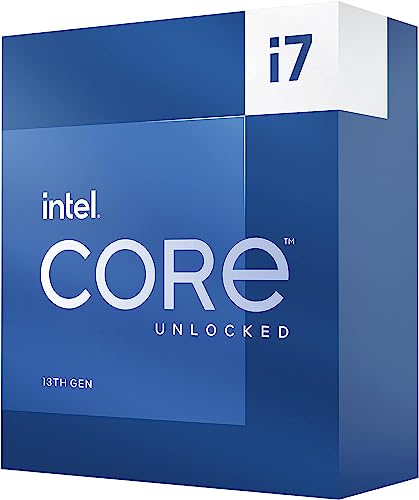
- Intel Core i7 13700T (Overall score: 9.14 points)
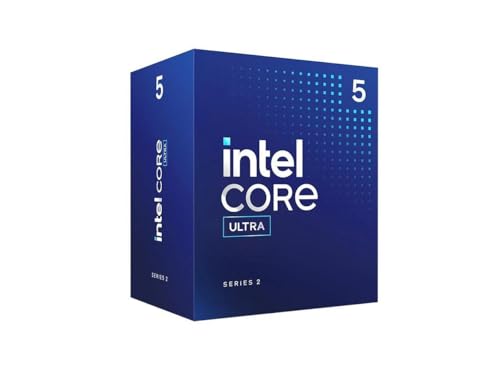
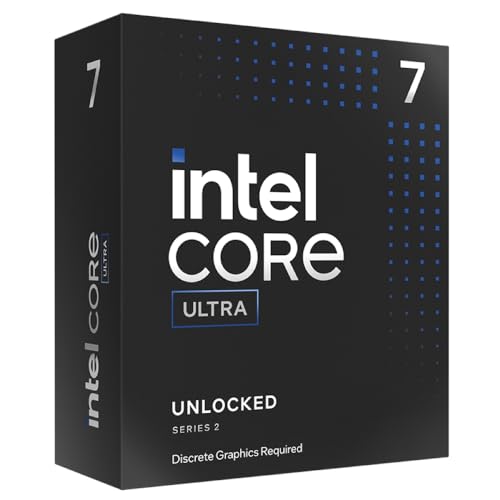
- Intel Core Ultra 5 235 (Overall score: 9.1 points)
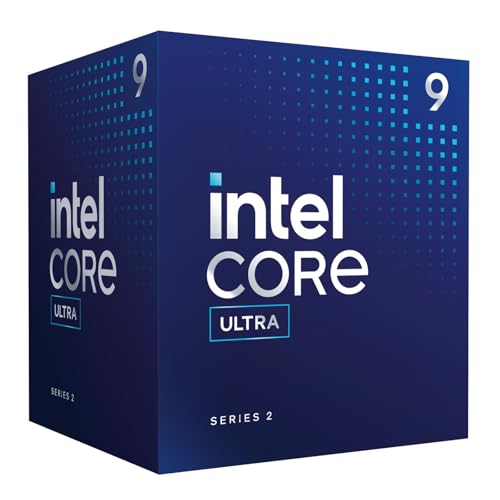
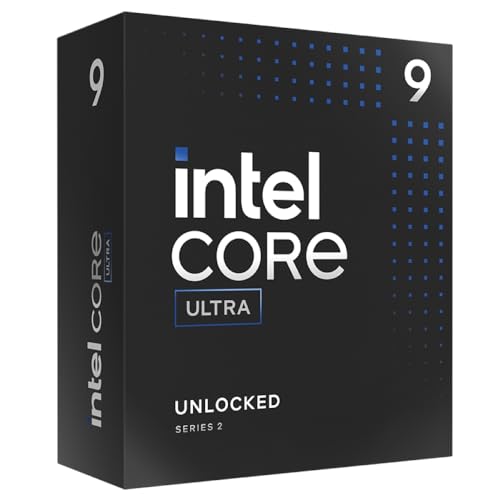
- Intel Core Ultra 9 285 (Overall score: 9.07 points)
How do Intel processors compare to AMD?
Intel CPUs often lead in tasks that depend on fast single-thread speed such as gaming, while AMD processors perform well in workloads that scale across many threads such as rendering and content creation.
Intel tends to dominate the high end with models that reach higher clock frequencies, but AMD has gained ground with efficient designs and strong performance per watt. AMD also integrates more cores in mainstream models, so it delivers good multitasking and productivity performance at lower costs. Both brands release new architectures regularly, which shifts advantages between them depending on generation and specific use case.
In practice, Intel processors often deliver smoother gaming performance because of higher single-core efficiency, while AMD can give better results in multi-core intensive software because of higher thread counts.
Who makes Intel processors?
Intel processors are made by Intel Corporation, an American multinational company founded in 1968 by Robert Noyce and Gordon Moore in Santa Clara, California.
The company designs and manufactures CPUs, chipsets, and other semiconductor products. It has its own fabrication plants (fabs) in the United States, Ireland, Israel, and other locations, where it develops advanced process technologies such as 10 nm, 7 nm, and upcoming 5 nm nodes.
Intel employs over 120,000 people worldwide and remains one of the largest semiconductor manufacturers by revenue. Its processors power personal computers, servers, and data centers, with famous product lines such as Intel Core, Xeon, and Pentium.
How popular are Intel processors?
Intel processors are the most widely used worldwide, with shipments in 2024 estimated at around 170 million units and a global market share close to 70 % in the x86 CPU segment, which kept Intel ahead of AMD in total volume. The 13th and 14th Gen Core processors (Raptor Lake and Raptor Lake Refresh) drove most sales, while Xeon chips remained strong in servers and enterprise markets.
Intel performed strongest in North America and Europe, where its share exceeded 70 %, while in Asia it stayed closer to 65 % because of stronger AMD competition in gaming and high-performance desktops.
What are the main Intel processor series?
The main Intel CPU series are the following:
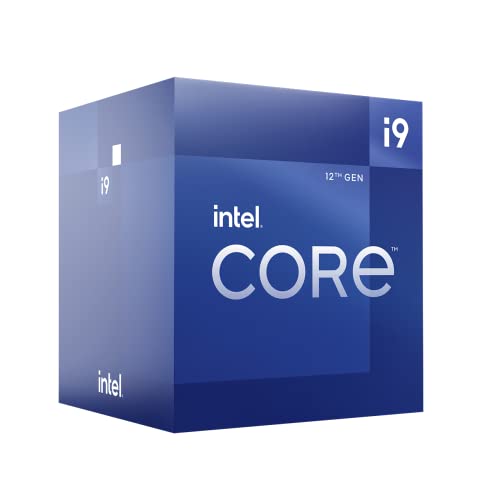
- Intel Core series: This is the most popular line for desktops and laptops. It includes Core i3, i5, i7, and i9 models, which differ in performance, core counts, and clock speeds. Core i3 targets entry-level needs, Core i5 balances cost and power for mainstream use, Core i7 handles demanding tasks such as gaming or content creation, and Core i9 is designed for high-end performance with more cores and higher frequencies.
- Intel Xeon series: Xeon CPUs are built for servers, workstations, and enterprise systems. They support large amounts of RAM, (?) code memory (ECC), and multiple CPU configurations. They focus on stability and scalability rather than high clock speeds, which makes them reliable for business and scientific workloads.
- Intel Atom series: Atom chips are designed for low power consumption and small form factor devices such as tablets, lightweight laptops, and embedded systems. They have modest performance but high efficiency, which fits devices that need long battery life and compact designs.
- Intel Pentium and Celeron series: These are budget processors for basic computing. Pentium models provide entry-level performance with dual or quad cores, while Celeron CPUs are the lowest tier, suitable for simple tasks such as web browsing, emails, and word processing.
- Intel Itanium series: Itanium was developed for high-end enterprise servers and specialized computing. It used a different architecture (IA-64) compared to mainstream x86 CPUs, but Intel discontinued it as Xeon processors advanced and replaced its role.
How much do Intel processors cost?
Intel processors cost between £85 and well above £850 depending on the series, generation, and performance level.
Entry-level Intel Core i3 chips usually start near the lower range, while Core i5 and Core i7 processors move into the mid-range between £170 and £425, and the high-end Core i9 models often cost from £425 to more than £850.
The price also depends on whether the CPU is unlocked for overclocking, which adds to the cost, and on the intended use (for example, gaming or professional workloads). Xeon processors, which are built for servers and workstations, generally sit at the higher end of the spectrum and can easily exceed several thousand euros because they focus on stability, reliability, and high core counts.
The following chart compares prices across Intel Core processors.
[vertical-chart-06748633599940846698018499540611066905592264768512]
How many cores and threads do Intel CPUs have?
Intel CPUs have different numbers of cores and threads depending on the series and generation.
Entry-level Intel processors usually start with 2 to 4 cores and 4 to 8 threads, while mid-range models such as Intel Core i5 and i7 commonly range from 6 to 12 cores and 12 to 20 threads. High-end models such as the Intel Core i9 and workstation-focused Xeon CPUs go much higher, with i9 chips reaching up to 24 cores and 32 threads, and Xeon processors going beyond that for server and enterprise use.
Threads represent the number of tasks a CPU can handle at once. Intel uses Hyper-Threading technology in many of its CPUs, which allows one core to run two threads. This doubles the number of threads compared to physical cores in supported models, so a CPU with 8 cores can process 16 threads at the same time.
Some recent generations combine performance cores (P-cores) with efficiency cores (E-cores), which affects both the total number of cores and the way threads are distributed.
The following chart compares the number of physical cores in Intel Core CPUs.
[vertical-chart-08796190118658987975133919515397756136993597137410]
What clock speeds do Intel CPUs have?
Intel CPUs have clock speeds that range from around 1 GHz in low-power chips to over 6 GHz in the fastest desktop processors.
Base clock speeds usually stay between 2 GHz and 4 GHz, while turbo boost frequencies can push much higher depending on the model, generation, and cooling. High-end gaming and workstation processors reach top speeds above 5 GHz, which improves single-threaded performance in tasks that rely on fast core response.
Clock speed also varies across Intel’s product lines. Core i3, i5, i7, and i9 chips for desktops and laptops run with base speeds between 2 GHz and 4 GHz and turbo frequencies that often exceed 4.5 GHz or more. Xeon processors, designed for servers and workstations, usually have lower base clocks between 2 GHz and 3.5 GHz because they focus on stability and high core counts, although some models still reach boost speeds above 4 GHz.
What cache size do Intel CPUs have?
Intel CPUs have different cache sizes depending on the model and generation. Cache is divided into levels, usually L1, L2, and L3, and each level serves a different purpose.
L1 cache is the smallest but fastest and typically ranges from 32 KB to 128 KB per core. L2 cache is larger and slower than L1, usually between 256 KB and 2 MB per core. L3 cache is shared across cores and much bigger, often from 2 MB up to 36 MB or more, depending on the processor family.
High-end Intel Core and Xeon processors usually have larger L3 cache capacities because they are designed for heavier workloads and multitasking. For example, mainstream desktop processors may feature 12 MB to 30 MB of L3 cache, while workstation or server Xeon CPUs can exceed 60 MB.
Do Intel CPUs have integrated graphics?
Intel CPUs have integrated graphics in most consumer models. Intel includes these graphics units under the name Intel UHD Graphics or Intel Iris Xe, and they handle everyday visual tasks such as web browsing, video playback, and light gaming. This means a separate graphics card is not required in many systems, as the processor itself manages display output.
Not every Intel CPU has integrated graphics, as some models, especially in the high-end desktop (HEDT) and Xeon series, exclude them to focus on raw processing power. These processors rely on dedicated graphics cards to handle visuals.
In contrast, the Core i3, i5, i7, and i9 lines for desktops and laptops almost always include integrated graphics, although variants with an “F” suffix (e.g., i5-12400F) ship without it.
What is the power consumption of Intel CPUs?
The power consumption of Intel CPUs depends on the model, series, and workload.
Intel CPUs have a rated power level known as TDP (thermal design power), which indicates the amount of heat generated and the typical power draw under standard usage. Consumer desktop processors often have TDP values between 35 W and 125 W, while high-end desktop and workstation models can reach higher levels. Mobile processors use less power, often between 9 W and 45 W, since they focus on efficiency and battery life.
Server and Xeon processors usually consume more power because they use more cores and higher frequencies. Some Xeon models have TDP ratings over 200 W, while others are designed with lower consumption for dense server environments.
Do Intel CPUs support overclocking?
Yes, Intel CPUs support overclocking, but this feature is primarily available on specific processor models designated with a "K" or "KF" suffix (such as Intel Core i7-13700K). These unlocked processors have adjustable multipliers that allow users to increase clock speeds beyond their base frequencies.
Intel also produces locked processors without the "K" designation which have limited overclocking capabilities, though some basic memory overclocking may still be possible depending on the chipset.
The ability to overclock Intel CPUs depends not only on the processor itself but also on the motherboard chipset and BIOS support. High-end chipsets like Z-series (Z790, Z690, Z590) provide full overclocking features, while mid-range chipsets like B-series offer more restricted overclocking options.