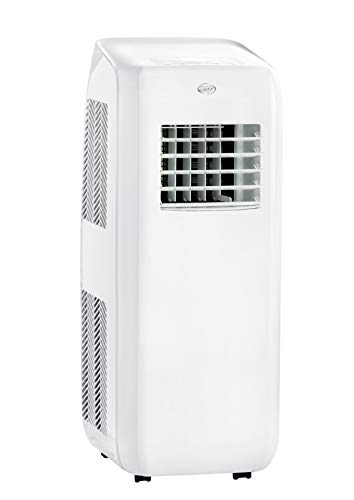
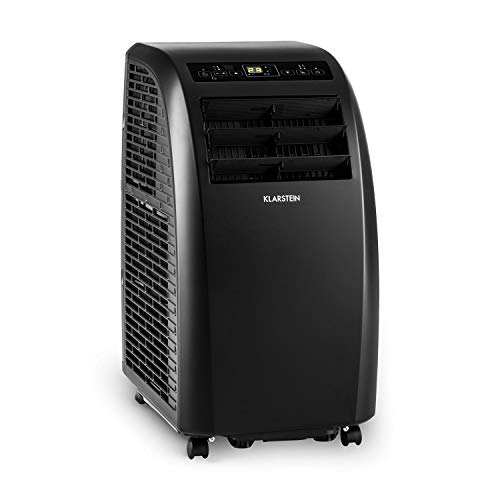
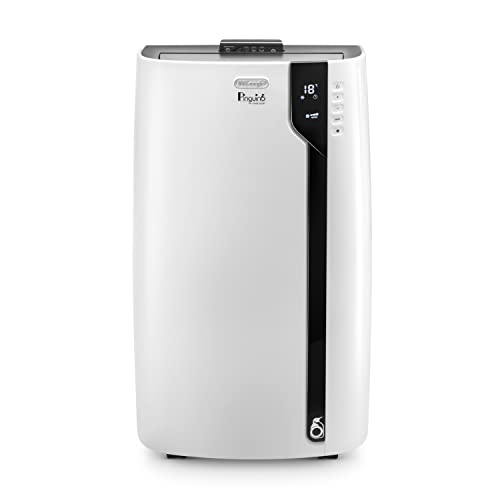
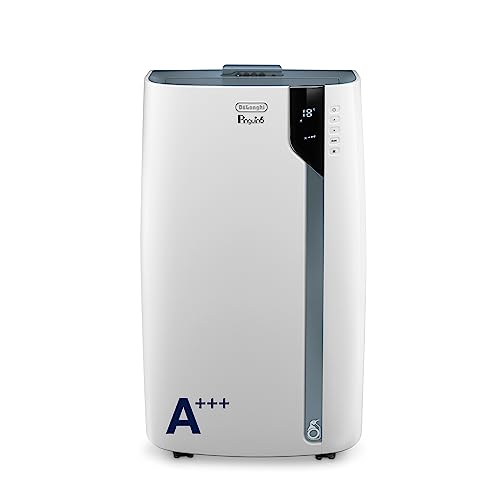
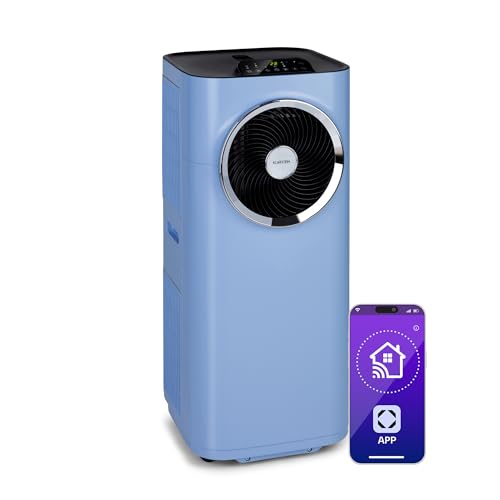
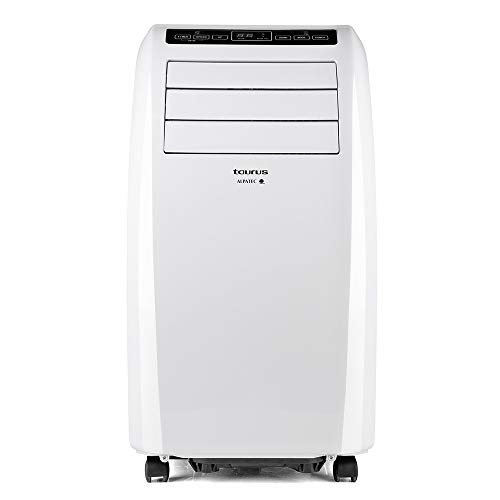
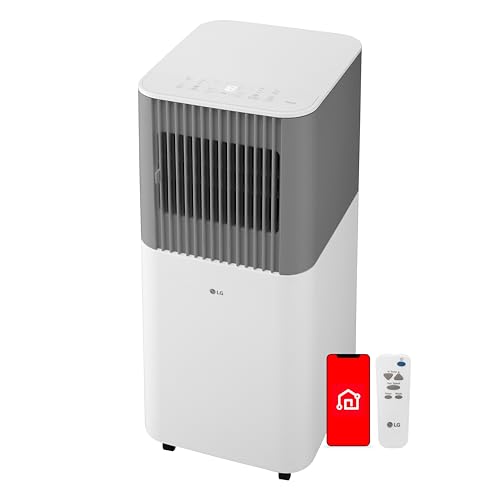
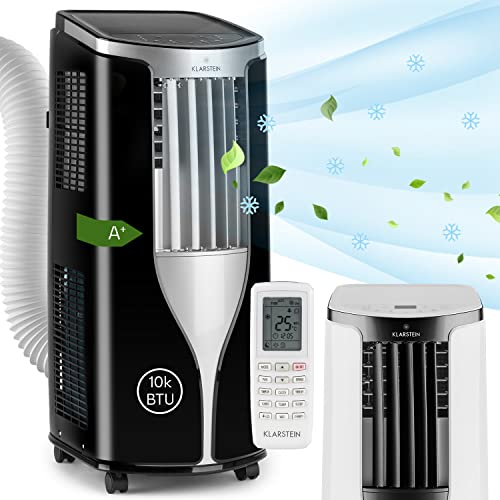
A 10,000 BTU portable air conditioner usually suits about 25–40 m² in a closed room, with the upper end dependent on insulation, sun exposure, ceiling height, and internal heat. Several models claim 44–49 m², but those figures are optimistic for a sunny room or an open doorway.
Use the lower end for a bedroom or office with afternoon sun, and consider a 12,000 BTU-class model when the room is poorly insulated, has a high ceiling, or includes cooking and computer heat. A smaller, well-sealed room can benefit from 10,000 BTU without the bulk of a larger machine.
Check the DOE/SACC rating, hose route, and window seal rather than treating the nominal label as a guaranteed room size. A long or leaky exhaust can reduce delivered cooling enough to change the practical fit.
The chart below shows the maximum-room-size distribution of 10000 BTU portable air conditioners.
[vertical-chart-03904584176139437430007749027202590510722723670449]
How do ASHRAE and DOE/SACC ratings affect a 10000 BTU model?
ASHRAE BTU/h is a nominal laboratory capacity, while DOE/SACC is intended to reflect seasonal delivered cooling after heat enters through the exhaust hose and other portable-unit losses. A 10,000 BTU ASHRAE label can therefore correspond to a noticeably lower real-room capacity.
For sizing, compare DOE/SACC figures measured under the same method and check whether the manufacturer quotes a single-hose arrangement. Use the nominal BTU number to identify the tier, but let delivered capacity, hose sealing, and the room’s heat load determine whether the unit is adequate.
When does a room need more than 10000 BTU of cooling?
A room needs more than 10,000 BTU of portable cooling when it has strong direct sun, poor insulation, high ceilings, open connections to other spaces, or substantial appliance heat. For a closed room around 30–40 m², those conditions can push the practical choice toward 12,000 BTU or higher, especially when the hose system is single-hose.
Before increasing capacity, shade the windows, close the door, and seal the exhaust panel. These changes reduce the heat load and the replacement-air penalty, so they can make an existing 10,000 BTU unit perform more consistently.
If the room still warms quickly, use DOE/SACC output and a higher-capacity class rather than relying on a generous manufacturer room claim. Oversizing a tiny room can create damp cycling, but undersizing a hot room leaves the compressor running continuously.