GIGABYTE B650E AORUS Stealth Ice Review | 107 Data compared

double-arrow
  • Avg. price: ~£200
  • CPU socket: AM5
  • Chipset: AMD B650E
  • Form factor: ATX

GIGABYTE B650E AORUS Stealth Ice review. Compare 107 technical specifications and user reviews to see how it ranks among motherboards and if it is worth buying.

8.2

Overall score

What it is: An overall evaluation of the motherboard's quality, based on technical analyses and user reviews.

When it matters: When you need a quick reference to identify the best motherboards on the market.

Score components:

90.0%

8.1

Technical Score

10.0%

8.4

User score

Excellent
8.1

Technical Score

What it is: An assessment of the motherboard's technical performance, covering key areas such as power delivery, CPU and memory support, expansion, storage, connectivity, cooling, BIOS features, and design.

When it matters: When you want to compare motherboards based on technical performance and available features.

Score components:

19.0%

9.8

Memory

16.0%

8.7

Platform & Features

16.0%

7.7

Storage

15.0%

9.9

Network

13.0%

6.8

Ports & USB

8.0%

5.1

Expansion

8.0%

7.2

Power & Cooling

5.0%

5.8

Audio

Excellent
8.4

User score

What it is: A rating that combines user reviews and the total number of reviews received by the motherboard.

When it matters: When you want to understand how a motherboard performs in real-world builds and how reliable it is in terms of stability, BIOS usability, connectivity, and long-term ownership.

Score components:

70.0%

8.7

User reviews

30.0%

7.7

Popularity

User score:
United Kingdom
amazon
4.3
(121)
amazon
4.4
(107)
United States
Amazon_logo.png
4.4
(106)

(Reviews last updated: May 2026)

Excellent
  • 8.8
    Gaming

    Score components:

    28.0%

    7.4

    VRM phases

    22.0%

    7.8

    N. of M.2 sockets

    18.0%

    10

    LAN speed

    17.0%

    10

    Maximum RAM speed

    15.0%

    10

    N. of PCIe 5.0 x16 slots

  • gigabyte-b650e-aorus-stealth-ice
  • gigabyte-b650e-aorus-stealth-ice
  • gigabyte-b650e-aorus-stealth-ice
  • gigabyte-b650e-aorus-stealth-ice
  • gigabyte-b650e-aorus-stealth-ice
  • gigabyte-b650e-aorus-stealth-ice
gigabyte-b650e-aorus-stealth-ice

Best prices in UK

Best rankings

?

Available: ranking among products currently available (including other versions of this product).
All: ranking among all products in the database.

Verdict

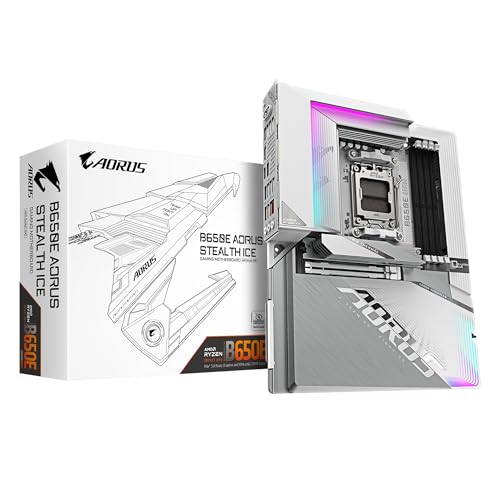
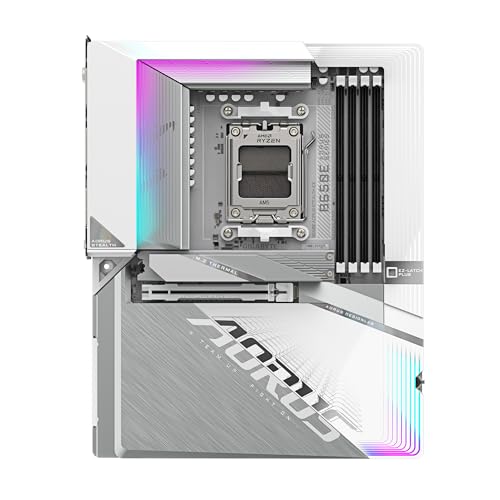
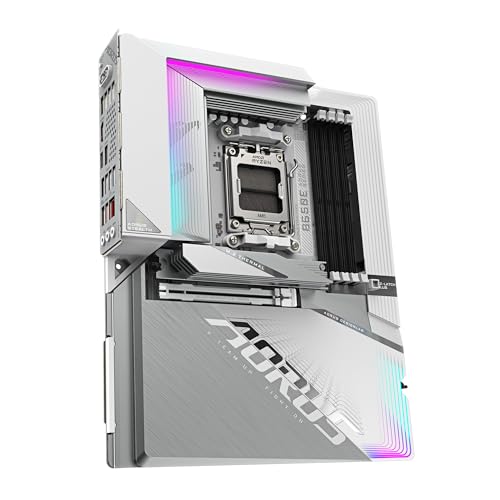
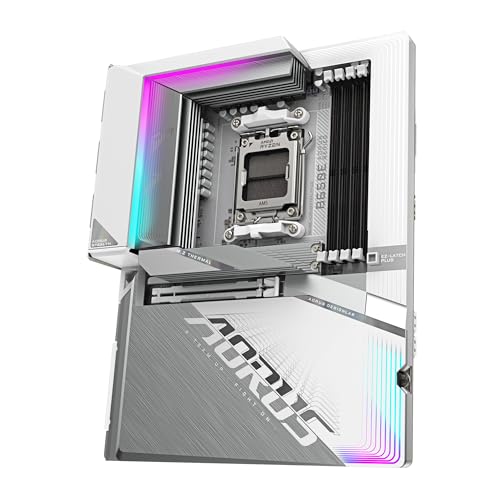
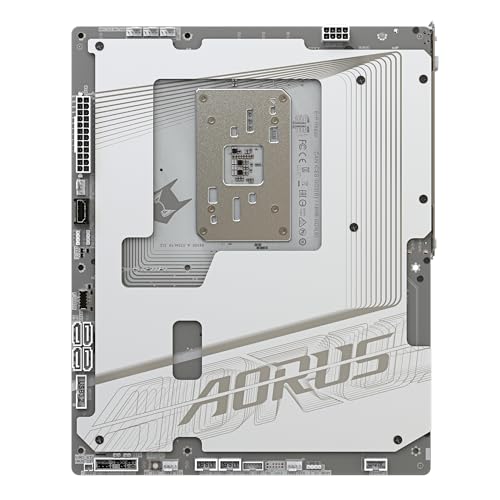
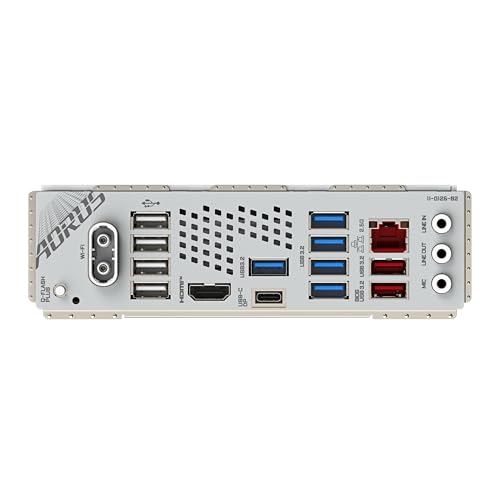
The Gigabyte B650E Aorus Stealth Ice is an ATX motherboard for the AMD AM5 socket (Ryzen 7000/8000/9000 series), distinguished as the world's first true white board featuring a 'Stealth' back-connector design that hides all cables for a clean aesthetic. It is equipped with a digital twin 12+2+2 phase VRM (60A DrMOS), supports dual-channel DDR5 memory up to 8000MHz (OC), and provides a PCIe 5.0 x16 graphics slot alongside three M.2 slots (one PCIe 5.0, two PCIe 4.0). Key pros include cutting-edge Wi-Fi 7 and 2.5GbE networking, DIY-friendly EZ-Latch and magnetic EZ-Match heatsinks, and comprehensive thermal armor. However, its main cons are restricted compatibility with cases specifically designed for back-side connectivity and a lack of additional PCIe expansion slots beyond the primary x16 slot.

Technical Specifications of GIGABYTE B650E AORUS Stealth Ice

Technical Score

What it is: An assessment of the motherboard's technical performance, covering key areas such as power delivery, CPU and memory support, expansion, storage, connectivity, cooling, BIOS features, and design.

When it matters: When you want to compare motherboards based on technical performance and available features.

Score components:

19.0%

9.8

Memory

16.0%

8.7

Platform & Features

16.0%

7.7

Storage

15.0%

9.9

Network

13.0%

6.8

Ports & USB

8.0%

5.1

Expansion

8.0%

7.2

Power & Cooling

5.0%

5.8

Audio

8.1
GIGABYTE B650E AORUS Stealth Ice has a technical score of 8.12 points, which is higher than that of 83.9% of products in this category.
User score

What it is: A rating that combines user reviews and the total number of reviews received by the motherboard.

When it matters: When you want to understand how a motherboard performs in real-world builds and how reliable it is in terms of stability, BIOS usability, connectivity, and long-term ownership.

Score components:

70.0%

8.7

User reviews

30.0%

7.7

Popularity

User score:
United Kingdom
amazon
4.3
(121)
amazon
4.4
(107)
United States
Amazon_logo.png
4.4
(106)

(Reviews last updated: May 2026)

8.4
GIGABYTE B650E AORUS Stealth Ice has a user score of 8.39 points, which is higher than that of 72.8% of products in this category.
Popularity
What it is: An indicator based on the number of reviews received by the motherboard.
When it matters: When you prefer a motherboard that has already been bought and reviewed by many other users.
7.7
GIGABYTE B650E AORUS Stealth Ice has a popularity of 7.7 points, which is higher than 72.1% of products in this category.
Ratio quality/price

What it is: An indicator that combines the motherboard's overall rating with its cost.

When it matters: When you are looking for a motherboard that offers a strong balance of features, performance, and price.

Score components:

60.0%

8.2

Overall score

40.0%

9.5

Price

8.5
GIGABYTE B650E AORUS Stealth Ice has a quality-to-price ratio of 8.5 points, which is higher than 85.7% of products in this category.
Brand name
What it is: The brand that makes the motherboard.
When it matters: When you have a brand preference for support, BIOS, or build quality.

Importance: MEDIUM

Gigabyte
CPU socket
What it is: The socket type the motherboard is built to support.
When it matters: When you need the motherboard to match a specific CPU.

Importance: HIGH

AM5
GIGABYTE B650E AORUS Stealth Ice uses the AM5 CPU socket, which is more advanced than that of 85.8% of motherboards and equal to that of 14.2% of motherboards.
CPU platform

Importance: MEDIUM

AMD
Chipset
What it is: The chipset that defines the motherboard platform and many of its features.
When it matters: When you compare platform features, connectivity, and CPU support.

Importance: HIGH

AMD B650E
GIGABYTE B650E AORUS Stealth Ice uses the AMD B650E chipset, which is more advanced than that of 76.5% of motherboards and equal to that of 0.6% of motherboards.
Form factor
What it is: The physical size standard of the motherboard, such as ATX or Micro-ATX.
When it matters: When you need the board to fit a specific case size.

Importance: HIGH

ATX
GIGABYTE B650E AORUS Stealth Ice has the ATX form factor, which is more versatile than that of 47.8% of motherboards and equal to that of 52.2% of motherboards.
Show more
DDR memory version
What it is: The RAM generation the motherboard supports, such as DDR4 or DDR5.
When it matters: When you need the board to match a certain memory platform.

Importance: HIGH

Good value: DDR5

DDR5
GIGABYTE B650E AORUS Stealth Ice uses DDR5 memory, which is newer than that of 64.7% of motherboards and equal to that of 35.3% of motherboards.
Memory slots
What it is: The number of RAM slots on the motherboard.
When it matters: When you want more room for future memory upgrades.

Importance: HIGH

Good value: >=4

4
GIGABYTE B650E AORUS Stealth Ice has 4 Memory slots, which is more than 21.5% of motherboards and equal to 72.5% of motherboards.
Maximum memory capacity
What it is: The largest total amount of RAM the motherboard supports.
When it matters: When you plan a build with very high memory capacity.

Importance: HIGH

Good value: >=128 GB

256 GB
GIGABYTE B650E AORUS Stealth Ice supports up to 256 GB of memory, which is more than 82.8% of motherboards and equal to 16.5% of motherboards.
requires BIOS update for full capacity
Memory channels
What it is: The memory channel configuration supported by the motherboard platform.
When it matters: When memory bandwidth matters for your build.

Importance: MEDIUM

2
GIGABYTE B650E AORUS Stealth Ice supports 2 memory channels, which is more than 0.2% of motherboards and equal to 92.5% of motherboards.
Maximum RAM speed
What it is: The highest officially supported memory speed for the motherboard.
When it matters: When you choose RAM and want to know the supported speed ceiling.

Importance: HIGH

Good value: >=6400 MT/s

8,000 MT/s
GIGABYTE B650E AORUS Stealth Ice supports memory speeds up to 8000 MT/s, which is higher than that of 85% of motherboards and equal to that of 5.6% of motherboards.
Show more
N. of M.2 sockets
What it is: The number of M.2 slots available on the motherboard.
When it matters: When you want room for more NVMe or M.2 drives.

Importance: HIGH

Good value: >=3

3
GIGABYTE B650E AORUS Stealth Ice has 3 M.2 sockets, which is more than 65.4% of motherboards and equal to 18.6% of motherboards.
M.2 slot interface per slot
What it is: The storage or PCIe interface available for each M.2 slot on the motherboard.
When it matters: When you want to check which drives each M.2 slot can use.

Importance: HIGH

1x PCIe 5.0 x4, 2x PCIe 4.0 x4
GIGABYTE B650E AORUS Stealth Ice offers 1x PCIe 5.0x4, 2x PCIe 4.0x4 for M.2 slot interfaces, which is faster than that of 84.8% of motherboards and equal to that of 3.1% of motherboards.
N. of SATA 3 connectors
What it is: The number of SATA 6Gb/s connectors on the motherboard.
When it matters: When you plan to connect multiple SATA drives.

Importance: MEDIUM

Good value: >=6

4
GIGABYTE B650E AORUS Stealth Ice has 4 SATA 3 connectors, which is more than 5.6% of motherboards and equal to 46.3% of motherboards.
Supported RAID levels
What it is: The RAID modes officially supported by the motherboard storage platform.
When it matters: When you plan to use multiple drives in a RAID setup.

Importance: MEDIUM

0/1/10
GIGABYTE B650E AORUS Stealth Ice supports RAID levels 0/1/10, which is narrower than 68.3% of motherboards and equal to 23.2% of motherboards.
NVMe RAID support
What it is: Shows whether the board supports RAID configurations that use NVMe SSDs.
When it matters: When you plan to use multiple NVMe drives in RAID.

Importance: LOW

yes
GIGABYTE B650E AORUS Stealth Ice supports NVMe RAID. 40.3% of motherboards support this feature.
RAID 0/1/10 only
Show more
N. of PCIe 5.0 x16 slots
What it is: The number of PCIe 5.0 x16 physical slots on the motherboard.
When it matters: When you want the newest high-bandwidth expansion slots.

Importance: HIGH

Good value: >=1

1
GIGABYTE B650E AORUS Stealth Ice has 1 PCIe 5.0x16 slots, which is more than 68.6% of motherboards and equal to 26.6% of motherboards.
N. of PCIe 4.0 x16 slots
What it is: The number of PCIe 4.0 x16 physical slots on the motherboard.
When it matters: When you want more room for modern expansion cards.

Importance: HIGH

Good value: >=1

0
GIGABYTE B650E AORUS Stealth Ice has 0 PCIe 4.0x16 slots, which is equal to 55.6% of motherboards.
N. of PCIe 3.0 x16 slots
What it is: The number of PCIe 3.0 x16 physical slots on the motherboard.
When it matters: When you need more full-length expansion slots.

Importance: MEDIUM

0
GIGABYTE B650E AORUS Stealth Ice has 0 PCIe 3.0x16 slots, which is fewer than 59.5% of motherboards and equal to 40.5% of motherboards.
PCIe slot electrical configuration
What it is: The actual lane wiring used by the motherboard PCIe slots.
When it matters: When you need to know how much bandwidth each slot really gets.

Importance: HIGH

?
PCIe bifurcation support
What it is: Shows whether the board can split PCIe lanes across multiple devices from one slot or link.
When it matters: When you plan multi-SSD adapters or more advanced expansion setups.

Importance: MEDIUM

yes
GIGABYTE B650E AORUS Stealth Ice supports PCIe bifurcation. 39.1% of motherboards support this feature.
x8/x8.
Show more
Total USB ports (rear I/O)
What it is: The total number of rear USB ports available on the motherboard.
When it matters: When you use many USB devices directly from the back of the PC.

Importance: MEDIUM

Good value: >=8

12
GIGABYTE B650E AORUS Stealth Ice has 12 USB ports (rear I/O), which is more than 93% of motherboards and equal to 5.5% of motherboards.
Total USB ports (including headers)
What it is: The total number of USB ports supported when rear ports and internal headers are counted together.
When it matters: When you want to know the board's full USB expansion potential.

Importance: MEDIUM

Good value: >=14

18
GIGABYTE B650E AORUS Stealth Ice has 18 USB ports (including headers), which is more than 82.9% of motherboards and equal to 4.8% of motherboards.
Total USB-C ports (rear I/O)
What it is: The total number of rear USB-C ports on the motherboard.
When it matters: When you want more USB-C devices connected without adapters.

Importance: MEDIUM

Good value: >=1

1
GIGABYTE B650E AORUS Stealth Ice has 1 USB-C ports (rear I/O), which is more than 35.4% of motherboards and equal to 48.8% of motherboards.
Total USB-C ports (including headers)
What it is: The total number of USB-C ports supported when rear ports and internal headers are counted together.
When it matters: When you want more USB-C connectivity across the whole build.

Importance: MEDIUM

Good value: >=2

2
GIGABYTE B650E AORUS Stealth Ice has 2 USB-C ports (including headers), which is more than 51.8% of motherboards and equal to 32.8% of motherboards.
N. of USB 3.2 Gen2x2 ports (USB-C)
What it is: The number of rear USB 3.2 Gen2x2 Type-C ports on the motherboard.
When it matters: When you want very fast USB-C connectivity on the rear I/O.

Importance: HIGH

Good value: >=1

0
GIGABYTE B650E AORUS Stealth Ice has 0 USB 3.2 Gen2x2 ports (USB-C), which is equal to 81.6% of motherboards.
USB4 excluded.
Show more
LAN speed
What it is: The maximum wired Ethernet speed supported by the motherboard.
When it matters: When you want faster wired networking.

Importance: HIGH

Good value: 2.5GbE

2.5 Gbps
GIGABYTE B650E AORUS Stealth Ice supports LAN speeds up to 2.5 Gbps, which is higher than that of 49.2% of motherboards and equal to that of 41.5% of motherboards.
LAN controller
What it is: The model of onboard Ethernet controller used by the motherboard.
When it matters: When you compare networking hardware quality and features.

Importance: MEDIUM

?
N. of RJ45 ports
What it is: The number of wired Ethernet ports on the motherboard.
When it matters: When you need one or more wired network connections.

Importance: LOW

1
GIGABYTE B650E AORUS Stealth Ice has 1 RJ45 ports, which is equal to 85.6% of motherboards.
Wi-Fi connectivity
What it is: Shows whether the motherboard includes onboard Wi-Fi hardware instead of requiring a separate adapter.
When it matters: When you want wireless networking without adding an extra card.

Importance: MEDIUM

yes
GIGABYTE B650E AORUS Stealth Ice supports Wi-Fi connectivity. 50.9% of motherboards support this feature.
Wi-Fi version
What it is: The supported Wi-Fi generation, such as Wi-Fi 6 or Wi-Fi 7.
When it matters: When you care about wireless speed and router compatibility.

Importance: MEDIUM

Good value: Wi-Fi 6E (802.11ax)

Wi-Fi 7 (802.11be)
GIGABYTE B650E AORUS Stealth Ice supports Wi-Fi 7 (802.11be), which is newer than that of 88.7% of motherboards and equal to that of 11.3% of motherboards.
Show more
Audio codec
What it is: The onboard audio codec used by the motherboard.
When it matters: When sound quality from the built-in audio matters to you.

Importance: MEDIUM

Realtek ALC897
GIGABYTE B650E AORUS Stealth Ice uses the Realtek ALC897 audio codec, which is less advanced than that of 50.8% of motherboards and equal to that of 29.3% of motherboards.
Audio channels
What it is: The audio channel configuration supported by the onboard sound solution.
When it matters: When you want surround sound from the motherboard audio outputs.

Importance: LOW

Good value: 7.1

7.1
GIGABYTE B650E AORUS Stealth Ice offers 7.1 audio channels, which is more than 4.9% of motherboards and equal to 95.1% of motherboards.
surround needs jack retasking.
Audio SNR
What it is: The signal-to-noise ratio of the onboard audio solution.
When it matters: When you care about cleaner onboard audio output.

Importance: MEDIUM

Good value: >=120 dB

97 dB
GIGABYTE B650E AORUS Stealth Ice has an audio SNR of 97 dB, which is lower than that of 67.3% of motherboards and equal to that of 16.8% of motherboards.
Headphone amp support
What it is: Shows whether the onboard audio path includes dedicated headphone amplification for harder-to-drive headsets.
When it matters: When you use harder-to-drive headphones from the onboard audio.

Importance: LOW

no
GIGABYTE B650E AORUS Stealth Ice does not support a headphone amp. 63% of motherboards support this feature.
N. of 3.5mm audio jacks
What it is: The number of rear 3.5mm audio jacks on the motherboard.
When it matters: When you want more analog audio connection options.

Importance: LOW

Good value: >=5

3
GIGABYTE B650E AORUS Stealth Ice has 3 3.5mm audio jacks, which is fewer than 50.3% of motherboards and equal to 38.2% of motherboards.
Show more
VRM phases
What it is: The number of power-delivery phases used by the motherboard VRM.
When it matters: When you care about CPU power delivery and overclocking headroom.

Importance: HIGH

Good value: >=12

12+2+2
GIGABYTE B650E AORUS Stealth Ice has 12+2+2 VRM phases, which is more than 74.8% of motherboards and equal to 0.5% of motherboards.
N. of CPU power connectors
What it is: The number of CPU power connectors on the motherboard.
When it matters: When you care about power delivery for higher-end CPUs.

Importance: HIGH

Good value: >=2

1
GIGABYTE B650E AORUS Stealth Ice has 1 CPU power connectors, which is equal to 54.5% of motherboards.
N. of fan headers
What it is: The number of headers available for case or CPU fans.
When it matters: When your build uses several fans.

Importance: MEDIUM

Good value: >=6

6
GIGABYTE B650E AORUS Stealth Ice has 6 fan headers, which is more than 50.3% of motherboards and equal to 22.3% of motherboards.
Pump header
What it is: Shows whether the motherboard includes a dedicated header designed for a liquid-cooling pump.
When it matters: When you build with an AIO or custom liquid cooling loop.

Importance: MEDIUM

yes
GIGABYTE B650E AORUS Stealth Ice has a pump header. 23.1% of motherboards include this feature.
Pump header max current
What it is: The maximum current the dedicated pump header can supply.
When it matters: When you want to make sure the pump header can power your cooling setup.

Importance: LOW

Good value: >=2 A

?
Show more

GIGABYTE B650E AORUS Stealth Ice vs the average motherboard

  • Newer CPU socket
    GIGABYTE B650E AORUS Stealth Ice has newer CPU socket than the average motherboard (AM5 vs LGA 1,151). The average motherboard uses LGA 1,151 CPU socket.
    What it is: The socket type the motherboard is built to support.
    When it matters: When you need the motherboard to match a specific CPU.

    Importance: HIGH

    GIGABYTE B650E AORUS Stealth Ice has newer CPU socket than the average motherboard (AM5 vs LGA 1,151). The average motherboard uses LGA 1,151 CPU socket.AM5 vs LGA 1151
  • 2x more maximum memory capacity
    GIGABYTE B650E AORUS Stealth Ice has more maximum memory capacity than the average motherboard (256 GB vs 128 GB). The average motherboard supports 128 GB of memory.
    requires BIOS update for full capacity
    What it is: The largest total amount of RAM the motherboard supports.
    When it matters: When you plan a build with very high memory capacity.

    Importance: HIGH

    Good value: >=128 GB

    GIGABYTE B650E AORUS Stealth Ice has more maximum memory capacity than the average motherboard (256 GB vs 128 GB). The average motherboard supports 128 GB of memory.256 GB vs 128 GB
  • 4 more rear USB ports
    GIGABYTE B650E AORUS Stealth Ice has more rear USB ports than the average motherboard (12 vs 8). The average motherboard has 8 rear USB port/s.
    What it is: The total number of rear USB ports available on the motherboard.
    When it matters: When you use many USB devices directly from the back of the PC.

    Importance: MEDIUM

    Good value: >=8

    GIGABYTE B650E AORUS Stealth Ice has more rear USB ports than the average motherboard (12 vs 8). The average motherboard has 8 rear USB port/s.12 vs 8
  • Newer DDR memory generation
    GIGABYTE B650E AORUS Stealth Ice has newer DDR memory generation than the average motherboard (DDR5 vs DDR4). The average motherboard supports DDR4 memory.
    What it is: The RAM generation the motherboard supports, such as DDR4 or DDR5.
    When it matters: When you need the board to match a certain memory platform.

    Importance: HIGH

    Good value: DDR5

    GIGABYTE B650E AORUS Stealth Ice has newer DDR memory generation than the average motherboard (DDR5 vs DDR4). The average motherboard supports DDR4 memory.DDR5 vs DDR4
  • 1 more PCIe 5.0x16 slots
    GIGABYTE B650E AORUS Stealth Ice has more PCIe 5.0x16 slots than the average motherboard (1 vs 0). The average motherboard has 0 PCIe 5.0x16 slot/s.
    What it is: The number of PCIe 5.0 x16 physical slots on the motherboard.
    When it matters: When you want the newest high-bandwidth expansion slots.

    Importance: HIGH

    Good value: >=1

    GIGABYTE B650E AORUS Stealth Ice has more PCIe 5.0x16 slots than the average motherboard (1 vs 0). The average motherboard has 0 PCIe 5.0x16 slot/s.1 vs 0
  • 1 more M.2 sockets
    GIGABYTE B650E AORUS Stealth Ice has more M.2 sockets than the average motherboard (3 vs 2). The average motherboard has 2 M.2 socket/s.
    What it is: The number of M.2 slots available on the motherboard.
    When it matters: When you want room for more NVMe or M.2 drives.

    Importance: HIGH

    Good value: >=3

    GIGABYTE B650E AORUS Stealth Ice has more M.2 sockets than the average motherboard (3 vs 2). The average motherboard has 2 M.2 socket/s.3 vs 2
  • Integrated I/O shield
    GIGABYTE B650E AORUS Stealth Ice has an integrated I/O shield, while the average motherboard does not. 46.1% of motherboards include an integrated I/O shield.
    What it is: Shows whether the rear I/O shield comes pre-mounted on the motherboard instead of being installed separately.
    When it matters: When you want an easier motherboard installation process.

    Importance: LOW

    GIGABYTE B650E AORUS Stealth Ice has an integrated I/O shield, while the average motherboard does not. 46.1% of motherboards include an integrated I/O shield.
  • 1 more USB 3.2 Gen2 USB-C ports
    GIGABYTE B650E AORUS Stealth Ice has more USB 3.2 Gen2 USB-C ports than the average motherboard (1 vs 0). The average motherboard has 0 USB 3.2 Gen2 USB-C port/s.
    What it is: The number of rear USB 3.2 Gen2 Type-C ports on the motherboard.
    When it matters: When you want faster rear USB-C connectivity.

    Importance: HIGH

    Good value: >=1

    GIGABYTE B650E AORUS Stealth Ice has more USB 3.2 Gen2 USB-C ports than the average motherboard (1 vs 0). The average motherboard has 0 USB 3.2 Gen2 USB-C port/s.1 vs 0
  • Newer CPU socket
    GIGABYTE B650E AORUS Stealth Ice has newer CPU socket than the average motherboard (AM5 vs LGA 1,151). The average motherboard uses LGA 1,151 CPU socket.
  • Integrated I/O shield
    GIGABYTE B650E AORUS Stealth Ice has an integrated I/O shield, while the average motherboard does not. 46.1% of motherboards include an integrated I/O shield.
  • Includes onboard reset button
    GIGABYTE B650E AORUS Stealth Ice has an onboard reset button, while the average motherboard does not. 27.6% of motherboards include an onboard reset button.
  • 2x more maximum memory capacity
    GIGABYTE B650E AORUS Stealth Ice has more maximum memory capacity than the average motherboard (256 GB vs 128 GB). The average motherboard supports 128 GB of memory.
  • Newer DDR memory generation
    GIGABYTE B650E AORUS Stealth Ice has newer DDR memory generation than the average motherboard (DDR5 vs DDR4). The average motherboard supports DDR4 memory.
  • 73.9% higher maximum RAM speed
    GIGABYTE B650E AORUS Stealth Ice has a higher maximum RAM speed than the average motherboard (8,000 MT/s vs 4,600 MT/s). The average motherboard supports RAM speed of 4,600 MT/s.
  • 62.2% higher overclocked RAM speed
    GIGABYTE B650E AORUS Stealth Ice has a higher overclocked RAM speed than the average motherboard (8,000 MT/s vs 4,933 MT/s). The average motherboard supports overclocked RAM speed of 4,933 MT/s.
  • 1 more M.2 sockets
    GIGABYTE B650E AORUS Stealth Ice has more M.2 sockets than the average motherboard (3 vs 2). The average motherboard has 2 M.2 socket/s.
  • 1 more PCIe 5.0x16 slots
    GIGABYTE B650E AORUS Stealth Ice has more PCIe 5.0x16 slots than the average motherboard (1 vs 0). The average motherboard has 0 PCIe 5.0x16 slot/s.
  • 4 more rear USB ports
    GIGABYTE B650E AORUS Stealth Ice has more rear USB ports than the average motherboard (12 vs 8). The average motherboard has 8 rear USB port/s.
  • 1 more USB 3.2 Gen2 USB-C ports
    GIGABYTE B650E AORUS Stealth Ice has more USB 3.2 Gen2 USB-C ports than the average motherboard (1 vs 0). The average motherboard has 0 USB 3.2 Gen2 USB-C port/s.
  • 3 more total USB connections
    GIGABYTE B650E AORUS Stealth Ice has more total USB connections than the average motherboard (18 vs 15). The average motherboard has 15 total USB connections.
  • 1 more USB 3.2 Gen2 ports
    GIGABYTE B650E AORUS Stealth Ice has more USB 3.2 Gen2 ports than the average motherboard (2 vs 1). The average motherboard has 1 USB 3.2 Gen2 port/s.
  • 1 more USB4 40Gbps ports
    GIGABYTE B650E AORUS Stealth Ice has more USB4 40Gbps ports than the average motherboard (1 vs 0). The average motherboard has 0 USB4 40Gbps port/s.
  • 1 more USB 3.2 Gen1 ports
    GIGABYTE B650E AORUS Stealth Ice has more USB 3.2 Gen1 ports than the average motherboard (5 vs 4). The average motherboard has 4 USB 3.2 Gen1 port/s.
  • 1 more USB 3.2 Gen2x2 headers
    GIGABYTE B650E AORUS Stealth Ice has more USB 3.2 Gen2x2 headers than the average motherboard (1 vs 0). The average motherboard has 0 USB 3.2 Gen2x2 header/s.
  • 1 more total USB-C connections
    GIGABYTE B650E AORUS Stealth Ice has more total USB-C connections than the average motherboard (2 vs 1). The average motherboard has 1 total USB-C connections.
  • 2 more USB 2.0 ports
    GIGABYTE B650E AORUS Stealth Ice has more USB 2.0 ports than the average motherboard (4 vs 2). The average motherboard has 2 USB 2.0 port/s.
  • Supports Wi-Fi
    GIGABYTE B650E AORUS Stealth Ice supports Wi-Fi connectivity, while the average motherboard does not. 49.1% of motherboards support Wi-Fi connectivity.
  • Supports Bluetooth
    GIGABYTE B650E AORUS Stealth Ice supports Bluetooth, while the average motherboard does not. 47% of motherboards support Bluetooth.
  • More VRM phases
    GIGABYTE B650E AORUS Stealth Ice has more VRM phases than the average motherboard (12+2+2 vs 10). The average motherboard has 10 VRM phase/s.
  • 61 mm shorter
    GIGABYTE B650E AORUS Stealth Ice is shorter than the average motherboard (244 mm vs 305 mm). The average motherboard height is 305 mm.
  • 1 more fan headers
    GIGABYTE B650E AORUS Stealth Ice has more fan headers than the average motherboard (6 vs 5). The average motherboard has 5 fan header/s.
  • More basic motherboard chipset
    GIGABYTE B650E AORUS Stealth Ice has more basic motherboard chipset than the average motherboard (AMD B650E vs Intel B860). The average motherboard uses Intel B860 chipset.
  • Fewer RAID options
    GIGABYTE B650E AORUS Stealth Ice has fewer RAID options than the average motherboard (0/1/10 vs 0/1/5/10). The average motherboard has 0/1/5/10 RAID level/s.
  • No multi-GPU support
    GIGABYTE B650E AORUS Stealth Ice does not support multi-GPU, while the average motherboard does. 54.6% of motherboards support multi-GPU.
  • 1 fewer PCIe x1 slots
    GIGABYTE B650E AORUS Stealth Ice has fewer PCIe x1 slots than the average motherboard (0 vs 1). The average motherboard has 1 PCIe x1 slot/s.
  • 1 fewer PCIe 3.0x16 slots
    GIGABYTE B650E AORUS Stealth Ice has fewer PCIe 3.0x16 slots than the average motherboard (0 vs 1). The average motherboard has 1 PCIe 3.0x16 slot/s.
  • 1 fewer DisplayPort outputs
    GIGABYTE B650E AORUS Stealth Ice has fewer DisplayPort outputs than the average motherboard (0 vs 1). The average motherboard has 1 DisplayPort outputs.
  • 1 fewer PS/2 ports
    GIGABYTE B650E AORUS Stealth Ice has fewer PS/2 ports than the average motherboard (0 vs 1). The average motherboard has 1 PS/2 port/s.
  • 18 dB lower audio SNR
    GIGABYTE B650E AORUS Stealth Ice has a lower audio SNR than the average motherboard (97 dB vs 115 dB). The average motherboard has audio SNR of 115 dB.
  • No headphone amp support
    GIGABYTE B650E AORUS Stealth Ice does not support a headphone amp, while the average motherboard does. 63% of motherboards support a headphone amp.
  • More basic audio codec
    GIGABYTE B650E AORUS Stealth Ice has more basic audio codec than the average motherboard (Realtek ALC897 vs Realtek ALC898). The average motherboard uses Realtek ALC898 audio codec.
  • 2 fewer 3.5mm audio jacks
    GIGABYTE B650E AORUS Stealth Ice has fewer 3.5mm audio jacks than the average motherboard (3 vs 5). The average motherboard has 5 3.5mm audio jacks.
  • No optical S/PDIF out
    GIGABYTE B650E AORUS Stealth Ice does not have optical S/PDIF out, while the average motherboard does. 55.7% of motherboards include optical S/PDIF out.
  • Fewer RAID options
    GIGABYTE B650E AORUS Stealth Ice has fewer RAID options than the average motherboard (0/1/10 vs 0/1/5/10). The average motherboard has 0/1/5/10 RAID level/s.
    What it is: The RAID modes officially supported by the motherboard storage platform.
    When it matters: When you plan to use multiple drives in a RAID setup.

    Importance: MEDIUM

    GIGABYTE B650E AORUS Stealth Ice has fewer RAID options than the average motherboard (0/1/10 vs 0/1/5/10). The average motherboard has 0/1/5/10 RAID level/s.0/1/10 vs 0/1/5/10
  • No multi-GPU support
    GIGABYTE B650E AORUS Stealth Ice does not support multi-GPU, while the average motherboard does. 54.6% of motherboards support multi-GPU.
    What it is: Shows whether the board can run more than one graphics card in a supported multi-GPU configuration.
    When it matters: When you plan to run more than one graphics card.

    Importance: LOW

    GIGABYTE B650E AORUS Stealth Ice does not support multi-GPU, while the average motherboard does. 54.6% of motherboards support multi-GPU.
  • 18 dB lower audio SNR
    GIGABYTE B650E AORUS Stealth Ice has a lower audio SNR than the average motherboard (97 dB vs 115 dB). The average motherboard has audio SNR of 115 dB.
    What it is: The signal-to-noise ratio of the onboard audio solution.
    When it matters: When you care about cleaner onboard audio output.

    Importance: MEDIUM

    Good value: >=120 dB

    GIGABYTE B650E AORUS Stealth Ice has a lower audio SNR than the average motherboard (97 dB vs 115 dB). The average motherboard has audio SNR of 115 dB.97 dB vs 115 dB
  • No headphone amp support
    GIGABYTE B650E AORUS Stealth Ice does not support a headphone amp, while the average motherboard does. 63% of motherboards support a headphone amp.
    What it is: Shows whether the onboard audio path includes dedicated headphone amplification for harder-to-drive headsets.
    When it matters: When you use harder-to-drive headphones from the onboard audio.

    Importance: LOW

    GIGABYTE B650E AORUS Stealth Ice does not support a headphone amp, while the average motherboard does. 63% of motherboards support a headphone amp.
  • More basic motherboard chipset
    GIGABYTE B650E AORUS Stealth Ice has more basic motherboard chipset than the average motherboard (AMD B650E vs Intel B860). The average motherboard uses Intel B860 chipset.
    What it is: The chipset that defines the motherboard platform and many of its features.
    When it matters: When you compare platform features, connectivity, and CPU support.

    Importance: HIGH

    GIGABYTE B650E AORUS Stealth Ice has more basic motherboard chipset than the average motherboard (AMD B650E vs Intel B860). The average motherboard uses Intel B860 chipset.AMD B650E vs Intel B860
  • More basic audio codec
    GIGABYTE B650E AORUS Stealth Ice has more basic audio codec than the average motherboard (Realtek ALC897 vs Realtek ALC898). The average motherboard uses Realtek ALC898 audio codec.
    What it is: The onboard audio codec used by the motherboard.
    When it matters: When sound quality from the built-in audio matters to you.

    Importance: MEDIUM

    GIGABYTE B650E AORUS Stealth Ice has more basic audio codec than the average motherboard (Realtek ALC897 vs Realtek ALC898). The average motherboard uses Realtek ALC898 audio codec.Realtek ALC897 vs Realtek ALC898
  • 1 fewer DisplayPort outputs
    GIGABYTE B650E AORUS Stealth Ice has fewer DisplayPort outputs than the average motherboard (0 vs 1). The average motherboard has 1 DisplayPort outputs.
    What it is: The number of DisplayPort video outputs on the motherboard.
    When it matters: When you want to connect compatible displays through the rear I/O.

    Importance: MEDIUM

    Good value: >=1

    GIGABYTE B650E AORUS Stealth Ice has fewer DisplayPort outputs than the average motherboard (0 vs 1). The average motherboard has 1 DisplayPort outputs.0 vs 1
  • 2 fewer 3.5mm audio jacks
    GIGABYTE B650E AORUS Stealth Ice has fewer 3.5mm audio jacks than the average motherboard (3 vs 5). The average motherboard has 5 3.5mm audio jacks.
    What it is: The number of rear 3.5mm audio jacks on the motherboard.
    When it matters: When you want more analog audio connection options.

    Importance: LOW

    Good value: >=5

    GIGABYTE B650E AORUS Stealth Ice has fewer 3.5mm audio jacks than the average motherboard (3 vs 5). The average motherboard has 5 3.5mm audio jacks.3 vs 5

Graphic comparison of GIGABYTE B650E AORUS Stealth Ice and

Attribute category
Attribute
No results found

Third-party reviews

United States

(Reviews last updated: May 2026)

What customers like about GIGABYTE B650E AORUS Stealth Ice?

  • Innovative back-connector design allows for a clutter-free, 'cableless' aesthetic in the front of the build
  • Premium white and silver aesthetic is highly praised as one of the best-looking motherboards for white-themed builds
  • Strong feature set including PCIe 5.0 support for both the x16 slot and at least one M.2 slot
  • User-friendly 'EZ-Latch' design simplifies the installation and removal of M.2 heatsinks and graphics cards without tools
  • Excellent connectivity options, featuring Wi-Fi 7, Bluetooth 5.4, and a high number of USB-A ports (11x)
  • Robust power delivery (12+2+2 phase VRM) capable of handling high-end Ryzen processors

What customers dislike about GIGABYTE B650E AORUS Stealth Ice?

  • Commonly reported 'RGB tragedy' where white lighting appears with purple or green tints due to reflections from the VRM cover
  • Gigabyte Control Center (GCC) software is frequently criticized for causing system instability and BSODs (Driver Power State Failure)
  • Limited expansion capability with zero additional PCIe slots beyond the primary x16 slot
  • Case compatibility is restricted to specific chassis that support back-side connector motherboards
  • Higher price point compared to standard B650E boards, essentially charging a premium for the 'Stealth' feature
  • Some users reported boot issues with specific high-end CPUs (e.g., 9800X3D) requiring BIOS updates or specific RAM configurations to post

Video reviews

Compare GIGABYTE B650E AORUS Stealth Ice with

VS
VS

Compare