
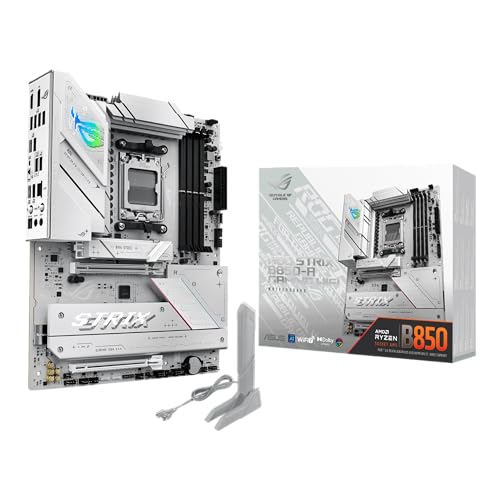
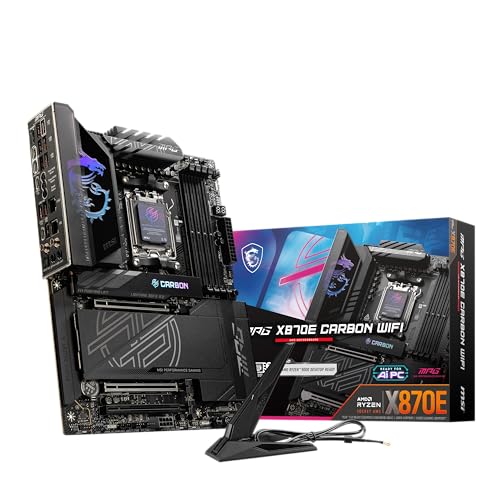
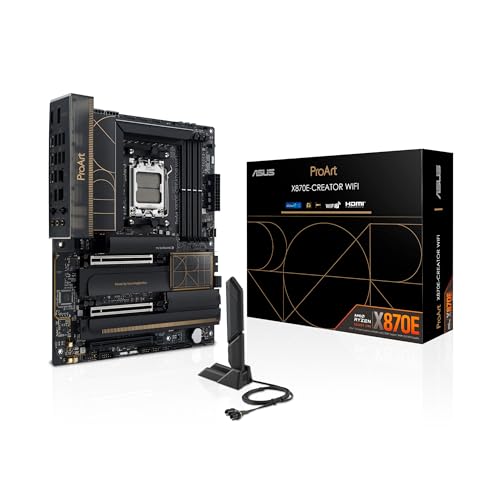
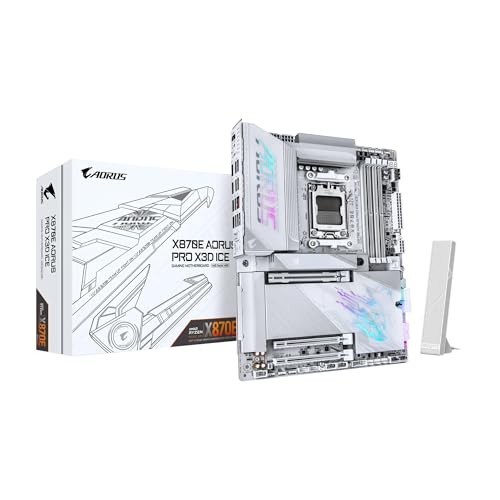
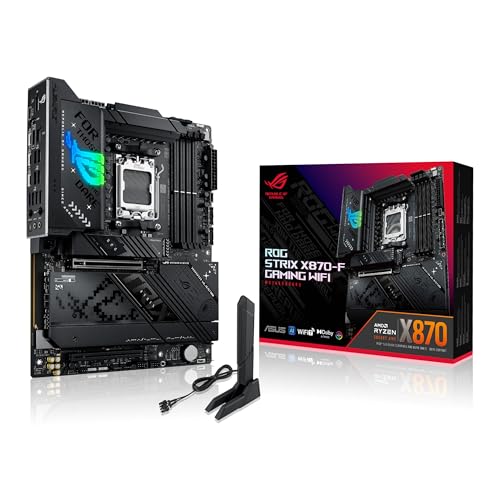
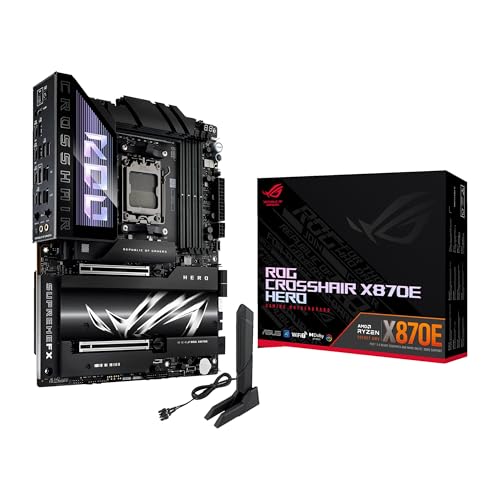
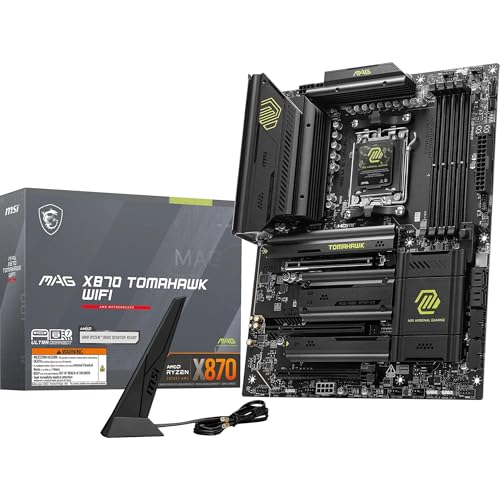
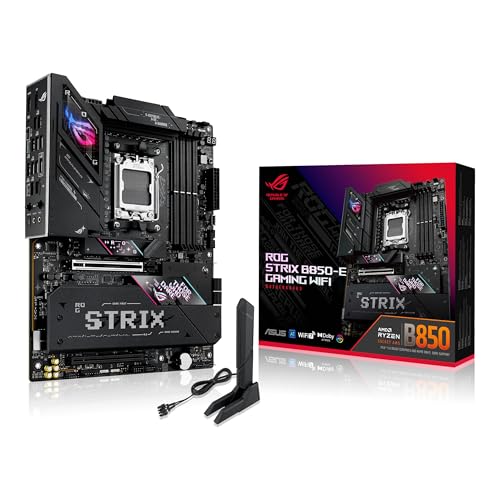
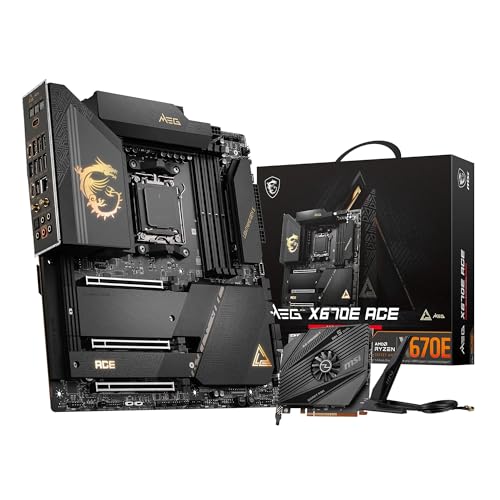
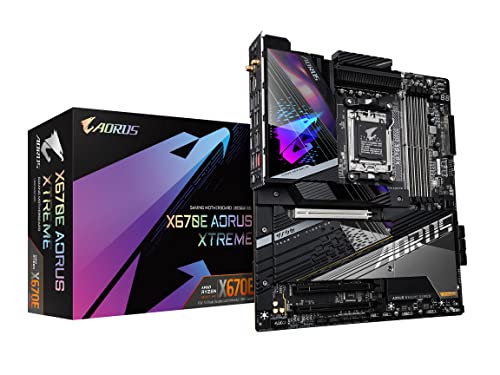
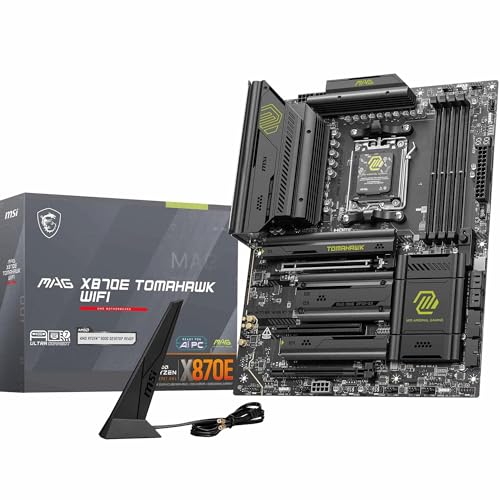
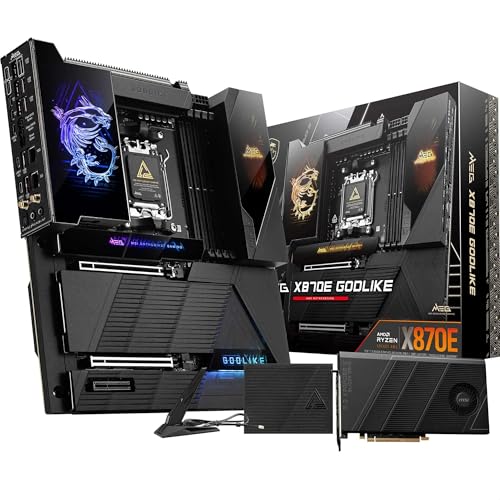
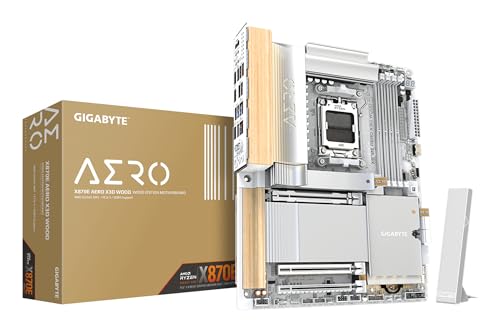
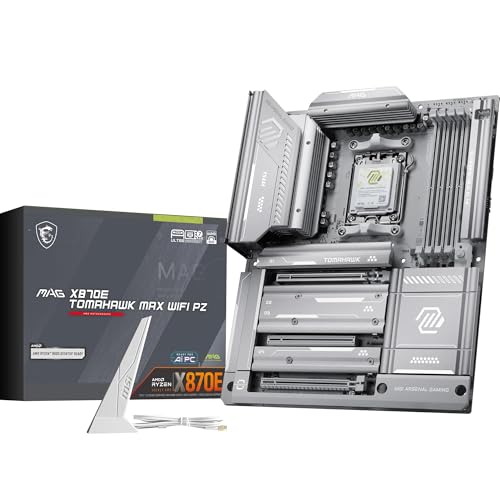
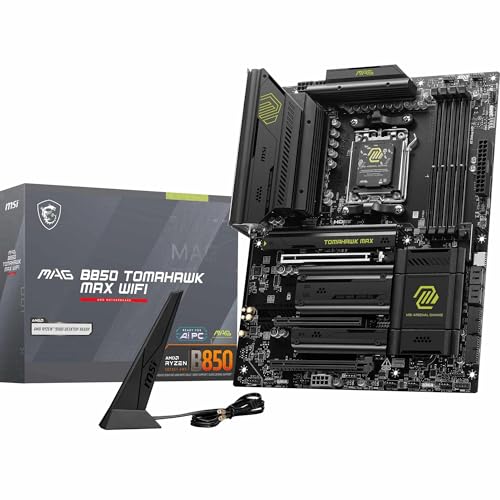
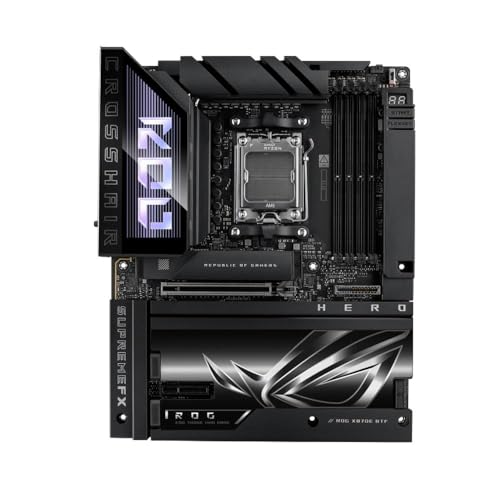
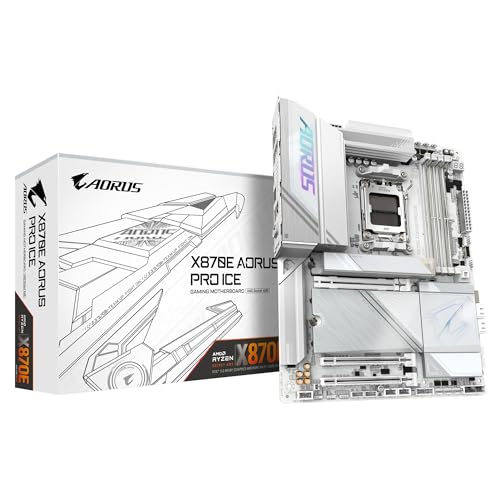
What is an AM5 motherboard?
An AM5 motherboard is the platform that supports AMD’s Ryzen 7000 series processors and later models. It uses the LGA 1718 socket, which replaces the older AM4 socket, so it is not backward compatible with earlier CPUs. The socket supports DDR5 memory and PCIe 5.0, so it prepares the system for higher performance in gaming, content creation, and professional workloads.
The AM5 platform introduces several new technologies compared to AM4. It supports up to 24 PCIe lanes, USB 4.0 on selected boards, and faster connectivity options such as Wi-Fi 6E. It also supports higher TDP processors, up to 170 W, which means better performance with more powerful chips.
AM5 motherboards come in different chipsets like B650, B650E, X670, and X670E, each with different levels of expansion and features for mainstream or enthusiast users.
Which processors are compatible with AM5 motherboards?
AM5 motherboards are compatible with AMD's Ryzen 7000 series processors and newer generations built on the Zen 4 architecture and beyond. These processors include the Ryzen 5 7600X, Ryzen 7 7700X, Ryzen 9 7900X, and Ryzen 9 7950X, which launched alongside the AM5 platform in 2022.
The socket also supports the Ryzen 8000G series APUs (accelerated processing units) that combine CPU and GPU cores on a single chip, as well as the Ryzen 9000 series processors based on Zen 5 architecture that arrived in 2024.
What chipsets are available for AM5 motherboards?
AM5 motherboards support eleven distinct chipsets that span entry-level to high-performance segments.
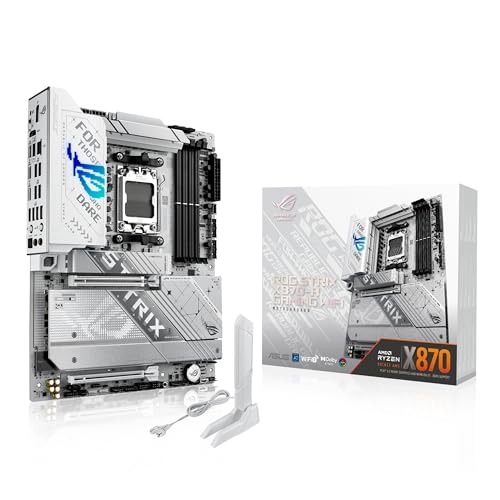
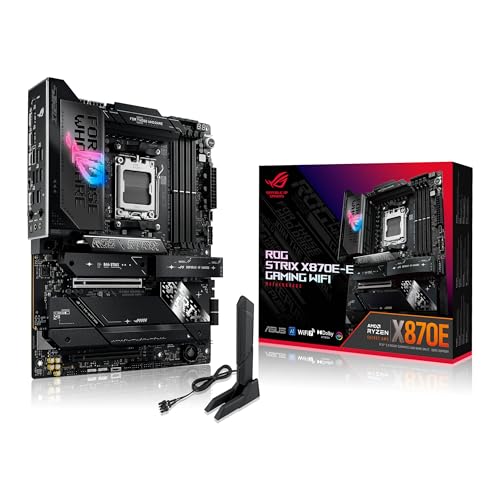
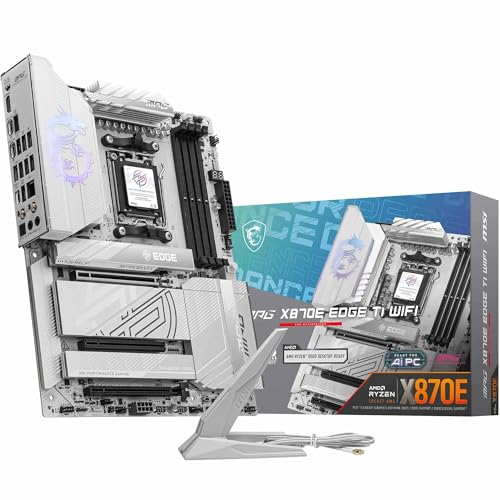
The current chipset lineup includes A620 and A620A for basic builds, B650 and B650E for mainstream users, X670 and X670E for enthusiasts, and the newer B840, B850, X870, and X870E chipsets released in 2024-2025. Additionally, AMD offers the PRO600 chipset for business applications.
Does an AM5 motherboard support DDR4 RAM?
An AM5 motherboard does not support DDR4 RAM. The AM5 platform was built to work only with DDR5 memory, so it does not include DDR4 slots. This design means that if you buy an AM5 motherboard, you must use DDR5 RAM for the system to run.
DDR4 and DDR5 use different physical connectors and signaling standards, so they are not cross-compatible.
AM5 motherboards are available in several form factors that match different case sizes and user needs.
The main options are ATX, Micro-ATX, and Mini-ITX, which are the same standards used with AM4 motherboards. ATX is the most common format since it balances expansion slots, memory capacity, and compatibility with mid-tower and full-tower cases.
Micro-ATX boards are smaller than ATX and usually reduce the number of PCIe slots, but they still support the same AM5 CPUs and memory standards. They are a good fit for compact builds that still require multiple storage or GPU options. Mini-ITX boards are the most compact AM5 choice, with only two RAM slots and limited expansion space, yet they provide full AM5 socket support and DDR5 compatibility in small cases.
Which brands make the best AM5 motherboards?
The best AM5 motherboard brands are as follows.
- ASUS (Overall score: 9 points)
- GIGABYTE (Overall score: 8.9 points)
- MSI (Overall score: 8.8 points)
The chart below ranks AM5 motherboard brands by average overall score.
[horizontal-chart-11278762638913530295098784767663383899854002480144]
How much do AM5 motherboards cost?
AM5 motherboards cost from about £130 for entry-level models to over £550 for high-end versions. The wide price range comes from differences in chipset type, build quality, and extra features that target either mainstream users or enthusiasts.
B650 motherboards usually start at the lower end of the scale and focus on balanced performance at a lower cost, while B650E versions sit higher with more advanced connectivity. X670 and X670E motherboards take the top range, often exceeding £430 because they support more PCIe lanes, better VRM systems, and stronger overclocking capability.
The following chart shows the price distribution of AM5 motherboards.
[vertical-chart-11946979353291684810091888135353360105562488065576]
AM4
What is an AM4 motherboard?
An AM4 motherboard is a computer motherboard that uses AMD's AM4 socket to connect AMD Ryzen, Athlon, and A-series processors.
The AM4 socket features 1331 pins in a Pin Grid Array (PGA) configuration, which means the processor pins insert directly into the motherboard socket. This socket design supports DDR4 memory and PCIe 3.0 lanes, with newer chipsets also supporting PCIe 4.0 connectivity.
AM4 motherboards come with different chipsets that determine their features and capabilities. The chipsets range from basic A320 boards for budget builds to high-end X570 and B550 boards that support advanced features like PCIe 4.0, multiple GPU configurations, and extensive overclocking options.
These motherboards typically include multiple RAM slots (usually 2 or 4 DIMM slots), various expansion slots (PCIe x16, x8, x4, and x1), USB ports, SATA connectors for storage devices, and integrated audio and networking capabilities.
The AM4 platform launched in 2016 and AMD maintained socket compatibility across multiple processor generations, which means users can upgrade their CPU without changing the motherboard in many cases.
Which processors are compatible with AM4 motherboards?
AM4 motherboards are compatible with AMD's Ryzen processors from the first through fourth generations, along with several APU series.
The socket supports Ryzen 1000 series (Summit Ridge), Ryzen 2000 series (Pinnacle Ridge), Ryzen 3000 series (Matisse), and Ryzen 4000 series (Vermeer) desktop processors. Additionally, AM4 motherboards work with Ryzen G-series APUs including the 2000G, 3000G, 4000G, and 5000G series that feature integrated Radeon graphics.
The AM4 platform also supports AMD's A-series APUs such as the A6, A8, A10, and A12 models, which use the Bristol Ridge and Stoney Ridge architectures. Athlon processors built on the AM4 socket include both standard Athlon models and Athlon PRO variants designed for business applications.
Some AM4 motherboards require BIOS updates to support newer processor generations, particularly when using newer Ryzen chips on older motherboard chipsets like B350 or X370.
What chipsets are available for AM4 motherboards?
AM4 motherboards support several chipsets from AMD, which include the A320, B350, B450, B550, X370, X470, and X570 models.
The A320 represents the entry-level option with basic functionality and no overclocking support, while the B350 and B450 chipsets target mainstream users with moderate overclocking capabilities and standard connectivity options. The B550 chipset introduces PCIe 4.0 support for the primary PCIe x16 slot and M.2 connector, which delivers faster data transfer speeds for compatible graphics cards and NVMe storage devices.
The enthusiast-grade X370, X470, and X570 chipsets deliver advanced features and extensive connectivity options for high-performance builds.
Does an AM4 motherboard support DDR5 RAM?
AM4 motherboards do not support DDR5 RAM.
The AM4 socket, which houses AMD Ryzen processors from the 1000 series through 5000 series, exclusively supports DDR4 memory modules due to the physical pin configuration and electrical specifications built into the platform.
DDR5 memory requires different voltage levels (1.1V versus DDR4's 1.2V) and uses a completely different pin layout with 288 pins compared to DDR4's 260 pins.
AM4 motherboards are available in several form factors. The main types are ATX, Micro-ATX, and Mini-ITX. ATX boards are the largest and include the most expansion slots and connectors. Micro-ATX boards are smaller, but they still support multiple PCIe slots and memory slots. Mini-ITX boards are the most compact, designed for small systems with limited space.
Some manufacturers also produced Extended ATX (E-ATX) boards for AM4. These boards are wider than standard ATX and include additional features such as more power phases, more USB ports, or more storage connectors.
Which brands make the best AM4 motherboards?
How much do AM4 motherboards cost?
AM4 motherboards cost between £45 and £340 depending on the chipset, features, and brand.
Budget A320 motherboards start around 50-£60, while mid-range B450 and B550 boards typically cost 80-£130. High-end X570 and X470 motherboards with advanced features like multiple PCIe 4.0 slots, Wi-Fi 6, and robust VRM designs can cost 200-£340.
The price varies significantly based on form factor, with mini-ITX boards often commanding a premium over standard ATX models due to their compact design requirements.