Scored using Motherboards Methodology v3.0
Motherboards Methodology v3.0
Mathematical & Unbiased Scoring
Products in this category are scored under Frontum Motherboards Methodology v3.0: the technical score from the specifications is the base, and independent expert and video reviews (up to ±0.5 points), owner opinions (up to ±0.3) and best-of lists (up to +0.3) move it up or down.
Explore Motherboards Methodology v3.0

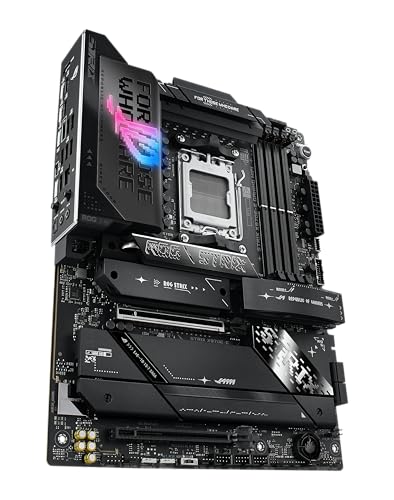
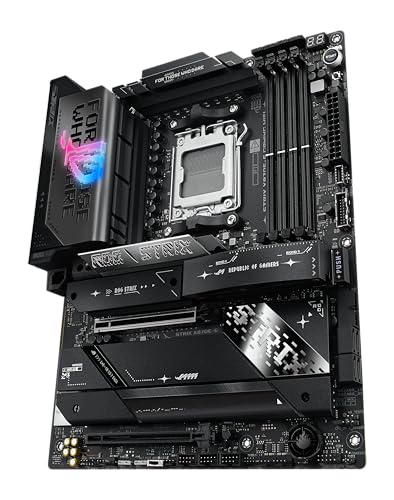
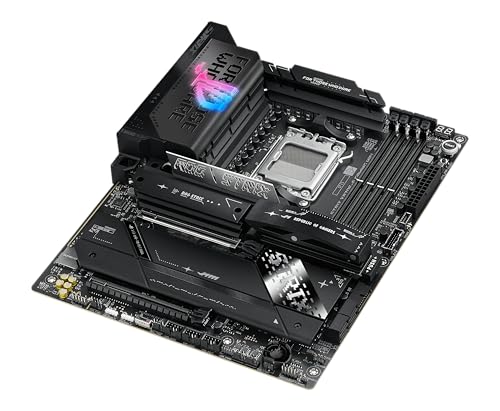
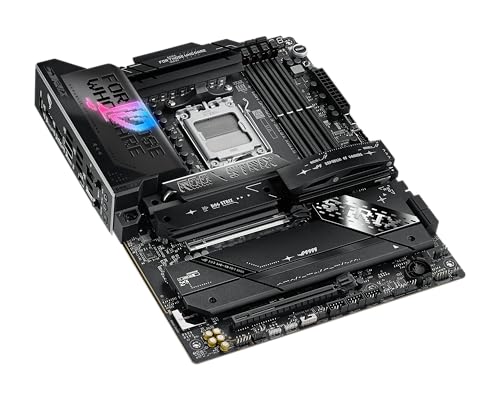
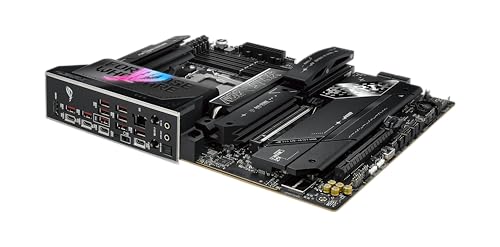
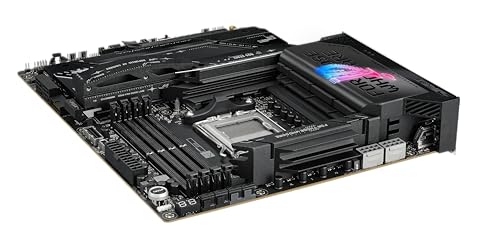
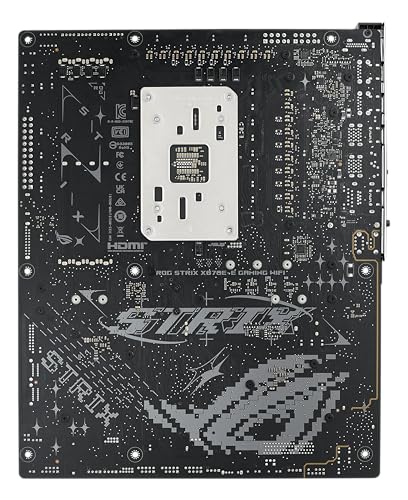
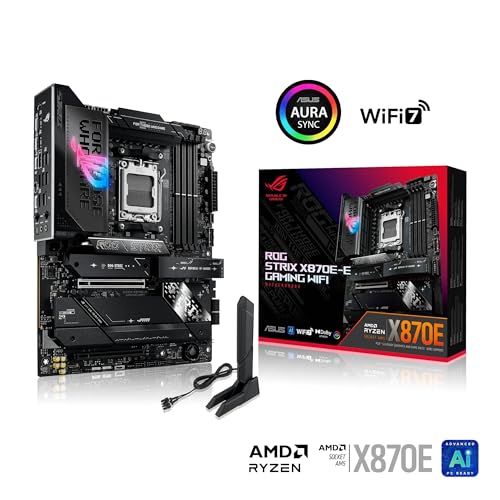
ASUS ROG Strix X870E-E Gaming WiFi review: 109 specs compared

Avg. price:~£430CPU socket:AM5Chipset:AMD X870EForm factor:ATX

ASUS ROG Strix X870E-E Gaming WiFi Review: Compare 109 technical specifications, 23 expert and video reviews and 7 best-of lists to see how this product ranks in the Motherboards category and whether it is worth buying.
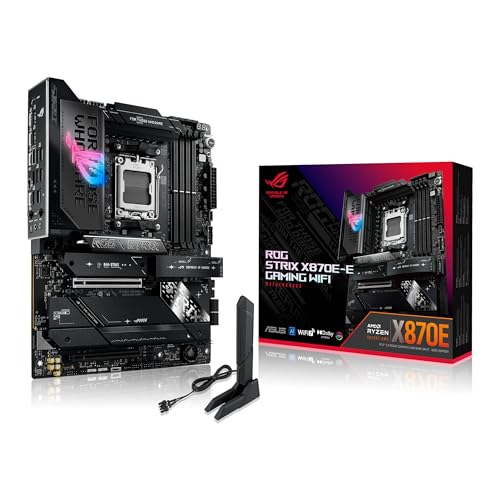
ASUS ROG Strix X870E-E Gaming WiFi
9.1/10

Overall score

Score
9.1/ 10
✕
What it is
Our main score for this model, 1–10. It combines specs, expert reviews, best-of lists, ratings from across the web and owners.
How we count it
Parts: Technical score 45%, Reviews score 20%, List score 20%, User score 10%, Sentiment score 5%
Marks: Each part gets a mark out of 10. For reviews, lists and owners, a typical model in this category gets about 8 and the best one gets 10.
No data yet: A part with no data shows "?". It counts as the mark of a weaker model in this category (4 in 5 models with data score higher). This way, models with reviews, lists and owners usually come out ahead.
Score distribution
▼
<55-66-77-88-99-10
Score components

45%

9.0

Technical score

20%

8.9

Reviews score

20%

9.7

List score

10%

9.2

User score

5%

8.0

Sentiment score

★Better than 99% of motherboards
8.8

Value for money

Value for money
8.8/ 10
✕
What it is
An indicator that combines the motherboard's overall rating with its cost.
When it matters
When you are looking for a motherboard that offers a strong balance of features, performance, and price.
Score distribution
▼
<55-66-77-88-99-10
Score components

70%

9.1

Overall score

30%

8.3

Price

★Better than 99%
9.0

Technical score

Technical score
9.0/ 10
✕
What it is
How good the specs are compared with the other models in this category, 1–10.
How we count it
Areas: We rate the specs in each area against the other models in this category.
Weighting: The areas that matter most to buyers count more. The shares are shown under Score components.
Share: The technical score is 45% of the overall score.
Score distribution
▼
<55-66-77-88-99-10
Score components

19%

10

Memory

16%

9.6

Platform

16%

9.2

Storage

15%

8.2

Network

13%

8.7

Ports

8%

6.0

Expansion

8%

9.1

Power & Cooling

5%

9.7

Audio

★Better than 98%
8.9

Reviews score

Reviews score
8.9/ 10
✕
What it is
Average grade from independent test sites, magazines and video reviewers, 1–10.
How we count it
Grades: Each review's own score is converted to 1–10; without one, we grade the review ourselves. Big test sites count more, short reviews half as much as full tests. A video review counts half.
Score: The average grade is 80% of the review mark; the number of reviews is the other 20% (1 review = 5, the typical number in this category = 8, the most-reviewed model = 10).
Enough data: With few reviews, the average grade is pulled toward the typical grade of this category. No reviews yet: 7.8 for now.
Share: Reviews count 20% of the overall score.
Score distribution
▼
<55-66-77-88-99-10

80%

8.7

Average grade

20%

9.9

Popularity

Grades by review (23)
13 reviews: 6 with a printed score, 7 estimated from the review. 10 video reviews, each counting half as much as a written test. Reviews count 20% of the overall score.
Ratings from across the web count in the User score, not in this score.
★Better than 99%
9.2

User score

User score
9.2/ 10
✕
What it is
How happy buyers are with this model, based on ratings from across the web.
How we count it
Enough data: A model needs at least 1 rating from across the web. Without one, it counts as 7.9, the mark of a weaker rated model in this category.
Share: User score counts 10% of the overall score.
Score distribution
▼
<55-66-77-88-99-10

70%

8.8

Rating

30%

10

Popularity

▲Better than 87%
9.7

List score

List score
9.7/ 10
✕
What it is
How often independent test sites, magazines and video reviewers put this model in their best-of lists for this category.
How we count it
Points: The model in the most lists of this category gets 10; the others get 8 to 10 in proportion. In no list yet: 7.5. Lists count 20% of the overall score.
Enough data: Every list counts, even a single one. With fewer than 5 best-of lists in the category, this part is left out.
Lists with this model (7)
List score: in 7 of 60 lists (12%)
★Better than 99%
  • asus-rog-strix-x870e-e-gaming-wifi
  • asus-rog-strix-x870e-e-gaming-wifi
  • asus-rog-strix-x870e-e-gaming-wifi
  • asus-rog-strix-x870e-e-gaming-wifi
  • asus-rog-strix-x870e-e-gaming-wifi
  • asus-rog-strix-x870e-e-gaming-wifi
  • asus-rog-strix-x870e-e-gaming-wifi
  • asus-rog-strix-x870e-e-gaming-wifi
  • asus-rog-strix-x870e-e-gaming-wifi
  • asus-rog-strix-x870e-e-gaming-wifi
  • asus-rog-strix-x870e-e-gaming-wifi
  • asus-rog-strix-x870e-e-gaming-wifi
  • asus-rog-strix-x870e-e-gaming-wifi
  • asus-rog-strix-x870e-e-gaming-wifi
  • asus-rog-strix-x870e-e-gaming-wifi
  • asus-rog-strix-x870e-e-gaming-wifi
  • asus-rog-strix-x870e-e-gaming-wifi
  • asus-rog-strix-x870e-e-gaming-wifi
  • asus-rog-strix-x870e-e-gaming-wifi
  • asus-rog-strix-x870e-e-gaming-wifi
asus-rog-strix-x870e-e-gaming-wifi
Where to buy
*As an Amazon Associate, we earn from qualifying purchases.

What reviewers say about the ASUS ROG Strix X870E-E Gaming WiFi

Based on 13 · 10

Reviewers praise the plentiful USB ports and easy building, but criticise the high price and the limited graphics card slot.
Praised
Mixed views
Criticised
Pick a topic to see who said what

What owners say about the ASUS ROG Strix X870E-E Gaming WiFi

Based on 94 owners sharing their experience in online comments

34%positive19%mixed47%negative

Owners praise speed and features, but boot and memory failures, lane sharing, and bulky heatsinks raise reliability concerns.

What owners dislike

  • Several owners report the board fails to boot or POST, with error codes like 00, 4D and C5, and some say it only boots on some attempts.16
  • Owners report memory not training, with some RAM sticks not detected, and one case of a memory stick failing.7
  • Owners say an M.2 drive or a SATA SSD was not detected in Windows or BIOS, and some say enabling XMP stopped their Samsung drive from showing up.7
  • Owners report the Mediatek WiFi chip does not work on Linux or Windows 10, and some say WiFi did not work even after installing the ASUS driver.7
  • Owners report BIOS updates that failed, caused a black screen, or dropped features after updating.7
  • Owners say 8000 MT/s memory is unstable, and 4-stick setups with 32GB sticks fail to train memory at boot.6
  • Owners say using the top M.2 slots drops the GPU slot from x16 to x8 or x4, and some say the second PCIe slot also reduces GPU bandwidth.6
  • Owners say the large M.2 heatsinks block tall AIO pumps and some GPUs, and some had to remove the heatsinks to fit their builds.6
  • Some owners report games or Warzone freezing and the PC crashing, and some say the problem came back after an RMA replacement.3
  • High price for what the board offers3

Points mentioned by at least 3 owners, most mentioned first.

Loading...
Loading category ranking...

Technical Specifications of motherboard ASUS ROG Strix X870E-E Gaming WiFi

Technical score
Technical score
9.0/ 10
✕
What it is
How good the specs are compared with the other models in this category, 1–10.
How we count it
Areas: We rate the specs in each area against the other models in this category.
Weighting: The areas that matter most to buyers count more. The shares are shown under Score components.
Share: The technical score is 45% of the overall score.
Score distribution
▼
<55-66-77-88-99-10
Score components:

19%

10

Memory

16%

9.6

Platform

16%

9.2

Storage

15%

8.2

Network

13%

8.7

Ports

8%

6.0

Expansion

8%

9.1

Power & Cooling

5%

9.7

Audio

9.0
Reviews score
8.9
User score
9.2
List score
9.7
Value for money
Value for money
8.8/ 10
✕
What it is
An indicator that combines the motherboard's overall rating with its cost.
When it matters
When you are looking for a motherboard that offers a strong balance of features, performance, and price.
Score distribution
▼
<55-66-77-88-99-10
Score components:

70%

9.1

Overall score

30%

8.3

Price

8.8
CPU socket
AM5
This motherboard uses AM5, which is more up-to-date than 85.5% of Motherboards and the same as 14.5% of Motherboards.
CPU platform
AMD
Chipset
AMD X870E
This motherboard uses AMD X870E, which is more capable than 98.2% of Motherboards and as capable as 1.8% of Motherboards.
Form factor
ATX
Integrated graphics support
yes
This motherboard supports integrated graphics. 10.2% of motherboards support this feature.
Show more
DDR memory version
DDR5
This motherboard uses DDR5, which is more modern than 63.8% of Motherboards and the same as 36.2% of Motherboards.
Memory slots
4
This motherboard has 4 Memory slots, which is more than 21.9% of motherboards and equal to 72% of motherboards.
Maximum memory capacity
256 GB
This motherboard supports up to 256 GB of memory, which is more than 82.5% of motherboards and equal to 16.7% of motherboards.
higher limit with high-density DIMMs
Memory channels
2
Maximum RAM speed
8,400 MT/s
This motherboard supports memory speeds up to 8,400 MT/s, which is higher than that of 93.2% of motherboards and equal to that of 0.6% of motherboards.
Show more
What reviewers say
N. of M.2 sockets
5
This motherboard has 5 M.2 sockets, which is more than 94.8% of motherboards and equal to 4.3% of motherboards.
M.2 slot interface per slot
3x PCIe 5.0 x4, 2x PCIe 4.0 x4
This motherboard offers M.2 slots: 3x PCIe 5.0x4, 2x PCIe 4.0x4, which is faster than 97.4% of Motherboards and the same as 0.3% of Motherboards.
N. of SATA 3 connectors
4
This motherboard has 4 SATA 3 connectors, which is more than 6.1% of motherboards and equal to 46.8% of motherboards.
Supported RAID levels
0/1/5/10
This motherboard RAID support: 0/1/5/10, which is more flexible than 32.5% of Motherboards and the same as 67.5% of Motherboards.
RAID 5 requires Ryzen 9,000 series CPU
NVMe RAID support
yes
This motherboard supports NVMe RAID. 40.2% of motherboards support this feature.
Show more
What reviewers say
N. of PCIe 5.0 x16 slots
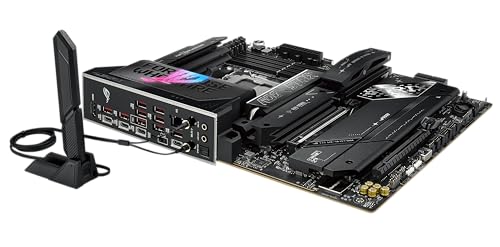
1
This motherboard has 1 PCIe 5.0x16 slots, which is more than 68.4% of motherboards and equal to 26.6% of motherboards.
N. of PCIe 4.0 x16 slots
1
This motherboard has 1 PCIe 4.0x16 slots, which is more than 55.2% of motherboards and equal to 35.7% of motherboards.
N. of PCIe 3.0 x16 slots
0
This motherboard has 0 PCIe 3.0x16 slots, which is fewer than 59.6% of motherboards and equal to 40.4% of motherboards.
PCIe slot electrical configuration
x16
This motherboard splits its PCIe lanes as x16, which is less generous than 81% of Motherboards and the same as 16.1% of Motherboards.
PCIe bifurcation support
yes
This motherboard supports PCIe bifurcation. 40.3% of motherboards support this feature.
x8/x8, x8/x4/x4.
Show more
What reviewers say
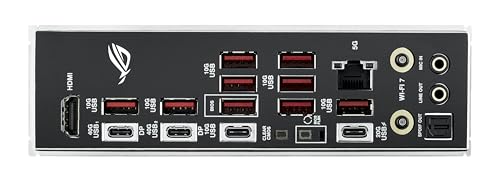
Total USB ports (rear I/O)
13
This motherboard has 13 USB ports (rear I/O), which is more than 98.4% of motherboards and equal to 0.8% of motherboards.
Total USB ports (including headers)
24
This motherboard has 24 USB ports (including headers), which is more than 99.5% of motherboards and equal to 0.2% of motherboards.
Total USB-C ports (rear I/O)
4
This motherboard has 4 USB-C ports (rear I/O), which is more than 99.2% of motherboards and equal to 0.6% of motherboards.
Total USB-C ports (including headers)
5
This motherboard has 5 USB-C ports (including headers), which is more than 98.4% of motherboards and equal to 1.2% of motherboards.
N. of USB 3.2 Gen2x2 ports (USB-C)
1
This motherboard has 1 USB 3.2 Gen2x2 ports (USB-C), which is more than 82.1% of motherboards and equal to 17.7% of motherboards.
Show more
What reviewers say
LAN speed
5 Gbps
This motherboard supports LAN speeds up to 5 Gbps, which is higher than that of 90.4% of motherboards and equal to that of 5.3% of motherboards.
LAN controller
Killer + Intel + Realtek
This motherboard has a Killer + Intel + Realtek LAN controller, which is slower than 64.6% of Motherboards and equal to 28.7% of Motherboards.
N. of RJ45 ports
1
This motherboard has 1 RJ45 ports, which is fewer than 14.4% of motherboards and equal to 85.6% of motherboards.
Wi-Fi connectivity
yes
This motherboard supports Wi-Fi connectivity. 50% of motherboards support this feature.
Wi-Fi version
Wi-Fi 7 (802.11be)
This motherboard uses Wi-Fi 7 (802.11be), which is newer than 88.2% of Motherboards and the same as 11.8% of Motherboards.
Show more
What reviewers say
Audio codec
Realtek ALC4080
This motherboard uses Realtek ALC4080, which is higher-end than 90.4% of Motherboards and the same as 6.4% of Motherboards.
Audio channels
7.1
This motherboard offers 7.1 audio channels, which is more than 4.7% of motherboards and equal to 95.3% of motherboards.
Audio SNR
120 dB
This motherboard has an audio SNR of 120 dB, which is higher than that of 55.6% of motherboards and equal to that of 41% of motherboards.
Headphone amp support
yes
This motherboard supports a headphone amp. 41.2% of motherboards support this feature.
headphone amp on rear port.
N. of 3.5mm audio jacks
5
This motherboard has 5 3.5mm audio jacks, which is more than 50.6% of motherboards and equal to 36.3% of motherboards.
Show more
VRM phases
18+2+2
This motherboard has 18+2+2 VRM phases, which is more than 95.5% of motherboards and equal to 0.4% of motherboards.
N. of CPU power connectors
2
This motherboard has 2 CPU power connectors, which is more than 54.9% of motherboards and equal to 44.8% of motherboards.
N. of fan headers
8
This motherboard has 8 fan headers, which is more than 82.2% of motherboards and equal to 15% of motherboards.
Pump header
yes
This motherboard has a pump header. 22.1% of motherboards include this feature.
Pump header max current
1 A
This motherboard supports up to 1 A on the pump header, which is lower than that of 56.5% of motherboards and equal to that of 19.6% of motherboards.
Show more
What reviewers say

ASUS ROG Strix X870E-E Gaming WiFi vs the average motherboard

246810TotalPlatformMemoryStorageExpansionPortsNetworkAudioPower & Cooling
  • 3 more M.2 sockets
    This motherboard has more M.2 sockets than the average motherboard (5 vs 2). The average motherboard has 2 M.2 socket/s.
    5 vs 2
  • More up-to-date socket
    This motherboard uses a more up-to-date socket than the average motherboard (AM5 vs LGA 1151).
    AM5 vs LGA 1,151
  • 3 more top-speed NVMe slots
    This motherboard has more PCIe 5.0 M.2 slots than the average motherboard (3 vs 0).
    3 vs 0
  • 2x more maximum memory capacity
    This motherboard has more maximum memory capacity than the average motherboard (256 GB vs 128 GB). The average motherboard supports 128 GB of memory.
    higher limit with high-density DIMMs
    256 GB vs 128 GB
  • 5 more rear USB ports
    This motherboard has more rear USB ports than the average motherboard (13 vs 8). The average motherboard has 8 rear USB port/s.
    13 vs 8
  • 8 more USB 3.2 Gen2 ports
    This motherboard has more USB 3.2 Gen2 ports than the average motherboard (9 vs 1). The average motherboard has 1 USB 3.2 Gen2 port/s.
    9 vs 1
  • More modern memory type
    This motherboard uses a more modern memory type than the average motherboard (DDR5 vs DDR4).
    DDR5 vs DDR4
  • 1 more PCIe 5.0x16 slots
    This motherboard has more PCIe 5.0x16 slots than the average motherboard (1 vs 0). The average motherboard has 0 PCIe 5.0x16 slot/s.
    1 vs 0
  • 18.3% higher list score
    List score
    9.7/ 10
    ✕
    What it is
    How often independent test sites, magazines and video reviewers put this model in their best-of lists for this category.
    How we count it
    Points: The model in the most lists of this category gets 10; the others get 8 to 10 in proportion. In no list yet: 7.5. Lists count 20% of the overall score.
    Enough data: Every list counts, even a single one. With fewer than 5 best-of lists in the category, this part is left out.
    Lists with this model (7)
    List score: in 7 of 60 lists (12%)
    9.7 vs 8.2
  • 15.5% better value for money
    ASUS ROG Strix X870E-E Gaming WiFi has better value for money than the average motherboard (8.82 vs 7.6).
    8.82 vs 7.63
  • 8.5% higher review score
    Reviews score
    8.9/ 10
    ✕
    What it is
    Average grade from independent test sites, magazines and video reviewers, 1–10.
    How we count it
    Grades: Each review's own score is converted to 1–10; without one, we grade the review ourselves. Big test sites count more, short reviews half as much as full tests. A video review counts half.
    Score: The average grade is 80% of the review mark; the number of reviews is the other 20% (1 review = 5, the typical number in this category = 8, the most-reviewed model = 10).
    Enough data: With few reviews, the average grade is pulled toward the typical grade of this category. No reviews yet: 7.8 for now.
    Share: Reviews count 20% of the overall score.
    Score distribution
    ▼
    <55-66-77-88-99-10

    80%

    8.7

    Average grade

    20%

    9.9

    Popularity

    Grades by review (23)
    13 reviews: 6 with a printed score, 7 estimated from the review. 10 video reviews, each counting half as much as a written test. Reviews count 20% of the overall score.
    Ratings from across the web count in the User score, not in this score.
    8.9 vs 8.2
  • More up-to-date socket
    This motherboard uses a more up-to-date socket than the average motherboard (AM5 vs LGA 1151).
    AM5 vs LGA 1,151
  • Integrated I/O shield
    This motherboard has an integrated I/O shield, while the average motherboard does not. 46.6% of motherboards include an integrated I/O shield.
  • Includes POST code display
    This motherboard has a POST code display, while the average motherboard does not. 26.7% of motherboards include a POST code display.
    Q-Code display.
  • Rear-panel CMOS reset button
    This motherboard has a rear-panel CMOS reset button, while the average motherboard does not. 26.5% of motherboards include a rear-panel CMOS reset button.
  • More capable chipset
    This motherboard uses a more capable chipset than the average motherboard (AMD X870E vs Intel B860).
    AMD X870E vs Intel B860
  • 2x more maximum memory capacity
    This motherboard has more maximum memory capacity than the average motherboard (256 GB vs 128 GB). The average motherboard supports 128 GB of memory.
    higher limit with high-density DIMMs
    256 GB vs 128 GB
  • More modern memory type
    This motherboard uses a more modern memory type than the average motherboard (DDR5 vs DDR4).
    DDR5 vs DDR4
  • 78.7% higher maximum RAM speed
    This motherboard has a higher maximum RAM speed than the average motherboard (8,400 MT/s vs 4,699.5 MT/s). The average motherboard supports RAM speed of 4,699.5 MT/s.
    8,400 MT/s vs 4,699.5 MT/s
  • Supports ECC memory
    This motherboard supports ECC memory, while the average motherboard does not. 20.9% of motherboards support ECC memory.
    ECC requires compatible CPU.
  • 68% higher overclocked RAM speed
    This motherboard has a higher overclocked RAM speed than the average motherboard (8,400 MT/s vs 5,000 MT/s). The average motherboard supports overclocked RAM speed of 5,000 MT/s.
    8,400 MT/s vs 5,000 MT/s
  • 3 more M.2 sockets
    This motherboard has more M.2 sockets than the average motherboard (5 vs 2). The average motherboard has 2 M.2 socket/s.
    5 vs 2
  • 3 more top-speed NVMe slots
    This motherboard has more PCIe 5.0 M.2 slots than the average motherboard (3 vs 0).
    3 vs 0
  • Faster NVMe storage slots
    This motherboard has faster M.2 slots than the average motherboard (3x PCIe 5x4, 2x PCIe 4x4 vs 1x PCIe 5x4, 2x PCIe 4x4).
    3x PCIe 5.0x4, 2x PCIe 4.0x4 vs 1x PCIe 5.0x4, 2x PCIe 4.0x4
  • 1 more PCIe 5.0x16 slots
    This motherboard has more PCIe 5.0x16 slots than the average motherboard (1 vs 0). The average motherboard has 0 PCIe 5.0x16 slot/s.
    1 vs 0
  • 1 more PCIe 4.0x16 slots
    This motherboard has more PCIe 4.0x16 slots than the average motherboard (1 vs 0). The average motherboard has 0 PCIe 4.0x16 slot/s.
    1 vs 0
  • 5 more rear USB ports
    This motherboard has more rear USB ports than the average motherboard (13 vs 8). The average motherboard has 8 rear USB port/s.
    13 vs 8
  • 8 more USB 3.2 Gen2 ports
    This motherboard has more USB 3.2 Gen2 ports than the average motherboard (9 vs 1). The average motherboard has 1 USB 3.2 Gen2 port/s.
    9 vs 1
  • 1 more USB 3.2 Gen2x2 USB-C ports
    This motherboard has more USB 3.2 Gen2x2 USB-C ports than the average motherboard (1 vs 0). The average motherboard has 0 USB 3.2 Gen2x2 USB-C port/s.
    1 vs 0
  • 3 more rear USB-C ports
    This motherboard has more rear USB-C ports than the average motherboard (4 vs 1). The average motherboard has 1 rear USB-C port/s.
    4 vs 1
  • 9 more total USB connections
    This motherboard has more total USB connections than the average motherboard (24 vs 15). The average motherboard has 15 total USB connections.
    24 vs 15
  • 1 more USB 3.2 Gen2 USB-C ports
    This motherboard has more USB 3.2 Gen2 USB-C ports than the average motherboard (1 vs 0). The average motherboard has 0 USB 3.2 Gen2 USB-C port/s.
    1 vs 0
  • 4 more total USB-C connections
    This motherboard has more total USB-C connections than the average motherboard (5 vs 1). The average motherboard has 1 total USB-C connections.
    5 vs 1
  • 1 more USB 3.2 Gen1 headers
    This motherboard has more USB 3.2 Gen1 headers than the average motherboard (2 vs 1). The average motherboard has 1 USB 3.2 Gen1 header/s.
    two internal headers
    2 vs 1
  • 2 more USB4 40Gbps ports
    This motherboard has more USB4 40Gbps ports than the average motherboard (2 vs 0). The average motherboard has 0 USB4 40Gbps port/s.
    2 vs 0
  • 2 more Thunderbolt 3 ports
    This motherboard has more Thunderbolt 3 ports than the average motherboard (2 vs 0). The average motherboard has 0 Thunderbolt 3 port/s.
    USB4 only, not Thunderbolt 3
    2 vs 0
  • 1 more USB 2.0 headers
    This motherboard has more USB 2.0 headers than the average motherboard (3 vs 2). The average motherboard has 2 USB 2.0 header/s.
    3 vs 2
  • 1 more USB 3.2 Gen2 headers
    This motherboard has more USB 3.2 Gen2 headers than the average motherboard (1 vs 0). The average motherboard has 0 USB 3.2 Gen2 header/s.
    20Gbps Type-C header
    1 vs 0
  • More recent Wi-Fi standard
    This motherboard has a more recent Wi-Fi standard than the average motherboard (Wi-Fi 7 (802.11be) vs Wi-Fi 5 (802.11ac)).
    Wi-Fi 7 (802.11be) vs Wi-Fi 5 (802.11ac)
  • 2x higher LAN speed
    This motherboard has a higher LAN speed than the average motherboard (5 Gbps vs 2.5 Gbps). The average motherboard offers LAN speed of 2.5 Gbps.
    5 Gbps vs 2.5 Gbps
  • Supports Bluetooth
    This motherboard supports Bluetooth, while the average motherboard does not. 49% of motherboards support Bluetooth.
  • More capable onboard audio
    This motherboard has a higher-end audio codec than the average motherboard (Realtek ALC4080 vs Realtek ALC897).
    Realtek ALC4080 vs Realtek ALC897
  • 5 dB higher audio SNR
    This motherboard has a higher audio SNR than the average motherboard (120 dB vs 115 dB). The average motherboard has audio SNR of 115 dB.
    120 dB vs 115 dB
  • 2 more 3.5mm audio jacks
    This motherboard has more 3.5mm audio jacks than the average motherboard (5 vs 3). The average motherboard has 3 3.5mm audio jacks.
    5 vs 3
  • More VRM phases
    This motherboard has more VRM phases than the average motherboard (18+2+2 vs 10). The average motherboard has 10 VRM phase/s.
    18+2+2 vs 10
  • 1 more CPU power connectors
    This motherboard has more CPU power connectors than the average motherboard (2 vs 1). The average motherboard has 1 CPU power connectors.
    2 vs 1
  • 2.5 more fan headers
    This motherboard has more fan headers than the average motherboard (8 vs 5.5). The average motherboard has 5.5 fan header/s.
    8 vs 5.5
  • 1 more ARGB headers
    This motherboard has more ARGB headers than the average motherboard (3 vs 2). The average motherboard has 2 ARGB header/s.
    3 vs 2
  • Includes onboard RGB lighting
    This motherboard has onboard RGB lighting, while the average motherboard does not. 50% of motherboards include onboard RGB lighting.
  • 4 fewer USB 3.2 Gen1 ports
    This motherboard has fewer USB 3.2 Gen1 ports than the average motherboard (0 vs 4). The average motherboard has 4 USB 3.2 Gen1 port/s.
    rear USB-C is faster than Gen 1
    0 vs 4
  • Less generous lane split
    This motherboard splits its PCIe lanes less generously than the average motherboard (x16 vs x16/x0/x4, x8/x8/x4).
    x16 vs x16/x0/x4, x8/x8/x4
  • 1 fewer DisplayPort outputs
    This motherboard has fewer DisplayPort outputs than the average motherboard (0 vs 1). The average motherboard has 1 DisplayPort outputs.
    0 vs 1
  • 2.87x more expensive
    ASUS ROG Strix X870E-E Gaming WiFi is more expensive than the average motherboard (£430 vs £150).
    £430 vs £150
  • 1 fewer RGB headers
    This motherboard has fewer RGB headers than the average motherboard (0 vs 1). The average motherboard has 1 RGB header/s.
    0 vs 1
  • 1 fewer PCIe x1 slots
    This motherboard has fewer PCIe x1 slots than the average motherboard (0 vs 1). The average motherboard has 1 PCIe x1 slot/s.
    0 vs 1
  • 1 A lower pump header current limit
    This motherboard has a lower pump header current than the average motherboard (1 A vs 2 A). The average motherboard provides pump header current of 2 A.
    1 A vs 2 A
  • 1 fewer PCIe 3.0x16 slots
    This motherboard has fewer PCIe 3.0x16 slots than the average motherboard (0 vs 1). The average motherboard has 1 PCIe 3.0x16 slot/s.
    0 vs 1
  • 2.87x more expensive
    ASUS ROG Strix X870E-E Gaming WiFi is more expensive than the average motherboard (£430 vs £150).
    £430 vs £150
  • Less generous lane split
    This motherboard splits its PCIe lanes less generously than the average motherboard (x16 vs x16/x0/x4, x8/x8/x4).
    x16 vs x16/x0/x4, x8/x8/x4
  • 1 fewer PCIe x1 slots
    This motherboard has fewer PCIe x1 slots than the average motherboard (0 vs 1). The average motherboard has 1 PCIe x1 slot/s.
    0 vs 1
  • 1 fewer PCIe 3.0x16 slots
    This motherboard has fewer PCIe 3.0x16 slots than the average motherboard (0 vs 1). The average motherboard has 1 PCIe 3.0x16 slot/s.
    0 vs 1
  • 4 fewer USB 3.2 Gen1 ports
    This motherboard has fewer USB 3.2 Gen1 ports than the average motherboard (0 vs 4). The average motherboard has 4 USB 3.2 Gen1 port/s.
    rear USB-C is faster than Gen 1
    0 vs 4
  • 1 fewer DisplayPort outputs
    This motherboard has fewer DisplayPort outputs than the average motherboard (0 vs 1). The average motherboard has 1 DisplayPort outputs.
    0 vs 1
  • 1 fewer RGB headers
    This motherboard has fewer RGB headers than the average motherboard (0 vs 1). The average motherboard has 1 RGB header/s.
    0 vs 1
  • 1 A lower pump header current limit
    This motherboard has a lower pump header current than the average motherboard (1 A vs 2 A). The average motherboard provides pump header current of 2 A.
    1 A vs 2 A

Video reviews

Hands-on testing, unboxing, and real-world video evaluations

9.0
Upgrade
≈ estimated
18/03/2026
Long-term use · install and about six weeks of daily use
Verdict
ASUS ROG Strix X870E-E Gaming WiFi is stable and roomy for M.2 storage, and a good pick if you need many drives.
9.5
FrogboyX1Gaming & Tech Reviews
≈ estimated
05/02/2026
Long-term test · six months of daily use
Verdict
ASUS ROG Strix X870E-E Gaming WiFi earned high praise after six months of use, staying stable and feature-rich; the creator bought a second one.
9.0
GLITCHED
≈ estimated
26/12/2025
Hands-on review · stress test, thermals and BIOS
Verdict
ASUS ROG Strix X870E-E Gaming WiFi is a solid board that performs well, though its price is a little high.
9.0
Kleo Yan
≈ estimated
07/12/2024
Hands-on review · thermals, measurements and benchmark tests
Verdict
ASUS ROG Strix X870E-E Gaming WiFi is a great board for gamers and content creators, though its VRM cooling could be better.
9.5
The Tech Tank
≈ estimated
04/10/2024
Hands-on review · benchmarks, thermals and pricing
Verdict
ASUS ROG Strix X870E-E Gaming WiFi is an exceptional board for new builds, though the price is high and 600-series owners need not upgrade.
9.0
ThinkComputers
≈ estimated
24/11/2025
First look · physical walkthrough and feature tour
Verdict
ASUS ROG Strix X870E-E Gaming WiFi is expensive but excellent, with plenty of connectivity, and recommended for high-end Ryzen builds.
7.0
RememberThisTech
≈ estimated
10/09/2025
Unboxing · first look at features and included parts
Verdict
ASUS ROG Strix X870E-E Gaming WiFi might suit you if you want top-tier features, stability and overclocking potential.
8.0
Realmeltan
≈ estimated
17/10/2024
First look · GPU installation and BIOS overview
Verdict
ASUS ROG Strix X870E-E Gaming WiFi is a very good board with a new M.2 design, though heavy GPU support still needs testing.
Not graded
Overview video
Overview video

Expert reviews

In-depth analysis and verdict from leading tech publications

8.0
tomshardware.com
✓ explicit
04/04/2025
Lab test · AM5 motherboard
Verdict
The ROG Strix X870E-E Gaming WiFi suits builders who want lots of ports and fast M.2 storage, though most tests show only average performance.
9.0
overclock3d.net
≈ estimated
30/09/2024
Feature review · AM5 motherboard
Verdict
The ROG Strix X870E-E is a strong pick for connectivity, with three Gen5 M.2 slots, fast USB4 and 5G LAN, while performance matches rival X870 boards.
10
pcguide.com
✓ explicit
13/05/2025
Lab test · AM5 motherboard
Verdict
The ROG Strix X870E-E Gaming WiFi is a strong AM5 board with fast memory overclocking and tool-free storage, but it is more premium than most builds need.
9.0
lanoc.org
≈ estimated
30/09/2024
Hands-on review · ATX motherboard
Verdict
The ROG Strix X870E-E Gaming WiFi is a strong choice for all-black builds with many fast USB ports and solid M.2 cooling, though it lacks 10GbE.
9.0
back2gaming.com
✓ explicit
30/04/2026
Heavy-load test · AM5 motherboard
Verdict
The ROG Strix X870E-E Gaming WiFi7 NEO is a dependable mainstream board that stayed stable under days of heavy workloads, but lacks 10GbE networking.
6.6
pcgameshardware.de
✓ explicit
23/12/2024
Follow-up test · USB4 ports
Verdict
The ROG Strix X870E-E Gaming WiFi's USB4 ports rarely reach full speed, and the first firmware patch helped but did not fully fix them.
9.0
fr.gamegpu.com
≈ estimated
09/10/2024
Hands-on test · AM5 motherboard
Verdict
The ROG Strix X870E-E Gaming WiFi is a high-end AM5 board for enthusiasts and demanding gamers, with Wi-Fi 7, many USB ports and tool-free M.2 slots.
9.5
gameit.es
≈ estimated
14/10/2024
Review · High-end AM5 board
Verdict
The ROG Strix X870E-E Gaming WiFi is an understated, premium ATX board with strong VRM cooling and automatic overclock switching, though its fastest M.2 slots depend on your CPU.
9.0
masgamers.com
≈ estimated
25/10/2024
Review · Premium AM5 board
Verdict
The ROG Strix X870E-E Gaming WiFi is a well-cooled, easy-to-build high-end board for Ryzen 9000, though it costs somewhat more than rivals and caps memory speed with some CPUs.
9.2
profesionalreview.com
✓ explicit
30/03/2026
Detailed review · AM5 motherboard
Verdict
The ROG Strix X870E-E Gaming WiFi7 NEO suits builders wanting a strong AM5 power stage and five M.2 slots, though some M.2 slots share lanes with other ports.
8.0
vortexgaming.io
≈ estimated
25/11/2025
Video review · AM5 motherboard
Verdict
The ROG Strix X870E-E Gaming WiFi is a premium AM5 board for high-end Ryzen builds, with plenty of ports and tool-free M.2 slots, but it is costly.
8.0
gamecored.com
≈ estimated
30/10/2024
Written review · AM5 motherboard
Verdict
The ROG Strix X870E-E Gaming WiFi suits Ryzen gamers wanting five M.2 slots, USB4 and Wi-Fi 7, though not every M.2 slot has a button release.
8.2
techgaming.nl
✓ explicit
30/09/2024
Review · High-end AM5 board
Verdict
The ROG Strix X870E-E Gaming WiFi is a solid high-end AM5 board with USB4, Wi-Fi 7 and a useful Q-Dashboard, though it changes little from its predecessor.

Third-party reviews

What customers like about ASUS ROG Strix X870E-E Gaming WiFi

  • Exceptional rear I/O connectivity featuring 13 USB ports, including dual USB4 (40Gbps) and high-speed Type-A options
  • User-friendly 'Q-Design' features like Q-Release Slim for GPUs and tool-free M.2 latches that simplify building
  • Robust power delivery (18+2+2 power stages) capable of handling flagship Ryzen 9000 series CPUs and heavy overclocking
  • Comprehensive storage options with five M.2 slots, including support for three PCIe 5.0 NVMe drives
  • Next-gen networking with Wi-Fi 7 support and a fast 5Gb Ethernet port
  • Excellent thermal management provided by heavy-duty VRM and M.2 heatsinks
  • Sleek, premium 'blackout' aesthetic that fits well in high-end builds

What customers don't like about ASUS ROG Strix X870E-E Gaming WiFi

  • High premium price point, often exceeding $500, which some users feel is steep compared to similar B850 or competing X870E boards
  • Lane sharing issues where populating certain M.2 slots can reduce the primary GPU slot bandwidth from x16 to x8
  • Large M.2 heatsinks can cause physical clearance issues with certain high-end air coolers (e.g., Arctic Liquid Freezer III)
  • Armoury Crate software is still described by some users as bloated and occasionally buggy
  • Lack of onboard RGB lighting on some parts of the board, which might disappoint those looking for a flashier aesthetic
  • Missing legacy 4-pin RGB headers, which may require additional controllers for older accessories

Verdict

The ASUS ROG Strix X870E-E Gaming WiFi is a high-performance ATX motherboard built for AMD Ryzen 9000, 8000, and 7000 series processors, featuring a robust 18+2+2 power stage delivery rated at 110A per stage. It offers cutting-edge connectivity with WiFi 7, 5Gb Ethernet, and dual USB4 ports (40Gbps), alongside extensive storage support via three PCIe 5.0 and two PCIe 4.0 M.2 slots. Main pros include its advanced AI-driven overclocking and cooling tools, DIY-friendly 'Q-Release' mechanisms for easier assembly, and support for high-speed DDR5-8000+ memory. However, cons include a high price point compared to mainstream boards and the fact that the primary PCIe x16 slot drops to x8 bandwidth when the second and third M.2 slots are simultaneously populated.

Compare ASUS ROG Strix X870E-E Gaming WiFi with other products in the Motherboards category

1Product to compare no. 1
VS
2Product to compare no. 2
VS
3Product to compare no. 3 (optional)

Graphic comparison of ASUS ROG Strix X870E-E Gaming WiFi and other products in the Motherboards category

No results found