
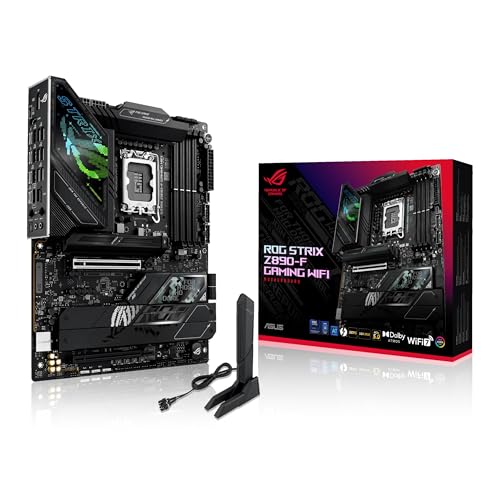
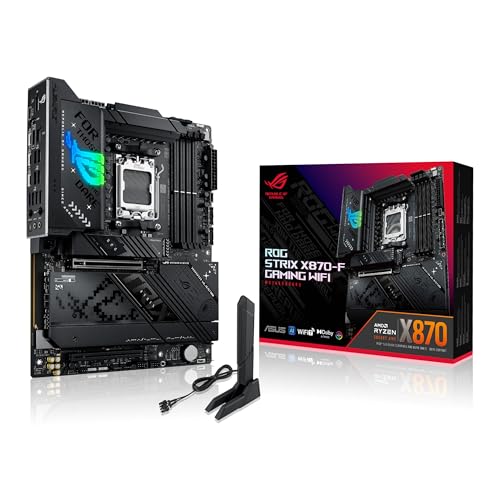
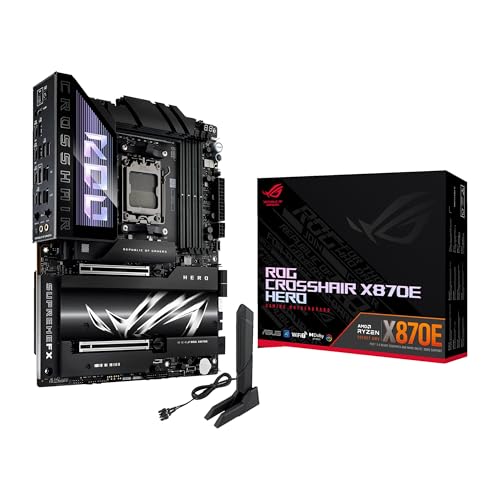
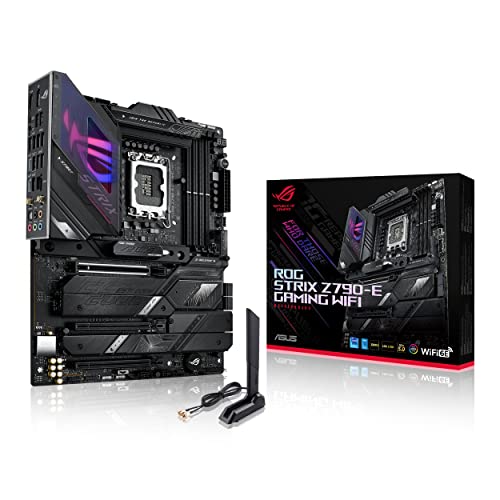
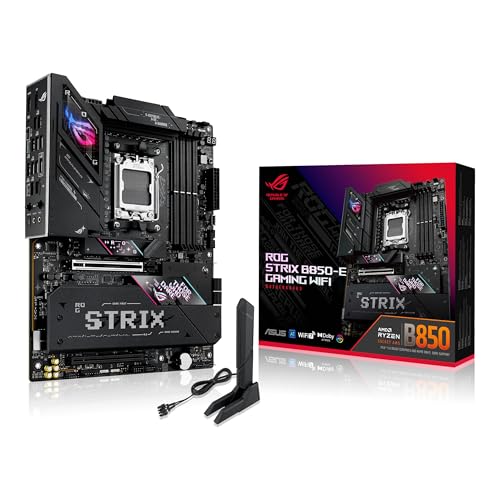
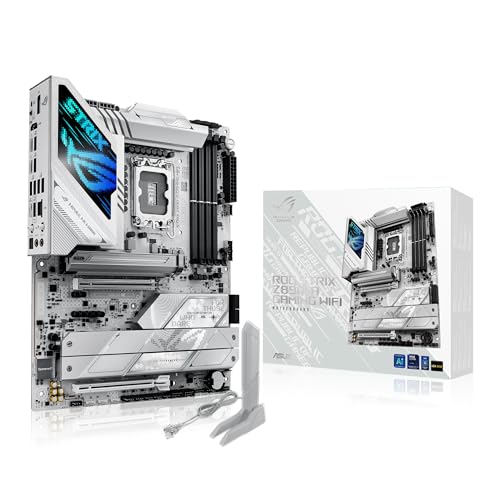
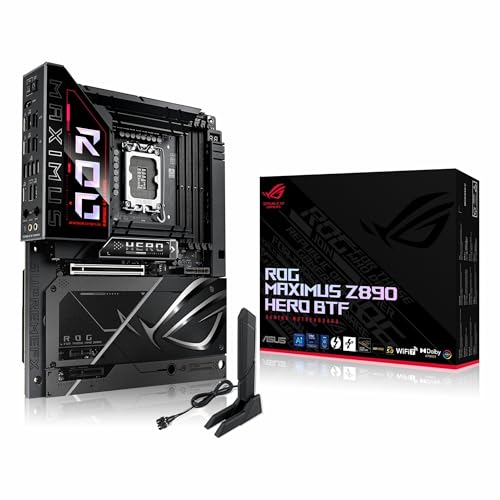
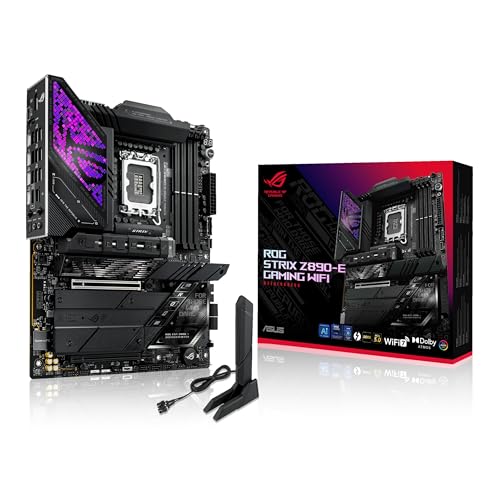
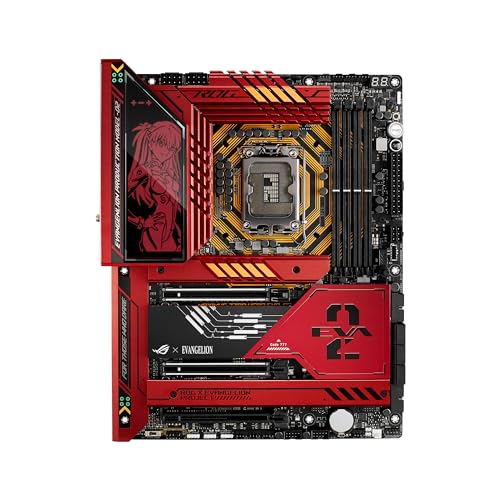
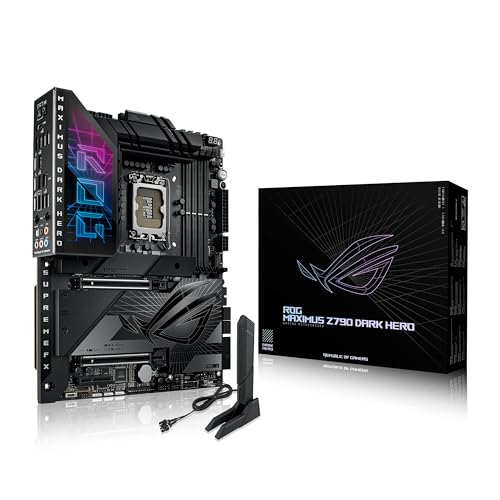
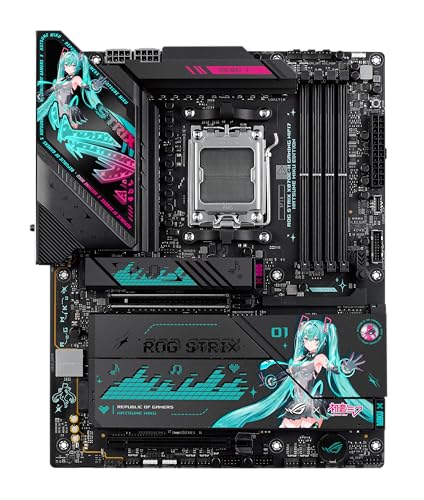
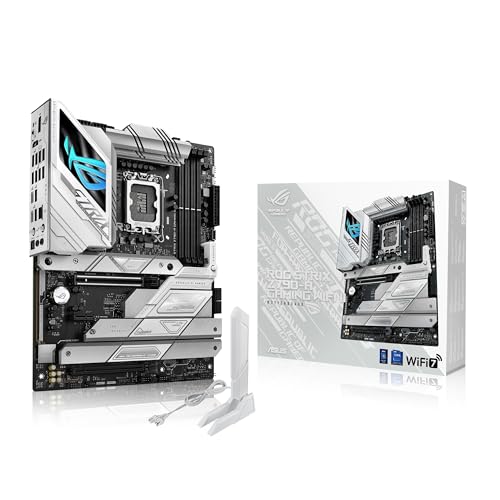
Are Asus ROG motherboards good?
Asus ROG motherboards have an average overall score of 9 and a user rating of 9.2 based on user reviews.
Asus ROG motherboards are well-regarded for their strong performance and advanced features. They are designed primarily for gamers and PC enthusiasts who need high stability, overclocking potential, and premium build quality.
These boards usually come with advanced power delivery systems, efficient cooling solutions, and BIOS options that appeal to users who want fine control over their hardware. Their durability and reliability also make them a trusted choice for high-end builds.
At the same time, Asus ROG motherboards are often more expensive compared to standard models, which means they may not be the best choice for users on a budget or for simple office builds. Their focus on gaming and overclocking means you pay for features that casual users may never use.
The best Asus ROG motherboards are as follows.
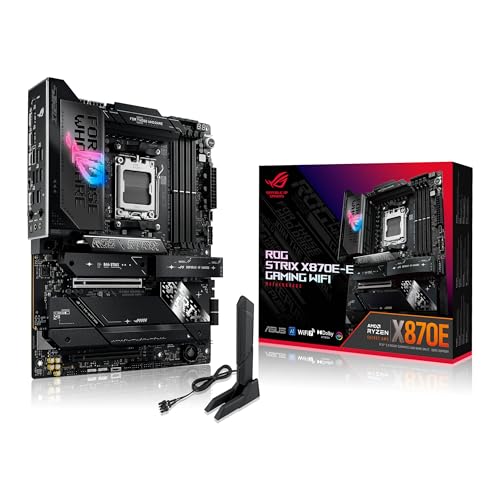
- ASUS ROG Strix X870E E Gaming WiFi (Overall score: 9.2 points)
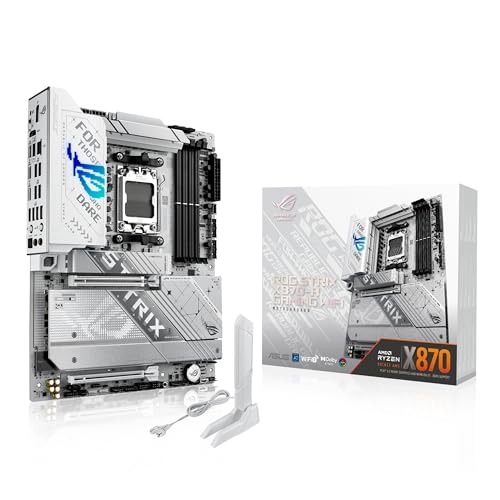
- ASUS ROG Strix X870 A Gaming WiFi (Overall score: 9.16 points)
The chart below ranks motherboard series by average overall score.
[horizontal-chart-12588743876552819512164314463740724746191265422285]

What are the main advantages of Asus ROG motherboards?
The main advantages of Asus ROG motherboards are the following:
- High power delivery: ROG motherboards use VRM designs with up to 20+2 power stages, which stabilizes performance for CPUs such as Intel Core i9 and AMD Ryzen 9. This enables stable overclocking at higher voltages without thermal throttling.
- Advanced cooling solutions: Many ROG boards integrate large aluminum heatsinks, heatpipe connections, and dedicated fan headers. Some models include integrated water-cooling zones that support flow and temperature sensors, which improves thermal control during extended gaming or benchmarking sessions.
- Premium connectivity: They include multiple PCIe 5.0 x16 slots, M.2 slots with PCIe 5.0 NVMe support, and DDR5 RAM compatibility up to 7600 MHz (OC). This combination maximizes GPU bandwidth, storage speed, and memory overclocking.
- Integrated high-speed networking: Most ROG motherboards feature Intel 2.5G LAN or Marvell 10G LAN, plus Wi-Fi 6E with up to 6 GHz band support. This reduces latency in online gaming and increases throughput for heavy workloads such as 4K streaming or large file transfers.
- Enhanced audio quality: ROG SupremeFX audio systems use high-end DACs such as ESS SABRE and Nichicon capacitors. This delivers a high signal-to-noise ratio (around 120 dB) and low distortion, which improves positional audio in competitive gaming.
- Extensive BIOS and software features: ROG UEFI BIOS includes AI Overclocking, AI Cooling, and FanXpert controls. These systems automatically tune performance based on CPU silicon quality and thermal readings, so users can reach optimal balance between performance and temperature.
What are the main disadvantages of Asus ROG motherboards?
Asus ROG motherboards have the following main disadvantages:
- High price range: ROG boards often cost from £220 to over £700, which is significantly higher than mid-range motherboards from MSI or Gigabyte.
- Power consumption: Due to heavy VRM designs and integrated features, some boards draw more idle and load power compared to simpler models.
- Larger form factor: Many ROG models come in E-ATX or ATX only, which limits compatibility with compact PC cases.
- Complexity of settings: BIOS options and tuning features may overwhelm less experienced users, as settings are designed for enthusiasts.
- Limited value for non-gamers: Features such as RGB headers, AI overclocking, and high-end audio add cost but bring little benefit for users who focus only on office or casual use.
Who makes Asus ROG motherboards?
Asus ROG motherboards are made by Asus, a Taiwanese multinational company founded in 1989 in Taipei. ROG stands for Republic of Gamers, a sub-brand which Asus created in 2006 to focus on high-performance hardware for gamers and overclockers. Asus designs and manufactures these boards in Taiwan and China, and distributes them worldwide.
Asus employs over 16,000 people and operates across Asia, Europe, and North America. The company is one of the largest motherboard manufacturers in the world and produces not only ROG models but also TUF Gaming and Prime series.
ROG motherboards are recognized as Asus’s flagship line, and they are built with premium components and advanced features aimed at competitive gaming and professional use.
How popular are Asus ROG motherboards worldwide?
Asus ROG (Republic of Gamers) motherboards are among the most popular premium models worldwide, with shipments in 2024 estimated at around 10 million units and a global market share near 9 %, which kept ROG the leading sub-brand in the high-end gaming and enthusiast segment. Flagship lines such as ROG Maximus, ROG Crosshair, and ROG Strix dominated sales, supporting Intel’s LGA 1700 and AMD’s AM5 platforms.
Asus ROG performed strongest in Asia and Europe, where its share in the premium market often exceeded 15 %, while in North America it stayed closer to 10 %.
What are the main Asus ROG motherboard models?
The main Asus ROG motherboard series are as follows.
- ROG Rampage: High-end motherboards built for Intel’s enthusiast platforms. They have advanced power delivery, robust cooling, and features aimed at extreme overclocking and multi-GPU setups.
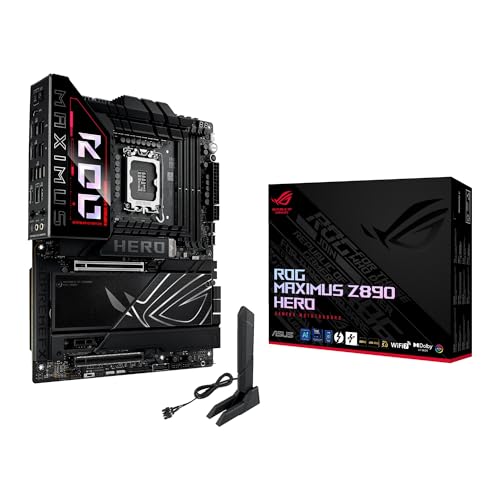
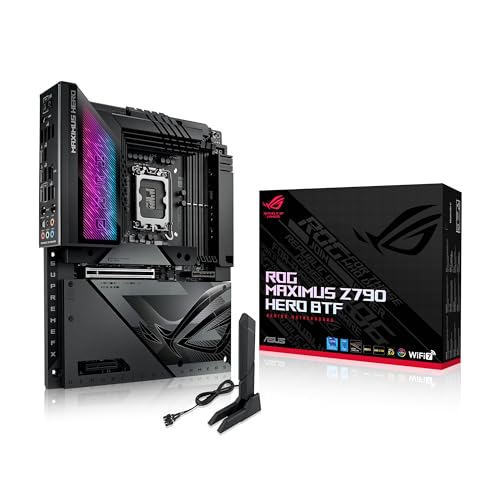
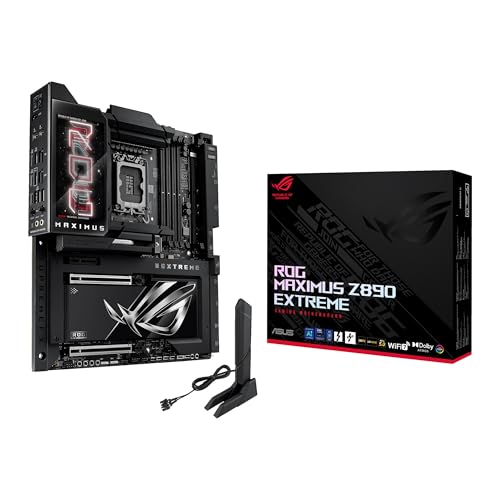
- ROG Maximus: Premium motherboards for Intel mainstream CPUs. They combine strong VRM design, high-speed connectivity, and advanced BIOS options that target gamers and PC enthusiasts.
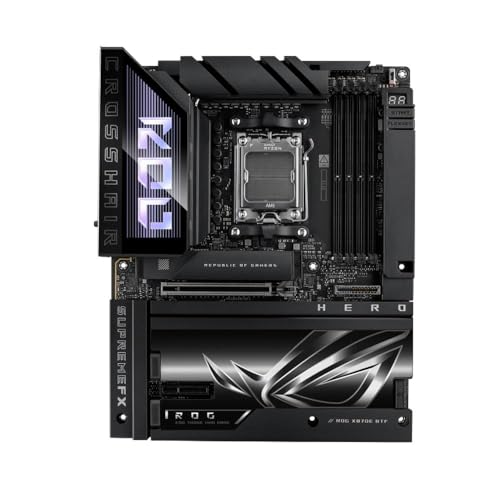
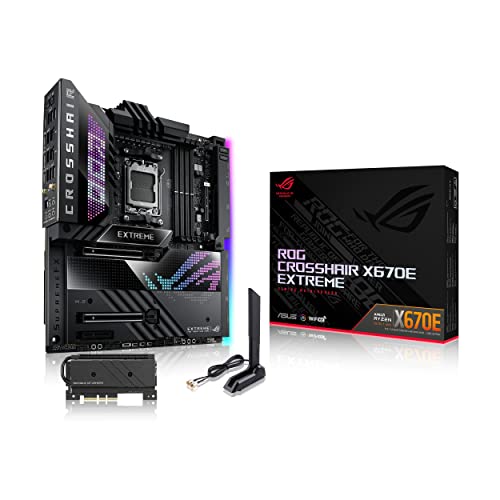
- ROG Crosshair: Flagship models for AMD Ryzen processors. They focus on stable power delivery, strong memory support, and features tuned for overclockers and high-performance builds.
- ROG Strix: Mid to high-range motherboards for both Intel and AMD. They balance performance and aesthetics, with good VRM setups, RGB lighting, and gaming-focused features at a lower price than Rampage or Maximus.
- ROG Gene: Compact micro-ATX motherboards with high-end features. They provide strong power delivery and premium components in smaller builds, so they are often used in compact but powerful systems.
- ROG Apex: Overclocking-focused motherboards that prioritize memory tuning and CPU stability. They are designed for benchmark enthusiasts who want to push hardware limits.
- ROG Hero: A popular line in the Maximus and Crosshair families. These models target high-performance gamers with strong feature sets, good cooling, and balanced pricing compared to the flagship boards.
How much do Asus ROG motherboards cost?
Asus ROG motherboards cost between £170 and £800 depending on the chipset, features, and target audience.
Entry-level ROG Strix models with B-series chipsets usually start around 200–£220, which places them within reach of mainstream gaming builds. Mid-range boards with Z-series chipsets often sell between £260 and £430, and they focus on overclocking support, faster memory compatibility, and better VRM cooling. High-end ROG Crosshair and Maximus boards sit in the 600–£800 range, which places them among the most expensive consumer motherboards.
The following chart shows the price distribution of Asus ROG motherboards.
[vertical-chart-06179182589287142393056374791637417593471191433500]
What should you consider while choosing the best Asus ROG motherboard?
When choosing the best Asus ROG motherboard, you must consider the following factors:
- Form factor and socket compatibility: Check that the motherboard matches your CPU socket and case size requirements. ROG Maximus boards support Intel CPUs with LGA 1700 or LGA 1851 sockets, while ROG Crosshair models work with AMD AM5 sockets for Ryzen 7000+ processors. ATX format boards like the Z790-F Gaming provide more expansion slots, but mATX variants fit smaller cases.
- VRM design and power stages: Select boards with robust voltage regulator modules that handle high-end CPUs effectively. The ROG Maximus Z790 Dark Hero features a massive 20+1+2 stage VRM rated for 90A per stage, while mid-range boards like the Strix B550-F Gaming use 12+2 power stages. Higher-tier boards deliver superior power regulation and overclocking headroom for demanding processors.
- Memory support and overclocking: Look for DDR5 compatibility with high-speed memory support and advanced overclocking features. ROG Strix X670E-E Gaming supports DDR5-6400+ speeds with OptiMem II technology that reduces signal interference. AEMP (ASUS Enhanced Memory Profile) and AI Overclocking automatically optimize memory timings for peak performance.
- PCIe slots and storage options: Evaluate the number and speed of expansion slots for GPUs and storage devices. Premium boards like the Strix X670E-E Gaming offer PCIe 5.0 x16 slots with SafeSlot reinforcement plus multiple M.2 slots with PCIe 5.0 support. Entry-level ROG boards typically provide PCIe 4.0 slots and fewer M.2 connections but still maintain solid expansion capabilities.
- Cooling architecture and thermal management: Consider boards with comprehensive cooling solutions for sustained performance under load. ROG boards feature large VRM heatsinks, M.2 heatsinks, and multiple fan headers with Fan Xpert 4 control. Six-layer PCB designs help dissipate heat around voltage regulators and improve system stability during overclocking sessions.