Fujifilm FinePix X10 review. Compare 108 technical specifications and user reviews to see how it ranks among cameras and if it is worth buying.
Overall score
What it is: An overall evaluation of the camera's quality, based on technical analyses and user reviews.
When it matters: When you need a quick reference to identify the best cameras on the market.
Score components:
90.0%
Technical Score
10.0%
User score
Technical Score
What it is: An assessment of the camera's technical performance, covering eight key areas: image quality, autofocus, video features, stabilization, lens compatibility, connectivity, battery, and design.
When it matters: When you want to compare cameras based on technical performance and available features.
Score components:
28.0%
Sensor & Image
25.0%
Photo Features
18.0%
Video & Audio
14.0%
Display & Design
8.0%
Battery & Power
7.0%
Connectivity & Storage
User score
What it is: A rating that combines user reviews and the total number of reviews received by the camera.
When it matters: When real-world owner satisfaction and review volume matter to your decision.
Score components:
70.0%
User reviews
30.0%
Popularity
Score components:
25.0%
Sensor size
20.0%
Main camera megapixels
20.0%
Dual card slots
15.0%
N. of focus points
10.0%
RAW photo capture
10.0%
Phase-detection autofocus (photos)
Score components:
35.0%
Weight
30.0%
Battery life (CIPA)
20.0%
Sensor-shift stabilization
15.0%
GPS
Score components:
30.0%
Price
20.0%
Weight
20.0%
AF tracking
20.0%
Battery life (CIPA)
10.0%
Touchscreen
Score components:
30.0%
Main camera megapixels
25.0%
Sensor size
20.0%
Main camera pixel size
15.0%
Sensor-shift stabilization
10.0%
RAW photo capture
Score components:
30.0%
Weight
25.0%
Thickness
20.0%
AF low-light sensitivity
15.0%
Sensor-shift stabilization
10.0%
Eye detection AF (human)
Score components:
30.0%
Sensor size
25.0%
Main camera pixel size
20.0%
Eye detection AF (human)
15.0%
Main camera megapixels
10.0%
Sensor-shift stabilization
Score components:
30.0%
Weight
25.0%
Battery life (CIPA)
20.0%
Min operating temperature
15.0%
Sensor-shift stabilization
10.0%
GPS
Available: ranking among products currently available (including other versions of this product).
All: ranking among all products in the database.
#91 in Best Fujifilm Cameras
#154 in Best Cameras for Travel
#297 in Best Compact Cameras
#297 in Best Point & Shoot Cameras
#548 in Best Cameras under £200
#676 in Best Cameras under £300
#846 in Best Cameras
#846 in Best Digital Cameras
#858 in Best Travel Cameras
#862 in Best Cameras for Hiking
What it is: An assessment of the camera's technical performance, covering eight key areas: image quality, autofocus, video features, stabilization, lens compatibility, connectivity, battery, and design.
When it matters: When you want to compare cameras based on technical performance and available features.
Score components:
28.0%
Sensor & Image
25.0%
Photo Features
18.0%
Video & Audio
14.0%
Display & Design
8.0%
Battery & Power
7.0%
Connectivity & Storage
What it is: A rating that combines user reviews and the total number of reviews received by the camera.
When it matters: When real-world owner satisfaction and review volume matter to your decision.
Score components:
70.0%
User reviews
30.0%
Popularity
What it is: An indicator that combines the camera's overall rating with its cost.
When it matters: When you want to know how much overall quality you get for the price.
Score components:
60.0%
Overall score
40.0%
Price
Importance: HIGH
Good value: Full frame or larger
Importance: HIGH
Good value: At least 20 MP
Importance: HIGH
Good value: At least 3.5 µm
Importance: LOW
Importance: MEDIUM
Good value: At least ISO 25,600
Importance: MEDIUM
Importance: MEDIUM
Good value: At least 14-bit
Importance: LOW
Importance: LOW
Importance: LOW
Importance: LOW
Importance: LOW
Importance: LOW
Importance: LOW
Importance: LOW
Importance: MEDIUM
Importance: LOW
Importance: LOW
Importance: LOW
Importance: LOW
Importance: LOW
Importance: HIGH
Good value: At least 200 points
Importance: HIGH
Importance: MEDIUM
Importance: LOW
Importance: LOW
Importance: MEDIUM
Importance: MEDIUM
Importance: HIGH
Good value: At least 5 stops
Importance: LOW
Importance: MEDIUM
Good value: At least 10 fps
Importance: LOW
Importance: LOW
Importance: LOW
Importance: LOW
Importance: LOW
Importance: LOW
Importance: LOW
Importance: LOW
Importance: LOW
Importance: LOW
Importance: LOW
Importance: LOW
Importance: LOW
Importance: LOW
Importance: LOW
Importance: LOW
Good value: At least 200,000 actuations
Importance: LOW
Good value: At least 10x
Importance: HIGH
Good value: At least 3840 px
Importance: MEDIUM
Good value: At least 200 Mbps
Importance: MEDIUM
Good value: At least 10-bit
Importance: LOW
Importance: LOW
Importance: LOW
Importance: LOW
Importance: LOW
Importance: LOW
Importance: LOW
Good value: At least 30 min
Importance: LOW
Importance: LOW
Importance: LOW
Importance: LOW
Importance: LOW
Good value: At least 2 microphones
Importance: LOW
Importance: LOW
Importance: LOW
Importance: LOW
Importance: MEDIUM
Good value: 500 g or less
Importance: LOW
Importance: LOW
Importance: LOW
Importance: MEDIUM
Importance: MEDIUM
Good value: At least 2.36 million dots
Importance: LOW
Good value: 100%
Importance: LOW
Importance: LOW
Good value: At least 120 Hz
Importance: MEDIUM
Good value: At least 3 in
Importance: LOW
Importance: LOW
Importance: LOW
Importance: LOW
Importance: LOW
Importance: LOW
Importance: LOW
Good value: At least 10 m
Importance: LOW
Importance: LOW
Importance: LOW
Importance: LOW
Importance: MEDIUM
Good value: At least 400 shots
Importance: LOW
Good value: At least 1,500 mAh
Importance: LOW
Importance: LOW
Importance: LOW
Importance: LOW
Importance: LOW
Importance: LOW
Importance: LOW
Importance: LOW
Importance: LOW
Importance: LOW
Importance: LOW
Importance: LOW
Importance: LOW
Importance: LOW
Importance: LOW
Importance: LOW
Importance: LOW
Importance: LOW
Importance: LOW
Importance: MEDIUM
Importance: HIGH
Good value: At least 200 points
Importance: LOW
Importance: MEDIUM
Good value: At least 10 fps
Importance: LOW
Importance: HIGH
Good value: At least 20 MP
Importance: HIGH
Good value: Full frame or larger
Importance: LOW
Good value: 100%
Importance: LOW
Importance: MEDIUM
Good value: At least 14-bit
Importance: LOW
Importance: LOW
Importance: MEDIUM
Good value: At least 3 in
The DPReview evaluation highlights the Fujifilm X10 as a premium, retro-styled compact featuring a robust magnesium alloy body, extensive manual controls, and a sharp 28-112mm equivalent f/2.0-2.8 lens. Its 12-megapixel 2/3" EXR CMOS sensor shines in 6-megapixel mode, offering excellent dynamic range, high-ISO performance, and pleasing JPEGs, complemented by effective image stabilization and strong in-camera RAW processing. However, the review notes significant drawbacks, including a restrictive optical viewfinder that lacks data overlay and suffers from lens barrel blockage. While the internal processor is strong, third-party RAW conversion produces lower-quality results, and the camera faces issues with slow wake-up times, poor battery life, and inconsistent autofocus in low contrast, according to DPReview.
The Fujifilm FinePix X10, reviewed by ePHOTOzine, is a premium compact camera featuring a 2/3" EXR CMOS sensor that offers excellent image quality, fast autofocus, and a swift shutter response, alongside a unique mechanical on/off zoom lens. Its robust, retro-styled design is praised for its tactile, manual controls and a useful optical viewfinder, making it a fast-operating tool for photography enthusiasts. Conversely, the review notes the high retail price as a barrier, and while the optical viewfinder is beneficial, it lacks any overlaid shooting information, requiring reliance on the rear LCD to check settings. Additionally, the lack of electronic preview in the viewfinder can lead to parallax errors when shooting in macro mode.
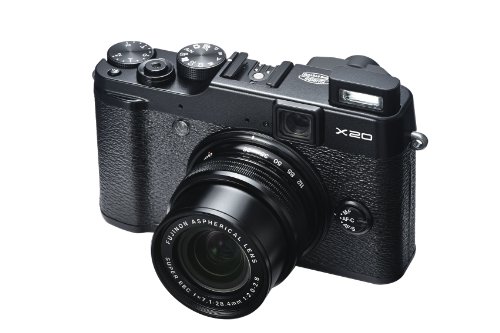
The Fujifilm FinePix X10 is a retro, rangefinder-styled compact camera designed for enthusiast photographers, featuring a high-end 2/3-inch 12MP EXR CMOS sensor and a manual 4x zoom lens (28-112mm equivalent). Priced moderately compared to its premium sibling, the X100, it stands out for its unique sensor tech that optimizes low-light capture and extends dynamic range, while supporting 1080p video, 7fps continuous shooting, and raw format (RAF) files. The camera earns praise for its premium build quality, excellent overall handling, a bright, clear LCD screen, and solid ISO noise performance for its sensor size. However, it falls short due to a weak built-in flash, a finicky rear control bezel, and an optical viewfinder that completely lacks informational framing marks or shooting data.
The Fujifilm X10 is a retro-styled enthusiast compact camera featuring a 12-megapixel EXR CMOS sensor and a 4x Fujinon f/2--2.8 zoom lens equivalent to 28-112mm. It features a premium, all-black body made with a magnesium alloy upper deck and base, textured faux leather coating, and milled aluminium controls. Uniquely, the camera lacks a traditional power button and is turned on by manually twisting the lens barrel. Image performance is highly praised for producing excellent picture quality with clean files up to ISO 1600, minimal distortion at both ends of the zoom, and useful feature modes like EXR automatic scene selection, high-resolution Motion Panorama, and Pro Focus background blurring. Several notable advantages and disadvantages define the user experience. The primary "pros" include its elegant build quality that feels like a "real" camera, clean high-ISO performance, an excellent menu system, an integrated electronic tilt indicator, and the inclusion of a top-mounted optical viewfinder. Conversely, the "cons" highlight a relatively sluggish startup time of 2 to 3 seconds, a one-second delay between subsequent shots, and a strange temporary exposure drop on the LCD...
The Fujifilm X10 is a premium compact camera that offers an authentic, traditional camera experience through its manual control layout, robust aluminum knobs, and an innovative manual zoom ring that doubles as the power switch. Built like a miniature rangefinder, its solid body features a die-cast magnesium top and base, metal lens cap, and real strap lugs, giving it structural durability superior to its class rivals. Its 2/3-inch 12-megapixel CMOS sensor produces sharp images with distinctive contrast, beautiful color reproduction, and an impressive three-dimensional pop. Additionally, the camera defies small-sensor limitations by providing exceptional high-ISO performance, keeping noise well-controlled and delivering highly usable images all the way from ISO 100 up to ISO 3200. Pros & Cons Pros: Premium Construction: Features exceptional build quality using die-cast magnesium and solid metal components. Tactile Handling: Includes an intuitive manual zoom ring (28–112mm equivalent) and tactile physical exposure controls. Bright Optics: Equipped with a fast f/2.0 to f/2.8 lens that performs well in diverse lighting conditions. Low-Light Capability: Delivers fantastic high-ISO performance that remains clean up to ISO 3200. Creative Variety: Offers beautiful...
The Light and Matter review describes the Fujifilm X10 as a robust, professional-grade compact featuring quick responsiveness and an effective Auto Dynamic Range mode that produces warm, rich images. It is lauded for its manual control, allowing users to shoot even without full focus lock. However, the camera struggles with autofocus and exposure in low-light, sometimes requiring manual compensation, and the included SilkyPix RAW software is considered subpar. Because of this, the reviewer advises relying on the camera's excellent JPEG engine over RAW shooting.
The Photo Review evaluation highlights the Fujifilm X10 as a robust, retro-styled camera featuring a durable magnesium alloy body and a bright, versatile 4x optical zoom lens with f/2.0-2.8 aperture. It is praised for intuitive manual controls and high-quality images from its 12-megapixel EXR-CMOS sensor. Key drawbacks include an optical viewfinder that lacks any data display, slow autofocus in low-light, and an sluggish manual focus interface. Additionally, the camera is limited by poor Full HD video quality and a short battery life.
Overview The Fujifilm X10 is a premium, retro-styled compact camera that acts as a smaller, more affordable alternative to the popular APS-C sensor X100. Priced at $599, it is designed for photography enthusiasts and beginners alike, featuring a smaller 2/3-inch EXR CMOS sensor paired with a high-quality, manual 28-112mm equivalent f/2-2.8 zoom lens built directly into the all-black metal body. While it delivers the signature rich, vibrant "Fuji colors" and boasts a very fast autofocus system that actually surpasses the X100, it struggles with true shallow depth-of-field control due to its sensor size and features an optical viewfinder that, while bright, lacks exposure information and offers only 85% frame coverage. Pros and Cons Pros Superb Build & Styling: Offers a high-quality, classic all-black metal finish that matches the premium feel of the X100. Fuji Color & Image Quality: Delivers beautiful, sharp out-of-camera JPEGs with rich film simulation modes like Velvia and Provia. Performance: Features rapid autofocus, reliable metering, and an intuitive lens-barrel power switch mechanism. Strong Low-Light Capabilities: High ISO performance is excellent for a small sensor, especially when utilizing...
DXOMARK Review Summary: Fujifilm FinePix X10 The DXOMARK review highlights the Fujifilm FinePix X10 as an appealing, lower-cost alternative to the X100, pairing a traditional retro metal aesthetics with strong category performance. On the positive side (Pros), the camera delivers exceptional image metrics for its segment, achieving a color depth score of 20.5 and a robust dynamic range of 11.3 Evs, matching premium rivals like the Canon PowerShot G12 and S100. It is also praised for its highly versatile and bright 4x zoom lens—covering a 28-112mm equivalent—which retains a fast f/2.0 aperture at wide angles and remains bright at f/2.8 at full telephoto. Additionally, its 2/3-inch EXR CMOS sensor is twice as large as standard compact sensors (like the F600 EXR), resulting in a low-light ISO score of 245 that outperforms direct competitors such as the Nikon Coolpix P7100 and Panasonic LX5 by nearly 2/3 of a stop. Conversely, the review highlights distinct limitations (Cons) that potential buyers should consider. Despite utilizing advanced EXR sensor technology, the X10's low-light ISO capabilities remain inherently limited by its compact form factor, restricting...
The Andrei Nicoara Fujifilm X10 Review positions this premium compact digital camera as a highly capable, portable alternative to bulky DSLR setups for travel and street photography. The author praises its exceptionally bright 28-112mm equivalent F2.0-2.8 manual zoom lens, which offers excellent low-light capability and decent subject isolation. Performance highlights include beautiful color rendition for street scenes and portraits, high ISO capabilities up to 1600, and a "magic" EXR mode that delivers stunning dynamic range in 6MP JPEGs. Additionally, the reviewer appreciates its solid mechanical build quality, responsive autofocus with face detection, a clever lens-rotation on/off system, a macro mode, and a completely silent shooting option. Despite its strengths, the review notes several significant limitations that prevent it from being absolutely perfect. The most notorious flaw is the "white orbs" issue—specular highlights expanding into distracting white discs in night cityscapes—though later sensor replacements and firmware updates partially mitigated this. The optical viewfinder is deemed mostly useless due to a lack of focus confirmation overlays and lens barrel obstruction. Furthermore, the camera suffers from poor battery life yielding fewer than 200...
The Fujifilm X10 is a premium compact camera featuring robust, retro-styled construction, a bright optical viewfinder, and a versatile manual zoom lens that offers fast, high-quality imaging. Key advantages include its intuitive handling, advanced shooting modes, and excellent, detailed image output. Conversely, the review highlights significant drawbacks, most notably the production of white, blooming discs in high-contrast scenes, along with occasional white balance inaccuracies. Despite these issues, the camera is positioned as a strong, stylish option for enthusiasts.
The Fujifilm FinePix X10 features a robust, retro-styled metal body with a high-speed 4x manual zoom lens (28-112mm f/2.0-2.8) that wakes in just 1.5 seconds, according to a Digitalkamera.de review. Its 2/3-inch EXR CMOS sensor is highly commended for delivering excellent image quality, low noise, and improved dynamic range in varying light conditions. However, the review notes several drawbacks, including a mediocre battery life of 270 shots per charge and a smooth grip that hampers handling. Additionally, the metal tripod mount is awkwardly offset from the optical axis, making precise tripod work more difficult. Digitalkamera.de
The Fujifilm FinePix X10 is a premium retro-styled compact camera that stands out for its exceptional image quality and premium build. It features a large 2/3-inch EXR-CMOS sensor, providing twice the surface area of standard compact cameras, which pairs with a bright F2-2.8 manual 4x zoom lens (28-112mm equivalent) to deliver excellent depth-of-field control and high-end detail retention up to ISO 1,600. Key advantages include its robust, high-quality chassis that offers a secure grip, an intuitive manual zoom ring that doubles as the power switch, a fast and silent continuous autofocus, and a responsive optical viewfinder that adjusts seamlessly alongside the focal length. The camera additionally scores points for its quick 0.33-second shutter lag, a high-resolution 2.8-inch display, a digital horizon level, and a specialized EXR mode that reduces image noise by a third in low-light environments. Despite its stellar performance, the camera has noticeable drawbacks, particularly when it comes to video recording. While it is the first in its class to offer Full-HD video, recording is limited to automatic mode and suffers from disruptive background noise, as the internal...
The Fujifilm FinePix X10 is a premium retro-styled compact digital camera featuring a relatively large 2/3-inch EXR-CMOS sensor and a bright 4x Fujinon optical zoom lens (28-112mm equivalent at f/2.0-2.8). On the positive side, the review praises the camera's high-quality housing, direct manual controls, and excellent color reproduction under both real-world and laboratory settings. It delivers good image quality with low noise and solid detail retention up to ISO 400, and remaining respectable up to ISO 1,600 in good lighting. Performance is another strong suit, boasting a fast snapshot-ready autofocus speed of 0.33 seconds, a low shutter lag of 0.03 seconds, and a continuous shooting rate of up to 7.8 frames per second in JPEG mode. Additionally, the camera features a bright optical viewfinder, Full-HD video recording, an integrated flash with great close-up coverage, and several built-in film simulation modes. Conversely, the review highlights several drawbacks that negatively impact the camera's overall score. A major issue is a sensor defect known as the "White Dot Syndrome" (blooming effect), which creates white, point-like anomalies around bright light sources or harsh reflections....
Fujifilm X10 Review Summary The Fujifilm X10 is a premium compact digital camera designed with a distinct retro aesthetic that mimics classic analogue viewfinder cameras, complete with a leather-like black surface, matte metal accents, and numerous physical control dials. A key highlight is its relatively large 0.58 cm² image sensor paired with a bright f/2.0–2.8 4x zoom lens. This combination allows photographers to easily isolate subjects with a shallow depth of field and achieves noticeably cleaner low-light performance with less image noise than smaller-sensor competitors like the Canon S90. Additionally, the camera boasts exceptional macro capabilities, enabling sharp focus at a distance of just one centimetre from the subject. It features a secure slip-on lens cap and a clever power mechanism triggered by twisting the lens zoom ring.
The Heise short test highlights the Fujifilm FinePix X10 as a high-quality compact camera for enthusiasts, featuring a robust magnesium alloy build, a fast f/2.0–2.8 lens, and an innovative power switch integrated into the manual zoom ring. Its 2/3-inch EXR sensor delivers strong image quality, though the camera faces competition in raw performance from newer models. However, the review notes significant drawbacks, including a viewfinder that lacks data overlays and is partially blocked by the lens barrel, alongside challenging RAW file compatibility and short battery life. The camera is lauded more for its tactile, traditional shooting experience than for its digital efficiency.
The Fujifilm X10 is a high-quality compact camera featuring a 12-megapixel 2/3-inch EXR CMOS sensor and a very bright 28-112mm equivalent f/2.0–2.8 Fujinon lens, which offers superior low-light performance compared to its main competitors, the Canon G12 and Nikon P7100. The reviewer heavily praises its exceptionally premium retro design and build quality, noting that its leatherette body, manual metal zoom ring, and tactile dials feel more elegant than comparable compacts from Nikon, Canon, or Panasonic-built Leicas. Users can also comfortably shoot in ISO ranges up to 1,600 or 3,200. Additional strong points include an excellent JPEG processing engine that makes internal black-and-white 1:1 aspect ratio shooting highly enjoyable, a useful sweep panorama feature, and a super macro mode that allows the lens to get practically right up against a subject. However, the camera is not without its flaws. A major drawback discussed is the notorious "White Dot Syndrome" (WDS), where high-contrast night scenes like holiday lights or New Year's Eve fireworks produce distracting, punch-hole-like white discs in the images. While the manual zoom mechanism is highly praised, the optical viewfinder...
The avguide.ch review highlights the Fujifilm X10 as a robust, high-quality premium compact camera built with a durable magnesium housing. It is praised for its excellent handling size—striking a balance between being large enough for comfortable operation yet compact enough for travel. Reviewers appreciated its precise multifunction control wheel, which allows for swift settings adjustments, and the dedicated RAW button on the back for toggling image formats. The camera operates smoothly when held with both hands, making the overall shooting workflow fast and efficient. If you plan on choosing a premium compact camera
The Fujifilm X10 is reviewed as a handy, premium, and visually attractive compact camera that provides an enjoyable, fast-reacting shooting experience for advanced photographers seeking manual control. Among its main pros, the camera boasts quick autofocusing and immediate shutter release when turned on. The manual lens zoom ring is easy to adjust, and the lens delivers very good, neutral colour reproduction in daylight with minimal color fringing. Additionally, its sharpness optimizes beautifully at an aperture of f/4.0, and the primary body functions are highly accessible for a fluid, hands-on workflow. However, the review outlines several prominent cons, noting that the overall image quality does not match the standard of mirrorless (CSC) or DSLR cameras. Image noise is disappointing, increasing significantly and smearing details at sensitivities above ISO 400, while the advertised EXR modes offer less noise reduction and dynamic range improvement than expected. Performance setbacks include a sluggish standby wakeup time, long processing times when shooting in RAW mode, and overly stiff lens resistance that leads to shaky video zooming. Finally, the camera suffers from a widely discussed "white orb"...
The Fujifilm X10 is a premium compact camera featuring a design focused heavily on conventional photography, deliberately omitting trendy image effects or highly specialized shooting modes. Its notable operational strengths include a native 4:3 aspect ratio sensor with flexible 3:2, 16:9, and 1:1 format options, alongside an impressive burst shooting speed of up to 7 frames per second (fps) at full resolution, which can ramp up to 10 fps at a lower resolution. Key photographic features include a "Motion Panorama" mode capable of creating panoramic views up to 360 degrees, and the signature Fujifilm "Film Simulation" styles—such as Provia (Standard), Velvia (Vivid), and Astia (Soft)—which closely replicate classic slide films. Additionally, it offers a dedicated EXR mode that optimizes high resolution, expanded dynamic range, or low-noise/high-sensitivity shooting, as well as an Advanced mode featuring "Pro Focus" to simulate a blurry background by merging three consecutive shots. On the downside, the camera features a few distinct functional limitations. A major drawback is that RAW format shooting is restricted, as it is unavailable at ISO settings above 3200. Furthermore, RAW shooting is...
The Fujifilm FinePix X10 is a solid and well-built premium compact camera that stands out for its durable, retro-inspired metallic construction and intuitive controls, such as a mechanical zoom ring that doubles as the power switch. It features a bright 4x (28-112mm) f/2-2.8 lens and a new 2/3" EXR CMOS sensor, delivering excellent image quality and highly progressive ISO performance that remains perfectly usable up to ISO 1600. Additionally, the camera offers an impressive burst mode of 6 to 7 frames per second, snappy autofocus that clocks in under half a second in good lighting, and an accurate rear screen with superb viewing angles. While it records Full HD 1080p video with clear stereo sound, the video files suffer from noticeable compression and aliasing (staircase effects) on curved lines. The camera's biggest flaw is its severely limited battery life, which fails to reach 200 shots on a single charge due to a small 3.5 Wh battery, forcing users to carry spares. Ergonomically, its substantial size compromises pocketability, and users may find certain details annoying, such as the lack of a...
The 01net Fujifilm X10 review highlights this camera as a highly appealing, retro-styled expert compact that prioritizes luxury and build quality over budget pricing. Built with a premium metal shell and faux-leather coating, it features an elegant design and a manual mechanical lens barrel that acts as the power switch. Performance-wise, its relatively large 2/3-inch 12-megapixel CMOS sensor coupled with a bright 4x optical zoom lens (f/2.0 at 28mm to f/2.8 at 112mm) allows it to deliver excellent image quality with minimal distortion and highly accurate colors. It outperforms standard compact competitors in low-light environments, managing digital noise exceptionally well up to ISO 800 and remaining highly reliable up to ISO 1,600. Key Pros and Cons Pros: Excellent Build Quality: Robust metallic chassis with refined, resistant control dials. Superior Optics: Very bright, sharp f/2.0-2.8 manual mechanical zoom lens. Advanced Low-Light Capabilities: Highly efficient noise management up to ISO 1600. Enhanced Viewfinder: Bright, precise, and superior traditional optical viewfinder compared to rivals. Discreet Operation: Extremely silent electronic shutter mechanism. Cons: Weaker Battery Life: Limited stamina, averaging roughly 250 captures per charge....
The Fujifilm FinePix X10 is a premium, retro-styled compact camera designed to capture the elegance and appeal of its larger sibling, the X100, at a lower price point. The reviewer praises its solid build quality, comfortable weight, and intuitive, firm control dials, which include an innovative lens-twist power mechanism. On the technical side, its standout feature is the bright, stabilized 28-112mm f/2.0-2.8 zoom lens paired with a larger-than-average 2/3-inch sensor, delivering excellent, detailed image quality across the zoom range under daylight conditions. Additional advantages include a rapid autofocus system and a fast continuous burst mode capable of capturing 7 frames per second at full resolution. However, the camera exhibits notable drawbacks when pushed beyond basic daylight photography. Low-light performance is weak; image quality degrades considerably when the ISO exceeds 800 due to sensor limitations, resulting in prominent noise. Furthermore, the small sensor prevents a pronounced background bokeh effect, and the manual focus mode is described as a "nightmare" to operate. The reviewer also critiques the 2.8-inch display's modest 460,000-dot resolution, the poor video recording quality, and a frustratingly short battery...
The Fujifilm X10 is a compact camera that blends retro charm with unique features, though it comes with some clear operational quirks. On the positive side, it features an excellent manual zoom ring and an enjoyable optical viewfinder that makes framing a pleasure. The camera shoots high-quality JPEG images straight out of the box, showing great dynamic range and strong performance in bright light. Its physical design is highly functional, offering handy dedicated buttons for exposure compensation and autofocus modes, as well as a fast-acting pop-up flash. Furthermore, advanced users will appreciate the standard hot shoe for external flashes, the customizable C1/C2 modes, and a fast 1/4000 second maximum shutter speed in standard manual modes. However, the X10 falls short in several areas of processing and interface design. A major flaw for RAW shooters is the strange "orange peel" grain artifact that appears when developing RAW files in Adobe Lightroom, which destroys fine detail and forces a soft image look. The physical dials and the rear menu layout are overly small and confusing, made worse by a fixed LCD screen...
The CameraRace review defines the Fujifilm X10 as a premium, enthusiast-focused compact, highlighting its retro magnesium alloy design and excellent handling. Pros include the bright Fujinon 28-112mm equivalent f/2.0-2.8 lens, a relatively large 2/3-inch 12MP EXR CMOS sensor offering strong low-light performance, and versatile EXR dynamic range modes. However, key cons include the optical viewfinder's limited 85% field coverage, subpar battery life, and the "white orbs" blooming issue on high-contrast specular highlights. Additionally, the camera is limited by poor RAW file compatibility with modern software and underwhelming shadow detail extraction.
The Fujifilm X10 is a groundbreaking premium compact camera that blends retro aesthetics with high-end functionality, distinguishing itself by offering an off-centre optical viewfinder, a fluid manual zoom ring, and stable handling at a reasonable price. Testing the camera on the streets of Arles, France, the reviewer highlights several standout positive features, including its tactile manual zoom lens (a bright 28-122mm equivalent f/2-2.8) that provides vastly superior precision over motorised equivalents. The corner-mounted optical viewfinder provides a clear, bright view that does not blackout during exposure, making it incredibly responsive in bright daylight and highly discrete for street photography. Additional pros include an integrated pop-up flash, an automatic panoramic mode, solid build quality, and an efficient image stabilisation system that allows comfortable handheld shooting at slow shutter speeds like 1/10 second. Despite its overall high praise, the review points out several notable drawbacks. The optical viewfinder lacks exposure or focus data, covers only 85% of the frame, and suffers from visible barrel distortion and a significant, "violent" parallax error at the wide 28mm end. For portability, the lens does not...
The Fujifilm X10 review by Xataka Foto highlights a premium, advanced compact camera priced at around €500 that stands out for delivering great "sensations" and a nostalgic rangefinder-inspired design reminiscent of its larger sibling, the X100. The camera excels in build quality and design, utilizing magnesium alloy and a textured faux-leather grip to create a highly tactile, professional-feeling device. Its physical controls are praised as outstanding for a compact model, featuring a unique and highly intuitive power switch integrated directly into the manual zoom ring of the bright f/2.0-2.8 Fujinon lens. Image performance from the 2/3-inch EXR CMOS sensor is solid, offering correct autofocusing, accurate auto white balance, and highly malleable RAW files that allow for deep manual editing. However, the review details several notable downsides, clarifying that the X10 is not simply a cheaper, smaller X100. A major limitation is the camera's confusing interface and a chaotic menu structure with poorly documented feature dependencies; for instance, turning on face detection completely locks out core autofocus point and metering adjustments. Performance specs also suffer from "fine print" restrictions, as the...
The Xataka review highlights the Fujifilm X10 as a premium, highly seductive high-end compact camera. A major pro is its exceptional build quality and retro design, which offers a sense of exclusivity and distinction that appeals directly to photography enthusiasts. The camera stands out for its unique ergonomics, specifically the manual mechanical control ring on the lens that serves both to zoom and to turn the camera on. Performance-wise, it features a bright f/2.0-2.8 Fujinon 4x optical zoom lens (28-112mm equivalent) paired with a 12-megapixel 2/3-inch EXR CMOS sensor, a combination that delivers outstanding color science, great contrast, and a signature vintage JPEG look right out of the camera. However, the review and its accompanying analysis note several noticeable constraints. A significant con is the performance of the optical viewfinder, which is underwhelming because it completely lacks overlaid shooting information and is partially blocked (around 15%) by the extended lens barrel. While its 2/3-inch sensor is larger than standard compacts, it is still small compared to modern mirrorless systems, leading to limited high-ISO usability in low-light environments and compressed shadow...
The Fujifilm X10 is a premium compact digital camera that features a retro-inspired, sturdy metal body, a tactile manual zoom ring that doubles as the power switch, and a high-performing 2/3-inch EXR CMOS sensor. It is equipped with a highly luminous 4x Fujinon optical zoom lens (f/2.0–2.8) spanning a 28–112mm equivalent focal length, which provides exceptional image sharpness and beautiful selective focus blur (bokeh). The camera offers excellent color management, high-speed continuous shooting up to 7 fps, and reliable 1080p Full HD video recording with stereo sound. Additionally, it provides a highly customizable 2.8-inch TFT LCD screen, dual adjustment dials, and dedicated modes such as film simulation (Provia, Velvia, Astia) and an intelligent EXR exposure mode for handling complex, high-contrast scenes. Despite its excellent build and image performance, the camera has notable limitations. The primary disadvantage is its direct optical viewfinder, which covers only 85% of the frame, suffers from parallax errors at short-to-medium distances, and completely lacks shooting data, making it less useful than a modern hybrid or electronic viewfinder. Reviewers also noted that the internal microphone is highly...
The Fujifilm X10 is praised as an exceptional professional compact camera that stands out for its high-quality construction and advanced technology. Built with a solid magnesium alloy body, it offers a retro design that mimics classic analog cameras while remaining highly portable for day trips. Key pros include its relatively large 12 MP 2/3” CMOS sensor and a very bright f/2.0-2.8 Fujinon 4x zoom lens (28-112mm equivalent), which performs remarkably well in low-light situations. Additionally, Moncho García highlights the camera's clever lens-barrel power switch, integrated image stabilization, built-in EXR analog film simulations, and crisp Full HD video capabilities. Despite being a premium device with very low noise and high image sharpness, the camera does have several cons. Although the review focuses heavily on the positive user experience, it notes that the autofocus system—while precise—is notably slower than that of a DSLR camera. Ergonomically, its mid-sized body means it is far from a true "pocket-sized" compact. Furthermore, users looking for maximum lens protection or wishing to use standard lens filters will have to purchase an additional, separate 52mm filter adapter ring.
The Fujifilm X10 represents a bold step forward in the high-end compact camera market, moving away from the SuperCCD era to set a new standard for advanced compacts. Built with a retro, rangefinder-inspired design, the camera provides an excellent, solid grip and intuitive reflex-like physical controls, balancing size and handling effectively. Its standout features include a bright, manual-zoom Fujinon lens (28-112mm equivalent) that delivers sharp wide-open performance, and an innovative 12MP EXR CMOS sensor. The sensor offers unique 6MP shooting modes that physically adapt to prioritize low noise (SN mode) or an expanded dynamic range (DR mode). Furthermore, its multi-shot "Pro Low Light" mode creates remarkably clean images up to ISO 3200 by combining four quick shots, while the "Pro Focus" mode produces artificial background bokeh that elevates portraiture well beyond standard compact capabilities.
The Saggiamente review highlights the Fujifilm X10 as an exceptional "memory machine" that balances nostalgic, robust build quality with DSLR-like physical controls and a fast Fujinon f/2.0-2.8 manual zoom lens. Its 2/3-inch EXR CMOS sensor delivers superior JPEG image quality, characterized by high contrast and distinct film simulation modes that excel at capturing everyday scenes. However, the review notes significant limitations, most notably the "white orbs" blooming defect in highlights and a notorious, short battery life. Additional drawbacks include a limited optical viewfinder with parallax error, slow autofocus at full zoom, and poor RAW file handling in Adobe Lightroom.
This 2012 review evaluates three Fujifilm X-series cameras sharing the same 12-megapixel 2/3" EXR CMOS sensor: the compact X10, the pocketable XF1, and the bridge superzoom X-S1. A major collective pro highlighted in the text is the impressive photographic quality provided by the sensor-processor pairing, which outperforms standard small-sensor compacts and delivers clean, usable images up to ISO 3200. Additionally, the cameras' EXR modes excel at maximizing dynamic range and sharpness by downscaling resolution to 6 megapixels. On the downside, a notable shared con is the sluggish autofocus system, which suffers from a distinct rate of false focusing, particularly in low-light environments. Individually, each model caters to distinct users with its own physical and operational traits: Fujifilm X10: Designed as a budget-friendly alternative to the X100, this premium model features a bright f/2.0-2.8, 28-112mm zoom lens, a sturdy retro metal body, and a standalone optical viewfinder. However, its separate metal lens cap cannot be attached to the body, making it cumbersome to manage during quick power-ons. Fujifilm XF1: This highly pocketable, stylish option boasts a wider 25-100mm lens with an...
The Fujifilm X10 review highlights a premium compact camera heavily inspired by the vintage aesthetics and manual control philosophy of the larger X100. Built with a solid metal body, it stands out for its high physical interaction, featuring an exposure compensation dial and a unique manual zoom ring that doubles as the camera’s power switch. A core strength is its fast 4x Fujinon zoom lens (28-112mm equivalent), which maintains a bright f/2.0 to f/2.8 aperture even at full telephoto, offering excellent brightness. The camera also features dedicated physical controls like a 4-way joypad with a concentric adjustment wheel and a quick-access RAW button. However, the review outlines several clear drawbacks regarding usability and hardware choices. The integrated 2.8-inch LCD monitor is noted to have a lower resolution of 460,000 dots, resulting in subpar visibility when used under direct, full sunlight. While the inclusion of a Galilean optical viewfinder is appreciated for framing, it lacks the advanced hybrid optical/electronic capabilities of the X100. Additionally, the premium metal lens cap, while sturdy and aesthetically pleasing, is criticized for being somewhat inconvenient because...
The Fujifilm X10 is a retro-styled, high-end compact camera featuring a premium metal body and a 12-megapixel 2/3-inch EXR-CMOS sensor, which is larger than those found in its direct competitors. A standout feature is its 28-112mm f/2-2.8 Fujinon lens, which offers a unique manual mechanical zoom ring that also serves as the camera's power switch. The camera behaves similarly to a DSLR with its abundance of physical dials and buttons, though the control wheel surrounding the directional keys is critique-worthy for being too small. Performance-wise, the X10 feels fast, offering a 0.01-second shutter lag, up to 7 frames per second in full JPEG resolution, and 1080p video recording capabilities. Image quality is a major strength, delivering excellent central sharpness from f/2 onward and strong noise management up to ISO 800 and 1600. The innovative EXR sensor allows for special SN (noise reduction) and DR (dynamic range enhancement) modes, which effectively deliver on their promises at the expense of lowering resolution to 6 megapixels. Optical stabilization provides an extra 2 to 3 stops of stability. However, the built-in optical viewfinder is...
The Fujifilm FinePix X10 is evaluated as a premium, retro-styled niche compact camera built with a solid all-metal magnesium body and designed for enthusiast "power users". A standout pro highlighted in the review is its bright Fujinon f/2.0–2.8 lens with a 28–112mm equivalent range, featuring a unique manual zoom ring that doubles as the camera’s power switch. It features a 2/3" EXR CMOS sensor, which is roughly 35% larger than the 1/1.7" sensors found in rivals like the Canon PowerShot G12 and Nikon P7100, providing an advantage in dynamic range and noise reduction through its clever 6-megapixel EXR pixel-binning technology. Additionally, its physical controls—including a dedicated exposure compensation wheel, an AEL button, and a RAW file toggler—receive high praise for creating a seamless user experience. On the downside, the review notes that the camera's fixed lens protrudes from the body even when fully retracted, making it completely impractical to carry in a standard trouser pocket. While the advanced optical viewfinder offers a superior 85% frame coverage compared to its direct competitors, it still suffers from parallax error because it does...
The reviewer purchased the Fujifilm FinePix X10 Zwart compact camera as a secondary device to complement their camera collection, specifically comparing its utility alongside an older DSLR like the Canon 20D with a premium 17-40L lens. The final verdict awards the camera a 4 out of 5 stars (Good) rating. While the reviewer notes that the X10 cannot fully replace a DSLR for maximum image quality under ideal lighting conditions, they heavily praise the performance of its 2/3" sensor and software integration for delivering excellent visual results. They also update a common industry complaint by noting that the native Fujifilm RAW format is now fully supported by third-party software like Adobe and ACDsee Pro 5, meaning users no longer have to rely on the bundled SilkyPix software. Pros and Cons Highlighted The review explicitly breaks down the following performance traits of the camera: Pros: The device features a sturdy body, attractive physical design, and an incredibly close 1cm macro mode. On the imaging side, it supports 1080p video, High Dynamic Range (HDR) photos, in-camera RAW processing, and allows physical lens...
The Fiat Grande Panda Elettrica stands out in the compact B-segment due to its exceptionally stylish exterior, unique cabin design, and high practicality, making it a dream to drive in town and comfortable for European touring. Powered by an 83 kW/113 HP electric motor and a 44 kWh battery, the car delivers smooth, near-silent propulsion and an agile, precise steering experience that handles city pavés and winding roads with predictable stability. Inside, the modern cabin offers ample room for four tall adults, simple yet comprehensive digital displays, intuitive physical climate control knobs, and a decent 361-litre boot space that expands to 1,315 litres with the rear seats folded down. However, the vehicle has distinct limitations, particularly regarding its boxy, less aerodynamic shape which noticeably degrades efficiency at higher speeds. While a realistic urban driving range reaches up to 300 km, wind resistance on motorways pushes energy consumption up to 18–19 kWh/100 km, causing the driving range to drop sharply below 220 km. Additional drawbacks include a limited top speed of 132 km/h, the complete absence of built-in navigation—forcing drivers to...
The Fujifilm X10 is a premium compact camera that stands out for its high-quality construction and a beautiful, rangefinder-style retro design featuring robust magnesium alloy top and base plates. A primary advantage of the camera is its fast 4x optical zoom Fujinon lens (28-112mm equivalent), which provides a bright f/2.0 to f/2.8 aperture, an integrated manual zoom mechanism that doubles as the camera's power switch, and excellent macro performance. Additionally, its relatively large 2/3-inch EXR CMOS sensor offers advanced pixel-binning technology that delivers impressive dynamic range, vibrant colours, and sharp details—especially when utilizing the camera's highly praised native JPEG film simulations. Extensive physical controls, including dedicated exposure compensation and mode dials, provide users with a satisfying, DSLR-like manual shooting experience in a highly portable format. Despite its strong appeal, the camera suffers from several notable drawbacks, particularly regarding its optical viewfinder, which lacks any active shooting or focus information and suffers from parallax errors and physical lens blockage at wide angles. The overall battery life is famously short, frequently requiring users to carry multiple spares to get through a full...
Compare