DJI Osmo Nano Review | 96 Data compared

double-arrow
  • Avg. price: ~£250
  • Video resolution: 4K
  • Battery life: 65 min
  • Waterproof depth: 10 m
  • Electronic image stabilization: yes
  • Maximum 4K frame rate: 60 fps

DJI Osmo Nano review. Compare 96 technical specifications and user reviews to see how it ranks among action cameras and if it is worth buying.

8.1

Overall score

What it is: An overall evaluation of the action camera's quality, based on technical analyses and user reviews.

When it matters: When you need a quick reference to identify the best action cameras on the market.

Score components:

80.0%

7.8

Technical Score

20.0%

9.3

User score

Excellent
7.8

Technical Score

What it is: An assessment of the action camera's technical performance, covering eight key areas: video quality, image quality, stabilization, ruggedness, waterproofing, mounting options, connectivity, battery, and design.

When it matters: When you want to compare action cameras based on technical performance and available features.

Score components:

30.0%

8.3

Video

22.0%

7.7

Photo

14.0%

9.0

Ruggedness & Storage

13.0%

4.2

Battery

11.0%

7.7

Connectivity & Audio

10.0%

9.2

Display & Design

Very good
9.3

User score

What it is: A rating that combines user reviews and the total number of reviews received by the action camera.

When it matters: When real-world owner satisfaction and review volume matter to your decision.

Score components:

70.0%

9.0

User reviews

30.0%

10

Popularity

User score:
United Kingdom
amazon
4.4
(1859)
United States
Amazon_logo.png
4.5
(1876)

(Reviews last updated: July 2026)

Exceptional
  • 7.6
    Motorcycle riding

    Score components:

    35.0%

    10

    Electronic image stabilization

    30.0%

    7.2

    Video resolution

    20.0%

    2.4

    Battery life

    15.0%

    10

    Waterproof depth

  • 10
    Skiing

    Score components:

    30.0%

    10

    Electronic image stabilization

    25.0%

    10

    Horizon leveling

    25.0%

    10

    Waterproof depth

    20.0%

    10

    Minimum operating temperature

  • 6.5
    Low light

    Score components:

    35.0%

    1.0

    HDR mode

    30.0%

    8.8

    Sensor size

    20.0%

    10

    Color depth

    15.0%

    10

    Electronic image stabilization

  • 4.4
    Long videos

    Score components:

    50.0%

    2.4

    Battery life

    20.0%

    1.0

    Removable battery

    15.0%

    10

    Fast charging

    15.0%

    10

    Charging time

  • dji-osmo-nano
  • dji-osmo-nano
  • dji-osmo-nano
  • dji-osmo-nano
  • dji-osmo-nano
  • dji-osmo-nano
  • dji-osmo-nano
  • dji-osmo-nano
  • dji-osmo-nano
  • dji-osmo-nano
  • dji-osmo-nano
dji-osmo-nano
dji-osmo-nano
dji-osmo-nano
dji-osmo-nano
dji-osmo-nano
dji-osmo-nano
dji-osmo-nano
dji-osmo-nano
dji-osmo-nano
dji-osmo-nano
dji-osmo-nano

Best prices in UK

Best rankings

?

Available: ranking among products currently available (including other versions of this product).
All: ranking among all products in the database.

Verdict

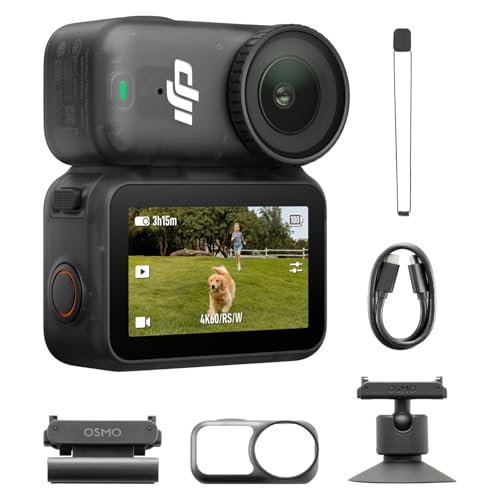
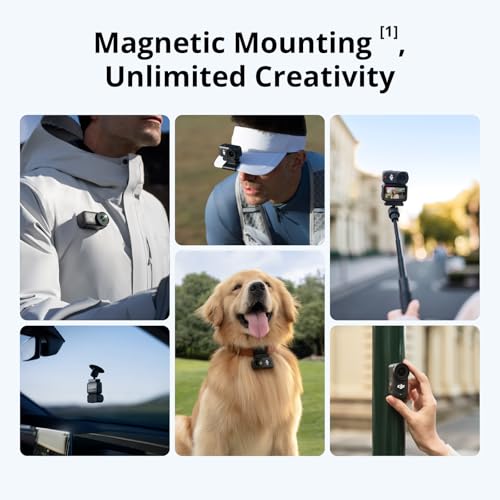
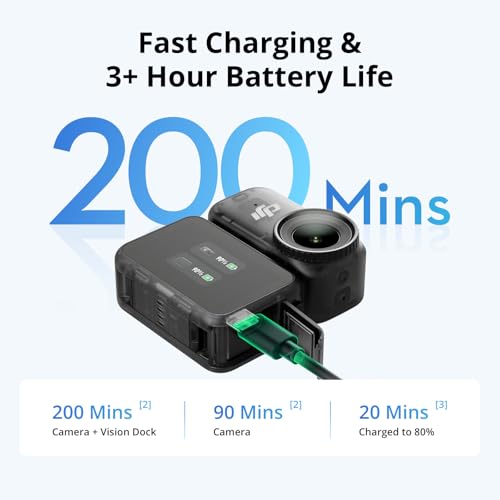
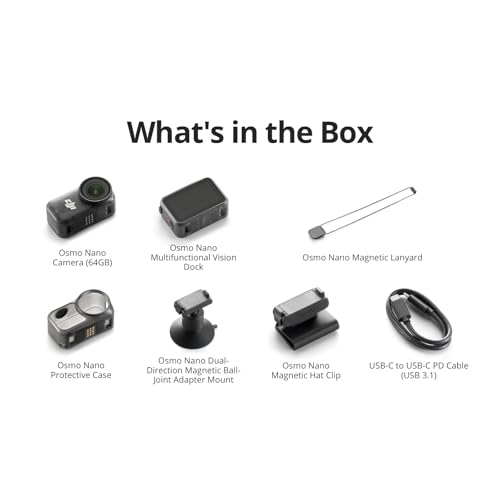
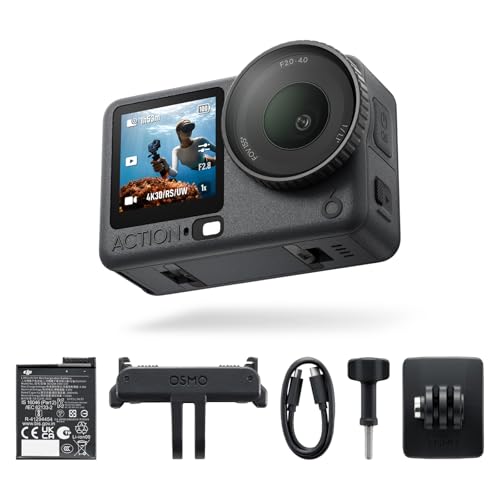
The DJI Osmo Nano is an ultra-lightweight, 52-gram modular action camera featuring a 1/1.3-inch CMOS sensor that captures 4K video at 60fps, 4K slow-motion at 120fps, and 35MP photos with 10-bit D-Log M color. Main characteristics include a 143° ultra-wide FOV f/2.8 lens, RockSteady 3.0 image stabilization, built-in 64GB or 128GB flash storage, and a dual-sided magnetic mounting system alongside a detachable 1.96-inch OLED touchscreen Multifunctional Vision Dock. Key advantages include an extended 200-minute battery life when docked, fast charging to 80% in 20 minutes, 10-meter native waterproofing for the standalone camera unit, and flexible hands-free POV shooting. However, notable drawbacks include limited continuous recording times per charge when undocked, a fixed-focus lens with a minimum distance constraint of 0.35 meters, and a tendency to run warm or overheat during high-bitrate recording.

Technical Specifications of DJI Osmo Nano

Technical Score

What it is: An assessment of the action camera's technical performance, covering eight key areas: video quality, image quality, stabilization, ruggedness, waterproofing, mounting options, connectivity, battery, and design.

When it matters: When you want to compare action cameras based on technical performance and available features.

Score components:

30.0%

8.3

Video

22.0%

7.7

Photo

14.0%

9.0

Ruggedness & Storage

13.0%

4.2

Battery

11.0%

7.7

Connectivity & Audio

10.0%

9.2

Display & Design

7.8
DJI Osmo Nano has a technical score of 7.75 points, which is higher than 88.6% of action cameras.
User score

What it is: A rating that combines user reviews and the total number of reviews received by the action camera.

When it matters: When real-world owner satisfaction and review volume matter to your decision.

Score components:

70.0%

9.0

User reviews

30.0%

10

Popularity

User score:
United Kingdom
amazon
4.4
(1859)
United States
Amazon_logo.png
4.5
(1876)

(Reviews last updated: July 2026)

9.3
DJI Osmo Nano has a user score of 9.3 points, which is higher than 89.8% of action cameras.
Popularity
What it is: An indicator based on the number of reviews received by the action camera.
When it matters: When you want to see which action cameras attract the most buyer attention and review activity.
10
DJI Osmo Nano has a popularity of 10 points, which is higher than 68.7% of products in this category.
Ratio quality/price

What it is: An indicator that combines the action camera's overall rating with its cost.

When it matters: When you want to know how much overall quality you get for the price.

Score components:

60.0%

8.1

Overall score

40.0%

9.2

Price

8.4
DJI Osmo Nano has a quality-to-price ratio of 8.4 points, which is higher than 91% of products in this category.
Video resolution
What it is: The listed recording format states maximum capture resolution and frame rate.
When it matters: When video quality matters for your footage.

Importance: HIGH

4K
DJI Osmo Nano records video at 4K, which is higher than that of 36.1% of action cameras.
Maximum 4K frame rate
What it is: Indicates the highest frame rate available when recording at 4K resolution.
When it matters: When you want detailed footage and still need enough frame rate for action or mild slow motion.

Importance: HIGH

60 fps
DJI Osmo Nano has a maximum 4K frame rate of 60 fps, which is higher than that of 67.6% of action cameras and equal to that of 19.6% of action cameras.
Maximum 1080p frame rate
What it is: Indicates the highest frame rate available when recording at 1080p resolution.
When it matters: When you want smoother slow motion or fast-action playback while staying at 1080p resolution.

Importance: MEDIUM

240 fps
DJI Osmo Nano has a maximum 1080p frame rate of 240 fps, which is higher than that of 85.6% of action cameras and equal to that of 14.4% of action cameras.
Video bitrate
What it is: The amount of video data recorded per second, which affects file size and potential recording quality.
When it matters: When you compare potential video quality and want fewer compression artifacts in demanding scenes.

Importance: HIGH

120 Mbps
DJI Osmo Nano has a video bitrate of 120 Mbps, which is higher than that of 77.8% of action cameras and equal to that of 10.3% of action cameras.
Video codecs
What it is: The video compression formats the camera can use when recording, affecting compatibility, efficiency, and workflow.
When it matters: When compatibility, editing performance, and file efficiency matter in the way you handle video.

Importance: LOW

H.265
DJI Osmo Nano supports the following video codecs: H.265. Its codec support is more advanced than that of 68.5% of action cameras.
Show more
Main camera megapixels
What it is: The resolution of the primary rear camera sensor, measured in millions of pixels (MP). Higher megapixels can capture more detail.
When it matters: When you want to capture high-resolution images that can be cropped or printed large.

Importance: HIGH

35 MP
DJI Osmo Nano has a main camera resolution of 35 MP, which is higher than that of 89.3% of action cameras.
Sensor size
What it is: The sensor format value describes the physical light-collecting area.
When it matters: When you shoot in more difficult lighting.

Importance: HIGH

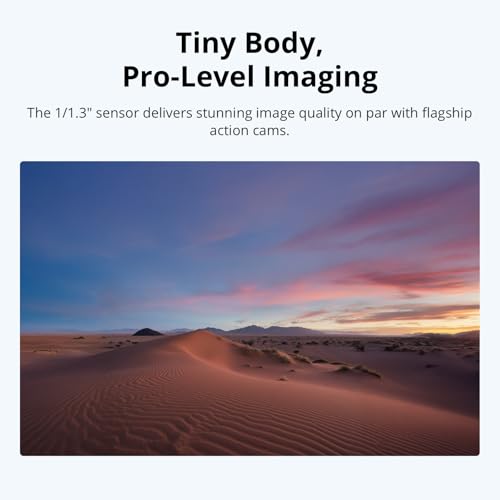
1/1.3"
DJI Osmo Nano has a sensor size of 1/1.3", which is larger than that of 86.5% of action cameras.
Main camera aperture
What it is: The size of the lens opening (f-stop) that controls light entry. A lower f-number indicates a wider aperture, allowing better low-light shots.
When it matters: When you want better low-light performance or a natural background blur effect.

Importance: HIGH

2.8 f
DJI Osmo Nano has a main camera aperture of 2.8 f, which is wider than that of 5.3% of action cameras and equal to that of 49.3% of action cameras.
Photo resolution
What it is: The maximum resolution of still photos captured by the camera, measured in megapixels.
When it matters: When you want more detail for cropping, large displays, or prints; higher photo resolution provides more pixels when image quality is otherwise comparable.

Importance: LOW

35 MP
DJI Osmo Nano captures photos at 35 MP, which is higher than 89.3% of action cameras.
Field of view
What it is: The field-of-view angle shows how wide the camera can capture in one frame.
When it matters: When you want a wider or tighter look from the camera.

Importance: MEDIUM

143 °
DJI Osmo Nano has a field of view of 143 °, which is narrower than that of 71.9% of action cameras.
Show more
Built-in display
What it is: Whether the action camera has its own built-in screen for framing, playback, or settings.
When it matters: When you want to frame shots, review clips, or change settings directly on the camera.

Importance: LOW

?
Screen size
What it is: The physical diagonal measurement of the display area, usually expressed in inches.
When it matters: When you want a bigger on-camera screen for framing, playback, or reading menus more easily.

Importance: MEDIUM

?
Touchscreen
What it is: Indicates that the display acts as an input device, recognizing touch gestures.
When it matters: When you interact with your device using intuitive taps and gestures.

Importance: LOW

?
Secondary screen
What it is: Indicates whether the camera includes an additional display separate from the main screen.
When it matters: When you vlog, frame yourself often, or need status info visible without rotating the camera.

Importance: LOW

?
Secondary screen resolution
What it is: States the pixel resolution of the additional display used for status information or framing.
When it matters: When you depend on the front or extra display for framing and want a clearer preview.

Importance: LOW

N/A
Show more
Wi-Fi connectivity
What it is: The ability to connect to wireless local area networks for internet access and local networking.
When it matters: When you want to save mobile data and connect to home or public networks.

Importance: LOW

yes
DJI Osmo Nano supports Wi-Fi connectivity. This feature is present on 92.5% of action cameras.
Wi-Fi version
What it is: The specific generation of Wi-Fi standards supported (e.g., Wi-Fi 6, Wi-Fi 7), determining maximum speed and efficiency.
When it matters: When you have a high-speed router and want faster downloads with less congestion.

Importance: LOW

802.11ax
DJI Osmo Nano supports 802.11ax, which is newer than the standard supported by 98.6% of action cameras and equal to the standard supported by 1.4% of action cameras.
Bluetooth version
What it is: The Bluetooth version the action camera supports for wireless accessories and companion-device pairing.
When it matters: When you want to pair the camera with wireless accessories or a companion device reliably.

Importance: LOW

5.1
DJI Osmo Nano supports Bluetooth version 5.1 which is newer than that supported by 89.3% of action cameras and equal to that of 2.5% of action cameras.
Vision Dock accessory uses Bluetooth 5.4.
GPS
What it is: Support for the Global Positioning System to determine the device's precise location.
When it matters: When you need accurate navigation for driving, walking, or exploring new places.

Importance: LOW

no
DJI Osmo Nano does not support GPS. 13.9% of action cameras include GPS functionality.
GPS data requires a phone or external accessory.
USB Type-C
What it is: A modern, reversible connector used for charging, data transfer, and sometimes audio or video output.
When it matters: When you want a reversible cable that handles charging, data, and accessories universally.

Importance: LOW

yes
DJI Osmo Nano features USB Type-C. This feature is present on 41.8% of action cameras.
Show more
Battery life
What it is: The typical endurance the watch can deliver on a full charge under the stated usage pattern.
When it matters: When you do not want to charge the watch too often.

Importance: HIGH

65 min
DJI Osmo Nano runs for 65 min per charge, which is shorter than the battery life of 83.5% of action cameras and equal to the battery life of 1.8% of action cameras.
Longer runtime is available with the Vision Dock.
Battery power
What it is: The battery capacity, usually measured in milliampere-hours (mAh).
When it matters: When you do not want to charge the watch too often.

Importance: MEDIUM

530 mAh
DJI Osmo Nano has a battery capacity of 530 mAh, which is lower than that of 94.3% of action cameras.
1300 mAh additional in the Vision Dock.
Charging time
What it is: The time the battery needs to recharge fully under supported conditions.
When it matters: When you want shorter breaks between charges.

Importance: MEDIUM

0.83 h
DJI Osmo Nano charges in 0.83 h, which is shorter than the charging time of 92.8% of action cameras.
Fast charging
What it is: Whether the camera supports faster-than-standard charging to reduce downtime between shoots.
When it matters: When you need to recharge quickly between shooting sessions, travel stops, or battery swaps.

Importance: LOW

yes
DJI Osmo Nano supports fast charging. This feature is present on 18.8% of action cameras.
Wireless charging
What it is: Whether the camera itself can charge wirelessly on a compatible charging surface or dock.
When it matters: When you want to top up the camera without plugging in a cable every time.

Importance: LOW

no
DJI Osmo Nano does not support wireless charging. 0.6% of action cameras support wireless charging.
Show more
Waterproof depth
What it is: The maximum depth of water the device is certified to withstand for a specific duration.
When it matters: When you film while swimming, snorkeling, or in heavy water exposure and need to know the camera's native underwater limit.

Importance: HIGH

10 m
DJI Osmo Nano is waterproof to 10 m, which is deeper than the waterproof depth of 67.1% of action cameras and equal to the waterproof depth of 23.8% of action cameras.
IP rating
What it is: A standardized protection code that shows how well the action camera resists dust and water ingress.
When it matters: When you shoot in rain, snow, dust, or around water and want to know how well the camera is sealed.

Importance: MEDIUM

IPX8
DJI Osmo Nano has an IP rating of IPX8, which is higher than that of 18.6% of action cameras and equal to that of 40% of action cameras.
Dock is IPX4.
Maximum operating temperature
What it is: The highest ambient temperature at which the watch is rated to operate normally.
When it matters: When you use the watch in heat, cold, or at high altitude.

Importance: LOW

45 °C
DJI Osmo Nano has a maximum operating temperature of 45 °C, which is higher than that of 74.5% of action cameras and equal to that of 19.7% of action cameras.
Minimum operating temperature
What it is: The lowest ambient temperature at which the watch is rated to operate normally.
When it matters: When you use the watch in heat, cold, or at high altitude.

Importance: LOW

-20 °C
DJI Osmo Nano has a minimum operating temperature of -20 °C, which is lower than that of 78.9% of action cameras and equal to that of 21.1% of action cameras.
External memory slot
What it is: A slot for expandable storage such as a memory card, if the watch provides one.
When it matters: When you want more room for apps, music, or offline data.

Importance: LOW

yes
DJI Osmo Nano includes an external memory slot. This feature is present on 95.2% of action cameras.
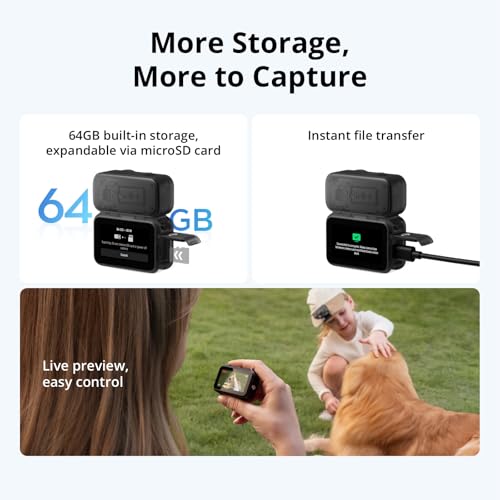
microSD slot is on the Vision Dock.
Show more

DJI Osmo Nano vs the average action camera

  • 23 MP higher main-camera resolution
    DJI Osmo Nano has a higher main action camera resolution than the average action camera (35 MP vs 12 MP). The average action camera has a resolution of 12 MP.
    What it is: The resolution of the primary rear camera sensor, measured in millions of pixels (MP). Higher megapixels can capture more detail.
    When it matters: When you want to capture high-resolution images that can be cropped or printed large.

    Importance: HIGH

    DJI Osmo Nano has a higher main action camera resolution than the average action camera (35 MP vs 12 MP). The average action camera has a resolution of 12 MP.35 MP vs 12 MP
  • Horizon leveling
    DJI Osmo Nano supports horizon leveling, the average action camera does not. 21% of action cameras support horizon leveling.
    Up to 30° only.
    What it is: Shows whether the camera can automatically keep the horizon visually level while the body tilts in use.
    When it matters: When the camera tilts often during skiing, biking, or running and you want a straighter final image.

    Importance: MEDIUM

    DJI Osmo Nano supports horizon leveling, the average action camera does not. 21% of action cameras support horizon leveling.
  • Higher sensor size
    DJI Osmo Nano has sensor size of 1/1.3", higher than the average action camera (1/2.3").
    What it is: The sensor format value describes the physical light-collecting area.
    When it matters: When you shoot in more difficult lighting.

    Importance: HIGH

    DJI Osmo Nano has sensor size of 1/1.3", higher than the average action camera (1/2.3").1/1.3" vs 1/2.3"
  • 2 bit higher color depth
    DJI Osmo Nano has a higher color depth than the average action camera (10 bit vs 8 bit). The average action camera records with a color depth of 8 bit.
    What it is: Describes how many bits are used to encode color information in a video signal or recording mode.
    When it matters: When you edit footage heavily and want cleaner gradients or more room for color correction.

    Importance: MEDIUM

    DJI Osmo Nano has a higher color depth than the average action camera (10 bit vs 8 bit). The average action camera records with a color depth of 8 bit.10 bit vs 8 bit
  • 9 m deeper waterproof depth
    DJI Osmo Nano has a higher waterproof depth rating than the average action camera (10 m vs 1 m). The average action camera has a waterproof depth rating of 1 m.
    What it is: The maximum depth of water the device is certified to withstand for a specific duration.
    When it matters: When you film while swimming, snorkeling, or in heavy water exposure and need to know the camera's native underwater limit.

    Importance: HIGH

    DJI Osmo Nano has a higher waterproof depth rating than the average action camera (10 m vs 1 m). The average action camera has a waterproof depth rating of 1 m.10 m vs 1 m
  • 2x higher video bitrate
    DJI Osmo Nano has a higher video bitrate than the average action camera (120 Mbps vs 60 Mbps). The average action camera has a video bitrate of 60 Mbps.
    What it is: The amount of video data recorded per second, which affects file size and potential recording quality.
    When it matters: When you compare potential video quality and want fewer compression artifacts in demanding scenes.

    Importance: HIGH

    DJI Osmo Nano has a higher video bitrate than the average action camera (120 Mbps vs 60 Mbps). The average action camera has a video bitrate of 60 Mbps.120 Mbps vs 60 Mbps
  • 180 fps higher 1080p frame rate
    DJI Osmo Nano has a higher 1080p frame rate than the average action camera (240 fps vs 60 fps). The average action camera reaches 60 fps at 1080p.
    What it is: Indicates the highest frame rate available when recording at 1080p resolution.
    When it matters: When you want smoother slow motion or fast-action playback while staying at 1080p resolution.

    Importance: MEDIUM

    DJI Osmo Nano has a higher 1080p frame rate than the average action camera (240 fps vs 60 fps). The average action camera reaches 60 fps at 1080p.240 fps vs 60 fps
  • 30 fps higher 4K frame rate
    DJI Osmo Nano has a higher 4K frame rate than the average action camera (60 fps vs 30 fps). The average action camera reaches 30 fps at 4K.
    What it is: Indicates the highest frame rate available when recording at 4K resolution.
    When it matters: When you want detailed footage and still need enough frame rate for action or mild slow motion.

    Importance: HIGH

    DJI Osmo Nano has a higher 4K frame rate than the average action camera (60 fps vs 30 fps). The average action camera reaches 30 fps at 4K.60 fps vs 30 fps
  • Horizon leveling
    DJI Osmo Nano supports horizon leveling, the average action camera does not. 21% of action cameras support horizon leveling.
  • 2 bit higher color depth
    DJI Osmo Nano has a higher color depth than the average action camera (10 bit vs 8 bit). The average action camera records with a color depth of 8 bit.
  • 2x higher video bitrate
    DJI Osmo Nano has a higher video bitrate than the average action camera (120 Mbps vs 60 Mbps). The average action camera has a video bitrate of 60 Mbps.
  • 180 fps higher 1080p frame rate
    DJI Osmo Nano has a higher 1080p frame rate than the average action camera (240 fps vs 60 fps). The average action camera reaches 60 fps at 1080p.
  • 30 fps higher 4K frame rate
    DJI Osmo Nano has a higher 4K frame rate than the average action camera (60 fps vs 30 fps). The average action camera reaches 30 fps at 4K.
  • 2 fps higher slow-motion frame rate
    DJI Osmo Nano has a higher slow-motion frame rate than the average action camera (240 fps vs 120 fps). The average action camera reaches 120 fps for slow motion.
  • More advanced log profiles
    DJI Osmo Nano offers more advanced log profiles than the average action camera (yes vs no). The average action camera offers no log profiles.
  • Better video codecs
    DJI Osmo Nano supports better video codecs than the average action camera (H.265 vs H.264). The average action camera supports H.264 video codecs.
  • 30 ° wider horizon lock angle
    DJI Osmo Nano has a higher horizon lock angle than the average action camera (30 ° vs 0 °). The average action camera supports a horizon lock angle of 0 °.
  • 23 MP higher main-camera resolution
    DJI Osmo Nano has a higher main action camera resolution than the average action camera (35 MP vs 12 MP). The average action camera has a resolution of 12 MP.
  • Higher sensor size
    DJI Osmo Nano has sensor size of 1/1.3", higher than the average action camera (1/2.3").
  • 2 MP higher photo resolution
    DJI Osmo Nano has a higher photo resolution than the average action camera (35 MP vs 12 MP). The average action camera captures 12 MP photos.
  • Supports RAW photo capture
    DJI Osmo Nano supports RAW photo capture, the average action camera does not. 35.1% of action cameras support RAW formats.
  • 19,200 ISO higher max ISO
    DJI Osmo Nano has a higher maximum ISO than the average action camera (25,600 ISO vs 6,400 ISO). The average action camera reaches a maximum ISO of 6,400 ISO.
  • Allows manual shutter speed
    DJI Osmo Nano allows manual shutter speed control, the average action camera does not. 48.1% of action cameras include this feature.
  • 54.4% lighter
    DJI Osmo Nano is lighter than the average action camera (52 g vs 114 g). The average action camera weighs 114 g.
  • 7 newer release date
    DJI Osmo Nano is newer than the average action camera (2,025 vs 2,018). The average action camera was released in 2,018.
  • 17 mm shorter
    DJI Osmo Nano is shorter than the average action camera (28 mm vs 45 mm). The average action camera has a height of 45 mm.
  • Newer Wi-Fi version
    DJI Osmo Nano supports a newer Wi-Fi version than the average action camera (802.11ax vs 802.11b/g/n). The average action camera uses Wi-Fi 802.11b/g/n.
  • Has USB Type-C
    DJI Osmo Nano has a USB Type-C port, the average action camera does not. 42.2% of action cameras use USB-C ports.
  • Newer USB version
    DJI Osmo Nano supports a newer USB version than the average action camera (USB 3.2 Gen 1 vs USB 2.0). The average action camera uses USB 2.0.
  • Supports voice commands
    DJI Osmo Nano supports voice commands, the average action camera does not. 30.5% of action cameras include voice command functionality.
  • Supports fast charging
    DJI Osmo Nano supports fast charging, the average action camera does not. 19.3% of action cameras support fast charging.
  • 1.17 h shorter charging time
    DJI Osmo Nano has a lower charging time than the average action camera (0.8 h vs 2 h). The average action camera takes 2 h to charge.
  • 9 m deeper waterproof depth
    DJI Osmo Nano has a higher waterproof depth rating than the average action camera (10 m vs 1 m). The average action camera has a waterproof depth rating of 1 m.
  • 872 GB larger microSD limit
    DJI Osmo Nano has a higher maximum microSD capacity than the average action camera (1,000 GB vs 128 GB). The average action camera supports microSD cards up to 128 GB.
  • Replaceable lens cover
    DJI Osmo Nano has a replaceable lens cover, the average action camera does not. 31.5% of action cameras have a replaceable lens cover.
  • 5 °C higher max operating temp
    DJI Osmo Nano has a higher maximum operating temperature than the average action camera (45 °C vs 40 °C). The average action camera reaches a maximum operating temperature of 40 °C.
  • Better IP rating
    DJI Osmo Nano has a higher IP rating than the average action camera (IPX8 vs IPX4). The average action camera has an IP rating of IPX4.
  • Lower video resolution
    DJI Osmo Nano records at 4K, a lower video resolution than the average action camera (5.3K).
  • 23 ° narrower field of view
    DJI Osmo Nano has a lower field of view than the average action camera (143 ° vs 166 °). The average action camera offers a field of view of 166 °.
  • 670 mAh less battery capacity
    DJI Osmo Nano has a lower battery capacity than the average action camera (530 mAh vs 1,200 mAh). The average action camera has a battery capacity of 1,200 mAh.
    1,300 mAh additional in the Vision Dock.
  • 25 min shorter battery life
    DJI Osmo Nano has shorter battery life than the average action camera (65 min vs 90 min). The average action camera offers 90 min of battery life.
    Longer runtime is available with the Vision Dock.
  • No removable battery
    DJI Osmo Nano does not have a removable battery, while the average action camera does.
  • Lower video resolution
    DJI Osmo Nano records at 4K, a lower video resolution than the average action camera (5.3K).
    What it is: The listed recording format states maximum capture resolution and frame rate.
    When it matters: When video quality matters for your footage.

    Importance: HIGH

    DJI Osmo Nano records at 4K, a lower video resolution than the average action camera (5.3K).4K vs 5.3K
  • 670 mAh less battery capacity
    DJI Osmo Nano has a lower battery capacity than the average action camera (530 mAh vs 1,200 mAh). The average action camera has a battery capacity of 1,200 mAh.
    1,300 mAh additional in the Vision Dock.
    What it is: The battery capacity, usually measured in milliampere-hours (mAh).
    When it matters: When you do not want to charge the watch too often.

    Importance: MEDIUM

    DJI Osmo Nano has a lower battery capacity than the average action camera (530 mAh vs 1,200 mAh). The average action camera has a battery capacity of 1,200 mAh.530 mAh vs 1200 mAh
  • 25 min shorter battery life
    DJI Osmo Nano has shorter battery life than the average action camera (65 min vs 90 min). The average action camera offers 90 min of battery life.
    Longer runtime is available with the Vision Dock.
    What it is: The typical endurance the watch can deliver on a full charge under the stated usage pattern.
    When it matters: When you do not want to charge the watch too often.

    Importance: HIGH

    DJI Osmo Nano has shorter battery life than the average action camera (65 min vs 90 min). The average action camera offers 90 min of battery life.65 min vs 90 min
  • No removable battery
    DJI Osmo Nano does not have a removable battery, while the average action camera does.
    What it is: Indicates whether the flight battery can be removed and swapped by the user.
    When it matters: When you want to swap batteries quickly between flights.

    Importance: LOW

    DJI Osmo Nano does not have a removable battery, while the average action camera does.
  • 23 ° narrower field of view
    DJI Osmo Nano has a lower field of view than the average action camera (143 ° vs 166 °). The average action camera offers a field of view of 166 °.
    What it is: The field-of-view angle shows how wide the camera can capture in one frame.
    When it matters: When you want a wider or tighter look from the camera.

    Importance: MEDIUM

    DJI Osmo Nano has a lower field of view than the average action camera (143 ° vs 166 °). The average action camera offers a field of view of 166 °.143 ° vs 166 °

Graphic comparison of DJI Osmo Nano and

Attribute category
Attribute
No results found

Third-party reviews

United Kingdom
United States

(Reviews last updated: July 2026)

What customers like about DJI Osmo Nano?

  • Extremely compact, pocketable design weighing just 52 grams
  • Excellent 4K video quality with sharp details and vibrant 10-bit color
  • Strong RockSteady 3.0 stabilization that handles active movement well
  • Versatile magnetic mounting system for discreet, creative POV angles
  • Fast charging capabilities, reaching an 80% charge in about 20 minutes
  • Convenient built-in storage paired with an SD card slot on the dock
  • Wireless video monitoring and camera control via the modular Vision Dock

What customers dislike about DJI Osmo Nano?

  • Short standalone battery life from the camera module without the dock
  • The camera module has a non-removable, non-replaceable battery
  • Noticeable image noise and drops in stabilization quality in low light
  • The Multifunctional Vision Dock is not waterproof
  • Small OLED touchscreen can be clunky, fiddly, and prone to accidental mode switches
  • The camera module lacks its own USB-C port or display for independent settings adjustment
  • No live preview on the dock when the camera module is physically detached
  • The camera module can overheat if left recording while entirely stationary

Expert reviews

T
techradar.com
23/09/2025

The DJI Osmo Nano is a highly versatile, modular action camera featuring a lightweight 52g standalone camera unit paired with a Multifunctional Vision Dock. Equipped with a 1/1.3-inch CMOS sensor, it captures exceptionally stabilized 4K video using RockSteady 3.0 and HorizonBalancing technology. Designed for serious content creators, the camera sets itself apart by supporting...Read more

E
expertreviews.co.uk
12/12/2025

in english language, be very specific, mention pros and cons inside You sent: 1 tab and said: 2 paragraphs summary of this review in english language, be very specific, mention pros and cons inside DJI Osmo Nano review: Different and thoroughly brilliant | Expert Reviews 2 paragraphs summary of this review in english language, be very specific, mention pros and cons inside

O
oscarliang.com
01/10/2025

The Oscar Liang review of the DJI Osmo Nano highlights the thumb-sized, 4K action camera as a major upgrade in video quality for FPV drones, featuring excellent 10-bit D-Log M color, superior exposure handling, and a flexible, magnetic, all-in-one design. The camera delivers impressive dynamic range and cleaner images compared to traditional FPV gear. However, the, review notes that...Read more

M
maisondudrone.com
22/10/2025

The Maison du Drone review highlights the DJI Osmo Nano as a versatile, 52g modular action camera featuring a 1/1.3-inch sensor that delivers impressive 4K/60fps video and 10-bit D-Log M color. Key strengths include the detachable Multifunctional Vision Dock, strong RockSteady 3.0 stabilization, and seamless integration for POV, vlogging, and magnetic mounting scenarios. Conversely,...Read more

B
bennetts.co.uk
23/09/2025

The DJI Osmo Nano is a highly competitive, budget-friendly mini action camera that excels in ergonomics and battery performance for motorcyclists. Priced aggressively to undercut its direct rival, the Insta360 GO Ultra, it features a squat, compact form factor that is ideal for mounting horizontally on motorcycle helmets, baseball caps, and various sports gear. Its core pros include...Read more

M
manofmany.com
26/09/2025

The DJI Osmo Nano is an ultra-compact, 52-gram micro action camera priced from AUD$529 that features a 1/1.3-inch sensor capable of shooting 4K/60fps and 4K/120fps slow-motion video. It delivers an impressive 13.5 stops of dynamic range, supports 10-bit or D-Log M colour profiles, and includes a detachable Multifunctional Vision Dock with an OLED HD touchscreen that functions as a...Read more

Z
zdnet.com
25/04/2026

The DJI Osmo Nano is an ultra-compact, 1.8-ounce 4K POV and vlogging camera designed for maximum convenience and portability. Despite its thumb-sized dimensions, it delivers impressive video quality via a 1/1.3-inch sensor with 13.5 stops of dynamic range, capable of shooting 4K footage at up to 120fps in a pro-grade 10-bit D-Log M profile. The camera stands out for its thoughtful...Read more

H
helicomicro.com
23/09/2025

The DJI Osmo Nano is highlighted as a highly portable 4K/60fps action camera, ideal for active, on-the-go scenarios with its 360-degree, non-square sensor design that allows for easy portrait or landscape orientation. Key strengths include its effective electronic image stabilization, robust battery, and a smart, card-swapping dock for quick, off-grid file transfers. While...Read more

D
dji.com
15/07/2026

in english language, be very specific, mention pros and cons inside You sent: 1 tab and said: 2 paragraphs summary of this review in english language, be very specific, mention pros and cons inside Osmo Nano - Own the Moment - DJI United States 2 paragraphs summary of this review in english language, be very specific, mention pros and cons inside

Video reviews

Compare DJI Osmo Nano with

VS
VS

Compare