Are DJI action cameras good?
DJI action cameras are good overall, with an average overall score of 8.1, ranking #1 among action camera brands.
DJI is strongest for buyers who value dependable stabilization, high-frame-rate 4K, practical battery systems, and tight integration with mounts, microphones, remotes, and the DJI Mimo app. The main caution is that the DJI range includes rugged Osmo Action cameras, delicate gimbal-based Pocket cameras, and a 360 model, so waterproofing, mounting, and durability vary sharply between families and must be matched to the intended use.
Who should consider buying DJI action cameras?
The types of users who should consider DJI action cameras are as follows:
- Riders and outdoor athletes: Osmo Action models are a good fit for helmet, bike, ski, and water-sports filming because they are rugged, waterproof, and well stabilized.
- Travelers and families: Osmo Action suits rough or wet trips, while Osmo Pocket is better for smooth walking footage and everyday clips in controlled conditions.
- Vloggers and solo creators: Front-facing controls, tracking on supported models, and wireless-microphone compatibility make self-recording easier.
- Handheld filmmakers and interview shooters: Osmo Pocket provides smooth gimbal movement and face tracking, although its moving mechanism requires careful handling.
- 360-video creators: Osmo 360 suits users who want to capture the full scene, reframe later, and produce invisible-selfie-stick shots.
- Existing DJI users: Owners of compatible DJI microphones, remotes, or mounts may benefit from an easier workflow, but should confirm exact model compatibility.
How do DJI action cameras differ from other action cameras?
DJI action cameras differ from many rivals through their strong stabilization, fast high-resolution modes, wireless microphone integration, and a product range that spans rugged, gimbal, and 360-degree designs.
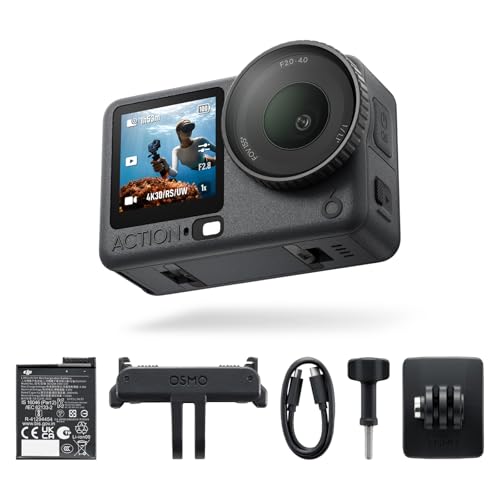
The Osmo Action line competes directly with conventional rugged action cameras. It emphasizes RockSteady electronic stabilization, horizon control, front-and-rear screens, deep native waterproofing, and cold-resistant removable batteries.
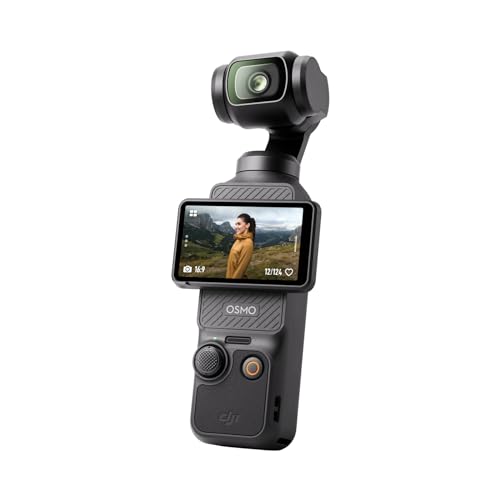
Osmo Pocket models use a motorized three-axis gimbal instead of relying only on electronic correction. This produces smooth, deliberate camera movement and a narrower filming style, but the mechanism is more exposed and not intended for the same impacts or underwater use as an Action model.
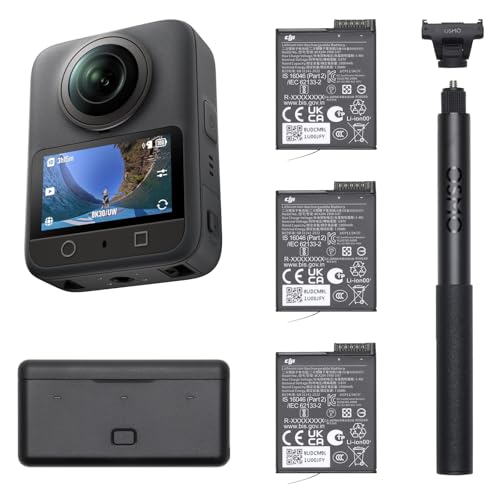
Osmo 360 records the full scene for later reframing. It can hide a compatible selfie stick and export conventional flat video, though 360 files require more storage, processing, and editing than ordinary single-lens footage.
Across the range, DJI also integrates closely with DJI Mimo, compatible wireless microphones, remotes, and magnetic or quick-release accessories. That ecosystem is convenient, but buyers should verify phone compatibility, adapter requirements, waterproofing with accessories attached, and whether the chosen model uses the same mounts or batteries as existing equipment.
What are the main series of DJI action cameras?
The main series of DJI action cameras are as follows:
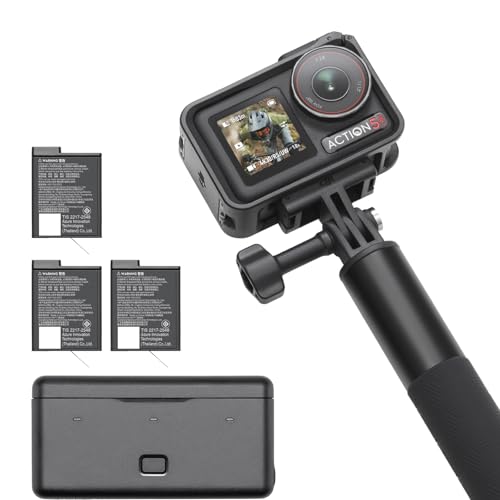
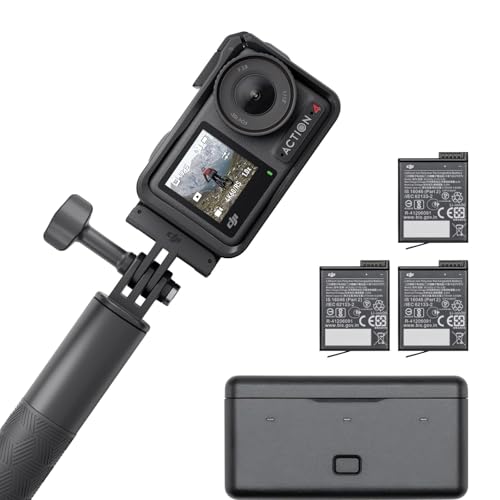
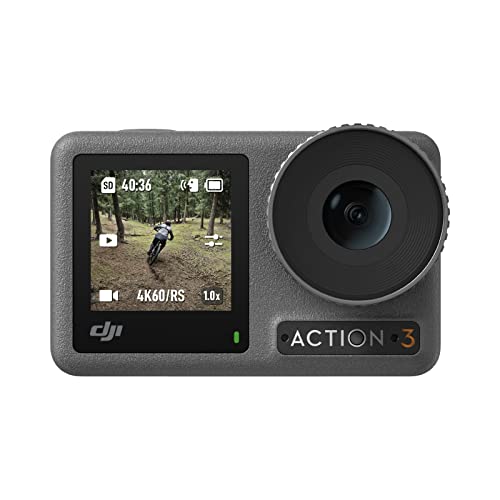
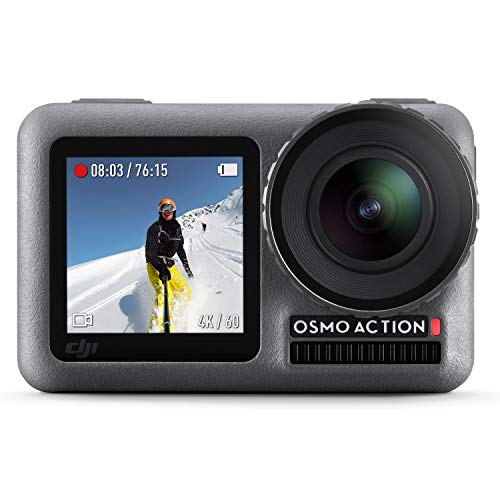
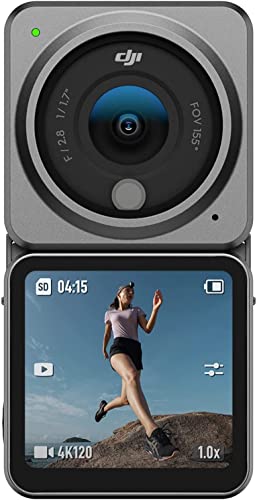
- Osmo Action: This is DJI's rugged conventional action-camera line, including the compact modular Action 2 and the more traditional Action 3, 4, and 5 generations. Recent models combine high-frame-rate 4K, RockSteady stabilization, horizon control, front-and-rear touchscreens, removable batteries, and native waterproofing. They are the best fit for helmets, vehicles, skiing, cycling, and water sports, although strong electronic stabilization crops the field of view and performs less naturally in very low light.
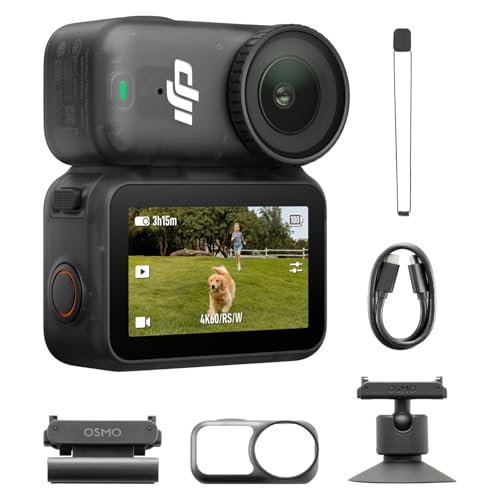
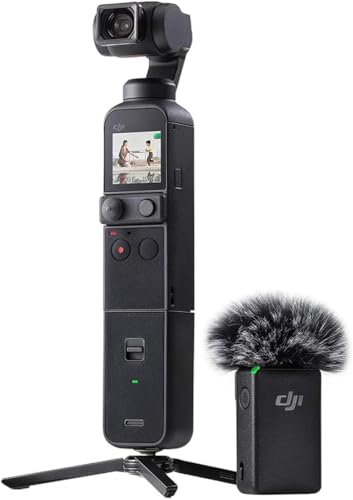
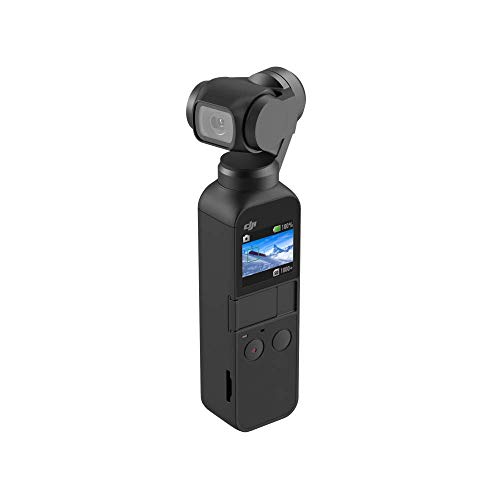
- Osmo Pocket: The Pocket series, including Pocket 2 and Osmo Pocket 3, uses a motorized three-axis gimbal instead of relying mainly on electronic stabilization. Pocket 3 adds a larger 1-inch sensor, rotating touchscreen, subject tracking, and strong wireless-microphone integration, making it especially suitable for vlogging, walking tours, interviews, and smooth handheld sequences. The exposed gimbal is not designed for impacts, rough helmet mounts, or underwater use, so this is a creator camera rather than a rugged sports camera.
- Osmo 360: The Osmo 360 series uses lenses on both sides to record the full scene, allowing the viewpoint, aspect ratio, and camera movement to be chosen after filming. It supports high-resolution 360 capture, invisible-selfie-stick shots, horizon leveling, and conventional flat-video exports from the same recording. This flexibility is ideal for travel, motorcycles, skiing, and solo filming, but the protruding lenses need protection and the footage requires more storage, processing power, and editing time.
How much do DJI action cameras cost?
DJI action cameras commonly cost about £220-£430, with most rugged Osmo Action and handheld Pocket models around £280-£370.
At roughly £220-£280, buyers usually find older Osmo Action generations, compact modules, or discounted models. They can still provide strong 4K and stabilization, but battery compatibility, sensor size, waterproofing, and long-term firmware support vary by generation.
The £300-£370 range contains many of the strongest current options. This level typically adds larger sensors, 4K/120 recording, longer batteries, improved horizon control, better low-light processing, or a more capable gimbal and tracking system.
Around £390-£430, DJI offers specialist designs such as high-resolution 360 capture or premium Pocket configurations. Allow another £40-£170 for batteries, magnetic or helmet mounts, a wireless microphone, protective cases, and a fast high-capacity memory card; the required accessories differ substantially between Action, Pocket, and 360 models.
What should you consider while choosing DJI action cameras?
The main points to consider while choosing DJI action cameras are as follows:
- Choose the correct DJI family: Use Osmo Action for rugged mounts, water, and impact-prone sports; Osmo Pocket for gimbal-stabilized handheld filming; and Osmo 360 for full-scene capture and later reframing. These families are not interchangeable in durability, mounting, editing, or battery systems.
- Sensor, resolution, and frame rates: Compare sensor format, native video resolution, maximum 4K frame rate, readout speed, bitrate, and 8-bit versus 10-bit recording. Confirm the exact combinations available because 4K/120, HDR, D-Log M, the widest field of view, and stabilization may not all work together.
- Stabilization type and crop: Check RockSteady strength, horizon-leveling angle, full horizon lock, and field-of-view loss on Action models. Pocket models rely on a mechanical gimbal with movement limits and calibration needs, while 360 models stabilize after stitching; each method behaves differently during impacts, low light, and rapid rotation.
- Battery, charging, and heat: Compare runtime with stabilization, both screens, wireless microphones, GPS, and high-frame-rate recording active. Verify removable-battery compatibility, USB-C recording, charging speed, cold-weather behavior, and overheating limits, because batteries and thermal performance differ between DJI generations.
- Waterproofing and physical durability: Check the native depth rating rather than a housing-only figure and inspect port-door seals, replaceable lens protection, and operating-temperature limits. Osmo Pocket gimbals are not substitutes for sealed Action bodies, and attached microphones or open power ports can reduce weather resistance.
- Mount and accessory compatibility: Confirm whether the camera uses magnetic quick releases, standard action-camera fingers, a tripod thread, a Pocket handle, or a 360 selfie stick. Check adapter strength, tether points, door clearance, and compatibility with existing mounts; similar-looking DJI accessories may fit only selected models or generations.
- Audio and wireless microphones: Review built-in microphone quality, wind reduction, channel count, and direct compatibility with DJI Mic systems. Verify whether multiple transmitters, Bluetooth audio, external adapters, and charging can work together and whether an attached receiver affects waterproofing or access to the USB-C port.
- Storage, codec, and editing workload: Check maximum microSD capacity, approved speed class, H.264 or H.265 support, proxy generation, and file sizes. High-bitrate 4K/120 and 360 footage require faster cards, more storage, stronger computers, and additional export time compared with ordinary 4K/30 clips.
- Screens, controls, and DJI Mimo: Test touch response, front-screen control, physical buttons, voice operation, remote compatibility, Wi-Fi transfer speed, and phone support. Some setup, firmware, tracking, or export functions may depend on DJI Mimo, so verify compatibility with the intended Android or iOS device.
- Generation, support, and total price: Compare the exact model year, firmware history, included accessories, warranty, and availability of genuine batteries and replacement parts. Add the cost of the correct mount, protective parts, microphone, spare batteries, and memory card; a lower camera price can disappear if the existing accessory system is incompatible.