Scored using Wi-Fi extenders Methodology v1.0
Wi-Fi extenders Methodology v1.0
Mathematical & Unbiased Scoring
Products in this category are evaluated mathematically under Frontumo Wi-Fi extenders Methodology v1.0 using verified laboratory benchmarks, technical specifications, and authentic consumer ratings with 0% commercial bias.
Explore Wi-Fi extenders Methodology v1.0

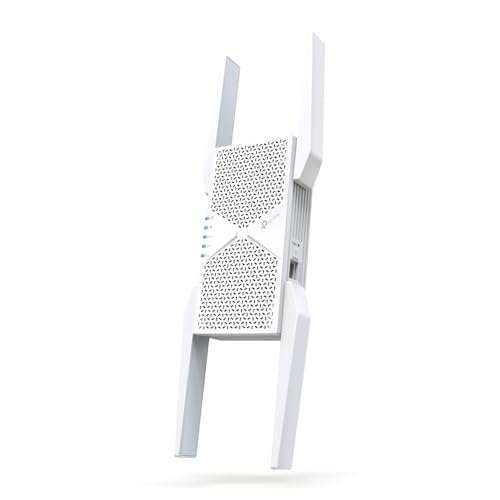
TP-Link RE815XE Review | 63 Data compared

Avg. price:~£110Wi-Fi version:Wi-Fi 6E (802.11ax)Wi-Fi speed:5400 MbpsCoverage area:260 m²

TP-Link RE815XE Review: Compare 63 technical specifications and user reviews to see how this product ranks in the Wi-Fi extenders category and whether it is worth buying.

8.8

Overall score

Score
8.8/ 10
✕
What it is
An overall evaluation of the Wi-Fi extender's quality, based on technical analyses and user reviews.
When it matters
When you need a quick reference to spot the best Wi‑Fi extenders overall.
Score distribution
â–¼
<55-66-77-88-99-10
Score components

80%

8.8

Technical score

20%

?

User score

★Better than 93% of wi-fi-extenders
8.8

Technical score

Technical score
8.8/ 10
✕
What it is
An assessment of technical performance for products in the Wi-Fi extenders category across these key areas: Wi-Fi Performance, Network & Security, Ports, Setup & Management, Hardware & Deployment.
When it matters
When you want to compare Wi‑Fi extenders based on speed, coverage, ports, and wireless features.
Score distribution
â–¼
<55-66-77-88-99-10
Score components

40%

9.8

Wi-Fi Performance

30%

8.3

Network & Security

12%

10

Setup & Management

10%

6.3

Hardware & Deployment

8%

7.8

Ports

★Better than 91% of wi-fi-extenders
?

User score

User score
8.0/ 10
✕
What it is
A rating that combines user reviews and the total number of reviews received by the Wi-Fi extender.
When it matters
When you want to know how a Wi‑Fi extender performs in daily use and how reliably it maintains a stable connection over time according to user feedback.
Score distribution
â–¼
<55-66-77-88-99-10
Score components

70%

?

User ratings

30%

?

Number of reviews

  • No image
No image

Best prices

    N/A~ £110
Loading...
Loading category ranking...

Technical Specifications of Wi-Fi extender TP-Link RE815XE

Technical score
Technical score
8.8/ 10
✕
What it is
An assessment of technical performance for products in the Wi-Fi extenders category across these key areas: Wi-Fi Performance, Network & Security, Ports, Setup & Management, Hardware & Deployment.
When it matters
When you want to compare Wi‑Fi extenders based on speed, coverage, ports, and wireless features.
Score distribution
â–¼
<55-66-77-88-99-10
Score components:

40%

9.8

Wi-Fi Performance

30%

8.3

Network & Security

12%

10

Setup & Management

10%

6.3

Hardware & Deployment

8%

7.8

Ports

8.8
User score
User score
8.0/ 10
✕
What it is
A rating that combines user reviews and the total number of reviews received by the Wi-Fi extender.
When it matters
When you want to know how a Wi‑Fi extender performs in daily use and how reliably it maintains a stable connection over time according to user feedback.
Score distribution
â–¼
<55-66-77-88-99-10
Score components

70%

?

User ratings

30%

?

Number of reviews

?
Popularity
Popularity
1.0/ 10
✕
What it is
An indicator based on the number of reviews received by the Wi-Fi extender.
When it matters
When you prefer to buy a Wi‑Fi extender that has already been chosen and reviewed by many other users.
Score distribution
â–¼
<55-66-77-88-99-10
Popularity:
TP-Link RE815XE has a popularity score of 1 point, which is lower than 70.6% of Wi-Fi extenders.
1.0
Value for money
Value for money
9.2/ 10
✕
What it is
An indicator that combines the Wi-Fi extender's overall rating with its cost.
When it matters
When you are looking for a Wi‑Fi extender with a good balance between performance and price.
Score distribution
â–¼
<55-66-77-88-99-10
Score components:

60%

8.8

Overall score

40%

9.9

Price

9.2
Wi-Fi version
Wi-Fi 6E (802.11ax)
Wi-Fi version
Wi-Fi 6E (802.11ax)
This wi-fi extender supports Wi-Fi 6E (802.11ax), more advanced than 92.2% of Wi-Fi extenders.
Wi-Fi bands
Tri-band
Wi-Fi bands
Tri-band
This wi-fi extender supports Tri-band, more versatile than 86.3% of Wi-Fi extenders and equal to 13.7% of Wi-Fi extenders.
6 GHz band support
yes
6 GHz band support
yes
This wi-fi extender supports the 6 GHz band. 95.1% of Wi-Fi extenders support the 6 GHz band.
Includes 6 GHz band.
Wi-Fi speed
5,400 Mbps
Wi-Fi speed
5,400 Mbps
This wi-fi extender reaches 5,400 Mbps Wi-Fi speed, faster than 91.2% of Wi-Fi extenders and equal to 1% of Wi-Fi extenders.
Max speed 2.4 GHz
574 Mbps
Max speed 2.4 GHz
574 Mbps
This wi-fi extender reaches 574 Mbps on 2.4 GHz, faster than 52.9% of Wi-Fi extenders and equal to 21.6% of Wi-Fi extenders.
Show more
Ethernet backhaul
yes
Ethernet backhaul
yes
This wi-fi extender supports Ethernet backhaul. 49.5% of Wi-Fi extenders support Ethernet backhaul.
Mesh compatibility
EasyMesh
Mesh standard
EasyMesh
Roaming feature
yes
Roaming feature
yes
This wi-fi extender supports roaming. 17.7% of Wi-Fi extenders support roaming.
Requires mesh system.
802.11k support
yes
802.11k support
yes
This wi-fi extender supports 802.11k. 24% of Wi-Fi extenders support 802.11k.
Requires OneMesh/EasyMesh.
Show more
N. of LAN ports
1
N. of LAN ports
1
This wi-fi extender has 1 LAN port/s, more than 9.8% of Wi-Fi extenders and equal to 74.5% of Wi-Fi extenders.
Ethernet port speed
1 Gbps
Ethernet port speed
1 Gbps
This wi-fi extender offers 1 Gbps Ethernet speed, faster than 25.5% of Wi-Fi extenders and equal to 63.7% of Wi-Fi extenders.
N. of USB ports
0
N. of USB ports
0
This wi-fi extender has 0 USB port/s, fewer than 2.9% of Wi-Fi extenders and equal to 97.1% of Wi-Fi extenders.
PoE standard
N/A
Dedicated smartphone app
yes
Dedicated smartphone app
yes
This wi-fi extender comes with a dedicated smartphone app. 15.7% of Wi-Fi extenders come with a dedicated smartphone app.
TP-Link Tether app.
Web UI management
yes
Web UI management
yes
This wi-fi extender has a web management interface. 2% of Wi-Fi extenders have a web management interface.
Web UI at tplinkrepeater.net.
Automatic firmware updates
yes
Automatic firmware updates
yes
This wi-fi extender has automatic firmware updates. 54.9% of Wi-Fi extenders have automatic firmware updates.
Auto-update via TP-Link app.
LED control
yes
LED control
yes
This wi-fi extender has LED control. 14.7% of Wi-Fi extenders have LED control.
Night Mode for LEDs.
Buttons present
wps, reset
Show more
Mounting type
wall-plug
Portable design
yes
Portable design
yes
This wi-fi extender has a portable design. 34.3% of Wi-Fi extenders have a portable design.
Height
348.2 mm
Height
348.2 mm
This wi-fi extender is 348.2 mm tall, taller than 99% of Wi-Fi extenders and equal to 1% of Wi-Fi extenders.
Width
106.6 mm
Width
106.6 mm
This wi-fi extender is 106.6 mm wide, wider than 70.6% of Wi-Fi extenders and equal to 1% of Wi-Fi extenders.
Thickness
39.7 mm
Thickness
39.7 mm
This wi-fi extender is 39.7 mm thick, thinner than 66.7% of Wi-Fi extenders.
Show more

TP-Link RE815XE vs the average Wi-Fi extender

246810TotalWi-Fi PerformanceNetwork & SecurityPortsSetup & ManagementHardware & Deployment
  • Modern Wi-Fi standard
    Wi-Fi version
    Wi-Fi 6E (802.11ax)
    This wi-fi extender supports a more advanced Wi-Fi version than the average Wi-Fi extender (Wi-Fi 6E (802.11ax) vs Wi-Fi 5 (802.11ac)). The average Wi-Fi extender supports Wi-Fi Wi-Fi 5 (802.11ac).
    Wi-Fi 6E (802.11ax) vs Wi-Fi 5 (802.11ac)
  • 3.04x faster Wi-Fi speed
    Wi-Fi speed
    5,400 Mbps
    This wi-fi extender reaches faster Wi-Fi speed than the average Wi-Fi extender (5400 Mbps vs 1775 Mbps). The average Wi-Fi extender reaches 1775 Mbps Wi-Fi speed.
    5,400 Mbps vs 1,775 Mbps
  • 73.3% larger coverage area
    Coverage area
    260 m²
    This wi-fi extender covers a larger area than the average Wi-Fi extender (260 m² vs 150 m²). The average Wi-Fi extender covers 150 m².
    260 m² vs 150 m²
  • Multi-band support
    Wi-Fi bands
    Tri-band
    This wi-fi extender supports more versatile Wi-Fi bands than the average Wi-Fi extender (Tri-band vs Dual-band). The average Wi-Fi extender supports Dual-band Wi-Fi bands.
    Tri-band vs Dual-band
  • 7 dBm stronger transmit power
    Transmit power
    30 dBm
    This wi-fi extender has higher transmit power than the average Wi-Fi extender (30 dBm vs 23 dBm). The average Wi-Fi extender has 23 dBm of transmit power.
    5 GHz maximum.
    30 dBm vs 23 dBm
  • Supports OFDMA
    OFDMA support
    yes
    This wi-fi extender supports OFDMA, while the average Wi-Fi extender does not. 45.6% of Wi-Fi extenders support OFDMA.
  • 65 more connected devices
    Max connected devices
    96
    This wi-fi extender supports more connected devices than the average Wi-Fi extender (96 vs 31). The average Wi-Fi extender supports up to 31 connected devices.
    96 vs 31
  • 2 more antennas
    Wi-Fi speed
    4 Mbps
    This wi-fi extender has more antennas than the average Wi-Fi extender (4 vs 2). The average Wi-Fi extender has 2 antennas.
    4 vs 2
  • 14% better value for money
    TP-Link RE815XE has a higher value-for-money score than the average Wi-Fi extender (9.18 vs 8.1).
    9.18 vs 8.05
  • Modern Wi-Fi standard
    Wi-Fi version
    Wi-Fi 6E (802.11ax)
    This wi-fi extender supports a more advanced Wi-Fi version than the average Wi-Fi extender (Wi-Fi 6E (802.11ax) vs Wi-Fi 5 (802.11ac)). The average Wi-Fi extender supports Wi-Fi Wi-Fi 5 (802.11ac).
    Wi-Fi 6E (802.11ax) vs Wi-Fi 5 (802.11ac)
  • 3.04x faster Wi-Fi speed
    Wi-Fi speed
    5,400 Mbps
    This wi-fi extender reaches faster Wi-Fi speed than the average Wi-Fi extender (5400 Mbps vs 1775 Mbps). The average Wi-Fi extender reaches 1775 Mbps Wi-Fi speed.
    5,400 Mbps vs 1,775 Mbps
  • 73.3% larger coverage area
    Coverage area
    260 m²
    This wi-fi extender covers a larger area than the average Wi-Fi extender (260 m² vs 150 m²). The average Wi-Fi extender covers 150 m².
    260 m² vs 150 m²
  • Multi-band support
    Wi-Fi bands
    Tri-band
    This wi-fi extender supports more versatile Wi-Fi bands than the average Wi-Fi extender (Tri-band vs Dual-band). The average Wi-Fi extender supports Dual-band Wi-Fi bands.
    Tri-band vs Dual-band
  • 7 dBm stronger transmit power
    Transmit power
    30 dBm
    This wi-fi extender has higher transmit power than the average Wi-Fi extender (30 dBm vs 23 dBm). The average Wi-Fi extender has 23 dBm of transmit power.
    5 GHz maximum.
    30 dBm vs 23 dBm
  • Supports OFDMA
    OFDMA support
    yes
    This wi-fi extender supports OFDMA, while the average Wi-Fi extender does not. 45.6% of Wi-Fi extenders support OFDMA.
  • 65 more connected devices
    Max connected devices
    96
    This wi-fi extender supports more connected devices than the average Wi-Fi extender (96 vs 31). The average Wi-Fi extender supports up to 31 connected devices.
    96 vs 31
  • 2 more antennas
    Wi-Fi speed
    4 Mbps
    This wi-fi extender has more antennas than the average Wi-Fi extender (4 vs 2). The average Wi-Fi extender has 2 antennas.
    4 vs 2
  • 6 GHz band support
    6 GHz band support
    yes
    This wi-fi extender supports the 6 GHz band, while the average Wi-Fi extender does not. 5.8% of Wi-Fi extenders support the 6 GHz band.
    Includes 6 GHz band.
  • Wide channel support
    Channel width support
    160 + 80 + 40 + 20
    This wi-fi extender supports broader channel widths than the average Wi-Fi extender (160 + 80 + 40 + 20 vs 80 + 40 + 20). The average Wi-Fi extender supports 80 + 40 + 20 channel widths.
    160 + 80 + 40 + 20 vs 80 + 40 + 20
  • Supports DFS
    DFS support
    yes
    This wi-fi extender supports DFS, while the average Wi-Fi extender does not. 43.2% of Wi-Fi extenders support DFS.
  • Supports BSS coloring
    BSS coloring
    yes
    This wi-fi extender supports BSS coloring, while the average Wi-Fi extender does not. 45.6% of Wi-Fi extenders support BSS coloring.
  • 124 Mbps faster 2.4 GHz speed
    Max speed 2.4 GHz
    574 Mbps
    This wi-fi extender reaches a faster 2.4 GHz speed than the average Wi-Fi extender (574 Mbps vs 450 Mbps). The average Wi-Fi extender reaches 450 Mbps on 2.4 GHz.
    574 Mbps vs 450 Mbps
  • Advanced QAM level
    QAM level
    1024-QAM
    This wi-fi extender uses a more advanced QAM level than the average Wi-Fi extender (1024-QAM vs 256-QAM). The average Wi-Fi extender uses 256-QAM QAM.
    1,024-QAM vs 256-QAM
  • Supports Target Wake Time
    Target Wake Time (TWT)
    yes
    This wi-fi extender supports Target Wake Time, while the average Wi-Fi extender does not. 44.7% of Wi-Fi extenders support Target Wake Time.
  • Automatic firmware updates
    Automatic firmware updates
    yes
    This wi-fi extender has automatic firmware updates, while the average Wi-Fi extender does not. 45.6% of Wi-Fi extenders have automatic firmware updates.
    Auto-update via TP-Link app.
  • 2.9 W lower power consumption
    Operating power consumption
    6.6 W
    This wi-fi extender uses less power than the average Wi-Fi extender (6.6 W vs 9.5 W). The average Wi-Fi extender uses 9.5 W of power.
    23 W maximum also appears in specs.
    6.6 W vs 9.5 W
  • No QoS support
    QoS support
    no
    This wi-fi extender does not support QoS, while the average Wi-Fi extender does. 52.4% of Wi-Fi extenders support QoS.
    Extender firmware omits on-device QoS
  • 60.4% heavier
    Weight
    449 g
    This wi-fi extender is heavier than the average Wi-Fi extender (449 g vs 280 g). The average Wi-Fi extender weighs 280 g.
    449 g vs 280 g
  • 226.2 mm taller
    Height
    348.2 mm
    This wi-fi extender is taller than the average Wi-Fi extender (348.2 mm vs 122 mm). The average Wi-Fi extender has a height of 122 mm.
    348.2 mm vs 122 mm
  • 6.59x less popular
    TP-Link RE815XE has a lower popularity than the average Wi-Fi extender (1 vs 6.6).
    1 vs 6.59
  • 57.1% more expensive
    TP-Link RE815XE is more expensive than the average Wi-Fi extender (£110 vs £70).
    £110 vs £70
  • 25.2 mm wider
    Width
    106.6 mm
    This wi-fi extender is wider than the average Wi-Fi extender (106.6 mm vs 81.4 mm). The average Wi-Fi extender has a width of 81.4 mm.
    106.6 mm vs 81.4 mm
  • 6.59x less popular
    TP-Link RE815XE has a lower popularity than the average Wi-Fi extender (1 vs 6.6).
    1 vs 6.59
  • 57.1% more expensive
    TP-Link RE815XE is more expensive than the average Wi-Fi extender (£110 vs £70).
    £110 vs £70
  • No QoS support
    QoS support
    no
    This wi-fi extender does not support QoS, while the average Wi-Fi extender does. 52.4% of Wi-Fi extenders support QoS.
    Extender firmware omits on-device QoS
  • 60.4% heavier
    Weight
    449 g
    This wi-fi extender is heavier than the average Wi-Fi extender (449 g vs 280 g). The average Wi-Fi extender weighs 280 g.
    449 g vs 280 g
  • 226.2 mm taller
    Height
    348.2 mm
    This wi-fi extender is taller than the average Wi-Fi extender (348.2 mm vs 122 mm). The average Wi-Fi extender has a height of 122 mm.
    348.2 mm vs 122 mm
  • 25.2 mm wider
    Width
    106.6 mm
    This wi-fi extender is wider than the average Wi-Fi extender (106.6 mm vs 81.4 mm). The average Wi-Fi extender has a width of 81.4 mm.
    106.6 mm vs 81.4 mm

Video reviews

Hands-on testing, unboxing, and real-world video evaluations
Third-party reviews

What we like about TP-Link RE815XE

  • Excellent tri-band Wi-Fi 6E performance with speeds up to 5400 Mbps.
  • Dedicated 6 GHz band helps reduce interference and network congestion.
  • Four external antennas and 160 MHz channels improve coverage and throughput.
  • Supports TP-Link OneMesh for smoother roaming across the home.
  • Gigabit Ethernet port and Tether app setup add useful flexibility.

What we don't like about TP-Link RE815XE

  • Large physical size can block adjacent wall outlets.
  • Power consumption is higher than on more compact extenders.
  • The 6 GHz band loses effectiveness more quickly through walls and obstacles.

Verdict

The TP-Link RE815XE is a high-performance AXE5400 tri-band Wi-Fi 6E range extender that delivers combined speeds of up to 5,400 Mbps, distributed as 2,402 Mbps on both the 6 GHz and 5 GHz bands, and 574 Mbps on the 2.4 GHz band. Its standout features include a dedicated 6 GHz band to eliminate interference from legacy devices, 160 MHz channel bandwidth for doubled data throughput, and four external antennas supported by Beamforming and 6x high-power FEM for broad coverage. Major pros include its seamless roaming capability through TP-Link OneMesh, a versatile Gigabit Ethernet port for wired devices or Access Point mode, and easy setup via the Tether app. However, its significant physical size can block adjacent power outlets, and it has a relatively high idle power consumption of approximately 6.1W.

Compare TP-Link RE815XE with other products in the Wi-Fi extenders category

1Product to compare no. 1
VS
2Product to compare no. 2
VS
3Product to compare no. 3 (optional)

Graphic comparison of TP-Link RE815XE and other products in the Wi-Fi extenders category

No results found