Scored using VR headsets Methodology v3.0
VR headsets Methodology v3.0
Mathematical & Unbiased Scoring
Products in this category are scored under Frontum VR headsets Methodology v3.0: the technical score from the specifications is the base, and independent expert and video reviews (up to ±0.5 points), owner opinions (up to ±0.3) and best-of lists (up to +0.3) move it up or down.
Explore VR headsets Methodology v3.0

Retoo VR 3D Glasses review: 90 specs compared

Avg. price:~£20Weight:320 gResolution:N/ARefresh rate:N/A HzDisplay type:N/ADevice type:smartphone VR

Retoo VR 3D Glasses Review: Compare 90 technical specifications to see how this product ranks in the VR headsets category and whether it is worth buying.
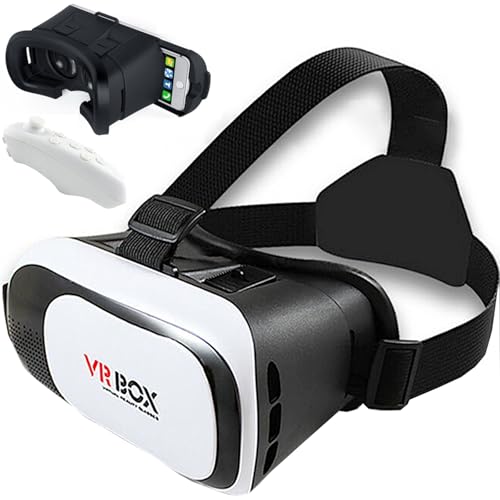
Retoo VR 3D Glasses
6.7/10

Overall score

Score
6.7/ 10
✕
What it is
Our main score for this model, 1–10. It combines specs, best-of lists, expert reviews and owners.
How we count it
Parts: Technical score 35%, List score 30%, Reviews score 25%, Sentiment score 10%
Marks: Each part gets a mark out of 10. For reviews, lists and owners, a typical model in this category gets about 8 and the best one gets 10.
No data yet: A part with no data shows "?". It counts as the mark of a weaker model in this category (4 in 5 models with data score higher). This way, models with reviews, lists and owners usually come out ahead.
Score distribution
â–¼
<55-66-77-88-99-10
Score components

35%

5.6

Technical score

30%

?

List scoreNot enough data yet, so we use 7.5, the mark of a weaker model in this category

25%

?

Reviews scoreNot enough data yet, so we use 7.2, the mark of a weaker model in this category

10%

?

Sentiment scoreNot enough data yet, so we use 7.0, the mark of a weaker model in this category

â–¼Worse than 66% of VR headsets
7.7

Value for money

Value for money
7.7/ 10
✕
What it is
An indicator that combines the VR headset's overall rating with its cost.
When it matters
When you are looking for a VR headset with a good balance between quality and price.
Score distribution
â–¼
<55-66-77-88-99-10
Score components

70%

6.7

Overall score

30%

10

Price

â–²Better than 73%
5.6

Technical score

Technical score
5.6/ 10
✕
What it is
How good the specs are compared with the other models in this category, 1–10.
How we count it
Areas: We rate the specs in each area against the other models in this category.
Weighting: The areas that matter most to buyers count more. The shares are shown under Score components.
Share: The technical score is 35% of the overall score.
Score distribution
â–¼
<55-66-77-88-99-10
Score components

58%

6.3

Display

22%

3.7

Tracking

10%

6.1

Controls & Audio

4%

4.0

Hardware

3%

4.7

Connectivity

3%

7.8

Design & Power

â–¼Worse than 76%
?

Reviews score

Reviews score
✕
What it is
Average grade from independent test sites, magazines and video reviewers, 1–10.
How we count it
Grades: Each review's own score is converted to 1–10; without one, we grade the review ourselves. Big test sites count more, short reviews half as much as full tests. A video review counts half.
Score: The average grade is 80% of the review mark; the number of reviews is the other 20% (1 review = 5, the typical number in this category = 8, the most-reviewed model = 10).
Enough data: With few reviews, the average grade is pulled toward the typical grade of this category. No reviews yet: 7.2 for now.
Share: Reviews count 25% of the overall score.
Score distribution
â–¼
<55-66-77-88-99-10
Grades by review (0)
We have not found an independent test of this model yet. Until we do, its review part counts as 7.2.
User ratings collected online are not part of this score.
No expert tests yet
?

List score

List score
7.5/ 10
✕
What it is
How often independent test sites, magazines and video reviewers put this model in their best-of lists for this category.
How we count it
Points: The model in the most lists of this category gets 10; the others get 8 to 10 in proportion. In no list yet: 7.5. Lists count 30% of the overall score.
Enough data: Every list counts, even a single one. With fewer than 5 best-of lists in the category, this part is left out.
Lists with this model (0)
Not in any best-of list yet, so this part counts as 7.5. Models in a list get 8 to 10.
Not in any best-of list yet
  • retoo-vr-3d-glasses
retoo-vr-3d-glasses
Where to buy
    N/A~ £20
Best rankings
Available: ranking among products currently available (including other versions of this product).All: ranking among all products in the database.
Loading...
Loading category ranking...

VR headsets model ranking

Ranked #53 of 63 models in VR headsets (Overall score)

Technical Specifications of VR headset Retoo VR 3D Glasses

Technical score
Technical score
5.6/ 10
✕
What it is
How good the specs are compared with the other models in this category, 1–10.
How we count it
Areas: We rate the specs in each area against the other models in this category.
Weighting: The areas that matter most to buyers count more. The shares are shown under Score components.
Share: The technical score is 35% of the overall score.
Score distribution
â–¼
<55-66-77-88-99-10
Score components:

58%

6.3

Display

22%

3.7

Tracking

10%

6.1

Controls & Audio

4%

4.0

Hardware

3%

4.7

Connectivity

3%

7.8

Design & Power

5.6
Reviews score
7.2
List score
?
Value for money
Value for money
7.7/ 10
✕
What it is
An indicator that combines the VR headset's overall rating with its cost.
When it matters
When you are looking for a VR headset with a good balance between quality and price.
Score distribution
â–¼
<55-66-77-88-99-10
Score components:

70%

6.7

Overall score

30%

10

Price

7.7
Resolution
N/A
Screen size
N/A
Refresh rate
N/A
Visible FoV (horizontal)
90 °
This VR headset offers a horizontal FoV of 90 ° which is narrower than that of 87.9% of VR headsets and equal to that of 1.7% of VR headsets.
Visible FoV (vertical)
?
Show more
Tracking type
3DoF internal sensors
360° head tracking
yes
This VR headset supports full 360° head tracking. 1.6% of VR headsets support this tracking mode.
N. of tracking sensors
0
N. of cameras
0
This VR headset has 0 cameras which is fewer than in 55.6% of VR headsets and equal to that in 44.4% of VR headsets.
Tracking frequency
?
Show more
Operating system
Android/iOS
OpenXR support
no
This VR headset does not support OpenXR. 57.8% of VR headsets support this cross-platform VR standard.
Wireless PC streaming
no
This VR headset does not support wireless PC streaming. 31.3% of VR headsets support cable-free PC VR streaming.
Wi-Fi connectivity
no
This VR headset does not have Wi-Fi. 31.3% of VR headsets have Wi-Fi connectivity.
Wi-Fi version
N/A
Show more
Touch controllers
?
Game controller included
yes
This VR headset includes a game controller. 41.3% of VR headsets ship with controllers in the box.
Spatial audio
no
This VR headset does not support spatial audio. 85% of VR headsets support spatial audio.
N. of speakers
0
This VR headset has 0 speakers which is fewer than in 58.3% of VR headsets and equal to that in 41.7% of VR headsets.
N. of microphones
0
This VR headset includes 0 microphones, which is fewer than 61% of VR headsets and equal to 39% of VR headsets.
Show more
Device type
smartphone VR
Chipset
N/A
CPU clock speed
N/A
GPU model
N/A
RAM capacity
N/A
Show more
Battery capacity
N/A
Battery life
N/A
Charging time
N/A
Weight
320 g
This VR headset weighs 320 g which is lighter than 86.2% of VR headsets.
Headstrap type
elastic strap
This VR headset uses a elastic strap headstrap, which is less comfortable than the design on 60.8%.
Show more

Retoo VR 3D Glasses vs the average VR headset

246810TotalDisplayTrackingConnectivityControls & AudioHardwareDesign & Power
  • Better lens type
    This VR headset uses aspheric lenses, while the average VR headset uses fresnel lenses.
    aspheric vs fresnel
  • Includes remote control
    This VR headset includes a remote control, the average VR headset does not.
  • 42.9% lighter
    This VR headset is lighter than the average VR headset (320 g vs 560 g). The average VR headset weighs 560 g.
    320 g vs 560 g
  • Compatible with iOS
    This VR headset is compatible with iOS, the average VR headset is not. 40.6% of VR headsets support iPhone or iPad integration.
  • Better lens type
    This VR headset uses aspheric lenses, while the average VR headset uses fresnel lenses.
    aspheric vs fresnel
  • Compatible with iOS
    This VR headset is compatible with iOS, the average VR headset is not. 40.6% of VR headsets support iPhone or iPad integration.
  • Includes remote control
    This VR headset includes a remote control, the average VR headset does not.
  • 42.9% lighter
    This VR headset is lighter than the average VR headset (320 g vs 560 g). The average VR headset weighs 560 g.
    320 g vs 560 g
  • 11 ° narrower horizontal FoV
    This VR headset has a lower horizontal visible FoV than the average VR headset (90 ° vs 101 °). The average VR headset offers a horizontal visible FoV of 101 °.
    90 ° vs 101 °
  • 16.5 mm smaller lens diameter
    This VR headset has a lower lens diameter than the average VR headset (33.5 mm vs 50 mm). The average VR headset has a lens diameter of 50 mm.
    33.5 mm vs 50 mm
  • No haptic feedback
    This VR headset does not support haptic feedback, the average VR headset does. 55.4% of VR headsets offer haptics in the headset or controllers.
  • No spatial audio
    This VR headset does not support spatial audio, the average VR headset does. 83.6% of VR headsets support spatial audio.
  • 2 fewer cameras
    This VR headset has fewer cameras than the average VR headset (0 vs 2). The average VR headset has 2 cameras.
    0 vs 2
  • Inferior headstrap type
    This VR headset uses a elastic strap headstrap, while the average VR headset uses rigid halo.
    elastic strap vs rigid halo
  • 2 fewer speakers
    This VR headset has fewer speakers than the average VR headset (0 vs 2). The average VR headset has 2 speakers.
    0 vs 2
  • No accelerometer
    This VR headset does not have an accelerometer, the average VR headset does. 83.9% of VR headsets include an accelerometer.
  • 11 ° narrower horizontal FoV
    This VR headset has a lower horizontal visible FoV than the average VR headset (90 ° vs 101 °). The average VR headset offers a horizontal visible FoV of 101 °.
    90 ° vs 101 °
  • 16.5 mm smaller lens diameter
    This VR headset has a lower lens diameter than the average VR headset (33.5 mm vs 50 mm). The average VR headset has a lens diameter of 50 mm.
    33.5 mm vs 50 mm
  • 2 fewer cameras
    This VR headset has fewer cameras than the average VR headset (0 vs 2). The average VR headset has 2 cameras.
    0 vs 2
  • No accelerometer
    This VR headset does not have an accelerometer, the average VR headset does. 83.9% of VR headsets include an accelerometer.
  • No OpenXR support
    This VR headset does not support OpenXR, the average VR headset does. 56.9% of VR headsets support this cross-platform VR standard.
  • No 3.5 mm jack
    This VR headset does not include a 3.5 mm audio jack, the average VR headset does. 54.7% of VR headsets include wired audio output.
  • No haptic feedback
    This VR headset does not support haptic feedback, the average VR headset does. 55.4% of VR headsets offer haptics in the headset or controllers.
  • No spatial audio
    This VR headset does not support spatial audio, the average VR headset does. 83.6% of VR headsets support spatial audio.
  • 2 fewer speakers
    This VR headset has fewer speakers than the average VR headset (0 vs 2). The average VR headset has 2 speakers.
    0 vs 2
  • 1 fewer microphones
    This VR headset includes fewer microphones than the average VR headset (0 vs 1). The average VR headset includes 1 microphones.
    0 vs 1
  • Inferior headstrap type
    This VR headset uses a elastic strap headstrap, while the average VR headset uses rigid halo.
    elastic strap vs rigid halo

Third-party reviews

What customers like about Retoo VR 3D Glasses

  • At 320 g it is light on the head.
  • An elastic strap holds it in place.
  • A remote control is included.
  • Lens spacing can be adjusted to suit your eyes.
  • 360 degree head tracking follows your head turns.
  • It works with both Android and iOS phones.

What customers don't like about Retoo VR 3D Glasses

  • The 90 degree view shows less of the scene at once.
  • The lens is 33.5 mm across, which is small for a headset.
  • There are no speakers, so sound depends on the phone.
  • There is no 3.5 mm jack for wired headphones.
  • Tracking covers head turns only, not movement.

Verdict

The main limit of the Retoo VR 3D Glasses is the view, so it is worth knowing before you buy. At 90 degrees the picture feels tight, and the 33.5 mm lens is small. Its strongest point is weight: at 320 g it is light, and an elastic strap holds it on your head. A remote control comes with it, which lets you change things without touching the phone. There are no speakers and no 3.5 mm jack, so the sound comes from the phone itself. The lens spacing can be adjusted, and 360 degree head tracking follows your turns, though not your movement. It suits someone who wants a light headset for short films and simple games and who does not need a wide view.

Compare Retoo VR 3D Glasses with other products in the VR headsets category

1Product to compare no. 1
VS
2Product to compare no. 2
VS
3Product to compare no. 3 (optional)

Graphic comparison of Retoo VR 3D Glasses and other products in the VR headsets category

No results found