ZEISS VR ONE Review | 89 Data compared

double-arrow
  • Avg. price in UK: ~£90
  • Avg. price in US: ~$100
  • Weight: 590 g
  • Resolution: ?
  • Refresh rate: N/A (Relies on smartphone display) Hz
  • Display type: N/A
  • Device type: smartphone VR

ZEISS VR ONE review. Compare 89 technical specifications and user reviews to see how it ranks among vr headsets and if it is worth buying.

5.3

Overall score

What it is: An overall evaluation of the VR headset's quality, based on technical analyses and user reviews.

When it matters: When you need a quick reference to identify the best VR headsets on the market.

Score components:

80.0%

4.5

Technical Score

20.0%

8.1

User score

Good
4.5

Technical Score

What it is: An assessment of the VR headset's technical performance, covering eight key areas: display quality, tracking, comfort, controllers, connectivity, audio, battery, and design.

When it matters: When you want to compare VR headsets based on technical performance and available features.

Score components:

58.0%

4.0

Display & Optics

22.0%

6.4

Tracking & Sensors

10.0%

3.7

Controls & Audio

4.0%

4.0

Hardware

3.0%

4.2

Connectivity

3.0%

4.9

Design & Power

Poor
8.1

User score

What it is: A rating that combines user reviews and the total number of reviews received by the VR headset.

When it matters: When you want to know how a VR headset performs in real use and how reliable it remains over time according to user feedback.

Score components:

70.0%

7.3

User reviews

30.0%

10

Popularity

User score:
United Kingdom
amazon
3.7
(1219)
amazon
3.6
(559)
United States
Amazon_logo.png
3.7
(26)

(Reviews last updated: July 2026)

Excellent
  • 3.4
    Gaming

    Score components:

    40.0%

    0.0

    Refresh rate

    35.0%

    4.0

    Touch controllers

    25.0%

    ?

    Resolution

  • 7.4
    Movies

    Score components:

    40.0%

    ?

    Resolution

    35.0%

    ?

    Display type

    25.0%

    5.6

    Visible FoV (horizontal)

  • zeiss-vr-one
  • zeiss-vr-one
  • zeiss-vr-one
  • zeiss-vr-one
  • zeiss-vr-one
  • zeiss-vr-one
  • zeiss-vr-one
  • zeiss-vr-one
zeiss-vr-one
zeiss-vr-one
zeiss-vr-one
zeiss-vr-one
zeiss-vr-one
zeiss-vr-one
zeiss-vr-one
zeiss-vr-one

Best prices in UK

Best rankings

?

Available: ranking among products currently available (including other versions of this product).
All: ranking among all products in the database.

Verdict

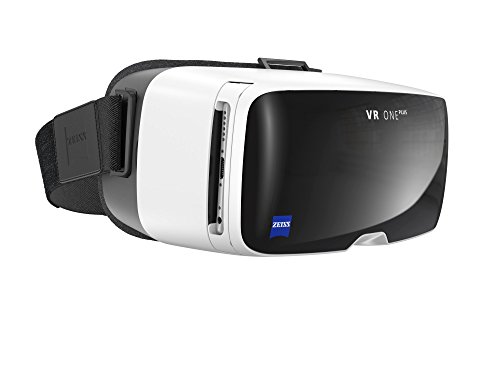
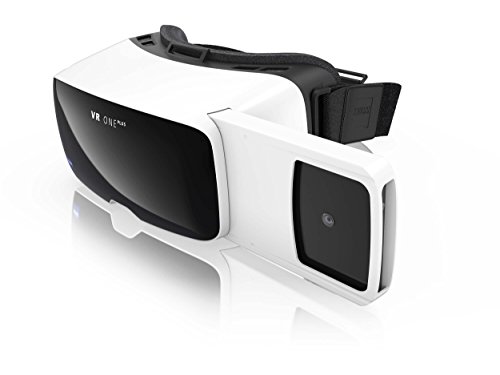
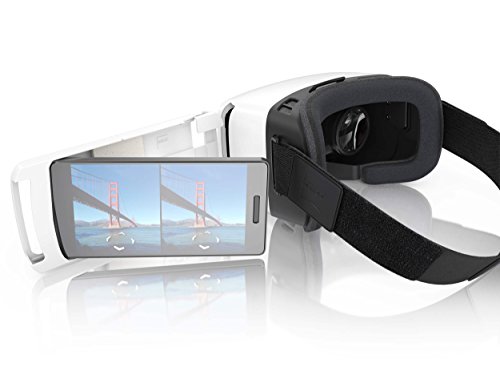
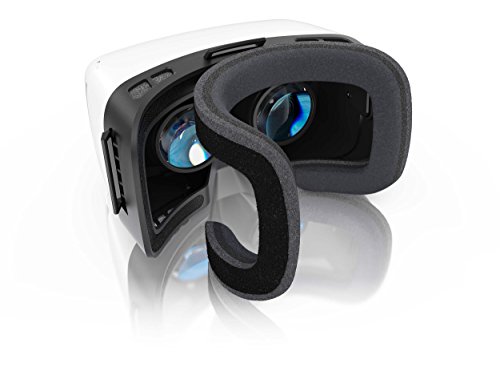
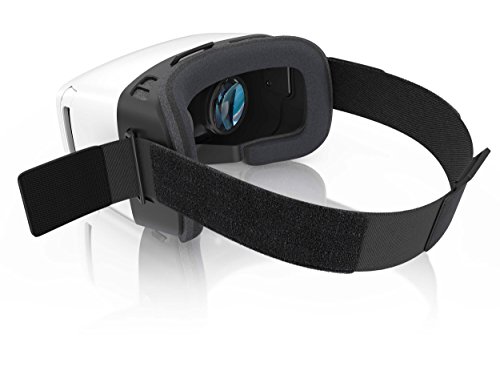
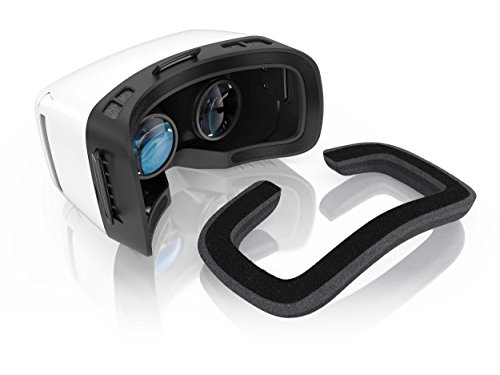
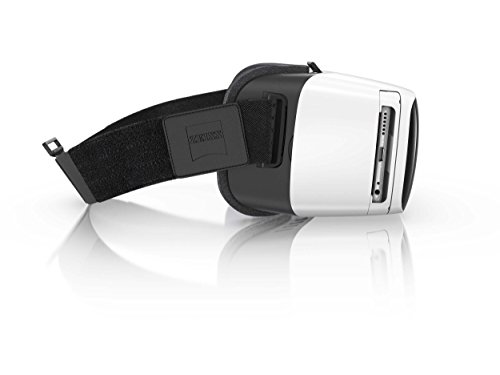
The Zeiss VR One is a mobile virtual reality headset designed for smartphones with display sizes between 4.7 and 5.5 inches, featuring high-performance Zeiss precision optics that provide a 100-degree field of view. Its key characteristics include a unique slide-out tray system for phone docking, a transparent front shield for augmented reality applications, and a large eyebox that eliminates the need for manual interpupillary distance (IPD) adjustments. Main pros include its premium build quality, exceptional lens clarity, and a spacious interior that comfortably accommodates users wearing eyeglasses. However, significant cons include the complete lack of integrated controls or a magnetic trigger for interaction, a dependency on purchasing device-specific trays, and a non-adjustable lens system that may not provide a sharp focus for all users.

Technical Specifications of ZEISS VR ONE

Technical Score

What it is: An assessment of the VR headset's technical performance, covering eight key areas: display quality, tracking, comfort, controllers, connectivity, audio, battery, and design.

When it matters: When you want to compare VR headsets based on technical performance and available features.

Score components:

58.0%

4.0

Display & Optics

22.0%

6.4

Tracking & Sensors

10.0%

3.7

Controls & Audio

4.0%

4.0

Hardware

3.0%

4.2

Connectivity

3.0%

4.9

Design & Power

4.5
ZEISS VR ONE has a technical score of 4.55 points, which is lower than 87.8% of VR headsets.
User score

What it is: A rating that combines user reviews and the total number of reviews received by the VR headset.

When it matters: When you want to know how a VR headset performs in real use and how reliable it remains over time according to user feedback.

Score components:

70.0%

7.3

User reviews

30.0%

10

Popularity

User score:
United Kingdom
amazon
3.7
(1219)
amazon
3.6
(559)
United States
Amazon_logo.png
3.7
(26)

(Reviews last updated: July 2026)

8.1
ZEISS VR ONE has a user score of 8.14 points, which is higher than 67.4% of VR headsets.
Popularity
What it is: An indicator based on the number of reviews received by the VR headset.
When it matters: When you prefer to buy a product chosen and reviewed by many other consumers.
10
ZEISS VR ONE has a popularity of 10 points, which is higher than 67.4% of products in this category.
Ratio quality/price

What it is: An indicator that combines the VR headset's overall rating with its cost.

When it matters: When you are looking for a VR headset with a good balance between quality and price.

Score components:

60.0%

5.3

Overall score

40.0%

10

Price

6.7
ZEISS VR ONE has a quality-to-price ratio of 6.7 points, which is higher than 42.9% of products in this category.
Resolution
What it is: The total number of pixels displayed on the screen, expressed as width x height, determining sharpness.
When it matters: When you want crisp text and sharp details in photos and videos.

Importance: HIGH

?
Screen size
What it is: The physical diagonal measurement of the display area, usually expressed in inches.
When it matters: When you want a larger image area that can feel more immersive in games, movies, and VR apps.

Importance: LOW

Good value: >4.41 inches

?
Refresh rate
What it is: The number of times per second the display updates the image, measured in Hertz (Hz); higher rates offer smoother motion.
When it matters: When you want scrolling to feel fluid and games to look smoother.

Importance: HIGH

Good value: >102 Hz

N/A (Relies on smartphone display) Hz
Visible FoV (horizontal)
What it is: Measures the visible horizontal field of view of the image, expressed in degrees.
When it matters: When you want a wider left-to-right view for racing, shooters, and room-scale immersion.

Importance: HIGH

Good value: >105.7 °

100 °
ZEISS VR ONE offers a horizontal FoV of 100 ° which is wider than that of 47.4% of VR headsets and equal to that of 10.5% of VR headsets.
Visible FoV (vertical)
What it is: Measures the visible vertical field of view of the image, expressed in degrees.
When it matters: When a taller visible image helps scenes feel less cropped above and below your view.

Importance: HIGH

Good value: >97.5 °

?
Show more
Tracking type
What it is: Specifies the tracking method used for positional detection, such as inside-out or outside-in.
When it matters: When you want to know whether tracking depends on onboard cameras or external hardware.

Importance: LOW

3DoF internal sensors
360° head tracking
What it is: Shows whether the headset can track head movement across a full 360-degree space.
When it matters: When you turn around often in room-scale games and do not want tracking blind spots.

Importance: MEDIUM

yes
ZEISS VR ONE supports full 360° head tracking. 2% of VR headsets support this tracking mode.
N. of tracking sensors
What it is: Counts the integrated sensors used for positional or motion tracking.
When it matters: When you compare how much built-in hardware the headset uses for motion tracking.

Importance: LOW

Good value: >4.2

0
N. of cameras
What it is: Counts the built-in cameras used for tracking, passthrough, or environmental sensing.
When it matters: When passthrough quality, room mapping, and inside-out tracking matter to your setup.

Importance: MEDIUM

Good value: >4.2

0
ZEISS VR ONE has 0 cameras which is fewer than in 64.6% of VR headsets and equal to that in 35.4% of VR headsets.
Tracking frequency
What it is: Indicates how often the tracking system updates position data, measured in hertz.
When it matters: When you want fast motion tracking to stay stable during quick head or hand movement.

Importance: LOW

Good value: >718 Hz

N/A
Show more
Operating system
What it is: The primary system software that manages the headset's hardware, apps, and core functions.
When it matters: When you have a preference for the user interface and app ecosystem.

Importance: LOW

Android/iOS
OpenXR support
What it is: Indicates whether the headset supports the OpenXR standard for compatible VR software.
When it matters: When you want broader compatibility with VR apps across different software platforms.

Importance: LOW

no
ZEISS VR ONE does not support OpenXR. 64.4% of VR headsets support this cross-platform VR standard.
Wireless PC streaming
What it is: Shows whether the headset can receive PC VR content over a wireless connection.
When it matters: When you want PC VR without a cable running from the headset to your computer.

Importance: LOW

no
ZEISS VR ONE does not support wireless PC streaming. 36.7% of VR headsets support cable-free PC VR streaming.
Wi-Fi connectivity
What it is: The ability of the headset to connect to a wireless network.
When it matters: When you want wireless downloads, streaming, updates, or online features without relying on a cable.

Importance: LOW

no
ZEISS VR ONE does not have Wi-Fi. 38.8% of VR headsets have Wi-Fi connectivity.
Wi-Fi version
What it is: Version of Wi-Fi standard supported.
When it matters: When compatibility with your router and wireless setup affects download speeds, streaming quality, or latency.

Importance: LOW

N/A
Show more
Touch controllers
What it is: Shows whether dedicated motion controllers are included for hand-based input in VR.
When it matters: When your favorite games rely on precise hand input rather than hand tracking alone.

Importance: MEDIUM

no
ZEISS VR ONE does not include touch controllers. 73.5% of VR headsets come with dedicated hand controllers.
Game controller included
What it is: Indicates whether game controllers are included in the standard package.
When it matters: When you want a complete VR package and do not want to buy controllers separately.

Importance: LOW

no
ZEISS VR ONE does not include a game controller. 65.3% of VR headsets ship with controllers in the box.
Spatial audio
What it is: Supports immersive spatial audio playback.
When it matters: When movies, games, and VR experiences feel better with more immersive positional sound.

Importance: LOW

no
ZEISS VR ONE does not support spatial audio. 91.5% of VR headsets support spatial audio.
N. of speakers
What it is: Counts the built-in speakers used for audio playback.
When it matters: When you plan to use the headset without separate headphones or external speakers.

Importance: LOW

0
ZEISS VR ONE has 0 speakers which is fewer than in 63% of VR headsets and equal to that in 37% of VR headsets.
N. of microphones
What it is: The number of microphones built into the headset or its integrated hardware.
When it matters: When voice chat, voice commands, or in-headset recording quality matter to your setup.

Importance: LOW

0
ZEISS VR ONE includes 0 microphones, which is fewer than 74.4% of VR headsets and equal to 25.6% of VR headsets.
Show more
Device type
What it is: Describes the overall headset class, such as standalone, PC VR, or mixed reality.
When it matters: When you choose between a standalone headset, a PC VR model, or mixed-reality use.

Importance: LOW

smartphone VR
Chipset
What it is: The central System-on-Chip (SoC) that houses the CPU, GPU, modem, and other core processing components.
When it matters: When you want to know the specific engine powering your device's speed and features.

Importance: LOW

N/A
CPU clock speed
What it is: Indicates the base operating frequency of the main processor, measured in gigahertz.
When it matters: When you compare standalone headset speed for games, menus, and mixed-reality apps.

Importance: LOW

Good value: >2.86 GHz

N/A
GPU model
What it is: The official model name of the graphics processor used in the tablet.
When it matters: When you compare graphics hardware for gaming, video editing, or benchmarks.

Importance: LOW

N/A
RAM capacity
What it is: States the installed RAM capacity used for system operation and multitasking.
When it matters: When you want smoother multitasking and better headroom for demanding VR apps.

Importance: LOW

Good value: >9.3 GB

N/A
Show more
Battery capacity
What it is: The amount of electric charge the battery can store, usually measured in mAh.
When it matters: When you want longer untethered play time without recharging the headset too often.

Importance: LOW

Good value: >4980 mAh

N/A
Charging time
What it is: Time required for a full charge.
When it matters: When charging speed, charging method, or battery upkeep convenience matters to your routine.

Importance: LOW

Good value: <2.3 hours

N/A
Weight
What it is: The total weight of the headset, affecting how heavy it feels during use.
When it matters: When you want a headset that feels lighter and more comfortable during longer VR sessions.

Importance: LOW

Good value: <484.2 g

590 g
ZEISS VR ONE weighs 590 g which is heavier than 53.3% of VR headsets and equal to the weight of 4.4% of VR headsets.
Headstrap type
What it is: Identifies the design of the headstrap used to secure the headset on the user's head.
When it matters: When comfort, balance, and pressure distribution matter during long VR sessions.

Importance: LOW

elastic strap
ZEISS VR ONE uses a elastic strap headstrap, which is less comfortable than the design on 61.2%.
Body material
What it is: The main material used for the headset body or housing.
When it matters: When you care about how sturdy, premium, or lightweight the headset feels over time.

Importance: LOW

plastic
Show more

ZEISS VR ONE vs the average VR headset

  • Supports color passthrough
    ZEISS VR ONE supports color passthrough, the average VR headset does not.
    What it is: Indicates whether the passthrough view can display the surroundings in color rather than monochrome.
    When it matters: When mixed-reality apps feel more useful with a natural full-color view of the room.

    Importance: MEDIUM

    ZEISS VR ONE supports color passthrough, the average VR headset does not.
  • Better lens type
    ZEISS VR ONE uses aspheric lenses, while the average VR headset uses fresnel lenses.
    What it is: Identifies the optical lens design used by the headset, such as Fresnel or pancake.
    When it matters: When you compare edge clarity, glare behavior, and headset thickness across optical designs.

    Importance: MEDIUM

    ZEISS VR ONE uses aspheric lenses, while the average VR headset uses fresnel lenses.aspheric vs fresnel
  • Compatible with Android
    ZEISS VR ONE is compatible with Android, the average VR headset is not. 50% of VR headsets support Android pairing or companion apps.
    What it is: Shows whether the headset can work with Android phones or tablets for setup, companion apps, or content.
    When it matters: When you want the headset to pair cleanly with Android phones for apps or setup.

    Importance: LOW

    ZEISS VR ONE is compatible with Android, the average VR headset is not. 50% of VR headsets support Android pairing or companion apps.
  • Compatible with iOS
    ZEISS VR ONE is compatible with iOS, the average VR headset is not. 34.7% of VR headsets support iPhone or iPad integration.
    What it is: Shows whether the headset can work with iPhone or iPad devices.
    When it matters: When you want the headset to pair cleanly with iPhones or iPads for apps or setup.

    Importance: LOW

    ZEISS VR ONE is compatible with iOS, the average VR headset is not. 34.7% of VR headsets support iPhone or iPad integration.
  • Better lens type
    ZEISS VR ONE uses aspheric lenses, while the average VR headset uses fresnel lenses.
  • Supports color passthrough
    ZEISS VR ONE supports color passthrough, the average VR headset does not.
  • Compatible with Android
    ZEISS VR ONE is compatible with Android, the average VR headset is not. 50% of VR headsets support Android pairing or companion apps.
  • Compatible with iOS
    ZEISS VR ONE is compatible with iOS, the average VR headset is not. 34.7% of VR headsets support iPhone or iPad integration.
  • No adjustable IPD
    ZEISS VR ONE does not support adjustable IPD, the average VR headset does. 64% of VR headsets offer adjustable lens spacing.
  • 20 mm smaller lens diameter
    ZEISS VR ONE has a lower lens diameter than the average VR headset (30 mm vs 50 mm). The average VR headset has a lens diameter of 50 mm.
  • No accelerometer
    ZEISS VR ONE does not have an accelerometer, the average VR headset does. 86% of VR headsets include an accelerometer.
  • 2 fewer cameras
    ZEISS VR ONE has fewer cameras than the average VR headset (0 vs 2). The average VR headset has 2 cameras.
  • No OpenXR support
    ZEISS VR ONE does not support OpenXR, the average VR headset does. 63% of VR headsets support this cross-platform VR standard.
  • Lacks USB Type-C
    ZEISS VR ONE lacks a USB Type-C port, the average VR headset includes one. 58% of VR headsets use USB-C ports.
  • No 3.5 mm jack
    ZEISS VR ONE does not include a 3.5 mm audio jack, the average VR headset does. 61.2% of VR headsets include wired audio output.
  • No touch controllers
    ZEISS VR ONE does not include touch controllers, the average VR headset does. 72% of VR headsets come with dedicated hand controllers.
  • No haptic feedback
    ZEISS VR ONE does not support haptic feedback, the average VR headset does. 63.3% of VR headsets offer haptics in the headset or controllers.
  • No spatial audio
    ZEISS VR ONE does not support spatial audio, the average VR headset does. 89.6% of VR headsets support spatial audio.
  • Fewer microphones
    ZEISS VR ONE includes fewer microphones than the average VR headset (0 vs 2). The average VR headset includes 2 microphone/s.
  • Fewer speakers
    ZEISS VR ONE has fewer speakers than the average VR headset (0 vs 2). The average VR headset has 2 speakers.
  • No game controller included
    ZEISS VR ONE does not include a game controller, the average VR headset does. 64% of VR headsets ship with controllers in the box.
  • Inferior headstrap type
    ZEISS VR ONE uses a elastic strap headstrap, while the average VR headset uses rigid halo.
  • 4 older release date
    ZEISS VR ONE is older than the average VR headset (2,014 vs 2,018). The average VR headset was released in 2,018.
  • 14 mm thicker
    ZEISS VR ONE is thicker than the average VR headset (119 mm vs 105 mm). The average VR headset has a thickness of 105 mm.
  • 5 °C higher minimum operating temperature
    ZEISS VR ONE has a higher minimum operating temperature than the average VR headset (5 °C vs 0 °C). The average VR headset reaches a minimum operating temperature of 0 °C.
  • 16.5 mm higher height
    ZEISS VR ONE is taller than the average VR headset (125 mm vs 108.5 mm). The average VR headset has a height of 108.5 mm.
  • No adjustable IPD
    ZEISS VR ONE does not support adjustable IPD, the average VR headset does. 64% of VR headsets offer adjustable lens spacing.
    What it is: Shows whether the lens spacing can be adjusted to match the distance between the user's pupils.
    When it matters: When more than one person uses the headset and needs the lenses aligned comfortably.

    Importance: HIGH

    ZEISS VR ONE does not support adjustable IPD, the average VR headset does. 64% of VR headsets offer adjustable lens spacing.
  • 20 mm smaller lens diameter
    ZEISS VR ONE has a lower lens diameter than the average VR headset (30 mm vs 50 mm). The average VR headset has a lens diameter of 50 mm.
    What it is: States the diameter of the optical lenses, usually measured in millimeters.
    When it matters: When lens size affects the optical design and how the headset feels close to your face.

    Importance: MEDIUM

    Good value: >44 mm

    ZEISS VR ONE has a lower lens diameter than the average VR headset (30 mm vs 50 mm). The average VR headset has a lens diameter of 50 mm.30 mm vs 50 mm
  • No touch controllers
    ZEISS VR ONE does not include touch controllers, the average VR headset does. 72% of VR headsets come with dedicated hand controllers.
    What it is: Shows whether dedicated motion controllers are included for hand-based input in VR.
    When it matters: When your favorite games rely on precise hand input rather than hand tracking alone.

    Importance: MEDIUM

    ZEISS VR ONE does not include touch controllers, the average VR headset does. 72% of VR headsets come with dedicated hand controllers.
  • No haptic feedback
    ZEISS VR ONE does not support haptic feedback, the average VR headset does. 63.3% of VR headsets offer haptics in the headset or controllers.
    What it is: Shows whether vibration-based haptic feedback is available in the controllers or headset.
    When it matters: When you want stronger physical feedback from hits, grabs, or rhythm cues in VR games.

    Importance: LOW

    ZEISS VR ONE does not support haptic feedback, the average VR headset does. 63.3% of VR headsets offer haptics in the headset or controllers.
  • No spatial audio
    ZEISS VR ONE does not support spatial audio, the average VR headset does. 89.6% of VR headsets support spatial audio.
    What it is: Supports immersive spatial audio playback.
    When it matters: When movies, games, and VR experiences feel better with more immersive positional sound.

    Importance: LOW

    ZEISS VR ONE does not support spatial audio, the average VR headset does. 89.6% of VR headsets support spatial audio.
  • Fewer microphones
    ZEISS VR ONE includes fewer microphones than the average VR headset (0 vs 2). The average VR headset includes 2 microphone/s.
    What it is: The number of microphones built into the headset or its integrated hardware.
    When it matters: When voice chat, voice commands, or in-headset recording quality matter to your setup.

    Importance: LOW

    ZEISS VR ONE includes fewer microphones than the average VR headset (0 vs 2). The average VR headset includes 2 microphone/s.0 vs 2
  • 2 fewer cameras
    ZEISS VR ONE has fewer cameras than the average VR headset (0 vs 2). The average VR headset has 2 cameras.
    What it is: Counts the built-in cameras used for tracking, passthrough, or environmental sensing.
    When it matters: When passthrough quality, room mapping, and inside-out tracking matter to your setup.

    Importance: MEDIUM

    Good value: >4.2

    ZEISS VR ONE has fewer cameras than the average VR headset (0 vs 2). The average VR headset has 2 cameras.0 vs 2
  • No accelerometer
    ZEISS VR ONE does not have an accelerometer, the average VR headset does. 86% of VR headsets include an accelerometer.
    What it is: A sensor that measures proper acceleration, used for screen rotation, step counting, and motion detection.
    When it matters: When you want the screen to rotate automatically or track your steps.

    Importance: LOW

    ZEISS VR ONE does not have an accelerometer, the average VR headset does. 86% of VR headsets include an accelerometer.

Graphic comparison of ZEISS VR ONE and

Attribute category
Attribute
No results found

Third-party reviews

United States

(Reviews last updated: July 2026)

What customers like about ZEISS VR ONE?

  • Superior optics with large, high-quality lenses from a renowned brand
  • Exceptional build quality and robust design
  • High level of comfort due to triple-layered foam padding and adjustable straps
  • Accommodates users who wear glasses comfortably
  • Supports augmented reality (AR) through a transparent front cover
  • Large field of view (FOV) comparable to some high-end tethered headsets
  • Good ventilation system that prevents lens fogging and phone overheating

What customers dislike about ZEISS VR ONE?

  • Lack of integrated controls or a magnetic button for Google Cardboard apps
  • Requires purchasing separate, phone-specific trays for a secure fit
  • Lenses are non-adjustable for interpupillary distance (IPD) or focus
  • Limited native content and underwhelming dedicated apps
  • Significantly heavier than competing mobile VR headsets like the Gear VR
  • High retail price compared to other smartphone-based VR viewers
  • The 'one size fits all' optical approach can lead to eye strain or motion sickness for some users

Expert reviews

T
techadvisor.com
10/02/2015

I am basing this summary exclusively on the provided 2015 review of the Zeiss VR One headset, assuming you want a clear breakdown of its exact launch capabilities and physical design. Review Summary The Zeiss VR One is a well-built virtual reality headset that offered a more accessible, slightly broader alternative to competitors like the Samsung Gear VR at launch. Its primary...Read more

P
petapixel.com
16/09/2015

Carl Zeiss VR ONE The Carl Zeiss VR ONE is a well-built, comfortable virtual reality headset that ultimately fails to deliver a usable experience due to significant design flaws. On the positive side, the headset features a high-quality, sturdy, and lightweight plastic construction with a sleek, minimalist aesthetic. It is exceptionally comfortable to wear, featuring excellent...Read more

P
pcmag.com
22/03/2016

The Zeiss VR One is a well-constructed mobile VR visor featuring a white matte design, a secure tray system for specific smartphones, and high-quality, bright fixed optics. PCMag praised the comfortable, three-strap elastic band system and the overall solid, durable build. However, the headset is limited by a lack of onboard controls or a magnetic trigger required for Google...Read more

N
newatlas.com
18/02/2015

The Zeiss VR One is a $99 virtual reality headset designed with consumer-grade plastic, comfortable foam padding, and durable adjustable straps that mirror the premium build quality of the Samsung Gear VR. Shifting away from standard adjustable arms or permanent ports, the headset utilizes an innovative, interchangeable slide-out tray mechanism to hold specific smartphones, which...Read more

A
androidcentral.com
19/03/2016

The Android Central review by Russell Holly criticises the Zeiss VR One as an overpriced, poorly designed smartphone-based virtual reality headset. On the positive side, the headset features a sturdier hard plastic body than basic Google Cardboard models, offering ample room for eyeglasses and a well-covered air vent system that effectively prevents lenses from fogging up....Read more

P
pocnetwork.net
02/03/2015

The ZEISS VR One is a virtual and augmented reality headset designed to work with smartphones ranging from 4.7 to 5.2 inches, specifically launching with dedicated trays for the iPhone 6 and Samsung Galaxy S5. Reviewers praise the device for its impressive virtual reality quality, comfortable fit once the top head strap is attached, and the ability to accommodate users wearing...Read more

D
digitalreviews.net
19/04/2015

The Zeiss VR One review presents the headset as an entry-level virtual reality product with great long-term potential, though it ultimately functions more like a demonstration project than a polished consumer device. A primary benefit noted by the reviewer is the device's simple design and hardware layout, featuring comfortable head straps and a straightforward user interface via...Read more

T
trustedreviews.com
06/01/2016

The Trusted Reviews evaluation of the Carl Zeiss VR One highlights its premium, robust matte-white construction and effective anti-fogging, ventilated design. Key pros include high-end build quality, comfortable padding, and an adjustable, secure headstrap system. However, as a smartphone-based viewer, the headset's performance is limited by the user's phone, which dictates...Read more

A
alxklive.com
24/02/2015

The Zeiss VR One is a stylish, wireless, "slip-in" mobile VR headset priced at $99 that uses a smartphone's built-in computer, screen, and sensors to deliver a portable virtual reality experience. Its standout features include exceptional glass lenses crafted by Carl Zeiss AG, which significantly reduce eye fatigue compared to the plastic lenses used in competing headsets like the...Read more

U
uk.pcmag.com
22/03/2016

The Zeiss VR One review by PCMag UK evaluates a smartphone-based virtual reality headset that earns a "Fair" 2.5 out of 5 rating due to critical omissions in its user control interface. On the positive side, the hardware features a solid build quality and a highly comfortable design consisting of a white matte plastic visor, permanently affixed foam facial padding, and three...Read more

T
tomsguide.com
18/04/2016

Zeiss VR One Review Summary The Zeiss VR One is a $120 mobile virtual reality headset designed to work with both Android and iOS smartphones. It features incredibly high-precision lenses made from durable polycarbonate resin that nearly eliminate outer-edge distortion. The headset also offers unique augmented reality (AR) capabilities when used with an included paper cube. Unlike...Read more

T
tagesanzeiger.ch
23/03/2015

The Tages-Anzeiger review evaluates the Zeiss VR One as a robust, high-quality smartphone-based headset, positioning it as a premium alternative to Google Cardboard with comfortable, well-designed head straps and cushioning. A key advantage is its innovative design, allowing a semi-translucent front shield for augmented reality applications. Conversely, the review highlights...Read more

N
n-tv.de
24/02/2015

The Zeiss VR One is an early-stage mobile virtual reality headset priced at approximately €100 that supports both iOS and Android devices between 4.7 and 5.2 inches. A major advantage of this headset is its broad cross-platform compatibility and its inclusion of a slightly larger 100-degree field of view compared to its main competitor, the Samsung Gear VR. Additionally, it provides...Read more

0
01net.com
22/04/2015

The 01net.com review highlights the Zeiss VR One as a premium 129-euro smartphone-based VR headset, noted for its superior build quality, high-end design comparable to the Samsung Gear VR, and excellent optics, including very low peripheral distortion, 0.1.1. Its fixed-lens system is designed to accommodate 90% of users without adjustments, and it offers superior comfort, being one...Read more

R
realite-virtuelle.com
18/06/2015

The Zeiss VR One is a well-built mobile virtual reality headset that acts as a premium plastic shell for smartphones between 4.7 and 5.2 inches. On the positive side, it features a sturdy and comfortable design with solid plastic, soft foam padding, and adjustable straps. Its unique sliding tray system makes inserting a phone very easy and ensures precise screen positioning....Read more

C
casques-vr.com
05/02/2015

This 2015 review evaluates the Zeiss VR One, a high-end smartphone virtual reality headset priced at €99. Designed by precision optics specialist Carl Zeiss, the headset features a premium white and black plastic design and a highly comfortable triple-density face foam. The device utilizes a unique tray system that perfectly centres specific smartphones in front of the lenses for an...Read more

D
dailymotion.com
30/04/2015

In this review from 01net.com, journalist Bruno Cormier evaluates the Zeiss VR One, a virtual reality headset designed specifically for smartphones. The headset stands out primarily due to the exceptional expertise of the German optics brand Zeiss. Its built-in dual lenses deliver outstanding visual quality with minimal distortion along the edges. A major highlight is its unique,...Read more

A
appletips.nl
04/04/2015

The Zeiss VR ONE is a sturdy and well-built virtual reality headset designed to transform your iPhone 6 (or Samsung Galaxy S5) into a personal VR device. It relies on your phone’s internal sensors, like the gyroscoop and accelerometer, to let you navigate menus through head tilts. The headset stands out for its high-quality construction and a lightweight design that features soft...Read more

Video reviews

Compare ZEISS VR ONE with

VS
VS

Compare