Scored using VR headsets Methodology v3.0
VR headsets Methodology v3.0
Mathematical & Unbiased Scoring
Products in this category are scored under Frontum VR headsets Methodology v3.0: the technical score from the specifications is the base, and independent expert and video reviews (up to ±0.5 points), owner opinions (up to ±0.3) and best-of lists (up to +0.3) move it up or down.
Explore VR headsets Methodology v3.0

Samsung Gear VR 2016 review: 90 specs compared

Avg. price:~£90Weight:345 gResolution:N/ARefresh rate:N/A HzDisplay type:N/ADevice type:smartphone VR

Samsung Gear VR 2016 Review: Compare 90 technical specifications, 18 expert and video reviews and 1 best-of list to see how this product ranks in the VR headsets category and whether it is worth buying.
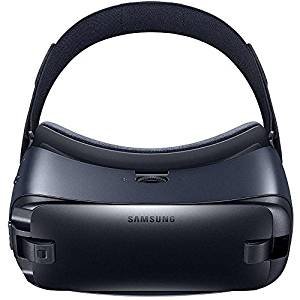
Samsung Gear VR 2016
6.7/10

Overall score

Score
6.7/ 10
✕
What it is
Our main score for this model, 1–10. It combines specs, best-of lists, expert reviews and owners.
How we count it
Parts: Technical score 40%, List score 30%, Reviews score 25%, Sentiment score 5%
Marks: Each part gets a mark out of 10. For reviews, lists and owners, a typical model in this category gets about 8 and the best one gets 10.
No data yet: A part with no data shows "?". It counts as the mark of a weaker model in this category (4 in 5 models with data score higher). This way, models with reviews, lists and owners usually come out ahead.
Score distribution
<55-66-77-88-99-10
Score components

40%

5.4

Technical score

30%

7.5

List score

25%

8.0

Reviews score

5%

5.4

Sentiment score

▼Worse than 74% of VR headsets
7.7

Value for money

Value for money
7.7/ 10
✕
What it is
An indicator that combines the VR headset's overall rating with its cost.
When it matters
When you are looking for a VR headset with a good balance between quality and price.
Score distribution
<55-66-77-88-99-10
Score components

70%

6.7

Overall score

30%

10

Price

▲Better than 71%
5.4

Technical score

Technical score
5.4/ 10
✕
What it is
How good the specs are compared with the other models in this category, 1–10.
How we count it
Areas: We rate the specs in each area against the other models in this category.
Weighting: The areas that matter most to buyers count more. The shares are shown under Score components.
Share: The technical score is 40% of the overall score.
Score distribution
<55-66-77-88-99-10
Score components

58%

5.3

Display

22%

5.8

Tracking

10%

5.5

Controls & Audio

4%

4.0

Hardware

3%

4.7

Connectivity

3%

7.3

Design & Power

▼Worse than 79%
8.0

Reviews score

Reviews score
8.0/ 10
✕
What it is
Average grade from independent test sites, magazines and video reviewers, 1–10.
How we count it
Grades: Each review's own score is converted to 1–10; without one, we grade the review ourselves. Big test sites count more, short reviews half as much as full tests. A video review counts half.
Score: The average grade is 80% of the review mark; the number of reviews is the other 20% (1 review = 5, the typical number in this category = 8, the most-reviewed model = 10).
Enough data: With few reviews, the average grade is pulled toward the typical grade of this category. No reviews yet: 7.2 for now.
Share: Reviews count 25% of the overall score.
Score distribution
<55-66-77-88-99-10

80%

8.2

Average grade

20%

7.3

Popularity

Grades by review (18)
13 reviews: 5 with a printed score, 8 estimated from the review. 5 video reviews, each counting half as much as a written test. Reviews count 25% of the overall score.
User ratings collected online are not part of this score.
▲Better than 71%
7.5

List score

List score
7.5/ 10
✕
What it is
How often independent test sites, magazines and video reviewers put this model in their best-of lists for this category.
How we count it
Points: The model in the most lists of this category gets 10; the others get 8 to 10 in proportion. In no list yet: 7.5. Lists count 30% of the overall score.
Enough data: Every list counts, even a single one. With fewer than 10 best-of lists in the category, this part is left out.
Lists with this model (1)
List score: in 1 of 89 lists (1%)
▼Worse than 51%
  • samsung-gear-vr-2016
samsung-gear-vr-2016
Where to buy
    N/A~ £90
Best rankings
Available: ranking among products currently available (including other versions of this product).All: ranking among all products in the database.

What reviewers say about the Samsung Gear VR 2016

Based on 10 · 5

Reviewers like the improved touchpad and wider view, but limited phone compatibility is the clear drawback.
Praised
Mixed views
Criticised
Pick a topic to see who said what

What owners say about the Samsung Gear VR 2016

Based on 31 owners sharing their experience in online comments

39%positive6%mixed55%negative

Owners enjoy immersive VR and watching films, but blurry visuals and phone overheating leave too many frustrations.

What owners dislike

  • Owners report blurry edges and double-edge shadows in Oculus Cinema and on settings screens, and 360-degree video from the web browser looks low quality with no quality setting.4
  • The phone heats up quickly during use, especially when charging at the same time, and owners say it then becomes laggy.3
  • Owners find too few games in certain genres, such as 3D platformers, and say early use feels underwhelming without good app recommendations.3

Points mentioned by at least 3 owners, most mentioned first.

Loading...
Loading category ranking...

Technical Specifications of VR headset Samsung Gear VR 2016

Technical score
Technical score
5.4/ 10
✕
What it is
How good the specs are compared with the other models in this category, 1–10.
How we count it
Areas: We rate the specs in each area against the other models in this category.
Weighting: The areas that matter most to buyers count more. The shares are shown under Score components.
Share: The technical score is 40% of the overall score.
Score distribution
<55-66-77-88-99-10
Score components:

58%

5.3

Display

22%

5.8

Tracking

10%

5.5

Controls & Audio

4%

4.0

Hardware

3%

4.7

Connectivity

3%

7.3

Design & Power

5.4
Reviews score
8.0
List score
7.5
Value for money
Value for money
7.7/ 10
✕
What it is
An indicator that combines the VR headset's overall rating with its cost.
When it matters
When you are looking for a VR headset with a good balance between quality and price.
Score distribution
<55-66-77-88-99-10
Score components:

70%

6.7

Overall score

30%

10

Price

7.7
Resolution
N/A
Screen size
N/A
Refresh rate
N/A
Visible FoV (horizontal)
101 °
This VR headset offers a horizontal FoV of 101 ° which is wider than that of 48.3% of VR headsets and equal to that of 3.5% of VR headsets.
Visible FoV (vertical)
N/A
Show more
What reviewers say
Tracking type
3DoF internal sensors
360° head tracking
yes
This VR headset supports full 360° head tracking. 1.6% of VR headsets support this tracking mode.
N. of tracking sensors
1
N. of cameras
0
This VR headset has 0 cameras which is fewer than in 55.6% of VR headsets and equal to that in 44.4% of VR headsets.
Uses smartphone camera.
Tracking frequency
1,000 Hz
This VR headset has a tracking frequency of 1,000 Hz which is higher than that of 38.1% of VR headsets and equal to that of 57.1% of VR headsets.
Show more
What reviewers say
Operating system
Android
OpenXR support
no
This VR headset does not support OpenXR. 57.8% of VR headsets support this cross-platform VR standard.
Wireless PC streaming
no
This VR headset does not support wireless PC streaming. 31.3% of VR headsets support cable-free PC VR streaming.
Third-party phone-streaming apps only.
Wi-Fi connectivity
no
This VR headset does not have Wi-Fi. 31.3% of VR headsets have Wi-Fi connectivity.
Uses smartphone Wi-Fi.
Wi-Fi version
N/A
Show more
Touch controllers
no
This VR headset does not include touch controllers. 71.4% of VR headsets come with dedicated hand controllers.
Game controller included
no
This VR headset does not include a game controller. 60.3% of VR headsets ship with controllers in the box.
Spatial audio
yes
This VR headset supports spatial audio. 16.7% of VR headsets support spatial audio.
Supported via compatible apps.
N. of speakers
0
This VR headset has 0 speakers which is fewer than in 58.3% of VR headsets and equal to that in 41.7% of VR headsets.
N. of microphones
0
This VR headset includes 0 microphones, which is fewer than 61% of VR headsets and equal to 39% of VR headsets.
Show more
What reviewers say
Device type
smartphone VR
Chipset
N/A
CPU clock speed
N/A
GPU model
N/A
RAM capacity
N/A
Show more
What reviewers say
Battery capacity
N/A
Battery life
N/A
Charging time
N/A
Weight
345 g
This VR headset weighs 345 g which is lighter than 81% of VR headsets and equal to the weight of 1.7% of VR headsets.
Headstrap type
elastic strap
This VR headset uses a elastic strap headstrap, which is less comfortable than the design on 60.8%.
Show more
What reviewers say

Samsung Gear VR 2016 vs the average VR headset

246810TotalDisplayTrackingConnectivityControls & AudioHardwareDesign & Power
  • See-through mode
    This VR headset supports see-through mode, the average VR headset does not. 40.3% of VR headsets offer passthrough viewing.
    Via phone rear camera.
  • Better lens type
    This VR headset uses aspheric lenses, while the average VR headset uses fresnel lenses.
    aspheric vs fresnel
  • Supports color passthrough
    This VR headset supports color passthrough, the average VR headset does not.
    Via phone rear camera.
  • Adjustable diopter
    This VR headset supports adjustable diopter, the average VR headset does not. 21.9% of VR headsets offer built-in diopter adjustment.
    Top focus wheel.
  • Supports voice commands
    This VR headset supports voice commands, the average VR headset does not. 33.9% of VR headsets include voice command functionality.
    Via Oculus Voice on compatible Galaxy phones.
  • Includes compass
    This VR headset features a compass, the average VR headset does not. 34.6% of VR headsets include a compass sensor.
  • 38.4% lighter
    This VR headset is lighter than the average VR headset (345 g vs 560 g). The average VR headset weighs 560 g.
    345 g vs 560 g
  • Battery level indicator
    This VR headset has a battery level indicator, the average VR headset does not. 37.1% of VR headsets include a battery level indicator.
    Shows phone battery in dashboard.
  • 5.3% higher review score
    Reviews score
    8.0/ 10
    ✕
    What it is
    Average grade from independent test sites, magazines and video reviewers, 1–10.
    How we count it
    Grades: Each review's own score is converted to 1–10; without one, we grade the review ourselves. Big test sites count more, short reviews half as much as full tests. A video review counts half.
    Score: The average grade is 80% of the review mark; the number of reviews is the other 20% (1 review = 5, the typical number in this category = 8, the most-reviewed model = 10).
    Enough data: With few reviews, the average grade is pulled toward the typical grade of this category. No reviews yet: 7.2 for now.
    Share: Reviews count 25% of the overall score.
    Score distribution
    <55-66-77-88-99-10

    80%

    8.2

    Average grade

    20%

    7.3

    Popularity

    Grades by review (18)
    13 reviews: 5 with a printed score, 8 estimated from the review. 5 video reviews, each counting half as much as a written test. Reviews count 25% of the overall score.
    User ratings collected online are not part of this score.
    8.0 vs 7.6
  • Better lens type
    This VR headset uses aspheric lenses, while the average VR headset uses fresnel lenses.
    aspheric vs fresnel
  • Adjustable diopter
    This VR headset supports adjustable diopter, the average VR headset does not. 21.9% of VR headsets offer built-in diopter adjustment.
    Top focus wheel.
  • See-through mode
    This VR headset supports see-through mode, the average VR headset does not. 40.3% of VR headsets offer passthrough viewing.
    Via phone rear camera.
  • Supports color passthrough
    This VR headset supports color passthrough, the average VR headset does not.
    Via phone rear camera.
  • Includes compass
    This VR headset features a compass, the average VR headset does not. 34.6% of VR headsets include a compass sensor.
  • Supports voice commands
    This VR headset supports voice commands, the average VR headset does not. 33.9% of VR headsets include voice command functionality.
    Via Oculus Voice on compatible Galaxy phones.
  • 38.4% lighter
    This VR headset is lighter than the average VR headset (345 g vs 560 g). The average VR headset weighs 560 g.
    345 g vs 560 g
  • Battery level indicator
    This VR headset has a battery level indicator, the average VR headset does not. 37.1% of VR headsets include a battery level indicator.
    Shows phone battery in dashboard.
  • No adjustable IPD
    This VR headset does not support adjustable IPD, the average VR headset does. 70.3% of VR headsets offer adjustable lens spacing.
  • No touch controllers
    This VR headset does not include touch controllers, the average VR headset does. 70.2% of VR headsets come with dedicated hand controllers.
  • 8 mm smaller lens diameter
    This VR headset has a lower lens diameter than the average VR headset (42 mm vs 50 mm). The average VR headset has a lens diameter of 50 mm.
    42 mm vs 50 mm
  • No haptic feedback
    This VR headset does not support haptic feedback, the average VR headset does. 55.4% of VR headsets offer haptics in the headset or controllers.
  • 2 fewer cameras
    This VR headset has fewer cameras than the average VR headset (0 vs 2). The average VR headset has 2 cameras.
    Uses smartphone camera.
    0 vs 2
  • Inferior headstrap type
    This VR headset uses a elastic strap headstrap, while the average VR headset uses rigid halo.
    elastic strap vs rigid halo
  • 2 fewer speakers
    This VR headset has fewer speakers than the average VR headset (0 vs 2). The average VR headset has 2 speakers.
    0 vs 2
  • No OpenXR support
    This VR headset does not support OpenXR, the average VR headset does. 56.9% of VR headsets support this cross-platform VR standard.
  • 8.5% lower list score
    List score
    7.5/ 10
    ✕
    What it is
    How often independent test sites, magazines and video reviewers put this model in their best-of lists for this category.
    How we count it
    Points: The model in the most lists of this category gets 10; the others get 8 to 10 in proportion. In no list yet: 7.5. Lists count 30% of the overall score.
    Enough data: Every list counts, even a single one. With fewer than 10 best-of lists in the category, this part is left out.
    Lists with this model (1)
    List score: in 1 of 89 lists (1%)
    7.5 vs 8.2
  • 28.9% lower sentiment score
    5.4 vs 7.6
  • No adjustable IPD
    This VR headset does not support adjustable IPD, the average VR headset does. 70.3% of VR headsets offer adjustable lens spacing.
  • 8 mm smaller lens diameter
    This VR headset has a lower lens diameter than the average VR headset (42 mm vs 50 mm). The average VR headset has a lens diameter of 50 mm.
    42 mm vs 50 mm
  • 3 years older release date
    This VR headset is older than the average VR headset (2016 vs 2019). The average VR headset was released in 2019.
    August 2016
    2016 vs 2019
  • 2 fewer cameras
    This VR headset has fewer cameras than the average VR headset (0 vs 2). The average VR headset has 2 cameras.
    Uses smartphone camera.
    0 vs 2
  • No OpenXR support
    This VR headset does not support OpenXR, the average VR headset does. 56.9% of VR headsets support this cross-platform VR standard.
  • No 3.5 mm jack
    This VR headset does not include a 3.5 mm audio jack, the average VR headset does. 54.7% of VR headsets include wired audio output.
    Audio comes from the connected phone, not the headset shell.
  • Older USB version
    This VR headset supports an older USB version than the average VR headset (USB 2 vs USB 3.2 Gen 1). The average VR headset uses USB version USB 3.2 Gen 1.
    USB 2.0 vs USB 3.2 Gen 1
  • No touch controllers
    This VR headset does not include touch controllers, the average VR headset does. 70.2% of VR headsets come with dedicated hand controllers.
  • No haptic feedback
    This VR headset does not support haptic feedback, the average VR headset does. 55.4% of VR headsets offer haptics in the headset or controllers.
  • 2 fewer speakers
    This VR headset has fewer speakers than the average VR headset (0 vs 2). The average VR headset has 2 speakers.
    0 vs 2
  • No game controller included
    This VR headset does not include a game controller, the average VR headset does. 59.4% of VR headsets ship with controllers in the box.
  • 1 fewer microphones
    This VR headset includes fewer microphones than the average VR headset (0 vs 1). The average VR headset includes 1 microphones.
    0 vs 1
  • Inferior headstrap type
    This VR headset uses a elastic strap headstrap, while the average VR headset uses rigid halo.
    elastic strap vs rigid halo
  • 19.3 mm wider
    This VR headset is wider than the average VR headset (207.8 mm vs 188.5 mm). The average VR headset has a width of 188.5 mm.
    207.8 mm vs 188.5 mm
  • 16.6 mm thicker
    This VR headset is thicker than the average VR headset (122.5 mm vs 105.9 mm). The average VR headset has a thickness of 105.9 mm.
    122.5 mm vs 105.9 mm

Video reviews

Hands-on testing, unboxing, and real-world video evaluations

8.0
PhoneArena
≈ estimated
22/08/2016
Hands-on review · performance, input and display tests
Verdict
Samsung Gear VR 2016 is a clear upgrade over last year's model, but not a big enough leap to justify replacing it.
8.0
Quick Expert Reviews
≈ estimated
28/11/2016
Comparison with previous model · feature differences
Verdict
Samsung Gear VR 2016 is more future-proof, so it is the better pick if you have not bought a Gear VR yet.
9.0
Chad Christian
≈ estimated
06/10/2016
Unboxing and review · comparison with previous model
Verdict
Samsung Gear VR 2016 is recommended over last year's model for its touchpad, field of view and padding.
7.0
MGT - Max Games Tech
≈ estimated
17/10/2016
First look · features and controls walkthrough
Verdict
Samsung Gear VR 2016 is worth trying, but buy it only if you like it; otherwise wait for another model.
Overview video
Not graded
Hands-on video, no verdict
Overview video
Hands-on video, no verdict
Not graded
Hands-on video, no verdict

Expert reviews

In-depth analysis and verdict from leading tech publications
8.4
cnet.com
✓ explicit
23/08/2016
Personal review · Phone-based VR headset
Verdict
The Samsung Gear VR is still the best mobile VR option, with a big app library and sharp picture, but works with few Samsung phones and lacks positional tracking.
8.0
pcmag.com
✓ explicit
16/08/2016
Hands-on review · Phone-based VR
Verdict
The Samsung Gear VR (2016) is a comfortable, easy way to try VR with a compatible Galaxy phone, but its graphics and motion tracking lag behind PC headsets.
9.5
mashable.com
≈ estimated
16/08/2016
Hands-on review · Samsung VR headset
Verdict
The Samsung Gear VR (2016) is the best mobile VR headset, with a stronger app library and a useful home button, but it only works with Samsung phones.
8.0
newatlas.com
≈ estimated
23/08/2016
Full review · Mobile VR headset
Verdict
The Samsung Gear VR 2016 is an incremental upgrade whose extra room stops lens fog, a good entry point for Samsung owners, though it lacks positional tracking.
9.0
engadget.com
≈ estimated
02/08/2016
Hands-on test · Comfort update
Verdict
The Samsung Gear VR is the best way to get started in VR with a phone, and this redesign fits more comfortably with a slightly wider view.
9.0
wareable.com
≈ estimated
13/09/2016
Review · Galaxy-only VR headset
Verdict
The Samsung Gear VR (2016) is the top mobile VR headset, with a big library and no lens fog, but works only with Galaxy phones and lacks motion tracking.
10
stuff.tv
✓ explicit
04/08/2016
Hands-on test · Early impressions
Verdict
The Samsung Gear VR (2016) is a wider, roomier upgrade and the best way into mobile VR if you already own a Samsung phone.
9.0
impulsegamer.com
✓ explicit
09/10/2016
Full review · Headset for Samsung phones
Verdict
The Samsung Gear VR (2016) is a portable, easy VR entry point with a growing game library, but it drains your phone battery quickly and only supports Samsung devices.
9.0
gavinsgadgets.com
≈ estimated
07/09/2016
First impressions · Phone VR headset
Verdict
The Samsung Gear VR 2016 is a lighter, slightly sharper phone headset and a good first step into VR, with Galaxy Note 7 support.
8.0
uk.pcmag.com
✓ explicit
16/08/2016
Hands-on review · Phone VR headset
Verdict
The Samsung Gear VR 2016 is an easy, comfortable way into VR if you own a Galaxy phone, but it is less impressive visually than PC headsets.
8.0
arstechnica.com
≈ estimated
24/08/2016
Hands-on comparison · Phone VR headset
Verdict
The Samsung Gear VR 2016 is a near-identical update, worth buying mainly if you own a Galaxy Note 7, since its changes are small.
8.0
computerbild.de
≈ estimated
02/08/2016
Hands-on test · USB-C version
Verdict
The Samsung Gear VR 2016 is a comfortable upgrade with thicker padding and bigger controls, and its micro-USB adapter works with older S6 and S7 phones.
8.0
multiplayer.it
≈ estimated
29/07/2017
Full review · Wireless phone headset
Verdict
The Samsung Gear VR (2017) is a wireless, comfortable headset with a precise new remote, best for owners of compatible Samsung phones, though its games remain limited.

Third-party reviews

What customers like about Samsung Gear VR 2016

  • Affordable price point for entry-level VR
  • Lightweight and improved padding for better comfort compared to earlier models
  • Wider field of view (101°) providing a more immersive experience
  • Backward compatibility with older micro-USB Samsung phones via included adapter
  • Access to a large and high-quality library of Oculus-powered apps and games
  • Simple setup and user-friendly interface with a dedicated home button

What customers don't like about Samsung Gear VR 2016

  • Strictly limited to a specific range of Samsung Galaxy flagship smartphones
  • Lack of positional tracking, limiting interaction compared to PC-based VR
  • Potential for phone overheating during prolonged or intensive use
  • Fast battery drain on the docked smartphone
  • Lenses are prone to fogging or smudging during use
  • No integrated audio; requires external headphones for an immersive soundscape

Verdict

The Samsung Gear VR 2016 (SM-R323) is a mobile virtual reality headset featuring an improved 101-degree field of view and a lightweight 318g design with a blue-black finish to minimize internal light reflections. It offers enhanced comfort through thicker cushioning and integrates a flat, responsive touchpad alongside dedicated Home and Back buttons for seamless navigation through the Oculus ecosystem. A major technical upgrade is the interchangeable connector system, supporting both USB Type-C and Micro-USB to ensure compatibility with devices ranging from the Galaxy S6 to the Note 7. Main pros include its affordability, low-latency head tracking (under 20ms), and a large library of high-quality content. However, cons include its strict exclusivity to specific Samsung smartphones, a lack of positional tracking compared to PC-based VR, and the potential for device overheating during extended gaming sessions.

Compare Samsung Gear VR 2016 with other products in the VR headsets category

1Product to compare no. 1
VS
2Product to compare no. 2
VS
3Product to compare no. 3 (optional)

Graphic comparison of Samsung Gear VR 2016 and other products in the VR headsets category

No results found