Scored using Tablets Methodology v3.0
Tablets Methodology v3.0
Mathematical & Unbiased Scoring
Products in this category are scored under Frontum Tablets Methodology v3.0: the technical score from the specifications is the base, and independent expert and video reviews (up to ±0.5 points), owner opinions (up to ±0.3) and best-of lists (up to +0.3) move it up or down.
Explore Tablets Methodology v3.0

Lenovo Pad Plus Cellular (6GB + 128GB) review: 168 specs compared

Avg. price:~£270RAM capacity:6 GBInternal storage:128 GBScreen size:11 inchesChipset:MediaTek Helio G99

Lenovo Pad Plus Cellular (6GB + 128GB) Review: Compare 168 technical specifications to see how this product ranks in the Tablets category and whether it is worth buying.
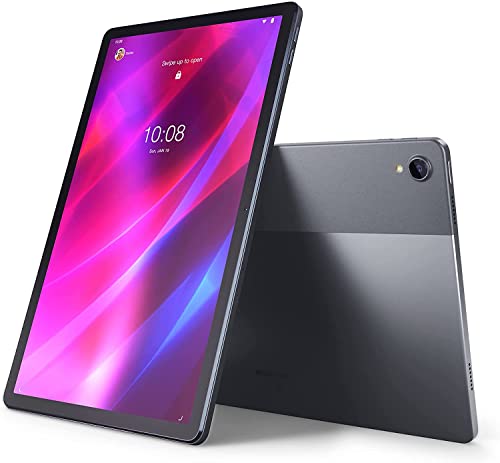
Lenovo Pad Plus Cellular (6GB + 128GB)
7.3/10

Overall score

Score
7.3/ 10
✕
What it is
Our main score for this model, 1–10. It combines specs, best-of lists, expert reviews and owners.
How we count it
Parts: Technical score 35%, List score 30%, Reviews score 25%, Sentiment score 10%
Marks: Each part gets a mark out of 10. For reviews, lists and owners, a typical model in this category gets about 8 and the best one gets 10.
No data yet: A part with no data shows "?". It counts as the mark of a weaker model in this category (4 in 5 models with data score higher). This way, models with reviews, lists and owners usually come out ahead.
Score distribution
â–¼
<55-66-77-88-99-10
Score components

35%

7.3

Technical score

30%

?

List scoreNot enough data yet, so we use 7.5, the mark of a weaker model in this category

25%

?

Reviews scoreNot enough data yet, so we use 7.4, the mark of a weaker model in this category

10%

?

Sentiment scoreNot enough data yet, so we use 6.9, the mark of a weaker model in this category

â–²Better than 65% of tablets
7.9

Value for money

Value for money
7.9/ 10
✕
What it is
An indicator that combines the tablet's overall rating with its cost.
When it matters
When you are looking for a tablet with a good balance between quality and price.
Score distribution
â–¼
<55-66-77-88-99-10
Score components

70%

7.3

Overall score

30%

9.1

Price

â–²Better than 73%
7.3

Technical score

Technical score
7.3/ 10
✕
What it is
How good the specs are compared with the other models in this category, 1–10.
How we count it
Areas: We rate the specs in each area against the other models in this category.
Weighting: The areas that matter most to buyers count more. The shares are shown under Score components.
Share: The technical score is 35% of the overall score.
Score distribution
â–¼
<55-66-77-88-99-10
Score components

22%

7.3

Performance

20%

6.3

Display

16%

7.9

Camera

14%

7.0

Battery

12%

7.3

Connectivity

8%

8.9

Software

5%

7.1

Design

3%

7.6

Audio

â–²Better than 74%
?

Reviews score

Reviews score
✕
What it is
Average grade from independent test sites, magazines and video reviewers, 1–10.
How we count it
Grades: Each review's own score is converted to 1–10; without one, we grade the review ourselves. Big test sites count more, short reviews half as much as full tests. A video review counts half.
Score: The average grade is 80% of the review mark; the number of reviews is the other 20% (1 review = 5, the typical number in this category = 8, the most-reviewed model = 10).
Enough data: With few reviews, the average grade is pulled toward the typical grade of this category. No reviews yet: 7.4 for now.
Share: Reviews count 25% of the overall score.
Score distribution
â–¼
<55-66-77-88-99-10
Grades by review (0)
We have not found an independent test of this model yet. Until we do, its review part counts as 7.4.
User ratings collected online are not part of this score.
No expert tests yet
?

List score

List score
7.5/ 10
✕
What it is
How often independent test sites, magazines and video reviewers put this model in their best-of lists for this category.
How we count it
Points: The model in the most lists of this category gets 10; the others get 8 to 10 in proportion. In no list yet: 7.5. Lists count 30% of the overall score.
Enough data: Every list counts, even a single one. With fewer than 5 best-of lists in the category, this part is left out.
Lists with this model (0)
Not in any best-of list yet, so this part counts as 7.5. Models in a list get 8 to 10.
Not in any best-of list yet
  • lenovo-pad-plus-6gb-128gb-cellular
lenovo-pad-plus-6gb-128gb-cellular
Where to buy
    N/A~ £270
Other versions:
Loading...
Loading category ranking...

Technical Specifications of tablet Lenovo Pad Plus Cellular (6GB + 128GB)

Technical score
Technical score
7.3/ 10
✕
What it is
How good the specs are compared with the other models in this category, 1–10.
How we count it
Areas: We rate the specs in each area against the other models in this category.
Weighting: The areas that matter most to buyers count more. The shares are shown under Score components.
Share: The technical score is 35% of the overall score.
Score distribution
â–¼
<55-66-77-88-99-10
Score components:

22%

7.3

Performance

20%

6.3

Display

16%

7.9

Camera

14%

7.0

Battery

12%

7.3

Connectivity

8%

8.9

Software

5%

7.1

Design

3%

7.6

Audio

7.3
Reviews score
7.4
List score
?
Value for money
Value for money
7.9/ 10
✕
What it is
An indicator that combines the tablet's overall rating with its cost.
When it matters
When you are looking for a tablet with a good balance between quality and price.
Score distribution
â–¼
<55-66-77-88-99-10
Score components:

70%

7.3

Overall score

30%

9.1

Price

7.9
RAM capacity
6 GB
This tablet has 6 GB of RAM, which is more than 65% of tablets and equal to 7.1% of tablets.
Process node
8 nm
This tablet is built on a 8 nm process, which is smaller than 69.2% of tablets and equal to 0.8% of tablets.
Internal storage
128 GB
This tablet has 128 GB of internal storage, which is more than 56.2% of tablets and equal to 20% of tablets.
Geekbench 6 single-core score
747 points
This tablet scores 747 points in single-core tests, which is higher than 51.9% of tablets.
Chipset
MediaTek Helio G99
This tablet runs on MediaTek Helio G99, which is less advanced than 50.8% of tablets and equal to 2.9% of tablets.
Show more
Screen resolution
2000×1200
This tablet has a 2000×1200 screen, which is sharper than 58.1% of tablets and equal to 8.1% of tablets.
Refresh rate
90 Hz
This tablet has a 90 Hz screen, which is smoother than 73.5% of tablets and equal to 6.7% of tablets.
Display type
IPS LCD
This tablet uses a IPS LCD display type. 17% of tablets use this display technology.
Pixel density
212 ppi
This tablet has a pixel density of 212 ppi, which is lower than 57.3% of tablets and equal to 0.9% of tablets.
Display glass type
?
Show more
Optical image stabilization
no
This tablet does not support optical stabilisation. 0.4% of tablets offer this.
Main camera megapixels
13 MP
This tablet has a rear camera with 13 MP resolution, which is higher than 73.9% of tablets and equal to 21.7% of tablets.
Front camera megapixels
8 MP
This tablet has a front camera with 8 MP resolution, which is higher than 69.6% of tablets and equal to 19.5% of tablets.
Main camera aperture
f/2.0
This tablet has a main camera aperture of f/2.0, which is wider than 57.4% of tablets and equal to 24.7% of tablets.
Optical zoom
1xxx
This tablet has 1xx optical zoom, which is stronger than 18.2% of tablets and equal to 80.9% of tablets.
Show more
Battery capacity
8,600 mAh
This tablet has 8,600 mAh battery capacity, which is larger than 79.7% of tablets and equal to 0.9% of tablets.
Charging speed
20 W
This tablet charges at 20 W, which is faster than 60.4% of tablets and equal to 6.2% of tablets.
Battery life
12 hours
This tablet has a battery life of 12 hours, which is longer than that of 65.7% of tablets and equal to that of 9.3% of tablets.
video playback
Wireless charging
no
This tablet does not support wireless charging. 1.5% of tablets offer this.
Fast charging
yes
This tablet supports fast charging. 43.2% of tablets offer this.
Show more
LTE support
yes
This tablet has built-in LTE. 57.1% of tablets offer this.
Wi-Fi connectivity
yes
This tablet connects to Wi-Fi. 0.2% of tablets offer this.
GPS
yes
This tablet has built-in GPS. 17.1% of tablets offer this.
5G connectivity
no
This tablet does not support 5G. 8.1% of tablets offer this.
NFC
no
This tablet does not include NFC. 10.8% of tablets offer this.
Show more
Operating system
Android
This tablet uses the Android operating system, which is more advanced than the one used by 23.2%.
Update support duration
medium
This tablet offers medium update support, which is longer than the support period of 47.6% of tablets and equal to that of 32.4% of tablets.
Direct OS updates
yes
This tablet supports direct OS updates. 20.3% of tablets offer this.
On-device AI
yes
This tablet supports on-device AI. 71.7% of tablets support this capability.
App tracking protection
yes
This tablet supports app tracking protection. 71.6% of tablets offer this.
Show more
IP rating
IP52
This tablet's IP rating is IP52, which is more protected than 84.8% of tablets and the same as 6.2% of tablets.
Weight
520 g
This tablet weighs 520 g, which is heavier than 58.4% of tablets and equal to 1.4% of tablets.
Backlit keyboard
no
This tablet does not support a backlit keyboard. 9.7% of tablets support backlit keyboards.
Keyboard accessory
yes
This tablet supports a keyboard accessory. 15.8% of tablets support this option.
Pen latency
?
Show more
Number of microphones
2
This tablet has a microphone array of 2, which is more than 55.1% of tablets and equal to 32.7% of tablets.
aptX Adaptive
no
This tablet does not support aptX Adaptive. 6.9% of tablets offer this.
Dolby Atmos support
yes
This tablet supports Dolby Atmos. 68.7% of tablets support Dolby Atmos.
N. of speakers
?
FM radio
?
Show more

Lenovo Pad Plus Cellular (6GB + 128GB) vs the average tablet

246810TotalPerformanceDisplayCameraBatteryConnectivitySoftwareDesignAudio
  • Faster storage type
    This tablet uses UFS storage, while the average tablet uses eMMC. Storage technology still varies widely across tablets.
    UFS vs eMMC
  • 50% faster refresh rate
    This tablet has a faster refresh rate than the average tablet (90 Hz vs 60 Hz). The average tablet has a 60 Hz refresh rate.
    90 Hz vs 60 Hz
  • More advanced graphics
    This tablet has more advanced graphics than the average tablet (Adreno 619 vs Mali-G51).
    Adreno 619 vs Mali-G51
  • 5 MP higher rear resolution
    This tablet has a higher-resolution rear camera than the average tablet (13 MP vs 8 MP). The average tablet has a rear camera of 8 MP.
    13 MP vs 8 MP
  • 3 MP higher front resolution
    This tablet has a higher-resolution front camera than the average tablet (8 MP vs 5 MP). The average tablet has a front camera of 5 MP.
    8 MP vs 5 MP
  • Supports LTE
    This tablet supports LTE, while the average tablet does not. 42.9% of tablets support LTE.
  • 30.3% larger battery capacity
    This tablet has a larger battery capacity than the average tablet (8,600 mAh vs 6,600 mAh). The average tablet offers 6,600 mAh of battery capacity.
    8,600 mAh vs 6,600 mAh
  • More advanced chipset
    This tablet has a more advanced chipset than the average tablet (MediaTek Helio G99 vs MediaTek MT8169A).
    MediaTek Helio G99 vs MediaTek MT8169A
  • Faster storage type
    This tablet uses UFS storage, while the average tablet uses eMMC. Storage technology still varies widely across tablets.
    UFS vs eMMC
  • More advanced graphics
    This tablet has more advanced graphics than the average tablet (Adreno 619 vs Mali-G51).
    Adreno 619 vs Mali-G51
  • More advanced chipset
    This tablet has a more advanced chipset than the average tablet (MediaTek Helio G99 vs MediaTek MT8169A).
    MediaTek Helio G99 vs MediaTek MT8169A
  • 69.2% faster GPU clock
    This tablet runs its GPU faster than the average tablet (1,100 MHz vs 650 MHz). The average tablet runs its GPU at 650 MHz.
    1,100 MHz vs 650 MHz
  • More advanced memory type
    This tablet uses more advanced memory than the average tablet (LPDDR4X vs LPDDR3).
    LPDDR4X vs LPDDR3
  • 2 GB more RAM
    This tablet has more RAM than the average tablet (6 GB vs 4 GB). The average tablet has 4 GB of RAM.
    6 GB vs 4 GB
  • 2x more internal storage
    This tablet has more internal storage than the average tablet (128 GB vs 64 GB). The average tablet has 64 GB of internal storage.
    128 GB vs 64 GB
  • Includes neural engine
    This tablet includes a neural engine, the average tablet does not. 25.6% of tablets include a neural engine.
  • 42.9% smaller process node
    This tablet has a smaller process node than the average tablet (8 nm vs 14 nm). The average tablet is built on 14 nm.
    8 nm vs 14 nm
  • 10% higher CPU speed
    This tablet has a higher CPU speed than the average tablet (2.2 GHz vs 2 GHz). The average tablet has CPU speed of 2 GHz.
    2.2 GHz vs 2 GHz
  • 50% faster refresh rate
    This tablet has a faster refresh rate than the average tablet (90 Hz vs 60 Hz). The average tablet has a 60 Hz refresh rate.
    90 Hz vs 60 Hz
  • 0.9 inches larger screen
    This tablet has a larger screen than the average tablet (11 inches vs 10.1 inches). The average tablet measures 10.1 inches.
    11 inches vs 10.1 inches
  • More vivid contrast
    This tablet has more contrast than the average tablet (1500:1 vs 1015:1). The average tablet has a contrast ratio of 1015:1.
    1,500:1 vs 1,015:1
  • Sharper display
    This tablet has a sharper screen than the average tablet (2000×1200 vs 1920×1200).
    2,000×1,200 vs 1,920×1,200
  • 5 MP higher rear resolution
    This tablet has a higher-resolution rear camera than the average tablet (13 MP vs 8 MP). The average tablet has a rear camera of 8 MP.
    13 MP vs 8 MP
  • 3 MP higher front resolution
    This tablet has a higher-resolution front camera than the average tablet (8 MP vs 5 MP). The average tablet has a front camera of 5 MP.
    8 MP vs 5 MP
  • Wider front camera aperture
    This tablet has a wider front camera aperture than the average tablet (f/2 vs f/2.2). The average tablet's front camera aperture is f/2.2.
    f/2.0 vs f/2.2
  • Wider main camera aperture
    This tablet has a wider main camera aperture than the average tablet (f/2 vs f/2.2). The average tablet's main camera aperture is f/2.2.
    f/2.0 vs f/2.2
  • 30.3% larger battery capacity
    This tablet has a larger battery capacity than the average tablet (8,600 mAh vs 6,600 mAh). The average tablet offers 6,600 mAh of battery capacity.
    8,600 mAh vs 6,600 mAh
  • 2 hours longer battery life
    This tablet offers longer battery life than the average tablet (12 hours vs 10 hours). The average tablet offers 10 hours of battery life.
    video playback
    12 hours vs 10 hours
  • Supports LTE
    This tablet supports LTE, while the average tablet does not. 42.9% of tablets support LTE.
  • Supports cellular data
    This tablet supports cellular data, while the average tablet does not. 47.4% of tablets offer this.
  • Includes on-device AI
    This tablet includes on-device AI, the average tablet does not. 28.3% of tablets include on-device AI.
  • Supports app tracking protection
    This tablet supports app tracking protection, while the average tablet does not. 28.4% of tablets offer this.
  • Supports dynamic themes
    This tablet supports dynamic themes, while the average tablet does not. 29.5% of tablets offer this.
  • Supports extra dim mode
    This tablet supports extra dim mode, while the average tablet does not. 35.9% of tablets offer this.
  • More dust and water protection
    This tablet offers better dust and water protection than the average tablet (IP52 vs not rated).
    IP52 vs not rated
  • Supports drawing
    This tablet is suitable for drawing, while the average tablet is not. 40% of tablets are suitable for drawing.
  • Supports stylus tilt
    This tablet supports stylus tilt, the average tablet does not. 33.5% of tablets support stylus tilt.
  • Supports Dolby Atmos
    This tablet supports Dolby Atmos, the average tablet does not. 31.3% of tablets support Dolby Atmos.
  • 1 more microphones
    This tablet has more microphones than the average tablet (2 vs 1). The average tablet's microphone count is 1.
    2 vs 1
  • No manual white balance
    This tablet does not support manual white balance, while the average tablet does. 51.5% of tablets support manual white balance.
  • 83.1 mm wider
    This tablet is wider than the average tablet (258.4 mm vs 175.3 mm). The average tablet is 175.3 mm wide.
    258.4 mm vs 175.3 mm
  • 1 nits dimmer screen
    This tablet is dimmer than the average tablet (400 nits vs 401 nits). The average tablet reaches 401 nits.
    400 nits vs 401 nits
  • 6.1% heavier
    This tablet is heavier than the average tablet (520 g vs 490 g). The average tablet weighs 490 g.
    520 g vs 490 g
  • 58.4 mm taller
    This tablet is taller than the average tablet (258.4 mm vs 200 mm). The average tablet is 200 mm tall.
    258.4 mm vs 200 mm
  • 4.1% softer screen detail
    This tablet has softer screen detail than the average tablet (212 ppi vs 221 ppi). The average tablet has a pixel density of 221 ppi.
    212 ppi vs 221 ppi
  • 1 nits dimmer screen
    This tablet is dimmer than the average tablet (400 nits vs 401 nits). The average tablet reaches 401 nits.
    400 nits vs 401 nits
  • 4.1% softer screen detail
    This tablet has softer screen detail than the average tablet (212 ppi vs 221 ppi). The average tablet has a pixel density of 221 ppi.
    212 ppi vs 221 ppi
  • No manual white balance
    This tablet does not support manual white balance, while the average tablet does. 51.5% of tablets support manual white balance.
  • 83.1 mm wider
    This tablet is wider than the average tablet (258.4 mm vs 175.3 mm). The average tablet is 175.3 mm wide.
    258.4 mm vs 175.3 mm
  • 6.1% heavier
    This tablet is heavier than the average tablet (520 g vs 490 g). The average tablet weighs 490 g.
    520 g vs 490 g
  • 58.4 mm taller
    This tablet is taller than the average tablet (258.4 mm vs 200 mm). The average tablet is 200 mm tall.
    258.4 mm vs 200 mm

Third-party reviews

What customers like about Lenovo Pad Plus Cellular (6GB + 128GB)

  • Four Dolby Atmos-tuned speakers provide loud, clear, and immersive audio
  • Vibrant 11-inch 2K display with sharp resolution and good brightness for indoor use
  • Excellent battery life, typically lasting through a full day of mixed use or up to 15 hours of music
  • Premium-feeling aluminum alloy unibody design that is slim and lightweight
  • Dedicated 'Productivity Mode' improves multitasking when a keyboard is attached

What customers don't like about Lenovo Pad Plus Cellular (6GB + 128GB)

  • Unimpressive camera quality, especially in low-light conditions where images appear flat and grainy
  • Limited long-term software support with no guaranteed updates beyond Android 12 for some models
  • No integrated 3.5mm headphone jack, requiring an adapter or Bluetooth for private listening
  • Face unlock feature is often described as mediocre and less secure than a fingerprint sensor
  • Performance can stutter during heavy multitasking or resource-intensive gaming like Genshin Impact

Verdict

The Lenovo Pad Plus Cellular is a versatile 11-inch tablet featuring a 2K (2000x1200) IPS display with 400 nits of brightness and a sleek, dual-tone aluminum-alloy design. It is powered by the Qualcomm Snapdragon 750G 5G processor, paired with 6GB of RAM and 128GB of internal storage, which is expandable up to 1TB via microSD. Key characteristics include a quad-speaker system tuned by JBL and Dolby Atmos for immersive audio, 5G connectivity for on-the-go productivity, and a 7700mAh battery that supports 20W quick charging. Main pros include its sharp high-resolution screen, robust audio performance, and smooth multitasking capabilities. However, some users have noted cons such as the lack of a 3.5mm headphone jack (requiring a USB-C adapter) and cameras that, while functional at 13MP (rear) and 8MP (front), may produce grainy images in low-light conditions.

Compare Lenovo Pad Plus Cellular (6GB + 128GB) with other tablets

1Product to compare no. 1
VS
2Product to compare no. 2
VS
3Product to compare no. 3 (optional)

Graphic comparison of Lenovo Pad Plus Cellular (6GB + 128GB) and other tablets

No results found