Scored using Tablets Methodology v3.0
Tablets Methodology v3.0
Mathematical & Unbiased Scoring
Products in this category are scored under Frontum Tablets Methodology v3.0: the technical score from the specifications is the base, and independent expert and video reviews (up to ±0.5 points), owner opinions (up to ±0.3) and best-of lists (up to +0.3) move it up or down.
Explore Tablets Methodology v3.0

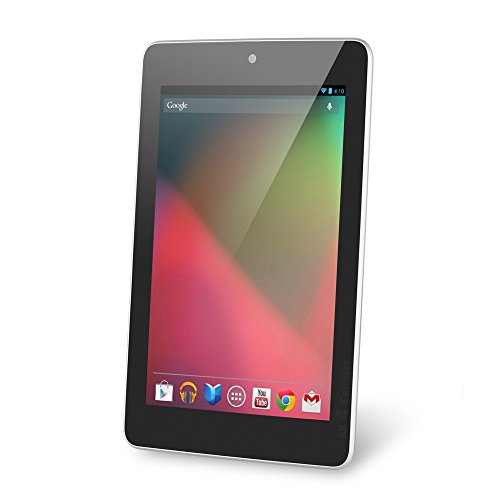
Asus Fonepad 3G ME371G (1GB + 8GB) review: 168 specs compared

Avg. price:~£200RAM capacity:1 GBInternal storage:8 GBScreen size:7 inchesChipset:Intel Atom Z2420

Asus Fonepad 3G ME371G (1GB + 8GB) Review: Compare 168 technical specifications and 7 expert and video reviews to see how this product ranks in the Tablets category and whether it is worth buying.

5.9/10

Overall score

Score
5.9/ 10
✕
What it is
Our main score for this model, 1–10. It combines specs, best-of lists, expert reviews and owners.
How we count it
Parts: Technical score 35%, List score 30%, Reviews score 25%, Sentiment score 10%
Marks: Each part gets a mark out of 10. For reviews, lists and owners, a typical model in this category gets about 8 and the best one gets 10.
No data yet: A part with no data shows "?". It counts as the mark of a weaker model in this category (4 in 5 models with data score higher). This way, models with reviews, lists and owners usually come out ahead.
Score distribution
â–¼
<55-66-77-88-99-10
Score components

35%

4.9

Technical score

30%

?

List scoreNot enough data yet, so we use 7.5, the mark of a weaker model in this category

25%

4.9

Reviews score

10%

?

Sentiment scoreNot enough data yet, so we use 6.9, the mark of a weaker model in this category

â–¼Worse than 90% of tablets
7.0

Value for money

Value for money
7.0/ 10
✕
What it is
An indicator that combines the tablet's overall rating with its cost.
When it matters
When you are looking for a tablet with a good balance between quality and price.
Score distribution
â–¼
<55-66-77-88-99-10
Score components

70%

5.9

Overall score

30%

9.5

Price

â–¼Worse than 83%
4.9

Technical score

Technical score
4.9/ 10
✕
What it is
How good the specs are compared with the other models in this category, 1–10.
How we count it
Areas: We rate the specs in each area against the other models in this category.
Weighting: The areas that matter most to buyers count more. The shares are shown under Score components.
Share: The technical score is 35% of the overall score.
Score distribution
â–¼
<55-66-77-88-99-10
Score components

22%

4.1

Performance

20%

4.3

Display

16%

6.2

Camera

14%

3.4

Battery

12%

5.7

Connectivity

8%

6.0

Software

5%

6.3

Design

3%

6.9

Audio

â–¼Worse than 90%
4.9

Reviews score

Reviews score
4.9/ 10
✕
What it is
Average grade from independent test sites, magazines and video reviewers, 1–10.
How we count it
Grades: Each review's own score is converted to 1–10; without one, we grade the review ourselves. Big test sites count more, short reviews half as much as full tests. A video review counts half.
Score: The average grade is 80% of the review mark; the number of reviews is the other 20% (1 review = 5, the typical number in this category = 8, the most-reviewed model = 10).
Enough data: With few reviews, the average grade is pulled toward the typical grade of this category. No reviews yet: 7.4 for now.
Share: Reviews count 25% of the overall score.
Score distribution
â–¼
<55-66-77-88-99-10

4.9

Mark 7.8 is below the typical mark 7.8 of this category, so it cannot lift the score above the technical score

80%

7.9

Average grade

20%

7.3

Popularity

Grades by review (7)
7 video reviews, each counting half as much as a written test. Reviews count 25% of the overall score.
User ratings collected online are not part of this score.
â–¼Worse than 93%
?

List score

List score
7.5/ 10
✕
What it is
How often independent test sites, magazines and video reviewers put this model in their best-of lists for this category.
How we count it
Points: The model in the most lists of this category gets 10; the others get 8 to 10 in proportion. In no list yet: 7.5. Lists count 30% of the overall score.
Enough data: Every list counts, even a single one. With fewer than 5 best-of lists in the category, this part is left out.
Lists with this model (0)
Not in any best-of list yet, so this part counts as 7.5. Models in a list get 8 to 10.
Not in any best-of list yet
  • No image
No image
Where to buy
    N/A~ £200
Best rankings
Available: ranking among products currently available (including other versions of this product).All: ranking among all products in the database.

What reviewers say about the Asus Fonepad 3G ME371G (1GB + 8GB)

Based on 0 · 7

Reviewers praise the long battery life and good display, but criticise connectivity, slow performance, build quality and the camera.
Praised
Criticised
Pick a topic to see who said what
Loading...
Loading category ranking...

Technical Specifications of tablet Asus Fonepad 3G ME371G (1GB + 8GB)

Technical score
Technical score
4.9/ 10
✕
What it is
How good the specs are compared with the other models in this category, 1–10.
How we count it
Areas: We rate the specs in each area against the other models in this category.
Weighting: The areas that matter most to buyers count more. The shares are shown under Score components.
Share: The technical score is 35% of the overall score.
Score distribution
â–¼
<55-66-77-88-99-10
Score components:

22%

4.1

Performance

20%

4.3

Display

16%

6.2

Camera

14%

3.4

Battery

12%

5.7

Connectivity

8%

6.0

Software

5%

6.3

Design

3%

6.9

Audio

4.9
Reviews score
4.9
List score
?
Value for money
Value for money
7.0/ 10
✕
What it is
An indicator that combines the tablet's overall rating with its cost.
When it matters
When you are looking for a tablet with a good balance between quality and price.
Score distribution
â–¼
<55-66-77-88-99-10
Score components:

70%

5.9

Overall score

30%

9.5

Price

7.0
RAM capacity
1 GB
This tablet has 1 GB of RAM, which is less than 78% of tablets and equal to 19.1% of tablets.
Process node
32 nm
This tablet is built on a 32 nm process, which is larger than 82.7% of tablets and equal to 4.2% of tablets.
Internal storage
8 GB
This tablet has 8 GB of internal storage, which is less than 93.6% of tablets and equal to 4.8% of tablets.
Geekbench 6 single-core score
?
Chipset
Intel Atom Z2420
This tablet runs on Intel Atom Z2420, which is less advanced than 84% of tablets and equal to 0.1% of tablets.
Show more
What reviewers say
Screen resolution
1280×800
This tablet has a 1280×800 screen, which is less sharp than 68.1% of tablets and equal to 21.7% of tablets.
Refresh rate
60 Hz
This tablet has a 60 Hz screen, which is smoother than 0.1% of tablets and equal to 73.4% of tablets.
Display type
IPS LCD
This tablet uses a IPS LCD display type. 17% of tablets use this display technology.
Pixel density
216 ppi
This tablet has a pixel density of 216 ppi, which is lower than 52% of tablets and equal to 3.7% of tablets.
Display glass type
?
Show more
What reviewers say
Optical image stabilization
no
This tablet does not support optical stabilisation. 0.4% of tablets offer this.
Main camera megapixels
?
Front camera megapixels
1.2 MP
This tablet has a front camera with 1.2 MP resolution, which is lower than 86.3% of tablets and equal to 4.8% of tablets.
Main camera aperture
f/2.4
This tablet has a main camera aperture of f/2.4, which is narrower than 70% of tablets and equal to 17.5% of tablets.
Optical zoom
1xxx
This tablet has 1xx optical zoom, which is stronger than 18.2% of tablets and equal to 80.9% of tablets.
Show more
What reviewers say
Battery capacity
4,270 mAh
This tablet has 4,270 mAh battery capacity, which is smaller than 81.2% of tablets and equal to 0.3% of tablets.
Charging speed
5 W
This tablet charges at 5 W, which is slower than 96% of tablets and equal to 3.3% of tablets.
Battery life
9 hours
This tablet has a battery life of 9 hours, which is shorter than that of 62.7% of tablets and equal to that of 6.9% of tablets.
Wireless charging
no
This tablet does not support wireless charging. 1.5% of tablets offer this.
Fast charging
no
This tablet does not support fast charging. 56.9% of tablets offer this.
Show more
What reviewers say
LTE support
no
This tablet does not have built-in LTE. 42.9% of tablets offer this.
Wi-Fi connectivity
yes
This tablet connects to Wi-Fi. 0.2% of tablets offer this.
GPS
yes
This tablet has built-in GPS. 17.1% of tablets offer this.
5G connectivity
no
This tablet does not support 5G. 8.1% of tablets offer this.
NFC
no
This tablet does not include NFC. 10.8% of tablets offer this.
Show more
What reviewers say
Operating system
Android
This tablet uses the Android operating system, which is more advanced than the one used by 23.2%.
Update support duration
short
This tablet offers short update support, which is shorter than the support period of 52.4% of tablets and equal to that of 47.6% of tablets.
Direct OS updates
yes
This tablet supports direct OS updates. 20.3% of tablets offer this.
On-device AI
no
This tablet does not support on-device AI. 28.3% of tablets support this capability.
App tracking protection
no
This tablet does not support app tracking protection. 28.4% of tablets offer this.
Show more
IP rating
not rated
This tablet's IP rating is not rated, which is less protected than 16.5% of tablets and the same as 83.6% of tablets.
Weight
340 g
This tablet weighs 340 g, which is lighter than 84% of tablets and equal to 0.9% of tablets.
Backlit keyboard
no
This tablet does not support a backlit keyboard. 9.7% of tablets support backlit keyboards.
Keyboard accessory
?
Pen latency
N/A
Show more
Number of microphones
2
This tablet has a microphone array of 2, which is more than 55.1% of tablets and equal to 32.7% of tablets.
aptX Adaptive
no
This tablet does not support aptX Adaptive. 6.9% of tablets offer this.
Dolby Atmos support
no
This tablet does not support Dolby Atmos. 31.3% of tablets support Dolby Atmos.
N. of speakers
?
FM radio
yes
This tablet includes an FM radio. 81.1% of tablets offer this.
Show more

Asus Fonepad 3G ME371G (1GB + 8GB) vs the average tablet

246810TotalPerformanceDisplayCameraBatteryConnectivitySoftwareDesignAudio
  • Manual focus control
    This tablet supports manual focus, while the average tablet does not. 36.9% of tablets support manual focus.
  • 30.6% lighter
    This tablet is lighter than the average tablet (340 g vs 490 g). The average tablet weighs 490 g.
    340 g vs 490 g
  • Supports multithreading
    This tablet supports multithreading, while the average tablet does not. 9.9% of tablets support multithreading.
  • Supports cellular data
    This tablet supports cellular data, while the average tablet does not. 47.4% of tablets offer this.
  • 1 more microphones
    This tablet has more microphones than the average tablet (2 vs 1). The average tablet's microphone count is 1.
    2 vs 1
  • 55.3 mm narrower
    This tablet is narrower than the average tablet (120 mm vs 175.3 mm). The average tablet is 175.3 mm wide.
    120 mm vs 175.3 mm
  • Supports multithreading
    This tablet supports multithreading, while the average tablet does not. 9.9% of tablets support multithreading.
  • Manual focus control
    This tablet supports manual focus, while the average tablet does not. 36.9% of tablets support manual focus.
  • Supports cellular data
    This tablet supports cellular data, while the average tablet does not. 47.4% of tablets offer this.
  • 30.6% lighter
    This tablet is lighter than the average tablet (340 g vs 490 g). The average tablet weighs 490 g.
    340 g vs 490 g
  • 55.3 mm narrower
    This tablet is narrower than the average tablet (120 mm vs 175.3 mm). The average tablet is 175.3 mm wide.
    120 mm vs 175.3 mm
  • 1 more microphones
    This tablet has more microphones than the average tablet (2 vs 1). The average tablet's microphone count is 1.
    2 vs 1
  • 6 fewer CPU threads
    This tablet has fewer CPU threads than the average tablet (2 vs 8). The average tablet has 8 CPU threads.
    2 vs 8
  • 3.8 MP lower front resolution
    This tablet has a lower-resolution front camera than the average tablet (1.2 MP vs 5 MP). The average tablet has a front camera of 5 MP.
    1.2 MP vs 5 MP
  • 30.0% lower review score
    Reviews score
    4.9/ 10
    ✕
    What it is
    Average grade from independent test sites, magazines and video reviewers, 1–10.
    How we count it
    Grades: Each review's own score is converted to 1–10; without one, we grade the review ourselves. Big test sites count more, short reviews half as much as full tests. A video review counts half.
    Score: The average grade is 80% of the review mark; the number of reviews is the other 20% (1 review = 5, the typical number in this category = 8, the most-reviewed model = 10).
    Enough data: With few reviews, the average grade is pulled toward the typical grade of this category. No reviews yet: 7.4 for now.
    Share: Reviews count 25% of the overall score.
    Score distribution
    â–¼
    <55-66-77-88-99-10

    4.9

    Mark 7.8 is below the typical mark 7.8 of this category, so it cannot lift the score above the technical score

    80%

    7.9

    Average grade

    20%

    7.3

    Popularity

    Grades by review (7)
    7 video reviews, each counting half as much as a written test. Reviews count 25% of the overall score.
    User ratings collected online are not part of this score.
    4.9 vs 7.0
  • No USB-C port
    This tablet does not have a USB Type-C port, while the average tablet does. 54% of tablets have one.
  • 3 GB less RAM
    This tablet has less RAM than the average tablet (1 GB vs 4 GB). The average tablet has 4 GB of RAM.
    1 GB vs 4 GB
  • Shorter update support
    This tablet offers shorter update support than the average tablet (short vs medium). The average tablet gets medium of update support.
    short vs medium
  • No fast charging
    This tablet does not support fast charging, while the average tablet does. 56.8% of tablets support fast charging.
  • 40% lower CPU speed
    This tablet has a lower CPU speed than the average tablet (1.2 GHz vs 2 GHz). The average tablet has CPU speed of 2 GHz.
    1.2 GHz vs 2 GHz
  • 30.0% lower review score
    Reviews score
    4.9/ 10
    ✕
    What it is
    Average grade from independent test sites, magazines and video reviewers, 1–10.
    How we count it
    Grades: Each review's own score is converted to 1–10; without one, we grade the review ourselves. Big test sites count more, short reviews half as much as full tests. A video review counts half.
    Score: The average grade is 80% of the review mark; the number of reviews is the other 20% (1 review = 5, the typical number in this category = 8, the most-reviewed model = 10).
    Enough data: With few reviews, the average grade is pulled toward the typical grade of this category. No reviews yet: 7.4 for now.
    Share: Reviews count 25% of the overall score.
    Score distribution
    â–¼
    <55-66-77-88-99-10

    4.9

    Mark 7.8 is below the typical mark 7.8 of this category, so it cannot lift the score above the technical score

    80%

    7.9

    Average grade

    20%

    7.3

    Popularity

    Grades by review (7)
    7 video reviews, each counting half as much as a written test. Reviews count 25% of the overall score.
    User ratings collected online are not part of this score.
    4.9 vs 7.0
  • 8.4% worse value for money
    Asus Fonepad 3G ME371G (1GB + 8GB) has worse value for money than the average tablet (6.97 vs 7.6).
    6.97 vs 7.55
  • 6 fewer CPU threads
    This tablet has fewer CPU threads than the average tablet (2 vs 8). The average tablet has 8 CPU threads.
    2 vs 8
  • 3 GB less RAM
    This tablet has less RAM than the average tablet (1 GB vs 4 GB). The average tablet has 4 GB of RAM.
    1 GB vs 4 GB
  • 40% lower CPU speed
    This tablet has a lower CPU speed than the average tablet (1.2 GHz vs 2 GHz). The average tablet has CPU speed of 2 GHz.
    1.2 GHz vs 2 GHz
  • 87.5% less internal storage
    This tablet has less internal storage than the average tablet (8 GB vs 64 GB). The average tablet has 64 GB of internal storage.
    8 GB vs 64 GB
  • 2.29x larger process node
    This tablet has a larger process node than the average tablet (32 nm vs 14 nm). The average tablet is built on 14 nm.
    32 nm vs 14 nm
  • More basic graphics
    This tablet has less advanced graphics than the average tablet (PowerVR SGX540 vs Mali-G51).
    PowerVR SGX540 vs Mali-G51
  • 1,066 MHz slower RAM speed
    This tablet has a lower RAM speed than the average tablet (800 MHz vs 1,866 MHz). The average tablet has RAM speed of 1,866 MHz.
    800 MHz vs 1,866 MHz
  • No big.LITTLE architecture
    This tablet does not support big.LITTLE architecture, while the average tablet does. 51.7% of tablets support big.LITTLE architecture.
  • 57% less memory bandwidth
    This tablet has less memory bandwidth than the average tablet (6.4 GB/s vs 14.9 GB/s). The average tablet has 14.9 GB/s of memory bandwidth.
    6.4 GB/s vs 14.9 GB/s
  • 6 years older
    This tablet was released earlier than the average tablet (2013 vs 2019). The average tablet was released in 2019.
    April 2013
    2013 vs 2019
  • More basic memory type
    This tablet uses less advanced memory than the average tablet (LPDDR2 vs LPDDR3).
    LPDDR2 vs LPDDR3
  • 3.1 inches smaller screen
    This tablet has a smaller screen than the average tablet (7 inches vs 10.1 inches). The average tablet measures 10.1 inches.
    7 inches vs 10.1 inches
  • 101 nits dimmer screen
    This tablet is dimmer than the average tablet (300 nits vs 401 nits). The average tablet reaches 401 nits.
    300 nits vs 401 nits
  • 100 nits lower typical brightness
    This tablet has a lower typical brightness than the average tablet (300 nits vs 400 nits). The average tablet reaches 400 nits typical brightness.
    300 nits vs 400 nits
  • Less sharp display
    This tablet has a less sharp screen than the average tablet (1280×800 vs 1920×1200).
    1,280×800 vs 1,920×1,200
  • 3.8 MP lower front resolution
    This tablet has a lower-resolution front camera than the average tablet (1.2 MP vs 5 MP). The average tablet has a front camera of 5 MP.
    1.2 MP vs 5 MP
  • No continuous video AF
    This tablet does not support continuous video AF, the average tablet does. 57.7% of tablets support continuous video autofocus.
  • Worse main-camera video
    This tablet supports worse main-camera video recording than the average tablet (720x30 fps vs 1080x30 fps). The average tablet supports 1080x30 fps main-camera video recording.
    720x30 fps vs 1080x30 fps
  • No manual exposure control
    This tablet does not support manual exposure, while the average tablet does. 63.6% of tablets support manual exposure.
  • Narrower main camera aperture
    This tablet has a narrower main camera aperture than the average tablet (f/2.4 vs f/2.2). The average tablet's main camera aperture is f/2.2.
    f/2.4 vs f/2.2
  • No fast charging
    This tablet does not support fast charging, while the average tablet does. 56.8% of tablets support fast charging.
  • 35.3% smaller battery capacity
    This tablet has a smaller battery capacity than the average tablet (4,270 mAh vs 6,600 mAh). The average tablet offers 6,600 mAh of battery capacity.
    4,270 mAh vs 6,600 mAh
  • 72.2% slower charging
    This tablet charges slower than the average tablet (5 W vs 18 W). The average tablet charges at 18 W.
    5 W vs 18 W
  • 1 hours shorter battery life
    This tablet offers shorter battery life than the average tablet (9 hours vs 10 hours). The average tablet offers 10 hours of battery life.
    9 hours vs 10 hours
  • No USB-C port
    This tablet does not have a USB Type-C port, while the average tablet does. 54% of tablets have one.
  • Older Bluetooth version
    This tablet has an older Bluetooth version than the average tablet (3 vs 5).
    3 vs 5
  • Older Wi-Fi standard
    This tablet has an older Wi-Fi standard than the average tablet (Wi-Fi 4 (802.11n) vs Wi-Fi 5 (802.11ac)).
    Wi-Fi 4 (802.11n) vs Wi-Fi 5 (802.11ac)
  • Fewer Wi-Fi bands
    This tablet supports fewer Wi-Fi bands than the average tablet (2.4GHz vs 2.4GHz/5GHz). The average tablet supports 2.4GHz/5GHz Wi-Fi bands.
    2.4GHz vs 2.4GHz/5GHz
  • No face recognition
    This tablet does not have face recognition, the average tablet does. 56.4% of tablets support face recognition.
  • Shorter update support
    This tablet offers shorter update support than the average tablet (short vs medium). The average tablet gets medium of update support.
    short vs medium
  • No split-screen
    This tablet does not support split-screen, the average tablet does. 72.8% of tablets support split-screen.
  • No picture-in-picture mode
    This tablet does not support picture-in-picture, the average tablet does. 61.4% of tablets support picture-in-picture.
  • No camera and mic privacy
    This tablet does not support camera and mic privacy, while the average tablet does. 56.6% of tablets offer this.
  • No multi-user mode
    User score
    8.0/ 10
    ✕
    What it is
    Average of independent expert reviews and videos, graded by us; missing reviews count as 7/10.
    When it matters
    When you want to know how independent test sites and video reviewers rate the product in real use.
    Score distribution
    â–¼
    â–¼
    <55-66-77-88-99-10
    Asus Fonepad 3G ME371G
    the average tablet
    Asus Fonepad 3G ME371G (1GB + 8GB) does not support multi-user mode, while the average tablet does. 73.8% of tablets offer this.
  • No full-page screenshots
    This tablet does not support full-page screenshots, the average tablet does. 53% of tablets support full-page screenshots.
  • No location privacy
    This tablet does not support location privacy, while the average tablet does. 76.7% of tablets offer this.
  • No dark mode
    This tablet does not support dark mode, while the average tablet does. 57.7% of tablets offer this.
  • 2.4 mm thicker
    This tablet is thicker than the average tablet (10.4 mm vs 8 mm). The average tablet is 8 mm thick.
    10.4 mm vs 8 mm

Video reviews

Hands-on testing, unboxing, and real-world video evaluations

8.0
PhoneArena
≈ estimated
31/05/2013
Hands-on review · build, display, calls and battery
Verdict
Asus Fonepad 3G ME371G is a very good 3G tablet with long battery life, but weak call quality and modest speed hold it back.
9.0
UltrabookReview
≈ estimated
22/05/2013
Hands-on review · build, screen, battery and phone features
Verdict
Asus Fonepad 3G ME371G suits budget buyers who want a tablet that doubles as a phone, despite minor flaws.
8.0
BASIC thinking
≈ estimated
08/05/2013
Full review · performance, battery, calls and video playback
Verdict
Asus Fonepad 3G ME371G is a good budget 3G tablet for general use, unless heavy gaming matters to you.
7.0
Android Authority
≈ estimated
30/04/2013
Hands-on review · battery, phone calls and camera tests
Verdict
Asus Fonepad 3G ME371G is a very nice 3G tablet rather than a great oversized phone, so it will not suit everyone.
8.0
TechRadar
≈ estimated
10/05/2013
Short review · battery tests and performance checks
Verdict
Asus Fonepad 3G ME371G is an effective, affordable phone-tablet hybrid and a decent tablet, though performance lags.
9.0
Geekanoids
≈ estimated
26/04/2013
Unboxing · first impressions and first look
Verdict
Asus Fonepad 3G ME371G is better than expected, with a well-priced, snappy tablet that looks nice.
Overview video
Not graded

Third-party reviews

What customers like about Asus Fonepad 3G ME371G (1GB + 8GB)

  • Exceptional value for money, often cited as a more versatile budget alternative to the Nexus 7.
  • High-quality 7-inch IPS display (1280x800) with good viewing angles and color reproduction.
  • Impressive battery life, frequently lasting over 10 hours of regular usage.
  • Includes both 3G connectivity and a microSD slot for expandable storage up to 32GB.
  • Premium build quality with a sturdy, brushed aluminum back panel.
  • Unique ability to make voice calls and send SMS like a standard smartphone.

What customers don't like about Asus Fonepad 3G ME371G (1GB + 8GB)

  • Modest performance from the single-core Intel Atom Z2420 processor, leading to sluggishness and UI stutters.
  • Inadequate for 3D gaming; intensive apps frequently experience lag and frame drops.
  • Awkward ergonomics for phone use; holding a 7-inch device to the ear is often described as impractical.
  • Underwhelming camera quality, with the 3MP rear camera producing grainy, washed-out images.
  • Internal speakers are tinny and lack bass, making headphones necessary for media.
  • Outdated software support, with users noting a lack of official Android OS upgrades beyond version 4.1.

Verdict

The Asus Fonepad 3G ME371G is a 7-inch hybrid device that combines tablet functionality with full 3G telephony, powered by a 1.2GHz Intel Atom Z2420 single-core processor with hyper-threading and 1GB of RAM. It features a high-definition 1280 x 800 IPS display for wide viewing angles, 8GB of internal storage expandable via microSD, and a metallic finish for a premium feel. Main advantages include its excellent battery life of up to 9–10 hours, solid build quality, and the convenience of voice calling on a portable screen; however, it is held back by the aging Android 4.1 Jelly Bean OS, a single-core CPU that struggles with modern 3D gaming, and underwhelming 3.15MP rear camera performance.

Compare Asus Fonepad 3G ME371G (1GB + 8GB) with other tablets

1Product to compare no. 1
VS
2Product to compare no. 2
VS
3Product to compare no. 3 (optional)

Graphic comparison of Asus Fonepad 3G ME371G (1GB + 8GB) and other tablets

No results found