Scored using Tablets Methodology v3.0
Tablets Methodology v3.0
Mathematical & Unbiased Scoring
Products in this category are scored under Frontum Tablets Methodology v3.0: the technical score from the specifications is the base, and independent expert and video reviews (up to ±0.5 points), owner opinions (up to ±0.3) and best-of lists (up to +0.3) move it up or down.
Explore Tablets Methodology v3.0

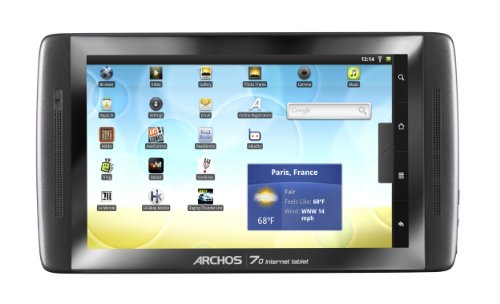
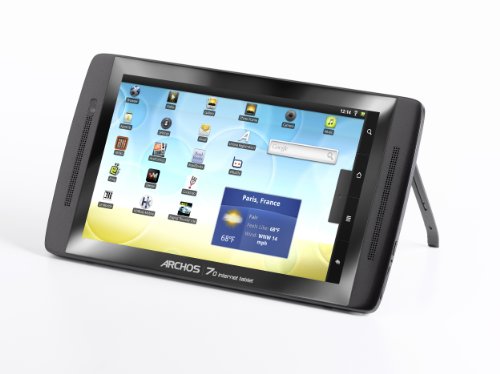
Archos 70 (256MB + 250GB) review: 168 specs compared

Avg. price:~£260RAM capacity:0.25 GBInternal storage:250 GBScreen size:7 inchesChipset:ARM Cortex-A8

Archos 70 (256MB + 250GB) Review: Compare 168 technical specifications and 20 expert and video reviews to see how this product ranks in the Tablets category and whether it is worth buying.
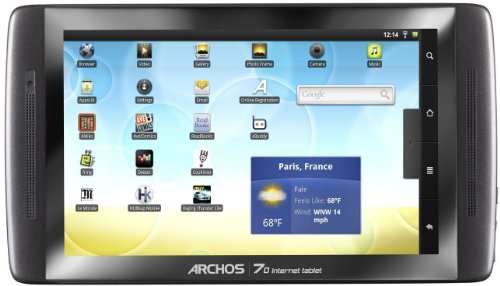
Archos 70 (256MB + 250GB)
5.9/10

Overall score

Score
5.9/ 10
✕
What it is
Our main score for this model, 1–10. It combines specs, best-of lists, expert reviews and owners.
How we count it
Parts: Technical score 35%, List score 30%, Reviews score 25%, Sentiment score 10%
Marks: Each part gets a mark out of 10. For reviews, lists and owners, a typical model in this category gets about 8 and the best one gets 10.
No data yet: A part with no data shows "?". It counts as the mark of a weaker model in this category (4 in 5 models with data score higher). This way, models with reviews, lists and owners usually come out ahead.
Score distribution
â–¼
<55-66-77-88-99-10
Score components

35%

4.6

Technical score

30%

?

List scoreNot enough data yet, so we use 7.5, the mark of a weaker model in this category

25%

4.6

Reviews score

10%

8.1

Sentiment score

â–¼Worse than 91% of tablets
6.8

Value for money

Value for money
6.8/ 10
✕
What it is
An indicator that combines the tablet's overall rating with its cost.
When it matters
When you are looking for a tablet with a good balance between quality and price.
Score distribution
â–¼
<55-66-77-88-99-10
Score components

70%

5.9

Overall score

30%

9.2

Price

â–¼Worse than 91%
4.6

Technical score

Technical score
4.6/ 10
✕
What it is
How good the specs are compared with the other models in this category, 1–10.
How we count it
Areas: We rate the specs in each area against the other models in this category.
Weighting: The areas that matter most to buyers count more. The shares are shown under Score components.
Share: The technical score is 35% of the overall score.
Score distribution
â–¼
<55-66-77-88-99-10
Score components

22%

4.5

Performance

20%

4.0

Display

16%

4.7

Camera

14%

3.7

Battery

12%

5.2

Connectivity

8%

5.8

Software

5%

5.6

Design

3%

7.1

Audio

â–¼Worse than 97%
4.6

Reviews score

Reviews score
4.6/ 10
✕
What it is
Average grade from independent test sites, magazines and video reviewers, 1–10.
How we count it
Grades: Each review's own score is converted to 1–10; without one, we grade the review ourselves. Big test sites count more, short reviews half as much as full tests. A video review counts half.
Score: The average grade is 80% of the review mark; the number of reviews is the other 20% (1 review = 5, the typical number in this category = 8, the most-reviewed model = 10).
Enough data: With few reviews, the average grade is pulled toward the typical grade of this category. No reviews yet: 7.4 for now.
Share: Reviews count 25% of the overall score.
Score distribution
â–¼
<55-66-77-88-99-10

4.6

Mark 7.8 is below the typical mark 7.8 of this category, so it cannot lift the score above the technical score

80%

7.7

Average grade

20%

8.4

Popularity

Grades by review (20)
11 reviews: 4 with a printed score, 7 estimated from the review. 9 video reviews, each counting half as much as a written test. Reviews count 25% of the overall score.
User ratings collected online are not part of this score.
â–¼Worse than 98%
?

List score

List score
7.5/ 10
✕
What it is
How often independent test sites, magazines and video reviewers put this model in their best-of lists for this category.
How we count it
Points: The model in the most lists of this category gets 10; the others get 8 to 10 in proportion. In no list yet: 7.5. Lists count 30% of the overall score.
Enough data: Every list counts, even a single one. With fewer than 5 best-of lists in the category, this part is left out.
Lists with this model (0)
Not in any best-of list yet, so this part counts as 7.5. Models in a list get 8 to 10.
Not in any best-of list yet
  • archos-70-256mb-250gb
  • archos-70-256mb-250gb
  • archos-70-256mb-250gb
  • archos-70-256mb-250gb
  • archos-70-256mb-250gb
archos-70-256mb-250gb
Where to buy
    N/A~ £260
Best rankings
Available: ranking among products currently available (including other versions of this product).All: ranking among all products in the database.
Available versions:
Other versions:
256MB + 250GB

What reviewers say about the Archos 70 (256MB + 250GB)

Based on 11 · 12

Reviewers enjoy media playback and the compact, light size, but criticize the limited app store and missing software updates.
Praised
Mixed views
Criticised
Pick a topic to see who said what

What owners say about the Archos 70 (256MB + 250GB)

Based on 62 owners sharing their experience in online comments

56%positive7%mixed37%negative

Owners enjoy its media playback and helpful setup guides, but outdated software and unreliable app access cause frustration.

What owners dislike

  • Owners often can't reach the app store: AppsLib shows nothing, Arctools asks for a PayPal link, and some installs fail with memory errors.7
  • The tablet is stuck on Android 2.2, so newer apps won't install and promised updates have been slow to arrive.4
  • Only about 100 MB of RAM is free at any time, so apps close in the background, browser tabs crash, and the tablet freezes when memory drops low.3

Points mentioned by at least 3 owners, most mentioned first.

Loading...
Loading category ranking...

Technical Specifications of tablet Archos 70 (256MB + 250GB)

Technical score
Technical score
4.6/ 10
✕
What it is
How good the specs are compared with the other models in this category, 1–10.
How we count it
Areas: We rate the specs in each area against the other models in this category.
Weighting: The areas that matter most to buyers count more. The shares are shown under Score components.
Share: The technical score is 35% of the overall score.
Score distribution
â–¼
<55-66-77-88-99-10
Score components:

22%

4.5

Performance

20%

4.0

Display

16%

4.7

Camera

14%

3.7

Battery

12%

5.2

Connectivity

8%

5.8

Software

5%

5.6

Design

3%

7.1

Audio

4.6
Reviews score
4.6
List score
?
Value for money
Value for money
6.8/ 10
✕
What it is
An indicator that combines the tablet's overall rating with its cost.
When it matters
When you are looking for a tablet with a good balance between quality and price.
Score distribution
â–¼
<55-66-77-88-99-10
Score components:

70%

5.9

Overall score

30%

9.2

Price

6.8
RAM capacity
0.25 GB
This tablet has 0.25 GB of RAM, which is less than 99.8% of tablets and equal to 0.2% of tablets.
Process node
45 nm
This tablet is built on a 45 nm process, which is larger than 94.9% of tablets and equal to 4.4% of tablets.
Internal storage
250 GB
This tablet has 250 GB of internal storage, which is more than 76.3% of tablets and equal to 0.1% of tablets.
Geekbench 6 single-core score
?
Chipset
ARM Cortex-A8
This tablet runs on ARM Cortex-A8, which is less advanced than 99.8% of tablets.
Show more
What reviewers say
Screen resolution
800×480
This tablet has a 800×480 screen, which is less sharp than 99.2% of tablets and equal to 0.7% of tablets.
Refresh rate
?
Display type
LCD
This tablet uses a LCD display type. 83.1% of tablets use this display technology.
Pixel density
133 ppi
This tablet has a pixel density of 133 ppi, which is lower than 96.9% of tablets and equal to 0.7% of tablets.
Display glass type
Plastic
This tablet protects its screen with Plastic, which is less durable than 97.7% of tablets and the same as 2.3% of tablets.
Show more
What reviewers say
Optical image stabilization
no
This tablet does not support optical stabilisation. 0.4% of tablets offer this.
Main camera megapixels
N/A
Front camera megapixels
0.3 MP
This tablet has a front camera with 0.3 MP resolution, which is lower than 93% of tablets and equal to 7% of tablets.
Main camera aperture
N/A
Optical zoom
1xxx
This tablet has 1xx optical zoom, which is stronger than 18.2% of tablets and equal to 80.9% of tablets.
Show more
Battery capacity
4,270 mAh
This tablet has 4,270 mAh battery capacity, which is smaller than 81.2% of tablets and equal to 0.3% of tablets.
Charging speed
1 W
This tablet charges at 1 W, which is slower than 100% of tablets.
Battery life
10 hours
This tablet has a battery life of 10 hours, which is longer than that of 39.1% of tablets and equal to that of 20.5% of tablets.
video playback
Wireless charging
no
This tablet does not support wireless charging. 1.5% of tablets offer this.
Fast charging
no
This tablet does not support fast charging. 56.9% of tablets offer this.
Show more
What reviewers say
LTE support
no
This tablet does not have built-in LTE. 42.9% of tablets offer this.
Wi-Fi connectivity
yes
This tablet connects to Wi-Fi. 0.2% of tablets offer this.
GPS
no
This tablet does not have built-in GPS. 82.9% of tablets offer this.
5G connectivity
no
This tablet does not support 5G. 8.1% of tablets offer this.
NFC
no
This tablet does not include NFC. 10.8% of tablets offer this.
Show more
What reviewers say
Operating system
Android
This tablet uses the Android operating system, which is more advanced than the one used by 23.2%.
Update support duration
short
This tablet offers short update support, which is shorter than the support period of 52.4% of tablets and equal to that of 47.6% of tablets.
Direct OS updates
yes
This tablet supports direct OS updates. 20.3% of tablets offer this.
On-device AI
no
This tablet does not support on-device AI. 28.3% of tablets support this capability.
App tracking protection
no
This tablet does not support app tracking protection. 28.4% of tablets offer this.
Show more
What reviewers say
IP rating
not rated
This tablet's IP rating is not rated, which is less protected than 16.5% of tablets and the same as 83.6% of tablets.
Weight
400 g
This tablet weighs 400 g, which is lighter than 74.5% of tablets and equal to 0.6% of tablets.
Backlit keyboard
no
This tablet does not support a backlit keyboard. 9.7% of tablets support backlit keyboards.
Keyboard accessory
yes
This tablet supports a keyboard accessory. 15.8% of tablets support this option.
Pen latency
N/A
Show more
What reviewers say
Number of microphones
1
This tablet has a microphone array of 1, which is more than 0.2% of tablets and equal to 54.8% of tablets.
aptX Adaptive
no
This tablet does not support aptX Adaptive. 6.9% of tablets offer this.
Dolby Atmos support
yes
This tablet supports Dolby Atmos. 68.7% of tablets support Dolby Atmos.
N. of speakers
?
FM radio
no
This tablet does not include an FM radio. 19% of tablets offer this.
Show more

Archos 70 (256MB + 250GB) vs the average tablet

246810TotalPerformanceDisplayCameraBatteryConnectivitySoftwareDesignAudio
  • 3.91x more internal storage
    This tablet has more internal storage than the average tablet (250 GB vs 64 GB). The average tablet has 64 GB of internal storage.
    250 GB vs 64 GB
  • Wider color gamut
    This tablet supports a wider color gamut than the average tablet (DCI-P3 vs sRGB). The average tablet covers sRGB color gamut.
    DCI-P3 vs sRGB
  • Supports Dolby Atmos
    This tablet supports Dolby Atmos, the average tablet does not. 31.3% of tablets support Dolby Atmos.
  • 18.4% lighter
    This tablet is lighter than the average tablet (400 g vs 490 g). The average tablet weighs 490 g.
    400 g vs 490 g
  • Supports HDMI output
    This tablet supports HDMI output, while the average tablet does not. 49.8% of tablets offer this.
  • More advanced memory type
    This tablet uses more advanced memory than the average tablet (DDR3 vs LPDDR3).
    DDR3 vs LPDDR3
  • 3.91x more internal storage
    This tablet has more internal storage than the average tablet (250 GB vs 64 GB). The average tablet has 64 GB of internal storage.
    250 GB vs 64 GB
  • More advanced memory type
    This tablet uses more advanced memory than the average tablet (DDR3 vs LPDDR3).
    DDR3 vs LPDDR3
  • Wider color gamut
    This tablet supports a wider color gamut than the average tablet (DCI-P3 vs sRGB). The average tablet covers sRGB color gamut.
    DCI-P3 vs sRGB
  • Supports HDMI output
    This tablet supports HDMI output, while the average tablet does not. 49.8% of tablets offer this.
  • 18.4% lighter
    This tablet is lighter than the average tablet (400 g vs 490 g). The average tablet weighs 490 g.
    400 g vs 490 g
  • Supports Dolby Atmos
    This tablet supports Dolby Atmos, the average tablet does not. 31.3% of tablets support Dolby Atmos.
  • 4.7 MP lower front resolution
    This tablet has a lower-resolution front camera than the average tablet (0.3 MP vs 5 MP). The average tablet has a front camera of 5 MP.
    0.3 MP vs 5 MP
  • 7 fewer CPU threads
    This tablet has fewer CPU threads than the average tablet (1 vs 8). The average tablet has 8 CPU threads.
    1 vs 8
  • 34.3% lower review score
    Reviews score
    4.6/ 10
    ✕
    What it is
    Average grade from independent test sites, magazines and video reviewers, 1–10.
    How we count it
    Grades: Each review's own score is converted to 1–10; without one, we grade the review ourselves. Big test sites count more, short reviews half as much as full tests. A video review counts half.
    Score: The average grade is 80% of the review mark; the number of reviews is the other 20% (1 review = 5, the typical number in this category = 8, the most-reviewed model = 10).
    Enough data: With few reviews, the average grade is pulled toward the typical grade of this category. No reviews yet: 7.4 for now.
    Share: Reviews count 25% of the overall score.
    Score distribution
    â–¼
    <55-66-77-88-99-10

    4.6

    Mark 7.8 is below the typical mark 7.8 of this category, so it cannot lift the score above the technical score

    80%

    7.7

    Average grade

    20%

    8.4

    Popularity

    Grades by review (20)
    11 reviews: 4 with a printed score, 7 estimated from the review. 9 video reviews, each counting half as much as a written test. Reviews count 25% of the overall score.
    User ratings collected online are not part of this score.
    4.6 vs 7.0
  • 3.75 GB less RAM
    This tablet has less RAM than the average tablet (0.3 GB vs 4 GB). The average tablet has 4 GB of RAM.
    0.25 GB vs 4 GB
  • No USB-C port
    This tablet does not have a USB Type-C port, while the average tablet does. 54% of tablets have one.
  • Less sharp display
    This tablet has a less sharp screen than the average tablet (800×480 vs 1920×1200).
    800×480 vs 1,920×1,200
  • 50% lower CPU speed
    This tablet has a lower CPU speed than the average tablet (1 GHz vs 2 GHz). The average tablet has CPU speed of 2 GHz.
    1 GHz vs 2 GHz
  • Shorter update support
    This tablet offers shorter update support than the average tablet (short vs medium). The average tablet gets medium of update support.
    short vs medium
  • 34.3% lower review score
    Reviews score
    4.6/ 10
    ✕
    What it is
    Average grade from independent test sites, magazines and video reviewers, 1–10.
    How we count it
    Grades: Each review's own score is converted to 1–10; without one, we grade the review ourselves. Big test sites count more, short reviews half as much as full tests. A video review counts half.
    Score: The average grade is 80% of the review mark; the number of reviews is the other 20% (1 review = 5, the typical number in this category = 8, the most-reviewed model = 10).
    Enough data: With few reviews, the average grade is pulled toward the typical grade of this category. No reviews yet: 7.4 for now.
    Share: Reviews count 25% of the overall score.
    Score distribution
    â–¼
    <55-66-77-88-99-10

    4.6

    Mark 7.8 is below the typical mark 7.8 of this category, so it cannot lift the score above the technical score

    80%

    7.7

    Average grade

    20%

    8.4

    Popularity

    Grades by review (20)
    11 reviews: 4 with a printed score, 7 estimated from the review. 9 video reviews, each counting half as much as a written test. Reviews count 25% of the overall score.
    User ratings collected online are not part of this score.
    4.6 vs 7.0
  • 10.4% worse value for money
    Archos 70 (256MB + 250GB) has worse value for money than the average tablet (6.84 vs 7.6).
    6.84 vs 7.55
  • 7 fewer CPU threads
    This tablet has fewer CPU threads than the average tablet (1 vs 8). The average tablet has 8 CPU threads.
    1 vs 8
  • 3.75 GB less RAM
    This tablet has less RAM than the average tablet (0.3 GB vs 4 GB). The average tablet has 4 GB of RAM.
    0.25 GB vs 4 GB
  • 50% lower CPU speed
    This tablet has a lower CPU speed than the average tablet (1 GHz vs 2 GHz). The average tablet has CPU speed of 2 GHz.
    1 GHz vs 2 GHz
  • 3.21x larger process node
    This tablet has a larger process node than the average tablet (45 nm vs 14 nm). The average tablet is built on 14 nm.
    45 nm vs 14 nm
  • More basic graphics
    This tablet has less advanced graphics than the average tablet (PowerVR SGX530 vs Mali-G51).
    PowerVR SGX530 vs Mali-G51
  • 94.6% less memory bandwidth
    This tablet has less memory bandwidth than the average tablet (0.8 GB/s vs 14.9 GB/s). The average tablet has 14.9 GB/s of memory bandwidth.
    0.8 GB/s vs 14.9 GB/s
  • Slower storage type
    This tablet uses HDD storage, while the average tablet uses faster eMMC. Storage technology still varies widely across tablets.
    HDD vs eMMC
  • No big.LITTLE architecture
    This tablet does not support big.LITTLE architecture, while the average tablet does. 51.7% of tablets support big.LITTLE architecture.
  • 9 years older
    This tablet was released earlier than the average tablet (2010 vs 2019). The average tablet was released in 2019.
    November 2010
    2010 vs 2019
  • 3 fewer GPU execution units
    This tablet has less GPU execution units than the average tablet (1 vs 4). The average tablet has 4 GPU execution units.
    1 vs 4
  • More basic chipset
    This tablet has a less advanced chipset than the average tablet (ARM Cortex-A8 vs MediaTek MT8169A).
    ARM Cortex-A8 vs MediaTek MT8169A
  • Less sharp display
    This tablet has a less sharp screen than the average tablet (800×480 vs 1920×1200).
    800×480 vs 1,920×1,200
  • Inferior display type
    This tablet has an inferior display type compared to the average tablet (LCD vs IPS LCD). 0.00% of tablets use the superior display type.
    LCD vs IPS LCD
  • 3.1 inches smaller screen
    This tablet has a smaller screen than the average tablet (7 inches vs 10.1 inches). The average tablet measures 10.1 inches.
    7 inches vs 10.1 inches
  • 185 nits dimmer screen
    This tablet is dimmer than the average tablet (216 nits vs 401 nits). The average tablet reaches 401 nits.
    216 nits vs 401 nits
  • 39.8% softer screen detail
    This tablet has softer screen detail than the average tablet (133 ppi vs 221 ppi). The average tablet has a pixel density of 221 ppi.
    133 ppi vs 221 ppi
  • Less durable glass
    This tablet has less durable glass than the average tablet (Plastic vs Corning Gorilla Glass). The average tablet uses Corning Gorilla Glass.
    Plastic vs Corning Gorilla Glass
  • 184 nits lower typical brightness
    This tablet has a lower typical brightness than the average tablet (216 nits vs 400 nits). The average tablet reaches 400 nits typical brightness.
    216 nits vs 400 nits
  • Less vivid contrast
    This tablet has less contrast than the average tablet (581:1 vs 1015:1). The average tablet has a contrast ratio of 1015:1.
    581:1 vs 1,015:1
  • 50% slower touch response
    This tablet samples touch more slowly than the average tablet (60 Hz vs 120 Hz). The average tablet samples touch at 120 Hz.
    60 Hz vs 120 Hz
  • 4.7 MP lower front resolution
    This tablet has a lower-resolution front camera than the average tablet (0.3 MP vs 5 MP). The average tablet has a front camera of 5 MP.
    0.3 MP vs 5 MP
  • No continuous video AF
    This tablet does not support continuous video AF, the average tablet does. 57.7% of tablets support continuous video autofocus.
  • Worse main-camera video
    This tablet supports worse main-camera video recording than the average tablet (720x30 fps vs 1080x30 fps). The average tablet supports 1080x30 fps main-camera video recording.
    720x30 fps vs 1080x30 fps
  • No tap-to-focus
    This tablet does not support touch autofocus, while the average tablet does. 83% of tablets support touch autofocus.
  • No manual exposure control
    This tablet does not support manual exposure, while the average tablet does. 63.6% of tablets support manual exposure.
  • No burst mode
    This tablet does not support burst mode, the average tablet does. 60.6% of tablets support burst mode.
  • No panorama mode
    This tablet does not support panorama mode, while the average tablet does. 78.6% of tablets support panorama mode.
  • No timelapse video
    This tablet does not support timelapse video, while the average tablet does. 57.5% of tablets support timelapse video.
  • No fast charging
    This tablet does not support fast charging, while the average tablet does. 56.8% of tablets support fast charging.
  • 35.3% smaller battery capacity
    This tablet has a smaller battery capacity than the average tablet (4,270 mAh vs 6,600 mAh). The average tablet offers 6,600 mAh of battery capacity.
    4,270 mAh vs 6,600 mAh
  • 94.4% slower charging
    This tablet charges slower than the average tablet (1 W vs 18 W). The average tablet charges at 18 W.
    1 W vs 18 W
  • No USB-C port
    This tablet does not have a USB Type-C port, while the average tablet does. 54% of tablets have one.
  • Older Bluetooth version
    This tablet has an older Bluetooth version than the average tablet (2.1 vs 5).
    2.1 vs 5
  • Older Wi-Fi standard
    This tablet has an older Wi-Fi standard than the average tablet (Wi-Fi 4 (802.11n) vs Wi-Fi 5 (802.11ac)).
    Wi-Fi 4 (802.11n) vs Wi-Fi 5 (802.11ac)
  • No GPS
    This tablet does not include GPS, while the average tablet does. 82.9% of tablets include GPS.
  • Fewer Wi-Fi bands
    This tablet supports fewer Wi-Fi bands than the average tablet (2.4GHz vs 2.4GHz/5GHz). The average tablet supports 2.4GHz/5GHz Wi-Fi bands.
    2.4GHz vs 2.4GHz/5GHz
  • No face recognition
    This tablet does not have face recognition, the average tablet does. 56.4% of tablets support face recognition.
  • Shorter update support
    This tablet offers shorter update support than the average tablet (short vs medium). The average tablet gets medium of update support.
    short vs medium
  • No split-screen
    This tablet does not support split-screen, the average tablet does. 72.8% of tablets support split-screen.
  • No picture-in-picture mode
    This tablet does not support picture-in-picture, the average tablet does. 61.4% of tablets support picture-in-picture.
  • No camera and mic privacy
    This tablet does not support camera and mic privacy, while the average tablet does. 56.6% of tablets offer this.
  • No multi-user mode
    User score
    6.5/ 10
    ✕
    What it is
    Average of independent expert reviews and videos, graded by us; missing reviews count as 7/10.
    When it matters
    When you want to know how independent test sites and video reviewers rate the product in real use.
    Score distribution
    â–¼
    â–¼
    <55-66-77-88-99-10
    Archos 70
    the average tablet
    Archos 70 (256MB + 250GB) does not support multi-user mode, while the average tablet does. 73.8% of tablets offer this.
  • No full-page screenshots
    This tablet does not support full-page screenshots, the average tablet does. 53% of tablets support full-page screenshots.
  • No location privacy
    This tablet does not support location privacy, while the average tablet does. 76.7% of tablets offer this.
  • No voice commands
    This tablet does not support voice commands, while the average tablet does. 96.3% of tablets offer this.
  • No dark mode
    This tablet does not support dark mode, while the average tablet does. 57.7% of tablets offer this.
  • No offline voice recognition
    This tablet does not support offline voice recognition, the average tablet does. 76.4% of tablets support offline voice recognition.
  • 6 mm thicker
    This tablet is thicker than the average tablet (14 mm vs 8 mm). The average tablet is 8 mm thick.
    14 mm vs 8 mm
  • 25.7 mm wider
    This tablet is wider than the average tablet (201 mm vs 175.3 mm). The average tablet is 175.3 mm wide.
    201 mm vs 175.3 mm

Video reviews

Hands-on testing, unboxing, and real-world video evaluations

Not graded yet
Not graded yet
Not graded yet
Not graded yet
Not graded yet
Not graded yet
Not graded yet
Not graded yet
Not graded yet
Not graded yet
Not graded yet
Not graded yet

Expert reviews

In-depth analysis and verdict from leading tech publications
6.0
cnet.com
✓ explicit
01/04/2011
Full review · Budget 7-inch tablet
Verdict
The Archos 70 packs more ports and power than budget rivals, but its sluggishness and thin app store make it more of a toy than a tool.
7.0
trustedreviews.com
✓ explicit
19/04/2011
Full review · Budget 7-inch tablet
Verdict
The Archos 70 is a slim, light budget tablet with great value, but it needs tweaks and has a small app selection and poor viewing angles.
8.0
theregister.com
≈ estimated
23/05/2011
Full review · Media-focused tablet
Verdict
The Archos 70 is a small, light tablet that handles video, music, e-books and email well, and does much of what pricier tablets do.
8.0
geardiary.com
≈ estimated
07/12/2010
Hands-on test · Quick first look
Verdict
The Archos 70 is thinner and lighter than an iPad and feels solid in hand, but this was only a short first look.
9.0
lnxg.wordpress.com
≈ estimated
31/03/2011
Personal review · Mid-range Android
Verdict
The Archos 70 is a flexible, peppy Android tablet that is hard to beat for its price, though dual-core chips will soon outpace it.
6.0
umpcportal.com
≈ estimated
05/09/2010
Hands-on test · Budget Android tablet
Verdict
The Archos 70 is a good sofa, car or bedside video player with great browsing, but the lack of Gmail and Google Market holds it back.
7.0
armdevices.net
≈ estimated
16/10/2010
First look video · Budget Android tablet
Verdict
The Archos 70 is a light, pocket-sized Android tablet for carrying everywhere and watching video, with Google Marketplace easy to add.
6.6
android-user.de
✓ explicit
08/02/2024
Full test · Budget media tablet
Verdict
The Archos 70 is mainly a portable media player that plays 720p films well, but browsing is slow and it lacks Google Market.
3.8
computerbild.de
✓ explicit
03/03/2011
Full review · Budget 7-inch tablet
Verdict
The Archos 70 is a simple budget tablet with good Wi-Fi and microSD storage, but a small screen, limited apps and no Flash keep it behind rivals.
8.0
journaldugeek.com
≈ estimated
01/11/2010
Video test · Budget tablet
Verdict
The Archos 70 is a pleasant surprise with unbeaten value for money for now, suiting first-time tablet buyers despite charging only from the mains.
9.0
generation-nt.com
≈ estimated
26/10/2010
Hands-on test · Multimedia tablet
Verdict
The Archos 70 is a light, thin 7-inch player with a sharp screen and good speakers for video on the move, despite a fragile kickstand.

Third-party reviews

What customers like about Archos 70 (256MB + 250GB)

  • High storage capacity available, including a massive 250GB hard drive option
  • Excellent value for money as a budget-friendly Android tablet
  • Slim, lightweight design that is highly portable for travel
  • Includes a practical built-in kickstand for hands-free viewing
  • Versatile connectivity options including Mini-HDMI, Micro-USB, and Bluetooth
  • Extensive video file format support for smooth media playback

What customers don't like about Archos 70 (256MB + 250GB)

  • Generally sluggish performance with frequent interface lag
  • Poor screen viewing angles and mediocre brightness
  • Build quality feels somewhat cheap and plasticky
  • Limited app selection as it lacks the official Google Play/Android Market by default
  • Inconsistent battery life, often falling short of the category average
  • Unreliable Wi-Fi connectivity reported by some users

Verdict

The Archos 70 Internet Tablet (250GB) is a specialized multimedia device featuring a 7-inch capacitive multi-touch screen with an 800 x 480 resolution and a unique 250GB hard disk drive for extensive storage. Powered by a 1GHz ARM Cortex-A8 processor with a 3D OpenGL ES 2.0 graphics accelerator and 256MB of RAM, it runs on Android 2.2 (Froyo) and includes a front-facing VGA webcam, G-sensor, and built-in kickstand. Its primary strengths are its massive storage capacity for movies and music, HDMI output for TV connectivity, and wide codec support for HD video playback up to 720p. However, it is often hampered by sluggish performance and lag due to the mechanical hard drive and limited RAM, lacks a microSD slot found in flash models, and suffers from mediocre viewing angles and a plastic build that can feel flimsy.

Compare Archos 70 (256MB + 250GB) with other tablets

1Product to compare no. 1
VS
2Product to compare no. 2
VS
3Product to compare no. 3 (optional)

Graphic comparison of Archos 70 (256MB + 250GB) and other tablets

No results found