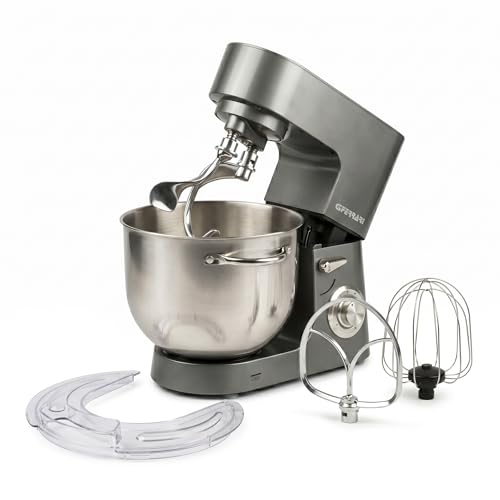
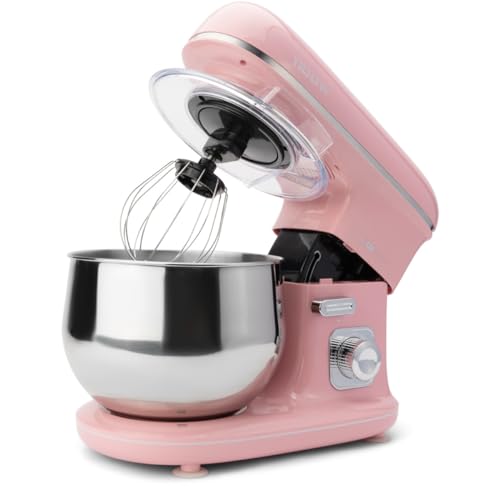
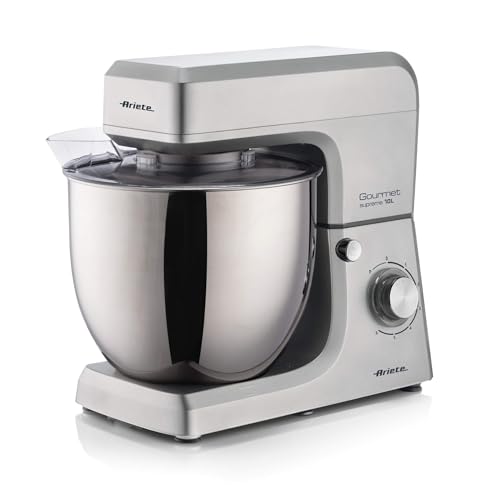
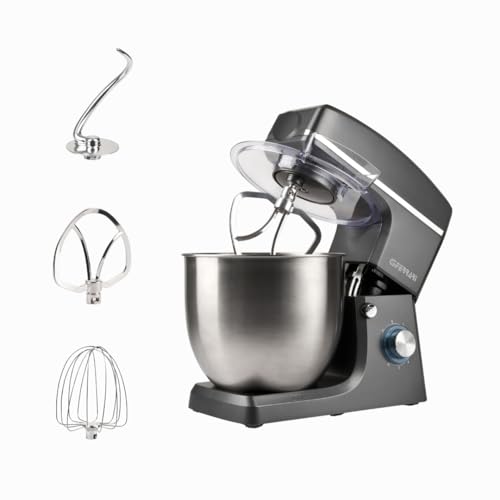
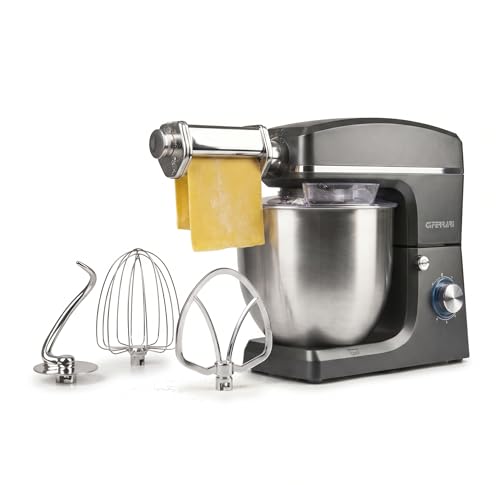
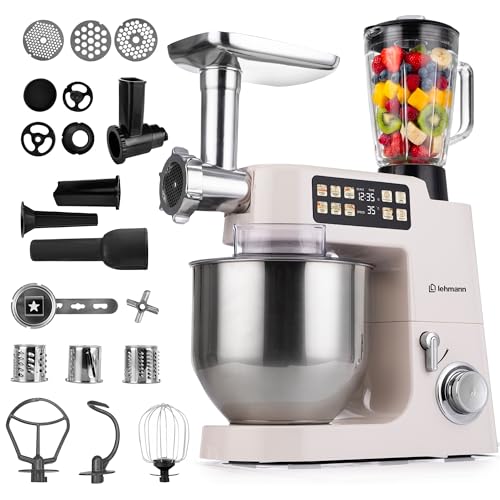
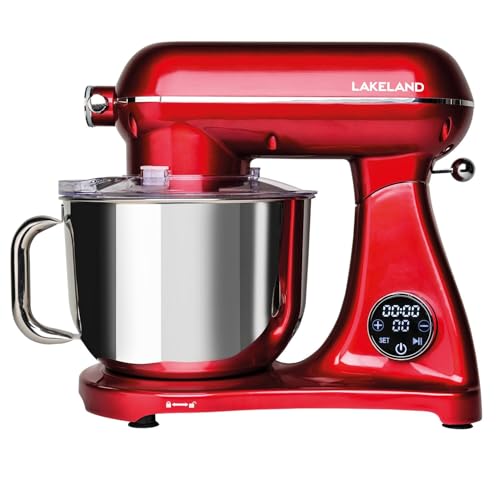
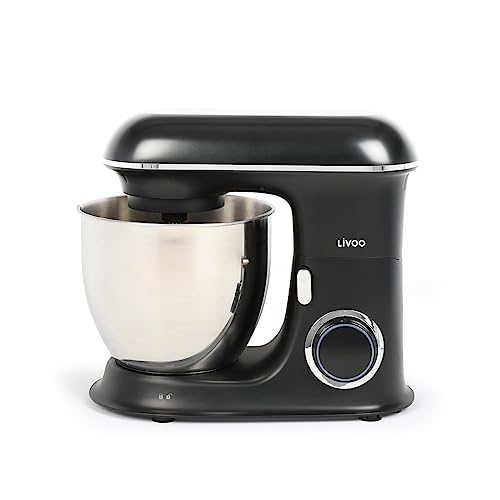
You should consider buying a high-power stand mixer for dough kneading if your baking repertoire revolves around dense sourdoughs, whole-wheat loaves, bagels, or stiff 55 to 60 percent hydration pizza doughs. Kneading these viscous mixtures manually requires 15 to 20 minutes of intense physical labor that high-torque mixers accomplish in under 8 minutes.
Standard entry-level mixers with plastic gears often overheat, emit burning smells, or flex alarmingly at the tilt-head hinge when subjected to stiff bread dough. Investing in a dedicated heavy dough machine protects your appliance from premature mechanical failure and delivers superior gluten development.
How does heavy bread and pizza dough strain stand mixer motors and gears?
Heavy bread and pizza dough exerts extreme mechanical resistance against rotating mixer attachments, generating counter-rotational torque that pushes outward against the transmission gears. As flour hydrates and gluten polymers cross-link into tough elastic strands, the power required to drag the hook through the mass surges dramatically.
In poorly reinforced mixers, this continuous torsional stress forces drive shafts slightly out of alignment, wearing down nylon gear teeth and causing the planetary head to wobble. If heat dissipation is inadequate, motor windings reach critical temperatures within 5 to 7 minutes of sustained kneading.
Professional-grade bread mixers solve this by utilizing heavy brass, bronze, or hardened steel gears enclosed in oil-sealed gearboxes that dissipate frictional heat smoothly across the metal chassis.