Scored using Routers Methodology v3.0
Routers Methodology v3.0
Mathematical & Unbiased Scoring
Products in this category are scored under Frontum Routers Methodology v3.0: the technical score from the specifications is the base, and independent expert and video reviews (up to ±0.5 points), owner opinions (up to ±0.3) and best-of lists (up to +0.3) move it up or down.
Explore Routers Methodology v3.0

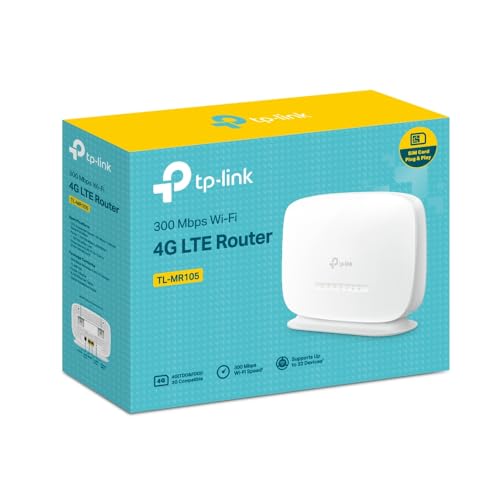
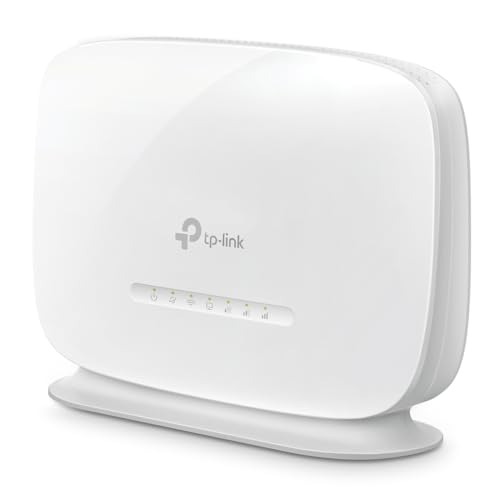
TP-Link TL-MR105 review: 77 specs compared

Avg. price:~£35Wi-Fi version:Wi-Fi 4 (802.11n)Wi-Fi speed:300 MbpsLAN port speeds:100 MbpsMesh Wi-Fi:?

TP-Link TL-MR105 Review: Compare 77 technical specifications, 3 expert and video reviews and 2 best-of lists to see how this product ranks in the Routers category and whether it is worth buying.
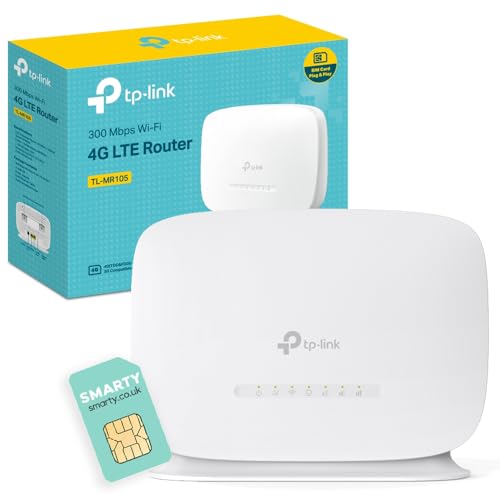
TP-Link TL-MR105
7.1/10

Overall score

Score
7.1/ 10
✕
What it is
Our main score for this model, 1–10. It combines specs, expert reviews, best-of lists and owners.
How we count it
Parts: Technical score 40%, Reviews score 25%, List score 25%, Sentiment score 10%
Marks: Each part gets a mark out of 10. For reviews, lists and owners, a typical model in this category gets about 8 and the best one gets 10.
No data yet: A part with no data shows "?". It counts as the mark of a weaker model in this category (4 in 5 models with data score higher). This way, models with reviews, lists and owners usually come out ahead.
Score distribution
▼
<55-66-77-88-99-10
Score components

40%

6.8

Technical score

25%

6.8

Reviews score

25%

8.2

List score

10%

6.3

Sentiment score

▼Worse than 67% of routers
8.0

Value for money

Value for money
8.0/ 10
✕
What it is
An indicator that combines the router's overall rating with its cost.
When it matters
When you are looking for a router with a good balance between network performance, features, and price.
Score distribution
▼
<55-66-77-88-99-10
Score components

70%

7.1

Overall score

30%

10

Price

▼Worse than 62%
6.8

Technical score

Technical score
6.8/ 10
✕
What it is
How good the specs are compared with the other models in this category, 1–10.
How we count it
Areas: We rate the specs in each area against the other models in this category.
Weighting: The areas that matter most to buyers count more. The shares are shown under Score components.
Share: The technical score is 40% of the overall score.
Score distribution
▼
<55-66-77-88-99-10
Score components

26%

5.5

Wireless

20%

4.0

Ports

18%

9.4

Networking

14%

8.0

Security

12%

8.1

Hardware

10%

7.5

Management

▼Worse than 63%
6.8

Reviews score

Reviews score
6.8/ 10
✕
What it is
Average grade from independent test sites, magazines and video reviewers, 1–10.
How we count it
Grades: Each review's own score is converted to 1–10; without one, we grade the review ourselves. Big test sites count more, short reviews half as much as full tests. A video review counts half.
Score: The average grade is 80% of the review mark; the number of reviews is the other 20% (1 review = 5, the typical number in this category = 8, the most-reviewed model = 10).
Enough data: With few reviews, the average grade is pulled toward the typical grade of this category. No reviews yet: 7.7 for now.
Share: Reviews count 25% of the overall score.
Score distribution
▼
<55-66-77-88-99-10

6.8

Mark 8.0 is below the typical mark 8.1 of this category, so it cannot lift the score above the technical score

80%

8.2

Average grade

20%

7.0

Popularity

Grades by review (3)
1 review, its grade estimated from the review text. 2 video reviews, each counting half as much as a written test. Reviews count 25% of the overall score.
User ratings collected online are not part of this score.
▼Worse than 77%
8.2

List score

List score
8.2/ 10
✕
What it is
How often independent test sites, magazines and video reviewers put this model in their best-of lists for this category.
How we count it
Points: The model in the most lists of this category gets 10; the others get 8 to 10 in proportion. In no list yet: 7.5. Lists count 25% of the overall score.
Enough data: Every list counts, even a single one. With fewer than 5 best-of lists in the category, this part is left out.
Lists with this model (2)
List score: in 2 of 83 lists (2%)
▲Better than 82%
  • tp-link-tl-mr105
  • tp-link-tl-mr105
  • tp-link-tl-mr105
  • tp-link-tl-mr105
  • tp-link-tl-mr105
  • tp-link-tl-mr105
  • tp-link-tl-mr105
  • tp-link-tl-mr105
tp-link-tl-mr105
tp-link-tl-mr105
tp-link-tl-mr105
tp-link-tl-mr105
tp-link-tl-mr105
tp-link-tl-mr105
tp-link-tl-mr105
tp-link-tl-mr105
Where to buy
*As an Amazon Associate, we earn from qualifying purchases.
Best rankings
Available: ranking among products currently available (including other versions of this product).All: ranking among all products in the database.
Loading...
Loading category ranking...

Technical Specifications of router TP-Link TL-MR105

Technical score
Technical score
6.8/ 10
✕
What it is
How good the specs are compared with the other models in this category, 1–10.
How we count it
Areas: We rate the specs in each area against the other models in this category.
Weighting: The areas that matter most to buyers count more. The shares are shown under Score components.
Share: The technical score is 40% of the overall score.
Score distribution
▼
<55-66-77-88-99-10
Score components:

26%

5.5

Wireless

20%

4.0

Ports

18%

9.4

Networking

14%

8.0

Security

12%

8.1

Hardware

10%

7.5

Management

6.8
Reviews score
6.8
List score
8.2
Value for money
Value for money
8.0/ 10
✕
What it is
An indicator that combines the router's overall rating with its cost.
When it matters
When you are looking for a router with a good balance between network performance, features, and price.
Score distribution
▼
<55-66-77-88-99-10
Score components:

70%

7.1

Overall score

30%

10

Price

8.0
Brand name
TP-Link
Wi-Fi version
Wi-Fi 4 (802.11n)
This router uses Wi-Fi 4 (802.11n), which is less advanced than 65% of routers and equal to 32.7% of routers.
Wi-Fi bands
2.4 GHz
This router supports 2.4 GHz Wi-Fi bands, which are less versatile than 76% of routers and equal to 21.6% of routers.
Wi-Fi speed
300 Mbps
This router delivers 300 Mbps Wi-Fi speed, which is lower than 75.8% of routers and equal to 16.7% of routers.
Channel widths supported
20 MHz + 40 MHz
This router supports 20 MHz + 40 MHz channel width options, which is fewer than 63.7% of routers and the same as 31.2% of routers.
Show more
Wi-Fi security protocols
WPA/WPA2, WEP
This router supports WPA/WPA2, WEP Wi-Fi security protocols, which are less advanced than 96.5% of routers and equal to 1.6% of routers.
DoS protection
yes
This router includes DoS protection. 9.8% of routers include DoS protection.
SPI intrusion protection
yes
This router includes SPI-based intrusion protection. 4.7% of routers include SPI-based intrusion protection.
MAC address filtering
yes
This router supports MAC address filtering. 1.7% of routers include MAC address filtering.
URL filter
yes
This router supports URL filtering. 2.6% of routers include URL filtering.
Show more
IPv6 support
yes
This router supports IPv6. 8.8% of routers are IPv6-ready.
Dynamic routing
no
This router does not support dynamic routing. 46.2% of routers support dynamic routing.
Inter-VLAN routing
?
VLAN tagging
yes
This router supports VLAN tagging. 33.6% of routers include VLAN tagging.
QoS
yes
This router includes QoS controls. 2.4% of routers include QoS controls.
Show more
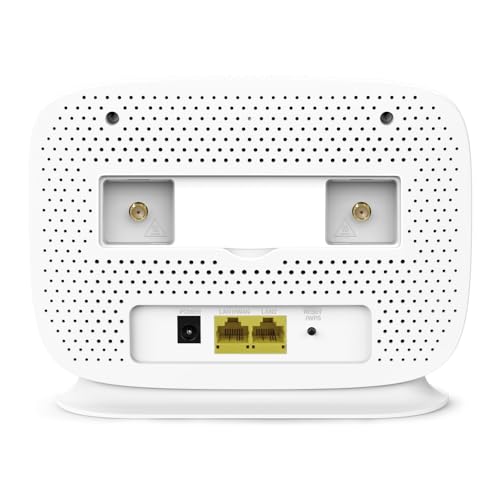
N. of LAN ports
1
This router has 1 LAN ports, which is fewer than 89.6% of routers and the same as 8.5% of routers.
LAN port speeds
100 Mbps
This router offers 100 Mbps on its LAN ports, which is slower than 74.5% of routers and on par with 25.1% of routers.
N. of WAN ports
1
This router has 1 WAN ports, which is more than 0.8% of routers and the same as 89.4% of routers.
N. of USB ports
0
This router has 0 USB ports, which is fewer than 60.1% of routers and the same as 39.9% of routers.
Power over Ethernet (PoE)
no
This router does not support Power over Ethernet (PoE). 1.7% of routers can be powered over Ethernet.
Show more
Management interface
Web UI, App
This router uses Web UI, App for management, which is more advanced than 29.7% of routers and equal to 60.9% of routers.
Firmware upgrade method
Web UI, App, Automatic
This router supports Web UI, App, Automatic firmware update methods, which are more convenient than 71.9% of routers and equal to 27.2% of routers.
Traffic monitoring
yes
This router includes traffic monitoring. 13.9% of routers include traffic monitoring.
Guest Wi-Fi network
yes
This router offers a guest Wi‑Fi network. 7.3% of routers offer a guest Wi‑Fi network.
Captive portal
no
This router does not offer captive portal features. 22.4% of routers offer captive portal features.
Show more
CPU clock speed
?
RAM capacity
?
Internal storage
?
Hardware acceleration
yes
This router offers hardware acceleration. 24.9% of routers offer hardware acceleration.
N. of external antennas
?
Show more

TP-Link TL-MR105 vs the average router

246810TotalWirelessSecurityNetworkingPortsManagementHardware
  • Supports automatic failover
    This router offers automatic failover, while the average router does not. 31.2% of routers offer automatic failover.
  • Newer cellular modem
    This router uses a 4G cellular modem, while the average router uses none (external modem required).
    4G vs none (external modem required)
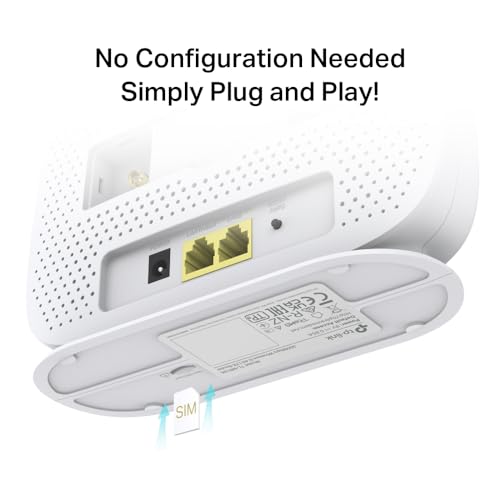
  • Includes SIM slot
    This router has a SIM slot, while the average router does not. 11.5% of routers have a SIM slot.
  • More advanced integrated modem
    This router uses a 4G integrated modem, while the average router uses none (external modem required).
    4G vs none (external modem required)
  • 4 more internal antennas
    This router has more internal antennas than the average router (4 vs 0). The average router has 0 internal antennas.
    4 vs 0
  • 4 years newer release date
    This router was released more recently than the average router (2023 vs 2019). The average router release year is 2019.
    2023 vs 2019
  • 2.71x cheaper
    TP-Link TL-MR105 is cheaper than the average router (£35 vs £95).
    £35 vs £95
  • 2.71x cheaper
    TP-Link TL-MR105 is cheaper than the average router (£35 vs £95).
    £35 vs £95
  • Supports automatic failover
    This router offers automatic failover, while the average router does not. 31.2% of routers offer automatic failover.
  • Newer cellular modem
    This router uses a 4G cellular modem, while the average router uses none (external modem required).
    4G vs none (external modem required)
  • Includes SIM slot
    This router has a SIM slot, while the average router does not. 11.5% of routers have a SIM slot.
  • More advanced integrated modem
    This router uses a 4G integrated modem, while the average router uses none (external modem required).
    4G vs none (external modem required)
  • 4 more internal antennas
    This router has more internal antennas than the average router (4 vs 0). The average router has 0 internal antennas.
    4 vs 0
  • 4 years newer release date
    This router was released more recently than the average router (2023 vs 2019). The average router release year is 2019.
    2023 vs 2019
  • 3 fewer LAN ports
    This router has fewer LAN ports than the average router (1 vs 4). The average router has 4 LAN ports.
    1 vs 4
  • Slower LAN ports
    This router has a lower LAN port speed than the average router (100 Mbps vs 1 Gbps). The average router has a LAN port speed of 1 Gbps.
    100 Mbps vs 1 Gbps
  • Older Wi-Fi version
    This router uses an older Wi-Fi version than the average router (Wi-Fi 4 (802.11n) vs Wi-Fi 5 (802.11ac)). The average router uses Wi-Fi 5 (802.11ac).
    Wi-Fi 4 (802.11n) vs Wi-Fi 5 (802.11ac)
  • Fewer Wi-Fi bands
    This router supports fewer Wi-Fi bands than the average router (2.4 GHz vs 2.4 GHz + 5 GHz). The average router supports 2.4 GHz + 5 GHz Wi-Fi bands.
    2.4 GHz vs 2.4 GHz + 5 GHz
  • No VPN server support
    This router cannot act as a VPN server, while the average router can. 68.8% of routers can act as a VPN server.
  • 82.9% slower Wi-Fi speed
    This router has a lower Wi-Fi speed than the average router (300 Mbps vs 1,750 Mbps). The average router reaches Wi-Fi speed of 1,750 Mbps.
    300 Mbps vs 1,750 Mbps
  • No MU-MIMO
    This router does not support MU-MIMO, while the average router does. 54% of routers support MU-MIMO.
  • 1 fewer USB ports
    This router has fewer USB ports than the average router (0 vs 1). The average router has 1 USB ports.
    0 vs 1
  • 11.7% lower review score
    Reviews score
    6.8/ 10
    ✕
    What it is
    Average grade from independent test sites, magazines and video reviewers, 1–10.
    How we count it
    Grades: Each review's own score is converted to 1–10; without one, we grade the review ourselves. Big test sites count more, short reviews half as much as full tests. A video review counts half.
    Score: The average grade is 80% of the review mark; the number of reviews is the other 20% (1 review = 5, the typical number in this category = 8, the most-reviewed model = 10).
    Enough data: With few reviews, the average grade is pulled toward the typical grade of this category. No reviews yet: 7.7 for now.
    Share: Reviews count 25% of the overall score.
    Score distribution
    ▼
    <55-66-77-88-99-10

    6.8

    Mark 8.0 is below the typical mark 8.1 of this category, so it cannot lift the score above the technical score

    80%

    8.2

    Average grade

    20%

    7.0

    Popularity

    Grades by review (3)
    1 review, its grade estimated from the review text. 2 video reviews, each counting half as much as a written test. Reviews count 25% of the overall score.
    User ratings collected online are not part of this score.
    6.8 vs 7.7
  • 19.2% lower sentiment score
    6.3 vs 7.8
  • Older Wi-Fi version
    This router uses an older Wi-Fi version than the average router (Wi-Fi 4 (802.11n) vs Wi-Fi 5 (802.11ac)). The average router uses Wi-Fi 5 (802.11ac).
    Wi-Fi 4 (802.11n) vs Wi-Fi 5 (802.11ac)
  • Fewer Wi-Fi bands
    This router supports fewer Wi-Fi bands than the average router (2.4 GHz vs 2.4 GHz + 5 GHz). The average router supports 2.4 GHz + 5 GHz Wi-Fi bands.
    2.4 GHz vs 2.4 GHz + 5 GHz
  • 82.9% slower Wi-Fi speed
    This router has a lower Wi-Fi speed than the average router (300 Mbps vs 1,750 Mbps). The average router reaches Wi-Fi speed of 1,750 Mbps.
    300 Mbps vs 1,750 Mbps
  • No MU-MIMO
    This router does not support MU-MIMO, while the average router does. 54% of routers support MU-MIMO.
  • Narrower channel widths
    This router has a lower supported channel width than the average router (20 MHz + 40 MHz vs 20 MHz + 40 MHz + 80 MHz). The average router supports channel width of 20 MHz + 40 MHz + 80 MHz.
    20 MHz + 40 MHz vs 20 MHz + 40 MHz + 80 MHz
  • No band steering
    This router does not support band steering, while the average router does. 57.6% of routers support band steering.
  • No beamforming
    This router does not support beamforming, while the average router does. 62.1% of routers support beamforming.
  • 32 fewer connected devices
    This router supports fewer connected devices than the average router (32 vs 64). The average router supports 64 connected devices.
    32 vs 64
  • No VPN server support
    This router cannot act as a VPN server, while the average router can. 68.8% of routers can act as a VPN server.
  • Weaker Wi-Fi security
    This router supports the Wi-Fi security protocols WPA/WPA2, WEP, while the average router supports WPA2, WPA/WPA2, WEP.
    WPA/WPA2, WEP vs WPA2, WPA/WPA2, WEP
  • 3 fewer LAN ports
    This router has fewer LAN ports than the average router (1 vs 4). The average router has 4 LAN ports.
    1 vs 4
  • Slower LAN ports
    This router has a lower LAN port speed than the average router (100 Mbps vs 1 Gbps). The average router has a LAN port speed of 1 Gbps.
    100 Mbps vs 1 Gbps
  • 1 fewer USB ports
    This router has fewer USB ports than the average router (0 vs 1). The average router has 1 USB ports.
    0 vs 1
  • No DLNA support
    This router does not support DLNA, while the average router does. 50.4% of routers support DLNA.
  • Less capable NAS services
    This router includes none NAS services, while the average router includes SMB, media server.
    none vs SMB, media server
  • 76 mm thicker design
    This router is thicker than the average router (130 mm vs 54 mm). The average router is 54 mm thick.
    130 mm vs 54 mm

Video reviews

Hands-on testing, unboxing, and real-world video evaluations

9.0
ade's favs
≈ estimated
07/11/2024
Hands-on review · speed, signal and setup tests
Verdict
TP-Link TL-MR105 is a compact 4G router that is easy to set up and handy for swapping SIM cards while travelling.
Not graded
Not graded

Expert reviews

In-depth analysis and verdict from leading tech publications

8.0
notebookspec.com
≈ estimated
01/07/2024
Hands-on test · 4G SIM router
Verdict
The TP-Link TL-MR105 is a plug-in 4G SIM router for rented homes and travel, but its 2.4GHz Wi-Fi reached only 23 to 29 Mbps in testing.

Third-party reviews

What customers like about TP-Link TL-MR105

  • Cat4 4G modem with download speeds up to 150 Mbps from a nano SIM
  • Pocket-sized and easy to carry on trips
  • Automatic failover between a wired line and the mobile connection
  • Connects up to 32 Wi-Fi devices at once
  • Guest network and parental controls included
  • Setup through the Tether app, no complex configuration
  • Three-year manufacturer warranty

What customers don't like about TP-Link TL-MR105

  • Wi-Fi 4 N300 on 2.4 GHz only, no 5 GHz band
  • Ethernet port limited to 100 Mbps
  • No USB port
  • No VPN server
  • Mobile speed capped at 150 Mbps down and 50 Mbps up

Verdict

Small enough to slip into a bag, the TP-Link TL-MR105 turns a nano SIM into a Wi-Fi network for up to 32 devices. Its 4G Cat4 modem tops out at 150 Mbps down and 50 Mbps up, and the Wi-Fi side is Wi-Fi 4 (N300) on the 2.4 GHz band only. Ethernet is limited to 100 Mbps, and there is no USB port. Setup needs nothing more than a SIM and the Tether app, and the router can also take a wired connection and act as a failover when the main line drops. Guest Wi-Fi and parental controls are included, but there is no VPN server. At a budget price, it suits holiday homes, caravans and backup duty rather than a busy household.

Compare TP-Link TL-MR105 with other routers

1Product to compare no. 1
VS
2Product to compare no. 2
VS
3Product to compare no. 3 (optional)

Graphic comparison of TP-Link TL-MR105 and other routers

No results found