Scored using Routers Methodology v3.0
Routers Methodology v3.0
Mathematical & Unbiased Scoring
Products in this category are scored under Frontum Routers Methodology v3.0: the technical score from the specifications is the base, and independent expert and video reviews (up to ±0.5 points), owner opinions (up to ±0.3) and best-of lists (up to +0.3) move it up or down.
Explore Routers Methodology v3.0

Tenda RX12 Pro review: 77 specs compared

Avg. price:~£35Wi-Fi version:Wi-Fi 6 (802.11ax)Wi-Fi speed:3000 MbpsLAN port speeds:1 GbpsMesh Wi-Fi:yes

Tenda RX12 Pro Review: Compare 77 technical specifications, 3 expert and video reviews and 1 best-of list to see how this product ranks in the Routers category and whether it is worth buying.
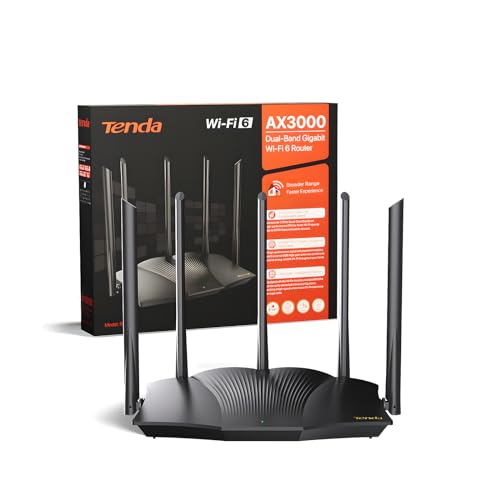
Tenda RX12 Pro
7.7/10

Overall score

Score
7.7/ 10
✕
What it is
Our main score for this model, 1–10. It combines specs, expert reviews, best-of lists and owners.
How we count it
Parts: Technical score 40%, Reviews score 25%, List score 25%, Sentiment score 10%
Marks: Each part gets a mark out of 10. For reviews, lists and owners, a typical model in this category gets about 8 and the best one gets 10.
No data yet: A part with no data shows "?". It counts as the mark of a weaker model in this category (4 in 5 models with data score higher). This way, models with reviews, lists and owners usually come out ahead.
Score distribution
▼
<55-66-77-88-99-10
Score components

40%

7.6

Technical score

25%

8.2

Reviews score

25%

7.6

List score

10%

?

Sentiment scoreNot enough data yet, so we use 6.9, the mark of a weaker model in this category

▲Better than 66% of routers
8.4

Value for money

Value for money
8.4/ 10
✕
What it is
An indicator that combines the router's overall rating with its cost.
When it matters
When you are looking for a router with a good balance between network performance, features, and price.
Score distribution
▼
<55-66-77-88-99-10
Score components

70%

7.7

Overall score

30%

10

Price

▲Better than 74%
7.6

Technical score

Technical score
7.6/ 10
✕
What it is
How good the specs are compared with the other models in this category, 1–10.
How we count it
Areas: We rate the specs in each area against the other models in this category.
Weighting: The areas that matter most to buyers count more. The shares are shown under Score components.
Share: The technical score is 40% of the overall score.
Score distribution
▼
<55-66-77-88-99-10
Score components

26%

7.8

Wireless

20%

5.5

Ports

18%

8.4

Networking

14%

9.3

Security

12%

8.0

Hardware

10%

7.2

Management

▲Better than 68%
8.2

Reviews score

Reviews score
8.2/ 10
✕
What it is
Average grade from independent test sites, magazines and video reviewers, 1–10.
How we count it
Grades: Each review's own score is converted to 1–10; without one, we grade the review ourselves. Big test sites count more, short reviews half as much as full tests. A video review counts half.
Score: The average grade is 80% of the review mark; the number of reviews is the other 20% (1 review = 5, the typical number in this category = 8, the most-reviewed model = 10).
Enough data: With few reviews, the average grade is pulled toward the typical grade of this category. No reviews yet: 7.7 for now.
Share: Reviews count 25% of the overall score.
Score distribution
▼
<55-66-77-88-99-10

80%

8.5

Average grade

20%

7.0

Popularity

Grades by review (3)
3 video reviews, each counting half as much as a written test. Reviews count 25% of the overall score.
User ratings collected online are not part of this score.
▲Better than 52%
7.6

List score

List score
7.6/ 10
✕
What it is
How often independent test sites, magazines and video reviewers put this model in their best-of lists for this category.
How we count it
Points: The model in the most lists of this category gets 10; the others get 8 to 10 in proportion. In no list yet: 7.5. Lists count 25% of the overall score.
Enough data: Every list counts, even a single one. With fewer than 5 best-of lists in the category, this part is left out.
Lists with this model (1)
List score: in 1 of 84 lists (1%)
▲Better than 70%
  • tenda-rx12-pro
  • tenda-rx12-pro
  • tenda-rx12-pro
  • tenda-rx12-pro
  • tenda-rx12-pro
  • tenda-rx12-pro
  • tenda-rx12-pro
  • tenda-rx12-pro
  • tenda-rx12-pro
tenda-rx12-pro
tenda-rx12-pro
tenda-rx12-pro
tenda-rx12-pro
tenda-rx12-pro
tenda-rx12-pro
tenda-rx12-pro
tenda-rx12-pro
tenda-rx12-pro
Where to buy
*As an Amazon Associate, we earn from qualifying purchases.
Best rankings
Available: ranking among products currently available (including other versions of this product).All: ranking among all products in the database.
Loading...
Loading category ranking...

Technical Specifications of router Tenda RX12 Pro

Technical score
Technical score
7.6/ 10
✕
What it is
How good the specs are compared with the other models in this category, 1–10.
How we count it
Areas: We rate the specs in each area against the other models in this category.
Weighting: The areas that matter most to buyers count more. The shares are shown under Score components.
Share: The technical score is 40% of the overall score.
Score distribution
▼
<55-66-77-88-99-10
Score components:

26%

7.8

Wireless

20%

5.5

Ports

18%

8.4

Networking

14%

9.3

Security

12%

8.0

Hardware

10%

7.2

Management

7.6
Reviews score
8.2
List score
7.6
Value for money
Value for money
8.4/ 10
✕
What it is
An indicator that combines the router's overall rating with its cost.
When it matters
When you are looking for a router with a good balance between network performance, features, and price.
Score distribution
▼
<55-66-77-88-99-10
Score components:

70%

7.7

Overall score

30%

10

Price

8.4
Brand name
Tenda
Wi-Fi version
Wi-Fi 6 (802.11ax)
This router uses Wi-Fi 6 (802.11ax), which is more advanced than 58.5% of routers and equal to 25.9% of routers.
Wi-Fi bands
2.4 GHz + 5 GHz
This router supports 2.4 GHz + 5 GHz Wi-Fi bands, which are more versatile than 24.2% of routers and equal to 65.6% of routers.
Wi-Fi speed
3,000 Mbps
This router delivers 3,000 Mbps Wi-Fi speed, which is higher than 65.9% of routers and equal to 6.6% of routers.
Channel widths supported
20 MHz + 40 MHz + 80 MHz + 160 MHz
This router supports 20 MHz + 40 MHz + 80 MHz + 160 MHz channel width options, which is more than 66.5% of routers and the same as 27.4% of routers.
Show more
Wi-Fi security protocols
?
DoS protection
yes
This router includes DoS protection. 9.8% of routers include DoS protection.
SPI intrusion protection
yes
This router includes SPI-based intrusion protection. 4.7% of routers include SPI-based intrusion protection.
MAC address filtering
yes
This router supports MAC address filtering. 1.7% of routers include MAC address filtering.
URL filter
yes
This router supports URL filtering. 2.6% of routers include URL filtering.
Show more
IPv6 support
yes
This router supports IPv6. 8.8% of routers are IPv6-ready.
Dynamic routing
no
This router does not support dynamic routing. 46.2% of routers support dynamic routing.
Inter-VLAN routing
?
VLAN tagging
?
QoS
yes
This router includes QoS controls. 2.4% of routers include QoS controls.
Show more
N. of LAN ports
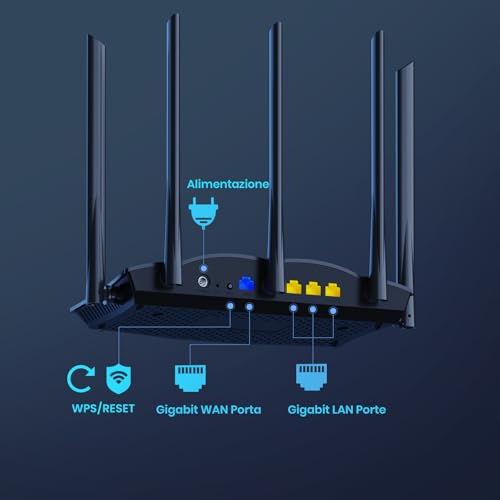
3
This router has 3 LAN ports, which is fewer than 66% of routers and the same as 18.2% of routers.
LAN port speeds
1 Gbps
This router offers 1 Gbps on its LAN ports, which is faster than 25.7% of routers and on par with 56.1% of routers.
N. of WAN ports
1
This router has 1 WAN ports, which is more than 0.8% of routers and the same as 89.4% of routers.
N. of USB ports
?
Power over Ethernet (PoE)
no
This router does not support Power over Ethernet (PoE). 1.7% of routers can be powered over Ethernet.
Show more
Management interface
Web UI, App
This router uses Web UI, App for management, which is more advanced than 29.7% of routers and equal to 60.9% of routers.
Firmware upgrade method
Web UI, App
This router supports Web UI, App firmware update methods, which are more convenient than 62.3% of routers and equal to 8.4% of routers.
Traffic monitoring
yes
This router includes traffic monitoring. 13.9% of routers include traffic monitoring.
Guest Wi-Fi network
yes
This router offers a guest Wi‑Fi network. 7.3% of routers offer a guest Wi‑Fi network.
Captive portal
no
This router does not offer captive portal features. 22.4% of routers offer captive portal features.
Show more
CPU clock speed
?
RAM capacity
?
Internal storage
?
Hardware acceleration
yes
This router offers hardware acceleration. 24.9% of routers offer hardware acceleration.
N. of external antennas
?
Show more

Tenda RX12 Pro vs the average router

246810TotalWirelessSecurityNetworkingPortsManagementHardware
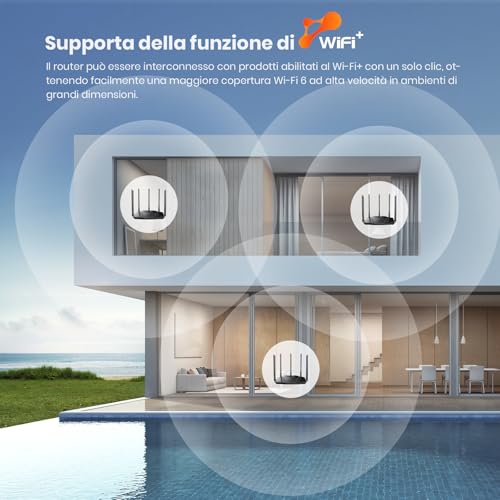
  • Supports mesh Wi-Fi
    This router supports mesh Wi-Fi, while the average router does not. 45.2% of routers support mesh Wi-Fi.
  • Supports OFDMA
    This router supports OFDMA, while the average router does not. 41.5% of routers support OFDMA.
  • Newer Wi-Fi version
    This router supports a newer Wi-Fi version than the average router (Wi-Fi 6 (802.11ax) vs Wi-Fi 5 (802.11ac)). The average router uses Wi-Fi 5 (802.11ac).
    Wi-Fi 6 (802.11ax) vs Wi-Fi 5 (802.11ac)
  • 71.4% faster Wi-Fi speed
    This router has a higher Wi-Fi speed than the average router (3,000 Mbps vs 1,750 Mbps). The average router reaches Wi-Fi speed of 1,750 Mbps.
    3,000 Mbps vs 1,750 Mbps
  • Wider channel widths
    This router has a higher supported channel width than the average router (20 MHz + 40 MHz + 80 MHz + 160 MHz vs 20 MHz + 40 MHz + 80 MHz). The average router supports channel width of 20 MHz + 40 MHz + 80 MHz.
    20 MHz + 40 MHz + 80 MHz + 160 MHz vs 20 MHz + 40 MHz + 80 MHz
  • Supports TWT
    This router supports Target Wake Time (TWT), while the average router does not. 42.6% of routers support Target Wake Time (TWT).
  • 6.5% higher review score
    Reviews score
    8.2/ 10
    ✕
    What it is
    Average grade from independent test sites, magazines and video reviewers, 1–10.
    How we count it
    Grades: Each review's own score is converted to 1–10; without one, we grade the review ourselves. Big test sites count more, short reviews half as much as full tests. A video review counts half.
    Score: The average grade is 80% of the review mark; the number of reviews is the other 20% (1 review = 5, the typical number in this category = 8, the most-reviewed model = 10).
    Enough data: With few reviews, the average grade is pulled toward the typical grade of this category. No reviews yet: 7.7 for now.
    Share: Reviews count 25% of the overall score.
    Score distribution
    ▼
    <55-66-77-88-99-10

    80%

    8.5

    Average grade

    20%

    7.0

    Popularity

    Grades by review (3)
    3 video reviews, each counting half as much as a written test. Reviews count 25% of the overall score.
    User ratings collected online are not part of this score.
    8.2 vs 7.7
  • 3 years newer release date
    This router was released more recently than the average router (2022 vs 2019). The average router release year is 2019.
    2022 vs 2019
  • 6.5% higher review score
    Reviews score
    8.2/ 10
    ✕
    What it is
    Average grade from independent test sites, magazines and video reviewers, 1–10.
    How we count it
    Grades: Each review's own score is converted to 1–10; without one, we grade the review ourselves. Big test sites count more, short reviews half as much as full tests. A video review counts half.
    Score: The average grade is 80% of the review mark; the number of reviews is the other 20% (1 review = 5, the typical number in this category = 8, the most-reviewed model = 10).
    Enough data: With few reviews, the average grade is pulled toward the typical grade of this category. No reviews yet: 7.7 for now.
    Share: Reviews count 25% of the overall score.
    Score distribution
    ▼
    <55-66-77-88-99-10

    80%

    8.5

    Average grade

    20%

    7.0

    Popularity

    Grades by review (3)
    3 video reviews, each counting half as much as a written test. Reviews count 25% of the overall score.
    User ratings collected online are not part of this score.
    8.2 vs 7.7
  • 2.71x cheaper
    Tenda RX12 Pro is cheaper than the average router (£35 vs £95).
    £35 vs £95
  • Supports mesh Wi-Fi
    This router supports mesh Wi-Fi, while the average router does not. 45.2% of routers support mesh Wi-Fi.
  • Supports OFDMA
    This router supports OFDMA, while the average router does not. 41.5% of routers support OFDMA.
  • Newer Wi-Fi version
    This router supports a newer Wi-Fi version than the average router (Wi-Fi 6 (802.11ax) vs Wi-Fi 5 (802.11ac)). The average router uses Wi-Fi 5 (802.11ac).
    Wi-Fi 6 (802.11ax) vs Wi-Fi 5 (802.11ac)
  • 71.4% faster Wi-Fi speed
    This router has a higher Wi-Fi speed than the average router (3,000 Mbps vs 1,750 Mbps). The average router reaches Wi-Fi speed of 1,750 Mbps.
    3,000 Mbps vs 1,750 Mbps
  • Wider channel widths
    This router has a higher supported channel width than the average router (20 MHz + 40 MHz + 80 MHz + 160 MHz vs 20 MHz + 40 MHz + 80 MHz). The average router supports channel width of 20 MHz + 40 MHz + 80 MHz.
    20 MHz + 40 MHz + 80 MHz + 160 MHz vs 20 MHz + 40 MHz + 80 MHz
  • Supports TWT
    This router supports Target Wake Time (TWT), while the average router does not. 42.6% of routers support Target Wake Time (TWT).
  • 3 years newer release date
    This router was released more recently than the average router (2022 vs 2019). The average router release year is 2019.
    2022 vs 2019
  • 1 fewer LAN ports
    This router has fewer LAN ports than the average router (3 vs 4). The average router has 4 LAN ports.
    3 vs 4
  • Limited firmware updates
    This router supports the firmware update methods Web UI, App, while the average router supports Web UI, App, Automatic.
    Web UI, App vs Web UI, App, Automatic
  • No DLNA support
    This router does not support DLNA, while the average router does. 50.4% of routers support DLNA.
  • Less capable NAS services
    This router includes none NAS services, while the average router includes SMB, media server.
    none vs SMB, media server
  • 6.2% lower list score
    List score
    7.6/ 10
    ✕
    What it is
    How often independent test sites, magazines and video reviewers put this model in their best-of lists for this category.
    How we count it
    Points: The model in the most lists of this category gets 10; the others get 8 to 10 in proportion. In no list yet: 7.5. Lists count 25% of the overall score.
    Enough data: Every list counts, even a single one. With fewer than 5 best-of lists in the category, this part is left out.
    Lists with this model (1)
    List score: in 1 of 84 lists (1%)
    7.6 vs 8.1
  • 170.6 mm higher height
    This router is taller than the average router (222 mm vs 51.4 mm). The average router is 51.4 mm tall.
    222 mm vs 51.4 mm
  • 112 mm thicker design
    This router is thicker than the average router (166 mm vs 54 mm). The average router is 54 mm thick.
    166 mm vs 54 mm
  • 74 mm wider width
    This router is wider than the average router (267 mm vs 193 mm). The average router is 193 mm wide.
    267 mm vs 193 mm
  • 6.2% lower list score
    List score
    7.6/ 10
    ✕
    What it is
    How often independent test sites, magazines and video reviewers put this model in their best-of lists for this category.
    How we count it
    Points: The model in the most lists of this category gets 10; the others get 8 to 10 in proportion. In no list yet: 7.5. Lists count 25% of the overall score.
    Enough data: Every list counts, even a single one. With fewer than 5 best-of lists in the category, this part is left out.
    Lists with this model (1)
    List score: in 1 of 84 lists (1%)
    7.6 vs 8.1
  • Narrower DFS range
    This router has fewer supported DFS channels than the average router (52-64 + 100-140 vs 52-64 + 100-144). The average router supports 52-64 + 100-144 DFS channels.
    52-64 + 100-140 vs 52-64 + 100-144
  • 1 fewer LAN ports
    This router has fewer LAN ports than the average router (3 vs 4). The average router has 4 LAN ports.
    3 vs 4
  • Limited firmware updates
    This router supports the firmware update methods Web UI, App, while the average router supports Web UI, App, Automatic.
    Web UI, App vs Web UI, App, Automatic
  • No DLNA support
    This router does not support DLNA, while the average router does. 50.4% of routers support DLNA.
  • Less capable NAS services
    This router includes none NAS services, while the average router includes SMB, media server.
    none vs SMB, media server
  • 170.6 mm higher height
    This router is taller than the average router (222 mm vs 51.4 mm). The average router is 51.4 mm tall.
    222 mm vs 51.4 mm
  • 112 mm thicker design
    This router is thicker than the average router (166 mm vs 54 mm). The average router is 54 mm thick.
    166 mm vs 54 mm
  • 74 mm wider width
    This router is wider than the average router (267 mm vs 193 mm). The average router is 193 mm wide.
    267 mm vs 193 mm

Video reviews

Hands-on testing, unboxing, and real-world video evaluations

9.0
IT Mania For IT (Ahmad)
≈ estimated
24/02/2024
Unboxing and review · features, speed and client management
Verdict
Tenda RX12 Pro is a very good all-in-one device that removes the need for extra networking gear.
9.0
kyeremu TV
≈ estimated
03/01/2024
Unboxing · first look at what's in the box and key features
Verdict
Tenda RX12 Pro offers strong value for its class and gets a clear recommendation, despite this being mainly an unboxing.
Hands-on video, no verdict

Third-party reviews

What customers like about Tenda RX12 Pro

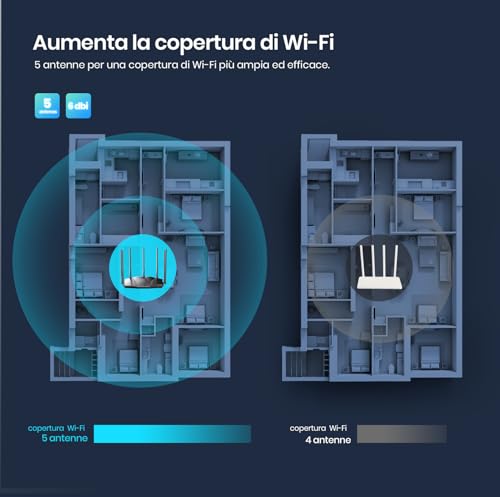
  • Wi-Fi 6 AX3000 with 2,402 Mbps on 5 GHz
  • Five 6 dBi antennas with beamforming
  • OFDMA, MU-MIMO and BSS colouring against interference
  • Four Gigabit Ethernet ports for wired devices
  • Target Wake Time lowers device power use
  • Three-year warranty

What customers don't like about Tenda RX12 Pro

  • No 2.5 Gbps port for multi-gig lines
  • No built-in modem, external modem required
  • Dual-band only, no 6 GHz band
  • Large 267 x 222 x 166 mm body
  • Antennas are fixed

Verdict

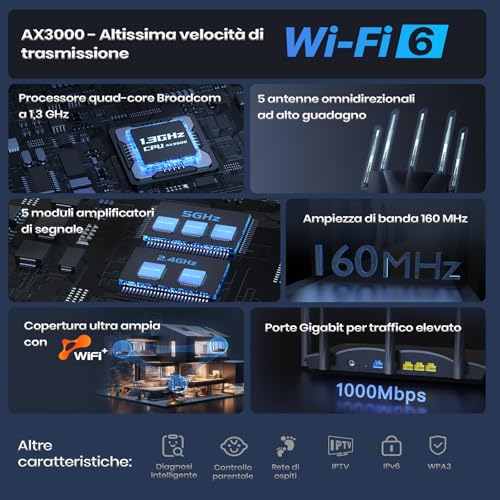
Tenda's RX12 Pro is a Wi-Fi 6 router with five 6 dBi antennas and a large body. AX3000 speeds split into 2,402 Mbps on 5 GHz and 574 Mbps on 2.4 GHz, with OFDMA, MU-MIMO, beamforming and BSS colouring to cut interference from neighbouring networks. Target Wake Time reduces power draw on connected devices. Four gigabit Ethernet ports, one of them WAN, cover wired gear, but nothing is faster than 1 Gbps. Setup runs through the Tenda WiFi app or a web page, and parental controls, guest access and WPA3 are included. The router can also join a mesh, and a one-click diagnostic tool repairs network problems. The antennas are fixed and there is no modem, so a separate modem or fibre box is required. A three-year warranty and a budget price make it a safe starter.

Compare Tenda RX12 Pro with other routers

1Product to compare no. 1
VS
2Product to compare no. 2
VS
3Product to compare no. 3 (optional)

Graphic comparison of Tenda RX12 Pro and other routers

No results found