Scored using Projectors Methodology v3.0
Projectors Methodology v3.0
Mathematical & Unbiased Scoring
Products in this category are scored under Frontum Projectors Methodology v3.0: the technical score from the specifications is the base, and independent expert and video reviews (up to ±0.5 points), owner opinions (up to ±0.3) and best-of lists (up to +0.3) move it up or down.
Explore Projectors Methodology v3.0

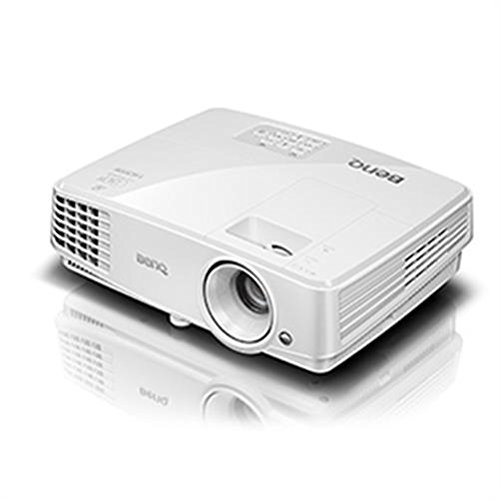
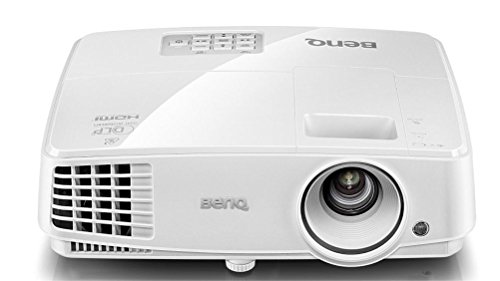
BenQ MS524 review: 86 specs compared

Avg. price:~£330Native panel resolution:800x600ANSI lumens:3200Throw ratio:1.86-2.04:1Lamp life:4500 hours

BenQ MS524 Review: Compare 86 technical specifications and 2 expert reviews to see how this product ranks in the Projectors category and whether it is worth buying.
BenQ MS524
6.3/10

Overall score

Score
6.3/ 10
✕
What it is
Our main score for this model, 1–10. It combines specs, best-of lists, expert reviews and owners.
How we count it
Parts: Technical score 35%, List score 30%, Reviews score 25%, Sentiment score 10%
Marks: Each part gets a mark out of 10. For reviews, lists and owners, a typical model in this category gets about 8 and the best one gets 10.
No data yet: A part with no data shows "?". It counts as the mark of a weaker model in this category (4 in 5 models with data score higher). This way, models with reviews, lists and owners usually come out ahead.
Score distribution
â–¼
<55-66-77-88-99-10
Score components

35%

5.7

Technical score

30%

?

List scoreNot enough data yet, so we use 7.5, the mark of a weaker model in this category

25%

5.7

Reviews score

10%

?

Sentiment scoreNot enough data yet, so we use 6.8, the mark of a weaker model in this category

â–¼Worse than 90% of projectors
7.1

Value for money

Value for money
7.1/ 10
✕
What it is
An indicator that combines the projector's overall rating with its cost.
When it matters
When you are looking for a projector with a good balance between quality and price.
Score distribution
â–¼
<55-66-77-88-99-10
Score components

70%

6.3

Overall score

30%

8.8

Price

â–²Better than 54%
5.7

Technical score

Technical score
5.7/ 10
✕
What it is
How good the specs are compared with the other models in this category, 1–10.
How we count it
Areas: We rate the specs in each area against the other models in this category.
Weighting: The areas that matter most to buyers count more. The shares are shown under Score components.
Share: The technical score is 35% of the overall score.
Score distribution
â–¼
<55-66-77-88-99-10
Score components

42%

6.4

Image Quality

22%

5.6

Projection & Lens

12%

5.2

HDMI & Gaming

10%

5.3

Audio & Features

8%

4.0

Connectivity

6%

4.8

Design & Power

â–¼Worse than 84%
5.7

Reviews score

Reviews score
5.7/ 10
✕
What it is
Average grade from independent test sites, magazines and video reviewers, 1–10.
How we count it
Grades: Each review's own score is converted to 1–10; without one, we grade the review ourselves. Big test sites count more, short reviews half as much as full tests. A video review counts half.
Score: The average grade is 80% of the review mark; the number of reviews is the other 20% (1 review = 5, the typical number in this category = 8, the most-reviewed model = 10).
Enough data: With few reviews, the average grade is pulled toward the typical grade of this category. No reviews yet: 7.8 for now.
Share: Reviews count 25% of the overall score.
Score distribution
â–¼
<55-66-77-88-99-10

5.7

Mark 7.7 is below the typical mark 8.2 of this category, so it cannot lift the score above the technical score

80%

8.1

Average grade

20%

6.1

Popularity

Grades by review (2)
2 reviews: 2 with a printed score, 0 estimated from the review. Reviews count 25% of the overall score.
User ratings collected online are not part of this score.
â–¼Worse than 89%
?

List score

List score
7.5/ 10
✕
What it is
How often independent test sites, magazines and video reviewers put this model in their best-of lists for this category.
How we count it
Points: The model in the most lists of this category gets 10; the others get 8 to 10 in proportion. In no list yet: 7.5. Lists count 30% of the overall score.
Enough data: Every list counts, even a single one. With fewer than 5 best-of lists in the category, this part is left out.
Lists with this model (0)
Not in any best-of list yet, so this part counts as 7.5. Models in a list get 8 to 10.
Not in any best-of list yet
  • benq-ms524
  • benq-ms524
benq-ms524
benq-ms524
Where to buy
    N/A~ £330
Best rankings
Available: ranking among products currently available (including other versions of this product).All: ranking among all products in the database.

What reviewers say about the BenQ MS524

Based on 3

Reviewers praise the brightness and long lamp life, but criticise the limited connections, weak sound and underwhelming picture.
Praised
Criticised
Pick a topic to see who said what
Loading...
Loading category ranking...

Technical Specifications of projector BenQ MS524

Technical score
Technical score
5.7/ 10
✕
What it is
How good the specs are compared with the other models in this category, 1–10.
How we count it
Areas: We rate the specs in each area against the other models in this category.
Weighting: The areas that matter most to buyers count more. The shares are shown under Score components.
Share: The technical score is 35% of the overall score.
Score distribution
â–¼
<55-66-77-88-99-10
Score components:

42%

6.4

Image Quality

22%

5.6

Projection & Lens

12%

5.2

HDMI & Gaming

10%

5.3

Audio & Features

8%

4.0

Connectivity

6%

4.8

Design & Power

5.7
Reviews score
5.7
List score
?
Value for money
Value for money
7.1/ 10
✕
What it is
An indicator that combines the projector's overall rating with its cost.
When it matters
When you are looking for a projector with a good balance between quality and price.
Score distribution
â–¼
<55-66-77-88-99-10
Score components:

70%

6.3

Overall score

30%

8.8

Price

7.1
ANSI lumens
3,200
This projector reaches 3,200 ANSI lumens, brighter than 72% of projectors and equal to 2.8% of projectors.
Contrast ratio
13,000:1
This projector has a contrast ratio of 13000:1, higher than 52.3% of projectors and equal to 1.2% of projectors.
Native panel resolution
800x600
This projector uses a native resolution of 800x600, lower than 97.7% of projectors and equal to 1.4% of projectors.
Output resolution
800x600
This projector supports output resolution up to 800x600, lower than 97.9% of projectors and equal to 1.4% of projectors.
Projection technology
DLP
Show more
What reviewers say
Throw ratio
1.86-2.04:1
Min throw distance
0.91 m
This projector needs a minimum throw distance of 0.91 m, shorter than 62.4% of projectors and equal to 0.7% of projectors.
Max projection size
300 inch
This projector supports projection sizes up to 300 inch, larger than 51.5% of projectors and equal to 38% of projectors.
Zoom ratio
1.1
This projector offers a zoom ratio of 1.1, narrower than 82.4% of projectors and equal to 16.1% of projectors.
Motorized zoom
no
This projector does not have motorised zoom. 14.8% of projectors offer this.
Show more
Input lag
?
Auto low latency mode (ALLM)
no
This projector does not switch to low-latency mode automatically. 16.1% of projectors offer this.
Variable refresh rate (VRR)
no
This projector does not support variable refresh rate. 1.8% of projectors offer this.
HDMI version
1.4
This projector supports HDMI 1.4, older than 54% of projectors and equal to 35.7% of projectors.
Max HDMI bandwidth
10.2 Gbps
This projector supports HDMI bandwidth up to 10.2 Gbps, lower than 51.2% of projectors and equal to 46.5% of projectors.
Show more
N. of HDMI ports
1
This projector has 1 HDMI port/s, fewer than 54.2% of projectors and equal to 42.9% of projectors.
Wi-Fi connectivity
no
This projector does not connect to Wi-Fi networks. 53.4% of projectors offer this.
Wi-Fi version
N/A
Bluetooth connectivity
no
This projector does not support Bluetooth. 50.7% of projectors offer this.
Bluetooth version
N/A
Show more
What reviewers say
Smart TV features
no
This projector does not have built-in smart TV features. 43.9% of projectors offer this.
Operating system
none
Android OS
no
This projector does not run Android OS. 19.1% of projectors run Android OS.
Dedicated smartphone app
no
This projector does not come with a dedicated smartphone app. 36.8% of projectors come with a dedicated smartphone app.
Remote control
yes
This projector includes a remote control. 1.5% of projectors offer this.
Show more
What reviewers say
Light source type
lamp
This projector uses lamp light source technology, less advanced than 66.5% of projectors and equal to 33.5% of projectors.
Laser light source
no
This projector does not have a laser light source. 26.8% of projectors offer this.
Lamp life
4,500 hours
This projector offers lamp life of 4,500 hours, longer than 75.8% of projectors and equal to 3% of projectors.
Lamp life (eco mode)
?
Operating power consumption
270 W
This projector uses 270 W of power, more than 59.8% of projectors and equal to 1.4% of projectors.
Normal mode power draw.
Show more
What reviewers say

BenQ MS524 vs the average projector

246810TotalImage QualityProjection & LensHDMI & GamingConnectivityAudio & FeaturesDesign & Power
  • 45.5% brighter image
    This projector has higher ANSI lumens than the average projector (3,200 vs 2,200). The average projector has 2,200 ANSI lumens.
    3,200 vs 2,200
  • 10 degrees more vertical correction
    This projector offers more vertical keystone correction than the average projector (40 degrees vs 30 degrees). The average projector offers vertical keystone correction of 30 degrees.
    40 degrees vs 30 degrees
  • 41.2% higher refresh rate
    This projector has a higher refresh rate than the average projector (120 Hz vs 85 Hz). The average projector has 85 Hz of refresh rate.
    120 Hz vs 85 Hz
  • 1 more audio input ports
    This projector has more audio input ports than the average projector (1 vs 0). The average projector has 0 audio input ports.
    1 vs 0
  • 50 inch larger image size
    This projector has a higher projection size than the average projector (300 inch vs 250 inch). The average projector has 250 inch of projection size.
    300 inch vs 250 inch
  • 0.08 inch larger DMD chip
    This projector has a higher DMD chip size than the average projector (0.6 inch vs 0.47 inch). The average projector has 0.47 inch of DMD chip size.
    0.55 inch vs 0.47 inch
  • Higher contrast ratio
    This projector has a higher contrast ratio than the average projector (13000:1 vs 10000:1). The average projector has 10000:1 of contrast ratio.
    13,000:1 vs 10,000:1
  • 0.1 m shorter throw distance
    This projector has a lower throw distance than the average projector (0.9 m vs 1 m). The average projector has 1.0055 m of throw distance.
    0.91 m vs 1.0055 m
  • 45.5% brighter image
    This projector has higher ANSI lumens than the average projector (3,200 vs 2,200). The average projector has 2,200 ANSI lumens.
    3,200 vs 2,200
  • 41.2% higher refresh rate
    This projector has a higher refresh rate than the average projector (120 Hz vs 85 Hz). The average projector has 85 Hz of refresh rate.
    120 Hz vs 85 Hz
  • 0.08 inch larger DMD chip
    This projector has a higher DMD chip size than the average projector (0.6 inch vs 0.47 inch). The average projector has 0.47 inch of DMD chip size.
    0.55 inch vs 0.47 inch
  • Higher contrast ratio
    This projector has a higher contrast ratio than the average projector (13000:1 vs 10000:1). The average projector has 10000:1 of contrast ratio.
    13,000:1 vs 10,000:1
  • 10 degrees more vertical correction
    This projector offers more vertical keystone correction than the average projector (40 degrees vs 30 degrees). The average projector offers vertical keystone correction of 30 degrees.
    40 degrees vs 30 degrees
  • 50 inch larger image size
    This projector has a higher projection size than the average projector (300 inch vs 250 inch). The average projector has 250 inch of projection size.
    300 inch vs 250 inch
  • 0.1 m shorter throw distance
    This projector has a lower throw distance than the average projector (0.9 m vs 1 m). The average projector has 1.0055 m of throw distance.
    0.91 m vs 1.0055 m
  • VGA input included
    This projector supports VGA input, while the average projector does not. 44.1% of projectors support VGA input.
  • 1 more audio input ports
    This projector has more audio input ports than the average projector (1 vs 0). The average projector has 0 audio input ports.
    1 vs 0
  • 36.2% lighter weight
    This projector is lighter than the average projector (1.9 kg vs 2.98 kg). The average projector weighs 2.98 kg.
    1.9 kg vs 2.98 kg
  • Lower output resolution
    This projector supports a lower output resolution than the average projector (800x600 vs 1920x1080). The average projector outputs at 1920x1080 resolution.
    800x600 vs 1920x1080
  • Low native resolution
    This projector has a lower native panel resolution than the average projector (800x600 vs 1920x1080). The average projector has a native panel resolution of 1920x1080.
    800x600 vs 1920x1080
  • Limited HDMI format
    This projector supports a less capable max HDMI input format than the average projector (1080p/60Hz vs 4K/120Hz). The average projector supports a max HDMI input format of 4K/120Hz.
    1080p/60Hz vs 4K/120Hz
  • Basic light source
    This projector has Basic light source than the average projector (lamp vs laser). The average projector uses a laser light source.
    lamp vs laser
  • No HDR10 support
    This projector does not support HDR10, while the average projector does. 57.6% of projectors support HDR10.
  • 1 fewer HDMI ports
    This projector has fewer HDMI ports than the average projector (1 vs 2). The average projector has 2 HDMI ports.
    1 vs 2
  • 43.3% lower HDMI bandwidth
    This projector has a lower HDMI bandwidth than the average projector (10.2 Gbps vs 18 Gbps). The average projector has 18 Gbps of HDMI bandwidth.
    10.2 Gbps vs 18 Gbps
  • 23.0% lower review score
    Reviews score
    5.7/ 10
    ✕
    What it is
    Average grade from independent test sites, magazines and video reviewers, 1–10.
    How we count it
    Grades: Each review's own score is converted to 1–10; without one, we grade the review ourselves. Big test sites count more, short reviews half as much as full tests. A video review counts half.
    Score: The average grade is 80% of the review mark; the number of reviews is the other 20% (1 review = 5, the typical number in this category = 8, the most-reviewed model = 10).
    Enough data: With few reviews, the average grade is pulled toward the typical grade of this category. No reviews yet: 7.8 for now.
    Share: Reviews count 25% of the overall score.
    Score distribution
    â–¼
    <55-66-77-88-99-10

    5.7

    Mark 7.7 is below the typical mark 8.2 of this category, so it cannot lift the score above the technical score

    80%

    8.1

    Average grade

    20%

    6.1

    Popularity

    Grades by review (2)
    2 reviews: 2 with a printed score, 0 estimated from the review. Reviews count 25% of the overall score.
    User ratings collected online are not part of this score.
    5.7 vs 7.4
  • Lower output resolution
    This projector supports a lower output resolution than the average projector (800x600 vs 1920x1080). The average projector outputs at 1920x1080 resolution.
    800x600 vs 1920x1080
  • Low native resolution
    This projector has a lower native panel resolution than the average projector (800x600 vs 1920x1080). The average projector has a native panel resolution of 1920x1080.
    800x600 vs 1920x1080
  • No HDR10 support
    This projector does not support HDR10, while the average projector does. 57.6% of projectors support HDR10.
  • 7 earlier release
    This projector was released earlier than the average projector (2014 vs 2021). The average projector was released in 2021.
    August 2014
    2014 vs 2021
  • 0.2 2x narrower zoom range
    This projector has a lower zoom ratio than the average projector (1.1 vs 1.3). The average projector has 1.3 of zoom ratio.
    1.1 vs 1.3
  • Limited HDMI format
    This projector supports a less capable max HDMI input format than the average projector (1080p/60Hz vs 4K/120Hz). The average projector supports a max HDMI input format of 4K/120Hz.
    1080p/60Hz vs 4K/120Hz
  • 43.3% lower HDMI bandwidth
    This projector has a lower HDMI bandwidth than the average projector (10.2 Gbps vs 18 Gbps). The average projector has 18 Gbps of HDMI bandwidth.
    10.2 Gbps vs 18 Gbps
  • Older HDMI version
    This projector has Old HDMI standard than the average projector (1.4 vs 2). The average projector supports HDMI 2.
    1.4 vs 2
  • More outdated HDCP support
    This projector supports an older HDCP version than the average projector (1.4 vs 2.2).
    1.4 vs 2.2
  • 1 fewer HDMI ports
    This projector has fewer HDMI ports than the average projector (1 vs 2). The average projector has 2 HDMI ports.
    1 vs 2
  • No Wi-Fi connectivity
    This projector does not connect to Wi-Fi networks, while the average projector does. 53.4% of projectors offer this.
  • No Bluetooth connectivity
    This projector does not support Bluetooth, while the average projector does. 50.6% of projectors offer this.
  • 75% weaker audio output
    This projector has a lower audio output power than the average projector (2.5 W vs 10 W). The average projector has 10 W of audio output power.
    2.5 W vs 10 W
  • No sleep timer
    This projector does not have a sleep timer, while the average projector does. 82.4% of projectors have one.
  • Basic light source
    This projector has Basic light source than the average projector (lamp vs laser). The average projector uses a laser light source.
    lamp vs laser
  • 15,500 hours shorter lamp life
    This projector has a lower lamp life than the average projector (4,500 hours vs 20,000 hours). The average projector has 20,000 hours of lamp life.
    4,500 hours vs 20,000 hours
  • 2 dB louder operation
    This projector has a higher audible noise than the average projector (33 dB vs 31 dB). The average projector has 31 dB of audible noise.
    33 dB vs 31 dB
  • 72 mm thicker body
    This projector is thicker than the average projector (222 mm vs 150 mm). The average projector has a thickness of 150 mm.
    222 mm vs 150 mm

Video reviews

Hands-on testing, unboxing, and real-world video evaluations

Hands-on video, no verdict

Expert reviews

In-depth analysis and verdict from leading tech publications
7.0
pcmag.com
✓ explicit
05/11/2014
Lab test · Classroom data projector
Verdict
The BenQ MS524 is a bright, lightweight SVGA projector for classrooms and offices, with long lamp life but weak audio and few ports.
7.0
uk.pcmag.com
✓ explicit
05/11/2014
Lab test · Budget data projector
Verdict
The BenQ MS524 is a bright, cheap data projector for presentations and classrooms, but its video and sound are weak.

Third-party reviews

What customers like about BenQ MS524

  • High brightness (3,200 lumens) performs well even in rooms with ambient light
  • Extremely lightweight and portable at approximately 4.2 lbs (1.9 kg)
  • Long lamp life of up to 10,000 hours in Smart-Eco mode
  • Affordable entry-level price point for budget-conscious users
  • Capable of projecting 3D content from Blu-ray players and PCs
  • Smart-Eco technology helps save up to 70% on power consumption

What customers don't like about BenQ MS524

  • Low native SVGA resolution (800x600) results in visible pixelation and lacks HD clarity
  • Weak internal 2W speaker is very soft and suitable only for small, quiet rooms
  • Dull color reproduction, particularly with yellows and reds, compared to 3LCD models
  • Limited vertical-only keystone adjustment makes flexible positioning difficult
  • Presence of 'rainbow artifacts' which can be distracting to sensitive viewers
  • Basic set of connection ports with limited HDMI options

Verdict

The BenQ MS524 is a compact DLP business projector designed for boardroom and classroom use, featuring a native SVGA (800 x 600) resolution and 4:3 aspect ratio. It delivers a bright output of 3,200 ANSI lumens and a high 13,000:1 contrast ratio, making it suitable for presenting data in environments with moderate ambient light. Key characteristics include Full 3D support, SmartEco technology for energy efficiency, and a lightweight 1.9 kg (4.2 lbs) portable build. Its primary pros are the exceptional lamp life—reaching up to 10,000 hours in LampSave mode—and a versatile set of inputs including HDMI and dual VGA. However, notable cons include its low native resolution which leads to pixelated video quality, a weak 2W mono speaker, and a lack of horizontal lens shift for flexible positioning.

Compare BenQ MS524 with other products in the Projectors category

1Product to compare no. 1
VS
2Product to compare no. 2
VS
3Product to compare no. 3 (optional)

Graphic comparison of BenQ MS524 and other products in the Projectors category

No results found