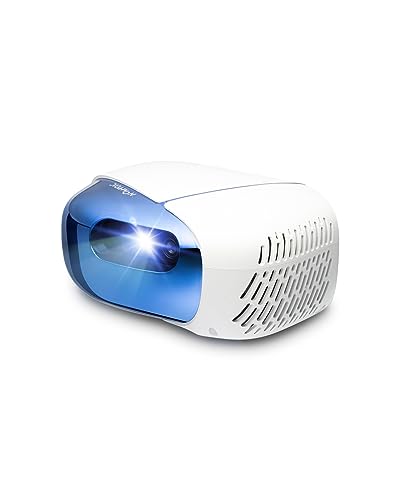
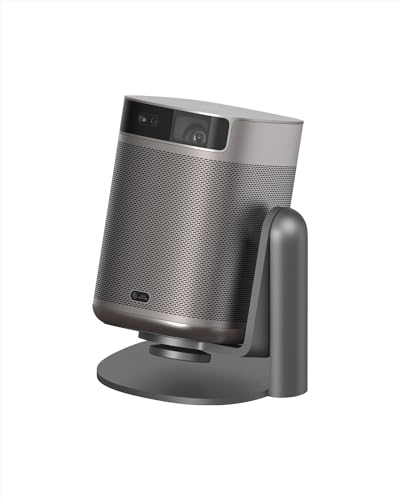
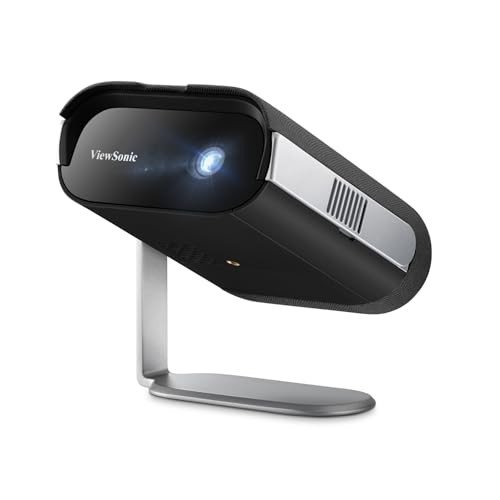
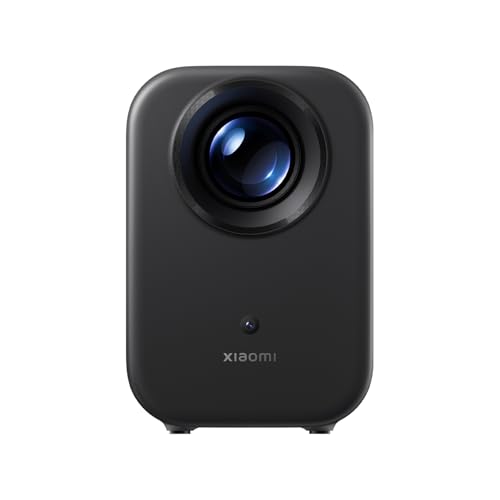
Which brands make the best portable projectors?
The best portable projector brands are as follows.
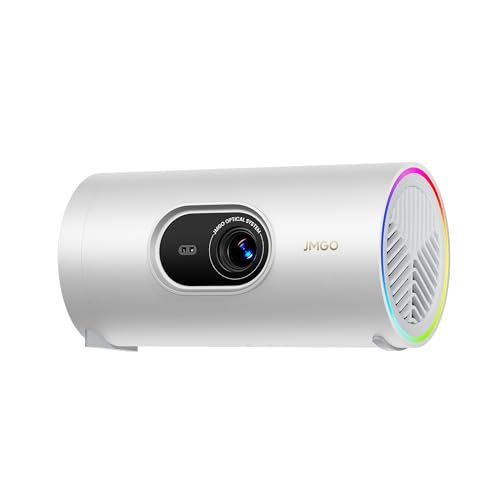
- JMGO (Average overall score: 7.4)
- XGIMI (Average overall score: 7)
- Dangbei (Average overall score: 7)
The chart below compares portable projector brands by average overall score.
[horizontal-chart-12501510141084568708113549480666826724063316040283]
What makes a portable projector suitable for travel?
A portable projector is suitable for travel when it combines the following features:
- Low weight and compact size: A projector that is easy to pack matters more for real travel than chasing the biggest possible image.
- Simple setup tools: Autofocus, auto keystone correction, and quick screen alignment save time when you are projecting in temporary spaces.
- Battery or easy power options: A built-in battery or USB-C power flexibility makes a portable model much easier to use away from a fixed wall socket.
- Usable built-in audio and streaming: Portable projectors work better on trips when they can play from apps directly and do not depend on an external speaker straight away.
- Realistic brightness: Travel models do not need home-cinema brightness, but they still need enough output for a dark hotel room or evening indoor use.
How bright is a portable projector in real use?
A portable projector is usually much dimmer than a full-size home projector, with many travel-friendly models landing around 300 to 1,200 ANSI lumens. That is normally fine for dark rooms, evening use, or smaller casual images, but it is not ideal for bright living rooms or daylight viewing.
In real use, brightness matters more than the headline marketing style. A compact projector can still feel great on a trip if the room is dark and the setup is easy, but it will struggle quickly once there is too much ambient light or the image gets too large.
Does a portable projector have a built-in battery?
Some portable projectors do have a built-in battery, but it is not universal and it should not be treated as automatic. Many compact models still need mains power, while battery-powered ones often reduce brightness or run for only a couple of hours to stay portable.
That means the battery is best seen as a convenience feature rather than a full replacement for a plug socket. If you want true travel freedom, it is worth checking both runtime and brightness together instead of assuming every portable projector works well off-grid.
What connections does a portable projector support?
A portable projector usually supports the following connections:
- HDMI: This is still the easiest way to connect a laptop, console, streaming stick, or media player when you want the most reliable video path.
- USB-C or USB power: Portable models benefit a lot from flexible power options, especially if you want to use a power bank or a compact charger.
- USB media playback: A USB-A port can be handy for local files, quick presentations, or powering accessories.
- Wi-Fi and Bluetooth: Wireless casting and Bluetooth audio matter more here than on many home models because they reduce the number of accessories you need to carry.
What price range is reasonable for a portable projector?
A reasonable portable projector price usually starts around £170 but the very cheapest models are often more novelty than long-term buy. They may be fine for casual use, yet real brightness, battery life, app quality, and focus consistency are usually the first things that feel weak.
\n
For most buyers, the more sensible range is around £340 to £600. This is where portable projectors start to feel genuinely usable, with better 1080p output, more dependable auto focus and keystone tools, and smart features that do not feel painfully slow.
\n
Spending closer to £690 to £860 usually makes sense only if you want a more polished all-in-one design. The extra cost tends to buy better speakers, a neater operating system, slightly stronger brightness, and a product that feels more like a compact TV replacement than a travel gadget.