Scored using Projectors Methodology v1.0
Projectors Methodology v1.0
Mathematical & Unbiased Scoring
Products in this category are scored under Frontum Projectors Methodology v1.0: technical specifications plus authentic consumer ratings, with 0% commercial bias.
Explore Projectors Methodology v1.0

Anker Nebula P1i Review | 84 Data compared

Avg. price:~£330Native panel resolution:1920x1080ANSI lumens:400Throw ratio:1.25:1Lamp life:30000 hours

Anker Nebula P1i Review: Compare 84 technical specifications and user reviews to see how this product ranks in the Projectors category and whether it is worth buying.
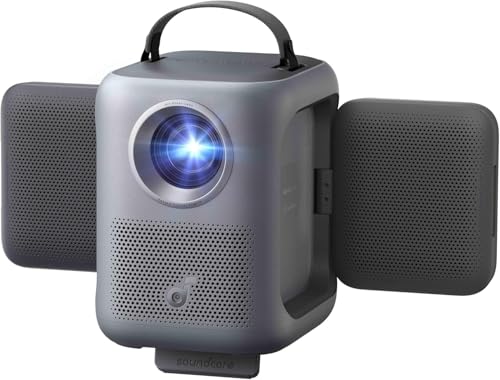
Anker Nebula P1i
6.4/10

Overall score

Score
6.4/ 10
✕
What it is
An overall evaluation of the projector's quality, based on technical analyses and user reviews.
When it matters
When you need a quick reference to identify the best projectors on the market.
Score distribution
▼
<55-66-77-88-99-10
Score components

90%

6.1

Technical score

10%

8.8

User score

▼Worse than 60% of projectors
7.1

Value for money

Value for money
7.1/ 10
✕
What it is
An indicator that combines the projector's overall rating with its cost.
When it matters
When you are looking for a projector with a good balance between quality and price.
Score distribution
▼
<55-66-77-88-99-10
Score components

70%

6.4

Overall score

30%

8.8

Price

▲Better than 77%
6.1

Technical score

Technical score
6.1/ 10
✕
What it is
An assessment of technical performance for products in the Projectors category across these key areas: Image Quality, Projection & Lens, HDMI & Gaming, Connectivity, Audio & Features, Design & Power.
When it matters
When you want to compare projectors based on technical performance and available features.
Score distribution
▼
<55-66-77-88-99-10
Score components

42%

5.5

Image Quality

22%

4.7

Projection & Lens

12%

7.6

HDMI & Gaming

10%

8.9

Audio & Features

8%

7.0

Connectivity

6%

7.1

Design & Power

▼Worse than 66%
8.8

User score

User score
8.8/ 10
✕
What it is
A rating that combines user reviews and the total number of reviews received by the projector.
When it matters
When you want to know how a projector performs in real use and how reliable it remains over time according to user feedback.
Score distribution
▼
<55-66-77-88-99-10
Score components

70%

8.6

User ratings

30%

9.1

Number of reviews

Based on ratings from across the web.
▲Better than 86%
  • anker-nebula-p1i
anker-nebula-p1i
Where to buy
*As an Amazon Associate, we earn from qualifying purchases.
Best rankings
Available: ranking among products currently available (including other versions of this product).All: ranking among all products in the database.
Loading...
Loading category ranking...

Technical Specifications of projector Anker Nebula P1i

Technical score
Technical score
6.1/ 10
✕
What it is
An assessment of technical performance for products in the Projectors category across these key areas: Image Quality, Projection & Lens, HDMI & Gaming, Connectivity, Audio & Features, Design & Power.
When it matters
When you want to compare projectors based on technical performance and available features.
Score distribution
▼
<55-66-77-88-99-10
Score components:

42%

5.5

Image Quality

22%

4.7

Projection & Lens

12%

7.6

HDMI & Gaming

10%

8.9

Audio & Features

8%

7.0

Connectivity

6%

7.1

Design & Power

6.1
User score
User score
8.8/ 10
✕
What it is
A rating that combines user reviews and the total number of reviews received by the projector.
When it matters
When you want to know how a projector performs in real use and how reliable it remains over time according to user feedback.
Score distribution
▼
<55-66-77-88-99-10
Score components

70%

8.6

User ratings

30%

9.1

Number of reviews

Based on ratings from across the web.
8.8
Popularity
Popularity
9.1/ 10
✕
What it is
An indicator based on the number of reviews received by the projector.
When it matters
When you prefer to buy a product chosen and reviewed by many other consumers.
Score distribution
▼
<55-66-77-88-99-10
Popularity:
Anker Nebula P1i has a popularity score of 9.1 points, which is higher than 81.6% of projectors.
9.1
Value for money
Value for money
7.1/ 10
✕
What it is
An indicator that combines the projector's overall rating with its cost.
When it matters
When you are looking for a projector with a good balance between quality and price.
Score distribution
▼
<55-66-77-88-99-10
Score components:

70%

6.4

Overall score

30%

8.8

Price

7.1
ANSI lumens
400
This projector reaches 400 ANSI lumens, dimmer than 83.3% of projectors and equal to 1.6% of projectors.
Contrast ratio
1,500:1
This projector has a contrast ratio of 1500:1, lower than 80.8% of projectors and equal to 2.9% of projectors.
Native contrast ratio.
Native panel resolution
1920x1080
This projector uses a native resolution of 1920x1080, higher than 26.2% of projectors and equal to 59.7% of projectors.
Output Resolution
1920x1080
This projector supports output resolution up to 1920x1080, higher than 24.9% of projectors and equal to 41% of projectors.
Projection technology
LCD
Show more
Throw ratio
1.25:1
Min throw distance
1.1 m
This projector needs a minimum throw distance of 1.1 m, longer than 54.8% of projectors and equal to 4% of projectors.
Max projection size
150 inch
This projector supports projection sizes up to 150 inch, smaller than 67.7% of projectors and equal to 10% of projectors.
Zoom ratio
N/A
Motorized zoom
no
This projector does not have motorized zoom. 16.3% of projectors have motorized zoom.
Show more
Input lag
20 ms
This projector has input lag of 20 ms, lower than 60.4% of projectors and equal to 3.6% of projectors.
In Game Mode.
Auto low latency mode (ALLM)
no
This projector does not support ALLM. 17.2% of projectors support ALLM.
Variable refresh rate (VRR)
no
This projector does not support VRR. 1.6% of projectors support VRR.
HDMI version
2.1
This projector supports HDMI 2.1, more modern than 82.3% of projectors and equal to 17.7% of projectors.
Max HDMI bandwidth
18 Gbps
This projector supports HDMI bandwidth up to 18 Gbps, higher than 47.7% of projectors and equal to 40.1% of projectors.
Show more
N. of HDMI ports
1
This projector has 1 HDMI port/s, fewer than 55.1% of projectors and equal to 41.6% of projectors.
Wi-Fi connectivity
yes
This projector supports Wi-Fi. 47.2% of projectors support Wi-Fi.
Wi-Fi version
Wi-Fi 5 (802.11ac)
This projector supports Wi-Fi 5 (802.11ac), more modern than 55.1% of projectors and equal to 29.4% of projectors.
Bluetooth connectivity
yes
This projector supports Bluetooth. 49.6% of projectors support Bluetooth.
Bluetooth version
5.1
This projector supports Bluetooth 5.1, more modern than 80.8% of projectors and equal to 7.7% of projectors.
Show more
Smart TV features
yes
This projector has smart TV features. 56.4% of projectors have smart TV features.
Google TV built in.
Operating system
Google TV
Android OS
no
This projector does not run Android OS. 18.8% of projectors run Android OS.
Dedicated smartphone app
yes
This projector comes with a dedicated smartphone app. 64.9% of projectors come with a dedicated smartphone app.
Nebula Connect app.
Remote control
yes
This projector includes a remote control. 1.6% of projectors include a remote control.
Backlit remote included.
Show more
Light source type
led
This projector uses led light source technology, more advanced than 33.1% of projectors and equal to 39% of projectors.
Laser Light Source
no
This projector does not use a laser light source. 28.1% of projectors use a laser light source.
Lamp life
30,000 hours
This projector offers lamp life of 30,000 hours, shorter than 69.1% of projectors and equal to 25.3% of projectors.
LED light source life.
Lamp life (eco mode)
?
Operating power consumption
140 W
This projector uses 140 W of power, less than 63.2% of projectors and equal to 1.2% of projectors.
Normal mode power draw.
Show more

Anker Nebula P1i vs the average projector

246810TotalImage QualityProjection & LensHDMI & GamingConnectivityAudio & FeaturesDesign & Power
  • Advanced focus control
    This projector offers Advanced focus control than the average projector (auto-focus vs manual). The average projector uses manual focus control.
    Manual remote fine-tuning available.
    auto-focus vs manual
  • Supports HDMI ARC
    This projector supports HDMI ARC, while the average projector does not. 36% of projectors support HDMI ARC.
  • Built-in smart TV features
    This projector has built-in smart TV features, while the average projector does not. 43.7% of projectors have built-in smart TV features.
    Google TV built in.
  • Smartphone app support
    This projector supports smartphone app control, while the average projector does not. 35.2% of projectors support smartphone app control.
    Nebula Connect app.
  • Supports frame interpolation
    This projector supports frame interpolation, while the average projector does not. 37.1% of projectors support frame interpolation.
    Multiple MEMC levels.
  • Built-in stereo speakers
    This projector has stereo speakers, while the average projector does not. 48.9% of projectors have stereo speakers.
  • Built-in Chromecast
    This projector supports built-in Chromecast, while the average projector does not. 26% of projectors support built-in Chromecast.
  • Supports voice commands
    This projector supports voice commands, while the average projector does not. 36.3% of projectors support voice commands.
    Google Assistant via remote.
  • 9.4% higher user score
    User score
    8.8/ 10
    ✕
    What it is
    A rating that combines user reviews and the total number of reviews received by the projector.
    When it matters
    When you want to know how a projector performs in real use and how reliable it remains over time according to user feedback.
    Score distribution
    ▼
    ▼
    <55-66-77-88-99-10
    Anker Nebula P1i
    the average projector
    Anker Nebula P1i has a higher user score than the average projector (8.75 vs 8.000).
    8.75 vs 8
  • 85.8% more popular
    Anker Nebula P1i has a higher popularity than the average projector (9.05 vs 4.9).
    9.05 vs 4.87
  • Wider color gamut
    This projector has a higher color gamut coverage than the average projector (124% Rec.709 % vs 99% Rec.709 %). The average projector has 99% Rec.709 % of color gamut coverage.
    124% Rec.709 % vs 99% Rec.709 %
  • Advanced focus control
    This projector offers Advanced focus control than the average projector (auto-focus vs manual). The average projector uses manual focus control.
    Manual remote fine-tuning available.
    auto-focus vs manual
  • Motorized focus
    This projector supports motorized focus, while the average projector does not. 47.2% of projectors support motorized focus.
  • Supports frame interpolation
    This projector supports frame interpolation, while the average projector does not. 37.1% of projectors support frame interpolation.
    Multiple MEMC levels.
  • Modern HDMI standard
    This projector offers Modern HDMI standard than the average projector (2.1 vs 2). The average projector supports HDMI 2.0.
    2.1 vs 2.0
  • 7 ms lower input lag
    This projector has a lower input lag than the average projector (20 ms vs 27 ms). The average projector has 27 ms of input lag.
    In Game Mode.
    20 ms vs 27 ms
  • Supports HDMI ARC
    This projector supports HDMI ARC, while the average projector does not. 36% of projectors support HDMI ARC.
  • Built-in Chromecast
    This projector supports built-in Chromecast, while the average projector does not. 26% of projectors support built-in Chromecast.
  • Supports AirPlay
    This projector supports AirPlay, while the average projector does not. 40% of projectors support AirPlay.
    Requires Nebula Cast app.
  • Built-in smart TV features
    This projector has built-in smart TV features, while the average projector does not. 43.7% of projectors have built-in smart TV features.
    Google TV built in.
  • Smartphone app support
    This projector supports smartphone app control, while the average projector does not. 35.2% of projectors support smartphone app control.
    Nebula Connect app.
  • Built-in stereo speakers
    This projector has stereo speakers, while the average projector does not. 48.9% of projectors have stereo speakers.
  • Supports voice commands
    This projector supports voice commands, while the average projector does not. 36.3% of projectors support voice commands.
    Google Assistant via remote.
  • 2x stronger audio output
    This projector has a higher audio output power than the average projector (20 W vs 10 W). The average projector has 10 W of audio output power.
    20 W vs 10 W
  • 10,000 hours longer lamp life
    This projector has a higher lamp life than the average projector (30,000 hours vs 20,000 hours). The average projector has 20,000 hours of lamp life.
    LED light source life.
    30,000 hours vs 20,000 hours
  • 176 mm narrower width
    This projector is narrower than the average projector (124 mm vs 300 mm). The average projector has a width of 300 mm.
    124 mm vs 300 mm
  • 5 newer model
    This projector was released more recently than the average projector (2026 vs 2021). The average projector was released in 2021.
    2026 vs 2021
  • 1 dB quieter operation
    This projector has a lower audible noise than the average projector (29 dB vs 30 dB). The average projector has 30 dB of audible noise.
    29 dB vs 30 dB
  • 81.8% dimmer image
    This projector has lower ANSI lumens than the average projector (400 vs 2,200). The average projector has 2,200 ANSI lumens.
    400 vs 2,200
  • Lower contrast ratio
    This projector has a lower contrast ratio than the average projector (1500:1 vs 10000:1). The average projector has 10000:1 of contrast ratio.
    Native contrast ratio.
    1,500:1 vs 10,000:1
  • 1 fewer HDMI ports
    This projector has fewer HDMI ports than the average projector (1 vs 2). The average projector has 2 HDMI ports.
    1 vs 2
  • Basic light source
    This projector has Basic light source than the average projector (led vs laser). The average projector uses a laser light source.
    led vs laser
  • 96.5 inch smaller image size
    This projector has a lower projection size than the average projector (150 inch vs 246.5 inch). The average projector has 246.5 inch of projection size.
    150 inch vs 246.5 inch
  • 29.4% lower refresh rate
    This projector has a lower refresh rate than the average projector (60 Hz vs 85 Hz). The average projector has 85 Hz of refresh rate.
    60 Hz vs 85 Hz
  • Limited HDMI format
    This projector supports a less capable max HDMI input format than the average projector (4K/60Hz vs 4K/120Hz). The average projector supports a max HDMI input format of 4K/120Hz.
    4K/60Hz vs 4K/120Hz
  • No 3D support
    This projector does not support 3D playback, while the average projector does. 55% of projectors support 3D playback.
  • 81.8% dimmer image
    This projector has lower ANSI lumens than the average projector (400 vs 2,200). The average projector has 2,200 ANSI lumens.
    400 vs 2,200
  • Lower contrast ratio
    This projector has a lower contrast ratio than the average projector (1500:1 vs 10000:1). The average projector has 10000:1 of contrast ratio.
    Native contrast ratio.
    1,500:1 vs 10,000:1
  • 29.4% lower refresh rate
    This projector has a lower refresh rate than the average projector (60 Hz vs 85 Hz). The average projector has 85 Hz of refresh rate.
    60 Hz vs 85 Hz
  • No 3D support
    This projector does not support 3D playback, while the average projector does. 55% of projectors support 3D playback.
  • 0.24 inch smaller DMD chip
    This projector has a lower DMD chip size than the average projector (0.2 inch vs 0.47 inch). The average projector has 0.47 inch of DMD chip size.
    0.23 inch vs 0.47 inch
  • No 3D glasses support
    This projector does not support 3D glasses, while the average projector does. 55.1% of projectors support 3D glasses.
  • 96.5 inch smaller image size
    This projector has a lower projection size than the average projector (150 inch vs 246.5 inch). The average projector has 246.5 inch of projection size.
    150 inch vs 246.5 inch
  • 10 degrees less vertical keystone correction
    This projector offers less vertical keystone correction than the average projector (20 degrees degrees vs 30 degrees degrees). The average projector offers 30 degrees degrees of vertical keystone correction.
    20 degrees vs 30 degrees
  • 10 degrees less horizontal keystone correction
    This projector offers less horizontal keystone correction than the average projector (20 degrees degrees vs 30 degrees degrees). The average projector offers 30 degrees degrees of horizontal keystone correction.
    20 degrees vs 30 degrees
  • 0.08 m longer throw distance
    This projector has a higher throw distance than the average projector (1.1 m vs 1 m). The average projector has 1.025 m of throw distance.
    1.1 m vs 1.025 m
  • Limited HDMI format
    This projector supports a less capable max HDMI input format than the average projector (4K/60Hz vs 4K/120Hz). The average projector supports a max HDMI input format of 4K/120Hz.
    4K/60Hz vs 4K/120Hz
  • 1 fewer HDMI ports
    This projector has fewer HDMI ports than the average projector (1 vs 2). The average projector has 2 HDMI ports.
    1 vs 2
  • No RS-232 control
    This projector does not support RS-232 control, while the average projector does. 52.1% of projectors support RS-232 control.
  • Basic light source
    This projector has Basic light source than the average projector (led vs laser). The average projector uses a laser light source.
    led vs laser
  • 1 dB louder eco mode
    This projector has a higher audible noise in eco mode than the average projector (29 dB vs 28 dB). The average projector has 28 dB of audible noise in eco mode.
    Eco mode figure.
    29 dB vs 28 dB
  • 101 mm taller body
    This projector is taller than the average projector (228 mm vs 127 mm). The average projector has a height of 127 mm.
    228 mm vs 127 mm

Video reviews

Hands-on testing, unboxing, and real-world video evaluations

7.0
Dustin Abbott
≈ estimated
13/02/2026
Hands-on review · sound, brightness and setup tests
Verdict
Anker Nebula P1i is good value for the right portable buyer, but it is too dim and power-dependent for home theatre.
9.0
Tech Guy Beau
≈ estimated
19/01/2026
Hands-on review · audio, setup, gaming and image tests
Verdict
Anker Nebula P1i is a very good all-in-one projector, especially for audio, portability and on-the-go use.
8.0
Lon's Gadget Picks
≈ estimated
15/04/2026
Quick review · brightness, speakers and Google TV
Verdict
Anker Nebula P1i's weak brightness limits it, but its speakers and features make it good value for the price.
9.0
FishBee Productions
≈ estimated
10/02/2026
Hands-on review · picture, sound, iPad and gaming tests
Verdict
Anker Nebula P1i is worth a close look, with a strong picture, good speakers and solid build for the price.
Overview video
Overview video
Overview video
Brand video
Overview video

Expert reviews

In-depth analysis and verdict from leading tech publications

androidauthority.com
29/03/2026
Hands-on review · Projector for dark rooms
Verdict
The Soundcore Nebula P1i is a quirky projector with folding speakers and built-in Google TV, best for movie nights in a dark room.
engadget.com
12/03/2026
Hands-on test · Portable projector
Verdict
The Soundcore Nebula P1i is easy to set up and color-accurate, but its 380 lumens and tinny sound make it best suited to dark rooms.
cnet.com
21/05/2026
Lab test · Google TV projector
Verdict
The Soundcore Nebula P1i delivers accurate color and rotating speakers for casual nights, but its simple lens means it must sit at midpoint height.
bestcustomerreviews.net
23/05/2026
Review summary · Speaker-focused projector
Verdict
The Soundcore Nebula P1i suits nighttime bedroom viewing thanks to its rotating speakers, but it must stay plugged in, and its 380 lumens limit daytime use.

Third-party reviews

Based on ratings from across the web.
Reviews last updated: October 2026 · How we calculate this

What customers like about Anker Nebula P1i

  • Innovative flippable speakers that can rotate to direct sound for better immersion
  • Integrated Google TV provides a smooth smart interface with native Netflix support
  • Fast and simple setup with reliable autofocus and auto-keystone correction
  • Strong color accuracy and vibrant image quality in dark environments
  • Compact and lightweight design with a convenient carrying handle
  • Low input lag (approx. 20ms) making it suitable for casual gaming

What customers don't like about Anker Nebula P1i

  • Low brightness (380 ANSI lumens) makes it difficult to use in daylight or rooms with ambient light
  • Lacks a built-in battery, requiring a constant connection to a power source
  • The image loses sharpness toward the edges, especially when using heavy keystone correction
  • Speakers lack significant bass response despite their unique design
  • Hardware can feel slightly wobbly or unstable, especially when speakers are extended
  • Fan may continue to run even when the unit is powered off, necessitating unplugging

Verdict

The Anker Nebula P1i is a 1080p Full HD smart projector featuring a unique 'flippable' speaker design with dual 10W Dolby Audio units that rotate up to 200° vertically and 90° horizontally to direct sound. It delivers 380 ANSI lumens of brightness through an all-glass lens and fully sealed optical engine, supporting a projection size of up to 150 inches with a 1.25:1 throw ratio. Running on Google TV with official Netflix certification, it simplifies setup via Intelligent Environment Adaptation (IEA) 3.0, which includes autofocus, auto-keystone correction, obstacle avoidance, and screen fit. Main pros include its highly adjustable audio, integrated smart platform, and effortless automated image alignment. However, notable cons include its limited brightness that requires a dark room for clear viewing and the lack of a built-in battery, requiring a constant AC power connection for operation.

Compare Anker Nebula P1i with other products in the Projectors category

1Product to compare no. 1
VS
2Product to compare no. 2
VS
3Product to compare no. 3 (optional)

Graphic comparison of Anker Nebula P1i and other products in the Projectors category

No results found