Scored using Processors Methodology v3.0
Processors Methodology v3.0
Mathematical & Unbiased Scoring
Products in this category are scored under Frontum Processors Methodology v3.0: the technical score from the specifications is the base, and independent expert and video reviews (up to ±0.5 points), owner opinions (up to ±0.3) and best-of lists (up to +0.3) move it up or down.
Explore Processors Methodology v3.0

AMD Ryzen 5 7500X3D review: 74 specs compared

Avg. price:~£220PassMark multi-core score:26000N. of physical cores:6CPU boost clock speed:4.5 GHzCPU socket:AM5TDP (Thermal design power):65 W

AMD Ryzen 5 7500X3D Review: Compare 168 technical specifications, 12 expert and video reviews and 17 best-of lists to see how this product ranks in the Processors category and whether it is worth buying.
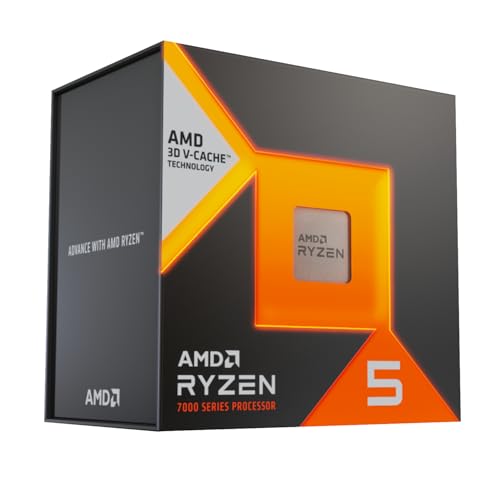
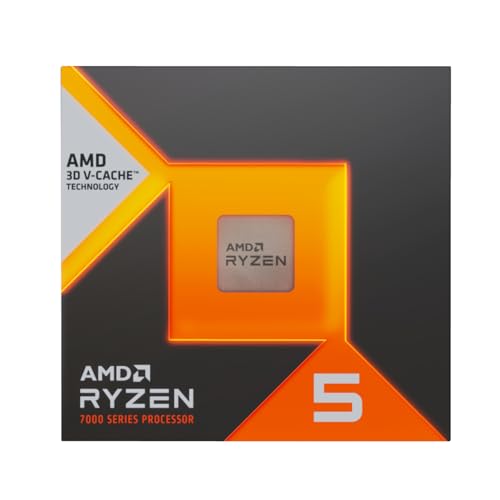
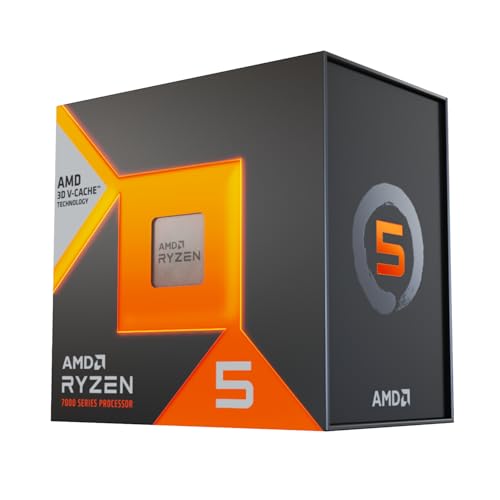
AMD Ryzen 5 7500X3D
8.0/10

Overall score

Score
8.0/ 10
✕
What it is
Our main score for this model, 1–10. It combines specs, expert reviews, best-of lists, owners and ratings from across the web.
How we count it
Parts: Technical score 40%, Reviews score 25%, List score 15%, Sentiment score 10%, User score 10%
Marks: Each part gets a mark out of 10. For reviews, lists and owners, a typical model in this category gets about 8 and the best one gets 10.
No data yet: A part with no data shows "?". It counts as the mark of a weaker model in this category (4 in 5 models with data score higher). This way, models with reviews, lists and owners usually come out ahead.
Score distribution
▼
<55-66-77-88-99-10
Score components

40%

7.7

Technical score

25%

7.3

Reviews score

15%

8.8

List score

10%

8.5

Sentiment score

10%

9.0

User score

★Better than 93% of processors
8.4

Value for money

Value for money
8.4/ 10
✕
What it is
An indicator that combines the processor's overall rating with its cost.
When it matters
When you are looking for a processor with a good balance between performance, efficiency, and price.
Score distribution
▼
<55-66-77-88-99-10
Score components

70%

8.0

Overall score

30%

9.4

Price

★Better than 96%
7.7

Technical score

Technical score
7.7/ 10
✕
What it is
How good the specs are compared with the other models in this category, 1–10.
How we count it
Areas: We rate the specs in each area against the other models in this category.
Weighting: The areas that matter most to buyers count more. The shares are shown under Score components.
Share: The technical score is 40% of the overall score.
Score distribution
▼
<55-66-77-88-99-10
Score components

60%

7.6

Performance

18%

8.1

Architecture

10%

8.4

Memory & PCIe

7%

6.2

Power & Thermal

4%

9.4

Platform

1%

6.6

Integrated graphics

▲Better than 81%
7.3

Reviews score

Reviews score
7.3/ 10
✕
What it is
Average grade from independent test sites, magazines and video reviewers, 1–10.
How we count it
Grades: Each review's own score is converted to 1–10; without one, we grade the review ourselves. Big test sites count more, short reviews half as much as full tests. A video review counts half.
Score: The average grade is 80% of the review mark; the number of reviews is the other 20% (1 review = 5, the typical number in this category = 8, the most-reviewed model = 10).
Enough data: With few reviews, the average grade is pulled toward the typical grade of this category. No reviews yet: 7.2 for now.
Share: Reviews count 25% of the overall score.
Score distribution
▼
<55-66-77-88-99-10

80%

6.9

Average grade

20%

8.9

Popularity

Grades by review (12)
8 reviews: 6 with a printed score, 2 estimated from the review. 4 video reviews, each counting half as much as a written test. Reviews count 25% of the overall score.
Ratings from across the web count in the User score, not in this score.
▼Worse than 57%
9.0

User score

User score
9.0/ 10
✕
What it is
How happy buyers are with this model, based on ratings from across the web.
How we count it
Enough data: A model needs at least 1 rating from across the web. Without one, it counts as 8.4, the mark of a weaker rated model in this category.
Share: User score counts 10% of the overall score.
Score distribution
▼
<55-66-77-88-99-10

80%

9.3

Rating

20%

7.9

Popularity

▲Better than 61%
8.8

List score

List score
8.8/ 10
✕
What it is
How often independent test sites, magazines and video reviewers put this model in their best-of lists for this category.
How we count it
Points: The model in the most lists of this category gets 10; the others get 8 to 10 in proportion. In no list yet: 7.5. Lists count 15% of the overall score.
Enough data: Every list counts, even a single one. With fewer than 5 best-of lists in the category, this part is left out.
Lists with this model (17)
List score: in 17 of 67 lists (25%)
★Better than 99%
  • amd-ryzen-5-7500x3d
  • amd-ryzen-5-7500x3d
  • amd-ryzen-5-7500x3d
  • amd-ryzen-5-7500x3d
  • amd-ryzen-5-7500x3d
  • amd-ryzen-5-7500x3d
amd-ryzen-5-7500x3d
amd-ryzen-5-7500x3d
amd-ryzen-5-7500x3d
amd-ryzen-5-7500x3d
amd-ryzen-5-7500x3d
amd-ryzen-5-7500x3d
Best prices
    N/A~ £220
Best rankings
Available: ranking among products currently available (including other versions of this product).All: ranking among all products in the database.
Loading...
Loading category ranking...

Technical Specifications of processor AMD Ryzen 5 7500X3D

Technical score
Technical score
7.7/ 10
✕
What it is
How good the specs are compared with the other models in this category, 1–10.
How we count it
Areas: We rate the specs in each area against the other models in this category.
Weighting: The areas that matter most to buyers count more. The shares are shown under Score components.
Share: The technical score is 40% of the overall score.
Score distribution
▼
<55-66-77-88-99-10
Score components:

60%

7.6

Performance

18%

8.1

Architecture

10%

8.4

Memory & PCIe

7%

6.2

Power & Thermal

4%

9.4

Platform

1%

6.6

Integrated graphics

7.7
Reviews score
7.3
User score
9.0
List score
8.8
Value for money
Value for money
8.4/ 10
✕
What it is
An indicator that combines the processor's overall rating with its cost.
When it matters
When you are looking for a processor with a good balance between performance, efficiency, and price.
Score distribution
▼
<55-66-77-88-99-10
Score components:

70%

8.0

Overall score

30%

9.4

Price

8.4
Processor type
desktop
AMD Ryzen 5 7500x3D belongs to the desktop processor class, which is more advanced than that of 54.7% of processors and equal to that of 39.5% of processors.
CPU socket
AM5
AMD Ryzen 5 7500x3D uses the AM5 CPU socket, which is newer than that of 95% of processors and equal to that of 3.1% of processors.
Chipset
X870, B850, X670E, X670, B650E, B650, A620
CPU architecture
x86-64
AMD Ryzen 5 7500x3D uses the x86-64 architecture, which is more advanced than that of 1.8% of processors and equal to that of 98.2% of processors.
Instruction sets
SSE4A, SSE4.1, SSE4.2, AVX2, AVX-512, FMA3, AES
Show more
What reviewers say
N. of physical cores
6
AMD Ryzen 5 7500x3D has 6 CPU cores, which is more than 47.7% of processors and equal to 13.4% of processors.
CPU threads
12
AMD Ryzen 5 7500x3D offers 12 CPU threads, which is more than 53% of processors and equal to 14.2% of processors.
CPU boost clock speed
4.5 GHz
AMD Ryzen 5 7500x3D reaches a boost clock of 4.5 GHz which is higher than that of 53.9% of processors and equal to that of 5.5% of processors.
CPU base clock speed
6x 4.0 GHz
AMD Ryzen 5 7500x3D has a base clock of 6x4.0 GHz which is higher than that of 73% of processors and equal to that of 0.1% of processors.
PassMark multi-core score
26,000
AMD Ryzen 5 7500x3D scores 26,000 in PassMark, which is higher than 81% of processors.
Show more
What reviewers say
Semiconductor size
5 nm
AMD Ryzen 5 7500x3D uses a 5 nm process node, which is more advanced than that of 83.5% of processors and equal to that of 3.2% of processors.
Foundry
?
L3 cache
96 MB
AMD Ryzen 5 7500x3D has an L3 cache of 96 MB which is larger than that of 97.3% of processors and equal to that of 0.6% of processors.
L2 cache
6 MB
AMD Ryzen 5 7500x3D has an L2 cache of 6 MB which is larger than that of 65.6% of processors and equal to that of 3.9% of processors.
L1 cache
384 KB
AMD Ryzen 5 7500x3D has an L1 cache of 384 KB which is larger than that of 44% of processors and equal to that of 15.7% of processors.
Show more
What reviewers say
DDR memory version
DDR5
AMD Ryzen 5 7500x3D supports DDR DDR5, which is newer than that of 64.2% of processors and equal to that of 12.8% of processors.
Maximum memory speed
5,200 MHz
AMD Ryzen 5 7500x3D supports memory speeds up to 5,200 MHz, which is higher than that of 70.6% of processors and equal to 6.6% of processors.
Max memory speed (JEDEC)
DDR5-5200 MHz
AMD Ryzen 5 7500x3D supports JEDEC memory speeds up to DDR5-5200 MHz, which is higher than that of 71% of processors and equal to 5.6% of processors.
Max memory speed (XMP / EXPO)
6,000 MHz
AMD Ryzen 5 7500x3D supports XMP/EXPO memory speeds up to 6,000 MHz, which is higher than that of 97.2% of processors and equal to 0.2% of processors.
Maximum memory capacity
128 GB
AMD Ryzen 5 7500x3D supports up to 128 GB of memory, which is more than 59.3% of processors and equal to 22.8% of processors.
Show more
Integrated graphics
yes
AMD Ryzen 5 7500x3D includes integrated graphics. 14.7% of processors offer this.
Integrated GPU model
Radeon Graphics
Integrated GPU execution units
2
AMD Ryzen 5 7500x3D has 2 GPU execution units, which is fewer than 95.5% of processors and equal to 4.5% of processors.
Integrated GPU base frequency
400 MHz
AMD Ryzen 5 7500x3D has an integrated GPU clock of 400 MHz which is higher than that of 68.4% of processors and equal to that of 8.3% of processors.
Integrated media encoders/decoders
?
Show more
TDP (Thermal design power)
65 W
AMD Ryzen 5 7500x3D has a TDP of 65 W which is higher than that of 68% of processors and equal to that of 17% of processors.
Base power (PL1)
65 W
AMD Ryzen 5 7500x3D has a base power of 65 W which is higher than that of 68.1% of processors and equal to that of 17.4% of processors.
Boost power (PL2)
88 W
AMD Ryzen 5 7500x3D has a boost power of 88 W which is higher than that of 58.1% of processors and equal to that of 0.8% of processors.
Tau (power duration limit)
N/A
Configurable TDP
?
Show more
What reviewers say

AMD Ryzen 5 7500X3D vs the average processor

246810TotalPlatformPerformanceArchitectureMemory & PCIeIntegrated graphicsPower & Thermal
  • 2.27x higher PassMark score
    AMD Ryzen 5 7500x3D has a higher PassMark benchmark score than the average processor (26,000 vs 11,469). The average processor scores 11,469 in PassMark benchmark.
    26,000 vs 11,469
  • 2.2x higher multi-core score
    AMD Ryzen 5 7500x3D has a higher Geekbench 6 multi-core score than the average processor (11,485 vs 5,209). The average processor scores 5,209 in Geekbench 6 multi-core.
    11,485 vs 5,209
  • 10.67x larger L3 cache
    AMD Ryzen 5 7500x3D has a higher L3 cache than the average processor (96 MB vs 9 MB). The average processor has L3 cache of 9 MB.
    96 MB vs 9 MB
  • More advanced microarchitecture
    AMD Ryzen 5 7500x3D uses a more advanced microarchitecture than the average processor (Raphael vs Kaby Lake).
    Raphael vs Kaby Lake
  • 65.5% higher single-core score
    AMD Ryzen 5 7500x3D has a higher Geekbench 6 single-core score than the average processor (2,541 vs 1,535). The average processor scores 1,535 in Geekbench 6 single-core.
    2,541 vs 1,535
  • Newer PCIe version
    AMD Ryzen 5 7500x3D supports a newer PCIe version than the average processor (5 vs 3).
    5.0 vs 3.0
  • 36.7% better single-core performance
    AMD Ryzen 5 7500x3D has a higher PassMark single-core score than the average processor (3,498 vs 2,558). The average processor scores 2,558 in PassMark single-core.
    3,498 vs 2,558
  • Unlocked for overclocking
    AMD Ryzen 5 7500x3D has an unlocked multiplier, while the average processor does not. 22.6% of processors offer this.
  • 23.3% higher user score
    User score
    9.0/ 10
    ✕
    What it is
    How happy buyers are with this model, based on ratings from across the web.
    How we count it
    Enough data: A model needs at least 1 rating from across the web. Without one, it counts as 8.4, the mark of a weaker rated model in this category.
    Share: User score counts 10% of the overall score.
    Score distribution
    ▼
    <55-66-77-88-99-10

    80%

    9.3

    Rating

    20%

    7.9

    Popularity

    9.0 vs 7.3
  • 9.0% higher review score
    Reviews score
    7.3/ 10
    ✕
    What it is
    Average grade from independent test sites, magazines and video reviewers, 1–10.
    How we count it
    Grades: Each review's own score is converted to 1–10; without one, we grade the review ourselves. Big test sites count more, short reviews half as much as full tests. A video review counts half.
    Score: The average grade is 80% of the review mark; the number of reviews is the other 20% (1 review = 5, the typical number in this category = 8, the most-reviewed model = 10).
    Enough data: With few reviews, the average grade is pulled toward the typical grade of this category. No reviews yet: 7.2 for now.
    Share: Reviews count 25% of the overall score.
    Score distribution
    ▼
    <55-66-77-88-99-10

    80%

    6.9

    Average grade

    20%

    8.9

    Popularity

    Grades by review (12)
    8 reviews: 6 with a printed score, 2 estimated from the review. 4 video reviews, each counting half as much as a written test. Reviews count 25% of the overall score.
    Ratings from across the web count in the User score, not in this score.
    7.3 vs 6.7
  • 12.8% higher list score
    List score
    8.8/ 10
    ✕
    What it is
    How often independent test sites, magazines and video reviewers put this model in their best-of lists for this category.
    How we count it
    Points: The model in the most lists of this category gets 10; the others get 8 to 10 in proportion. In no list yet: 7.5. Lists count 15% of the overall score.
    Enough data: Every list counts, even a single one. With fewer than 5 best-of lists in the category, this part is left out.
    Lists with this model (17)
    List score: in 17 of 67 lists (25%)
    8.8 vs 7.8
  • 14.9% better value for money
    AMD Ryzen 5 7500x3D has better value for money than the average processor (8.42 vs 7.3).
    8.42 vs 7.33
  • 18.1% higher sentiment score
    8.5 vs 7.2
  • Modern CPU socket
    AMD Ryzen 5 7500x3D uses a more modern CPU socket than the average processor (AM5 vs FP5).
    AM5 vs FP5
  • 5 years newer release date
    AMD Ryzen 5 7500x3D has a newer release date than the average processor (2025 vs 2020).
    2025 vs 2020
  • 2.27x higher PassMark score
    AMD Ryzen 5 7500x3D has a higher PassMark benchmark score than the average processor (26,000 vs 11,469). The average processor scores 11,469 in PassMark benchmark.
    26,000 vs 11,469
  • 2.2x higher multi-core score
    AMD Ryzen 5 7500x3D has a higher Geekbench 6 multi-core score than the average processor (11,485 vs 5,209). The average processor scores 5,209 in Geekbench 6 multi-core.
    11,485 vs 5,209
  • 65.5% higher single-core score
    AMD Ryzen 5 7500x3D has a higher Geekbench 6 single-core score than the average processor (2,541 vs 1,535). The average processor scores 1,535 in Geekbench 6 single-core.
    2,541 vs 1,535
  • 36.7% better single-core performance
    AMD Ryzen 5 7500x3D has a higher PassMark single-core score than the average processor (3,498 vs 2,558). The average processor scores 2,558 in PassMark single-core.
    3,498 vs 2,558
  • Unlocked for overclocking
    AMD Ryzen 5 7500x3D has an unlocked multiplier, while the average processor does not. 22.6% of processors offer this.
  • 2 more performance cores
    AMD Ryzen 5 7500x3D has more performance cores than the average processor (6 vs 4). The average processor has 4 performance cores.
    6 vs 4
  • Higher base clock
    AMD Ryzen 5 7500x3D has a higher base clock than the average processor (6x4 GHz vs 4x3.4 GHz).
    6x4.0 GHz vs 4x3.4 GHz
  • 4 more CPU threads
    AMD Ryzen 5 7500x3D has more CPU threads than the average processor (12 vs 8). The average processor has 8 CPU threads.
    12 vs 8
  • 10.67x larger L3 cache
    AMD Ryzen 5 7500x3D has a higher L3 cache than the average processor (96 MB vs 9 MB). The average processor has L3 cache of 9 MB.
    96 MB vs 9 MB
  • More advanced microarchitecture
    AMD Ryzen 5 7500x3D uses a more advanced microarchitecture than the average processor (Raphael vs Kaby Lake).
    Raphael vs Kaby Lake
  • 8.65x more L3 per core
    AMD Ryzen 5 7500x3D has more L3 cache per core than the average processor (16 MB/core vs 1.85 MB/core). The average processor provides 1.85 MB/core of L3 cache per core.
    16 MB/core vs 1.85 MB/core
  • Supports stacked cache
    AMD Ryzen 5 7500x3D has stacked 3D cache, while the average processor does not. 1.1% of processors offer this.
  • 58.3% smaller process node
    AMD Ryzen 5 7500x3D has a lower process node than the average processor (5 nm vs 12 nm). The average processor uses a process node of 12 nm.
    5 nm vs 12 nm
  • 2x more L2 per core
    AMD Ryzen 5 7500x3D has more L2 cache per core than the average processor (1 MB/core vs 0.5 MB/core). The average processor provides 0.5 MB/core of L2 cache per core.
    1 MB/core vs 0.5 MB/core
  • 2x larger L2 cache
    AMD Ryzen 5 7500x3D has a higher L2 cache than the average processor (6 MB vs 3 MB). The average processor has L2 cache of 3 MB.
    6 MB vs 3 MB
  • Newer PCIe version
    AMD Ryzen 5 7500x3D supports a newer PCIe version than the average processor (5 vs 3).
    5.0 vs 3.0
  • Supports memory overclocking
    AMD Ryzen 5 7500x3D supports memory overclocking, while the average processor does not. 43.9% of processors support memory overclocking.
  • 77.4% higher memory bandwidth
    AMD Ryzen 5 7500x3D has a higher memory bandwidth than the average processor (83.2 GB/s vs 46.9 GB/s). The average processor offers memory bandwidth of 46.9 GB/s.
    83.2 GB/s vs 46.9 GB/s
  • Newer DDR support
    AMD Ryzen 5 7500x3D supports a newer DDR generation than the average processor (DDR5 vs DDR4).
    DDR5 vs DDR4
  • 2x more memory capacity
    AMD Ryzen 5 7500x3D has more maximum memory capacity than the average processor (128 GB vs 64 GB). The average processor supports 64 GB of memory.
    128 GB vs 64 GB
  • 62.5% higher memory speed
    AMD Ryzen 5 7500x3D has a higher maximum memory speed than the average processor (5200 MHz vs 3200 MHz). The average processor supports memory speed of 3200 MHz.
    5,200 MHz vs 3,200 MHz
  • Supports ECC memory
    AMD Ryzen 5 7500x3D supports ECC memory, while the average processor does not. 32% of processors support it.
  • Higher JEDEC memory speed
    AMD Ryzen 5 7500x3D has a higher JEDEC memory speed than the average processor (DDR5-5200 MHz vs DDR4-3200 MHz). The average processor supports JEDEC memory speed of DDR4-3200 MHz.
    DDR5-5,200 MHz vs DDR4-3,200 MHz
  • 11 °C lower CPU temperature
    AMD Ryzen 5 7500x3D has a lower CPU temperature than the average processor (89 °C vs 100 °C). The average processor runs at a CPU temperature of 100 °C.
    89 °C vs 100 °C
  • Narrower instruction support
    AMD Ryzen 5 7500x3D supports a narrower instruction set than the average processor (SSE4A, SSE4.1, SSE4.2, AVX2, AVX-512, FMA3, AES vs MMX, SSE, SSE2, SSE3, SSSE3, SSE4A, SSE4.1, SSE4.2, AVX, AVX2, F16C, FMA3, AES, SHA, AMD-V).
    SSE4A, SSE4.1, SSE4.2, AVX2, AVX-512, FMA3, AES vs MMX, SSE, SSE2, SSE3, SSSE3, SSE4A, SSE4.1, SSE4.2, AVX, AVX2, F16C, FMA3, AES, SHA, AMD-V
  • Weaker security extensions
    AMD Ryzen 5 7500x3D provides less advanced security extensions than the average processor (AES-NI vs AES-NI, NX bit, Secure Key, TXT, OS Guard, Boot Guard, CET, MBEC, TME, TME-MK).
    AES-NI vs AES-NI, NX bit, Secure Key, TXT, OS Guard, Boot Guard, CET, MBEC, TME, TME-MK
  • 11 °C lower temperature limit
    AMD Ryzen 5 7500x3D has a lower temperature limit than the average processor (89 °C vs 100 °C). The average processor can run up to 100 °C.
    89 °C vs 100 °C
  • 44.4% higher base power
    AMD Ryzen 5 7500x3D has a higher base power draw than the average processor (65 W vs 45 W). The average processor has a base power draw of 45 W.
    65 W vs 45 W
  • Inferior integrated GPU
    AMD Ryzen 5 7500x3D uses an inferior integrated GPU to the average processor (Radeon Graphics vs Intel UHD Graphics 630).
    Radeon Graphics vs Intel UHD Graphics 630
  • 44.4% higher TDP
    AMD Ryzen 5 7500x3D has a higher TDP than the average processor (65 W vs 45 W). The average processor has a TDP of 45 W.
    65 W vs 45 W
  • More limited crypto acceleration
    AMD Ryzen 5 7500x3D offers more limited crypto acceleration than the average processor (AES vs AES, SHA).
    AES vs AES, SHA
  • 91.7% fewer GPU execution units
    AMD Ryzen 5 7500x3D has fewer GPU execution units than the average processor (2 vs 24). The average processor has 24 GPU execution units.
    2 vs 24
  • Narrower instruction support
    AMD Ryzen 5 7500x3D supports a narrower instruction set than the average processor (SSE4A, SSE4.1, SSE4.2, AVX2, AVX-512, FMA3, AES vs MMX, SSE, SSE2, SSE3, SSSE3, SSE4A, SSE4.1, SSE4.2, AVX, AVX2, F16C, FMA3, AES, SHA, AMD-V).
    SSE4A, SSE4.1, SSE4.2, AVX2, AVX-512, FMA3, AES vs MMX, SSE, SSE2, SSE3, SSSE3, SSE4A, SSE4.1, SSE4.2, AVX, AVX2, F16C, FMA3, AES, SHA, AMD-V
  • Weaker security extensions
    AMD Ryzen 5 7500x3D provides less advanced security extensions than the average processor (AES-NI vs AES-NI, NX bit, Secure Key, TXT, OS Guard, Boot Guard, CET, MBEC, TME, TME-MK).
    AES-NI vs AES-NI, NX bit, Secure Key, TXT, OS Guard, Boot Guard, CET, MBEC, TME, TME-MK
  • More limited crypto acceleration
    AMD Ryzen 5 7500x3D offers more limited crypto acceleration than the average processor (AES vs AES, SHA).
    AES vs AES, SHA
  • Older TPM support
    AMD Ryzen 5 7500x3D supports an older TPM version than the average processor (fTPM 2 vs PTT 2).
    fTPM 2.0 vs PTT 2.0
  • No speed boosting
    AMD Ryzen 5 7500x3D does not support automatic speed boosting, while the average processor does. 87.7% of processors offer this.
  • Inferior integrated GPU
    AMD Ryzen 5 7500x3D uses an inferior integrated GPU to the average processor (Radeon Graphics vs Intel UHD Graphics 630).
    Radeon Graphics vs Intel UHD Graphics 630
  • 91.7% fewer GPU execution units
    AMD Ryzen 5 7500x3D has fewer GPU execution units than the average processor (2 vs 24). The average processor has 24 GPU execution units.
    2 vs 24
  • 11 °C lower temperature limit
    AMD Ryzen 5 7500x3D has a lower temperature limit than the average processor (89 °C vs 100 °C). The average processor can run up to 100 °C.
    89 °C vs 100 °C
  • 44.4% higher base power
    AMD Ryzen 5 7500x3D has a higher base power draw than the average processor (65 W vs 45 W). The average processor has a base power draw of 45 W.
    65 W vs 45 W
  • 44.4% higher TDP
    AMD Ryzen 5 7500x3D has a higher TDP than the average processor (65 W vs 45 W). The average processor has a TDP of 45 W.
    65 W vs 45 W
  • 37.5% higher boost power
    AMD Ryzen 5 7500x3D has a higher boost power draw than the average processor (88 W vs 64 W). The average processor has a boost power draw of 64 W.
    88 W vs 64 W

Video reviews

Hands-on testing, unboxing, and real-world video evaluations

8.0
WELSHYTECH
≈ estimated
01/01/2026
Full review · benchmarks, gaming and thermal tests
Verdict
AMD Ryzen 5 7500X3D is a good budget entry point to X3D on AM5, provided you can get DDR5 memory at a reasonable price.
Shop video
Not graded
Overview video
Shop video
Overview video
Overview video

What reviewers agree on

Based on 8 · 4

Frugal with power and good for gaming on a solid AM5 platform, but productivity performance lags well behind.
Praised
Criticised
Pick a topic to see who said what

Expert reviews

In-depth analysis and verdict from leading tech publications
5.0
techspot.com
≈ estimated
05/01/2026
Benchmark review · Gaming CPU
Verdict
The AMD Ryzen 5 7500X3D is a strong gaming chip thanks to 3D V-Cache, but its 4.5GHz boost makes it the slowest modern processor tested in Cinebench.
7.0
pcgamesn.com
✓ explicit
26/03/2026
Benchmark review · High frame-rate gaming
Verdict
The AMD Ryzen 5 7500X3D excels at high frame-rate gaming, especially CS2, but its weak non-gaming performance makes it hard to recommend for most buyers.
4.0
computerbase.de
≈ estimated
12/11/2025
Benchmark test · Gaming comparison
Verdict
The AMD Ryzen 5 7500X3D is a gaming-only chip, while the Ryzen 5 9600X is the better all-round choice for mixed use.
6.0
pcgameshardware.de
✓ explicit
12/11/2025
Lab test · Efficiency and gaming
Verdict
The AMD Ryzen 5 7500X3D is a gaming chip with very low power use, but it is weak at heavy workloads and hard to tell apart from the 7600X3D.
9.2
pcmasters.de
✓ explicit
Not Dated
Hands-on test · Tuning and cooling
Verdict
The AMD Ryzen 5 7500X3D is a cool-running gaming chip with 96 MB of cache that is easy to tune, but four RAM sticks limit its memory speed.
8.0
profesionalreview.com
✓ explicit
12/11/2025
Full review · Gaming CPU
Verdict
The AMD Ryzen 5 7500X3D puts 3D V-Cache on a six-core AM5 chip for gaming-focused builds, though it cannot be overclocked and uses the older Zen 4 design.
8.5
hardzone.es
✓ explicit
12/11/2025
Lab test · 1080p gaming
Verdict
The AMD Ryzen 5 7500X3D is a gaming chip built for 1080p at 60 fps, with 3D V-Cache and 65 W power draw, but bottlenecks at higher resolutions.
5.0
tomshw.it
✓ explicit
12/11/2025
Hands-on test · Gaming CPU
Verdict
The AMD Ryzen 5 7500X3D is the fastest chip in games among those tested and very efficient, but weak at productivity, so it suits dedicated gaming PCs best.

Third-party reviews

What we like about AMD Ryzen 5 7500X3D

  • 96 MB of L3 cache helps the chip stay fast in games.
  • The chip is unlocked, so you can raise its clock speed.
  • A base power of 65 W keeps the chip calm.
  • The 5 nm build keeps the chip efficient.
  • A PassMark multi-core score of 26000 handles everyday tasks well.
  • It supports DDR5 memory up to 128 GB.

What we don't like about AMD Ryzen 5 7500X3D

  • Six cores can feel tight in heavy multitasking.
  • The built-in graphics has only 2 execution units, so a separate graphics card is needed.
  • No cooler is included, so you must buy one.
  • There is no Turbo Boost.
  • The 4.5 GHz boost clock gives modest lift on single tasks.

Verdict

Gaming on a tighter budget suits the AMD Ryzen 5 7500X3D, which has 6 cores and 96 MB of L3 cache. It fits a player who wants fast gaming without lots of cores for other work. The large cache is the main reason it does well in games, and the chip is unlocked, so you can raise its clock speed if you want. Its PassMark multi-core score of 26000 shows that it handles everyday tasks without trouble. The 5 nm build and base power of 65 W keep the chip calm and easy to cool. The trade-off is the lower core count: six cores can feel tight in heavy multitasking or when the chip must work hard on video. It works best for a player who plays more than they edit.

Compare AMD Ryzen 5 7500X3D with other processors

1Product to compare no. 1
VS
2Product to compare no. 2
VS
3Product to compare no. 3 (optional)

Graphic comparison of AMD Ryzen 5 7500X3D and other processors

No results found