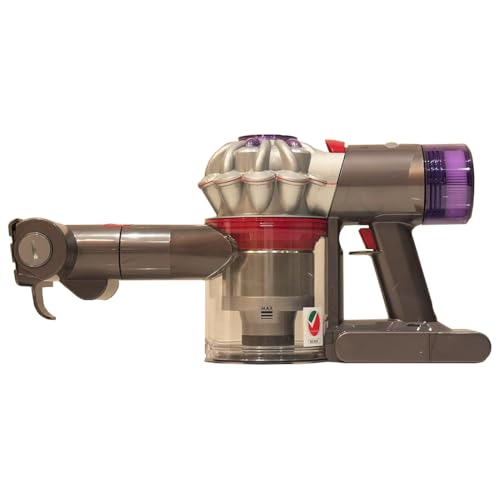
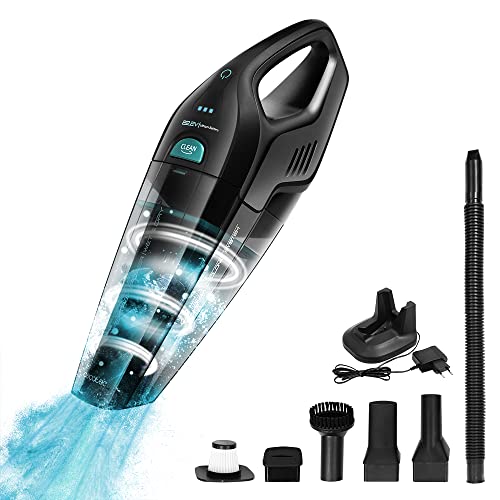
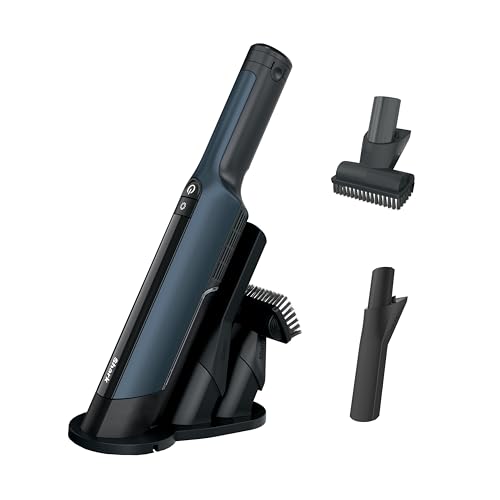
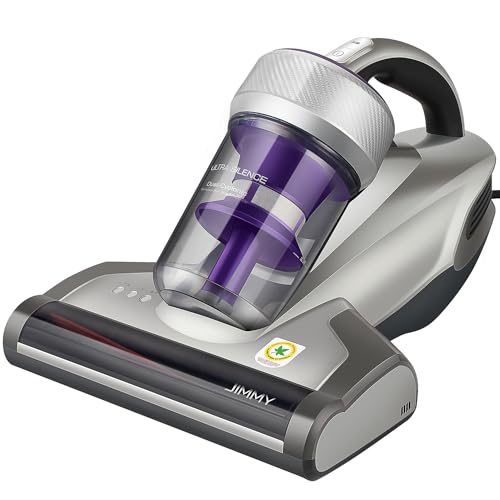
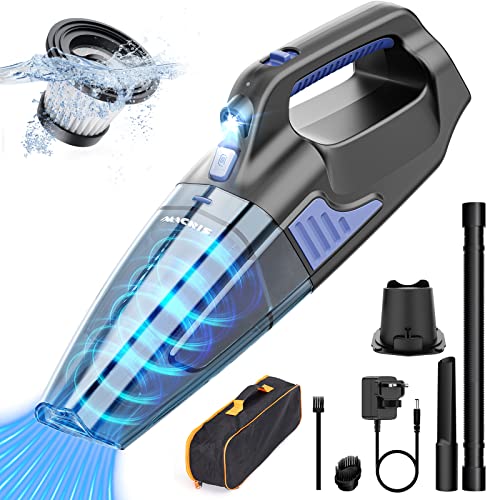
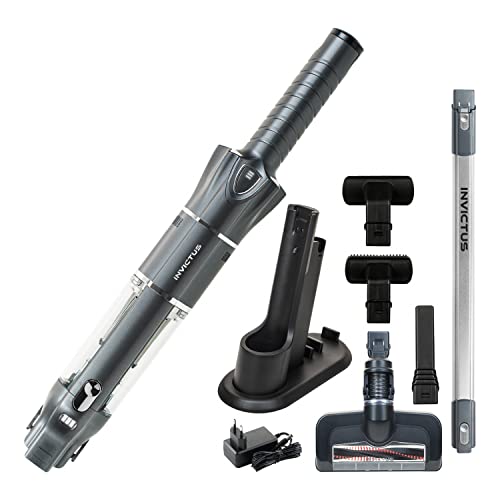
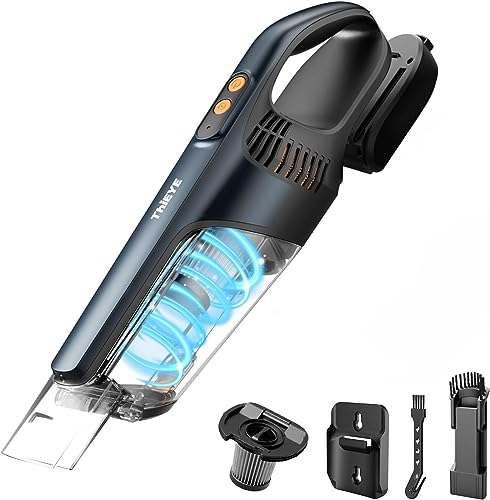
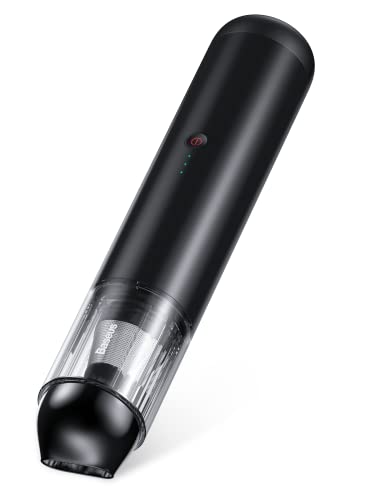
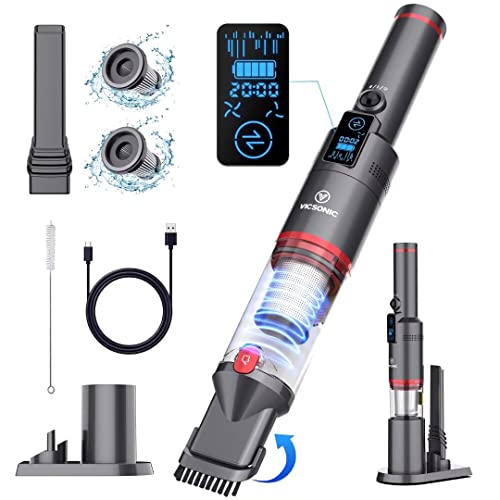
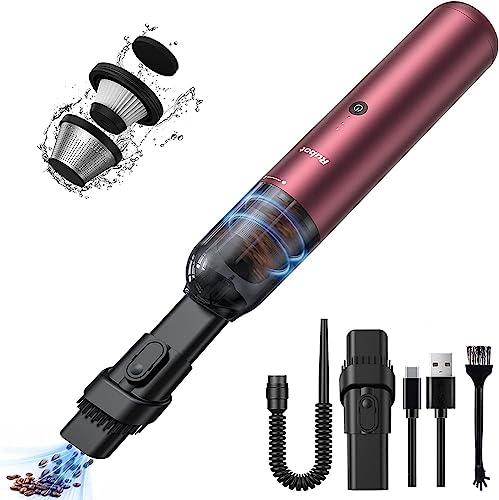
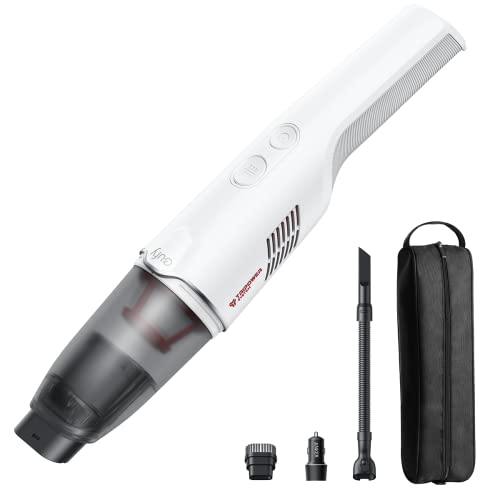
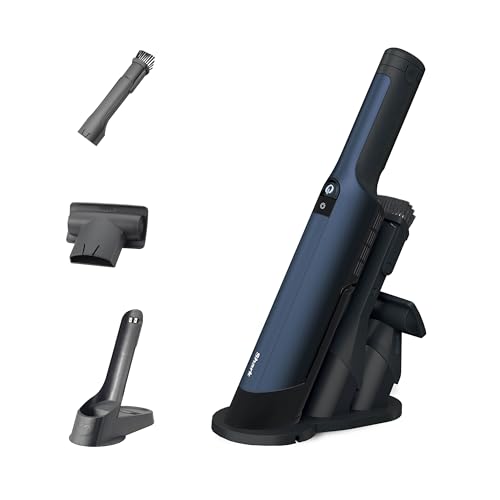
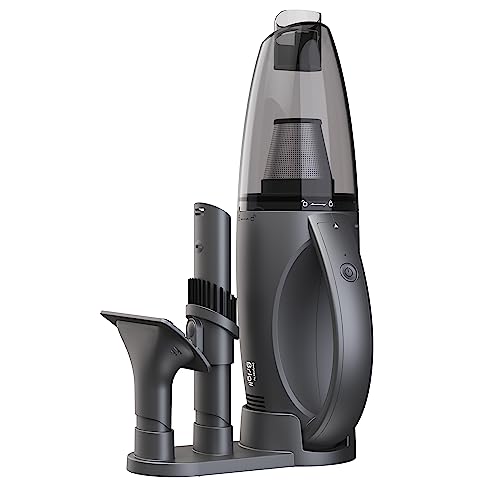
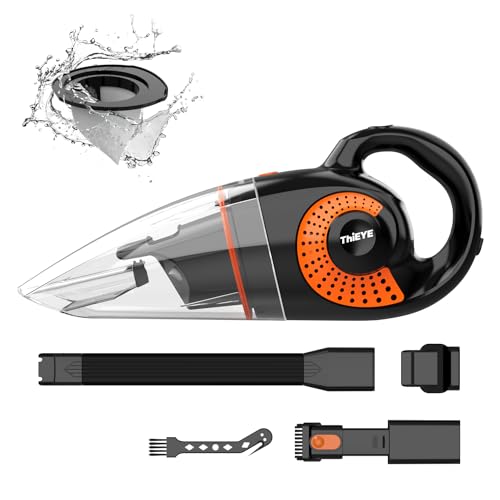
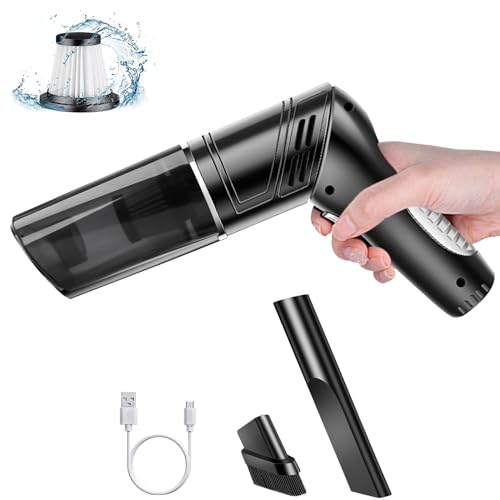
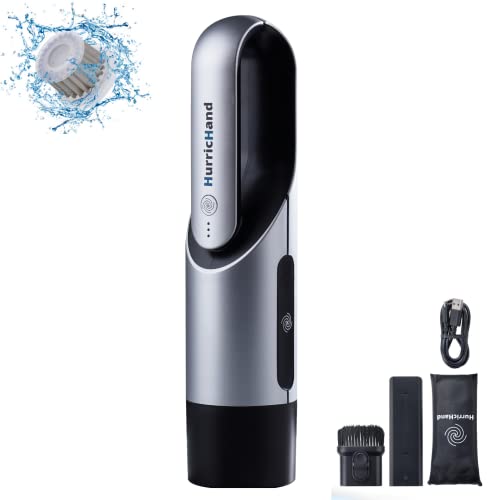
Which brands make the best powerful portable vacuum cleaners?
The best powerful portable vacuum cleaner brands by average overall score are as follows:
- URAQT (Average overall score: 7.8)
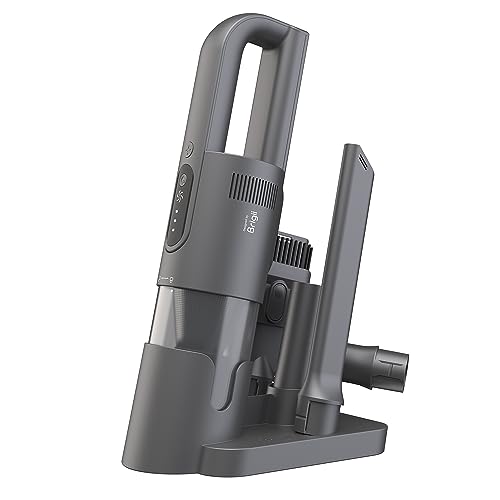
- Brigii (Average overall score: 7.5)
- Cecotec (Average overall score: 7.4)
The chart below compares the best powerful portable vacuum cleaner brands by average overall score.
[horizontal-chart-16835835057538659423094908061222112127591971504161]
What makes a portable vacuum cleaner powerful?
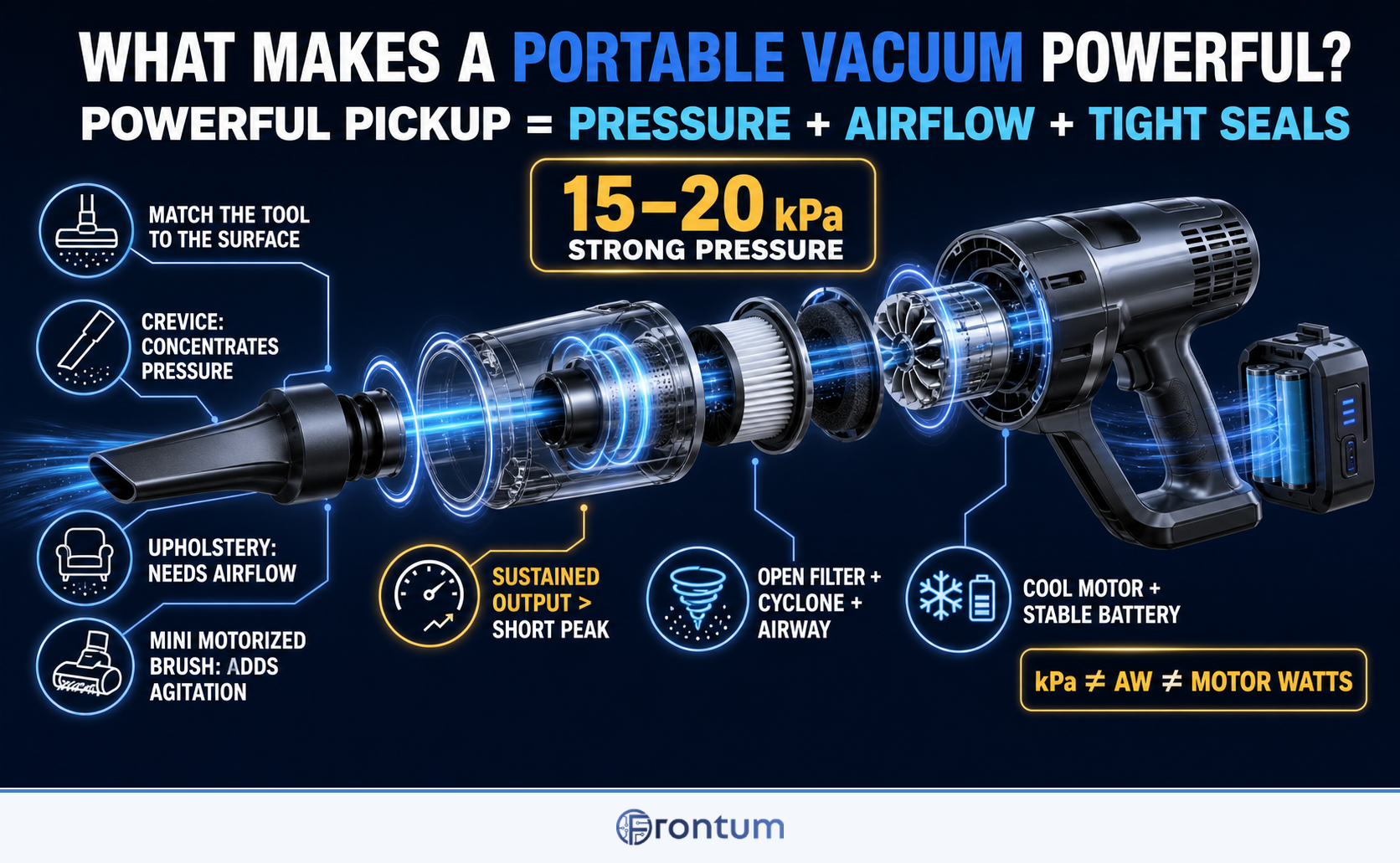
A portable vacuum cleaner is powerful when it produces useful pressure and airflow through an efficient, well-sealed nozzle and sustains that output as the bin fills. About 15–20 kPa is a strong pressure range for this category when measurements use comparable modes.
Kilopascals describe pressure, air watts combine pressure and airflow under a defined method, and motor watts describe electrical input. A large number in one unit cannot be converted into cleaning performance in another without the missing airflow, efficiency and test conditions.
The tool determines where the available output goes. A narrow crevice nozzle concentrates pressure, a wider upholstery head needs more airflow, and a mini motorized brush adds agitation for embedded hair but also increases battery demand.
Sustained power matters more than a short peak. Filters, cyclones and airways must remain open, the motor needs adequate cooling, and a cordless battery should deliver useful high-power runtime rather than dropping sharply after the first few minutes.
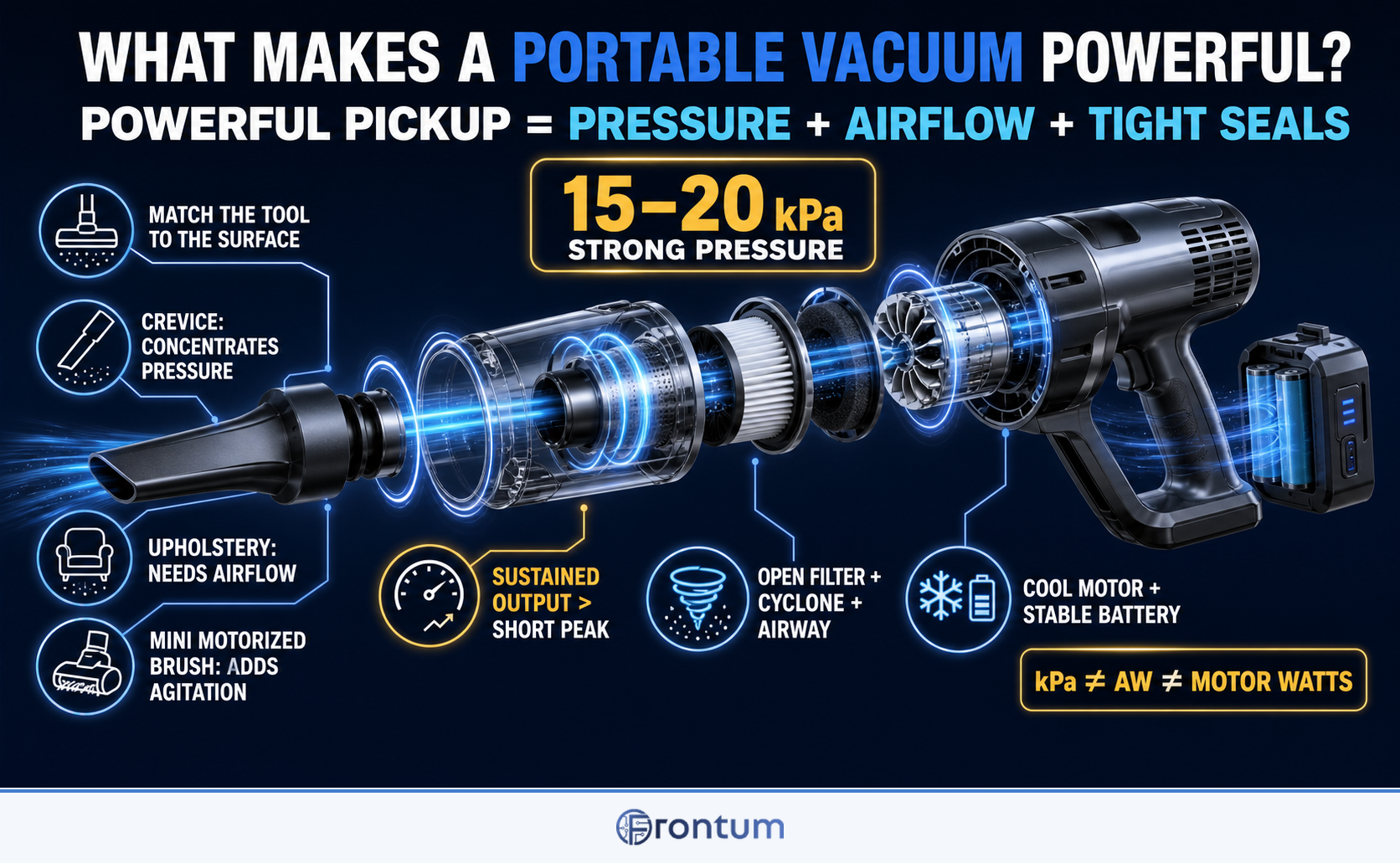
Suction pressure determines how strongly a portable vacuum can lift or hold debris at the nozzle, while motor power sets an electrical input ceiling rather than directly measuring pickup. Higher input can support more pressure or airflow, but losses in the fan, seals, filter and airway may consume that advantage.
Pickup improves only when pressure, airflow and surface contact work together. Compare kPa with kPa under the same mode, use AW only when the test method is comparable, and judge the complete tool: a well-sealed 120 W design can outperform a poorly routed 200 W model on the surface that matters.
The chart below shows the suction-pressure distribution of powerful portable vacuum cleaners.
[vertical-chart-17043621029575486850123033890858522226161609476863]
Does stronger suction reduce runtime or increase noise?
Stronger suction usually reduces cordless runtime and can increase noise, although motor efficiency, fan design and insulation determine how large those penalties are. High-power mode draws more current and often raises the motor speed, so it should be treated as a short cleaning tool rather than the normal operating condition.
A portable vacuum that runs for 20–30 minutes normally may provide only 5–15 minutes at maximum output. Battery voltage alone does not reveal this loss; compare runtime in each mode and note whether a powered attachment was fitted during the test.
Noise can rise from both the motor and turbulent airflow through a narrow nozzle or dirty filter. Around 70–75 dB is relatively restrained for routine use, while 80 dB or more is noticeably intrusive, but compare figures only in equivalent modes and at similar measurement distances.
How much do powerful portable vacuum cleaners cost?
Powerful portable vacuum cleaners generally cost about £30-£220, with many capable models between roughly £50 and £140. Below that range, a high peak number may come with brief runtime, basic seals or limited replacement support, so sustained pickup matters more than the headline claim.
Spending around £90-£150 can bring better motors, cleaner emptying and more useful powered tools. Above roughly £150, expect a clear gain such as replaceable batteries, sealed filtration, a mini motorized brush or verified high-power endurance rather than cosmetic displays and oversized accessory sets.
The chart below shows the price distribution of powerful portable vacuum cleaners.
[vertical-chart-10077634214053197810024181269002024211350466231655]
What should you consider while choosing a powerful portable vacuum cleaner?
Before buying a powerful portable vacuum cleaner, consider the following factors:
- Comparable suction output: Aim for roughly 15–20 kPa when demanding pickup is the priority, but compare only the same unit and mode. Air watts can also be useful under a shared method; motor-input watts are not a substitute for either measure.
- Airflow path and nozzle: Look for tight seals, a short unobstructed airway and tools matched to the surface. A crevice nozzle concentrates pressure, whereas upholstery and powered heads need enough airflow or agitation to lift embedded debris.
- High-power endurance: Prefer at least 20–30 minutes in normal use and about 10 minutes at maximum power for a cordless model. Confirm whether the figure includes a powered attachment and whether output remains stable as the battery discharges.
- Battery and charging: A recharge time near four hours or less is convenient, while a removable pack can extend service life. Check replacement price and local availability because voltage alone says little about energy capacity or performance.
- Capacity and airflow maintenance: Around 0.2–0.5 L is practical for portable cleaning without excessive bulk. A visible fill line, accessible cyclone and washable pre-filter help prevent debris from restricting the airflow that produces pickup.
- Weight, noise and heat: Keep weight near 1 kg when one-handed use matters and compare noise in the mode you will use most. Sustained high power can raise both sound and casing temperature, so controls and exhaust should remain comfortable to handle.
- Tools and replacement parts: Require a useful crevice nozzle and choose an upholstery or mini motorized brush for the intended surfaces. Verify access to filters, batteries and brush parts; strong initial performance is less valuable if routine wear makes the machine difficult to maintain.