Are BLACK+DECKER portable vacuum cleaners good?
BLACK+DECKER portable vacuum cleaners have an average overall score of 6.8, ranking #8 among comparable portable-vacuum brands.
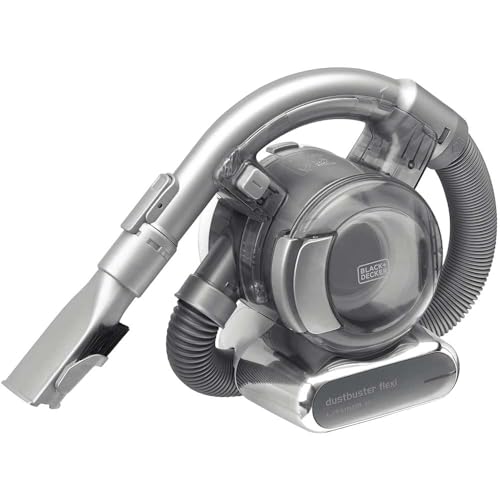
BLACK+DECKER portable vacuum cleaners are a strong choice when body design and task-specific tools matter: Pivot models reach awkward angles, Flexi models add a hose, and selected Pet or wet-and-dry packages address upholstery and spills. Prices also cover basic quick-clean models through stronger 18 V options.
BLACK+DECKER portable vacuum cleaners vary substantially in charging speed, suction and accessories. Many use fixed batteries, basic models may need about ten hours to recharge, and similar product codes can include different docks or brushes, so the exact suffix matters more than the shared dustbuster label.
The chart below compares the best portable vacuum cleaner brands by average overall score.
[horizontal-chart-16835835057538659423094908061222112127591971504161]
What are the main advantages of BLACK+DECKER portable vacuum cleaners?
The main advantages of BLACK+DECKER portable vacuum cleaners are as follows:
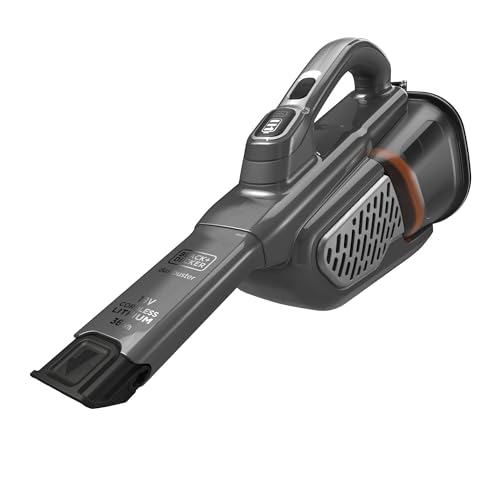
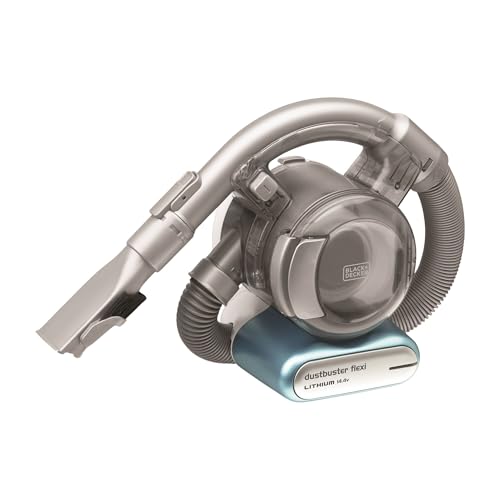
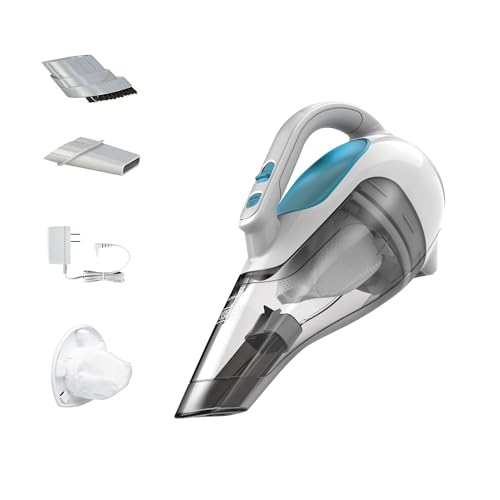
- Broad choice of formats: Conventional dustbuster bodies cover everyday crumbs, while Pivot and Flexi designs improve access around seats, shelves and stairs. Automotive, wet-and-dry and Pet packages provide more task-specific alternatives than a single-body range.
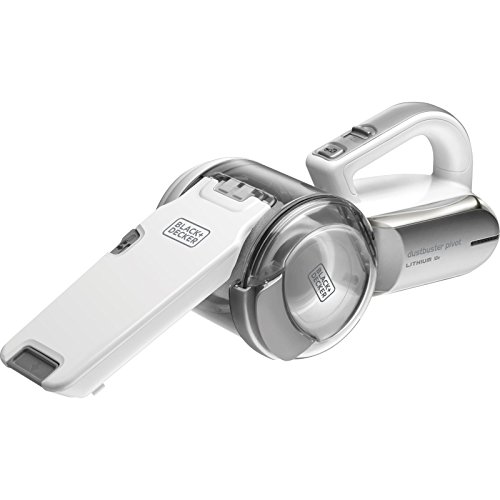
- Useful integrated tools: Many models store a crevice nozzle or flip-up brush on the cleaner, reducing the chance of losing a small accessory. Pivot's rotating nozzle and Flexi's hose reach spaces that a straight rigid body handles poorly.
- Capacity options for different jobs: Compact models commonly hold about 0.3–0.4 L, while stronger handhelds can reach roughly 0.6–0.75 L. Buyers can prioritize low weight for quick pickups or fewer emptying interruptions for a full car interior.
- Stronger midrange performance: Selected 12–18 V models provide roughly 20–35 AW and about 15–25 minutes of runtime. These figures give more headroom for grit and upholstery than the brand's simplest 3.6–7.2 V cleaners.
- Wide price coverage: Entry models start near £30-£30, and many capable Pivot, Flexi or AdvancedClean-type packages remain below £90. The range lets buyers pay for a useful body style or tool rather than automatically moving to a premium flagship.
What are the main disadvantages of BLACK+DECKER portable vacuum cleaners?
The main disadvantages of BLACK+DECKER portable vacuum cleaners are as follows:
- Fixed batteries on most handhelds: The pack is generally not designed for instant swapping, even on higher-voltage models. A depleted cleaner must return to its charger, and future battery service depends on the exact product code.
- Slow charging on basic models: Several entry-level dustbusters take around nine to ten hours to recharge for only about 10–15 minutes of cleaning. Four-to-five-hour charging is available on stronger ranges, but it should never be assumed from the brand name.
- Inconsistent performance between families: Suction spans from about 8 AW on simple quick-clean units to around 35 AW on stronger models. Voltage, input watts and suction figures describe different things, making comparison difficult when a retailer omits the real air-watt or pressure specification.
- Package-code complexity: Closely related NVC, BHHV, HLVC, PD and PV variants can differ in dock, pet brush, crevice tool and regional charger. A similar photo does not prove that two suffixes include the same equipment.
- Format-specific compromises: Pivot and Flexi models improve reach but are often heavier than a basic handheld, while the lightest cleaners usually have lower suction or smaller bins. Wet-and-dry capability and a motorized pet brush also appear only on selected packages.
Who makes BLACK+DECKER portable vacuum cleaners?
BLACK+DECKER portable vacuum cleaners are made under the BLACK+DECKER brand, which belongs to Stanley Black & Decker, Inc. The parent company is headquartered in New Britain, Connecticut, and manages BLACK+DECKER alongside other tool and home-product brands.
S. Duncan Black and Alonzo G. Decker founded their Baltimore machine shop in 1910. BLACK+DECKER introduced the dustbuster handheld vacuum in 1979, extending its cordless-tool experience into household cleaning, and launched the Flex vacuum with a four-foot hose in 2010.
The Stanley Works and Black & Decker combined in 2010 to form today's Stanley Black & Decker. Product engineering, sourcing and manufacturing operate through a global organization, so the country of manufacture can differ by model and sales region.
BLACK+DECKER portable vacuum cleaners retain that cordless and task-focused heritage through Pivot nozzles, Flexi hoses, car-powered models and conventional dustbusters. Filters, chargers and accessories are nevertheless tied to the full product code, so ownership by one global company does not make every part interchangeable.
What are the main BLACK+DECKER portable vacuum ranges?
The main BLACK+DECKER portable vacuum ranges are as follows:
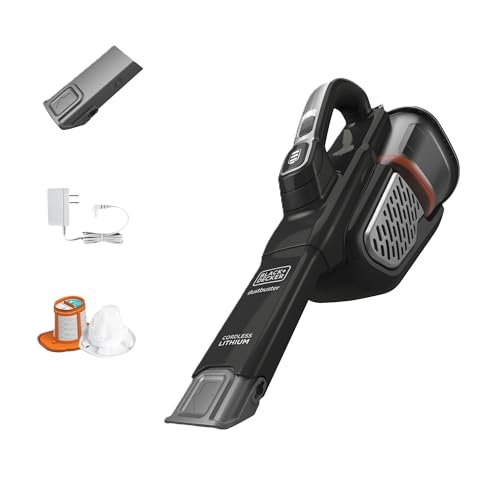
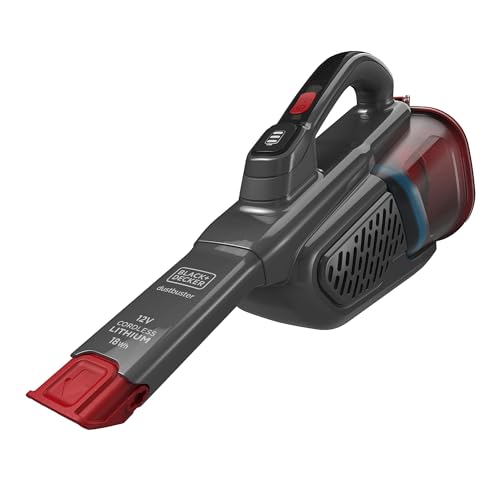
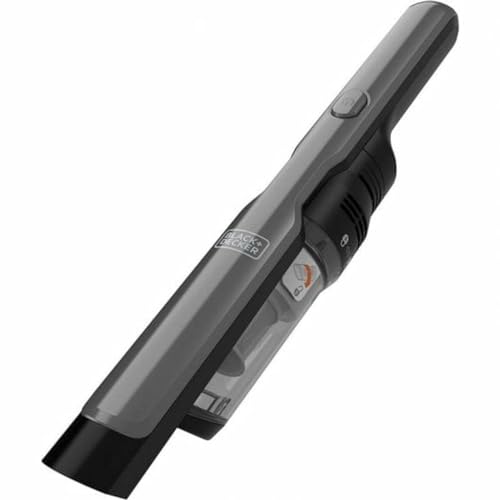
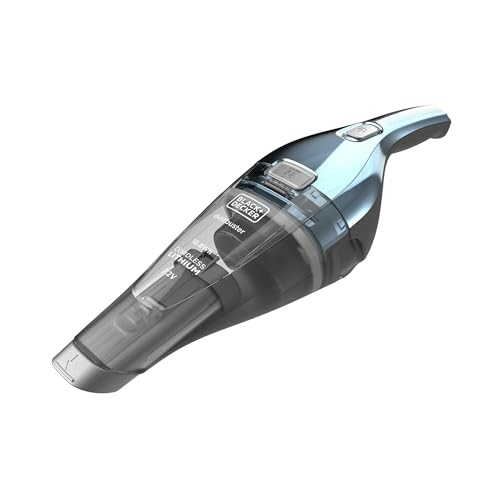
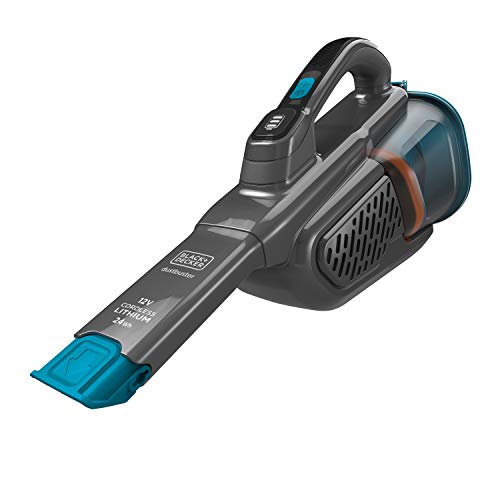
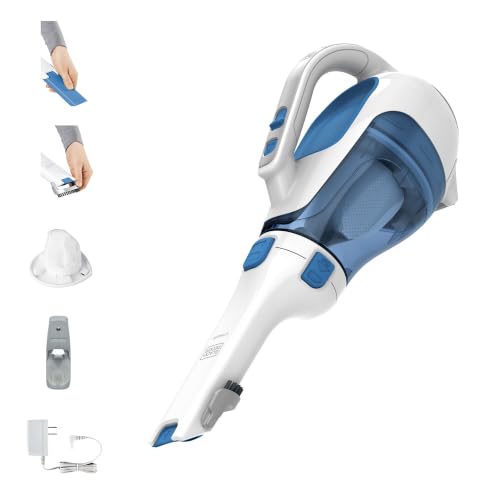
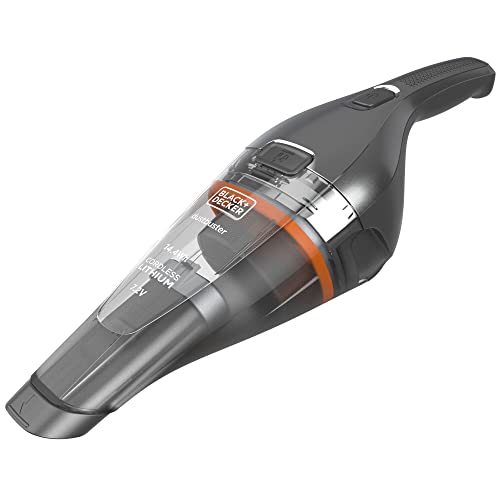
- Standard dustbuster and QuickClean: NVC, HNVC and related compact models are simple straight-body cleaners for crumbs, shelves and brief car touch-ups. They are usually the lightest and cheapest options, but lower-voltage versions have modest suction and can require a long recharge.
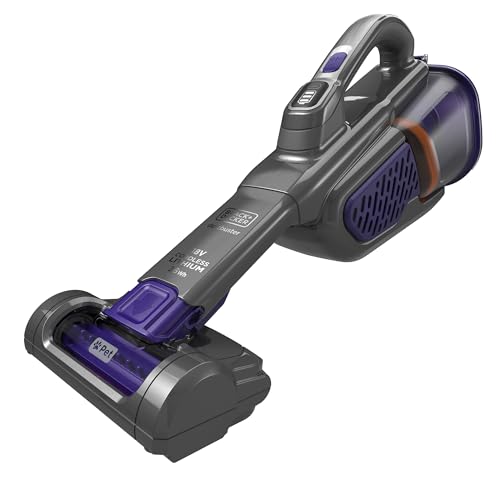
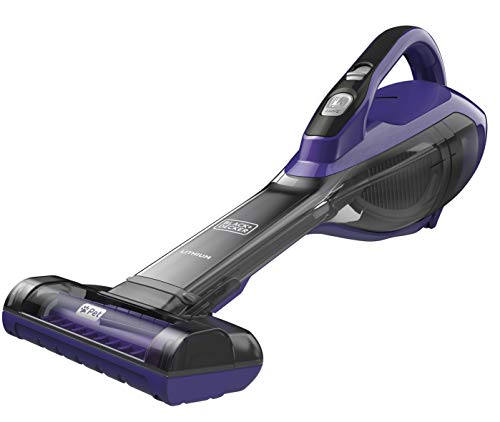
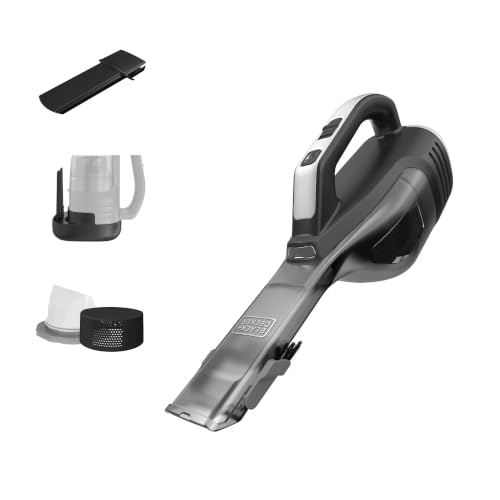
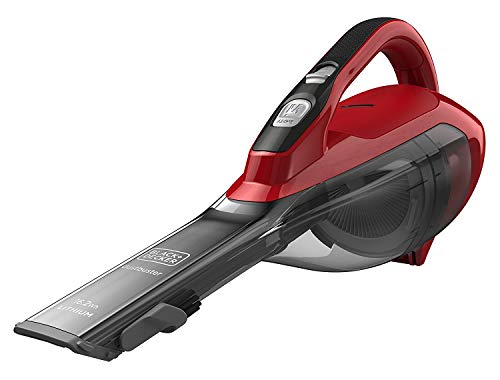
- AdvancedClean and AdvancedClean+: HLVC, HLVD, HHVI and HHVK models move toward larger bins, stronger batteries and better integrated tools. Selected versions reach about 20–35 AW or 20–25 minutes, while Pet suffixes may add a motorized brush.
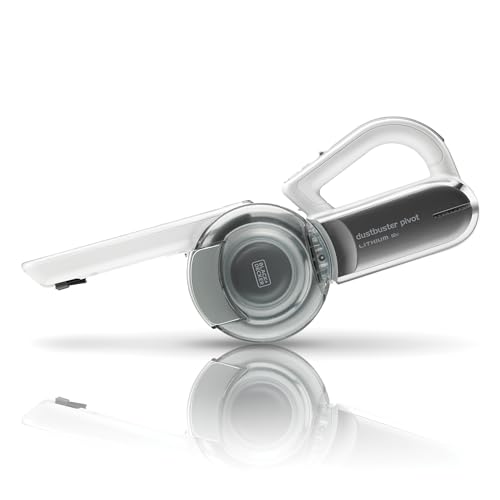
- Pivot: PV models use a nozzle that folds and rotates—up to 200 degrees on the PV1820L—to clean awkward angles without turning the whole body. The design stores compactly and suits shelves or car trim, although it is heavier than a basic dustbuster.
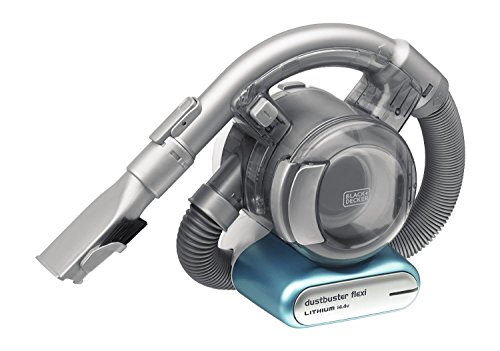
- Flexi: PD and Flexi models separate the nozzle from the motor body with a flexible hose, making seat gaps, stairs and high surfaces easier to reach. Typical versions hold roughly 0.56 L and include a crevice tool, but the hose and body require more storage than a slim handheld.
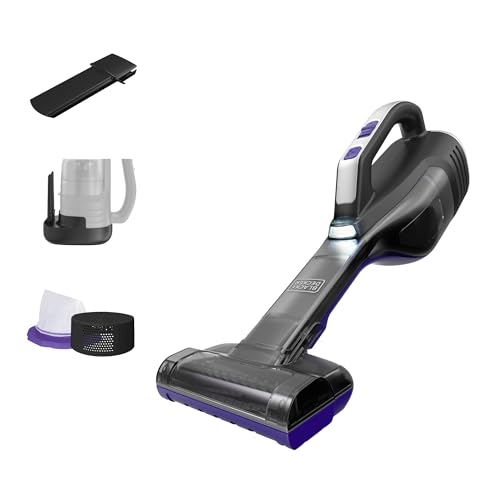
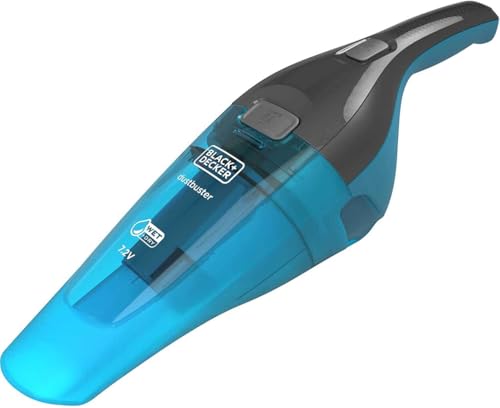
- Wet-and-dry and Pet variants: WDC, WDA and selected BHHV or HLVD packages add liquid pickup or a motorized upholstery brush. These capabilities are suffix-specific, so a standard dry model with a simple brush is not an equivalent substitute.
- Automotive models: ADV1200, NVB12AV and PD1200AV products draw power from a vehicle socket rather than relying only on a short cordless session. They suit longer car cleaning when a 12 V outlet is accessible, but the cable makes them less convenient around the home.
How much do BLACK+DECKER portable vacuum cleaners cost?
BLACK+DECKER portable vacuum cleaners generally cost about £30-£130. Entry dustbusters near £30-£40 provide simple crevice cleaning, smaller batteries and roughly 8–16 AW, while about £40-£80 adds stronger 10.8–18 V platforms, larger bins, quicker charging or a more useful Pivot, wet-and-dry or Pet package.
Models near £80-£130 should justify the premium with a Flexi hose, stronger suction, a 0.5–0.75 L bin, a motorized brush or a well-equipped charging base. Compare the full suffix and included charger because two similar bodies can differ materially in tools; replacement filters and eventual battery service also affect the long-term price.
The chart below shows the price distribution of BLACK+DECKER portable vacuum cleaners.
[vertical-chart-12482538834590265072102692877013123311081972788159]
How do BLACK+DECKER portable vacuum cleaners compare with Bosch models?
BLACK+DECKER portable vacuum cleaners offer more dedicated handheld shapes and task-specific packages, while Bosch provides fewer formats but stronger removable-battery options for buyers already using its tool systems.
BLACK+DECKER's dustbuster, Pivot and Flexi families cover straight-body cleaning, rotating nozzles and hose-based access, with selected Pet, wet-and-dry and 12 V car-powered variants. Most include their battery and charger, and prices commonly start lower, but the fixed battery limits session extension and long-term pack replacement.
Bosch EasyVac 12, UniversalVac 18 and Professional GAS 18V-1 use removable packs from their respective Bosch platforms, and their roughly 0.38–0.7 L containers plus extension tubes suit workshop or light floor work. The battery and charger may cost extra, and green DIY packs do not interchange with blue Professional 18V. Choose BLACK+DECKER for a purpose-built handheld format; choose Bosch for battery sharing and tool-style versatility.
What should you check before buying a BLACK+DECKER portable vacuum cleaner?
Before buying a BLACK+DECKER portable vacuum cleaner, consider the following factors:
- Comparable suction output: For routine crumbs, about 10–20 AW is a practical starting range; aim near 25–35 AW for heavier car grit or upholstery. Compare air watts with air watts because kilopascals measure pressure and motor watts measure electrical input, not the same cleaning result.
- Runtime and charging time: Prefer at least about 15 minutes for a full quick-clean session, or around 20–25 minutes when the car or several rooms are involved. Check the stated mode and recharge time, since some basic models need nine to ten hours while stronger versions restore in roughly four to five.
- Body format and reach: Choose a standard dustbuster for direct pickups, a Pivot nozzle for angled gaps, or a Flexi hose for seats, stairs and high shelves. The specialized formats improve access but add weight or storage bulk, so match the design to the actual job.
- Capacity and working weight: Roughly 0.3–0.4 L is adequate for crumbs, while 0.5–0.75 L reduces emptying during car or pet-hair cleaning. Lighter models can be near 0.6–0.9 kg, whereas Pivot and Flexi bodies may approach 1.3–1.5 kg and feel more tiring one-handed.
- Pet and liquid tools: Confirm a motorized mini brush when embedded hair is the priority, because a passive brush does not agitate fabric in the same way. For drink spills, require an explicitly wet-and-dry WDC, WDA or equivalent package rather than exposing a dry-only model to liquid.
- Power source and battery service: Most cordless BLACK+DECKER handhelds use fixed batteries, while ADV1200, NVB12AV and PD1200AV variants can run from a vehicle outlet. Check cord reach for automotive models and local battery-repair support for cordless products before purchase.
- Exact suffix, charger and filters: Use the complete NVC, BHHV, HLVC, PD or PV code when comparing listings and ordering parts. Verify the charging base, regional plug, crevice tool and replacement-filter number because visually similar suffixes can include different equipment.