Are Bosch portable vacuum cleaners good?
Bosch portable vacuum cleaners have an average overall score of 6.4, ranking #12 among comparable portable-vacuum brands.
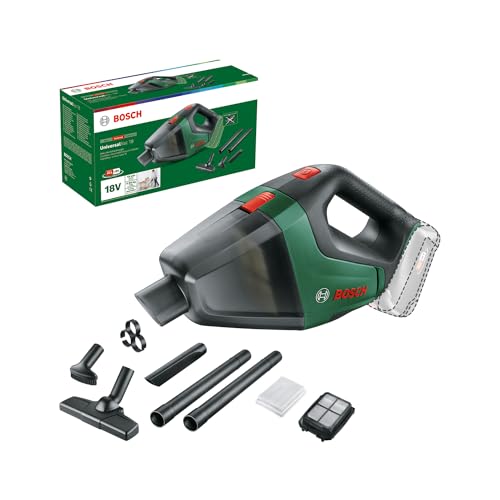
Bosch portable vacuum cleaners are a strong choice for buyers who value removable battery platforms, larger dust containers and tools that extend beyond simple crumb pickup. EasyVac 12 and UniversalVac 18 can use extension tubes for light floor work, while Professional GAS 18V-1 brings a 0.7 L container and Bosch Professional 18V compatibility.
Bosch portable vacuum cleaners require closer package checking than a self-contained appliance. Battery, charger and accessory bundles vary, professional and DIY packs are not interchangeable merely because both say 18V, and Move models use fixed batteries. Choose the platform first, then compare suction, runtime and included tools within it.
The chart below compares the best portable vacuum cleaner brands by average overall score.
[horizontal-chart-16835835057538659423094908061222112127591971504161]
What are the main advantages of Bosch portable vacuum cleaners?
The main advantages of Bosch portable vacuum cleaners are the following:
- Removable battery options: EasyVac 12, UniversalVac 18 and Professional GAS 18V-1 use exchangeable batteries from their respective Bosch systems. Owners of compatible tools can share packs and continue with a charged spare.
- Useful container sizes: Capacities run from about 0.3 L on Move handhelds to 0.7 L on GAS 18V-1. Even the 0.38–0.5 L DIY models reduce interruptions compared with very slim 0.1 L competitors.
- Versatile cleaning kits: Selected EasyVac and UniversalVac packages include extension tubes, floor nozzles, brushes and crevice tools. They can therefore cover shelves, workshop debris and small floor areas with one motor unit.
- Long runtime in selected models: GAS 18V-1 can reach about 42 minutes with the stated battery configuration, while Move BHN16L is rated around 40 minutes. Runtime still depends on battery capacity and operating conditions.
- Clear platform choices: Bosch separates simple Move appliances, green DIY battery products and blue Professional tools. Once the correct system is identified, compatible batteries, chargers and service channels are easier to evaluate.
What are the main disadvantages of Bosch portable vacuum cleaners?
The main disadvantages of Bosch portable vacuum cleaners are the following:
- Battery may cost extra: Tool-platform vacuums are often offered as bare units without a battery or charger. A low advertised price can rise sharply for a first-time Bosch owner.
- Incompatible 18V systems: Bosch DIY Power For All and Bosch Professional 18V are separate platforms. The shared voltage label does not make a green battery fit a blue Professional vacuum.
- Bulkier than slim handhelds: Containers around 0.38–0.7 L, removable packs and extension fittings add volume. These models are versatile but less elegant on a kitchen counter than a 0.6–0.8 kg docked wand.
- Mixed battery designs within the brand: Move models use fixed batteries while EasyVac, UniversalVac and GAS models use removable packs. Buyers cannot infer battery service or swapping from the Bosch name alone.
- Package and noise variation: Accessories, charger and battery capacity differ by product code, and some models are relatively loud. Confirm the complete kit and intended indoor environment rather than comparing only suction or voltage.
Who makes Bosch portable vacuum cleaners?
Bosch portable vacuum cleaners are sold under the Bosch name, but the range spans distinct parts of the Bosch organization. Green EasyVac and UniversalVac products belong to the consumer DIY tool portfolio, blue GAS models belong to Bosch Professional, and Move handhelds are conventional domestic appliances distributed through Bosch home-appliance channels.
The Bosch brand traces to the German engineering company founded by Robert Bosch in Stuttgart in 1886. Today the wider Bosch group develops products across mobility, industrial technology, consumer goods and building technology, while its tool and home-appliance activities maintain separate product platforms and support systems.
Bosch portable vacuum cleaners should therefore be matched by division as well as model. A Professional 18V battery does not become compatible with a green DIY product because both carry Bosch branding, and filters, tubes and chargers remain tied to the exact product code. That distinction is essential when buying a bare tool or ordering service parts.
How do the main Bosch portable vacuum ranges differ?
The main Bosch portable vacuum ranges differ as follows:
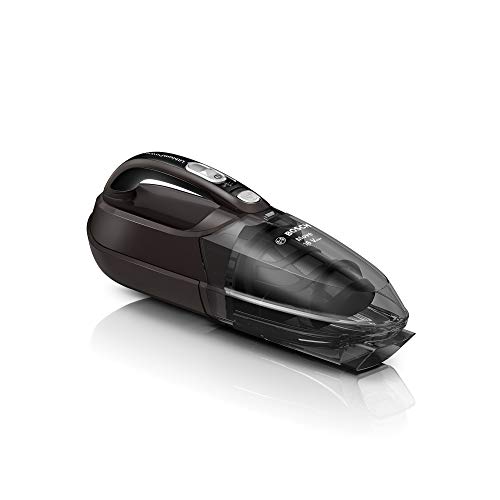
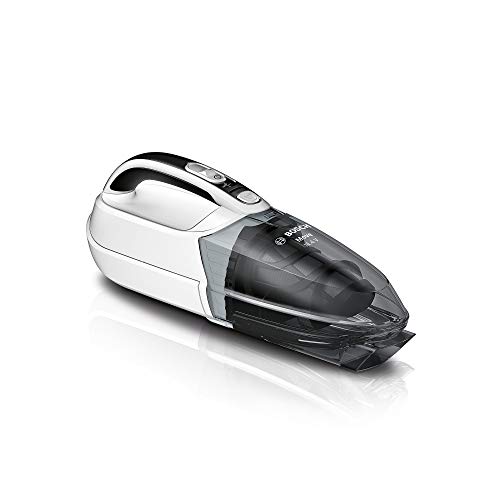
- Bosch Move and BHN: Move models are self-contained domestic handhelds with fixed batteries, roughly 0.3 L bins and simple crevice cleaning. They are easiest for buyers who do not own Bosch tools, but battery replacement and charging speed depend on the exact generation.
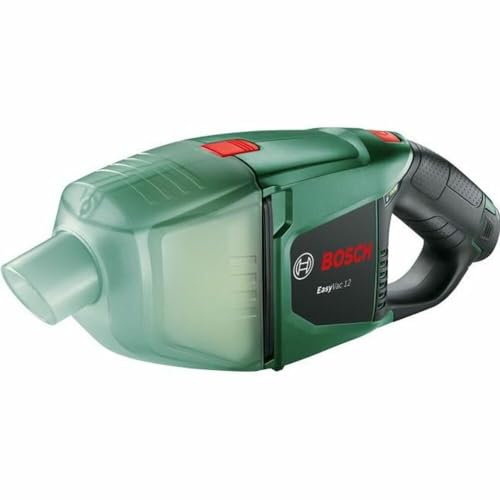
- Bosch EasyVac 12: EasyVac 12 uses Bosch's green 12V DIY battery system, holds about 0.38 L and can run around 25 minutes with the stated pack. Extension tubes and a floor nozzle make it more versatile than a basic handheld while keeping the platform relatively compact.
- Bosch UniversalVac 18: UniversalVac 18 moves to the green 18V Power For All system, offers about 9 kPa suction and a 0.5 L container, and supports a broader cleaning kit. It suits owners who already use compatible Bosch DIY or alliance batteries and want more headroom than the 12V model.
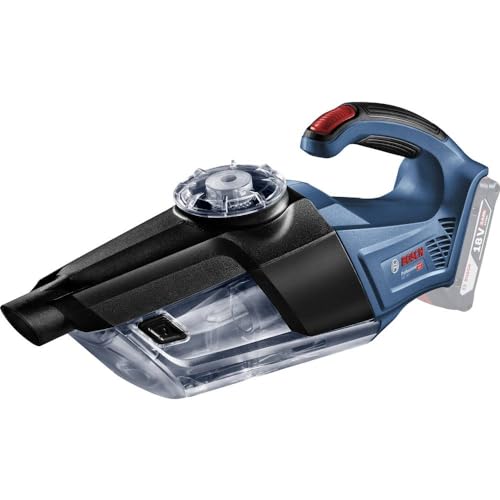
- Bosch Professional GAS 18V-1: GAS 18V-1 uses the blue Bosch Professional 18V system, a 0.7 L container and rotational airflow designed to reduce filter loading. It is the jobsite-oriented choice and can provide long runtime with a suitable pack, but it may be sold without battery or charger.
How much do Bosch portable vacuum cleaners cost?
Bosch portable vacuum cleaners generally cost about £50-£80 for the vacuum body or a standard appliance package. Move models and EasyVac 12 occupy the lower £50-£60 area, while UniversalVac 18 and Professional GAS 18V-1 sit closer to £70-£80.
Those prices are not directly comparable. A Move handheld normally includes its fixed battery and charger, whereas a tool-platform model may be a bare unit requiring both. For a first-time owner, the complete system cost can be much higher than the shelf price.
Existing battery owners can obtain strong value by sharing a pack and charger. Identify green 12V, green Power For All 18V or blue Professional 18V, then compare the included tubes, nozzles, filter and battery capacity.
How do Bosch portable vacuum cleaners compare with BLACK+DECKER models?
Bosch portable vacuum cleaners are strongest for buyers who want removable tool batteries, larger bins and extension-tube versatility, while BLACK+DECKER provides a broader selection of dedicated handheld shapes and price levels. The better brand depends on whether platform ownership or a purpose-built appliance matters more.
Bosch EasyVac 12, UniversalVac 18 and Professional GAS 18V-1 share batteries with their correct Bosch tool systems and hold about 0.38–0.7 L. Selected kits can handle light floor cleaning as well as shelves or workshop debris, but battery and charger may cost extra and Bosch's DIY and Professional 18V systems are separate.
BLACK+DECKER offers Dustbuster, Pivot and Flexi-style designs, often with integrated batteries and specialized nozzles that are convenient for cars and domestic spot cleaning. Its range is easier to buy as a complete appliance but can have smaller bins or fixed batteries. Choose Bosch when compatible packs and workshop versatility add value; choose BLACK+DECKER for wider handheld choice and simpler all-in-one packages.
What should you check before buying a Bosch portable vacuum cleaner?
Before buying a Bosch portable vacuum cleaner, check the following factors:
- Product division and battery platform: Identify green Bosch 12V, green Power For All 18V, blue Bosch Professional 18V or a fixed-battery Move appliance. Packs from these systems are not automatically interchangeable.
- Battery and charger inclusion: Read the package list for a bare-tool warning and note the supplied amp-hour capacity. Add the cost of a compatible pack and charger before comparing it with a complete handheld.
- Suction and intended debris: EasyVac 12 is rated around 5 kPa and UniversalVac 18 around 9 kPa, while jobsite performance also depends on airflow and nozzle. Choose based on real dust, crumbs or workshop debris rather than voltage alone.
- Runtime with the stated battery: Figures around 20–42 minutes depend on the model, pack and test condition. A larger battery extends use but also adds weight to the hand.
- Container and filter: Compare roughly 0.3 L on Move, 0.38–0.5 L on DIY models and 0.7 L on GAS 18V-1. Check how the filter is cleaned and whether replacements are stocked locally.
- Included tubes and nozzles: Verify the crevice tool, brush, extension tubes and floor nozzle shown in the listing. Bosch uses multiple product codes, and a bare body can look cheaper only because useful accessories are absent.
- Weight, noise and storage: Test balance with the battery fitted and plan space for the body, tubes and charger. A larger Bosch system is versatile but less convenient than a compact docked handheld for instant kitchen use.