Scored using Motherboards Methodology v3.0
Motherboards Methodology v3.0
Mathematical & Unbiased Scoring
Products in this category are scored under Frontum Motherboards Methodology v3.0: the technical score from the specifications is the base, and independent expert and video reviews (up to ±0.5 points), owner opinions (up to ±0.3) and best-of lists (up to +0.3) move it up or down.
Explore Motherboards Methodology v3.0

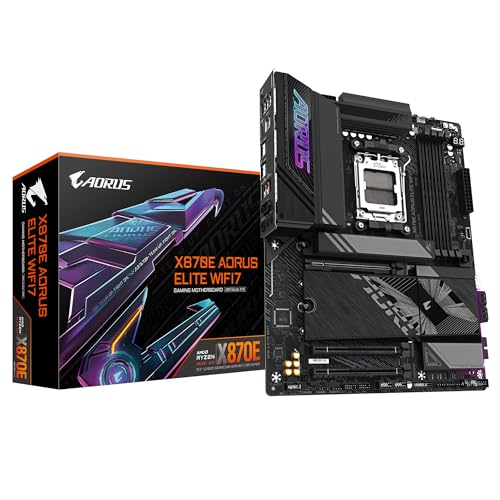
GIGABYTE X870E AORUS Elite X3D review: 109 specs compared

Avg. price:~£290CPU socket:AM5Chipset:AMD X870EForm factor:ATX

GIGABYTE X870E AORUS Elite X3D Review: Compare 109 technical specifications, 6 expert and video reviews and 2 best-of lists to see how this product ranks in the Motherboards category and whether it is worth buying.
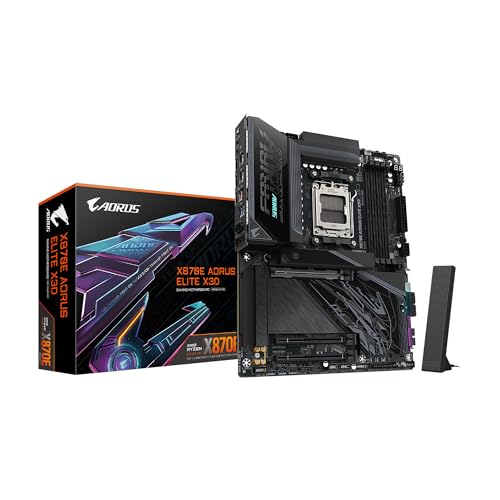
GIGABYTE X870E AORUS Elite X3D
8.6/10

Overall score

Score
8.6/ 10
✕
What it is
Our main score for this model, 1–10. It combines specs, expert reviews, best-of lists, ratings from across the web and owners.
How we count it
Parts: Technical score 45%, Reviews score 20%, List score 20%, User score 10%, Sentiment score 5%
Marks: Each part gets a mark out of 10. For reviews, lists and owners, a typical model in this category gets about 8 and the best one gets 10.
No data yet: A part with no data shows "?". It counts as the mark of a weaker model in this category (4 in 5 models with data score higher). This way, models with reviews, lists and owners usually come out ahead.
Score distribution
▼
<55-66-77-88-99-10
Score components

45%

8.8

Technical score

20%

8.6

Reviews score

20%

8.5

List score

10%

8.3

User score

5%

?

Sentiment scoreNot enough data yet, so we use 8.8, the mark of a weaker model in this category

★Better than 99% of motherboards
8.7

Value for money

Value for money
8.7/ 10
✕
What it is
An indicator that combines the motherboard's overall rating with its cost.
When it matters
When you are looking for a motherboard that offers a strong balance of features, performance, and price.
Score distribution
▼
<55-66-77-88-99-10
Score components

70%

8.6

Overall score

30%

9.0

Price

★Better than 97%
8.8

Technical score

Technical score
8.8/ 10
✕
What it is
How good the specs are compared with the other models in this category, 1–10.
How we count it
Areas: We rate the specs in each area against the other models in this category.
Weighting: The areas that matter most to buyers count more. The shares are shown under Score components.
Share: The technical score is 45% of the overall score.
Score distribution
▼
<55-66-77-88-99-10
Score components

19%

9.9

Memory

16%

9.2

Platform

16%

9.1

Storage

15%

8.7

Network

13%

7.9

Ports

8%

6.3

Expansion

8%

9.2

Power & Cooling

5%

8.2

Audio

★Better than 96%
8.6

Reviews score

Reviews score
8.6/ 10
✕
What it is
Average grade from independent test sites, magazines and video reviewers, 1–10.
How we count it
Grades: Each review's own score is converted to 1–10; without one, we grade the review ourselves. Big test sites count more, short reviews half as much as full tests. A video review counts half.
Score: The average grade is 80% of the review mark; the number of reviews is the other 20% (1 review = 5, the typical number in this category = 8, the most-reviewed model = 10).
Enough data: With few reviews, the average grade is pulled toward the typical grade of this category. No reviews yet: 7.8 for now.
Share: Reviews count 20% of the overall score.
Score distribution
▼
<55-66-77-88-99-10

80%

8.6

Average grade

20%

8.6

Popularity

Grades by review (6)
5 reviews: 3 with a printed score, 2 estimated from the review. 1 video review, counting half as much as a written test. Reviews count 20% of the overall score.
Ratings from across the web count in the User score, not in this score.
▲Better than 78%
8.3

User score

User score
8.3/ 10
✕
What it is
How happy buyers are with this model, based on ratings from across the web.
How we count it
Enough data: A model needs at least 1 rating from across the web. Without one, it counts as 7.9, the mark of a weaker rated model in this category.
Share: User score counts 10% of the overall score.
Score distribution
▼
<55-66-77-88-99-10

70%

8.4

Rating

30%

8.1

Popularity

▼Worse than 51%
8.5

List score

List score
8.5/ 10
✕
What it is
How often independent test sites, magazines and video reviewers put this model in their best-of lists for this category.
How we count it
Points: The model in the most lists of this category gets 10; the others get 8 to 10 in proportion. In no list yet: 7.5. Lists count 20% of the overall score.
Enough data: Every list counts, even a single one. With fewer than 5 best-of lists in the category, this part is left out.
Lists with this model (2)
List score: in 2 of 57 lists (4%)
★Better than 96%
  • gigabyte-x870e-aorus-elite-x3d
  • gigabyte-x870e-aorus-elite-x3d
  • gigabyte-x870e-aorus-elite-x3d
  • gigabyte-x870e-aorus-elite-x3d
  • gigabyte-x870e-aorus-elite-x3d
  • gigabyte-x870e-aorus-elite-x3d
  • gigabyte-x870e-aorus-elite-x3d
  • gigabyte-x870e-aorus-elite-x3d
gigabyte-x870e-aorus-elite-x3d
Where to buy
*As an Amazon Associate, we earn from qualifying purchases.
Best rankings
Available: ranking among products currently available (including other versions of this product).All: ranking among all products in the database.

What reviewers say about the GIGABYTE X870E AORUS Elite X3D

Based on 5 · 1

Reviewers agree it handles fast memory well and offers a solid selection of ports, with no major complaints raised.
Praised
Pick a topic to see who said what
Loading...
Loading category ranking...

Motherboards model ranking

Ranked #31 of 2,078 models in Motherboards (Overall score)

Technical Specifications of motherboard GIGABYTE X870E AORUS Elite X3D

Technical score
Technical score
8.8/ 10
✕
What it is
How good the specs are compared with the other models in this category, 1–10.
How we count it
Areas: We rate the specs in each area against the other models in this category.
Weighting: The areas that matter most to buyers count more. The shares are shown under Score components.
Share: The technical score is 45% of the overall score.
Score distribution
▼
<55-66-77-88-99-10
Score components:

19%

9.9

Memory

16%

9.2

Platform

16%

9.1

Storage

15%

8.7

Network

13%

7.9

Ports

8%

6.3

Expansion

8%

9.2

Power & Cooling

5%

8.2

Audio

8.8
Reviews score
8.6
User score
8.3
List score
8.5
Value for money
Value for money
8.7/ 10
✕
What it is
An indicator that combines the motherboard's overall rating with its cost.
When it matters
When you are looking for a motherboard that offers a strong balance of features, performance, and price.
Score distribution
▼
<55-66-77-88-99-10
Score components:

70%

8.6

Overall score

30%

9.0

Price

8.7
CPU socket
AM5
This motherboard uses AM5, which is more up-to-date than 85.5% of Motherboards and the same as 14.5% of Motherboards.
CPU platform
AMD
Chipset
AMD X870E
This motherboard uses AMD X870E, which is more capable than 98.2% of Motherboards and as capable as 1.8% of Motherboards.
Form factor
ATX
Integrated graphics support
yes
This motherboard supports integrated graphics. 10.2% of motherboards support this feature.
Rear outputs: HDMI + DisplayPort + USB4 / Thunderbolt.
Show more
DDR memory version
DDR5
This motherboard uses DDR5, which is more modern than 63.8% of Motherboards and the same as 36.2% of Motherboards.
Memory slots
4
This motherboard has 4 Memory slots, which is more than 21.9% of motherboards and equal to 72% of motherboards.
Maximum memory capacity
256 GB
This motherboard supports up to 256 GB of memory, which is more than 82.5% of motherboards and equal to 16.7% of motherboards.
Memory channels
2
Maximum RAM speed
9,000 MT/s
This motherboard supports memory speeds up to 9,000 MT/s, which is higher than that of 96% of motherboards and equal to that of 0.4% of motherboards.
Show more
What reviewers say
N. of M.2 sockets
4
This motherboard has 4 M.2 sockets, which is more than 84.1% of motherboards and equal to 10.7% of motherboards.
M.2 slot interface per slot
1x PCIe 5.0 x4, 1x PCIe 5.0 x4/x2, 2x PCIe 4.0 x4
This motherboard offers M.2 slots: 1x PCIe 5.0x4, 1x PCIe 5.0x4/x2, 2x PCIe 4.0x4, which is faster than 95.6% of Motherboards.
N. of SATA 3 connectors
4
This motherboard has 4 SATA 3 connectors, which is more than 6.1% of motherboards and equal to 46.8% of motherboards.
Supported RAID levels
0/1/5/10
This motherboard RAID support: 0/1/5/10, which is more flexible than 32.5% of Motherboards and the same as 67.5% of Motherboards.
RAID 5 requires Ryzen 9,000 series CPU
NVMe RAID support
yes
This motherboard supports NVMe RAID. 40.2% of motherboards support this feature.
RAID 5 requires Ryzen 9,000 series CPU
Show more
N. of PCIe 5.0 x16 slots
1
This motherboard has 1 PCIe 5.0x16 slots, which is more than 68.4% of motherboards and equal to 26.6% of motherboards.
N. of PCIe 4.0 x16 slots
1
This motherboard has 1 PCIe 4.0x16 slots, which is more than 55.2% of motherboards and equal to 35.7% of motherboards.
runs at x4 mode
N. of PCIe 3.0 x16 slots
1
This motherboard has 1 PCIe 3.0x16 slots, which is more than 40.5% of motherboards and equal to 26.8% of motherboards.
runs at x2 mode
PCIe slot electrical configuration
x16/x0/x0
This motherboard splits its PCIe lanes as x16/x0/x0, which is less generous than 73.2% of Motherboards and the same as 3.1% of Motherboards.
PCIe bifurcation support
yes
This motherboard supports PCIe bifurcation. 40.3% of motherboards support this feature.
Show more
Total USB ports (rear I/O)
11
This motherboard has 11 USB ports (rear I/O), which is more than 91.1% of motherboards and equal to 1.6% of motherboards.
Total USB ports (including headers)
19
This motherboard has 19 USB ports (including headers), which is more than 87% of motherboards and equal to 4.3% of motherboards.
Total USB-C ports (rear I/O)
3
This motherboard has 3 USB-C ports (rear I/O), which is more than 96.5% of motherboards and equal to 2.7% of motherboards.
Total USB-C ports (including headers)
4
This motherboard has 4 USB-C ports (including headers), which is more than 95.6% of motherboards and equal to 2.8% of motherboards.
N. of USB 3.2 Gen2x2 ports (USB-C)
0
This motherboard has 0 USB 3.2 Gen2x2 ports (USB-C), which is fewer than 18% of motherboards and equal to 82% of motherboards.
Show more
What reviewers say
LAN speed
5 Gbps
This motherboard supports LAN speeds up to 5 Gbps, which is higher than that of 90.4% of motherboards and equal to that of 5.3% of motherboards.
LAN controller
Realtek RTL8126
This motherboard has a Realtek RTL8126 LAN controller, which is faster than 86.9% of Motherboards and equal to 2% of Motherboards.
N. of RJ45 ports
1
This motherboard has 1 RJ45 ports, which is fewer than 14.4% of motherboards and equal to 85.6% of motherboards.
Wi-Fi connectivity
yes
This motherboard supports Wi-Fi connectivity. 50% of motherboards support this feature.
Wi-Fi version
Wi-Fi 7 (802.11be)
This motherboard uses Wi-Fi 7 (802.11be), which is newer than 88.2% of Motherboards and the same as 11.8% of Motherboards.
Show more
Audio codec
Realtek ALC1220
This motherboard uses Realtek ALC1220, which is higher-end than 65.5% of Motherboards and the same as 12.9% of Motherboards.
Audio channels
7.1
This motherboard offers 7.1 audio channels, which is more than 4.7% of motherboards and equal to 95.3% of motherboards.
surround needs jack retasking.
Audio SNR
120 dB
This motherboard has an audio SNR of 120 dB, which is higher than that of 55.6% of motherboards and equal to that of 41% of motherboards.
Headphone amp support
no
This motherboard does not support a headphone amp. 58.8% of motherboards support this feature.
N. of 3.5mm audio jacks
2
This motherboard has 2 3.5mm audio jacks, which is fewer than 88.8% of motherboards and equal to 10.8% of motherboards.
Show more
VRM phases
16+2+2
This motherboard has 16+2+2 VRM phases, which is more than 91.5% of motherboards and equal to 1.1% of motherboards.
N. of CPU power connectors
2
This motherboard has 2 CPU power connectors, which is more than 54.9% of motherboards and equal to 44.8% of motherboards.
N. of fan headers
8
This motherboard has 8 fan headers, which is more than 82.2% of motherboards and equal to 15% of motherboards.
Pump header
yes
This motherboard has a pump header. 22.1% of motherboards include this feature.
Pump header max current
2 A
This motherboard supports up to 2 A on the pump header, which is higher than that of 45.1% of motherboards and equal to that of 32.6% of motherboards.
Show more

GIGABYTE X870E AORUS Elite X3D vs the average motherboard

246810TotalPlatformMemoryStorageExpansionPortsNetworkAudioPower & Cooling
  • More up-to-date socket
    This motherboard uses a more up-to-date socket than the average motherboard (AM5 vs LGA 1151).
    AM5 vs LGA 1,151
  • 2 more M.2 sockets
    This motherboard has more M.2 sockets than the average motherboard (4 vs 2). The average motherboard has 2 M.2 socket/s.
    4 vs 2
  • 2 more top-speed NVMe slots
    This motherboard has more PCIe 5.0 M.2 slots than the average motherboard (2 vs 0).
    2 vs 0
  • 2x more maximum memory capacity
    This motherboard has more maximum memory capacity than the average motherboard (256 GB vs 128 GB). The average motherboard supports 128 GB of memory.
    256 GB vs 128 GB
  • 4 more USB 3.2 Gen2 ports
    This motherboard has more USB 3.2 Gen2 ports than the average motherboard (5 vs 1). The average motherboard has 1 USB 3.2 Gen2 port/s.
    5 vs 1
  • More modern memory type
    This motherboard uses a more modern memory type than the average motherboard (DDR5 vs DDR4).
    DDR5 vs DDR4
  • 3 more rear USB ports
    This motherboard has more rear USB ports than the average motherboard (11 vs 8). The average motherboard has 8 rear USB port/s.
    11 vs 8
  • 1 more PCIe 5.0x16 slots
    This motherboard has more PCIe 5.0x16 slots than the average motherboard (1 vs 0). The average motherboard has 0 PCIe 5.0x16 slot/s.
    1 vs 0
  • 14.7% better value for money
    GIGABYTE X870E AORUS Elite X3D has better value for money than the average motherboard (8.75 vs 7.6).
    8.75 vs 7.63
  • More up-to-date socket
    This motherboard uses a more up-to-date socket than the average motherboard (AM5 vs LGA 1151).
    AM5 vs LGA 1,151
  • Integrated I/O shield
    This motherboard has an integrated I/O shield, while the average motherboard does not. 46.6% of motherboards include an integrated I/O shield.
  • More capable chipset
    This motherboard uses a more capable chipset than the average motherboard (AMD X870E vs Intel B860).
    AMD X870E vs Intel B860
  • Broader Windows support
    This motherboard supports a wider range of Windows versions than the average motherboard (Windows 11, Windows 10, Windows 7 vs Windows 11, Windows 10).
    Windows 11, Windows 10, Windows 7 vs Windows 11, Windows 10
  • 2x more maximum memory capacity
    This motherboard has more maximum memory capacity than the average motherboard (256 GB vs 128 GB). The average motherboard supports 128 GB of memory.
    256 GB vs 128 GB
  • More modern memory type
    This motherboard uses a more modern memory type than the average motherboard (DDR5 vs DDR4).
    DDR5 vs DDR4
  • 91.5% higher maximum RAM speed
    This motherboard has a higher maximum RAM speed than the average motherboard (9,000 MT/s vs 4,699.5 MT/s). The average motherboard supports RAM speed of 4,699.5 MT/s.
    9,000 MT/s vs 4,699.5 MT/s
  • 80% higher overclocked RAM speed
    This motherboard has a higher overclocked RAM speed than the average motherboard (9,000 MT/s vs 5,000 MT/s). The average motherboard supports overclocked RAM speed of 5,000 MT/s.
    9,000 MT/s vs 5,000 MT/s
  • 2 more M.2 sockets
    This motherboard has more M.2 sockets than the average motherboard (4 vs 2). The average motherboard has 2 M.2 socket/s.
    4 vs 2
  • 2 more top-speed NVMe slots
    This motherboard has more PCIe 5.0 M.2 slots than the average motherboard (2 vs 0).
    2 vs 0
  • Faster NVMe storage slots
    This motherboard has faster M.2 slots than the average motherboard (1x PCIe 5x4, 1x PCIe 5x4/x2, 2x PCIe 4x4 vs 1x PCIe 5x4, 2x PCIe 4x4).
    1x PCIe 5.0x4, 1x PCIe 5.0x4/x2, 2x PCIe 4.0x4 vs 1x PCIe 5.0x4, 2x PCIe 4.0x4
  • 1 more PCIe 5.0x16 slots
    This motherboard has more PCIe 5.0x16 slots than the average motherboard (1 vs 0). The average motherboard has 0 PCIe 5.0x16 slot/s.
    1 vs 0
  • 1 more PCIe 4.0x16 slots
    This motherboard has more PCIe 4.0x16 slots than the average motherboard (1 vs 0). The average motherboard has 0 PCIe 4.0x16 slot/s.
    runs at x4 mode
    1 vs 0
  • 1 more PCIe x4 slots
    This motherboard has more PCIe x4 slots than the average motherboard (1 vs 0). The average motherboard has 0 PCIe x4 slot/s.
    1 vs 0
  • 4 more USB 3.2 Gen2 ports
    This motherboard has more USB 3.2 Gen2 ports than the average motherboard (5 vs 1). The average motherboard has 1 USB 3.2 Gen2 port/s.
    5 vs 1
  • 3 more rear USB ports
    This motherboard has more rear USB ports than the average motherboard (11 vs 8). The average motherboard has 8 rear USB port/s.
    11 vs 8
  • 2 more rear USB-C ports
    This motherboard has more rear USB-C ports than the average motherboard (3 vs 1). The average motherboard has 1 rear USB-C port/s.
    3 vs 1
  • 4 more total USB connections
    This motherboard has more total USB connections than the average motherboard (19 vs 15). The average motherboard has 15 total USB connections.
    19 vs 15
  • 3 more total USB-C connections
    This motherboard has more total USB-C connections than the average motherboard (4 vs 1). The average motherboard has 1 total USB-C connections.
    4 vs 1
  • 1 more USB 3.2 Gen1 headers
    This motherboard has more USB 3.2 Gen1 headers than the average motherboard (2 vs 1). The average motherboard has 1 USB 3.2 Gen1 header/s.
    two internal headers
    2 vs 1
  • 2 more USB4 40Gbps ports
    This motherboard has more USB4 40Gbps ports than the average motherboard (2 vs 0). The average motherboard has 0 USB4 40Gbps port/s.
    2 vs 0
  • 2 more Thunderbolt 3 ports
    This motherboard has more Thunderbolt 3 ports than the average motherboard (2 vs 0). The average motherboard has 0 Thunderbolt 3 port/s.
    USB4 only, not Thunderbolt 3
    2 vs 0
  • 1 more USB 3.2 Gen2 headers
    This motherboard has more USB 3.2 Gen2 headers than the average motherboard (1 vs 0). The average motherboard has 0 USB 3.2 Gen2 header/s.
    Gen 2x2 Type-C header
    1 vs 0
  • More recent Wi-Fi standard
    This motherboard has a more recent Wi-Fi standard than the average motherboard (Wi-Fi 7 (802.11be) vs Wi-Fi 5 (802.11ac)).
    Wi-Fi 7 (802.11be) vs Wi-Fi 5 (802.11ac)
  • More capable LAN controller
    This motherboard has a faster LAN controller than the average motherboard (Realtek RTL8126 vs Killer + Intel + Realtek).
    Realtek RTL8126 vs Killer + Intel + Realtek
  • 2x higher LAN speed
    This motherboard has a higher LAN speed than the average motherboard (5 Gbps vs 2.5 Gbps). The average motherboard offers LAN speed of 2.5 Gbps.
    5 Gbps vs 2.5 Gbps
  • Supports Bluetooth
    This motherboard supports Bluetooth, while the average motherboard does not. 49% of motherboards support Bluetooth.
  • More capable onboard audio
    This motherboard has a higher-end audio codec than the average motherboard (Realtek ALC1220 vs Realtek ALC897).
    Realtek ALC1220 vs Realtek ALC897
  • 5 dB higher audio SNR
    This motherboard has a higher audio SNR than the average motherboard (120 dB vs 115 dB). The average motherboard has audio SNR of 115 dB.
    120 dB vs 115 dB
  • More VRM phases
    This motherboard has more VRM phases than the average motherboard (16+2+2 vs 10). The average motherboard has 10 VRM phase/s.
    16+2+2 vs 10
  • 1 more CPU power connectors
    This motherboard has more CPU power connectors than the average motherboard (2 vs 1). The average motherboard has 1 CPU power connectors.
    2 vs 1
  • 2.5 more fan headers
    This motherboard has more fan headers than the average motherboard (8 vs 5.5). The average motherboard has 5.5 fan header/s.
    8 vs 5.5
  • 1 more ARGB headers
    This motherboard has more ARGB headers than the average motherboard (3 vs 2). The average motherboard has 2 ARGB header/s.
    3 vs 2
  • Includes onboard RGB lighting
    This motherboard has onboard RGB lighting, while the average motherboard does not. 50% of motherboards include onboard RGB lighting.
  • No multi-GPU support
    This motherboard does not support multi-GPU, while the average motherboard does. 53.9% of motherboards support multi-GPU.
  • Less generous lane split
    This motherboard splits its PCIe lanes less generously than the average motherboard (x16/x0/x0 vs x16/x0/x4, x8/x8/x4).
    x16/x0/x0 vs x16/x0/x4, x8/x8/x4
  • No headphone amp support
    This motherboard does not support a headphone amp, while the average motherboard does. 58.8% of motherboards support a headphone amp.
  • 1 fewer DisplayPort outputs
    This motherboard has fewer DisplayPort outputs than the average motherboard (0 vs 1). The average motherboard has 1 DisplayPort outputs.
    0 vs 1
  • 1 fewer USB 3.2 Gen1 ports
    This motherboard has fewer USB 3.2 Gen1 ports than the average motherboard (3 vs 4). The average motherboard has 4 USB 3.2 Gen1 port/s.
    3 vs 4
  • 93.3% more expensive
    GIGABYTE X870E AORUS Elite X3D is more expensive than the average motherboard (£290 vs £150).
    £290 vs £150
  • 1 fewer PCIe x1 slots
    This motherboard has fewer PCIe x1 slots than the average motherboard (0 vs 1). The average motherboard has 1 PCIe x1 slot/s.
    0 vs 1
  • 1 fewer 3.5mm audio jacks
    This motherboard has fewer 3.5mm audio jacks than the average motherboard (2 vs 3). The average motherboard has 3 3.5mm audio jacks.
    2 vs 3
  • 93.3% more expensive
    GIGABYTE X870E AORUS Elite X3D is more expensive than the average motherboard (£290 vs £150).
    £290 vs £150
  • No multi-GPU support
    This motherboard does not support multi-GPU, while the average motherboard does. 53.9% of motherboards support multi-GPU.
  • Less generous lane split
    This motherboard splits its PCIe lanes less generously than the average motherboard (x16/x0/x0 vs x16/x0/x4, x8/x8/x4).
    x16/x0/x0 vs x16/x0/x4, x8/x8/x4
  • 1 fewer PCIe x1 slots
    This motherboard has fewer PCIe x1 slots than the average motherboard (0 vs 1). The average motherboard has 1 PCIe x1 slot/s.
    0 vs 1
  • 1 fewer DisplayPort outputs
    This motherboard has fewer DisplayPort outputs than the average motherboard (0 vs 1). The average motherboard has 1 DisplayPort outputs.
    0 vs 1
  • 1 fewer USB 3.2 Gen1 ports
    This motherboard has fewer USB 3.2 Gen1 ports than the average motherboard (3 vs 4). The average motherboard has 4 USB 3.2 Gen1 port/s.
    3 vs 4
  • No headphone amp support
    This motherboard does not support a headphone amp, while the average motherboard does. 58.8% of motherboards support a headphone amp.
  • 1 fewer 3.5mm audio jacks
    This motherboard has fewer 3.5mm audio jacks than the average motherboard (2 vs 3). The average motherboard has 3 3.5mm audio jacks.
    2 vs 3
  • No rear line-in
    This motherboard does not have rear line-in, while the average motherboard does. 94.9% of motherboards include rear line-in.

Video reviews

Hands-on testing, unboxing, and real-world video evaluations

9.0
Kr00tman Tech!
≈ estimated
25/02/2026
Hands-on review · personal gaming PC build, BIOS and price
Verdict
GIGABYTE X870E AORUS Elite X3D is a solid buy for X3D CPUs and white builds, though its price is on the high side.

Expert reviews

In-depth analysis and verdict from leading tech publications

7.0
club386.com
≈ estimated
22/10/2025
Lab test · Turbo Mode 2.0
Verdict
The GIGABYTE X870E AORUS ELITE X3D is well connected with fast RAM support, but X3D Turbo Mode is still unfinished and it costs more than the Wi-Fi 7 model.
9.0
thefpsreview.com
✓ explicit
04/11/2025
Lab test · Turbo Mode performance
Verdict
The GIGABYTE X870E AORUS ELITE X3D is a solid, well-built board with a simpler BIOS, but its X3D Turbo Mode gains fell short of Gigabyte's claims in testing.
9.0
cgmagonline.com
✓ explicit
04/04/2026
Real-use review · Premium gaming board
Verdict
The GIGABYTE X870E AORUS Elite X3D Ice is a well-built, premium gaming board with a white finish, held back only by its RGB and control software.
9.0
de.gamegpu.com
≈ estimated
27/03/2026
Test report · Premium AM5 board
Verdict
The GIGABYTE X870E AORUS Elite X3D is a sturdy, well-equipped AM5 board for enthusiasts, with tuning options and easy-to-fit M.2 cooling.
9.6
geeknetic.es
✓ explicit
23/10/2025
Hands-on test · X3D Turbo Mode
Verdict
The GIGABYTE X870E AORUS ELITE X3D is a high-end board that switches on X3D Turbo Mode automatically, but its storage setup is modest.

Third-party reviews

What customers like about GIGABYTE X870E AORUS Elite X3D

  • Excellent connectivity, including dual USB4 (40Gbps) ports and WiFi 7 support
  • Improved lane-sharing design that prioritizes keeping the primary GPU slot at full x16 speed even when multiple M.2 slots are populated
  • User-friendly DIY features like tool-less M.2 heatsink installation and a simplified BIOS interface
  • High-quality thermal management with robust VRM cooling and thick M.2 heatsinks
  • Out-of-the-box stability for high-speed DDR5 RAM using AMD EXPO profiles

What customers don't like about GIGABYTE X870E AORUS Elite X3D

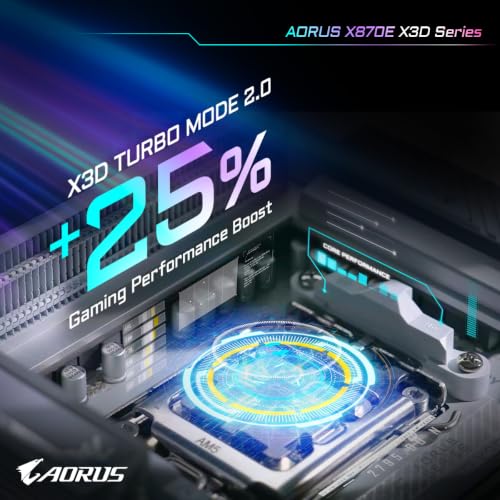
  • The signature 'X3D Turbo Mode 2.0' feature often yields inconsistent or negligible performance gains in real-world testing
  • Higher retail price compared to standard X870E models without the X3D branding
  • Onboard audio solution (Realtek ALC1220) is considered 'middling' for a high-end board at this price point
  • Potential BIOS stability issues; some users reported boot errors after specific firmware updates
  • Fiddly micro-buttons and a lack of a dedicated rear-panel CMOS clear button on some variants

Verdict

The Gigabyte X870E Aorus Elite X3D is a specialized ATX motherboard for the AMD AM5 socket, optimized for Ryzen 9000, 8000, and 7000 series processors with a focus on X3D chip performance. It features a digital twin 16+2+2 phase VRM with 80A Smart Power Stages and an 8-layer server-grade PCB with back-drilling technology to enhance signal integrity for DDR5 memory speeds up to 9000 MT/s. Key specifications include dual USB4 Type-C ports (40Gbps), four M.2 slots (two supporting PCIe 5.0), Wi-Fi 7, and a 5GbE LAN. Notable pros include the 'X3D Turbo Mode 2.0' for one-click gaming optimization, DIY-friendly EZ-Latch designs for screwless M.2 and GPU installation, and a 65W USB-C front panel power delivery. However, cons include the high initial retail price compared to standard X870E models and the fact that X3D Turbo Mode gains can be highly game-specific and occasionally result in lower multi-threaded performance due to core disabling in certain profiles.

Compare GIGABYTE X870E AORUS Elite X3D with other products in the Motherboards category

1Product to compare no. 1
VS
2Product to compare no. 2
VS
3Product to compare no. 3 (optional)

Graphic comparison of GIGABYTE X870E AORUS Elite X3D and other products in the Motherboards category

No results found