Scored using Motherboards Methodology v3.0
Motherboards Methodology v3.0
Mathematical & Unbiased Scoring
Products in this category are scored under Frontum Motherboards Methodology v3.0: the technical score from the specifications is the base, and independent expert and video reviews (up to ±0.5 points), owner opinions (up to ±0.3) and best-of lists (up to +0.3) move it up or down.
Explore Motherboards Methodology v3.0

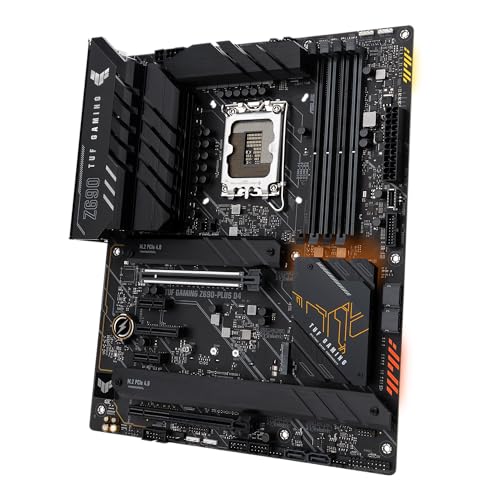
ASUS TUF Gaming Z690-Plus review: 109 specs compared

Avg. price:~£260CPU socket:LGA 1700Chipset:Intel Z690Form factor:ATX

ASUS TUF Gaming Z690-Plus Review: Compare 109 technical specifications and 2 expert and video reviews to see how this product ranks in the Motherboards category and whether it is worth buying.
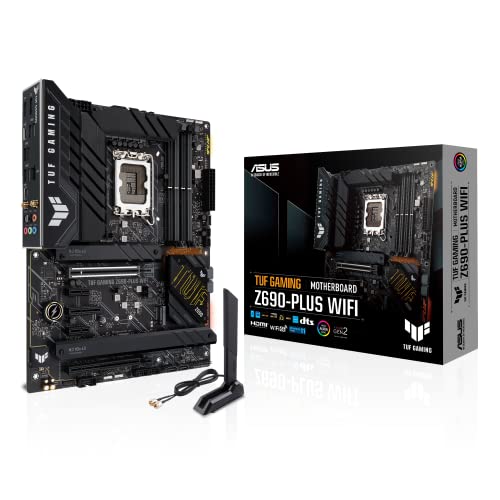
ASUS TUF Gaming Z690-Plus
7.9/10

Overall score

Score
7.9/ 10
✕
What it is
Our main score for this model, 1–10. It combines specs, expert reviews, best-of lists, owners and ratings from across the web.
How we count it
Parts: Technical score 40%, Reviews score 20%, List score 20%, Sentiment score 10%, User score 10%
Marks: Each part gets a mark out of 10. For reviews, lists and owners, a typical model in this category gets about 8 and the best one gets 10.
No data yet: A part with no data shows "?". It counts as the mark of a weaker model in this category (4 in 5 models with data score higher). This way, models with reviews, lists and owners usually come out ahead.
Score distribution
â–¼
<55-66-77-88-99-10
Score components

40%

7.7

Technical score

20%

7.7

Reviews score

20%

?

List scoreNot enough data yet, so we use 7.5, the mark of a weaker model in this category

10%

8.8

Sentiment score

10%

9.0

User score

â–²Better than 83% of motherboards
8.3

Value for money

Value for money
8.3/ 10
✕
What it is
An indicator that combines the motherboard's overall rating with its cost.
When it matters
When you are looking for a motherboard that offers a strong balance of features, performance, and price.
Score distribution
â–¼
<55-66-77-88-99-10
Score components

70%

7.9

Overall score

30%

9.2

Price

â–²Better than 83%
7.7

Technical score

Technical score
7.7/ 10
✕
What it is
How good the specs are compared with the other models in this category, 1–10.
How we count it
Areas: We rate the specs in each area against the other models in this category.
Weighting: The areas that matter most to buyers count more. The shares are shown under Score components.
Share: The technical score is 40% of the overall score.
Score distribution
â–¼
<55-66-77-88-99-10
Score components

19%

7.8

Memory

16%

8.5

Platform

16%

7.5

Storage

15%

8.2

Network

13%

6.6

Ports

8%

5.6

Expansion

8%

8.8

Power & Cooling

5%

7.6

Audio

â–²Better than 78%
7.7

Reviews score

Reviews score
7.7/ 10
✕
What it is
Average grade from independent test sites, magazines and video reviewers, 1–10.
How we count it
Grades: Each review's own score is converted to 1–10; without one, we grade the review ourselves. Big test sites count more, short reviews half as much as full tests. A video review counts half.
Score: The average grade is 80% of the review mark; the number of reviews is the other 20% (1 review = 5, the typical number in this category = 8, the most-reviewed model = 10).
Enough data: With few reviews, the average grade is pulled toward the typical grade of this category. No reviews yet: 7.8 for now.
Share: Reviews count 20% of the overall score.
Score distribution
â–¼
<55-66-77-88-99-10

7.7

Mark 8.2 is below the typical mark 8.3 of this category, so it cannot lift the score above the technical score

80%

8.6

Average grade

20%

6.9

Popularity

Grades by review (2)
1 review, with a printed score. 1 video review, counting half as much as a written test. Reviews count 20% of the overall score.
Ratings from across the web count in the User score, not in this score.
â–¼Worse than 60%
9.0

User score

User score
9.0/ 10
✕
What it is
How happy buyers are with this model, based on ratings from across the web.
How we count it
Enough data: A model needs at least 1 rating from across the web. Without one, it counts as 7.9, the mark of a weaker rated model in this category.
Share: User score counts 10% of the overall score.
Score distribution
â–¼
<55-66-77-88-99-10

70%

8.7

Rating

30%

9.8

Popularity

â–²Better than 79%
?

List score

List score
7.5/ 10
✕
What it is
How often independent test sites, magazines and video reviewers put this model in their best-of lists for this category.
How we count it
Points: The model in the most lists of this category gets 10; the others get 8 to 10 in proportion. In no list yet: 7.5. Lists count 20% of the overall score.
Enough data: Every list counts, even a single one. With fewer than 5 best-of lists in the category, this part is left out.
Lists with this model (0)
Not in any best-of list yet, so this part counts as 7.5. Models in a list get 8 to 10.
Not in any best-of list yet
  • asus-tuf-gaming-z690-plus
  • asus-tuf-gaming-z690-plus
  • asus-tuf-gaming-z690-plus
  • asus-tuf-gaming-z690-plus
  • asus-tuf-gaming-z690-plus
  • asus-tuf-gaming-z690-plus
asus-tuf-gaming-z690-plus
Where to buy
*As an Amazon Associate, we earn from qualifying purchases.

What owners say about the ASUS TUF Gaming Z690-Plus

Based on 127 owners sharing their experience in online comments

38%positive26%mixed36%negative

Owners value clear guidance, strong performance, cooling, and value, but memory instability, boot failures, and driver problems frustrate them.

What owners dislike

  • Some owners could not boot after adding an M.2 drive or a new CPU, with black screens; a BIOS reset, CMOS clear or updated BIOS fixed it for some.22
  • XMP profiles caused crashes and BSODs for some owners, while XMP 2 or Auto worked; some DDR4 kits stuck at 2133 or 3000 MHz instead of their rated speed.15
  • Owners reported static, crackling and dropouts from the onboard audio, and high-impedance headphones sounded weak, so many added a sound card or DAC.12
  • Owners had trouble with RAID mode defaulting on and missing RAID drivers, and some needed Intel RST drivers loaded during Windows install to see the NVMe drive.12
  • Some NVMe drives were not detected in Windows setup or BIOS, and a second M.2 drive in some slots stopped the system from booting or posting.10
  • Owners said the onboard Intel I225-V LAN dropped them from online games, and Wi-Fi and Bluetooth failed to work until drivers were installed or a USB dongle was added.8
  • BIOS updates were hard to finish without a compatible CPU installed, and the board lacks a dedicated BIOS flashback button, so recovery needed a workaround.7
  • Some owners got crashes, blue screen loops or failed shutdown and restart, often linked to XMP settings or an older BIOS version.6
  • RGB lighting stayed on even when the PC was off, and fans connected to the water cooler did not spin until switched to PWM mode.6
  • Owners found the BIOS hard to use and missing Q-Fan disable options, and some said the monitoring tools did not show the BIOS version or CPU frequency.5

Points mentioned by at least 3 owners, most mentioned first.

Loading...
Loading category ranking...

Technical Specifications of motherboard ASUS TUF Gaming Z690-Plus

Technical score
Technical score
7.7/ 10
✕
What it is
How good the specs are compared with the other models in this category, 1–10.
How we count it
Areas: We rate the specs in each area against the other models in this category.
Weighting: The areas that matter most to buyers count more. The shares are shown under Score components.
Share: The technical score is 40% of the overall score.
Score distribution
â–¼
<55-66-77-88-99-10
Score components:

19%

7.8

Memory

16%

8.5

Platform

16%

7.5

Storage

15%

8.2

Network

13%

6.6

Ports

8%

5.6

Expansion

8%

8.8

Power & Cooling

5%

7.6

Audio

7.7
Reviews score
7.7
User score
9.0
List score
?
Value for money
Value for money
8.3/ 10
✕
What it is
An indicator that combines the motherboard's overall rating with its cost.
When it matters
When you are looking for a motherboard that offers a strong balance of features, performance, and price.
Score distribution
â–¼
<55-66-77-88-99-10
Score components:

70%

7.9

Overall score

30%

9.2

Price

8.3
CPU socket
LGA 1700
This motherboard uses LGA 1700, which is more up-to-date than 54.7% of Motherboards and the same as 22.7% of Motherboards.
CPU platform
Intel
Chipset
Intel Z690
This motherboard uses Intel Z690, which is more capable than 68.4% of Motherboards and as capable as 3.7% of Motherboards.
Form factor
ATX
Integrated graphics support
yes
This motherboard supports integrated graphics. 10.2% of motherboards support this feature.
Show more
DDR memory version
DDR5
This motherboard uses DDR5, which is more modern than 63.8% of Motherboards and the same as 36.2% of Motherboards.
Memory slots
4
This motherboard has 4 Memory slots, which is more than 21.9% of motherboards and equal to 72% of motherboards.
Maximum memory capacity
128 GB
This motherboard supports up to 128 GB of memory, which is more than 40.1% of motherboards and equal to 31.9% of motherboards.
Memory channels
2
Maximum RAM speed
6,000 MT/s
This motherboard supports memory speeds up to 6,000 MT/s, which is higher than that of 71.5% of motherboards and equal to that of 0.9% of motherboards.
Show more
N. of M.2 sockets
4
This motherboard has 4 M.2 sockets, which is more than 84.1% of motherboards and equal to 10.7% of motherboards.
M.2 slot interface per slot
1x PCIe 4.0 x4, 1x PCIe 4.0 x4/SATA, 2x PCIe 4.0 x4
This motherboard offers M.2 slots: 1x PCIe 4.0x4, 1x PCIe 4.0x4/SATA, 2x PCIe 4.0x4, which is faster than 77.3% of Motherboards and the same as 0.1% of Motherboards.
N. of SATA 3 connectors
4
This motherboard has 4 SATA 3 connectors, which is more than 6.1% of motherboards and equal to 46.8% of motherboards.
Supported RAID levels
0/1/5/10
This motherboard RAID support: 0/1/5/10, which is more flexible than 32.5% of Motherboards and the same as 67.5% of Motherboards.
JBOD excluded from RAID-level set
NVMe RAID support
yes
This motherboard supports NVMe RAID. 40.2% of motherboards support this feature.
Intel RST support
Show more
N. of PCIe 5.0 x16 slots
1
This motherboard has 1 PCIe 5.0x16 slots, which is more than 68.4% of motherboards and equal to 26.6% of motherboards.
N. of PCIe 4.0 x16 slots
0
This motherboard has 0 PCIe 4.0x16 slots, which is fewer than 44.8% of motherboards and equal to 55.2% of motherboards.
N. of PCIe 3.0 x16 slots
1
This motherboard has 1 PCIe 3.0x16 slots, which is more than 40.5% of motherboards and equal to 26.8% of motherboards.
runs at x4 mode
PCIe slot electrical configuration
x16
This motherboard splits its PCIe lanes as x16, which is less generous than 81% of Motherboards and the same as 16.1% of Motherboards.
PCIe bifurcation support
yes
This motherboard supports PCIe bifurcation. 40.3% of motherboards support this feature.
Show more
Total USB ports (rear I/O)
8
This motherboard has 8 USB ports (rear I/O), which is more than 40.6% of motherboards and equal to 30.3% of motherboards.
Total USB ports (including headers)
15
This motherboard has 15 USB ports (including headers), which is more than 47.7% of motherboards and equal to 13.5% of motherboards.
Total USB-C ports (rear I/O)
2
This motherboard has 2 USB-C ports (rear I/O), which is more than 84.2% of motherboards and equal to 12.2% of motherboards.
Total USB-C ports (including headers)
3
This motherboard has 3 USB-C ports (including headers), which is more than 84.7% of motherboards and equal to 10.9% of motherboards.
N. of USB 3.2 Gen2x2 ports (USB-C)
1
This motherboard has 1 USB 3.2 Gen2x2 ports (USB-C), which is more than 82.1% of motherboards and equal to 17.7% of motherboards.
Show more
LAN speed
2.5 Gbps
This motherboard supports LAN speeds up to 2.5 Gbps, which is higher than that of 49% of motherboards and equal to that of 41.4% of motherboards.
LAN controller
?
N. of RJ45 ports
1
This motherboard has 1 RJ45 ports, which is fewer than 14.4% of motherboards and equal to 85.6% of motherboards.
Wi-Fi connectivity
yes
This motherboard supports Wi-Fi connectivity. 50% of motherboards support this feature.
Wi-Fi 6E.
Wi-Fi version
Wi-Fi 6E (802.11ax)
This motherboard uses Wi-Fi 6E (802.11ax), which is newer than 71.5% of Motherboards and the same as 16.7% of Motherboards.
Show more
Audio codec
Realtek S1200A
This motherboard uses Realtek S1200A, which is higher-end than 62.1% of Motherboards and the same as 0.9% of Motherboards.
Audio channels
7.1
This motherboard offers 7.1 audio channels, which is more than 4.7% of motherboards and equal to 95.3% of motherboards.
Audio SNR
98 dB
This motherboard has an audio SNR of 98 dB, which is lower than that of 62.8% of motherboards and equal to that of 2.8% of motherboards.
Headphone amp support
yes
This motherboard supports a headphone amp. 41.2% of motherboards support this feature.
headphone amp on rear port.
N. of 3.5mm audio jacks
5
This motherboard has 5 3.5mm audio jacks, which is more than 50.6% of motherboards and equal to 36.3% of motherboards.
Show more
VRM phases
14+1
This motherboard has 14+1 VRM phases, which is more than 75.2% of motherboards and equal to 0.4% of motherboards.
N. of CPU power connectors
2
This motherboard has 2 CPU power connectors, which is more than 54.9% of motherboards and equal to 44.8% of motherboards.
N. of fan headers
8
This motherboard has 8 fan headers, which is more than 82.2% of motherboards and equal to 15% of motherboards.
Pump header
yes
This motherboard has a pump header. 22.1% of motherboards include this feature.
Pump header max current
1 A
This motherboard supports up to 1 A on the pump header, which is lower than that of 56.5% of motherboards and equal to that of 19.6% of motherboards.
Show more

ASUS TUF Gaming Z690-Plus vs the average motherboard

246810TotalPlatformMemoryStorageExpansionPortsNetworkAudioPower & Cooling
  • 2 more M.2 sockets
    This motherboard has more M.2 sockets than the average motherboard (4 vs 2). The average motherboard has 2 M.2 socket/s.
    4 vs 2
  • More modern memory type
    This motherboard uses a more modern memory type than the average motherboard (DDR5 vs DDR4).
    DDR5 vs DDR4
  • 1 more PCIe 5.0x16 slots
    This motherboard has more PCIe 5.0x16 slots than the average motherboard (1 vs 0). The average motherboard has 0 PCIe 5.0x16 slot/s.
    1 vs 0
  • 1 more USB 3.2 Gen2x2 USB-C ports
    This motherboard has more USB 3.2 Gen2x2 USB-C ports than the average motherboard (1 vs 0). The average motherboard has 0 USB 3.2 Gen2x2 USB-C port/s.
    1 vs 0
  • More up-to-date socket
    This motherboard uses a more up-to-date socket than the average motherboard (LGA 1700 vs LGA 1151).
    LGA 1,700 vs LGA 1,151
  • 1 more rear USB-C ports
    This motherboard has more rear USB-C ports than the average motherboard (2 vs 1). The average motherboard has 1 rear USB-C port/s.
    2 vs 1
  • 1 more CPU power connectors
    This motherboard has more CPU power connectors than the average motherboard (2 vs 1). The average motherboard has 1 CPU power connectors.
    2 vs 1
  • Integrated I/O shield
    This motherboard has an integrated I/O shield, while the average motherboard does not. 46.6% of motherboards include an integrated I/O shield.
  • 21.6% higher user score
    User score
    9.0/ 10
    ✕
    What it is
    How happy buyers are with this model, based on ratings from across the web.
    How we count it
    Enough data: A model needs at least 1 rating from across the web. Without one, it counts as 7.9, the mark of a weaker rated model in this category.
    Share: User score counts 10% of the overall score.
    Score distribution
    â–¼
    <55-66-77-88-99-10

    70%

    8.7

    Rating

    30%

    9.8

    Popularity

    9.0 vs 7.4
  • 17.3% higher sentiment score
    8.8 vs 7.5
  • 7.4% better value for money
    ASUS TUF Gaming Z690-Plus has better value for money than the average motherboard (8.26 vs 7.7).
    8.26 vs 7.7
  • More up-to-date socket
    This motherboard uses a more up-to-date socket than the average motherboard (LGA 1700 vs LGA 1151).
    LGA 1,700 vs LGA 1,151
  • Integrated I/O shield
    This motherboard has an integrated I/O shield, while the average motherboard does not. 46.6% of motherboards include an integrated I/O shield.
  • More modern memory type
    This motherboard uses a more modern memory type than the average motherboard (DDR5 vs DDR4).
    DDR5 vs DDR4
  • 27.7% higher maximum RAM speed
    This motherboard has a higher maximum RAM speed than the average motherboard (6,000 MT/s vs 4,699.5 MT/s). The average motherboard supports RAM speed of 4,699.5 MT/s.
    6,000 MT/s vs 4,699.5 MT/s
  • 2 more M.2 sockets
    This motherboard has more M.2 sockets than the average motherboard (4 vs 2). The average motherboard has 2 M.2 socket/s.
    4 vs 2
  • 1 more PCIe 5.0x16 slots
    This motherboard has more PCIe 5.0x16 slots than the average motherboard (1 vs 0). The average motherboard has 0 PCIe 5.0x16 slot/s.
    1 vs 0
  • 1 more PCIe x4 slots
    This motherboard has more PCIe x4 slots than the average motherboard (1 vs 0). The average motherboard has 0 PCIe x4 slot/s.
    1 vs 0
  • 1 more PCIe x1 slots
    This motherboard has more PCIe x1 slots than the average motherboard (2 vs 1). The average motherboard has 1 PCIe x1 slot/s.
    2 vs 1
  • 1 more USB 3.2 Gen2x2 USB-C ports
    This motherboard has more USB 3.2 Gen2x2 USB-C ports than the average motherboard (1 vs 0). The average motherboard has 0 USB 3.2 Gen2x2 USB-C port/s.
    1 vs 0
  • 1 more rear USB-C ports
    This motherboard has more rear USB-C ports than the average motherboard (2 vs 1). The average motherboard has 1 rear USB-C port/s.
    2 vs 1
  • 1 more USB 3.2 Gen1 USB-C ports
    This motherboard has more USB 3.2 Gen1 USB-C ports than the average motherboard (1 vs 0). The average motherboard has 0 USB 3.2 Gen1 USB-C port/s.
    1 vs 0
  • 1 more USB 3.2 Gen2 ports
    This motherboard has more USB 3.2 Gen2 ports than the average motherboard (2 vs 1). The average motherboard has 1 USB 3.2 Gen2 port/s.
    2 vs 1
  • 2 more total USB-C connections
    This motherboard has more total USB-C connections than the average motherboard (3 vs 1). The average motherboard has 1 total USB-C connections.
    3 vs 1
  • 1 more USB4 or Thunderbolt headers
    This motherboard has more USB4 or Thunderbolt headers than the average motherboard (1 vs 0). The average motherboard has 0 USB4 or Thunderbolt header/s.
    1 vs 0
  • 1 more USB 3.2 Gen2 headers
    This motherboard has more USB 3.2 Gen2 headers than the average motherboard (1 vs 0). The average motherboard has 0 USB 3.2 Gen2 header/s.
    1 vs 0
  • More recent Wi-Fi standard
    This motherboard has a more recent Wi-Fi standard than the average motherboard (Wi-Fi 6E (802.11ax) vs Wi-Fi 5 (802.11ac)).
    Wi-Fi 6E (802.11ax) vs Wi-Fi 5 (802.11ac)
  • More capable onboard audio
    This motherboard has a higher-end audio codec than the average motherboard (Realtek S1200A vs Realtek ALC897).
    Realtek S1200A vs Realtek ALC897
  • 2 more 3.5mm audio jacks
    This motherboard has more 3.5mm audio jacks than the average motherboard (5 vs 3). The average motherboard has 3 3.5mm audio jacks.
    5 vs 3
  • 1 more CPU power connectors
    This motherboard has more CPU power connectors than the average motherboard (2 vs 1). The average motherboard has 1 CPU power connectors.
    2 vs 1
  • More VRM phases
    This motherboard has more VRM phases than the average motherboard (14+1 vs 10). The average motherboard has 10 VRM phase/s.
    14+1 vs 10
  • 2.5 more fan headers
    This motherboard has more fan headers than the average motherboard (8 vs 5.5). The average motherboard has 5.5 fan header/s.
    8 vs 5.5
  • 1 more ARGB headers
    This motherboard has more ARGB headers than the average motherboard (3 vs 2). The average motherboard has 2 ARGB header/s.
    3 vs 2
  • Includes onboard RGB lighting
    This motherboard has onboard RGB lighting, while the average motherboard does not. 50% of motherboards include onboard RGB lighting.
  • No BIOS flashback support
    This motherboard does not support BIOS flashback, while the average motherboard does. 51.3% of motherboards support BIOS flashback.
    requires CPU/RAM
  • Less generous lane split
    This motherboard splits its PCIe lanes less generously than the average motherboard (x16 vs x16/x0/x4, x8/x8/x4).
    x16 vs x16/x0/x4, x8/x8/x4
  • More basic chipset
    This motherboard uses a more basic chipset than the average motherboard (Intel Z690 vs Intel B860).
    Intel Z690 vs Intel B860
  • No multi-GPU support
    This motherboard does not support multi-GPU, while the average motherboard does. 53.9% of motherboards support multi-GPU.
    Secondary slot is chipset-fed / reduced-width only.
  • 17 dB lower audio SNR
    This motherboard has a lower audio SNR than the average motherboard (98 dB vs 115 dB). The average motherboard has audio SNR of 115 dB.
    98 dB vs 115 dB
  • Slower NVMe storage slots
    This motherboard has slower M.2 slots than the average motherboard (1x PCIe 4x4, 1x PCIe 4x4/SATA, 2x PCIe 4x4 vs 1x PCIe 5x4, 2x PCIe 4x4).
    1x PCIe 4.0x4, 1x PCIe 4.0x4/SATA, 2x PCIe 4.0x4 vs 1x PCIe 5.0x4, 2x PCIe 4.0x4
  • 73.3% more expensive
    ASUS TUF Gaming Z690-Plus is more expensive than the average motherboard (£260 vs £150).
    £260 vs £150
  • Less recent Bluetooth version
    This motherboard has a less recent Bluetooth version than the average motherboard (5.2 vs 5.4).
    5.2 vs 5.4
  • 73.3% more expensive
    ASUS TUF Gaming Z690-Plus is more expensive than the average motherboard (£260 vs £150).
    £260 vs £150
  • No BIOS flashback support
    This motherboard does not support BIOS flashback, while the average motherboard does. 51.3% of motherboards support BIOS flashback.
    requires CPU/RAM
  • More basic chipset
    This motherboard uses a more basic chipset than the average motherboard (Intel Z690 vs Intel B860).
    Intel Z690 vs Intel B860
  • Slower NVMe storage slots
    This motherboard has slower M.2 slots than the average motherboard (1x PCIe 4x4, 1x PCIe 4x4/SATA, 2x PCIe 4x4 vs 1x PCIe 5x4, 2x PCIe 4x4).
    1x PCIe 4.0x4, 1x PCIe 4.0x4/SATA, 2x PCIe 4.0x4 vs 1x PCIe 5.0x4, 2x PCIe 4.0x4
  • Less generous lane split
    This motherboard splits its PCIe lanes less generously than the average motherboard (x16 vs x16/x0/x4, x8/x8/x4).
    x16 vs x16/x0/x4, x8/x8/x4
  • No multi-GPU support
    This motherboard does not support multi-GPU, while the average motherboard does. 53.9% of motherboards support multi-GPU.
    Secondary slot is chipset-fed / reduced-width only.
  • Less recent Bluetooth version
    This motherboard has a less recent Bluetooth version than the average motherboard (5.2 vs 5.4).
    5.2 vs 5.4
  • 17 dB lower audio SNR
    This motherboard has a lower audio SNR than the average motherboard (98 dB vs 115 dB). The average motherboard has audio SNR of 115 dB.
    98 dB vs 115 dB
  • 1 A lower pump header current limit
    This motherboard has a lower pump header current than the average motherboard (1 A vs 2 A). The average motherboard provides pump header current of 2 A.
    1 A vs 2 A

Video reviews

Hands-on testing, unboxing, and real-world video evaluations

8.0
Dannys Tech Channel
≈ estimated
18/11/2021
Unboxing and walkthrough · budget DDR4 board
Verdict
The ASUS TUF Gaming Z690-Plus is a recommended DDR4 board for budget builds, though its price is high for its class.
Hands-on video, no verdict
Overview video
Hands-on video, no verdict

Expert reviews

In-depth analysis and verdict from leading tech publications

10
techpowerup.com
✓ explicit
30/06/2022
Design review · Mid-range Z690 board
Verdict
The ASUS Z690-Plus WiFi TUF Gaming Edition is a balanced mid-range board that skips dual Ethernet and high-end extras, suiting a modern gaming build.

Third-party reviews

What customers like about ASUS TUF Gaming Z690-Plus

  • Solid build quality and rugged 'TUF' aesthetic
  • Excellent value for a Z690 chipset board
  • Effective VRM cooling and power delivery for high-end CPUs like the i9-12900K
  • Comprehensive connectivity including PCIe 5.0 and four M.2 slots
  • User-friendly BIOS interface that is easy to navigate
  • DDR4 support allows for more budget-friendly builds compared to DDR5 models

What customers don't like about ASUS TUF Gaming Z690-Plus

  • Lacks a 'BIOS Flashback' button, making 13th/14th Gen Intel upgrades difficult without a 12th Gen CPU
  • Absence of a dedicated CMOS reset button on the rear I/O
  • Reported instability with certain XMP memory profiles on earlier BIOS versions
  • Some users reported persistent issues with USB port disconnects
  • Mixed reviews on onboard audio quality and driver stability
  • Minimal integrated RGB lighting compared to higher-end ROG series

Verdict

The ASUS TUF Gaming Z690-Plus is an ATX motherboard designed for 12th, 13th, and 14th Gen Intel Core processors on the LGA 1700 socket, featuring a robust 14+1 DrMOS power stage design and a six-layer PCB for stable performance. It offers next-gen connectivity with a PCIe 5.0 x16 slot, four PCIe 4.0 M.2 slots with dedicated heatsinks, and a rear USB 3.2 Gen 2x2 Type-C port providing up to 20 Gbps speeds. Key pros include its military-grade durability, 2.5 Gb Ethernet, WiFi 6/6E support, and a user-friendly M.2 Q-Latch system for tool-free SSD installation. However, it is limited by having only four SATA ports and a relatively modest number of rear USB Type-A ports compared to higher-end Z690 models.

Compare ASUS TUF Gaming Z690-Plus with other products in the Motherboards category

1Product to compare no. 1
VS
2Product to compare no. 2
VS
3Product to compare no. 3 (optional)

Graphic comparison of ASUS TUF Gaming Z690-Plus and other products in the Motherboards category

No results found