Scored using Microphones Methodology v1.0
Microphones Methodology v1.0
Mathematical & Unbiased Scoring
Products in this category are evaluated mathematically under Frontumo Microphones Methodology v1.0 using verified laboratory benchmarks, technical specifications, and authentic consumer ratings with 0% commercial bias.
Explore Microphones Methodology v1.0

Mars Gaming MMIC Review | 76 Data compared

Avg. price:~£9Connection type:USB + 3.5 mmTransducer type:condenserMax SPL:120 dB SPLSupported sample rates:48 kHzOutput connector type:USB

Mars Gaming MMIC Review: Compare 76 technical specifications and user reviews to see how this product ranks in the Microphones category and whether it is worth buying.

6.8

Overall score

Score
6.8/ 10
✕
What it is
An overall evaluation of the microphone's quality, based on technical analyses and user reviews.
When it matters
When you need a quick reference to identify the best microphones on the market.
Score distribution
â–¼
<55-66-77-88-99-10
Score components

75%

6.4

Technical score

25%

7.9

User score

â–¼Worse than 63% of microphones
6.4

Technical score

Technical score
6.4/ 10
✕
What it is
An assessment of technical performance for products in the Microphones category across these key areas: Audio Performance, Connectivity, Recording, Pickup Patterns, Controls & Features, Power, Design, Accessories, Compatibility.
When it matters
When you want to compare microphones based on technical performance and available features.
Score distribution
â–¼
<55-66-77-88-99-10
Score components

20%

7.2

Audio Performance

20%

6.3

Recording

16%

2.8

Pickup Patterns

16%

6.4

Controls & Features

10%

10

Power

7%

8.7

Compatibility

5%

4.9

Connectivity

3%

7.7

Design

3%

5.7

Accessories

â–¼Worse than 61% of microphones
7.9

User score

User score
7.9/ 10
✕
What it is
A rating that combines user reviews and the total number of reviews received by the microphone.
When it matters
When you want to know how a microphone performs in real use and how reliable it remains over time according to user feedback.
Score distribution
â–¼
<55-66-77-88-99-10
Score components

70%

8.4

User ratings

30%

6.8

Number of reviews

Based on 408 buyer reviews from online shops.
How we calculate this
User ratings – average star rating across all shop listings, weighted by how many reviews each has, on a 1–10 scale.
Number of reviews – how many buyer reviews the product has, on a logarithmic scale; the 8% most-reviewed models in the category get 10.
â–¼Worse than 84% of microphones
  • mars-gaming-mmic
  • mars-gaming-mmic
  • mars-gaming-mmic
  • mars-gaming-mmic
mars-gaming-mmic
mars-gaming-mmic
mars-gaming-mmic
mars-gaming-mmic

Best prices

*As an Amazon Associate, we earn from qualifying purchases.
Loading...
Loading category ranking...

Technical Specifications of microphone Mars Gaming MMIC

Technical score
Technical score
6.4/ 10
✕
What it is
An assessment of technical performance for products in the Microphones category across these key areas: Audio Performance, Connectivity, Recording, Pickup Patterns, Controls & Features, Power, Design, Accessories, Compatibility.
When it matters
When you want to compare microphones based on technical performance and available features.
Score distribution
â–¼
<55-66-77-88-99-10
Score components:

20%

7.2

Audio Performance

20%

6.3

Recording

16%

2.8

Pickup Patterns

16%

6.4

Controls & Features

10%

10

Power

7%

8.7

Compatibility

5%

4.9

Connectivity

3%

7.7

Design

3%

5.7

Accessories

6.4
User score
User score
7.9/ 10
✕
What it is
A rating that combines user reviews and the total number of reviews received by the microphone.
When it matters
When you want to know how a microphone performs in real use and how reliable it remains over time according to user feedback.
Score distribution
â–¼
<55-66-77-88-99-10
Score components

70%

8.4

User ratings

30%

6.8

Number of reviews

Based on 408 buyer reviews from online shops.
How we calculate this
User ratings – average star rating across all shop listings, weighted by how many reviews each has, on a 1–10 scale.
Number of reviews – how many buyer reviews the product has, on a logarithmic scale; the 8% most-reviewed models in the category get 10.
7.9
Popularity
Popularity
6.8/ 10
✕
What it is
An indicator based on the number of reviews received by the microphone.
When it matters
When you prefer to buy a product chosen and reviewed by many other consumers.
Score distribution
â–¼
<55-66-77-88-99-10
Popularity:
Mars Gaming MMIC has a popularity score of 6.8 points, which is higher than 54.8% of microphones.
6.8
Value for money
Value for money
7.8/ 10
✕
What it is
An indicator that combines the microphone's overall rating with its cost.
When it matters
When you are looking for a microphone with a good balance between quality and price.
Score distribution
â–¼
<55-66-77-88-99-10
Score components:

60%

6.8

Overall score

40%

10

Price

7.8
Microphone type
desktop
Transducer type
condenser
Diaphragm size
?
Capsule type
single
Sensitivity
-32 dBV/Pa
Show more
Connection type
USB + 3.5 mm
Output connector type
USB
Headphone output
no
Headphone output
no
This microphone does not include a headphone output. 62.8% of microphones include this output.
3.5 mm audio jack
yes
3.5 mm audio jack
yes
This microphone includes a 3.5 mm jack. 62.8% of microphones include this connector.
6.35 mm audio jack connector
no
6.35 mm audio jack connector
no
This microphone does not include a 6.35 mm jack. 2% of microphones include this connector.
Show more
Supported sample rates
48 kHz
Supported bit depths
24 bit
Audio interface sample rate
48 kHz
Audio interface sample rate
48 kHz
This microphone supports an interface sample rate of 48 kHz which is higher than that of 2.3% of microphones and equal to that of 55.6% of microphones.
Audio interface bit depth
16 bit
Audio interface bit depth
16 bit
This microphone supports an interface bit depth of 16 bit which is lower than that of 58.5% of microphones and equal to that of 41.5% of microphones.
Signal-to-noise ratio (DAC)
N/A
Show more
N. of polar patterns
1
N. of polar patterns
1
The number of selectable polar patterns offered by this microphone is 1, which is lower than that of 24.6% of microphones and equal to that of 75.4% of microphones.
Cardioid pattern
no
Cardioid pattern
no
This microphone does not support a cardioid pickup pattern. 91.5% of microphones support this pattern.
Omnidirectional pattern
yes
Omnidirectional pattern
yes
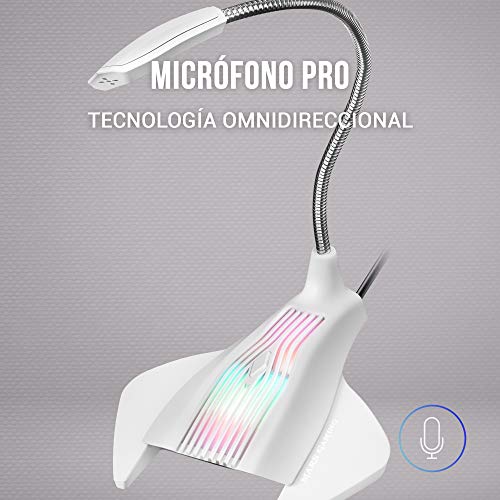
This microphone supports an omnidirectional pickup pattern. 25.6% of microphones support this pattern.
Hypercardioid pattern
no
Hypercardioid pattern
no
This microphone does not support a hypercardioid pickup pattern. 1.5% of microphones support this pattern.
Bidirectional pattern
no
Bidirectional pattern
no
This microphone does not support a bidirectional pickup pattern. 17.1% of microphones support this pattern.
Mute function
yes
Mute function
yes
This microphone includes a mute function. 67.8% of microphones include this control.
Onboard gain control
no
Onboard gain control
no
This microphone does not include onboard gain control. 51.3% of microphones include this control.
Volume control levels
0
Volume control levels
0
This microphone offers volume output of 0 which is lower than that of 65.7% of microphones and equal to that of 34.3% of microphones.
Flat DSP mode
no
Flat DSP mode
no
This microphone does not support a flat DSP mode. 25.6% of microphones offer this processing option.
DSP presets
0
DSP presets
0
This microphone offers 0 DSP presets, which is fewer than 16.6% of microphones and equal to 83.4% of microphones.
Show more
Phantom power required
no
Phantom power required
no
This microphone does not require phantom power. 90.5% of microphones also operate without phantom power.
Phantom power voltage
N/A
USB bus-powered
yes
USB bus-powered
yes
This microphone supports USB bus power. 85.9% of microphones support USB-powered operation.
Battery life
N/A
Height
140 mm
Height
140 mm
This microphone is 140 mm tall, which is shorter than 88.2% of microphones and equal in height to 1% of microphones.
Width
55 mm
Width
55 mm
This microphone is 55 mm wide, which is narrower than 53.3% of microphones and equal in width to 5.1% of microphones.
Body only.
Thickness
140 mm
Thickness
140 mm
This microphone is 140 mm thick, which is thicker than 96.8% of microphones and equal in thickness to 0.5% of microphones.
Weight
173 g
Weight
173 g
This microphone weighs 173 g, which is lighter than 95.2% of microphones.
Body material
plastic
Show more
Included accessories
desk clamp; shock mount; pop filter; cable
Shock mount included
no
Shock mount included
no
This microphone does not include a shock mount. 49.8% of microphones include this accessory.
Pop filter included
yes
Pop filter included
yes
This microphone includes a pop filter. 60.3% of microphones include this accessory.
Windscreen included
no
Windscreen included
no
This microphone does not include a windscreen. 31.8% of microphones include this accessory.
Cable length
1.5 m
Cable length
1.5 m
This microphone has a cable length of 1.5 m which is shorter than that of 82.5% of microphones and equal to that of 6.9% of microphones.
Android compatibility
yes
Android compatibility
yes
This microphone is compatible with Android. 65.8% of microphones are compatible with Android.
iOS compatibility
no
iOS compatibility
no
This microphone is not compatible with iOS. 61.8% of microphones are compatible with iOS.
Windows compatibility
yes
Windows compatibility
yes
This microphone is compatible with Windows. 100% of microphones are compatible with Windows.
macOS compatibility
yes
macOS compatibility
yes
This microphone is compatible with macOS. 99.5% of microphones are compatible with macOS.
Xbox compatibility
no
Xbox compatibility
no
This microphone is not compatible with Xbox. 1.5% of microphones are compatible with Xbox.
Show more

Mars Gaming MMIC vs the average microphone

246810TotalAudio PerformanceConnectivityRecordingPickup PatternsControls & FeaturesPowerDesignAccessoriesCompatibility
  • Supports omnidirectional pickup
    Omnidirectional pattern
    yes
    This microphone supports omnidirectional pickup, the average microphone does not.
  • Supports loopback audio
    Loopback support
    yes
    This microphone supports loopback audio, the average microphone does not.
  • 68.7% lighter
    Weight
    173 g
    This microphone is lighter than the average microphone (173 g vs 553 g). The average microphone weighs 553 g.
    173 g vs 553 g
  • 45 mm shorter body
    Height
    140 mm
    This microphone is shorter than the average microphone (140 mm vs 185 mm). The average microphone has a height of 185 mm.
    140 mm vs 185 mm
  • 7.78x cheaper
    Mars Gaming MMIC is cheaper than the average microphone (£9 vs £70).
    £9 vs £70
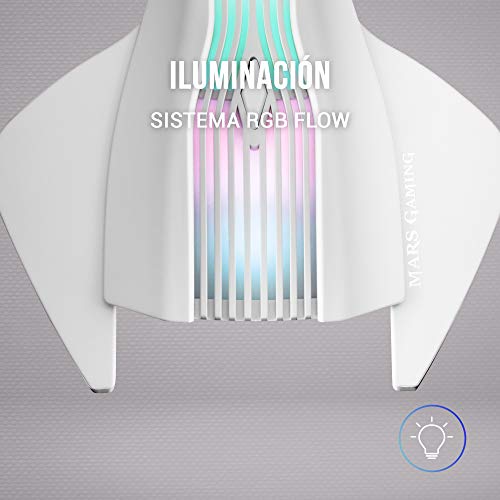
  • Includes RGB lighting
    RGB lighting
    yes
    This microphone includes RGB lighting, the average microphone does not.
  • 7.78x cheaper
    Mars Gaming MMIC is cheaper than the average microphone (£9 vs £70).
    £9 vs £70
  • Supports loopback audio
    Loopback support
    yes
    This microphone supports loopback audio, the average microphone does not.
  • Supports omnidirectional pickup
    Omnidirectional pattern
    yes
    This microphone supports omnidirectional pickup, the average microphone does not.
  • 68.7% lighter
    Weight
    173 g
    This microphone is lighter than the average microphone (173 g vs 553 g). The average microphone weighs 553 g.
    173 g vs 553 g
  • 45 mm shorter body
    Height
    140 mm
    This microphone is shorter than the average microphone (140 mm vs 185 mm). The average microphone has a height of 185 mm.
    140 mm vs 185 mm
  • Includes RGB lighting
    RGB lighting
    yes
    This microphone includes RGB lighting, the average microphone does not.
  • No gain control
    Onboard gain control
    no
    This microphone does not include onboard gain control, the average microphone does.
  • 8 bit lower interface bit depth
    Audio interface bit depth
    16 bit
    This microphone supports a lower audio interface bit depth than the average microphone (16 bit vs 24 bit). The average microphone audio interface supports 24 bit.
    16 bit vs 24 bit
  • 4,000 Hz lower high-frequency limit
    Highest frequency
    16,000 Hz
    This microphone has a lower high-frequency limit than the average microphone (16000 Hz vs 20000 Hz). By comparison, the average microphone has a high-frequency limit of 20000 Hz.
    16,000 Hz vs 20,000 Hz
  • No cardioid pickup
    Cardioid pattern
    no
    This microphone does not support cardioid pickup, the average microphone does.
  • Not compatible with iOS
    iOS compatibility
    no
    This microphone is not compatible with iOS, the average microphone is.
  • No headphone output
    Headphone output
    no
    This microphone does not include a headphone output, the average microphone does.
  • 84 mm thicker body
    Thickness
    140 mm
    This microphone is thicker than the average microphone (140 mm vs 56 mm). The average microphone has a thickness of 56 mm.
    140 mm vs 56 mm
  • 1 dB SPL lower limit
    Max SPL
    120 dB SPL
    This microphone has a lower max SPL than the average microphone (120 dB SPL vs 121 dB SPL). The average microphone handles a max SPL of 121 dB SPL.
    120 dB SPL vs 121 dB SPL
  • 1.5% lower user score
    User score
    7.9/ 10
    ✕
    What it is
    A rating that combines user reviews and the total number of reviews received by the microphone.
    When it matters
    When you want to know how a microphone performs in real use and how reliable it remains over time according to user feedback.
    Score distribution
    ▼▼
    <55-66-77-88-99-10
    Mars Gaming MMIC
    the average microphone
    Mars Gaming MMIC has a lower user score than the average microphone (7.91 vs 8.027).
    7.91 vs 8.03
  • 4,000 Hz lower high-frequency limit
    Highest frequency
    16,000 Hz
    This microphone has a lower high-frequency limit than the average microphone (16000 Hz vs 20000 Hz). By comparison, the average microphone has a high-frequency limit of 20000 Hz.
    16,000 Hz vs 20,000 Hz
  • 1 dB SPL lower limit
    Max SPL
    120 dB SPL
    This microphone has a lower max SPL than the average microphone (120 dB SPL vs 121 dB SPL). The average microphone handles a max SPL of 121 dB SPL.
    120 dB SPL vs 121 dB SPL
  • No headphone output
    Headphone output
    no
    This microphone does not include a headphone output, the average microphone does.
  • 8 bit lower interface bit depth
    Audio interface bit depth
    16 bit
    This microphone supports a lower audio interface bit depth than the average microphone (16 bit vs 24 bit). The average microphone audio interface supports 24 bit.
    16 bit vs 24 bit
  • No cardioid pickup
    Cardioid pattern
    no
    This microphone does not support cardioid pickup, the average microphone does.
  • No gain control
    Onboard gain control
    no
    This microphone does not include onboard gain control, the average microphone does.
  • 84 mm thicker body
    Thickness
    140 mm
    This microphone is thicker than the average microphone (140 mm vs 56 mm). The average microphone has a thickness of 56 mm.
    140 mm vs 56 mm
  • 0.5 m shorter cable length
    Cable length
    1.5 m
    This microphone has a shorter cable than the average microphone (1.5 m vs 2 m). The average microphone has a cable length of 2 m.
    1.5 m vs 2 m
  • Not compatible with iOS
    iOS compatibility
    no
    This microphone is not compatible with iOS, the average microphone is.

Video reviews

Hands-on testing, unboxing, and real-world video evaluations

Third-party reviews

Based on 408 buyer reviews from online shops.
Reviews last updated: July 2026 · How we calculate this

What we like about Mars Gaming MMIC

  • Exceptional value for money, often described as a great budget starter microphone.
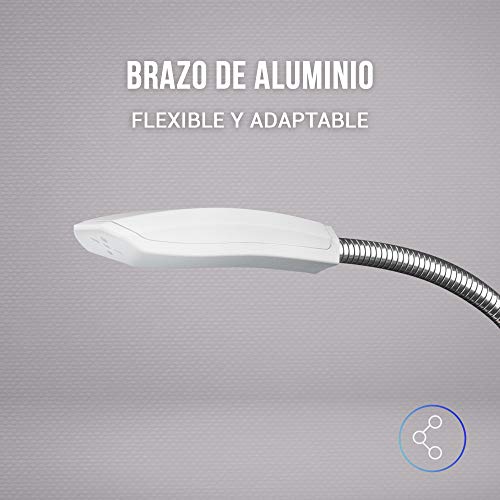
  • Solid build quality with many users praising the strong metal arm and durable structure.
  • Easy 'Plug & Play' installation requiring no additional software or drivers.
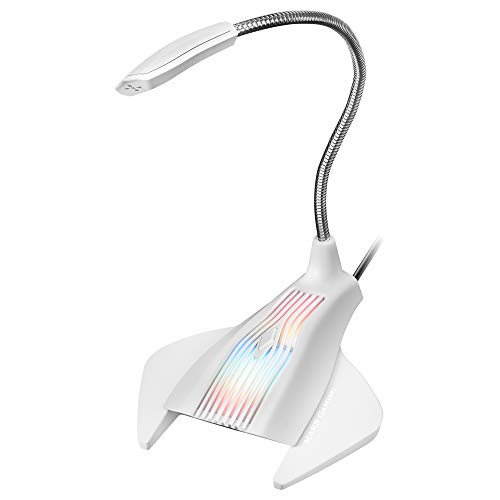
  • Attractive design featuring built-in RGB/ARGB lighting that enhances gaming setups.
  • Good voice recognition and sound clarity for streaming, gaming, and online calls.
  • Convenient physical controls, including a dedicated mute button and volume/gain wheels on select models.

What we don't like about Mars Gaming MMIC

  • Omnidirectional pattern can pick up unwanted background noise like keyboard and mouse clicks.
  • Noise cancellation (ENC) on some models can muffle the user's voice if environmental noise is too high.
  • Some users reported reliability issues, with the device failing after a few weeks of use.
  • Lack of dedicated software for fine-tuning settings or customizing lighting effects.
  • The physical size and weight can be substantial, requiring significant desk space.
  • Instructions for assembly (especially for the mechanical arm) can be unclear or missing.

Verdict

The Mars Gaming MMIC is a compact USB desktop microphone featuring an omnidirectional polar pattern with a frequency response of 20Hz–16KHz and a weight of just 173g. Key characteristics include its 275mm moldable flexible aluminum arm, integrated RGB Flow base lighting, and a dedicated physical mute button with a simple Plug & Play interface compatible with PC, Mac, and PlayStation consoles. Its main pros are the highly adaptable structure that allows for precise positioning and an eye-catching aesthetic that fits gaming setups without needing specialized software. However, common cons include a lack of advanced cardioid noise isolation, which makes it susceptible to picking up background ambient noise, and a reported drop in audio clarity if the user is not positioned very close to the capsule.

Compare Mars Gaming MMIC with other products in the Microphones category

1Product to compare no. 1
VS
2Product to compare no. 2
VS
3Product to compare no. 3 (optional)

Graphic comparison of Mars Gaming MMIC and other products in the Microphones category

No results found