
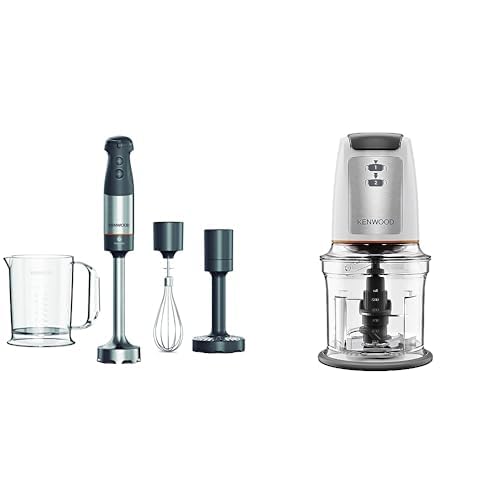
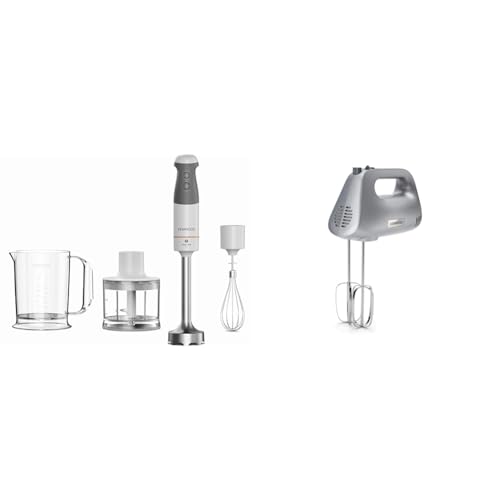


Are Kenwood immersion blenders good?
Kenwood immersion blenders have an average overall score of 7.6, ranking #19 among all immersion blender brands.
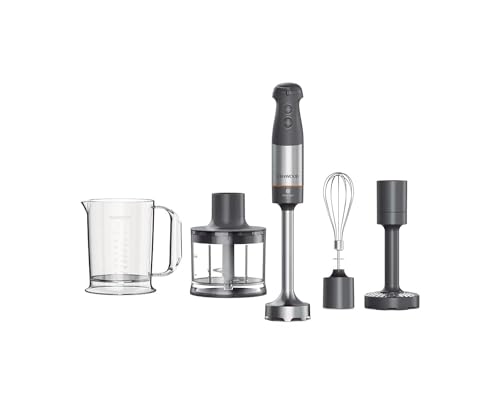
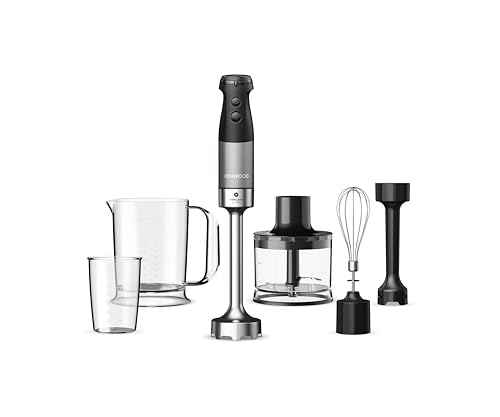
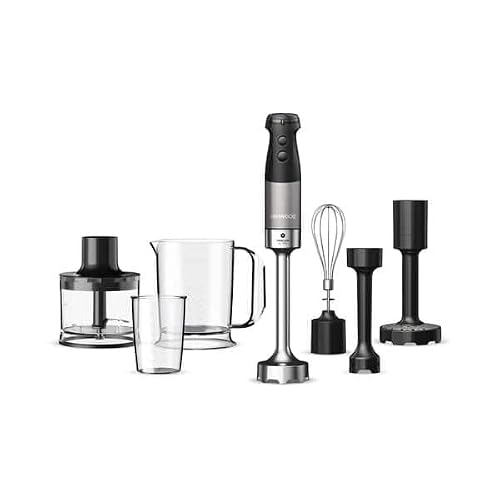
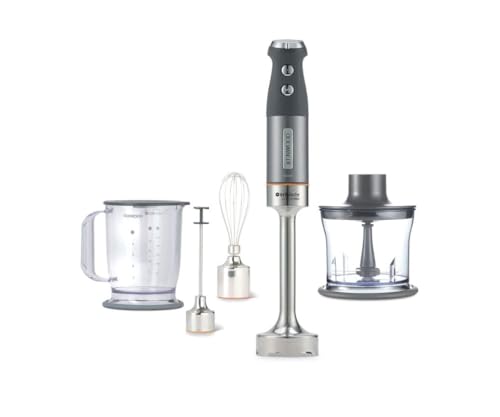
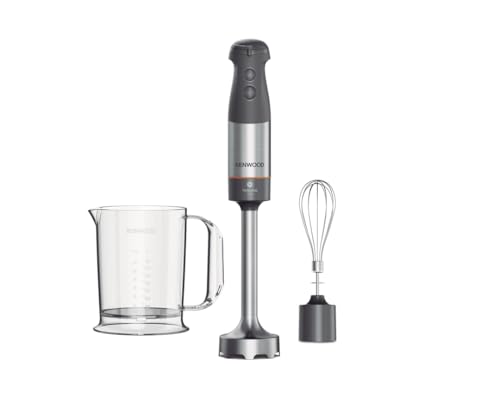
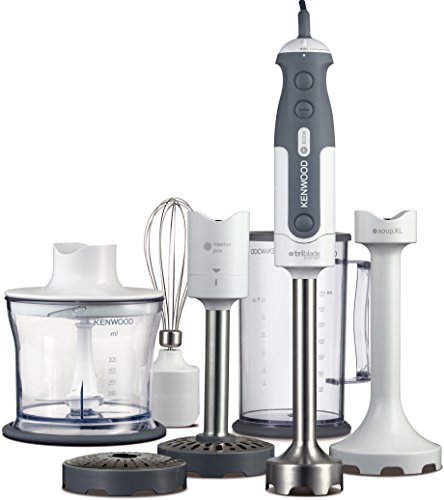
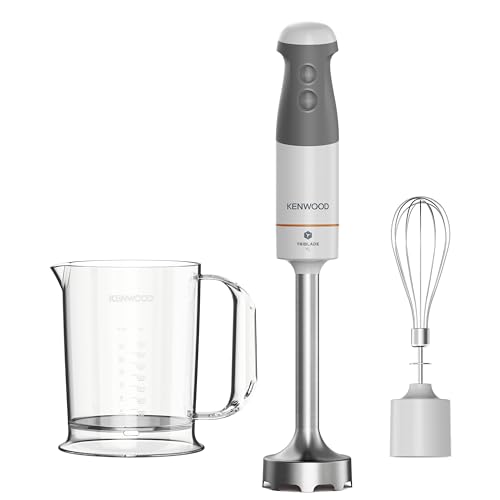
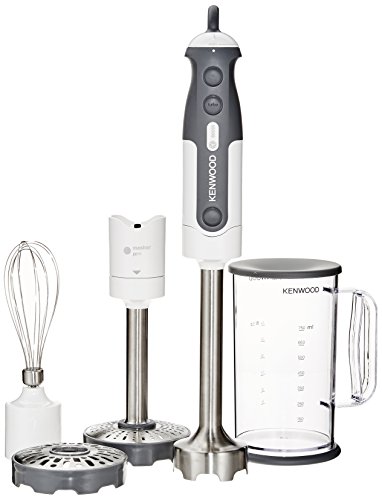
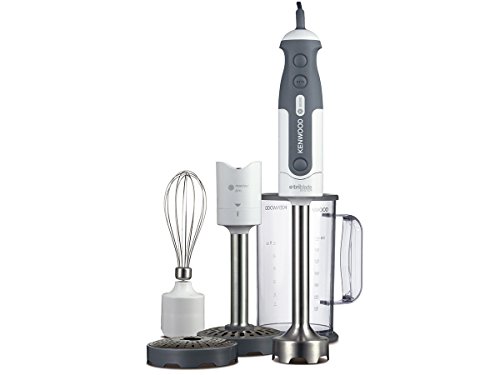
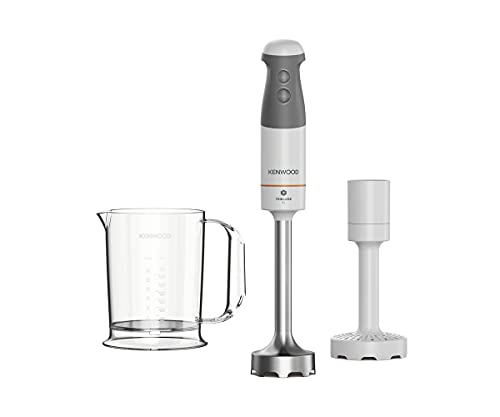
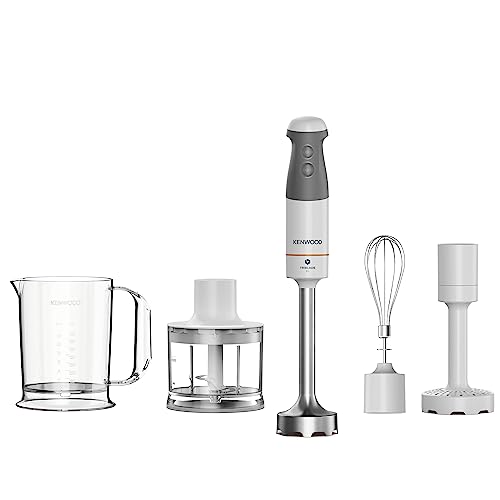
Kenwood is best known for its Triblade system, a blending foot with three sharp blade points instead of the usual two or four. The extra edge and the bell shape pull food down into the blades, so a pot of vegetable soup turns smooth in about 30–60 seconds. The HDM804SI sits at the top of the range with a 1000 W motor and 4 accessories in the box.
The main limitation is speed control. Many models have one speed, and the rest add only a turbo button. You cannot ease into a tall jug of smoothie at low speed to avoid splashes. Cooks who want a dial with 10–20 steps for gently whisking cream or blending a few spoons of purée will find more control elsewhere.
(Note: A total of 61 brands were evaluated in the comparison in the first paragraph. Only those with at least 3 immersion blender models in our database were included.)
The chart below ranks immersion blender brands by average overall score.
[horizontal-chart-01236393224515583485153992884091065572451810322944]What are the main advantages of Kenwood immersion blenders?
The main advantages of Kenwood immersion blenders are the following:
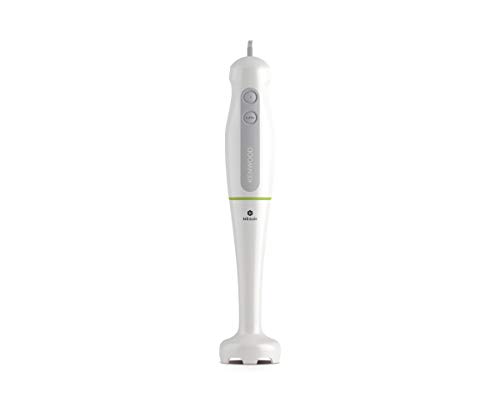
- Three-blade foot: Every model uses three blade points, which cut faster than a basic two-blade foot. Even the £30 HDP100WG gets the same design as the HBM60.007GY.
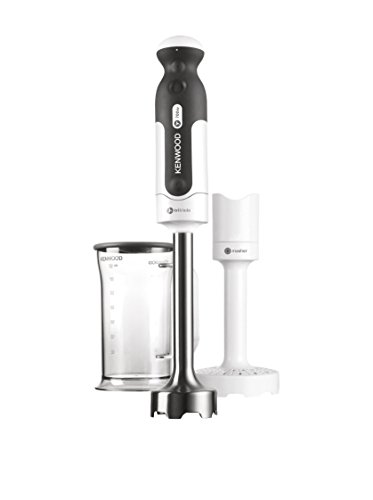
- Strong motors: The HBM60 models run at 1000 W, and the HBM60.002GY reaches 17,000 rpm. That is enough for thick lentil soup without the motor slowing down.
- Fair prices: The HBM40.002WH brings 850 W and 3 accessories for £60. Few brands give you a metal shaft and a full kit for that money.
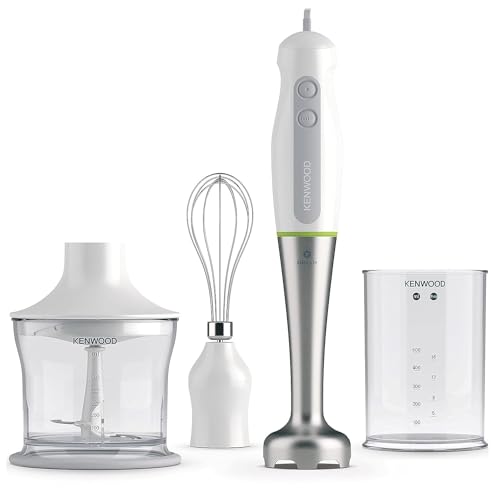
- Large accessory sets: The HDP408WH comes with 6 accessories. You get a chopper, whisk and beaker without buying extra parts later.
- Metal shafts: The stainless steel shaft on models such as the HBM40.302WH goes straight into hot soup. It comes off for the dishwasher after use.
What are the main disadvantages of Kenwood immersion blenders?
The main disadvantages of Kenwood immersion blenders are as follows:
- Few speeds: The HDP100WG, HBM40.002WH and HDP401WH have one speed only. Delicate jobs such as whipping a small amount of cream go from soft to stiff in seconds.
- No cordless model: Every model, from the HDP109WG to the HDM804SI, needs a socket. You blend within cord reach, which is awkward on a kitchen island.
- Weaker entry motors: The HDP109WG runs at 600 W. It is noticeably slower than the 1000 W HBM60.307GY with frozen fruit or thick purées.
- Costly accessory kits: The HDP401WH and HDP408WH cost about £130 yet run at 800 W. You pay mostly for attachments, not for more blending power.