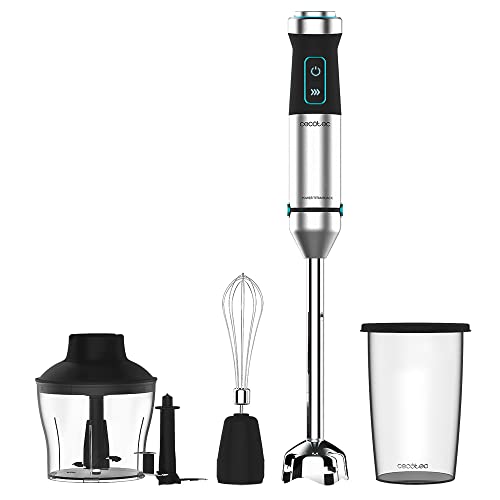
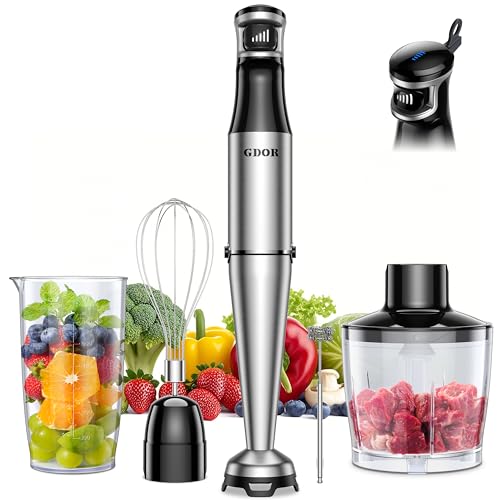
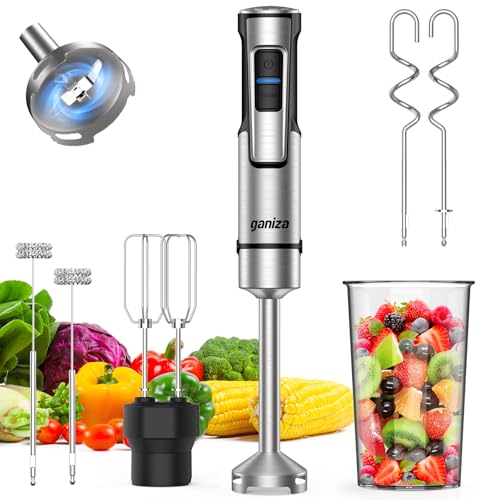
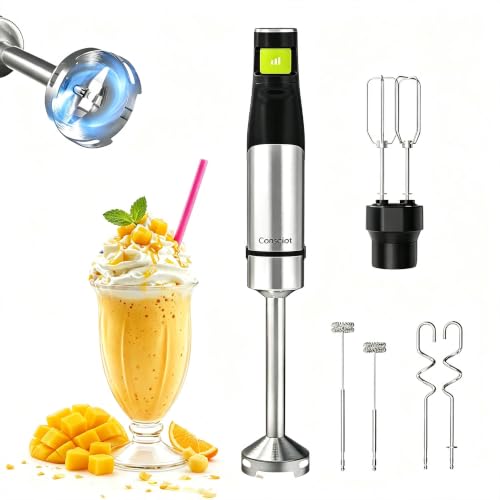
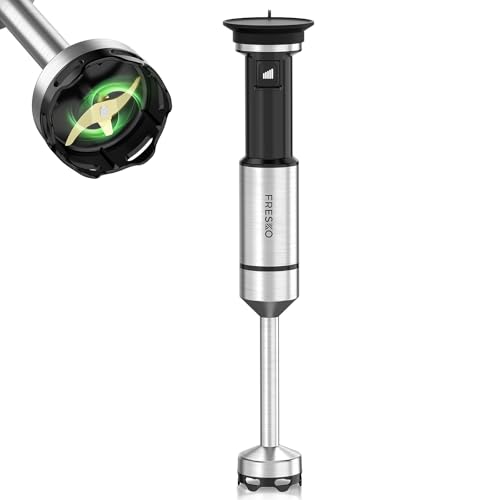
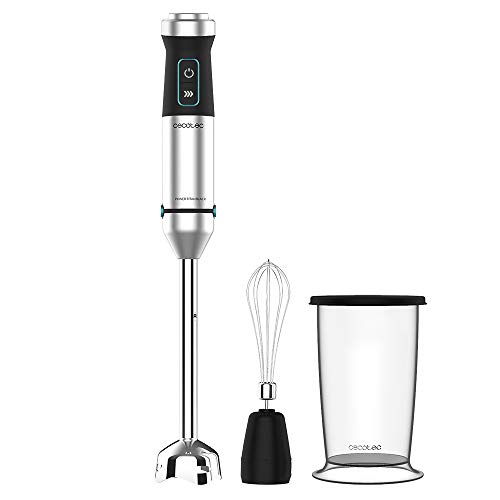
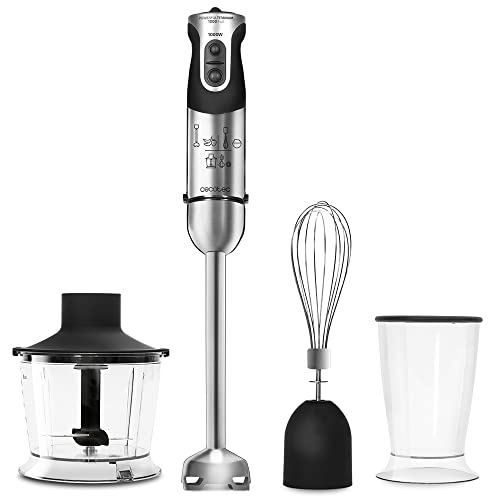
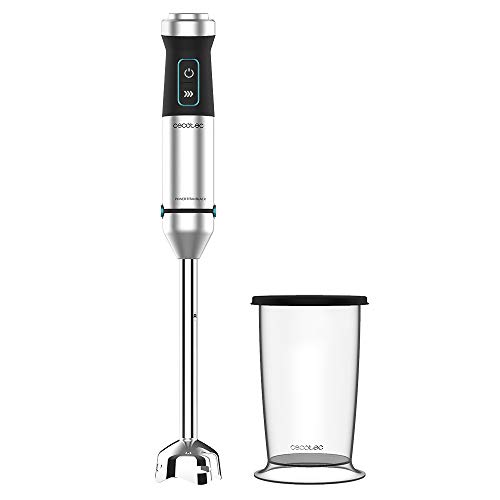
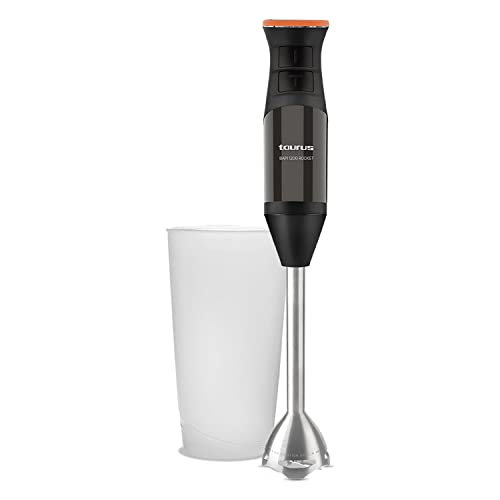
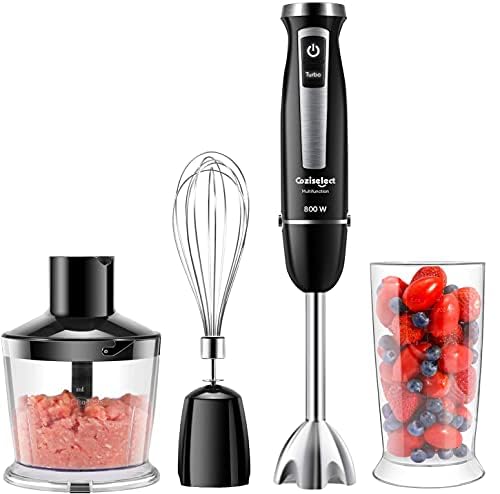
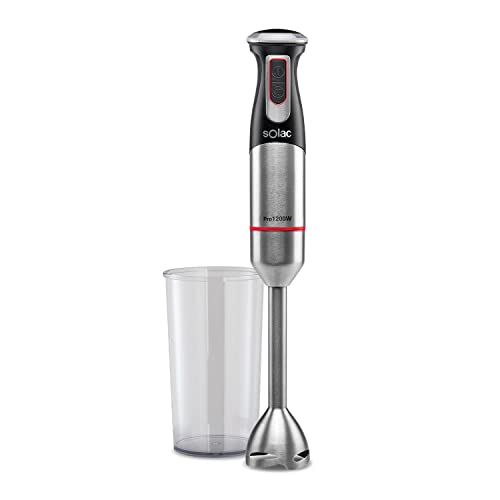
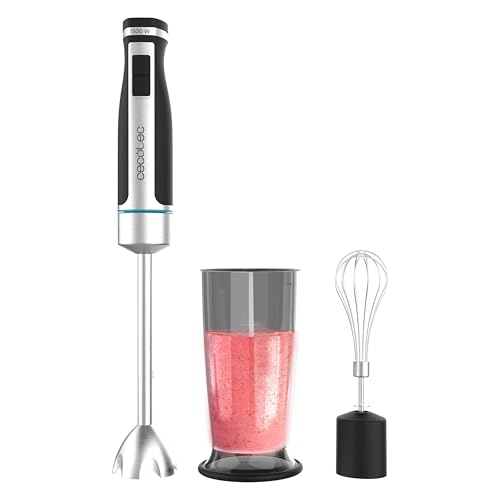
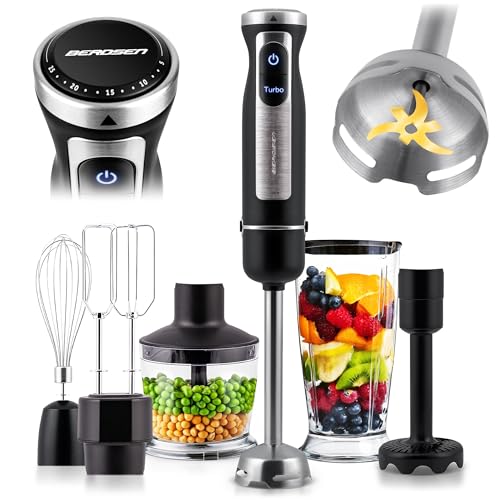
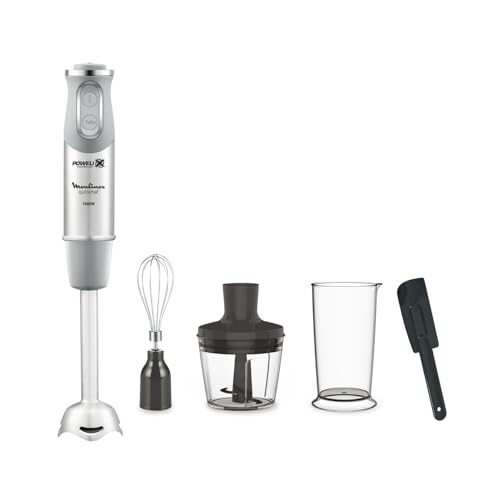
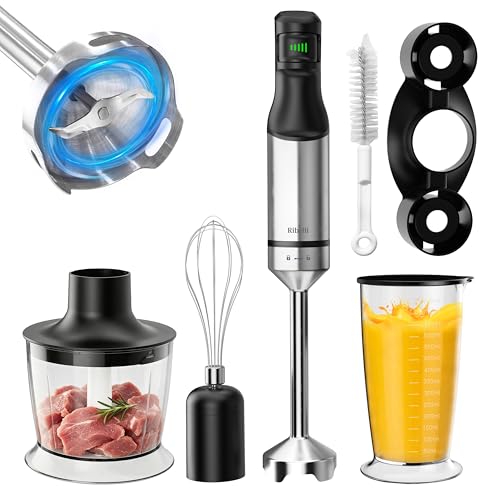
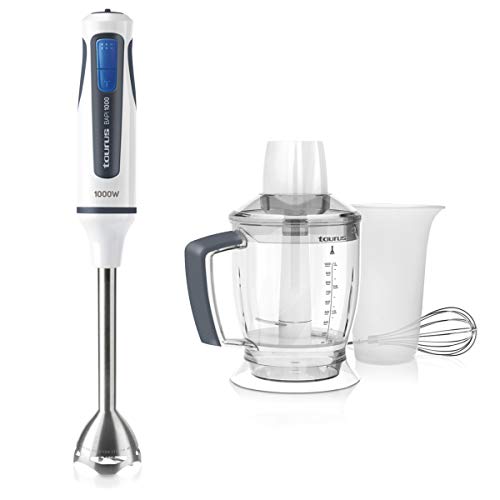
An affordable budget immersion blender makes sense when you blend a few times a week for soups, sauces and smoothies. For those jobs a 700 W motor and two speeds work as well as a premium stick. A model like the HAEGER Titan 1100W adds extra power and a 4-point blade for around £30.
It also suits a first kitchen, a holiday flat or a second blender for baby food. Skip the budget level if you crush ice, make nut butter or blend daily for 3–5 minutes at a time. Cheap motors are built for short bursts and wear out faster under that load.
What performance trade-offs exist in entry-level motors and plastic shaft housings?
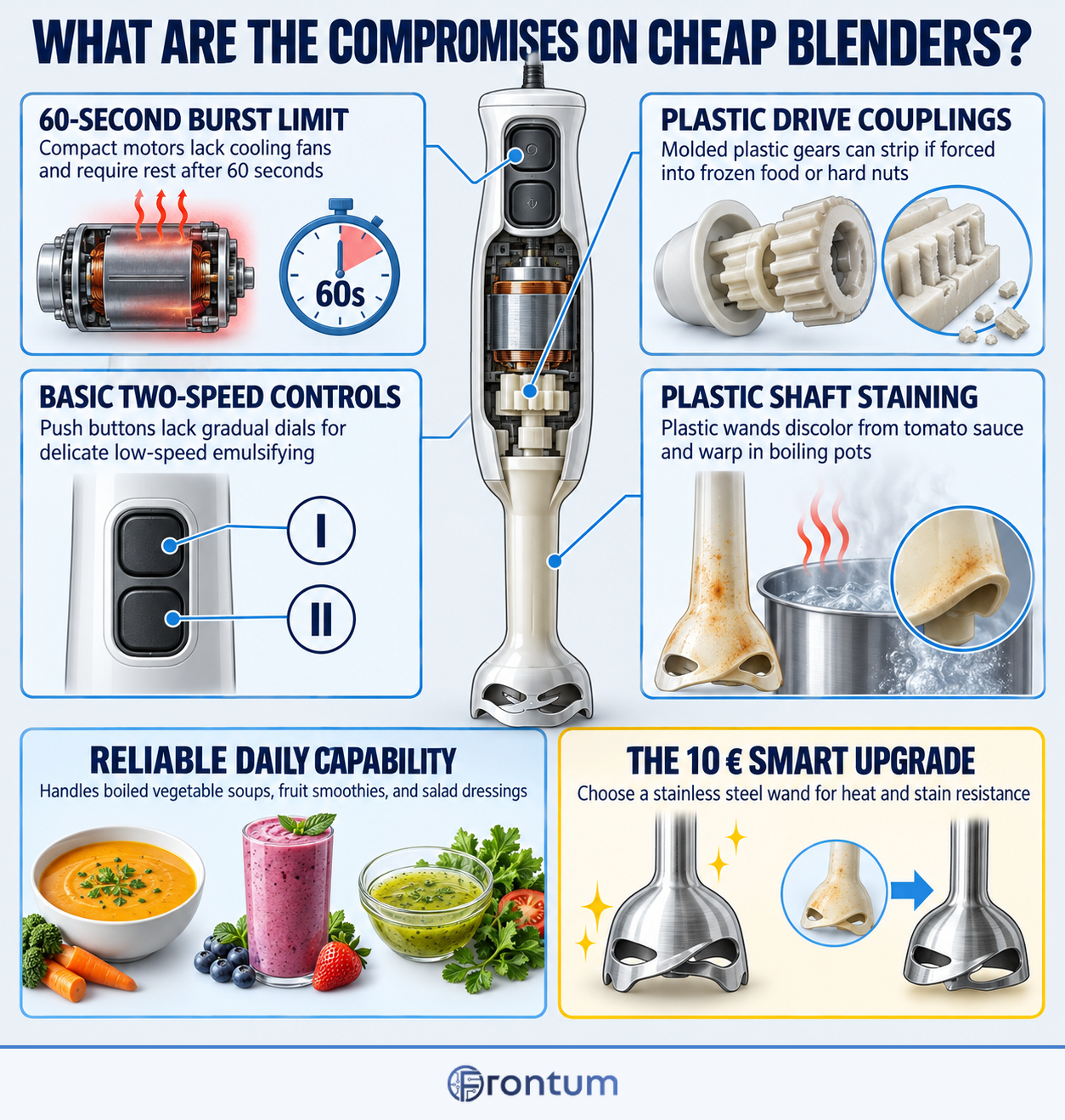
Entry-level motors trade sustained power for low cost: they show high peak watts on paper but use smaller brushes and bearings that heat up under load. A 1000 W rating on a cheap stick is often a peak figure, and the motor slows sharply in thick hummus or frozen berries. Most are rated for only about 1 minute of continuous use before a rest.
Plastic shaft housings save weight and money but stain and absorb smells. Tomato sauce and turmeric leave an orange tint, and plastic dislikes soup straight from the hob at near 100 °C. Plastic also flexes, so the blade wobbles and wears its seal faster than in a stainless foot.
The other savings show in the blade and controls. Models such as the Tristar MX-4850 use a 2-point blade and two speeds, which leaves celery and kale slightly stringy. A 4-blade foot, as on the Abuler 800W 5-in-1, gives smoother results without a bigger motor.