Scored using Drones Methodology v3.0
Drones Methodology v3.0
Mathematical & Unbiased Scoring
Products in this category are scored under Frontum Drones Methodology v3.0: the technical score from the specifications is the base, and independent expert and video reviews (up to ±0.5 points), owner opinions (up to ±0.3) and best-of lists (up to +0.3) move it up or down.
Explore Drones Methodology v3.0

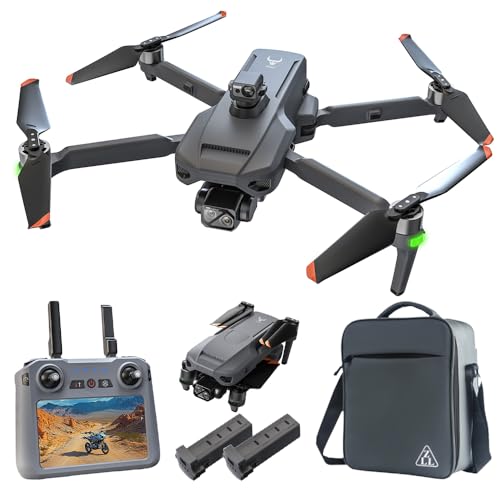
Ruko F11PRO 2 review: 97 specs compared

Avg. price:~£390Max flight time:35 minVideo resolution:4K/30 fpsMax transmission distance:3.048 km

Ruko F11PRO 2 Review: Compare 97 technical specifications, 27 expert and video reviews and 1 best-of list to see how this product ranks in the Drones category and whether it is worth buying.
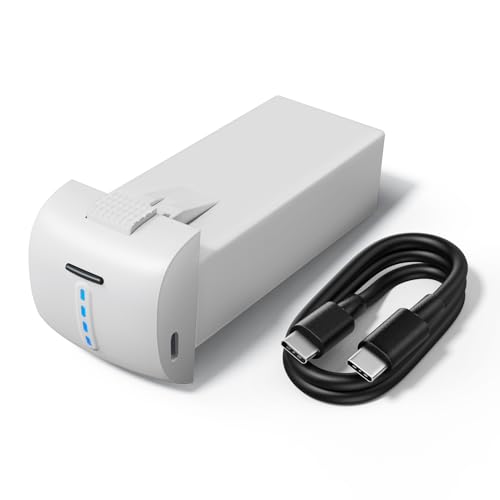
Ruko F11PRO 2
6.3/10

Overall score

Score
6.3/ 10
✕
What it is
Our main score for this model, 1–10. It combines specs, best-of lists, expert reviews and owners.
How we count it
Parts: Technical score 35%, List score 30%, Reviews score 25%, Sentiment score 10%
Marks: Each part gets a mark out of 10. For reviews, lists and owners, a typical model in this category gets about 8 and the best one gets 10.
No data yet: A part with no data shows "?". It counts as the mark of a weaker model in this category (4 in 5 models with data score higher). This way, models with reviews, lists and owners usually come out ahead.
Score distribution
▼
<55-66-77-88-99-10
Score components

35%

6.3

Technical score

30%

6.3

List score

25%

6.3

Reviews score

10%

6.3

Sentiment score

▼Worse than 76% of drones
6.9

Value for money

Value for money
6.9/ 10
✕
What it is
An indicator that combines the drone's overall rating with its cost.
When it matters
When you are looking for a drone with a good balance between flight quality, camera features, and price.
Score distribution
▼
<55-66-77-88-99-10
Score components

70%

6.3

Overall score

30%

8.5

Price

▼Worse than 84%
6.3

Technical score

Technical score
6.3/ 10
✕
What it is
How good the specs are compared with the other models in this category, 1–10.
How we count it
Areas: We rate the specs in each area against the other models in this category.
Weighting: The areas that matter most to buyers count more. The shares are shown under Score components.
Share: The technical score is 35% of the overall score.
Score distribution
▼
<55-66-77-88-99-10
Score components

26%

6.2

Flight

24%

5.8

Camera

20%

7.0

Safety

16%

5.8

Connectivity

14%

7.0

Battery & Design

▲Better than 55%
6.3

Reviews score

Reviews score
6.3/ 10
✕
What it is
Average grade from independent test sites, magazines and video reviewers, 1–10.
How we count it
Grades: Each review's own score is converted to 1–10; without one, we grade the review ourselves. Every review counts the same: written or video, short or full test.
Score: The average grade is 80% of the review mark; the number of reviews is the other 20% (1 review = 5, the typical number in this category = 8, the most-reviewed model = 10).
Enough data: With few reviews, the average grade is pulled toward the typical grade of this category. No reviews yet: 7.5 for now.
Share: Reviews count 25% of the overall score.
Score distribution
▼
<55-66-77-88-99-10

6.3

Mark 7.9 is below the typical mark 8.0 of this category, so it cannot lift the score above the technical score

80%

7.8

Average grade

20%

8.5

Popularity

Grades by review (27)
3 reviews + 24 videos, average 7.7/10. Reviews count 25% of the overall score.
User ratings collected online are not part of this score.
▼Worse than 65%
6.3

List score

List score
6.3/ 10
✕
What it is
How often independent test sites, magazines and video reviewers put this model in their best-of lists for this category.
How we count it
Points: The model in the most lists of this category gets 10; the others get 8 to 10 in proportion. In no list yet: 7.5. Lists count 30% of the overall score.
Enough data: Every list counts, even a single one. With fewer than 5 best-of lists in the category, this part is left out.
Lists with this model (1)
List score: in 1 of 97 lists (1%)
▲Better than 61%
  • ruko-f11pro-2
ruko-f11pro-2
Where to buy
*As an Amazon Associate, we earn from qualifying purchases.
Best rankings
Available: ranking among products currently available (including other versions of this product).All: ranking among all products in the database.

What reviewers say about the Ruko F11PRO 2

Based on 4 · 27

Reviewers find it easy to fly with good battery life and a steady gimbal, but are split on image quality.
Praised
Mixed views
Criticised
Pick a topic to see who said what

What owners say about the Ruko F11PRO 2

Based on 34 owners sharing their experience in online comments

35%positive30%mixed35%negative

Owners praise enjoyable flying, value, and image quality, while crashes and connection problems remain recurring concerns.

What owners dislike

  • Some owners report signal loss, drifting while hovering, sudden turns, and return-home flights ending in tree or ground crashes.7
  • Owners say Ruko support is hard to reach, with no live phone rep, and slow or unhelpful replies to problems.4
  • Some owners get no video on their phone even though the controller connects, and the app sometimes fails to connect.3
  • Video copies are slow to phone, stop if the phone screen turns off, and the SD card must be reformatted to work with Apple devices.3
  • Sticks feel stiff and hard to control yaw, there is no sensitivity setting, and camera zoom sits on the phone screen, not the remote.3

Points mentioned by at least 3 owners, most mentioned first.

Loading...
Loading category ranking...

Technical Specifications of drone Ruko F11PRO 2

Technical score
Technical score
6.3/ 10
✕
What it is
How good the specs are compared with the other models in this category, 1–10.
How we count it
Areas: We rate the specs in each area against the other models in this category.
Weighting: The areas that matter most to buyers count more. The shares are shown under Score components.
Share: The technical score is 35% of the overall score.
Score distribution
▼
<55-66-77-88-99-10
Score components:

26%

6.2

Flight

24%

5.8

Camera

20%

7.0

Safety

16%

5.8

Connectivity

14%

7.0

Battery & Design

6.3
Reviews score
6.3
List score
6.3
Value for money
Value for money
6.9/ 10
✕
What it is
An indicator that combines the drone's overall rating with its cost.
When it matters
When you are looking for a drone with a good balance between flight quality, camera features, and price.
Score distribution
▼
<55-66-77-88-99-10
Score components:

70%

6.3

Overall score

30%

8.5

Price

6.9
Max flight time
35 min
This drone has a max flight time of 35 min, longer than 81% of drones and equal to 2% of drones.
Real-world flight time is often lower than the advertised maximum.
Max flight distance
3.05 km
This drone has a max flight distance of 3.05 km, farther than 58.6% of drones.
Max flight speed
8.5 m/s
This drone has a max flight speed of 8.5 m/s, slower than 61.4% of drones.
Value reflects maximum mode speed (for example Sport/Manual mode).
Max wind resistance
10.73 m/s
This drone has max wind resistance of 10.73 m/s, higher than 73.4% of drones and equal to 1.4% of drones.
Value may include conversion from Beaufort-scale rating to m/s.
Max service ceiling (ASL)
3,048 m
This drone has a max service ceiling of 3,048 m, lower than 50.8% of drones.
Flight height is software-limited to 120 m AGL.
Show more
What reviewers say
Video resolution
4K/30 fps
This drone records video at 4K/30 fps, higher than 58.4% of drones and equal to 20.3% of drones.
4K camera
yes
This drone supports 4K video. 46% of drones support 4K video.
Sensor size
1/3.2"
This drone has a sensor size of 1/3.2", smaller than 81.5% of drones and equal to 2.8% of drones.
Main camera megapixels
8 MP
This drone has a main camera resolution of 8 MP, lower than 66% of drones and equal to 8.7% of drones.
19 MP photo size is interpolated.
Max movie bitrate
40 Mbps
This drone has a max movie bitrate of 40 Mbps, lower than 86.8% of drones and equal to 6.6% of drones.
Show more
What reviewers say
Obstacle detection
no
This drone does not support obstacle detection. 31% of drones support obstacle detection.
Return to Home (RTH)
yes
This drone supports Return-to-Home (RTH). 33% of drones support Return-to-Home (RTH).
GPS
yes
This drone supports GPS. 35.3% of drones support GPS.
GNSS systems supported
GPS, GLONASS
This drone supports GPS, GLONASS GNSS systems, which are more comprehensive than those of 49.8% and the same as those of 17.1%.
Obstacle sensing directions
downward
This drone senses obstacles in downward directions, which is more comprehensive than that of 57.3% and the same as that of 12.1%.
Only downward TOF/optical-flow sensing is explicitly confirmed.
Show more
What reviewers say
Max transmission distance
3.048 km
This drone has a max transmission distance of 3.048 km, farther than 58.7% of drones.
Transmission latency
170 ms
This drone has transmission latency of 170 ms, higher than 63.4% of drones and equal to 1.4% of drones.
Video transmission system
Digital Transmission
This drone uses Digital Transmission for video transmission, which is more advanced than the system used by 58.5% and the same as that used by 8.7%.
Live view quality
720p@25 fps
This drone offers live view quality of 720p@25 fps, lower-quality than 80.2% of drones and equal to 2.6% of drones.
Remote control
yes
This drone has a handheld remote controller. 5% of drones offer this.
Show more
What reviewers say
Battery capacity
3,200 mAh
This drone has a battery capacity of 3,200 mAh, larger than 75.7% of drones and equal to 0.5% of drones.
Battery energy
24.64 Wh
This drone has battery energy of 24.64 Wh, higher than 67.1% of drones.
Charging time
150 min
This drone charges in 150 min, slower than 76.9% of drones and equal to 6.9% of drones.
Weight
357 g
This drone weighs 357 g, heavier than 65.5% of drones.
Removable battery
yes
This drone has a removable battery. 0.5% of drones have a removable battery.
Show more

Ruko F11PRO 2 vs the average drone

246810TotalFlightCameraSafetyConnectivityBattery & Design
  • 15 min longer flight time
    This drone offers longer max flight time than the average drone (35 min vs 20 min). The average drone offers 20 min of max flight time.
    Real-world flight time is often lower than the advertised maximum.
    35 min vs 20 min
  • More advanced stabilization
    This drone uses 3-Axis Mechanical + EIS image stabilization, while the average drone uses EIS (Digital).
    3-Axis Mechanical + EIS vs EIS (Digital)
  • 3 more gimbal axes
    This drone has more gimbal axes than the average drone (3 vs 0). The average drone has 0 gimbal axes.
    3 vs 0
  • Supports low-light mode
    This drone supports low-light mode, while the average drone does not.
  • More modern charging port
    This drone uses USB-C for charging, while the average drone uses micro-USB.
    USB-C vs micro-USB
  • Supports waypoint flight
    This drone supports waypoint flight, while the average drone does not.
  • 1,000 mAh more battery capacity
    This drone has a larger battery capacity than the average drone (3,200 mAh vs 2,200 mAh). The average drone battery has a capacity of 2,200 mAh.
    3,200 mAh vs 2,200 mAh
  • Remote ID
    This drone supports Remote ID, while the average drone does not.
    Available via firmware update.
  • 15 min longer flight time
    This drone offers longer max flight time than the average drone (35 min vs 20 min). The average drone offers 20 min of max flight time.
    Real-world flight time is often lower than the advertised maximum.
    35 min vs 20 min
  • 0.03 m/s higher wind resistance
    This drone handles stronger wind than the average drone (10.7 m/s vs 10.7 m/s). The average drone handles wind up to 10.7 m/s.
    Value may include conversion from Beaufort-scale rating to m/s.
    10.73 m/s vs 10.7 m/s
  • 2.05 km longer flight distance
    This drone has a longer max flight distance than the average drone (3.1 km vs 1 km). The average drone can fly up to 1 km.
    3.05 km vs 1 km
  • More advanced stabilization
    This drone uses 3-Axis Mechanical + EIS image stabilization, while the average drone uses EIS (Digital).
    3-Axis Mechanical + EIS vs EIS (Digital)
  • 3 more gimbal axes
    This drone has more gimbal axes than the average drone (3 vs 0). The average drone has 0 gimbal axes.
    3 vs 0
  • Supports low-light mode
    This drone supports low-light mode, while the average drone does not.
  • Richer manual controls
    This drone offers partial manual camera controls, while the average drone offers no.
    Mostly limited manual tuning.
    partial vs no
  • 2 x higher digital zoom
    This drone offers more digital zoom than the average drone (5 x vs 3 x). The average drone offers 3 x of digital zoom.
    5 x vs 3 x
  • Supports waypoint flight
    This drone supports waypoint flight, while the average drone does not.
  • Remote ID
    This drone supports Remote ID, while the average drone does not.
    Available via firmware update.
  • 2.05 km longer transmission range
    This drone has a longer max transmission distance than the average drone (3 km vs 1 km). The average drone reaches 1 km of transmission distance.
    3.048 km vs 1 km
  • More modern charging port
    This drone uses USB-C for charging, while the average drone uses micro-USB.
    USB-C vs micro-USB
  • 1,000 mAh more battery capacity
    This drone has a larger battery capacity than the average drone (3,200 mAh vs 2,200 mAh). The average drone battery has a capacity of 2,200 mAh.
    3,200 mAh vs 2,200 mAh
  • 7.46 Wh more battery energy
    This drone has higher battery energy than the average drone (24.6 Wh vs 17.18 Wh). The average drone battery has 17.18 Wh of energy.
    24.64 Wh vs 17.18 Wh
  • Fewer GNSS systems
    This drone supports GPS, GLONASS GNSS systems, while the average drone supports GPS, GLONASS, Galileo, BeiDou.
    GPS, GLONASS vs GPS, GLONASS, Galileo, BeiDou
  • Smaller sensor size
    This drone has a smaller sensor than the average drone (1/3.2" vs 1/2.3"). The average drone uses a sensor of 1/2.3".
    1/3.2" vs 1/2.3"
  • 17.1% lower list score
    List score
    6.3/ 10
    ✕
    What it is
    How often independent test sites, magazines and video reviewers put this model in their best-of lists for this category.
    How we count it
    Points: The model in the most lists of this category gets 10; the others get 8 to 10 in proportion. In no list yet: 7.5. Lists count 30% of the overall score.
    Enough data: Every list counts, even a single one. With fewer than 5 best-of lists in the category, this part is left out.
    Lists with this model (1)
    List score: in 1 of 97 lists (1%)
    6.3 vs 7.6
  • Lower live view quality
    This drone has worse live view quality than the average drone (720p@25 fps vs 1080p@25 fps). The average drone offers live view quality of 1080p@25 fps.
    720p@25 fps vs 1080p@25 fps
  • 60 Mbps lower video bitrate
    This drone supports a lower maximum video bitrate than the average drone (40 Mbps vs 100 Mbps). The average drone supports a maximum video bitrate of 100 Mbps.
    40 Mbps vs 100 Mbps
  • Lower video resolution
    This drone offers lower video resolution than the average drone (4K/30 fps vs 4K/100 fps). The average drone offers a video resolution of 4K/100 fps.
    4K/30 fps vs 4K/100 fps
  • 60 min longer charging time
    This drone charges more slowly than the average drone (150 min vs 90 min). The average drone charges in 90 min.
    150 min vs 90 min
  • 6.5 m/s slower flight speed
    This drone reaches a lower max flight speed than the average drone (8.5 m/s vs 15 m/s). The average drone reaches 15 m/s.
    Value reflects maximum mode speed (for example Sport/Manual mode).
    8.5 m/s vs 15 m/s
  • 17.1% lower list score
    List score
    6.3/ 10
    ✕
    What it is
    How often independent test sites, magazines and video reviewers put this model in their best-of lists for this category.
    How we count it
    Points: The model in the most lists of this category gets 10; the others get 8 to 10 in proportion. In no list yet: 7.5. Lists count 30% of the overall score.
    Enough data: Every list counts, even a single one. With fewer than 5 best-of lists in the category, this part is left out.
    Lists with this model (1)
    List score: in 1 of 97 lists (1%)
    6.3 vs 7.6
  • 11.3% lower review score
    Reviews score
    6.3/ 10
    ✕
    What it is
    Average grade from independent test sites, magazines and video reviewers, 1–10.
    How we count it
    Grades: Each review's own score is converted to 1–10; without one, we grade the review ourselves. Every review counts the same: written or video, short or full test.
    Score: The average grade is 80% of the review mark; the number of reviews is the other 20% (1 review = 5, the typical number in this category = 8, the most-reviewed model = 10).
    Enough data: With few reviews, the average grade is pulled toward the typical grade of this category. No reviews yet: 7.5 for now.
    Share: Reviews count 25% of the overall score.
    Score distribution
    ▼
    <55-66-77-88-99-10

    6.3

    Mark 7.9 is below the typical mark 8.0 of this category, so it cannot lift the score above the technical score

    80%

    7.8

    Average grade

    20%

    8.5

    Popularity

    Grades by review (27)
    3 reviews + 24 videos, average 7.7/10. Reviews count 25% of the overall score.
    User ratings collected online are not part of this score.
    6.3 vs 7.1
  • 17.1% lower sentiment score
    6.3 vs 7.6
  • 7.7% worse value for money
    Ruko F11PRO 2 has worse value for money than the average drone (6.95 vs 7.5).
    6.95 vs 7.48
  • 95% more expensive
    Ruko F11PRO 2 is more expensive than the average drone (£390 vs £200).
    £390 vs £200
  • 6.5 m/s slower flight speed
    This drone reaches a lower max flight speed than the average drone (8.5 m/s vs 15 m/s). The average drone reaches 15 m/s.
    Value reflects maximum mode speed (for example Sport/Manual mode).
    8.5 m/s vs 15 m/s
  • 1.3 m/s slower descent speed
    This drone descends more slowly than the average drone (2.7 m/s vs 4 m/s). The average drone descends at 4 m/s.
    2.7 m/s vs 4 m/s
  • 2.6 m/s slower ascent speed
    This drone climbs more slowly than the average drone (2.4 m/s vs 5 m/s). The average drone climbs at 5 m/s.
    2.4 m/s vs 5 m/s
  • Smaller sensor size
    This drone has a smaller sensor than the average drone (1/3.2" vs 1/2.3"). The average drone uses a sensor of 1/2.3".
    1/3.2" vs 1/2.3"
  • 60 Mbps lower video bitrate
    This drone supports a lower maximum video bitrate than the average drone (40 Mbps vs 100 Mbps). The average drone supports a maximum video bitrate of 100 Mbps.
    40 Mbps vs 100 Mbps
  • Lower video resolution
    This drone offers lower video resolution than the average drone (4K/30 fps vs 4K/100 fps). The average drone offers a video resolution of 4K/100 fps.
    4K/30 fps vs 4K/100 fps
  • Fewer photo format options
    This drone supports JPEG photo formats, while the average drone supports JPEG, DNG (RAW).
    JPEG vs JPEG, DNG (RAW)
  • Narrower tilt range
    This drone has a narrower tilt range than the average drone (-90 to 0 ° vs -90 to 20 °).
    -90 to 0 ° vs -90 to 20 °
  • 15 ° narrower field of view
    This drone has a narrower field of view than the average drone (75 ° vs 90 °). The average drone has a field of view of 90 °.
    75 ° vs 90 °
  • 4 MP less camera resolution
    This drone has fewer main camera megapixels than the average drone (8 MP vs 12 MP). The average drone has 12 MP on the main camera.
    19 MP photo size is interpolated.
    8 MP vs 12 MP
  • Fewer GNSS systems
    This drone supports GPS, GLONASS GNSS systems, while the average drone supports GPS, GLONASS, Galileo, BeiDou.
    GPS, GLONASS vs GPS, GLONASS, Galileo, BeiDou
  • 0.2 m worse hover accuracy
    This drone has worse horizontal hover accuracy than the average drone (0.5 m vs 0.3 m). The average drone has horizontal hover accuracy of 0.3 m.
    0.5 m vs 0.3 m
  • Lower live view quality
    This drone has worse live view quality than the average drone (720p@25 fps vs 1080p@25 fps). The average drone offers live view quality of 1080p@25 fps.
    720p@25 fps vs 1080p@25 fps
  • More basic transmission system
    This drone uses Digital Transmission for video transmission, while the average drone uses SkyLink 2.0.
    Digital Transmission vs SkyLink 2.0
  • 40 ms higher latency
    This drone has higher transmission latency than the average drone (170 ms vs 130 ms). The average drone has transmission latency of 130 ms.
    170 ms vs 130 ms
  • Basic companion app
    This drone uses the Ruko Mini companion app, while the average drone uses HS FPV.
    Ruko Mini vs HS FPV
  • More basic controller
    This drone uses the this drone Remote Controller controller, while the average drone uses LiteRadio 4 SE.
    Ruko F11PRO 2 Remote Controller vs LiteRadio 4 SE
  • 60 min longer charging time
    This drone charges more slowly than the average drone (150 min vs 90 min). The average drone charges in 90 min.
    150 min vs 90 min
  • 109 mm wider width
    This drone is wider than the average drone (350 mm vs 241 mm). The average drone width is 241 mm.
    350 mm vs 241 mm
  • 45.1% higher weight
    This drone is heavier than the average drone (357 g vs 246 g). The average drone weighs 246 g.
    357 g vs 246 g
  • 110 mm longer body length
    This drone is longer than the average drone (385 mm vs 275 mm). The average drone is 275 mm long.
    385 mm vs 275 mm

Video reviews

Hands-on testing, unboxing, and real-world video evaluations

9.0
The Gray Dog
≈ estimated
17/02/2026
Hands-on review · setup, flight, footage and beginner suitability
Verdict
Ruko F11PRO 2 sits between beginner-friendly and capable, though image quality drops in low light.
8.0
Gorillaman's Garage
≈ estimated
16/01/2026
Hands-on review · flight test in cold weather
Verdict
Ruko F11PRO 2 works very well for a budget drone, though the small sensor and limited settings are drawbacks.
8.0
Tech Court
≈ estimated
29/12/2025
Hands-on review · flight footage and beginner suitability
Verdict
Ruko F11PRO 2 is a good beginner drone with clear limits on camera control and gimbal refinement.
9.0
Helmet Head
≈ estimated
18/11/2025
Hands-on review · GPS follow and battery use
Verdict
Ruko F11PRO 2 has good GPS follow and long battery life, which suit travel vlogging.
9.0
HL ModTech
≈ estimated
17/11/2025
Hands-on review · wind flights, altitude and auto-return tests
Verdict
Ruko F11PRO 2 is a smooth, stable, beginner-friendly drone that is well worth a look for newcomers.
7.0
FPV Evan
≈ estimated
08/11/2025
Unboxing and test flights · side-by-side camera comparison
Verdict
Ruko F11PRO 2 is a good little drone for newcomers who don't want to fiddle with camera settings, but not for experienced shooters.
5.0
Gorillaman's Garage
≈ estimated
21/08/2025
Crash and quality check · hands-on flight test and recovery
Verdict
Ruko F11PRO 2 still flies, but the propellers were damaged and sport mode may cause them to come loose.
9.0
The Old Jarhead
≈ estimated
28/05/2025
Hands-on review · flights, camera and controller
Verdict
Ruko F11PRO 2 is an enjoyable drone to fly, despite a return-home scare and drift when filming.
5.0
Gorillaman's Garage
≈ estimated
10/05/2025
Hands-on review · part 2 of a series, indoor and outdoor flight tests
Verdict
Ruko F11PRO 2 is not a first choice for now: well built and flies nicely, but many issues remain unresolved.
9.0
Ready To Run RC
≈ estimated
12/04/2025
Hands-on review · unboxing, flight time and range tests
Verdict
Ruko F11PRO 2 tested well, with good flight time, a smooth gimbal and more than enough range.
9.0
Jabber Tech
≈ estimated
06/04/2025
Hands-on review · flight, wind and app tests
Verdict
Ruko F11PRO 2 is a very easy drone for beginners, with smooth flying and reliable auto-return, and a strong pick for newcomers.
8.0
Barry Mountford
≈ estimated
10/03/2025
Hands-on review · flight test and battery check
Verdict
Ruko F11PRO 2 is a good, easy-to-fly starter drone, best for beginners rather than photographers.
More graded video reviews (14)
creator’s own scoreestimated by us

Expert reviews

In-depth analysis and verdict from leading tech publications

6.0
space.com
✓ explicit
02/05/2025
Expert review · Gimbal drone
Verdict
The Ruko F11PRO 2 suits casual flying, even on windy days, with a steady gimbal and about 70 minutes of flight, but its footage looks soft.
7.6
firstquadcopter.com
✓ explicit
09/01/2024
Expert review · Foldable drone
Verdict
The Ruko F11PRO 2 suits beginners who want stable GPS flight and 70 minutes of flying from two batteries, but it isn't built for high-end cinematic work.
6.0
digitalcameraworld.com
✓ explicit
05/02/2025
Expert review · 4K gimbal drone
Verdict
The Ruko F11PRO 2 is a durable beginner drone with smooth, gimbal-stabilized 4K video, but hazy images and slower flight than lighter rivals hold it back.

Third-party reviews

What customers like about Ruko F11PRO 2

  • Excellent build quality and sturdy, foldable design
  • Smooth 4K video recording thanks to a reliable 3-axis gimbal
  • Beginner-friendly features including GPS auto-return and one-touch takeoff/landing
  • Comprehensive kit that includes two batteries, spare propellers, and a high-quality carrying case
  • Stable flight performance even in moderate wind conditions
  • Responsive and helpful customer support noted by several users

What customers don't like about Ruko F11PRO 2

  • Image quality is often described as soft, hazy, or lacking sharpness, despite 6K photo marketing
  • Lacks advanced obstacle avoidance sensors
  • Weighs over 250g (approx. 357g), requiring FAA registration in the US
  • Camera settings are fully automatic with no manual control over exposure or white balance
  • Relatively slow flight speeds (max ~18 mph) compared to competitors in its price range
  • Actual flight time per battery often falls short of the advertised 35 minutes (averaging 20-30 mins)

Verdict

The Ruko F11PRO 2 is a beginner-friendly GPS drone featuring a 4K/30fps video camera and high-resolution 6K photo capability stabilized by a 3-axis mechanical gimbal. It offers an impressive transmission range of up to 10,000 feet and a total flight time of 70 minutes via two included 3200mAh batteries. Main pros include its durable build quality, Level 5 wind resistance, and helpful automated features like Smart Return-to-Home and Cruise Control. However, notable cons include a lack of obstacle avoidance, a fully automatic camera that limits manual control over exposure or white balance, and a weight of 357g that requires FAA registration.

Compare Ruko F11PRO 2 with other drones

1Product to compare no. 1
VS
2Product to compare no. 2
VS
3Product to compare no. 3 (optional)

Graphic comparison of Ruko F11PRO 2 and other drones

No results found