Scored using Drones Methodology v3.0
Drones Methodology v3.0
Mathematical & Unbiased Scoring
Products in this category are scored under Frontum Drones Methodology v3.0: the technical score from the specifications is the base, and independent expert and video reviews (up to ±0.5 points), owner opinions (up to ±0.3) and best-of lists (up to +0.3) move it up or down.
Explore Drones Methodology v3.0

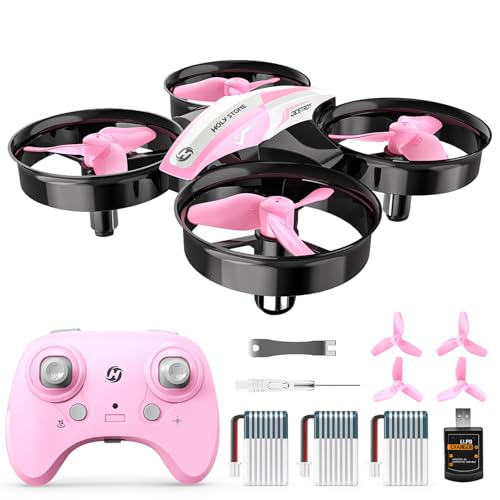
Holy Stone HS180 review: 97 specs compared

Avg. price:~£35Max flight time:7 minVideo resolution:N/AMax transmission distance:0.05 km

Holy Stone HS180 Review: Compare 97 technical specifications, 3 expert and video reviews and 1 best-of list to see how this product ranks in the Drones category and whether it is worth buying.
Holy Stone HS180
6.0/10

Overall score

Score
6.0/ 10
✕
What it is
Our main score for this model, 1–10. It combines specs, best-of lists, expert reviews and owners.
How we count it
Parts: Technical score 40%, List score 30%, Reviews score 25%, Sentiment score 5%
Marks: Each part gets a mark out of 10. For reviews, lists and owners, a typical model in this category gets about 8 and the best one gets 10.
No data yet: A part with no data shows "?". It counts as the mark of a weaker model in this category (4 in 5 models with data score higher). This way, models with reviews, lists and owners usually come out ahead.
Score distribution
▼
<55-66-77-88-99-10
Score components

40%

4.2

Technical score

30%

7.5

List score

25%

7.5

Reviews score

5%

?

Sentiment scoreNot enough data yet, so we use 4.2, the mark of a weaker model in this category

▼Worse than 99% of drones
7.2

Value for money

Value for money
7.2/ 10
✕
What it is
An indicator that combines the drone's overall rating with its cost.
When it matters
When you are looking for a drone with a good balance between flight quality, camera features, and price.
Score distribution
▼
<55-66-77-88-99-10
Score components

70%

6.0

Overall score

30%

10

Price

▼Worse than 88%
4.2

Technical score

Technical score
4.2/ 10
✕
What it is
How good the specs are compared with the other models in this category, 1–10.
How we count it
Areas: We rate the specs in each area against the other models in this category.
Weighting: The areas that matter most to buyers count more. The shares are shown under Score components.
Share: The technical score is 40% of the overall score.
Score distribution
▼
<55-66-77-88-99-10
Score components

26%

3.6

Flight

24%

3.7

Camera

20%

4.2

Safety

16%

4.2

Connectivity

14%

6.2

Battery & Design

▼Worse than 99%
7.5

Reviews score

Reviews score
7.5/ 10
✕
What it is
Average grade from independent test sites, magazines and video reviewers, 1–10.
How we count it
Grades: Each review's own score is converted to 1–10; without one, we grade the review ourselves. Every review counts the same: written or video, short or full test.
Score: The average grade is 80% of the review mark; the number of reviews is the other 20% (1 review = 5, the typical number in this category = 8, the most-reviewed model = 10).
Enough data: With few reviews, the average grade is pulled toward the typical grade of this category. No reviews yet: 7.5 for now.
Share: Reviews count 25% of the overall score.
Score distribution
▼
<55-66-77-88-99-10

80%

8.4

Average grade

20%

6.2

Popularity

Grades by review (3)
3 videos, average 9.0/10. We use 5 reviews; the 2 missing count as the category's typical 8.1: (9.0 × 3 + 8.1 × 2) ÷ 5 = 8.6. Reviews count 25% of the overall score.
User ratings collected online are not part of this score.
▼Worse than 86%
7.5

List score

List score
7.5/ 10
✕
What it is
How often independent test sites, magazines and video reviewers put this model in their best-of lists for this category.
How we count it
Points: The model in the most lists of this category gets 10; the others get 8 to 10 in proportion. In no list yet: 7.5. Lists count 30% of the overall score.
Enough data: Every list counts, even a single one. With fewer than 5 best-of lists in the category, this part is left out.
Lists with this model (1)
List score: in 1 of 97 lists (1%)
▲Better than 61%
  • holy-stone-hs180
  • holy-stone-hs180
  • holy-stone-hs180
  • holy-stone-hs180
  • holy-stone-hs180
  • holy-stone-hs180
  • holy-stone-hs180
  • holy-stone-hs180
  • holy-stone-hs180
holy-stone-hs180
holy-stone-hs180
holy-stone-hs180
holy-stone-hs180
holy-stone-hs180
holy-stone-hs180
holy-stone-hs180
holy-stone-hs180
holy-stone-hs180
Where to buy
*As an Amazon Associate, we earn from qualifying purchases.
Best rankings
Available: ranking among products currently available (including other versions of this product).All: ranking among all products in the database.

What reviewers say about the Holy Stone HS180

Based on 0 · 3

Reviewers agree the batteries are a highlight, giving satisfying flight time for a beginner drone.
Praised
Pick a topic to see who said what
Loading...
Loading category ranking...

Technical Specifications of drone Holy Stone HS180

Technical score
Technical score
4.2/ 10
✕
What it is
How good the specs are compared with the other models in this category, 1–10.
How we count it
Areas: We rate the specs in each area against the other models in this category.
Weighting: The areas that matter most to buyers count more. The shares are shown under Score components.
Share: The technical score is 40% of the overall score.
Score distribution
▼
<55-66-77-88-99-10
Score components:

26%

3.6

Flight

24%

3.7

Camera

20%

4.2

Safety

16%

4.2

Connectivity

14%

6.2

Battery & Design

4.2
Reviews score
7.5
List score
7.5
Value for money
Value for money
7.2/ 10
✕
What it is
An indicator that combines the drone's overall rating with its cost.
When it matters
When you are looking for a drone with a good balance between flight quality, camera features, and price.
Score distribution
▼
<55-66-77-88-99-10
Score components:

70%

6.0

Overall score

30%

10

Price

7.2
Max flight time
7 min
This drone has a max flight time of 7 min, shorter than 92% of drones and equal to 3% of drones.
Max flight distance
0.05 km
This drone has a max flight distance of 0.05 km, shorter-range than 87.3% of drones and equal to 6.6% of drones.
Max flight speed
5 m/s
This drone has a max flight speed of 5 m/s, slower than 77.9% of drones and equal to 10.1% of drones.
Max wind resistance
?
Max service ceiling (ASL)
?
Show more
Video resolution
N/A
4K camera
no
This drone does not support 4K video. 54.6% of drones support 4K video.
Sensor size
N/A
Main camera megapixels
N/A
Max movie bitrate
N/A
Show more
Obstacle detection
no
This drone does not support obstacle detection. 31% of drones support obstacle detection.
Return to Home (RTH)
no
This drone does not support Return-to-Home (RTH). 67.5% of drones support Return-to-Home (RTH).
GPS
no
This drone does not support GPS. 65.2% of drones support GPS.
GNSS systems supported
none
This drone supports none GNSS systems, which are less comprehensive than those of 65.8% and the same as those of 34.2%.
Obstacle sensing directions
N/A
Show more
Max transmission distance
0.05 km
This drone has a max transmission distance of 0.05 km, shorter-range than 85.2% of drones and equal to 9.2% of drones.
Transmission latency
N/A
Video transmission system
N/A
Live view quality
N/A
Remote control
yes
This drone has a handheld remote controller. 5% of drones offer this.
Show more
Battery capacity
220 mAh
This drone has a battery capacity of 220 mAh, smaller than 97.4% of drones and equal to 2.1% of drones.
Battery energy
0.814 Wh
This drone has battery energy of 0.814 Wh, lower than 98.2% of drones and equal to 1.2% of drones.
Charging time
60 min
This drone charges in 60 min, faster than 80% of drones and equal to 8.8% of drones.
Weight
30 g
This drone weighs 30 g, lighter than 96.9% of drones and equal to 0.5% of drones.
Removable battery
yes
This drone has a removable battery. 0.5% of drones have a removable battery.
Show more
What reviewers say

Holy Stone HS180 vs the average drone

246810TotalFlightCameraSafetyConnectivityBattery & Design
  • 87.8% lower weight
    This drone is lighter than the average drone (30 g vs 246 g). The average drone weighs 246 g.
    30 g vs 246 g
  • 30 min shorter charging time
    This drone charges faster than the average drone (60 min vs 90 min). The average drone charges in 90 min.
    60 min vs 90 min
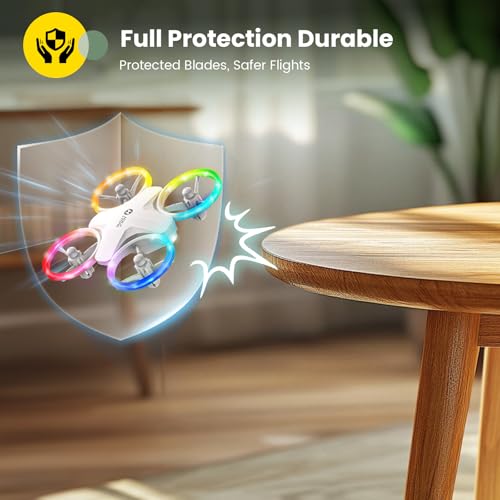
  • Includes propeller guards
    This drone has propeller guards, while the average drone does not. 33.3% of drones offer them.
  • Less restrictive EU class
    This drone is rated as C0 under the EU drone class system, while the average drone is rated as None.
    C0 vs None
  • 131 mm narrower width
    This drone is narrower than the average drone (110 mm vs 241 mm). The average drone width is 241 mm.
    110 mm vs 241 mm
  • 165 mm shorter body length
    This drone is shorter than the average drone (110 mm vs 275 mm). The average drone is 275 mm long.
    110 mm vs 275 mm
  • 37.5 mm lower body height
    This drone is shorter than the average drone (25 mm vs 62.5 mm). The average drone is 62.5 mm tall.
    25 mm vs 62.5 mm
  • 2 years newer release date
    This drone is newer than the average drone (2025 vs 2023). The average drone was released in 2023.
    2025 vs 2023
  • 5.71x cheaper
    Holy Stone HS180 is cheaper than the average drone (£35 vs £200).
    £35 vs £200
  • 2 years newer release date
    This drone is newer than the average drone (2025 vs 2023). The average drone was released in 2023.
    2025 vs 2023
  • Includes propeller guards
    This drone has propeller guards, while the average drone does not. 33.3% of drones offer them.
  • Less restrictive EU class
    This drone is rated as C0 under the EU drone class system, while the average drone is rated as None.
    C0 vs None
  • 87.8% lower weight
    This drone is lighter than the average drone (30 g vs 246 g). The average drone weighs 246 g.
    30 g vs 246 g
  • 30 min shorter charging time
    This drone charges faster than the average drone (60 min vs 90 min). The average drone charges in 90 min.
    60 min vs 90 min
  • 131 mm narrower width
    This drone is narrower than the average drone (110 mm vs 241 mm). The average drone width is 241 mm.
    110 mm vs 241 mm
  • 37.5 mm lower body height
    This drone is shorter than the average drone (25 mm vs 62.5 mm). The average drone is 62.5 mm tall.
    25 mm vs 62.5 mm
  • 165 mm shorter body length
    This drone is shorter than the average drone (110 mm vs 275 mm). The average drone is 275 mm long.
    110 mm vs 275 mm
  • Fewer GNSS systems
    This drone supports none GNSS systems, while the average drone supports GPS, GLONASS, Galileo, BeiDou.
    none vs GPS, GLONASS, Galileo, BeiDou
  • 13 min shorter flight time
    This drone offers shorter max flight time than the average drone (7 min vs 20 min). The average drone offers 20 min of max flight time.
    7 min vs 20 min
  • 10 m/s slower flight speed
    This drone reaches a lower max flight speed than the average drone (5 m/s vs 15 m/s). The average drone reaches 15 m/s.
    5 m/s vs 15 m/s
  • No subject tracking
    This drone cannot track subjects, while the average drone can.
  • No return-to-home (RTH)
    This drone does not support return-to-home (RTH), while the average drone does.
  • No GPS
    This drone does not have GPS, while the average drone does.
  • 1,980 mAh less battery capacity
    This drone has a smaller battery capacity than the average drone (220 mAh vs 2,200 mAh). The average drone battery has a capacity of 2,200 mAh.
    220 mAh vs 2,200 mAh
  • Fewer photo format options
    This drone supports none photo formats, while the average drone supports JPEG, DNG (RAW).
    none vs JPEG, DNG (RAW)
  • 7.4% lower list score
    List score
    7.5/ 10
    ✕
    What it is
    How often independent test sites, magazines and video reviewers put this model in their best-of lists for this category.
    How we count it
    Points: The model in the most lists of this category gets 10; the others get 8 to 10 in proportion. In no list yet: 7.5. Lists count 30% of the overall score.
    Enough data: Every list counts, even a single one. With fewer than 5 best-of lists in the category, this part is left out.
    Lists with this model (1)
    List score: in 1 of 97 lists (1%)
    7.5 vs 8.1
  • 5.2% worse value for money
    Holy Stone HS180 has worse value for money than the average drone (7.22 vs 7.6).
    7.22 vs 7.59
  • 5.1% lower review score
    Reviews score
    7.5/ 10
    ✕
    What it is
    Average grade from independent test sites, magazines and video reviewers, 1–10.
    How we count it
    Grades: Each review's own score is converted to 1–10; without one, we grade the review ourselves. Every review counts the same: written or video, short or full test.
    Score: The average grade is 80% of the review mark; the number of reviews is the other 20% (1 review = 5, the typical number in this category = 8, the most-reviewed model = 10).
    Enough data: With few reviews, the average grade is pulled toward the typical grade of this category. No reviews yet: 7.5 for now.
    Share: Reviews count 25% of the overall score.
    Score distribution
    ▼
    <55-66-77-88-99-10

    80%

    8.4

    Average grade

    20%

    6.2

    Popularity

    Grades by review (3)
    3 videos, average 9.0/10. We use 5 reviews; the 2 missing count as the category's typical 8.1: (9.0 × 3 + 8.1 × 2) ÷ 5 = 8.6. Reviews count 25% of the overall score.
    User ratings collected online are not part of this score.
    7.5 vs 7.9
  • 13 min shorter flight time
    This drone offers shorter max flight time than the average drone (7 min vs 20 min). The average drone offers 20 min of max flight time.
    7 min vs 20 min
  • 10 m/s slower flight speed
    This drone reaches a lower max flight speed than the average drone (5 m/s vs 15 m/s). The average drone reaches 15 m/s.
    5 m/s vs 15 m/s
  • 0.95 km shorter flight distance
    This drone has a shorter max flight distance than the average drone (0.1 km vs 1 km). The average drone can fly up to 1 km.
    0.05 km vs 1 km
  • Simpler motor design
    This drone uses brushed motors, while the average drone uses brushless motors.
    brushed vs brushless
  • Non-foldable design
    This drone does not have a foldable design, while the average drone does.
  • Fewer photo format options
    This drone supports none photo formats, while the average drone supports JPEG, DNG (RAW).
    none vs JPEG, DNG (RAW)
  • Fewer video codec options
    This drone supports none video codecs, while the average drone supports H.264/AVC.
    none vs H.264/AVC
  • No memory card slot
    This drone does not have a memory card slot, while the average drone does.
  • Fewer video format options
    This drone supports none video formats, while the average drone supports MP4.
    none vs MP4
  • More basic focus system
    This drone uses none for focusing, while the average drone uses fixed focus.
    none vs fixed focus
  • Fewer color profile options
    This drone supports none color profiles, while the average drone supports Normal.
    none vs Normal
  • 3 x lower digital zoom
    This drone offers less digital zoom than the average drone (0 x vs 3 x). The average drone offers 3 x of digital zoom.
    0 x vs 3 x
  • No 4K video
    This drone does not support 4K video, while the average drone does.
  • No CMOS sensor
    This drone does not have a CMOS sensor, while the average drone does.
  • 128 GB lower memory card limit
    This drone supports less external storage than the average drone (0 GB vs 128 GB). The average drone supports up to 128 GB of external storage.
    0 GB vs 128 GB
  • Fewer GNSS systems
    This drone supports none GNSS systems, while the average drone supports GPS, GLONASS, Galileo, BeiDou.
    none vs GPS, GLONASS, Galileo, BeiDou
  • No subject tracking
    This drone cannot track subjects, while the average drone can.
  • No return-to-home (RTH)
    This drone does not support return-to-home (RTH), while the average drone does.
  • No GPS
    This drone does not have GPS, while the average drone does.
  • No POI mode
    This drone does not support POI mode, while the average drone does.
  • 3 fewer flight modes
    This drone offers fewer intelligent flight modes than the average drone (1 vs 4). The average drone offers 4 intelligent flight modes.
    1 vs 4
  • No compass
    This drone does not have a compass, while the average drone does.
  • 88% higher takeoff weight
    This drone has a higher max takeoff weight than the average drone (30 g vs 249 g). The average drone has a max takeoff weight of 249 g.
    30 g vs 249 g
  • No beginner mode
    This drone does not support beginner mode, while the average drone does.
  • Fewer frequency bands
    This drone supports 2.4 GHz operating frequency bands, while the average drone supports 2.4 GHz, 5.8 GHz.
    2.4 GHz vs 2.4 GHz, 5.8 GHz
  • 0.95 km shorter transmission range
    This drone has a shorter max transmission distance than the average drone (0.1 km vs 1 km). The average drone reaches 1 km of transmission distance.
    0.05 km vs 1 km
  • Basic companion app
    This drone uses the None companion app, while the average drone uses HS FPV.
    None vs HS FPV
  • No wireless file transfer
    This drone does not support wireless file transfer, while the average drone does.
  • 1,980 mAh less battery capacity
    This drone has a smaller battery capacity than the average drone (220 mAh vs 2,200 mAh). The average drone battery has a capacity of 2,200 mAh.
    220 mAh vs 2,200 mAh
  • 16.37 Wh less battery energy
    This drone has lower battery energy than the average drone (0.8 Wh vs 17.18 Wh). The average drone battery has 17.18 Wh of energy.
    0.814 Wh vs 17.18 Wh

Video reviews

Hands-on testing, unboxing, and real-world video evaluations

9.0
Quadcopter 101
≈ estimated
23/03/2026
Hands-on review · outdoor and indoor flight tests
Verdict
Holy Stone HS180 is a good drone for learning, but flips can burn out its motors and higher wind makes it hard to control.
9.0
Open Circuit RC & Tech
≈ estimated
10/12/2025
Hands-on review · indoor flights, light modes and battery use
Verdict
Holy Stone HS180 is a small, stable and fun indoor flyer, though it drifts easily and has no position hold.
9.0
AlToneRC-RTR
≈ estimated
20/12/2025
First look · unboxing and feature walkthrough
Verdict
Holy Stone HS180 is a solid practice drone, especially for the price.
8.0
Circling the Drone
≈ estimated
12/12/2025
First impressions · unboxing and first flight
Verdict
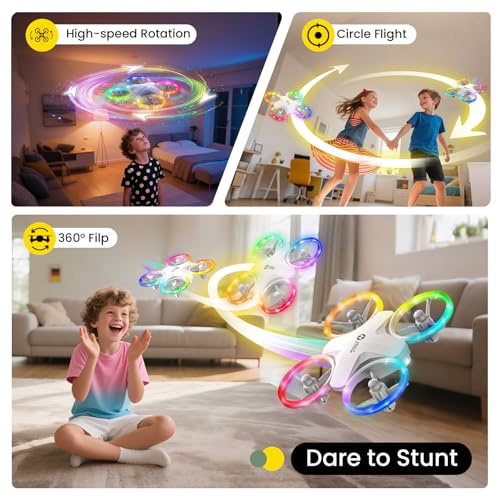
Holy Stone HS180 is a fun, beginner-friendly drone for kids, with vivid lights and 360 flips.
Hands-on video, no verdict

Third-party reviews

What customers like about Holy Stone HS180

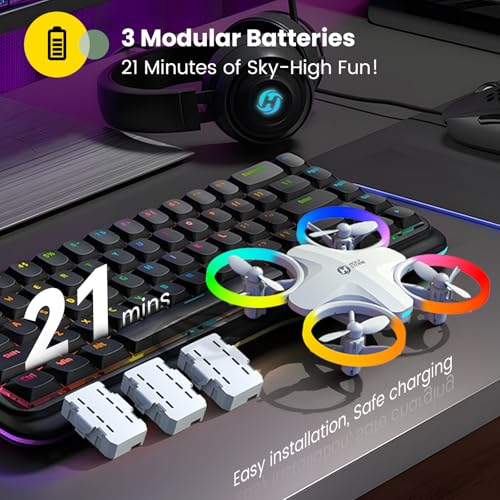
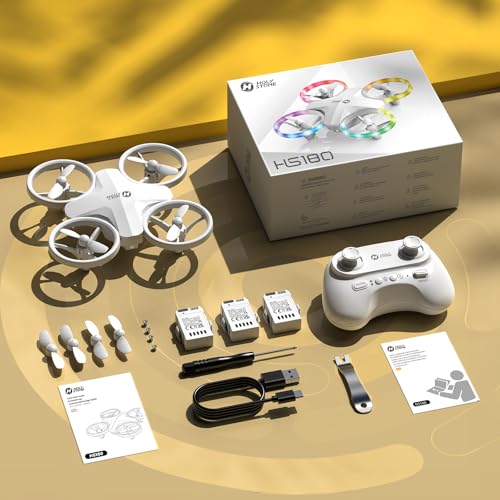
  • Three batteries included for longer play sessions
  • About seven minutes of flight per battery
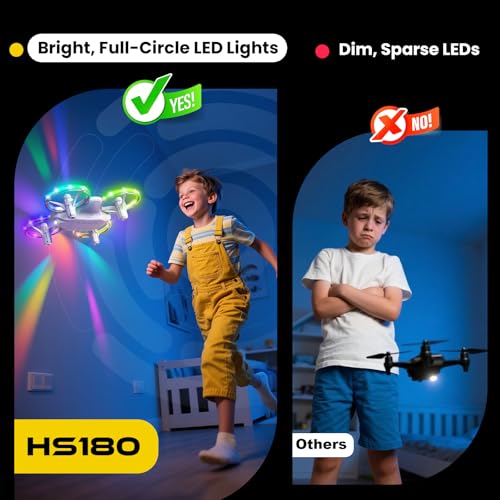
  • LED lights that children enjoy
  • Headless mode keeps steering simple
  • No app or phone needed

What customers don't like about Holy Stone HS180

  • No camera
  • No GPS or return-to-home
  • Brushed motors wear out sooner
  • Best kept indoors or on calm days

Verdict

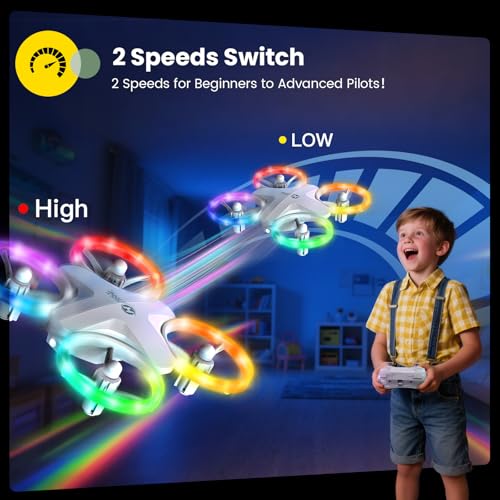
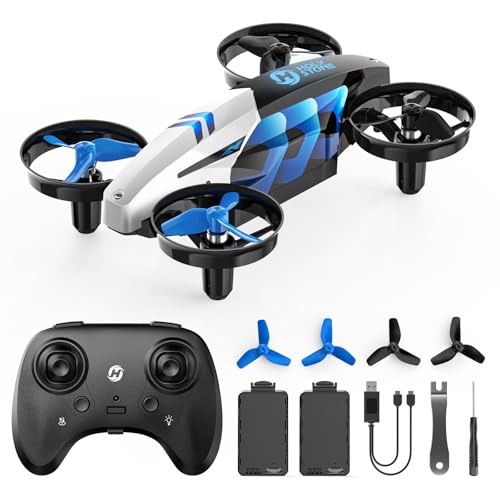
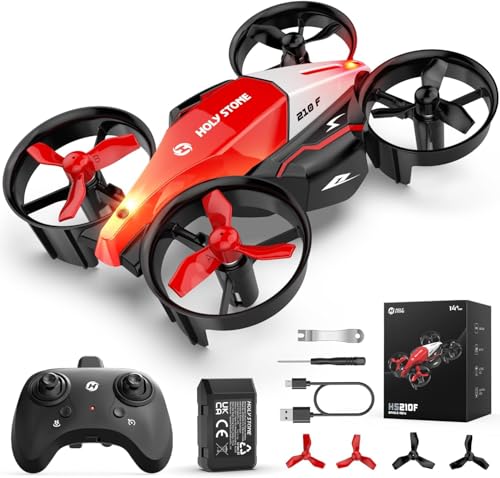
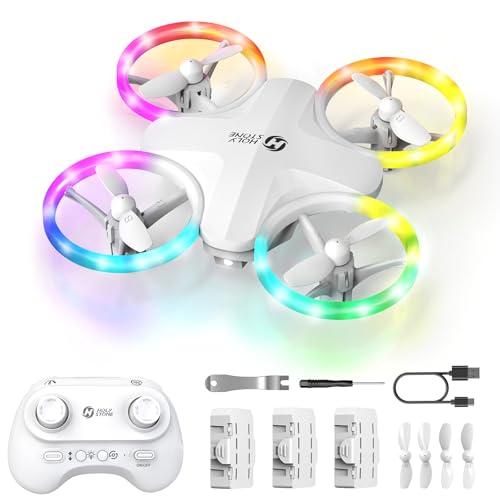
The Holy Stone HS180 is a simple mini drone made for children aged around six to twelve. It skips the camera and app entirely and focuses on what young pilots enjoy most: flips, fast turns and glowing LED lights. The set comes with three batteries, and each gives roughly seven minutes in the air, so a single session can last more than twenty minutes with swaps. Headless mode means the drone moves the way the stick points regardless of its orientation, which keeps frustration low for first-time flyers. Brushed motors keep the price down but wear out sooner than brushless designs, and the small size makes it best for indoor rooms or very calm days outside. There is no GPS or return-to-home. For a fun, low-cost introduction to flying, it covers the essentials and little more.

Compare Holy Stone HS180 with other drones

1Product to compare no. 1
VS
2Product to compare no. 2
VS
3Product to compare no. 3 (optional)

Graphic comparison of Holy Stone HS180 and other drones

No results found