Scored using Vacuum Cleaners Methodology v3.0
Vacuum Cleaners Methodology v3.0
Mathematical & Unbiased Scoring
Products in this category are scored under Frontum Vacuum Cleaners Methodology v3.0: the technical score from the specifications is the base, and independent expert and video reviews (up to ±0.5 points), owner opinions (up to ±0.3) and best-of lists (up to +0.3) move it up or down.
Explore Vacuum Cleaners Methodology v3.0

Makita DCL182Z review: 53 specs compared

Avg. price:~£45Suction power (AW):30 AWBattery runtime:66 minutesCapacity:0.5 LWeight:1.3 kg

Makita DCL182Z Review: Compare 53 technical specifications and 2 expert and video reviews to see how this product ranks in the Vacuum Cleaners category and whether it is worth buying.
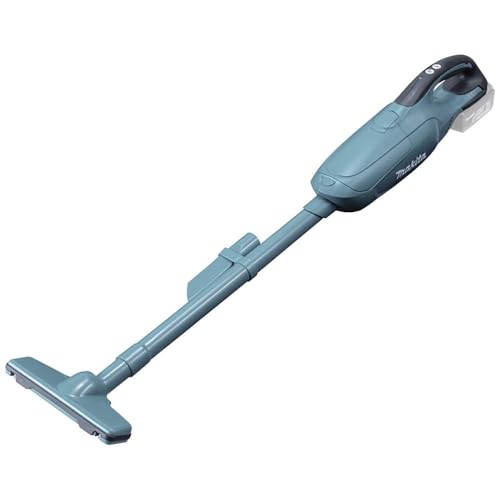
Makita DCL182Z
6.7/10

Overall score

Score
6.7/ 10
✕
What it is
Our main score for this model, 1–10. It combines specs, expert reviews, best-of lists and owners.
How we count it
Parts: Technical score 50%, Reviews score 25%, List score 20%, Sentiment score 5%
Marks: Each part gets a mark out of 10. For reviews, lists and owners, a typical model in this category gets about 8 and the best one gets 10.
No data yet: A part with no data shows "?". It counts as the mark of a weaker model in this category (4 in 5 models with data score higher). This way, models with reviews, lists and owners usually come out ahead.
Score distribution
<55-66-77-88-99-10
Score components

50%

5.9

Technical score

25%

7.9

Reviews score

20%

?

List scoreNot enough data yet, so we use 7.5, the mark of a weaker model in this category

5%

?

Sentiment scoreNot enough data yet, so we use 5.9, the mark of a weaker model in this category

â–¼Worse than 81% of vacuum cleaners
7.7

Value for money

Value for money
7.7/ 10
✕
What it is
An indicator that combines the vacuum cleaner's overall score with its price.
When it matters
When you are looking for a vacuum cleaner with a good balance between quality and price.
Score distribution
<55-66-77-88-99-10
Score components

70%

6.7

Overall score

30%

10

Price

â–¼Worse than 76%
5.9

Technical score

Technical score
5.9/ 10
✕
What it is
How good the specs are compared with the other models in this category, 1–10.
How we count it
Areas: We rate the specs in each area against the other models in this category.
Weighting: The areas that matter most to buyers count more. The shares are shown under Score components.
Share: The technical score is 50% of the overall score.
Score distribution
<55-66-77-88-99-10
Score components

28%

3.7

Performance

22%

8.9

Battery

18%

6.2

Filtration

14%

4.6

Attachments

10%

7.9

Design

8%

4.0

Smart features

â–¼Worse than 89%
7.9

Reviews score

Reviews score
7.9/ 10
✕
What it is
Average grade from independent test sites, magazines and video reviewers, 1–10.
How we count it
Grades: Each review's own score is converted to 1–10; without one, we grade the review ourselves. Big test sites count more, short reviews half as much as full tests. A video review counts half.
Score: The average grade is 80% of the review mark; the number of reviews is the other 20% (1 review = 5, the typical number in this category = 8, the most-reviewed model = 10).
Enough data: With few reviews, the average grade is pulled toward the typical grade of this category. No reviews yet: 7.4 for now.
Share: Reviews count 25% of the overall score.
Score distribution
<55-66-77-88-99-10

80%

8.2

Average grade

20%

6.9

Popularity

Grades by review (2)
2 video reviews, each counting half as much as a written test. Reviews count 25% of the overall score.
User ratings collected online are not part of this score.
â–²Better than 50%
?

Sentiment score

Sentiment score
5.9/ 10
✕
What it is
How positive owners are about this model in their comments under video reviews and on forums. We read each comment, keep only people who say they own the model, and sort them into positive, mixed or negative.
How we count it
Score: We compare how satisfied this model’s owners are with the other models in this category: the typical model gets 8, the most satisfied tenth 10, the least satisfied 4. This is 80% of the owner mark; the number of owners is the other 20%.
Enough data: A model counts with 10+ owners from 4+ different discussions. With fewer, the owner part changes nothing.
Share: Owners count 5% of the overall score (left out in categories where fewer than 10 models have enough owner comments).
Score distribution
<55-66-77-88-99-10
Owners (2)
Not enough owner comments yet (10+ owners from 4+ discussions needed), so the owner part changes nothing.
Our own analysis of online owner opinions, not a rating from any website.
Not enough owner comments yet
?

List score

List score
7.5/ 10
✕
What it is
How often independent test sites, magazines and video reviewers put this model in their best-of lists for this category.
How we count it
Points: The model in the most lists of this category gets 10; the others get 8 to 10 in proportion. In no list yet: 7.5. Lists count 20% of the overall score.
Enough data: Every list counts, even a single one. With fewer than 10 best-of lists in the category, this part is left out.
Lists with this model (0)
Not in any best-of list yet, so this part counts as 7.5. Models in a list get 8 to 10.
Not in any best-of list yet
  • makita-dcl182z
  • makita-dcl182z
makita-dcl182z
makita-dcl182z
Where to buy
*As an Amazon Associate, we earn from qualifying purchases.
Loading...
Loading category ranking...

Technical Specifications of vacuum cleaner Makita DCL182Z

Technical score
Technical score
5.9/ 10
✕
What it is
How good the specs are compared with the other models in this category, 1–10.
How we count it
Areas: We rate the specs in each area against the other models in this category.
Weighting: The areas that matter most to buyers count more. The shares are shown under Score components.
Share: The technical score is 50% of the overall score.
Score distribution
<55-66-77-88-99-10
Score components:

28%

3.7

Performance

22%

8.9

Battery

18%

6.2

Filtration

14%

4.6

Attachments

10%

7.9

Design

8%

4.0

Smart features

5.9
Reviews score
7.9
Sentiment score
?
List score
?
Value for money
Value for money
7.7/ 10
✕
What it is
An indicator that combines the vacuum cleaner's overall score with its price.
When it matters
When you are looking for a vacuum cleaner with a good balance between quality and price.
Score distribution
<55-66-77-88-99-10
Score components:

70%

6.7

Overall score

30%

10

Price

7.7
Suction power (AW)
30 AW
This vacuum cleaner has a suction power of 30 AW, which is lower than that of 90.6% of vacuum cleaners and equal to that of 1.7% of vacuum cleaners.
Suction power (kPa)
3.6 kPa
This vacuum cleaner has a suction pressure of 3.6 kPa, which is lower than that of 99.6% of vacuum cleaners and equal to that of 0.2% of vacuum cleaners.
Airflow
23.33 L/s
This vacuum cleaner delivers 23.33 L/s airflow, which is lower than that of 70.7% of vacuum cleaners and equal to that of 0.5% of vacuum cleaners.
Motor type
brushed
Power consumption
30 W
This vacuum cleaner draws 30 W, which is lower than the power consumption of 99.6% of vacuum cleaners and equal to that of 0.1% of vacuum cleaners.
Show more
Cordless
yes
This vacuum cleaner works cordlessly. 51.2% of vacuum cleaners offer cordless operation.
Battery runtime
66 minutes
This vacuum cleaner offers a battery runtime of 66 minutes, which is longer than that of 83.3% of vacuum cleaners.
Charging time
?
Battery capacity
3,000 mAh
This vacuum cleaner has a battery capacity of 3,000 mAh, which is larger than that of 73.9% of vacuum cleaners and equal to that of 4.8% of vacuum cleaners.
Battery voltage
18 V
This vacuum cleaner uses a battery voltage of 18 V, which is lower than that of 74.7% of vacuum cleaners and equal to that of 14.9% of vacuum cleaners.
Show more
Filter class
hepa
This vacuum cleaner uses filter class hepa, which is more advanced than the class used by 17.5% of vacuum cleaners and the same as the class used by 51.8% of vacuum cleaners.
Minimum overall efficiency
99.97%
This vacuum cleaner reaches 99.97% minimum overall efficiency, which is higher than that of 60% of vacuum cleaners and equal to that of 19.4% of vacuum cleaners.
Suitable for allergy sufferers
no
This vacuum cleaner is not suitable for allergy sufferers. 83.3% of vacuum cleaners are allergy-friendly.
Capacity
0.5 L
This vacuum cleaner has a dust capacity of 0.5 L, which is smaller than that of 76.5% of vacuum cleaners and equal to that of 7.8% of vacuum cleaners.
Bagless
no
This vacuum cleaner does not use a bagless design. 78.8% of vacuum cleaners use this setup.
Show more
Main brush type
classic
Roller type
none
Anti-tangle brush
no
This vacuum cleaner does not include an anti-tangle brush. 30% of vacuum cleaners include this feature.
Mini motorized brush
no
This vacuum cleaner does not include a mini motorized brush. 25.4% of vacuum cleaners include this attachment.
Suitable for pet owners
no
This vacuum cleaner is not suitable for pet owners. 75% of vacuum cleaners handle pet hair well.
Show more
Vacuum type
stick
Weight
1.3 kg
This vacuum cleaner weighs 1.3 kg, which is lower than the weight of 97.8% of vacuum cleaners and equal to that of 0.3% of vacuum cleaners.
2-in-1 design
yes
This vacuum cleaner offers a 2-in-1 design. 51.6% of vacuum cleaners offer this flexible format.
Self-standing
no
This vacuum cleaner does not stand on its own. 19.5% of vacuum cleaners offer this convenience.
Adjustable tube height
no
This vacuum cleaner does not include adjustable tube height. 46.1% of vacuum cleaners offer this ergonomic feature.
Show more
Auto suction adjustment
no
This vacuum cleaner does not support automatic suction adjustment. 22.3% of vacuum cleaners support this feature.
Dust particle sensor
no
This vacuum cleaner does not include a dust particle sensor. 9.5% of vacuum cleaners include this feature.
LED display
no
This vacuum cleaner does not include an LED display. 25.7% of vacuum cleaners include this interface feature.
Nozzle light
no
This vacuum cleaner does not include a nozzle light. 42.7% of vacuum cleaners include this visibility feature.
Mopping support
no
This vacuum cleaner does not support mopping. 8.4% of vacuum cleaners support this multi-function feature.

Makita DCL182Z vs the average vacuum cleaner

246810TotalPerformanceBatteryFiltrationAttachmentsDesignSmart features
  • 16 minutes longer runtime
    This vacuum cleaner offers longer battery runtime than the average vacuum cleaner (66 minutes vs 50 minutes).
    66 minutes vs 50 minutes
  • 64.9% lower weight
    This vacuum cleaner is lighter than the average vacuum cleaner (1.3 kg vs 3.7 kg).
    1.3 kg vs 3.7 kg
  • 550 W lower power consumption
    This vacuum cleaner draws less power than the average vacuum cleaner (30 W vs 580 W).
    30 W vs 580 W
  • 21 minutes longer turbo runtime
    This vacuum cleaner offers longer turbo runtime than the average vacuum cleaner (33 minutes vs 12 minutes).
    33 minutes vs 12 minutes
  • Quieter operation
    This vacuum cleaner is quieter than the average vacuum cleaner (71-71 dB vs 77-77 dB).
    71-71 dB vs 77-77 dB
  • 500 mAh larger battery capacity
    This vacuum cleaner has a larger battery capacity than the average vacuum cleaner (3,000 mAh vs 2,500 mAh).
    3,000 mAh vs 2,500 mAh
  • Includes removable battery
    This vacuum cleaner includes a removable battery, the average vacuum cleaner does not.
  • Includes wall bracket
    This vacuum cleaner includes a wall-mounted bracket, the average vacuum cleaner does not.
  • 3.11x cheaper
    Makita DCL182Z is cheaper than the average vacuum cleaner (£45 vs £140).
    £45 vs £140
  • 550 W lower power consumption
    This vacuum cleaner draws less power than the average vacuum cleaner (30 W vs 580 W).
    30 W vs 580 W
  • Quieter operation
    This vacuum cleaner is quieter than the average vacuum cleaner (71-71 dB vs 77-77 dB).
    71-71 dB vs 77-77 dB
  • 16 minutes longer runtime
    This vacuum cleaner offers longer battery runtime than the average vacuum cleaner (66 minutes vs 50 minutes).
    66 minutes vs 50 minutes
  • 21 minutes longer turbo runtime
    This vacuum cleaner offers longer turbo runtime than the average vacuum cleaner (33 minutes vs 12 minutes).
    33 minutes vs 12 minutes
  • 500 mAh larger battery capacity
    This vacuum cleaner has a larger battery capacity than the average vacuum cleaner (3,000 mAh vs 2,500 mAh).
    3,000 mAh vs 2,500 mAh
  • Includes removable battery
    This vacuum cleaner includes a removable battery, the average vacuum cleaner does not.
  • 0.02 % higher filtration efficiency
    This vacuum cleaner has higher filtration efficiency than the average vacuum cleaner (100 % vs 99.95 %).
    99.97 % vs 99.95 %
  • 64.9% lower weight
    This vacuum cleaner is lighter than the average vacuum cleaner (1.3 kg vs 3.7 kg).
    1.3 kg vs 3.7 kg
  • Includes wall bracket
    This vacuum cleaner includes a wall-mounted bracket, the average vacuum cleaner does not.
  • 151 mm narrower body
    This vacuum cleaner is narrower than the average vacuum cleaner (115 mm vs 266 mm).
    115 mm vs 266 mm
  • 117 mm shallower body
    This vacuum cleaner is less deep than the average vacuum cleaner (151 mm vs 268 mm).
    151 mm vs 268 mm
  • 16.4 kPa lower suction pressure
    This vacuum cleaner has lower suction pressure than the average vacuum cleaner (3.6 kPa vs 20 kPa).
    3.6 kPa vs 20 kPa
  • 120 AW lower suction power
    This vacuum cleaner has lower suction power than the average vacuum cleaner (30 AW vs 150 AW).
    30 AW vs 150 AW
  • Not pet-hair friendly
    This vacuum cleaner is not suitable for pet owners, the average vacuum cleaner is.
  • 0.4 L smaller dust container
    This vacuum cleaner has a smaller dust capacity than the average vacuum cleaner (0.5 L vs 0.9 L).
    0.5 L vs 0.9 L
  • Not allergy-friendly
    This vacuum cleaner is not suitable for allergy sufferers, the average vacuum cleaner is.
  • No bagless design
    This vacuum cleaner does not use a bagless design, the average vacuum cleaner does.
  • No cyclonic technology
    This vacuum cleaner does not use cyclonic technology, the average vacuum cleaner does.
  • No upholstery nozzle
    This vacuum cleaner does not include an upholstery nozzle, the average vacuum cleaner does.
  • 1.4% worse value for money
    Makita DCL182Z offers worse value for money than the average vacuum cleaner (7.7 vs 7.8).
    7.7 vs 7.81
  • 16.4 kPa lower suction pressure
    This vacuum cleaner has lower suction pressure than the average vacuum cleaner (3.6 kPa vs 20 kPa).
    3.6 kPa vs 20 kPa
  • 120 AW lower suction power
    This vacuum cleaner has lower suction power than the average vacuum cleaner (30 AW vs 150 AW).
    30 AW vs 150 AW
  • No cyclonic technology
    This vacuum cleaner does not use cyclonic technology, the average vacuum cleaner does.
  • 35 mm narrower cleaning path
    This vacuum cleaner has a narrower cleaning path than the average vacuum cleaner (225 mm vs 260 mm).
    225 mm vs 260 mm
  • Older release date
    This vacuum cleaner has an older release date than the average vacuum cleaner (2014 vs 2021).
    2014 vs 2021
  • 4 V lower voltage
    This vacuum cleaner has a lower battery voltage than the average vacuum cleaner (18 V vs 22 V).
    18 V vs 22 V
  • 0.4 L smaller dust container
    This vacuum cleaner has a smaller dust capacity than the average vacuum cleaner (0.5 L vs 0.9 L).
    0.5 L vs 0.9 L
  • Not allergy-friendly
    This vacuum cleaner is not suitable for allergy sufferers, the average vacuum cleaner is.
  • No bagless design
    This vacuum cleaner does not use a bagless design, the average vacuum cleaner does.
  • Not pet-hair friendly
    This vacuum cleaner is not suitable for pet owners, the average vacuum cleaner is.
  • No upholstery nozzle
    This vacuum cleaner does not include an upholstery nozzle, the average vacuum cleaner does.
  • No soft dusting brush
    This vacuum cleaner does not include a soft dusting brush, the average vacuum cleaner does.

Video reviews

Hands-on testing, unboxing, and real-world video evaluations

8.0
Ultra Value Tech
≈ estimated
21/05/2024
Long-term use · about one year of workshop and car cleaning
Verdict
Makita DCL182Z is underpowered with a small bin, but it is compact and cheap, making it a good pick for quick jobs.

Third-party reviews

What customers like about Makita DCL182Z

  • Lightweight and highly portable, making it easy to carry around and maneuver
  • Excellent value for money, especially for users who already own compatible Makita 18V LXT batteries
  • Great for light cleaning, small spaces, stairs, motorhomes, and vehicle interiors
  • Features a robust, high-quality, and sturdy build typical of the Makita brand
  • Offers two electronic suction modes (High/Low) that are easily controlled via push-buttons
  • Compatible with both eco-friendly reusable cloth bags and disposable paper bags

What customers don't like about Makita DCL182Z

  • Suction power is mixed; some users feel it is too weak for heavy-duty household cleaning or thick carpets
  • The dust bag capacity is very small, requiring frequent emptying and cleaning
  • It is sold as a bare unit ('Z' model), meaning batteries and a charger must be purchased separately
  • Can be quite noisy, especially when operating on the highest suction setting

Verdict

The Makita DCL182Z is a compact 18V LXT cordless stick vacuum featuring a two-stage suction system with high (30W) and low (11W) power settings, delivering a maximum sealed suction of 5.4 kPa and an airflow of 1.0 m³/min. Weighing just 1.3 kg, it offers a 500 ml cloth bag or 330 ml paper bag capacity and provides approximately 20 to 40 minutes of continuous runtime on a 3.0Ah battery. Key pros include its lightweight portability, low 71 dB noise level for quiet operation, and compatibility with the broad Makita 18V battery ecosystem. However, it is primarily designed for hard floors and light debris, as it lacks a rotating brush roll for deep carpet cleaning and is sold as a bare tool without a battery or charger.

Compare Makita DCL182Z with other vacuum cleaners

1Product to compare no. 1
VS
2Product to compare no. 2
VS
3Product to compare no. 3 (optional)

Graphic comparison of Makita DCL182Z and other vacuum cleaners

No results found