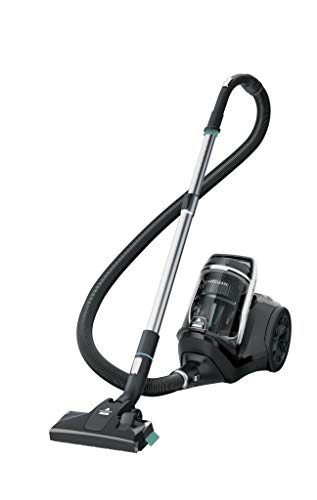

When should you consider buying a 2000 W vacuum?
Consider buying a 2000 W vacuum when you often clean large carpeted areas, embedded debris or pet hair and prefer continuous corded operation over battery runtime. A high-input motor can support sustained airflow during long sessions, but useful pickup still depends on the floorhead, seals and filter condition.
A 2000 W machine is less attractive for quick daily cleaning, frequent stair carrying or homes where storage and electricity use matter more than sustained corded performance. Check local availability as well, because regional efficiency rules and model variants can produce different power ratings under the same family name.

Does a 2000 W motor mean stronger suction?
A 2000 W motor does not automatically mean stronger suction because watts measure electrical input, not cleaning output. Air watts combine pressure and airflow into an output figure, while kilopascals measure pressure and litres per second measure airflow; only like-for-like figures measured under similar conditions should be compared.
As a practical reference, a 2000 W vacuum may publish roughly 200–250 AW, but the floorhead determines how effectively that output reaches carpet or hard flooring. Brush agitation, head sealing, air leaks and a loaded filter can create a larger real-world difference than a few hundred watts of motor input.
Power use is easier to calculate: a machine drawing 2000 W continuously consumes 2 kWh in one hour or about 1 kWh in 30 minutes. Lower settings may reduce consumption, so variable suction control is useful for curtains, rugs and hard floors as well as for electricity use.
Which floors and cleaning tasks suit a 2000 W vacuum?
A 2000 W vacuum is best suited to longer whole-home sessions, carpet, rugs, pet hair and heavier debris when it has a powered brush roll or an adjustable high-flow floorhead. A cleaning path around 250–300 mm, a 2–4 L container and an 8–10 m cable can reduce interruptions in larger rooms, although these dimensions should be balanced against storage space and carrying weight.
On hard floors, high input power is useful only when the head maintains airflow without scattering debris or clamping itself to the surface. Look for suction control, a brush-roll switch or a dedicated hard-floor head, and use a soft approved tool on delicate parquet; upholstery and crevice tools matter more than motor wattage for sofas, mattresses, stairs and edges.
How much do 2000 W vacuums cost?
The price of a 2000 W vacuum depends more on construction, floorheads, filtration and the accessory package than on the motor rating itself. Prices also vary by market and package, so current offers should be compared instead of assuming that all 2000 W models occupy one price tier.
Compare the final delivered price with the cost and availability of filters, bags where applicable, brush rolls and hoses. Also confirm the exact regional model number: two vacuums sharing a family name can have different motor ratings and included tools, making a cheaper listing a different specification rather than a better deal.
What should you check before buying a 2000 W vacuum?
You should check the following factors before buying a 2000 W vacuum:
- Exact power rating: Confirm that the rating plate and regional product sheet state 2000 W rather than relying on a shared family name. Different markets can sell visually similar variants with lower input ratings or different accessory packages.
- Suction and airflow: For general mixed-floor cleaning, aim for at least about 150 AW when air watts are measured comparably; around 200–250 AW gives more headroom for deep carpet and pet hair. If only pressure or airflow is published, about 20 kPa or 30 L/s is a useful starting target, but these metrics are not interchangeable and the 2000 W input rating cannot replace them.
- Floorhead design and width: A cleaning path around 250–300 mm balances room coverage with movement around furniture; choose the narrower end for smaller rooms and the wider end for open carpet. For carpet and pet hair, look for a powered removable brush roll, while delicate hard floors need suction control, a brush-roll switch or a dedicated soft head.
- Reach and capacity: A cable around 8–10 m and a container around 2–4 L can suit longer whole-home sessions with fewer socket changes or emptying stops. Also compare hose length, telescopic-tube adjustment, operating radius and the space required to store the complete machine.
- Filtration and noise: Prefer a sealed filter path and verify whether filters are washable or replaceable, particularly for allergy-sensitive homes. Aim for about 75 dB or below in normal mode when quieter operation matters; 80 dB or more is noticeably loud during a long session.
- Weight and controls: If the vacuum will be carried between floors, aim for roughly 7 kg or less; a machine above about 8 kg needs an excellent carrying handle and smooth wheels to remain manageable. Variable suction is also essential because full power can make rugs or curtains difficult to clean and consumes more electricity.
- Ownership cost: At full draw, 2000 W equals 2 kWh per hour, so calculate electricity cost from your local tariff and expected cleaning time. Add replacement filters, bags if used, brush rolls, hoses and warranty support before comparing long-term value.