Scored using Tablets Methodology v3.0
Tablets Methodology v3.0
Mathematical & Unbiased Scoring
Products in this category are scored under Frontum Tablets Methodology v3.0: the technical score from the specifications is the base, and independent expert and video reviews (up to ±0.5 points), owner opinions (up to ±0.3) and best-of lists (up to +0.3) move it up or down.
Explore Tablets Methodology v3.0

Microsoft Surface 2 4G (2GB + 64GB) review: 168 specs compared

Avg. price:~£480RAM capacity:2 GBInternal storage:64 GBScreen size:10.6 inchesChipset:Nvidia Tegra 4

Microsoft Surface 2 4G (2GB + 64GB) Review: Compare 168 technical specifications and 15 expert and video reviews to see how this product ranks in the Tablets category and whether it is worth buying.
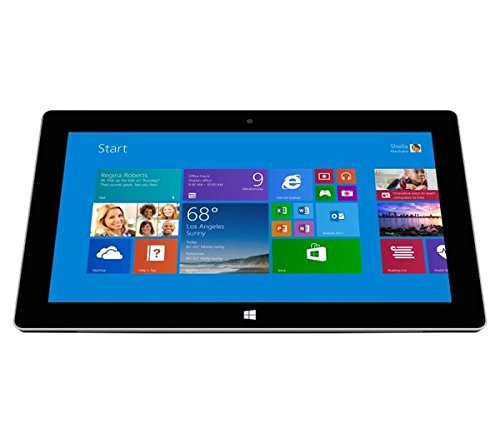
Microsoft Surface 2 4G (2GB + 64GB)
7.1/10

Overall score

Score
7.1/ 10
✕
What it is
Our main score for this model, 1–10. It combines specs, best-of lists, expert reviews and owners.
How we count it
Parts: Technical score 35%, List score 30%, Reviews score 25%, Sentiment score 10%
Marks: Each part gets a mark out of 10. For reviews, lists and owners, a typical model in this category gets about 8 and the best one gets 10.
No data yet: A part with no data shows "?". It counts as the mark of a weaker model in this category (4 in 5 models with data score higher). This way, models with reviews, lists and owners usually come out ahead.
Score distribution
â–¼
<55-66-77-88-99-10
Score components

35%

5.8

Technical score

30%

?

List scoreNot enough data yet, so we use 7.5, the mark of a weaker model in this category

25%

7.8

Reviews score

10%

8.6

Sentiment score

â–²Better than 55% of tablets
7.4

Value for money

Value for money
7.4/ 10
✕
What it is
An indicator that combines the tablet's overall rating with its cost.
When it matters
When you are looking for a tablet with a good balance between quality and price.
Score distribution
â–¼
<55-66-77-88-99-10
Score components

70%

7.1

Overall score

30%

8.0

Price

â–¼Worse than 62%
5.8

Technical score

Technical score
5.8/ 10
✕
What it is
How good the specs are compared with the other models in this category, 1–10.
How we count it
Areas: We rate the specs in each area against the other models in this category.
Weighting: The areas that matter most to buyers count more. The shares are shown under Score components.
Share: The technical score is 35% of the overall score.
Score distribution
â–¼
<55-66-77-88-99-10
Score components

22%

5.0

Performance

20%

5.6

Display

16%

6.1

Camera

14%

6.0

Battery

12%

6.6

Connectivity

8%

6.4

Software

5%

5.0

Design

3%

5.7

Audio

â–¼Worse than 61%
7.8

Reviews score

Reviews score
7.8/ 10
✕
What it is
Average grade from independent test sites, magazines and video reviewers, 1–10.
How we count it
Grades: Each review's own score is converted to 1–10; without one, we grade the review ourselves. Big test sites count more, short reviews half as much as full tests. A video review counts half.
Score: The average grade is 80% of the review mark; the number of reviews is the other 20% (1 review = 5, the typical number in this category = 8, the most-reviewed model = 10).
Enough data: With few reviews, the average grade is pulled toward the typical grade of this category. No reviews yet: 7.4 for now.
Share: Reviews count 25% of the overall score.
Score distribution
â–¼
<55-66-77-88-99-10

80%

7.8

Average grade

20%

8.1

Popularity

Grades by review (15)
13 reviews: 7 with a printed score, 6 estimated from the review. 2 video reviews, each counting half as much as a written test. Reviews count 25% of the overall score.
User ratings collected online are not part of this score.
â–¼Worse than 51%
?

List score

List score
7.5/ 10
✕
What it is
How often independent test sites, magazines and video reviewers put this model in their best-of lists for this category.
How we count it
Points: The model in the most lists of this category gets 10; the others get 8 to 10 in proportion. In no list yet: 7.5. Lists count 30% of the overall score.
Enough data: Every list counts, even a single one. With fewer than 5 best-of lists in the category, this part is left out.
Lists with this model (0)
Not in any best-of list yet, so this part counts as 7.5. Models in a list get 8 to 10.
Not in any best-of list yet
  • microsoft-surface-2-2gb-64gb-4g
microsoft-surface-2-2gb-64gb-4g
Where to buy
    N/A~ £480
Best rankings
Available: ranking among products currently available (including other versions of this product).All: ranking among all products in the database.

What reviewers say about the Microsoft Surface 2 4G (2GB + 64GB)

Based on 13 · 3

Reviewers love the display, kickstand and speed, but dislike the limited apps and Windows experience plus the bulky size and weight.
Praised
Mixed views
Criticised
Pick a topic to see who said what

What owners say about the Microsoft Surface 2 4G (2GB + 64GB)

Based on 101 owners sharing their experience in online comments

60%positive7%mixed33%negative

Owners praise its sharp screen, Office and speed, while the thin app selection and Windows RT limits frustrate many.

What owners dislike

  • Too few apps and missing popular services21
  • It cannot install regular Windows desktop programs, so owners can only use apps from the Windows Store.8
  • Owners report random freezes, crashes and unexpected shutdowns, and some say the screen backlight bleeds and the device turns off by itself.6
  • Some owners get a "plugged in, not charging" fault, and the battery drains quickly or wears out after about two years.5
  • It feels awkward to hold like a tablet because of its 16:9 shape and wide body, and some owners find it more like a laptop.4
  • Owners say it cannot be upgraded, and its low-power hardware feels outdated after a year or two.3
  • Storage fills up quickly, causing update failures and errors, and owners cannot easily add space or upgrade it.3
  • Poor sound and unreliable volume controls3

Points mentioned by at least 3 owners, most mentioned first.

Loading...
Loading category ranking...

Technical Specifications of tablet Microsoft Surface 2 4G (2GB + 64GB)

Technical score
Technical score
5.8/ 10
✕
What it is
How good the specs are compared with the other models in this category, 1–10.
How we count it
Areas: We rate the specs in each area against the other models in this category.
Weighting: The areas that matter most to buyers count more. The shares are shown under Score components.
Share: The technical score is 35% of the overall score.
Score distribution
â–¼
<55-66-77-88-99-10
Score components:

22%

5.0

Performance

20%

5.6

Display

16%

6.1

Camera

14%

6.0

Battery

12%

6.6

Connectivity

8%

6.4

Software

5%

5.0

Design

3%

5.7

Audio

5.8
Reviews score
7.8
List score
?
Value for money
Value for money
7.4/ 10
✕
What it is
An indicator that combines the tablet's overall rating with its cost.
When it matters
When you are looking for a tablet with a good balance between quality and price.
Score distribution
â–¼
<55-66-77-88-99-10
Score components:

70%

7.1

Overall score

30%

8.0

Price

7.4
RAM capacity
2 GB
This tablet has 2 GB of RAM, which is less than 61.3% of tablets and equal to 15.5% of tablets.
Process node
28 nm
This tablet is built on a 28 nm process, which is larger than 65.1% of tablets and equal to 17.6% of tablets.
Internal storage
64 GB
This tablet has 64 GB of internal storage, which is more than 39.1% of tablets and equal to 17% of tablets.
Geekbench 6 single-core score
?
Chipset
Nvidia Tegra 4
This tablet runs on Nvidia Tegra 4, which is less advanced than 64% of tablets and equal to 0.8% of tablets.
Show more
What reviewers say
Screen resolution
1920×1080
This tablet has a 1920×1080 screen, which is less sharp than 61.1% of tablets and equal to 2.6% of tablets.
Refresh rate
60 Hz
This tablet has a 60 Hz screen, which is smoother than 0.1% of tablets and equal to 73.4% of tablets.
Display type
LCD
This tablet uses a LCD display type. 83.1% of tablets use this display technology.
Pixel density
208 ppi
This tablet has a pixel density of 208 ppi, which is lower than 58.4% of tablets and equal to 0.3% of tablets.
Display glass type
Corning Gorilla Glass 3
This tablet protects its screen with Corning Gorilla Glass 3, which is more durable than 80.2% of tablets and the same as 11.2% of tablets.
Show more
What reviewers say
Optical image stabilization
no
This tablet does not support optical stabilisation. 0.4% of tablets offer this.
Main camera megapixels
?
Front camera megapixels
3.5 MP
This tablet has a front camera with 3.5 MP resolution, which is lower than 51.4% of tablets and equal to 0.2% of tablets.
Main camera aperture
?
Optical zoom
1xxx
This tablet has 1xx optical zoom, which is stronger than 18.2% of tablets and equal to 80.9% of tablets.
Show more
What reviewers say
Battery capacity
?
Charging speed
24 W
This tablet charges at 24 W, which is faster than 69% of tablets and equal to 1.4% of tablets.
Battery life
8 hours
This tablet has a battery life of 8 hours, which is shorter than that of 72.2% of tablets and equal to that of 11.9% of tablets.
video playback
Wireless charging
no
This tablet does not support wireless charging. 1.5% of tablets offer this.
Fast charging
yes
This tablet supports fast charging. 43.2% of tablets offer this.
Show more
What reviewers say
LTE support
yes
This tablet has built-in LTE. 57.1% of tablets offer this.
Wi-Fi connectivity
yes
This tablet connects to Wi-Fi. 0.2% of tablets offer this.
GPS
yes
This tablet has built-in GPS. 17.1% of tablets offer this.
5G connectivity
no
This tablet does not support 5G. 8.1% of tablets offer this.
NFC
no
This tablet does not include NFC. 10.8% of tablets offer this.
Show more
What reviewers say
Operating system
Windows
This tablet uses the Windows operating system, which is less advanced than the one used by 84.2%.
Update support duration
short
This tablet offers short update support, which is shorter than the support period of 52.4% of tablets and equal to that of 47.6% of tablets.
Direct OS updates
yes
This tablet supports direct OS updates. 20.3% of tablets offer this.
On-device AI
no
This tablet does not support on-device AI. 28.3% of tablets support this capability.
App tracking protection
no
This tablet does not support app tracking protection. 28.4% of tablets offer this.
Show more
IP rating
not rated
This tablet's IP rating is not rated, which is less protected than 16.5% of tablets and the same as 83.6% of tablets.
Weight
684 g
This tablet weighs 684 g, which is heavier than 87.5% of tablets.
Backlit keyboard
yes
This tablet supports a backlit keyboard. 90.4% of tablets support backlit keyboards.
Keyboard accessory
yes
This tablet supports a keyboard accessory. 15.8% of tablets support this option.
Pen latency
N/A
Show more
What reviewers say
Number of microphones
2
This tablet has a microphone array of 2, which is more than 55.1% of tablets and equal to 32.7% of tablets.
aptX Adaptive
no
This tablet does not support aptX Adaptive. 6.9% of tablets offer this.
Dolby Atmos support
no
This tablet does not support Dolby Atmos. 31.3% of tablets support Dolby Atmos.
N. of speakers
2
This tablet includes 2 speakers, which is more than in 9.8% of tablets and equal to the number in 60.8% of tablets.
FM radio
no
This tablet does not include an FM radio. 19% of tablets offer this.
Show more

Microsoft Surface 2 4G (2GB + 64GB) vs the average tablet

246810TotalPerformanceDisplayCameraBatteryConnectivitySoftwareDesignAudio
  • Supports LTE
    This tablet supports LTE, while the average tablet does not. 42.9% of tablets support LTE.
  • Monitors battery health
    This tablet monitors battery health, while the average tablet does not. 36.7% of tablets monitor battery health.
  • 68 more GPU execution units
    This tablet has more GPU execution units than the average tablet (72 vs 4). The average tablet has 4 GPU execution units.
    72 vs 4
  • More advanced chipset
    This tablet has a more advanced chipset than the average tablet (Nvidia Tegra 4 vs MediaTek MT8169A).
    Nvidia Tegra 4 vs MediaTek MT8169A
  • Supports cellular data
    This tablet supports cellular data, while the average tablet does not. 47.4% of tablets offer this.
  • 0.5 inches larger screen
    This tablet has a larger screen than the average tablet (10.6 inches vs 10.1 inches). The average tablet measures 10.1 inches.
    10.6 inches vs 10.1 inches
  • 1 more microphones
    This tablet has more microphones than the average tablet (2 vs 1). The average tablet's microphone count is 1.
    2 vs 1
  • Includes backlit keyboard
    This tablet has a backlit keyboard, the average tablet does not. 9.6% of tablets offer a backlit keyboard.
  • 11.4% higher review score
    Reviews score
    7.8/ 10
    ✕
    What it is
    Average grade from independent test sites, magazines and video reviewers, 1–10.
    How we count it
    Grades: Each review's own score is converted to 1–10; without one, we grade the review ourselves. Big test sites count more, short reviews half as much as full tests. A video review counts half.
    Score: The average grade is 80% of the review mark; the number of reviews is the other 20% (1 review = 5, the typical number in this category = 8, the most-reviewed model = 10).
    Enough data: With few reviews, the average grade is pulled toward the typical grade of this category. No reviews yet: 7.4 for now.
    Share: Reviews count 25% of the overall score.
    Score distribution
    â–¼
    <55-66-77-88-99-10

    80%

    7.8

    Average grade

    20%

    8.1

    Popularity

    Grades by review (15)
    13 reviews: 7 with a printed score, 6 estimated from the review. 2 video reviews, each counting half as much as a written test. Reviews count 25% of the overall score.
    User ratings collected online are not part of this score.
    7.8 vs 7.0
  • 14.7% higher sentiment score
    8.6 vs 7.5
  • 68 more GPU execution units
    This tablet has more GPU execution units than the average tablet (72 vs 4). The average tablet has 4 GPU execution units.
    72 vs 4
  • More advanced chipset
    This tablet has a more advanced chipset than the average tablet (Nvidia Tegra 4 vs MediaTek MT8169A).
    Nvidia Tegra 4 vs MediaTek MT8169A
  • 0.5 inches larger screen
    This tablet has a larger screen than the average tablet (10.6 inches vs 10.1 inches). The average tablet measures 10.1 inches.
    10.6 inches vs 10.1 inches
  • More durable glass
    This tablet has more durable glass than the average tablet (Corning Gorilla Glass 3 vs Corning Gorilla Glass). The average tablet uses Corning Gorilla Glass.
    Corning Gorilla Glass 3 vs Corning Gorilla Glass
  • Monitors battery health
    This tablet monitors battery health, while the average tablet does not. 36.7% of tablets monitor battery health.
  • 33.3% faster charging
    This tablet charges faster than the average tablet (24 W vs 18 W). The average tablet charges at 18 W.
    24 W vs 18 W
  • Supports LTE
    This tablet supports LTE, while the average tablet does not. 42.9% of tablets support LTE.
  • Supports cellular data
    This tablet supports cellular data, while the average tablet does not. 47.4% of tablets offer this.
  • Supports HDMI output
    This tablet supports HDMI output, while the average tablet does not. 49.8% of tablets offer this.
    micro-HDMI port
  • Includes backlit keyboard
    This tablet has a backlit keyboard, the average tablet does not. 9.6% of tablets offer a backlit keyboard.
  • 1 more microphones
    This tablet has more microphones than the average tablet (2 vs 1). The average tablet's microphone count is 1.
    2 vs 1
  • No USB-C port
    This tablet does not have a USB Type-C port, while the average tablet does. 54% of tablets have one.
  • 4 fewer CPU threads
    This tablet has fewer CPU threads than the average tablet (4 vs 8). The average tablet has 8 CPU threads.
    4 vs 8
  • More basic graphics
    This tablet has less advanced graphics than the average tablet (ULP GeForce vs Mali-G51).
    ULP GeForce vs Mali-G51
  • Shorter update support
    This tablet offers shorter update support than the average tablet (short vs medium). The average tablet gets medium of update support.
    short vs medium
  • Less advanced operating system
    This tablet runs on a less advanced operating system than the average tablet (Windows vs Android). Operating system choice shapes app support, updates, and ecosystem features.
    Windows vs Android
  • Inferior display type
    This tablet has an inferior display type compared to the average tablet (LCD vs IPS LCD). 0.00% of tablets use the superior display type.
    LCD vs IPS LCD
  • No continuous video AF
    This tablet does not support continuous video AF, the average tablet does. 57.7% of tablets support continuous video autofocus.
  • 2 hours shorter battery life
    This tablet offers shorter battery life than the average tablet (8 hours vs 10 hours). The average tablet offers 10 hours of battery life.
    video playback
    8 hours vs 10 hours
  • 84.6% more expensive
    Microsoft Surface 2 4G (2GB + 64GB) is more expensive than the average tablet (£480 vs £260).
    £480 vs £260
  • 4 fewer CPU threads
    This tablet has fewer CPU threads than the average tablet (4 vs 8). The average tablet has 8 CPU threads.
    4 vs 8
  • More basic graphics
    This tablet has less advanced graphics than the average tablet (ULP GeForce vs Mali-G51).
    ULP GeForce vs Mali-G51
  • 2 GB less RAM
    This tablet has less RAM than the average tablet (2 GB vs 4 GB). The average tablet has 4 GB of RAM.
    2 GB vs 4 GB
  • 2x larger process node
    This tablet has a larger process node than the average tablet (28 nm vs 14 nm). The average tablet is built on 14 nm.
    28 nm vs 14 nm
  • No big.LITTLE architecture
    This tablet does not support big.LITTLE architecture, while the average tablet does. 51.7% of tablets support big.LITTLE architecture.
  • 6 years older
    This tablet was released earlier than the average tablet (2013 vs 2019). The average tablet was released in 2019.
    October 2013
    2013 vs 2019
  • 14.1% less memory bandwidth
    This tablet has less memory bandwidth than the average tablet (12.8 GB/s vs 14.9 GB/s). The average tablet has 14.9 GB/s of memory bandwidth.
    12.8 GB/s vs 14.9 GB/s
  • 5% lower CPU speed
    This tablet has a lower CPU speed than the average tablet (1.9 GHz vs 2 GHz). The average tablet has CPU speed of 2 GHz.
    1.9 GHz vs 2 GHz
  • Inferior display type
    This tablet has an inferior display type compared to the average tablet (LCD vs IPS LCD). 0.00% of tablets use the superior display type.
    LCD vs IPS LCD
  • 20 nits lower typical brightness
    This tablet has a lower typical brightness than the average tablet (380 nits vs 400 nits). The average tablet reaches 400 nits typical brightness.
    380 nits vs 400 nits
  • 5.9% softer screen detail
    This tablet has softer screen detail than the average tablet (208 ppi vs 221 ppi). The average tablet has a pixel density of 221 ppi.
    208 ppi vs 221 ppi
  • Less sharp display
    This tablet has a less sharp screen than the average tablet (1920×1080 vs 1920×1200).
    1,920×1,080 vs 1,920×1,200
  • No continuous video AF
    This tablet does not support continuous video AF, the average tablet does. 57.7% of tablets support continuous video autofocus.
  • No tap-to-focus
    This tablet does not support touch autofocus, while the average tablet does. 83% of tablets support touch autofocus.
  • No manual exposure control
    This tablet does not support manual exposure, while the average tablet does. 63.6% of tablets support manual exposure.
  • No timelapse video
    This tablet does not support timelapse video, while the average tablet does. 57.5% of tablets support timelapse video.
  • 1.5 MP lower front resolution
    This tablet has a lower-resolution front camera than the average tablet (3.5 MP vs 5 MP). The average tablet has a front camera of 5 MP.
    3.5 MP vs 5 MP
  • 2 hours shorter battery life
    This tablet offers shorter battery life than the average tablet (8 hours vs 10 hours). The average tablet offers 10 hours of battery life.
    video playback
    8 hours vs 10 hours
  • No USB-C port
    This tablet does not have a USB Type-C port, while the average tablet does. 54% of tablets have one.
  • Older Wi-Fi standard
    This tablet has an older Wi-Fi standard than the average tablet (Wi-Fi 4 (802.11n) vs Wi-Fi 5 (802.11ac)).
    Wi-Fi 4 (802.11n) vs Wi-Fi 5 (802.11ac)
  • Older Bluetooth version
    This tablet has an older Bluetooth version than the average tablet (4 vs 5).
    4 vs 5
  • Shorter update support
    This tablet offers shorter update support than the average tablet (short vs medium). The average tablet gets medium of update support.
    short vs medium
  • Less advanced operating system
    This tablet runs on a less advanced operating system than the average tablet (Windows vs Android). Operating system choice shapes app support, updates, and ecosystem features.
    Windows vs Android
  • No picture-in-picture mode
    This tablet does not support picture-in-picture, the average tablet does. 61.4% of tablets support picture-in-picture.
  • No camera and mic privacy
    This tablet does not support camera and mic privacy, while the average tablet does. 56.6% of tablets offer this.
  • No full-page screenshots
    This tablet does not support full-page screenshots, the average tablet does. 53% of tablets support full-page screenshots.
  • No widgets
    This tablet does not support widgets, the average tablet does. 93.6% of tablets support widgets.
  • No dark mode
    This tablet does not support dark mode, while the average tablet does. 57.7% of tablets offer this.
  • 39.6% heavier
    This tablet is heavier than the average tablet (684 g vs 490 g). The average tablet weighs 490 g.
    684 g vs 490 g
  • 99.3 mm wider
    This tablet is wider than the average tablet (274.6 mm vs 175.3 mm). The average tablet is 175.3 mm wide.
    274.6 mm vs 175.3 mm
  • 0.9 mm thicker
    This tablet is thicker than the average tablet (8.9 mm vs 8 mm). The average tablet is 8 mm thick.
    8.9 mm vs 8 mm

Video reviews

Hands-on testing, unboxing, and real-world video evaluations

9.0
Red Ferret
≈ estimated
12/05/2014
Full review · 3G and 4G tests, gaming, camera and keyboard
Verdict
Microsoft Surface 2 4G is a very capable business tablet, especially with the keyboard and fast mobile internet.
Overview video

Expert reviews

In-depth analysis and verdict from leading tech publications
7.0
wired.com
✓ explicit
15/05/2014
Review · 4G Windows tablet
Verdict
The Surface 2 4G is a solidly built Windows tablet whose 4G connection costs a steep premium and adds little beyond the Wi-Fi model.
7.0
techradar.com
✓ explicit
12/06/2014
Hands-on test · 4G network speeds
Verdict
The Surface 2 4G connects quickly and suits big downloads and cloud syncing on the go, but it is limited to Windows Store apps.
6.0
t3.com
✓ explicit
14/05/2014
Hands-on review · Kickstand and keyboard
Verdict
The Surface 2 is a solid Windows tablet with a vivid screen and a useful kickstand, but its Windows Store has few apps.
8.0
pocket-lint.com
✓ explicit
21/10/2013
Hands-on review · Screen and keyboard
Verdict
The Microsoft Surface 2 has a superb screen and useful keyboard, and suits business users, but Windows RT's limited app range holds it back.
8.0
redferret.net
≈ estimated
12/05/2014
Hands-on review · Mobile internet
Verdict
The Microsoft Surface 2 4G is a fast, mobile-connected tablet with a backlit keyboard that suits office work, though Windows still feels quirky.
8.5
notebookcheck.com
✓ explicit
15/11/2013
Lab test · Display and benchmarks
Verdict
The Microsoft Surface 2 is a bright, high-contrast tablet with strong browsing speed, but its color accuracy is too weak for professional work.
8.0
chip.de
≈ estimated
21/10/2013
Lab test · Battery and handling
Verdict
The Microsoft Surface 2 won't dethrone the iPad, but its strong battery life and smooth handling earn it a top-10 place.
7.0
heise.de
≈ estimated
04/11/2013
Hands-on test · Battery and build
Verdict
The Microsoft Surface 2 suits people who mainly need Office, web and social apps, thanks to its long battery life, but the app selection is thin.
8.0
tablette-tactile.net
✓ explicit
03/12/2013
Review · Full HD and battery
Verdict
The Surface 2 is a sharper, longer-lasting upgrade of the original, well suited to Office and Full HD video, but locked to Windows Store apps.
8.0
geeksandcom.com
✓ explicit
31/12/2013
Hands-on test · Windows RT tablet
Verdict
The Microsoft Surface 2 is a sharper, faster follow-up to the Surface RT, but it can only run Store apps, so it suits basic office and web use.
9.0
xatakawindows.com
≈ estimated
11/11/2013
Hands-on test · Daily use
Verdict
The Microsoft Surface 2 is a pleasant, well-built tablet with a great screen and one-day battery, but its camera is weak and it won't play HD MKV natively.
6.0
leganerd.com
≈ estimated
22/04/2014
Month-long test · Office and keyboard
Verdict
The Surface 2 is a well-built, fast tablet with a great screen, but its sparse app store makes it hard to recommend.
7.0
hardware.info
≈ estimated
06/11/2013
Lab test · Screen measurements
Verdict
The Microsoft Surface 2 has a very bright, high-contrast screen for everyday use, but its colors are under-saturated, so it's not for color-critical work.

Third-party reviews

What customers like about Microsoft Surface 2 4G (2GB + 64GB)

  • Reliable 4G LTE connectivity for on-the-go productivity
  • Premium magnesium-alloy build quality and durable design
  • Excellent battery life, often reaching 8 to 10 hours in real-world use
  • Sharp 10.6-inch Full HD (1920x1080) display with good viewing angles
  • Includes full Microsoft Office 2013 RT (Word, Excel, PowerPoint, Outlook)
  • Versatile dual-position kickstand and full-size USB 3.0 port

What customers don't like about Microsoft Surface 2 4G (2GB + 64GB)

  • Limited to the Windows Store; cannot run traditional desktop (.exe) programs
  • Sparse app ecosystem compared to iOS and Android competitors
  • High initial price point for the 4G model compared to other tablets
  • Operating system and pre-installed apps occupy significant internal storage
  • Keyboard covers (Touch/Type) are essential for productivity but sold separately
  • Occasional performance bugs or 'jankiness' in touch-mode navigation

Verdict

The Microsoft Surface 2 4G (2GB + 64GB) is a portable 10.6-inch tablet featuring a 1920x1080 ClearType Full HD display and a 1.7GHz quad-core NVIDIA Tegra 4 processor. It is equipped with 2GB of RAM, 64GB of internal storage (expandable via microSD), a full-size USB 3.0 port, and integrated 4G LTE connectivity with GPS. Main pros include its premium magnesium alloy build, a versatile two-position kickstand, and the inclusion of Microsoft Office 2013 RT. However, significant cons include the restricted Windows RT 8.1 operating system, which cannot run standard desktop (.exe) applications, and a very limited selection of apps available in the Windows Store.

Compare Microsoft Surface 2 4G (2GB + 64GB) with other tablets

1Product to compare no. 1
VS
2Product to compare no. 2
VS
3Product to compare no. 3 (optional)

Graphic comparison of Microsoft Surface 2 4G (2GB + 64GB) and other tablets

No results found