Scored using Tablets Methodology v3.0
Tablets Methodology v3.0
Mathematical & Unbiased Scoring
Products in this category are scored under Frontum Tablets Methodology v3.0: the technical score from the specifications is the base, and independent expert and video reviews (up to ±0.5 points), owner opinions (up to ±0.3) and best-of lists (up to +0.3) move it up or down.
Explore Tablets Methodology v3.0

Kobo Arc (1GB + 64GB) review: 168 specs compared

Avg. price:~£260RAM capacity:1 GBInternal storage:64 GBScreen size:7 inchesChipset:TI OMAP 4470

Kobo Arc (1GB + 64GB) Review: Compare 168 technical specifications and 24 expert and video reviews to see how this product ranks in the Tablets category and whether it is worth buying.
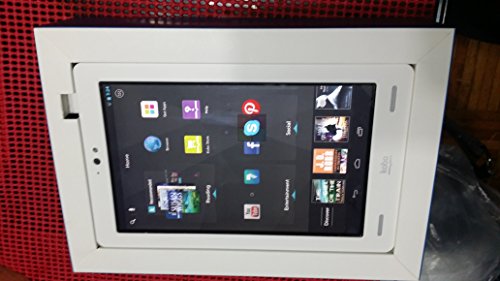
Kobo Arc (1GB + 64GB)
6.6/10

Overall score

Score
6.6/ 10
✕
What it is
Our main score for this model, 1–10. It combines specs, best-of lists, expert reviews and owners.
How we count it
Parts: Technical score 35%, List score 30%, Reviews score 25%, Sentiment score 10%
Marks: Each part gets a mark out of 10. For reviews, lists and owners, a typical model in this category gets about 8 and the best one gets 10.
No data yet: A part with no data shows "?". It counts as the mark of a weaker model in this category (4 in 5 models with data score higher). This way, models with reviews, lists and owners usually come out ahead.
Score distribution
â–¼
<55-66-77-88-99-10
Score components

35%

4.9

Technical score

30%

?

List scoreNot enough data yet, so we use 7.5, the mark of a weaker model in this category

25%

8.0

Reviews score

10%

?

Sentiment scoreNot enough data yet, so we use 6.9, the mark of a weaker model in this category

â–¼Worse than 64% of tablets
7.4

Value for money

Value for money
7.4/ 10
✕
What it is
An indicator that combines the tablet's overall rating with its cost.
When it matters
When you are looking for a tablet with a good balance between quality and price.
Score distribution
â–¼
<55-66-77-88-99-10
Score components

70%

6.6

Overall score

30%

9.2

Price

â–¼Worse than 62%
4.9

Technical score

Technical score
4.9/ 10
✕
What it is
How good the specs are compared with the other models in this category, 1–10.
How we count it
Areas: We rate the specs in each area against the other models in this category.
Weighting: The areas that matter most to buyers count more. The shares are shown under Score components.
Share: The technical score is 35% of the overall score.
Score distribution
â–¼
<55-66-77-88-99-10
Score components

22%

4.3

Performance

20%

5.0

Display

16%

5.1

Camera

14%

3.9

Battery

12%

5.1

Connectivity

8%

6.1

Software

5%

6.0

Design

3%

4.8

Audio

â–¼Worse than 92%
8.0

Reviews score

Reviews score
8.0/ 10
✕
What it is
Average grade from independent test sites, magazines and video reviewers, 1–10.
How we count it
Grades: Each review's own score is converted to 1–10; without one, we grade the review ourselves. Big test sites count more, short reviews half as much as full tests. A video review counts half.
Score: The average grade is 80% of the review mark; the number of reviews is the other 20% (1 review = 5, the typical number in this category = 8, the most-reviewed model = 10).
Enough data: With few reviews, the average grade is pulled toward the typical grade of this category. No reviews yet: 7.4 for now.
Share: Reviews count 25% of the overall score.
Score distribution
â–¼
<55-66-77-88-99-10

80%

7.9

Average grade

20%

8.6

Popularity

Grades by review (24)
19 reviews: 13 with a printed score, 6 estimated from the review. 5 video reviews, each counting half as much as a written test. Reviews count 25% of the overall score.
User ratings collected online are not part of this score.
â–²Better than 60%
?

List score

List score
7.5/ 10
✕
What it is
How often independent test sites, magazines and video reviewers put this model in their best-of lists for this category.
How we count it
Points: The model in the most lists of this category gets 10; the others get 8 to 10 in proportion. In no list yet: 7.5. Lists count 30% of the overall score.
Enough data: Every list counts, even a single one. With fewer than 5 best-of lists in the category, this part is left out.
Lists with this model (0)
Not in any best-of list yet, so this part counts as 7.5. Models in a list get 8 to 10.
Not in any best-of list yet
  • kobo-arc-1gb-64gb
kobo-arc-1gb-64gb
Where to buy
    N/A~ £260
Best rankings
Available: ranking among products currently available (including other versions of this product).All: ranking among all products in the database.
Other versions:

What reviewers say about the Kobo Arc (1GB + 64GB)

Based on 19 · 5

Reviewers like the screen and app selection, but complain about limited storage and an intrusive recommendation bar.
Praised
Mixed views
Criticised
Pick a topic to see who said what
Loading...
Loading category ranking...

Technical Specifications of tablet Kobo Arc (1GB + 64GB)

Technical score
Technical score
4.9/ 10
✕
What it is
How good the specs are compared with the other models in this category, 1–10.
How we count it
Areas: We rate the specs in each area against the other models in this category.
Weighting: The areas that matter most to buyers count more. The shares are shown under Score components.
Share: The technical score is 35% of the overall score.
Score distribution
â–¼
<55-66-77-88-99-10
Score components:

22%

4.3

Performance

20%

5.0

Display

16%

5.1

Camera

14%

3.9

Battery

12%

5.1

Connectivity

8%

6.1

Software

5%

6.0

Design

3%

4.8

Audio

4.9
Reviews score
8.0
List score
?
Value for money
Value for money
7.4/ 10
✕
What it is
An indicator that combines the tablet's overall rating with its cost.
When it matters
When you are looking for a tablet with a good balance between quality and price.
Score distribution
â–¼
<55-66-77-88-99-10
Score components:

70%

6.6

Overall score

30%

9.2

Price

7.4
RAM capacity
1 GB
This tablet has 1 GB of RAM, which is less than 78% of tablets and equal to 19.1% of tablets.
Process node
45 nm
This tablet is built on a 45 nm process, which is larger than 94.9% of tablets and equal to 4.4% of tablets.
Internal storage
64 GB
This tablet has 64 GB of internal storage, which is more than 39.1% of tablets and equal to 17% of tablets.
Geekbench 6 single-core score
?
Chipset
TI OMAP 4470
This tablet runs on TI OMAP 4470, which is less advanced than 67.8% of tablets and equal to 0.2% of tablets.
Show more
What reviewers say
Screen resolution
1280×800
This tablet has a 1280×800 screen, which is less sharp than 68.1% of tablets and equal to 21.7% of tablets.
Refresh rate
60 Hz
This tablet has a 60 Hz screen, which is smoother than 0.1% of tablets and equal to 73.4% of tablets.
Display type
IPS LCD
This tablet uses a IPS LCD display type. 17% of tablets use this display technology.
Pixel density
215 ppi
This tablet has a pixel density of 215 ppi, which is lower than 55.7% of tablets and equal to 0.2% of tablets.
Display glass type
?
Show more
What reviewers say
Optical image stabilization
no
This tablet does not support optical stabilisation. 0.4% of tablets offer this.
Main camera megapixels
N/A
Front camera megapixels
1.3 MP
This tablet has a front camera with 1.3 MP resolution, which is lower than 80.9% of tablets and equal to 5.4% of tablets.
Main camera aperture
N/A
Optical zoom
1xxx
This tablet has 1xx optical zoom, which is stronger than 18.2% of tablets and equal to 80.9% of tablets.
Show more
What reviewers say
Battery capacity
4,400 mAh
This tablet has 4,400 mAh battery capacity, which is smaller than 80% of tablets and equal to 0.5% of tablets.
Charging speed
13 W
This tablet charges at 13 W, which is slower than 58.4% of tablets and equal to 0.3% of tablets.
Battery life
10 hours
This tablet has a battery life of 10 hours, which is longer than that of 39.1% of tablets and equal to that of 20.5% of tablets.
Wireless charging
no
This tablet does not support wireless charging. 1.5% of tablets offer this.
Fast charging
no
This tablet does not support fast charging. 56.9% of tablets offer this.
Show more
LTE support
no
This tablet does not have built-in LTE. 42.9% of tablets offer this.
Wi-Fi connectivity
yes
This tablet connects to Wi-Fi. 0.2% of tablets offer this.
GPS
no
This tablet does not have built-in GPS. 82.9% of tablets offer this.
5G connectivity
no
This tablet does not support 5G. 8.1% of tablets offer this.
NFC
no
This tablet does not include NFC. 10.8% of tablets offer this.
Show more
What reviewers say
Operating system
Android
This tablet uses the Android operating system, which is more advanced than the one used by 23.2%.
Update support duration
short
This tablet offers short update support, which is shorter than the support period of 52.4% of tablets and equal to that of 47.6% of tablets.
Direct OS updates
yes
This tablet supports direct OS updates. 20.3% of tablets offer this.
On-device AI
no
This tablet does not support on-device AI. 28.3% of tablets support this capability.
App tracking protection
no
This tablet does not support app tracking protection. 28.4% of tablets offer this.
Show more
IP rating
not rated
This tablet's IP rating is not rated, which is less protected than 16.5% of tablets and the same as 83.6% of tablets.
Weight
364 g
This tablet weighs 364 g, which is lighter than 78.9% of tablets and equal to 0.3% of tablets.
Backlit keyboard
no
This tablet does not support a backlit keyboard. 9.7% of tablets support backlit keyboards.
Keyboard accessory
?
Pen latency
N/A
Show more
What reviewers say
Number of microphones
1
This tablet has a microphone array of 1, which is more than 0.2% of tablets and equal to 54.8% of tablets.
aptX Adaptive
no
This tablet does not support aptX Adaptive. 6.9% of tablets offer this.
Dolby Atmos support
no
This tablet does not support Dolby Atmos. 31.3% of tablets support Dolby Atmos.
N. of speakers
2
This tablet includes 2 speakers, which is more than in 9.8% of tablets and equal to the number in 60.8% of tablets.
FM radio
no
This tablet does not include an FM radio. 19% of tablets offer this.
Show more
What reviewers say

Kobo Arc (1GB + 64GB) vs the average tablet

246810TotalPerformanceDisplayCameraBatteryConnectivitySoftwareDesignAudio
  • 25.7% lighter
    This tablet is lighter than the average tablet (364 g vs 490 g). The average tablet weighs 490 g.
    364 g vs 490 g
  • More advanced chipset
    This tablet has a more advanced chipset than the average tablet (TI OMAP 4470 vs MediaTek MT8169A).
    TI OMAP 4,470 vs MediaTek MT8169A
  • 14.3% higher review score
    Reviews score
    8.0/ 10
    ✕
    What it is
    Average grade from independent test sites, magazines and video reviewers, 1–10.
    How we count it
    Grades: Each review's own score is converted to 1–10; without one, we grade the review ourselves. Big test sites count more, short reviews half as much as full tests. A video review counts half.
    Score: The average grade is 80% of the review mark; the number of reviews is the other 20% (1 review = 5, the typical number in this category = 8, the most-reviewed model = 10).
    Enough data: With few reviews, the average grade is pulled toward the typical grade of this category. No reviews yet: 7.4 for now.
    Share: Reviews count 25% of the overall score.
    Score distribution
    â–¼
    <55-66-77-88-99-10

    80%

    7.9

    Average grade

    20%

    8.6

    Popularity

    Grades by review (24)
    19 reviews: 13 with a printed score, 6 estimated from the review. 5 video reviews, each counting half as much as a written test. Reviews count 25% of the overall score.
    User ratings collected online are not part of this score.
    8.0 vs 7.0
  • 55.3 mm narrower
    This tablet is narrower than the average tablet (120 mm vs 175.3 mm). The average tablet is 175.3 mm wide.
    120 mm vs 175.3 mm
  • 14.3% higher review score
    Reviews score
    8.0/ 10
    ✕
    What it is
    Average grade from independent test sites, magazines and video reviewers, 1–10.
    How we count it
    Grades: Each review's own score is converted to 1–10; without one, we grade the review ourselves. Big test sites count more, short reviews half as much as full tests. A video review counts half.
    Score: The average grade is 80% of the review mark; the number of reviews is the other 20% (1 review = 5, the typical number in this category = 8, the most-reviewed model = 10).
    Enough data: With few reviews, the average grade is pulled toward the typical grade of this category. No reviews yet: 7.4 for now.
    Share: Reviews count 25% of the overall score.
    Score distribution
    â–¼
    <55-66-77-88-99-10

    80%

    7.9

    Average grade

    20%

    8.6

    Popularity

    Grades by review (24)
    19 reviews: 13 with a printed score, 6 estimated from the review. 5 video reviews, each counting half as much as a written test. Reviews count 25% of the overall score.
    User ratings collected online are not part of this score.
    8.0 vs 7.0
  • More advanced chipset
    This tablet has a more advanced chipset than the average tablet (TI OMAP 4470 vs MediaTek MT8169A).
    TI OMAP 4,470 vs MediaTek MT8169A
  • 25.7% lighter
    This tablet is lighter than the average tablet (364 g vs 490 g). The average tablet weighs 490 g.
    364 g vs 490 g
  • 55.3 mm narrower
    This tablet is narrower than the average tablet (120 mm vs 175.3 mm). The average tablet is 175.3 mm wide.
    120 mm vs 175.3 mm
  • 6 fewer CPU threads
    This tablet has fewer CPU threads than the average tablet (2 vs 8). The average tablet has 8 CPU threads.
    2 vs 8
  • 3.7 MP lower front resolution
    This tablet has a lower-resolution front camera than the average tablet (1.3 MP vs 5 MP). The average tablet has a front camera of 5 MP.
    1.3 MP vs 5 MP
  • No USB-C port
    This tablet does not have a USB Type-C port, while the average tablet does. 54% of tablets have one.
  • 3 GB less RAM
    This tablet has less RAM than the average tablet (1 GB vs 4 GB). The average tablet has 4 GB of RAM.
    1 GB vs 4 GB
  • Shorter update support
    This tablet offers shorter update support than the average tablet (short vs medium). The average tablet gets medium of update support.
    short vs medium
  • No fast charging
    This tablet does not support fast charging, while the average tablet does. 56.8% of tablets support fast charging.
  • 3.21x larger process node
    This tablet has a larger process node than the average tablet (45 nm vs 14 nm). The average tablet is built on 14 nm.
    45 nm vs 14 nm
  • 3.1 inches smaller screen
    This tablet has a smaller screen than the average tablet (7 inches vs 10.1 inches). The average tablet measures 10.1 inches.
    7 inches vs 10.1 inches
  • 6 fewer CPU threads
    This tablet has fewer CPU threads than the average tablet (2 vs 8). The average tablet has 8 CPU threads.
    2 vs 8
  • 3 GB less RAM
    This tablet has less RAM than the average tablet (1 GB vs 4 GB). The average tablet has 4 GB of RAM.
    1 GB vs 4 GB
  • 3.21x larger process node
    This tablet has a larger process node than the average tablet (45 nm vs 14 nm). The average tablet is built on 14 nm.
    45 nm vs 14 nm
  • 25% lower CPU speed
    This tablet has a lower CPU speed than the average tablet (1.5 GHz vs 2 GHz). The average tablet has CPU speed of 2 GHz.
    1.5 GHz vs 2 GHz
  • More basic graphics
    This tablet has less advanced graphics than the average tablet (PowerVR SGX544 vs Mali-G51).
    PowerVR SGX544 vs Mali-G51
  • 933 MHz slower RAM speed
    This tablet has a lower RAM speed than the average tablet (933 MHz vs 1,866 MHz). The average tablet has RAM speed of 1,866 MHz.
    933 MHz vs 1,866 MHz
  • No big.LITTLE architecture
    This tablet does not support big.LITTLE architecture, while the average tablet does. 51.7% of tablets support big.LITTLE architecture.
  • 49.7% less memory bandwidth
    This tablet has less memory bandwidth than the average tablet (7.5 GB/s vs 14.9 GB/s). The average tablet has 14.9 GB/s of memory bandwidth.
    7.5 GB/s vs 14.9 GB/s
  • 7 years older
    This tablet was released earlier than the average tablet (2012 vs 2019). The average tablet was released in 2019.
    November 2012
    2012 vs 2019
  • More basic memory type
    This tablet uses less advanced memory than the average tablet (LPDDR2 vs LPDDR3).
    LPDDR2 vs LPDDR3
  • 3.1 inches smaller screen
    This tablet has a smaller screen than the average tablet (7 inches vs 10.1 inches). The average tablet measures 10.1 inches.
    7 inches vs 10.1 inches
  • Less sharp display
    This tablet has a less sharp screen than the average tablet (1280×800 vs 1920×1200).
    1,280×800 vs 1,920×1,200
  • 8 nits dimmer screen
    This tablet is dimmer than the average tablet (393 nits vs 401 nits). The average tablet reaches 401 nits.
    393 nits vs 401 nits
  • 2.7% softer screen detail
    This tablet has softer screen detail than the average tablet (215 ppi vs 221 ppi). The average tablet has a pixel density of 221 ppi.
    215 ppi vs 221 ppi
  • 3.7 MP lower front resolution
    This tablet has a lower-resolution front camera than the average tablet (1.3 MP vs 5 MP). The average tablet has a front camera of 5 MP.
    1.3 MP vs 5 MP
  • No tap-to-focus
    This tablet does not support touch autofocus, while the average tablet does. 83% of tablets support touch autofocus.
  • No manual white balance
    This tablet does not support manual white balance, while the average tablet does. 51.5% of tablets support manual white balance.
  • No backside-illuminated sensor
    This tablet does not have a BSI sensor, while the average tablet does. 52.6% of tablets have a BSI sensor.
  • No timelapse video
    This tablet does not support timelapse video, while the average tablet does. 57.5% of tablets support timelapse video.
  • No fast charging
    This tablet does not support fast charging, while the average tablet does. 56.8% of tablets support fast charging.
  • 33.3% smaller battery capacity
    This tablet has a smaller battery capacity than the average tablet (4,400 mAh vs 6,600 mAh). The average tablet offers 6,600 mAh of battery capacity.
    4,400 mAh vs 6,600 mAh
  • 27.8% slower charging
    This tablet charges slower than the average tablet (13 W vs 18 W). The average tablet charges at 18 W.
    13 W vs 18 W
  • No USB-C port
    This tablet does not have a USB Type-C port, while the average tablet does. 54% of tablets have one.
  • Older Wi-Fi standard
    This tablet has an older Wi-Fi standard than the average tablet (Wi-Fi 4 (802.11n) vs Wi-Fi 5 (802.11ac)).
    Wi-Fi 4 (802.11n) vs Wi-Fi 5 (802.11ac)
  • No GPS
    This tablet does not include GPS, while the average tablet does. 82.9% of tablets include GPS.
  • Fewer Wi-Fi bands
    This tablet supports fewer Wi-Fi bands than the average tablet (2.4GHz vs 2.4GHz/5GHz). The average tablet supports 2.4GHz/5GHz Wi-Fi bands.
    2.4GHz vs 2.4GHz/5GHz
  • No Ethernet support
    This tablet does not have Ethernet support, the average tablet does. 76.5% of tablets support Ethernet.
  • Shorter update support
    This tablet offers shorter update support than the average tablet (short vs medium). The average tablet gets medium of update support.
    short vs medium
  • No split-screen
    This tablet does not support split-screen, the average tablet does. 72.8% of tablets support split-screen.
  • No picture-in-picture mode
    This tablet does not support picture-in-picture, the average tablet does. 61.4% of tablets support picture-in-picture.
  • No camera and mic privacy
    This tablet does not support camera and mic privacy, while the average tablet does. 56.6% of tablets offer this.
  • No full-page screenshots
    This tablet does not support full-page screenshots, the average tablet does. 53% of tablets support full-page screenshots.
  • No location privacy
    This tablet does not support location privacy, while the average tablet does. 76.7% of tablets offer this.
  • No dark mode
    This tablet does not support dark mode, while the average tablet does. 57.7% of tablets offer this.
  • No offline voice recognition
    This tablet does not support offline voice recognition, the average tablet does. 76.4% of tablets support offline voice recognition.
  • 3.5 mm thicker
    This tablet is thicker than the average tablet (11.5 mm vs 8 mm). The average tablet is 8 mm thick.
    11.5 mm vs 8 mm

Video reviews

Hands-on testing, unboxing, and real-world video evaluations

Not graded yet
Not graded yet
Not graded yet
Not graded yet
Not graded yet
Not graded yet
Not graded yet

Expert reviews

In-depth analysis and verdict from leading tech publications
8.0
pcmag.com
✓ explicit
23/01/2013
Benchmark test · Small Android tablet
Verdict
The Kobo Arc is a zippy small Android tablet with Google Play access, but short battery life and an unhideable Discover bar keep it behind the Nexus 7.
8.0
androidcentral.com
≈ estimated
22/10/2012
Hands-on review · Android tablet
Verdict
The Kobo Arc is a fine alternative to the Nexus 7 for buyers who want something different, with a bright screen and near-stock Android, though it feels plasticky.
6.3
cnet.com
✓ explicit
01/02/2013
Lab test · 7-inch tablet
Verdict
The Kobo Arc is a fine but unexciting 7-inch tablet with strong gaming performance, though it gives little reason to pick it over the Nexus 7.
8.0
techradar.com
✓ explicit
04/07/2013
Hands-on review · Reading tablet
Verdict
The Kobo Arc is a capable reading tablet with full Google Play access and quick performance, but lacks Bluetooth, HDMI output and a microSD slot.
8.0
trustedreviews.com
✓ explicit
08/02/2013
Hands-on review · E-reader tablet
Verdict
The Kobo Arc is good value for an ebook-focused tablet, more open than the Kindle Fire HD, but its dull, fingerprint-prone screen and slower feel hold it back.
8.0
uk.pcmag.com
✓ explicit
01/08/2013
Review · Small Android tablet
Verdict
The Kobo Arc is a crisp, solid small Android tablet with Google Play access, though its battery life is mediocre and its Android changes are questionable.
8.0
expertreviews.co.uk
✓ explicit
02/05/2014
Retrospective review · Discontinued tablet
Verdict
The Kobo Arc is a bright, flexible ebook tablet that's now discontinued, but frequent Wi-Fi drops and no microSD slot count against it.
9.0
scottishbookworm.wordpress.com
≈ estimated
24/07/2013
Personal review · Budget tablet
Verdict
The Kobo Arc is a nice budget tablet for magazines and email, with fast browsing and Google Play, though Kobo's book search is hit-or-miss and TV apps are missing.
8.0
laptopmag.com
✓ explicit
15/03/2013
Expert review · 7-inch reader tablet
Verdict
The Kobo Arc is a strong 7-inch alternative with full Google Play access and a sturdy build, though its Android version is outdated and its screen reflects glare.
9.0
hifitest.de
✓ explicit
22/04/2013
Test · Reading-focused tablet
Verdict
The Kobo Arc surprises with a sharp, well-colored screen and top-class performance for a 7-inch tablet, but its fixed storage and ad bar may disappoint.
8.0
android-user.de
✓ explicit
09/02/2024
Hands-on test · E-book tablet
Verdict
The Kobo Arc is a good alternative to the Kindle Fire HD for e-book fans, with Google Play, though its rear cover collects dirt and its speakers rattle.
8.0
spiegel.de
≈ estimated
23/01/2013
Hands-on test · E-reader tablet
Verdict
The Kobo Arc is a light, quick 7-inch tablet with a sharp screen and full Google Play access, held back by an unhideable recommendation bar and old Android.
8.7
teltarif.de
✓ explicit
23/01/2013
Hands-on test · Media tablet
Verdict
The Kobo Arc is a sturdy, bright 7-inch tablet with full Google Play access that has an edge over the Kindle Fire, but its storage cannot be expanded.
6.8
01net.com
✓ explicit
07/01/2013
Test · Performance and battery
Verdict
The Kobo Arc is a strong 7-inch rival to the Kindle Fire HD and Nexus 7, with a bright screen and very long battery life, though storage cannot be expanded.
5.0
tablette-tactile.net
✓ explicit
11/12/2012
Hands-on test · E-reader tablet
Verdict
The Kobo Arc is a 7-inch tablet that feels close to an e-reader, with access to 2.2 million books but a flimsy plastic build and a cluttered home screen.
7.0
webnews.it
≈ estimated
21/12/2012
Review · 7-inch Android tablet
Verdict
The Kobo Arc is a sturdy 7-inch Android tablet for readers, with full Google Play access, but its 360-gram weight and reflective screen are drawbacks.
8.0
dday.it
≈ estimated
13/12/2012
Hands-on test · Affordable Android tablet
Verdict
The Kobo Arc is a smooth, well-balanced 7-inch tablet for reading and everyday tasks, though some apps misbehave and demanding games slow down.
8.0
fwd.nl
✓ explicit
20/01/2013
Review · Ebook-focused tablet
Verdict
The Kobo Arc is a sturdy 7-inch tablet with a sharp screen and all-day battery, but its plain look and pushy book promotions may annoy.
9.0
ereaders.nl
≈ estimated
12/12/2012
Hands-on review · Reading tablet
Verdict
The Kobo Arc suits book lovers who want a fast, easy 7-inch tablet with full Android, but at 364 grams it is tiring for long reading in bed.

Third-party reviews

What customers like about Kobo Arc (1GB + 64GB)

  • Full access to Google Play Store and official Google apps
  • High-quality IPS display with sharp text and wide viewing angles
  • Strong gaming performance for its class due to a powerful GPU
  • Dedicated 'Reading Mode' that minimizes distractions and notifications
  • Customizable 'Tapestries' interface for organizing multimedia content
  • Front-facing speakers provide better direct audio than rear-mounted ones
  • Sturdy build quality capable of withstanding small drops

What customers don't like about Kobo Arc (1GB + 64GB)

  • Mediocre battery life, especially when gaming or in standby mode
  • Heavier and bulkier than competitors like the Nexus 7 or iPad mini
  • Lacks essential hardware features such as Bluetooth, GPS, and microSD expansion
  • Glossy screen finish is highly reflective and prone to fingerprint smudges
  • The 'Discover Ribbon' takes up screen space and cannot be easily disabled
  • Tinny audio quality that can become distorted at higher volumes
  • Ships with older versions of Android, lacking some performance optimizations

Verdict

The Kobo Arc (1GB + 64GB) is a 7-inch Android tablet featuring a 1.5GHz dual-core processor, 1GB of RAM, and a high-capacity 64GB of internal storage. Its standout characteristics include a 1280 x 800 IPS high-definition display with 215 ppi, front-facing stereo speakers with SRS TruMedia enhancement, and a 1.3MP 720p front camera. Main pros include full access to the Google Play Store, the unique 'Tapestries' interface for content discovery, and a durable screen capable of withstanding drops from up to 1.5 metres. However, it lacks a rear-facing camera, has no microSD slot for storage expansion, and omits Bluetooth and GPS connectivity.

Compare Kobo Arc (1GB + 64GB) with other tablets

1Product to compare no. 1
VS
2Product to compare no. 2
VS
3Product to compare no. 3 (optional)

Graphic comparison of Kobo Arc (1GB + 64GB) and other tablets

No results found